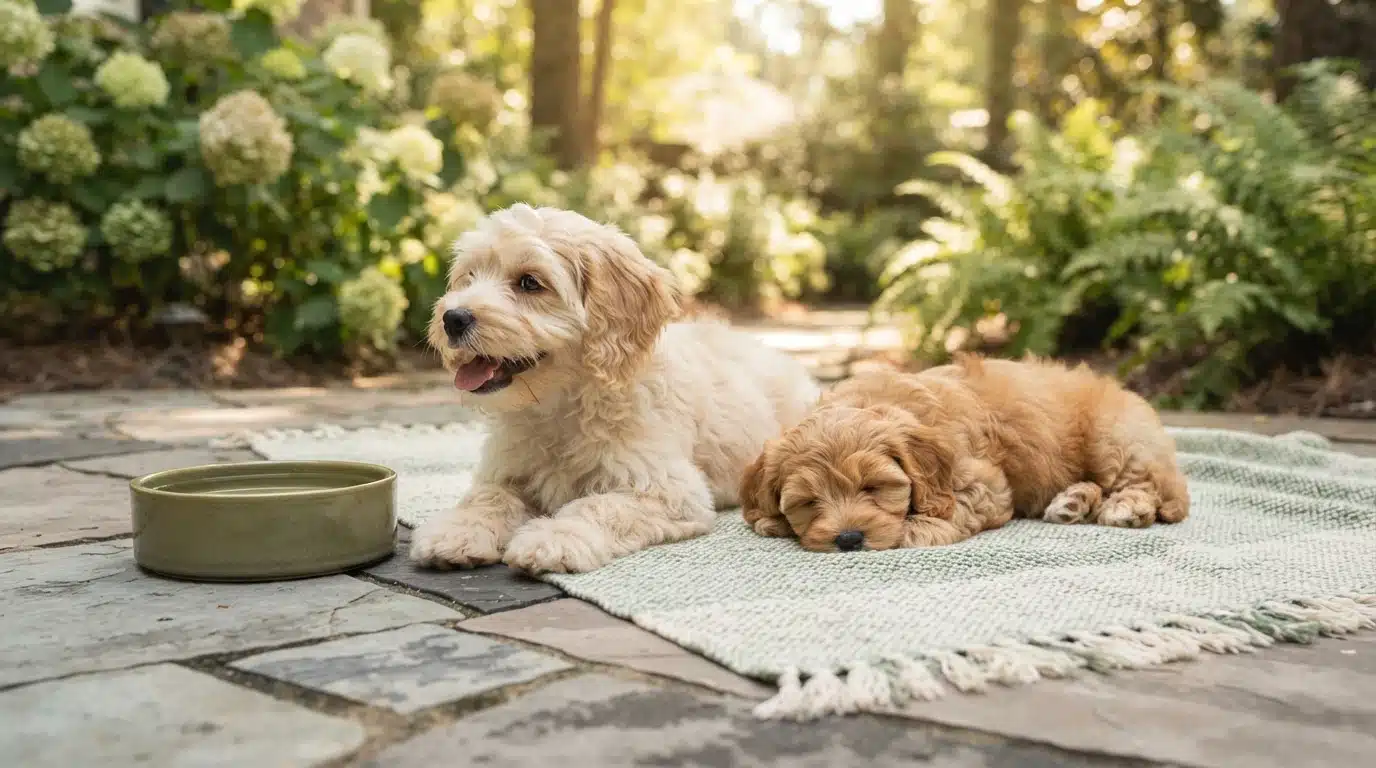
Quick Summary: Protecting a Florida puppy from heat and humidity means judging risk by humidity and pavement, not just the thermometer, and keeping outdoor trips short, shaded, and purposeful. Watch for early signs like heavy panting or thick drool, cool with room-temperature water (never ice), and call a vet immediately if the puppy wobbles or collapses. Set up a cool indoor zone before arrival, use the seven-second hand test on pavement, and skip long walks during peak heat.
A new puppy can step out of a cool delivery van onto hot Florida pavement and start struggling with humidity before you realize a three-minute potty trip has become a heat risk. Puppy heatstroke builds fast, especially in small breeds like Havanese, Havapoos, and Cavapoos, and Florida summer dogs face it nearly year-round. The signs of dog heat exhaustion often look like simple tiredness at first. This guide gives you a clear, puppy-specific plan: how to prep for pickup or delivery day, read humidity, spot warning behaviors early, and act fast if something goes wrong. At Sage Puppies, we raise our puppies in family homes and walk every family through safe arrival care, so nothing about a Florida welcome is left to guesswork.
Step 1: Prepare a Cool Indoor Landing Zone Before Your Puppy Arrives
Florida heat does not wait for your puppy to settle in. Set up the cool zone before pickup or delivery day, so the first thing your puppy meets is comfort, not stress.
Set the Air Conditioning, Water, and Rest Space First
Pick one room and make it home base. Set the air conditioning to about 70 to 72 degrees, since 68 to 72°F is comfortable for most puppies indoors. Keep the crate, water bowl, and bed all in that room, out of direct sun and away from hot windows.
Add these before the puppy arrives:
- A crate with soft bedding, placed where your family spends time
- Fresh water at ground level, refilled often
- A blanket with the breeder’s scent, if we sent one with your puppy
- One or two safe chew toys
A cool, quiet room lowers the risk of puppy heatstroke before it ever starts. It also helps your puppy rest, and rest matters more than play on day one.
Plan the First Car-to-Home Transition
The car ride home is the hottest, most stressful part of the day. Travel during early morning or evening, and pre-cool the car before the puppy gets in. Use a secured crate or harness, per AKC’s first-day guidance.
On arrival, go straight inside to the cool room. Skip the long backyard welcome. Let your puppy sniff, drink, and nap. Limit first-day introductions to family only, as Purina’s first-week guide recommends, then let sleep do its work.
Also Read: Havanese, Havapoo & Cavapoo Puppy Care Blog
Step 2: Make Every Outdoor Trip Brief, Shaded, and Purposeful
A Florida summer doesn’t reward long outings with a young puppy. It rewards short, planned ones. Before you clip on the leash, know exactly why you’re going outside, where the shade is, and when you’re coming back in.
Choose the Coolest Practical Time and Surface
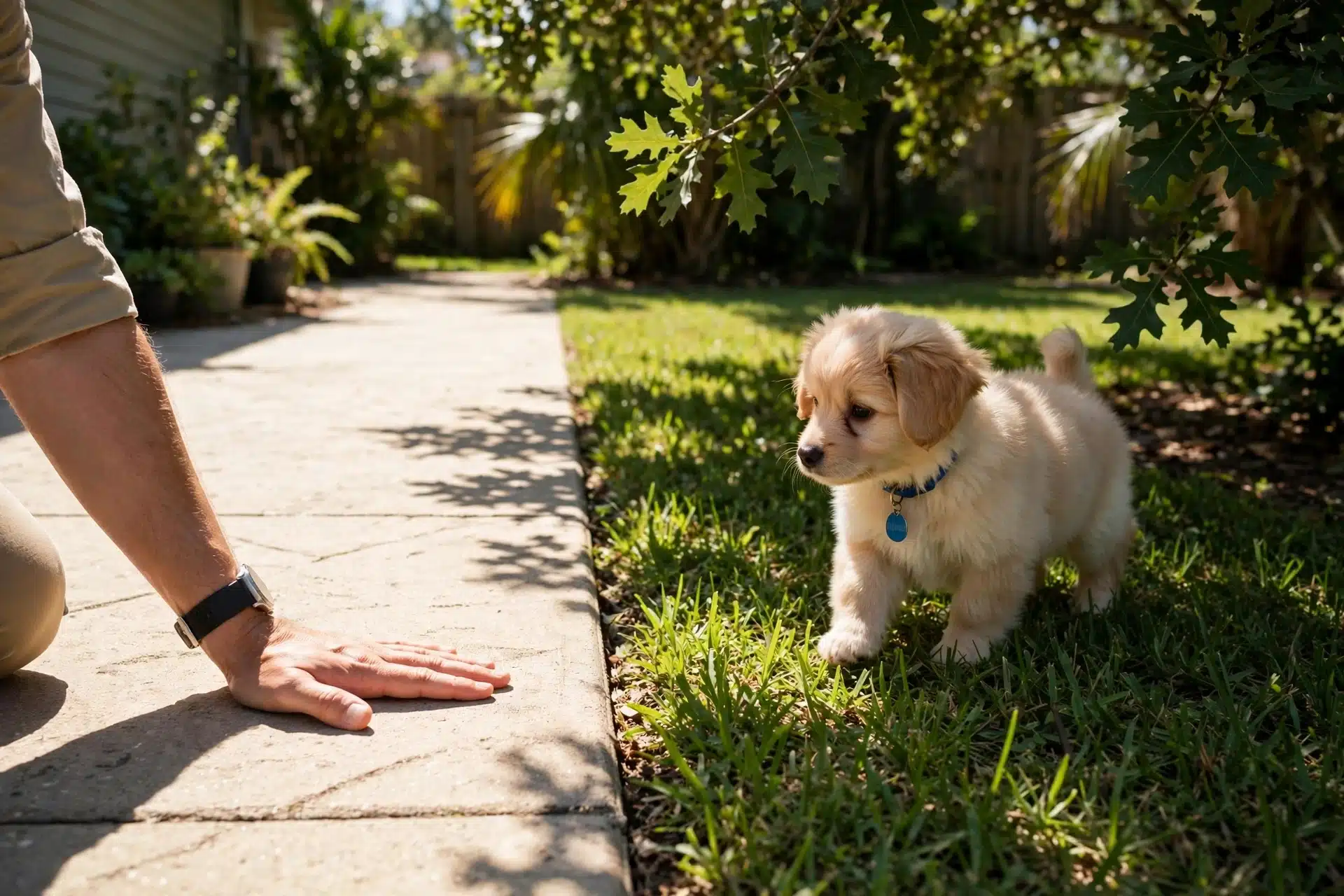
Aim for early morning, ideally before 9 a.m., or after sunset. Ground holds heat for hours, so evening sidewalks can still burn. Asphalt is the worst offender: on an 87-degree day it can reach about 143°F, and at 95 degrees it climbs past 160°F, according to Ridgefield Veterinary Center. Grass and dirt stay far cooler. Before any paved stretch, press the back of your hand down for seven seconds. If you can’t hold it there, your puppy’s paws can’t either. This seven-second test is the habit that prevents most paw burns.
Use a Short Potty Routine
- Take your puppy straight to the grassy potty spot.
- Give it two to three minutes, then praise and go back inside.
- Skip exploration walks during peak heat. Save sniffing sessions for early morning.
Keep a collapsible water bowl by the door and offer water after every trip.
Treat every midday outing as a potty break, not a walk. Long walks can wait for cooler months.
Know When Excitement Is Becoming Overheating
Puppies play hard and don’t self-regulate. Stop immediately if you see frantic panting, thick drool, slowing down, wobbliness, or a puppy who lies down and refuses to move. Carry them inside, cool the belly and paws with room-temperature water, and let them rest.
Also Read: How to Keep a New Puppy Cool During Florida Car Travel
Step 3: Judge Florida Heat by Temperature, Humidity, and Conditions Together
A weather app number tells you almost nothing on its own. In Florida, the same 85-degree day can be safe at sunrise and risky by noon.
Why Humidity Changes the Risk
Dogs cool off by panting, which works by evaporating moisture. When the air is already thick with humidity, that evaporation slows down and so does your puppy’s cooling. Research on humid climates shows panting rates climb sharply once heat and radiant load combine, so the risk rises well before any single temperature threshold. A 78-degree afternoon with 80% humidity can strain a small puppy more than a dry 85-degree day.
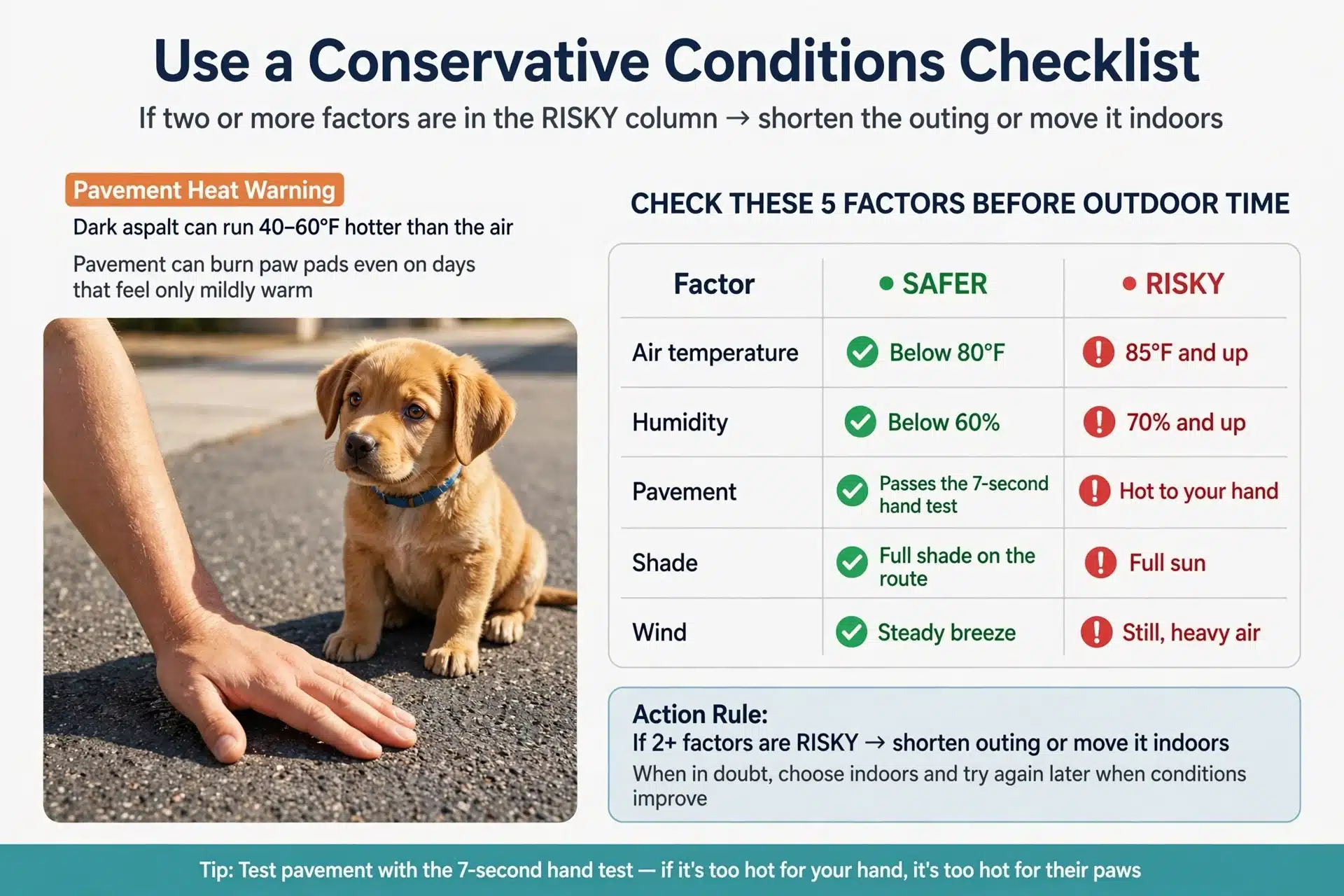
Use a Conservative Conditions Checklist
Run this quick check before any outdoor time:
| Factor | Safer | Risky |
|---|---|---|
| Air temperature | Below 80°F | 85°F and up |
| Humidity | Below 60% | 70% and up |
| Pavement | Passes the 7-second hand test | Hot to your hand |
| Shade | Full shade on the route | Full sun |
| Wind | Steady breeze | Still, heavy air |
If two or more factors land in the risky column, shorten the outing or move it indoors. Dark asphalt can run 40 to 60 degrees hotter than the air, so pavement can burn paw pads on days that feel only mildly warm.
Adjust for the Puppy, Not Just the Weather
Puppies, like the Havanese and Cavapoo puppies we raise at Sage Puppies, have soft pads and little heat tolerance built up yet. Short play sessions, shade, and water beat any calendar rule. Watch the puppy, not the clock.
Step 4: Build Heat-Safe Play, Exercise, and Grooming Habits
Puppies need play every day, but in Florida the when and how matter as much as the activity. Cornell’s veterinary team recommends keeping exercise to early morning or evening, since late afternoon (about 3-5 p.m.) is usually the hottest part of the day. Build your puppy’s routine around that window and you avoid most heat trouble before it starts.
Use Indoor Enrichment on High-Risk Days
On very hot or humid days, skip outdoor play entirely. Indoor games tire a puppy just as well.
- Hide treats around a cool room for a “find it” game
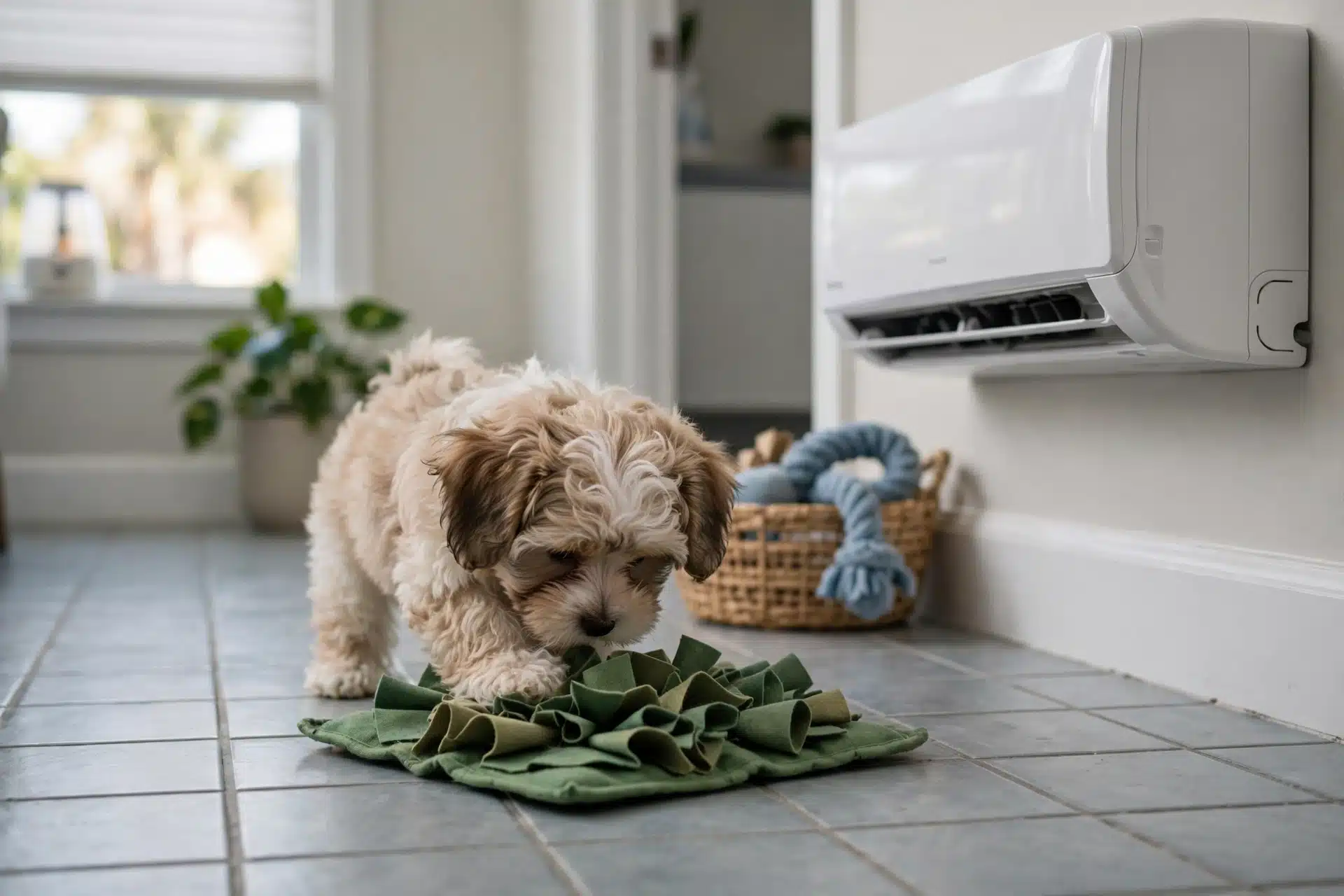
- Use a snuffle mat or puzzle feeder for meals
- Practice short training sessions – five minutes of new skills beats a long walk
- Set up a tug or soft toy session on tile or AC-cooled floors
Mental work plus rest equals a calm puppy by evening, no sweat required.
Add Outdoor Time Gradually
Puppies need weeks to adjust to heat. Start with five to ten minutes outside during the coolest hours. Watch your puppy, not the clock: heavy panting, slowing down, or seeking shade means stop and go inside. Offer water breaks every few minutes and stick to grass or shade. If the pavement fails the seven-second hand test, keep paws off it.
Brush and Trim Without Shaving the Coat
Havanese, Havapoos, and Cavapoos have hair that grows continuously, so regular brushing keeps air moving through the coat. Matting traps heat and moisture against the skin, so brush several times a week. A light summer trim by a groomer is fine, but never shave to the skin. Per the ASPCA, a coat acts as insulation against heat and protects skin from sunburn, so trimming beats buzz cuts every time.
Also Read: How to Prepare a New Puppy for Florida’s Heat and Humidity
Step 5: Recognize Puppy Heat Exhaustion Before It Becomes Heatstroke
Puppies don’t slow down on their own. A Havanese, Havapoo, or Cavapoo will keep playing until its body can’t keep up, so you have to read the signs for it. Catching heat exhaustion early is the whole game. Heatstroke can damage organs and even be fatal, and survival improves with early recognition and fast action, according to Cornell’s veterinary health center.
Early Signs That Mean Stop and Cool
Stop the activity the moment you see any of these:
- Heavy or faster panting that doesn’t settle after a minute of rest.
- Thick drooling or sticky gums.
- Bright red gums or tongue.
- Slowing down, seeking shade, or lying flat on a cool floor.
- Restlessness, pacing, or searching for water.
Move your puppy into air conditioning, wet its paws and belly with cool water, and offer small sips of water. The AVMA’s warm weather guide lists excessive panting, drooling, unsteadiness, and abnormal gum color as signs that need emergency care.
Emergency Signs of Puppy Heatstroke
These mean you cool first and drive to the vet:
- Weakness, wobbliness, or collapse.
- Vomiting, diarrhea, or bloody stools.
- Pale, gray, or bluish gums.
- Confusion, seizures, or refusal to move.
- Body temperature at or above 104°F.
Even if your puppy perks up, go. Internal damage may not show right away.
Why Puppies Need a Lower Threshold for Caution
Young dogs have immature cooling systems, and humidity makes it worse: when the air is already wet, panting sheds less heat. Small puppies also dehydrate faster and won’t self-regulate while excited. When in doubt, cut the session short.
Also Read: Guides – Sage Puppies
Step 6: Respond Immediately if You Suspect Puppy Heatstroke
Puppies overheat fast, and a small breed like a Havanese or Cavapoo has even less reserves than an adult dog. If your puppy is panting hard, drooling thickly, wobbling, or has bright red gums, act now. The rule veterinarians use is simple: cool first, transport second.
Move to Air Conditioning and Start Gentle Cooling
- Carry your puppy into air conditioning or strong shade right away.
- Stop all play and movement. Let the body settle.
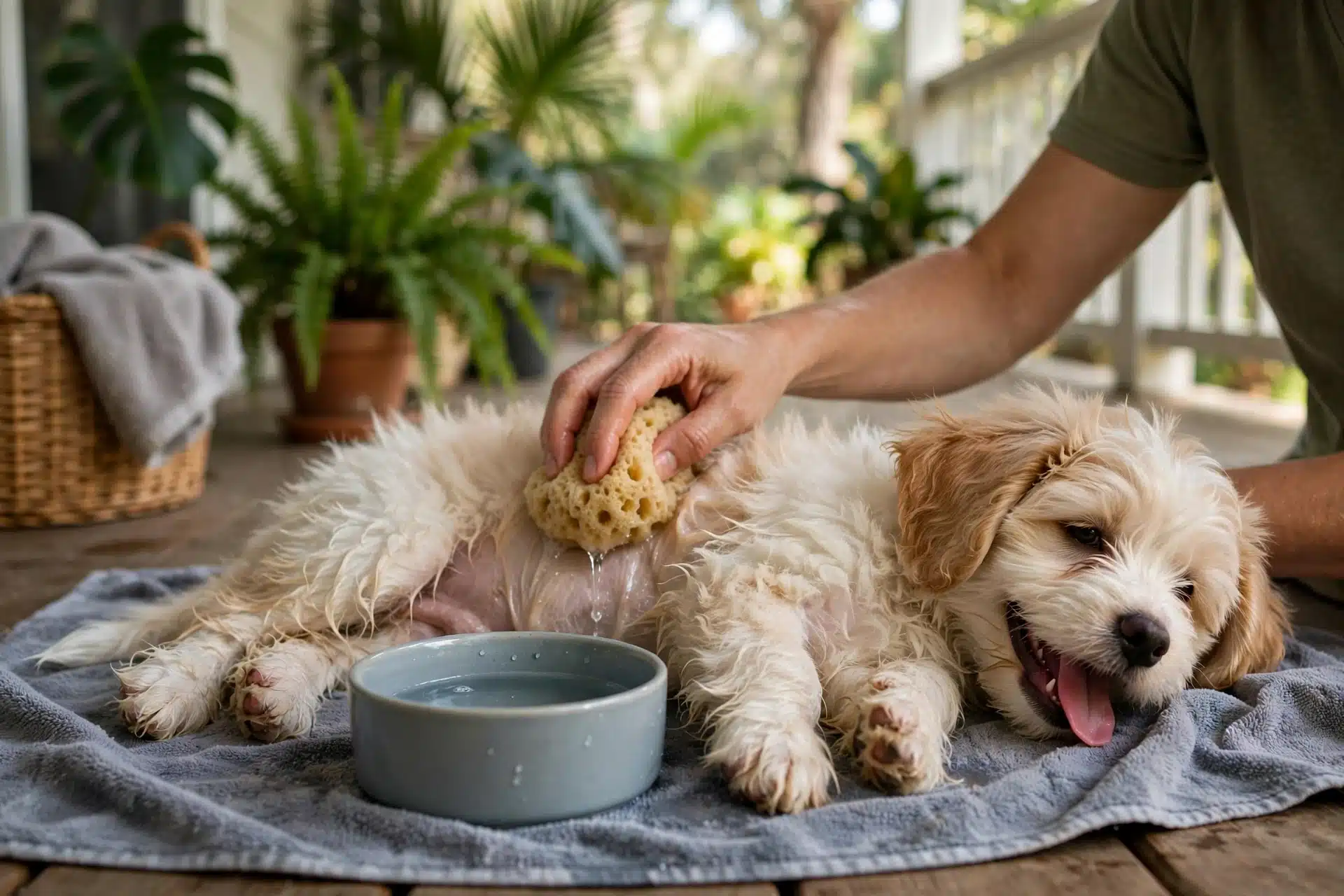
- Spray or sponge cool (not ice-cold) water on the belly, armpits, paws, and groin.
- Aim a fan at your puppy so the water evaporates. That is what pulls heat out.
- Offer small sips of water only if your puppy is alert. Never force it.
If you have a rectal thermometer, take a reading. Normal dog temperature runs 99.5 to 102.5 degrees, and anything at 104 or above is an emergency.
Call a Veterinarian and Prepare for Emergency Care
Call your vet or the nearest emergency animal hospital while you cool your puppy, and call ahead so the team is ready. Then transport in a cooled car with the fans on high.
Keep cooling during the drive, but stop once the temperature reaches about 103 degrees. Overcooling can drop your puppy into dangerous hypothermia. Even if your puppy perks up on the way, still go. Heatstroke can damage organs in ways you cannot see, and problems sometimes show up hours later.
Avoid These Common Emergency Mistakes
- No ice baths. Ice water can trigger shivering, which traps more heat.
- No wet towels over the body. They hold heat in. Cool water poured over works better.
- No forcing water into the mouth of a dazed puppy.
- No waiting to see if it passes. Minutes matter.
Every Sage Puppies family gets our care guidance before go-home day, so you know exactly who to call and where the nearest emergency vet is.
Step 7: Create a Repeatable Florida Heat Plan for the First Week
A plan you repeat beats a plan you improvise. Puppies settle fastest with predictable routines, so write yours down before your puppy’s first week begins.
The First 24 Hours
Keep it boring. Your puppy needs to decompress, not explore the neighborhood. Offer water in a cool room, keep potty breaks short and shaded, and let them sleep – a new puppy may sleep up to 20 hours a day. Skip visitors, skip playtime outdoors, skip the backyard “meet the family” party in afternoon heat. If your puppy arrives through delivery, the same rule applies: quiet indoors, water nearby, and short supervised breaks only.
Days Two Through Seven
Build a rhythm around the coolest parts of the day:
- Early morning potty and gentle play, before the sun climbs.
- Midday indoors with water, naps, and crate time.
- Late evening potty trips once pavement cools.
Before each outdoor trip, check the ground with the back of your hand for five seconds. If it burns you, carry your puppy to grass or wait. Watch eating, drinking, and energy daily – changes often show up before anything else does, so book your first vet visit within the first week.
Keep a Simple Heat-Safety Checklist by the Door
Tape a short list where everyone exits:
- Water bowl filled and cool
- Shaded route chosen
- Pavement tested with your hand
- Session under 10 minutes
- Puppy checked after coming in
Also Read: Puppy Weather Safety Guide for Heat, Cold, and Severe Storms
Common Mistakes to Avoid When Protecting a Puppy From Florida Heat
Most heat problems come from a few predictable errors. Catch these early and your puppy stays safe.
Relying on Temperature Alone
The thermometer doesn’t tell the whole story. Panting works poorly in humid air, so an 82-degree day with high humidity can stress a puppy more than a dry 90-degree one. Check the heat index, not just the temperature, before planning any time outside. Cornell’s veterinary team notes dogs struggle most in hot, humid conditions.
Waiting for the Puppy to Stop
Puppies rarely stop on their own. They play hard to please you, even while overheating. Don’t wait for a collapse. End outdoor time at the first signs of heavy panting or slowing down.
Using Ice, Forced Water, or a Parked Car
Never cool a puppy with ice water, which can trigger shock. Offer cool water, but don’t force drinking. And never leave a puppy in a parked car, even briefly with windows cracked, since interior temperatures climb dangerously fast.
Turning the First Potty Trip Into an Outing
Keep early potty breaks short and shaded. A quick trip on grass, then back inside. Save exploration for cooler months once your puppy has adjusted to Florida.

Ready for a puppy that’s well-prepared for Florida’s heat? At Sage Puppies, our home-raised Havanese, Havapoo, and Cavapoo puppies come socialized, health-tested, and started right – with local pickup or safe nationwide delivery. See our available puppies today.
Frequently Asked Questions
Q1: How can I protect my puppy from Florida heat and humidity?
Walk early or late, keep water handy, provide shade, and limit play to short bursts. Watch your puppy closely and stop at the first sign of heavy panting.
Q2: What are the signs of heatstroke in puppies in Florida?
Look for heavy panting, thick drool, bright red gums, wobbling, vomiting, or collapse. Move your puppy to shade, cool with water, and call your vet right away.
Q3: What temperature is too hot for puppies in Florida?
Above 85°F with high humidity, keep outdoor time brief. Above 90°F, stick to quick potty breaks and keep your puppy indoors.
Q4: Can I take my puppy to the beach in summer?
Wait until your puppy finishes vaccinations, then visit early morning only. Bring shade, fresh water, and watch for hot sand on paws.
Q5: How long can a puppy stay outside in Florida heat?
On humid days, keep sessions under 15 minutes. Watch behavior, offer water, and bring your puppy inside before it tires.
Q6: Do air conditioning changes help my puppy adjust?
Yes. Gradual outdoor exposure helps, but never rush it. Puppies cool less efficiently than adult dogs, so keep summer outings short and supervised.
Conclusion
Florida heat is manageable with a plan. Watch the heat index, not just the temperature, because humidity slows a puppy’s ability to cool by panting. Keep outdoor time short and shaded, walk early or late, protect paws, and never leave your puppy in a parked car. Know the early signs of overheating, act fast, and call your vet when behavior says something is wrong. Puppies are more vulnerable than adult dogs, and Texas A&M veterinarians note heat stress can start after just 10 minutes of play. With these habits, your Havanese, Havapoo, or Cavapoo stays safe, comfortable, and happy all summer long.