
Quick Summary: The article lays out a week-by-week puppy socialization schedule from ages 8 to 16 weeks, stressing that the critical window closes fast and should begin with the breeder before continuing at home. It recommends short, low-stress daily exposures to household sounds, surfaces, calm people, and known vaccinated dogs, grounded in AVSAB and AVMA guidance. Sage Puppies notes its family-raised Havanese, Havapoo, and Cavapoo puppies arrive already handled and desensitized, giving families a head start they can build on with patient, positive repetition.
If your family-raised puppy comes home at eight weeks old, you have roughly eight weeks to shape how she feels about the world for the rest of her life. That window closes faster than most families expect, and missing it is the quiet reason some well-loved dogs grow up worried by strollers, vet visits, or being left alone.
This guide gives you a week-by-week puppy socialization schedule built for Havanese, Havapoo, and Cavapoo puppies raised in a home like ours at Sage Puppies. You will get a puppy socialization timeline that starts before she is fully vaccinated, a puppy socialization calendar you can actually follow, and safety guidance grounded in AVSAB and AVMA recommendations. We breed and raise these puppies ourselves, so every step here reflects what we hand off to our families.
Step 1: Understand the Breeder-to-Family Handoff Window
A good puppy socialization schedule starts before you ever meet your puppy. The breeder’s weeks shape her confidence, and your first days at home decide whether that early work sticks.
What your breeder should already be doing (3 to 8 weeks)
The socialization window opens around 3 weeks and begins closing near 12 to 14 weeks. That means most of this early work belongs to the breeder, not to you. By weeks 3 to 5, puppies need gentle handling, soft surfaces and quiet household sounds. From weeks 5 to 8, a family-raised home should add new textures, short car rides, grooming touches, varied people and safe problem-solving games. Ask your breeder what she exposes puppies to and how she handles vet checks, nail trims and first baths. A breeder who lives with her litters, like Cassie does with Sage Puppies’ Havanese, Havapoo and Cavapoo litters, sends home a puppy who has already met vacuums, stairs and children. If you are still choosing a program, our family-raised puppy buyer’s guide covers what to look for.
What you take over the moment she comes home
Most puppies go home between 8 and 10 weeks, right when the window is wide open. Your job is to continue the pattern safely. Keep introductions positive, short and voluntary. Pair every new person, sound and surface with treats, and let her retreat if she wants to. Never flood her with a big crowd on day one. Your puppy socialization schedule should build on the breeder’s list, not restart it, so ask for a written summary of what she already knows.
Step 2: Weeks 8 to 10, Settle the Foundation
Your puppy comes home between weeks 8 and 10, and this window is about one thing: normal life. Keep the world small, familiar and calm. The goal is not to introduce everything, but to make everyday sounds and surfaces feel safe. A pup who learns that the dishwasher is boring at nine weeks carries that ease for life. This is especially true for family-raised Havanese, Havapoo and Cavapoo puppies, who thrive on gentle routine.
Household exposures to repeat on a daily loop
Build a simple daily loop and repeat it. Run the vacuum briefly while your puppy watches from a distance. Let her hear the TV, the garage door, the washing machine and normal kitchen clatter. Practice short separations: put her in her crate or pen for a few minutes while you shower. Do it when she is tired, not stressed. Handle her paws, ears and mouth for a few seconds each day, then reward. This makes grooming and vet exams easier later. Offer different surfaces, like tile, rug, grass and a wobbly cushion. Keep each exposure short and end on a win. If she startles, lower the intensity and try again tomorrow. Repetition at low volume builds far more confidence than one big event.
First low-key outings (carry and stroller rules)
Her vaccine series is not finished, so keep paws off public ground. Instead, carry her or use a stroller. This is where a cozy puppy carrier earns its keep.
Tip: A AVSAB position statement supports starting socialization before vaccines finish, as long as you avoid contact with unknown dogs.
Visit quiet spots: your front porch, a friend’s yard, a car ride with the window cracked. Watch people, bikes and distant dogs from her perch in your arms. Feed a treat, then go home while it is still fun. Five minutes is plenty.
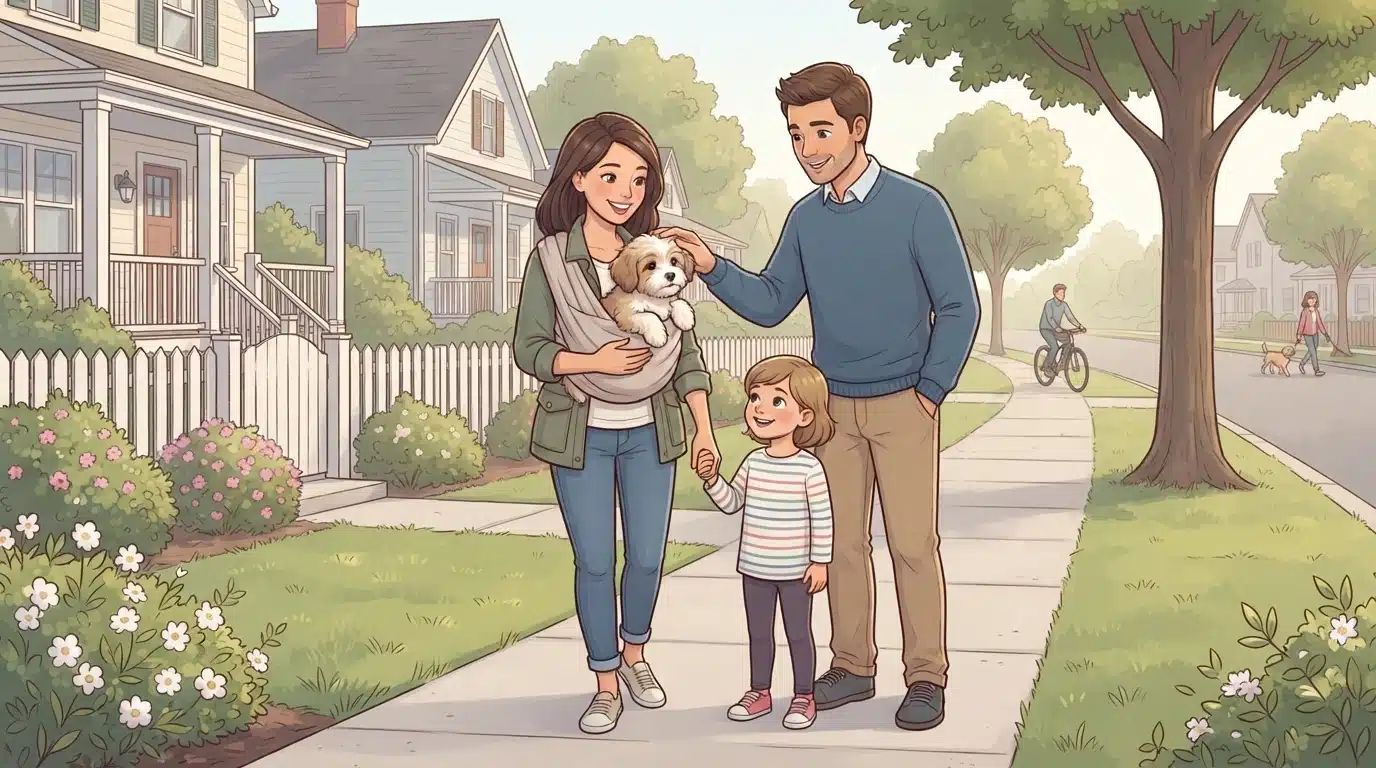
Short, happy outings now prevent fear later. Ten calm experiences beat one overwhelming trip, every single time.
Step 3: Weeks 10 to 12, Add the Wider World
By weeks 10 to 12, your puppy has usually had at least one round of vaccines. This is the window where you widen the circle. The AVSAB position statement supports socializing puppies before they are fully vaccinated, as long as they stay healthy and current on shots. Your vet can confirm your puppy is ready for short public outings.
Building a 15-minute outing habit
Start small. One 15-minute outing a day builds more confidence than one long trip on the weekend.
Pick calm places first. A quiet park bench, a pet-friendly hardware store aisle, or a shady patch outside the library all work. Let your puppy sit and watch. Sightseeing counts as socialization; not every outing needs play.
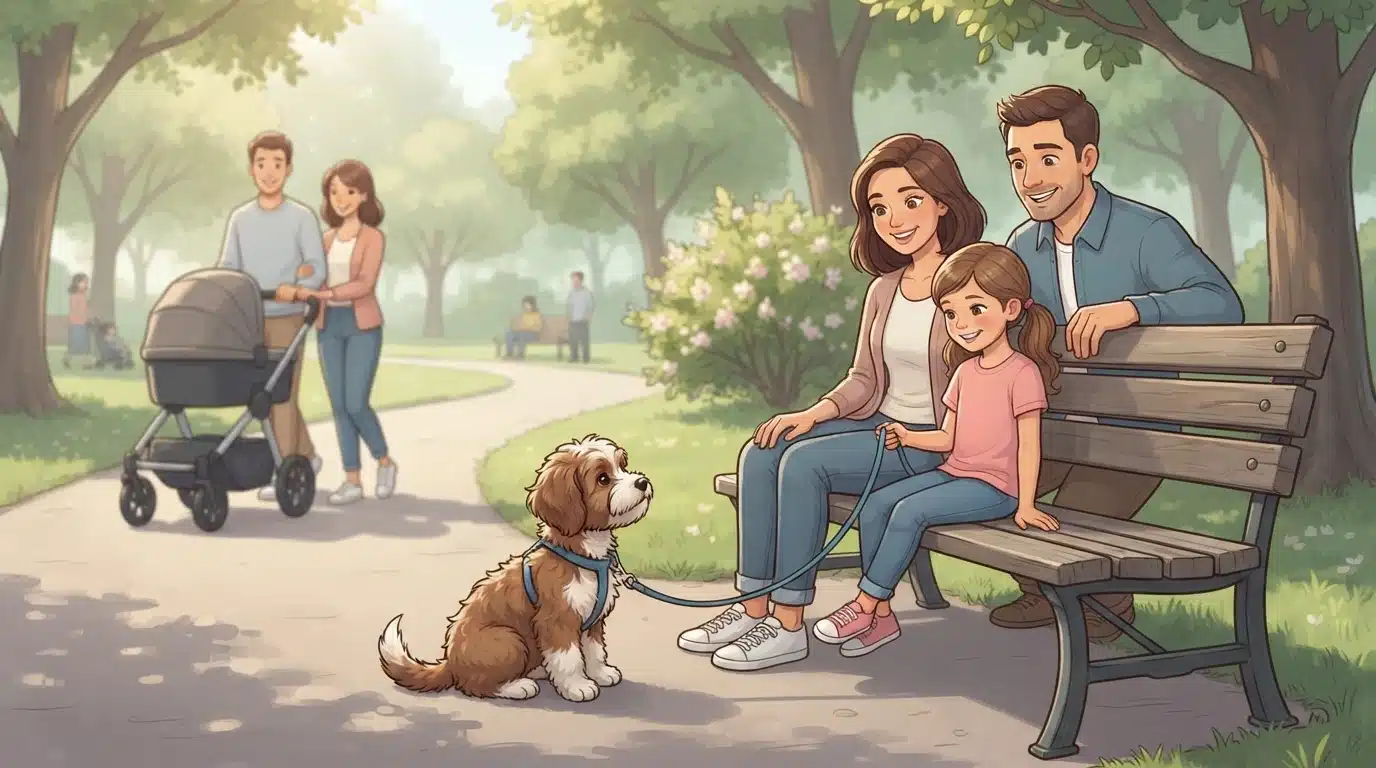
Vary the details each time. Different surfaces, sounds, speeds, and people give your puppy a library of normal experiences. Grass, gravel, a ramp, an automatic door, a person in a hat. Keep treats flowing and end before your puppy looks tired or worried. Short and happy beats long and hard.
Meeting new people and calm dogs safely
New people should follow one rule: let the puppy choose. Ask friends to crouch sideways, avoid staring, and offer a treat at your puppy’s level. You want your Havanese or Cavapoo to learn that strangers are safe and boring, not that everyone grabs at her.
Dog greetings are different. Pick calm, vaccinated adult dogs you know, not dog parks. Keep leashes loose, count three seconds, then move on. If either dog stiffens, simply walk away. Neutral is the goal.
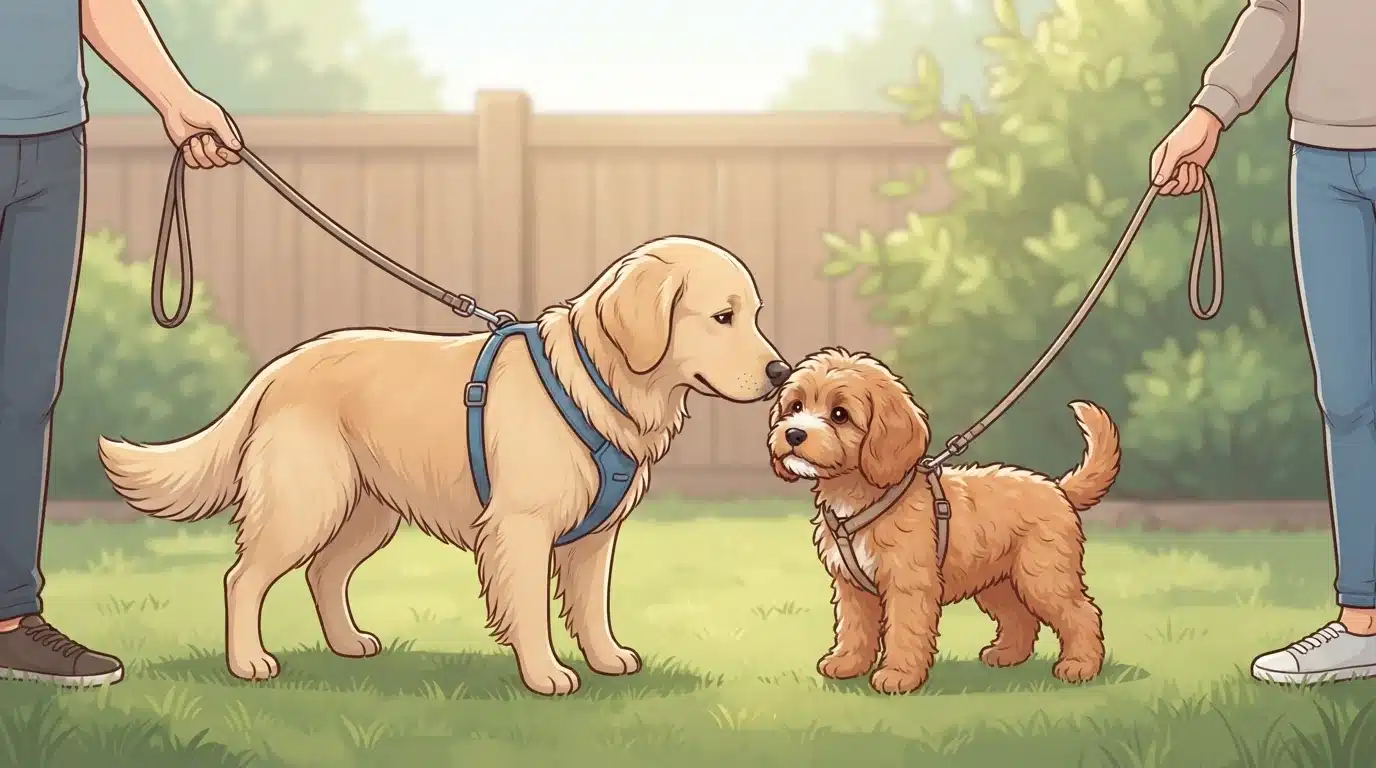
Step 4: Weeks 12 to 14, Layer Sounds, Surfaces, and Weather
By weeks 12 to 14, your puppy has the basics down. Now you build depth. The goal is simple: your puppy meets more variety, in more places, with calm confidence. Keep each new experience short and positive. End before your puppy gets tired or worried.
Sounds, surfaces, and weather checklist
Work through this list a few times each week. If your puppy startles, lower the volume or distance and try again with treats.
- Household sounds: vacuum, blender, dishwasher, washing machine, hair dryer, doorbell, phone ringing
- Street sounds: traffic, buses, motorcycles, sirens in the distance, leaf blowers, garbage trucks
- Odd sounds: thunder recordings at low volume, fireworks on video, dropped pans, clapping
- Surfaces: grass, gravel, wet pavement, sand, metal grates, cardboard, a wobbly cushion
- Weather: light rain, wind, puddles, sunshine, cold mornings, snow if the season allows
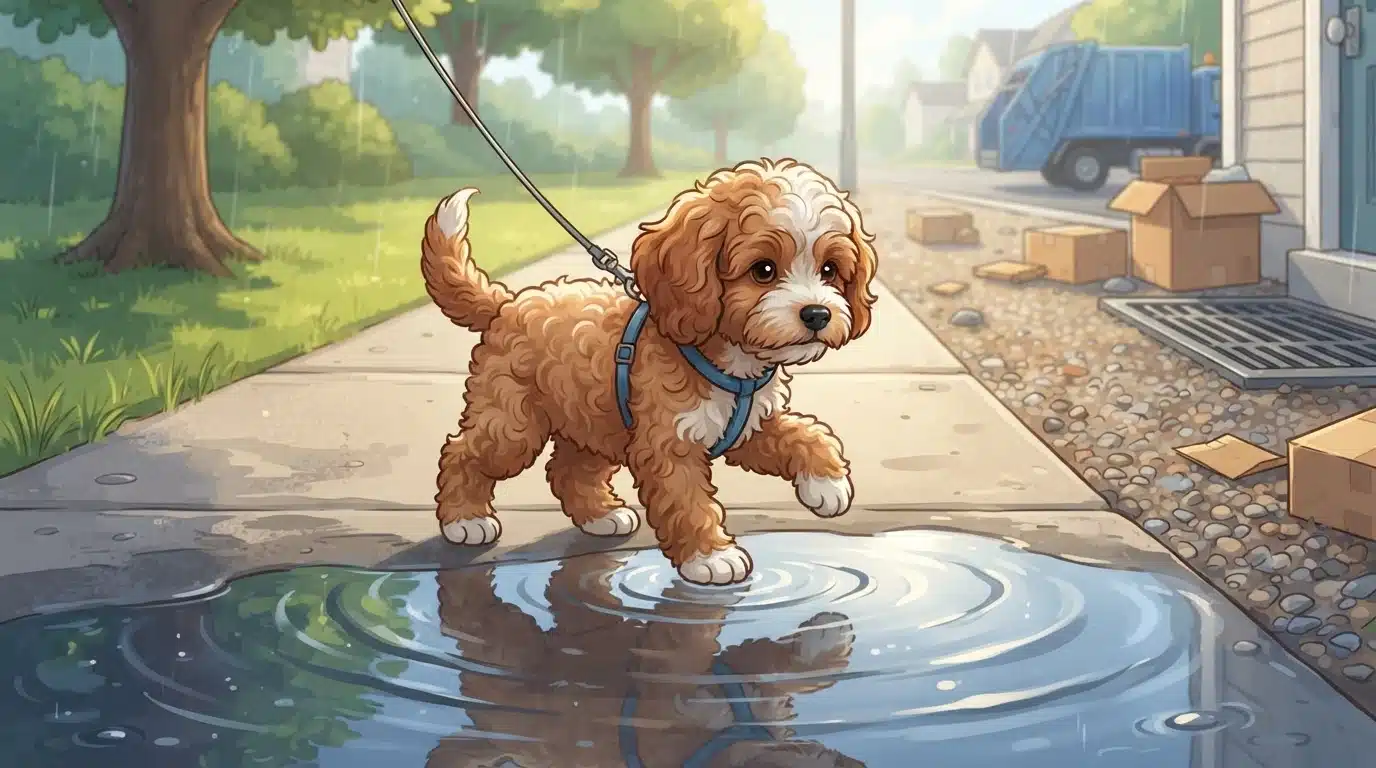
One rule helps most families: pair every new sound or surface with something good. Toss a treat, play a quick game, or offer a scratch under the chin. Your puppy learns that odd things predict good things.
Handling and body care practice
This window is also the best time to teach your puppy that being touched is safe. Havanese, Havapoo, and Cavapoo puppies need regular grooming for life, so start now.
Each day, spend two or three minutes on handling practice:
- Touch and gently hold each paw, then touch the nails
- Look in the ears and lift the ear flap
- Lift the lips and touch the gums
- Run a brush over the coat, including the belly and tail
- Pick your puppy up briefly, hold, and set back down
Follow each session with praise or a small treat. Then add the real tools: let your puppy hear clippers or nail trimmers without using them yet. If your breeder started desensitization before pickup, you will notice it here. Family-raised puppies often settle faster because this work began in the whelping box.
When you are ready for grooming supplies, our new puppy preparation tips cover the basics.
Step 5: Weeks 14 to 16, Lock In Resilience Before the Window Closes
The socialization window is closing, but your puppy is not done learning. Weeks 14 to 16 are about strengthening what you have built and fixing anything that still feels shaky.
Revisit any item your puppy worried about
Go back to your list. If your puppy flinched at the vacuum, balked at the car, or shied away from men in hats, now is the time to retry at an easier level. Set the scary thing farther away, lower the volume, or add a favorite treat. Keep sessions short and end on a win.
Fear periods can still pop up in adolescence, so watch for sudden worry about familiar things. If that happens, slow down rather than pushing through. Calm exposure beats forced contact every time.
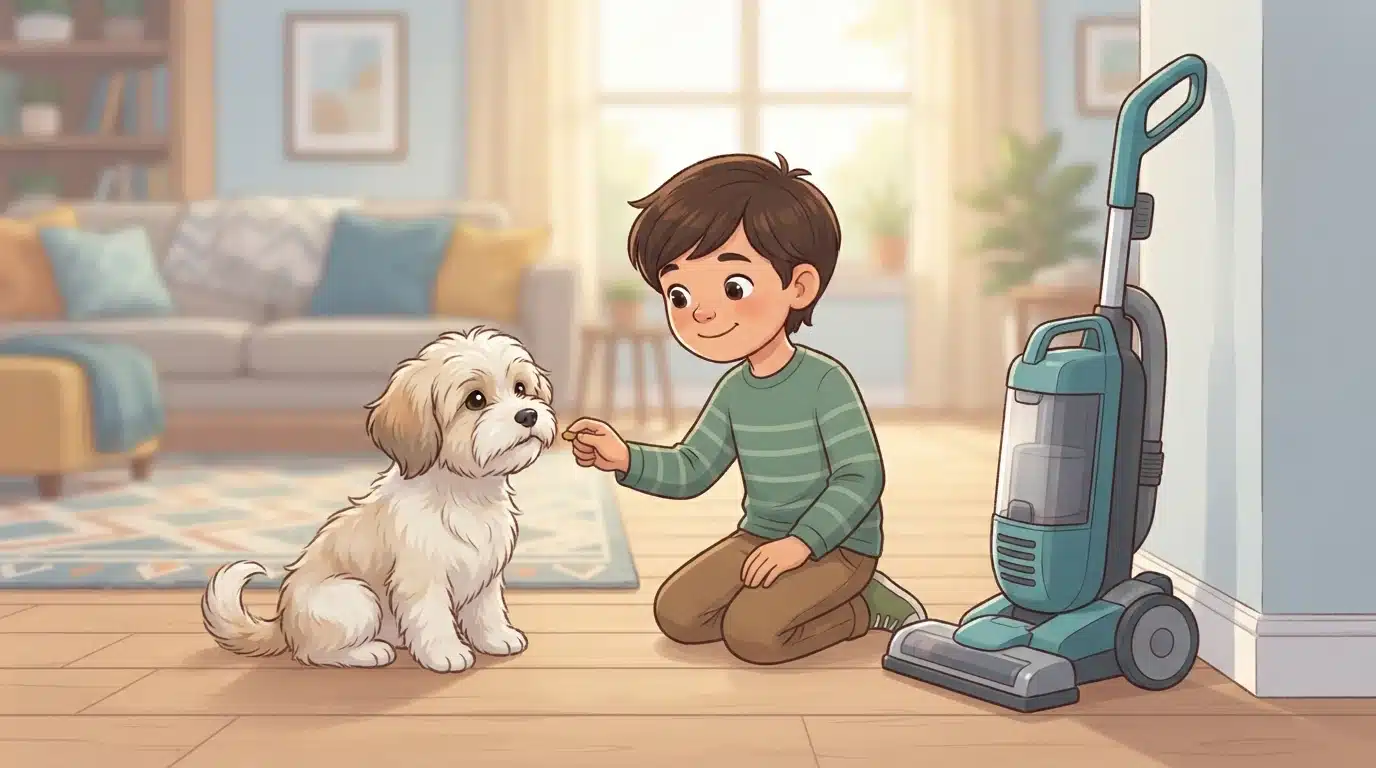
Warning: Never flood a worried puppy with the thing it fears. That teaches it the world is unsafe and can turn mild worry into lasting fear.
Track what you have actually done
Pull out the checklist you started at week 8. Count what is done and what is missing. Most families find two or three gaps, often things like riding in a crate, meeting a calm cat, or walking on different surfaces.
Schedule those gaps into the next two weeks. Simple beats elaborate: one new place, sound, or surface per day is plenty. By week 16, your Havanese, Havapoo, or Cavapoo should carry a solid foundation into adolescence, when steady habits matter most.
Step 6: Keep Socialization Boring on Purpose
The best socialization sessions often look like nothing happening. A puppy who watches joggers, hears a doorbell, and settles on a mat has learned more than a puppy who met five excitable strangers in one afternoon. Calm exposure builds a steady adult dog; overstimulation builds a reactive one.
Watch body language and keep sessions short
Learn to read your puppy before you plan an outing. Relaxed interest looks like a loose body, soft eyes, a wagging tail at spine level, and a willingness to sniff or approach. Stress looks different: yawning, lip licking, pinned-back ears, a tucked tail, scratching, or sudden sniffing at the ground. If you see those signals, increase the distance from whatever caused them.
End every session before your puppy fades. Five to ten minutes is plenty for an eight-week-old Havanese or Cavapoo, and two short outings beat one long one. Finish on a win, then let your puppy nap. Sleep is when experiences settle, so guard naps as carefully as you plan adventures.
Tip: If your puppy freezes or hides, do not push closer or hand out treats to “bribe” bravery. Step back until your puppy relaxes, then try again another day at an easier distance.
Build a calm default for the rest of year one
Socialization does not end at twelve weeks; it simply shifts from introductions to maintenance. Keep rotating through your checklist of sounds, surfaces, people, and handling each week, but make calm the goal. Ask for a sit before greetings. Reward settling on a mat while the household carries on around your puppy.
This steady rhythm is why family-raised puppies adapt so quickly in their new homes. Puppies like ours at Sage Puppies are handled daily from birth, so your job is less about building confidence from scratch and more about protecting the calm default your puppy already brings home.
Common Mistakes to Avoid
A few missteps come up again and again with new puppy families.
- Waiting too long. The socialization window closes fast. Waiting until your vet series is done wastes your puppy’s most open weeks.
- Flooding. Big crowds, loud parades or a full pet store on day one can backfire. Keep first exposures short and easy.
- Carrying everywhere. Small breeds are easy to tote, but puppies need safe ground time to explore, sniff and build confidence.
- Skipping handling practice. Touch paws, ears and mouths daily from the start, especially before grooming appointments.
- Forcing every interaction. Let your puppy watch from a distance when something feels big. Calm observation counts.
- Missing the handoff window. Ask your breeder what socialization already started, then continue it rather than starting over. Our family-raised puppy guide explains what to expect at pickup.
Slow and steady wins here. Small, positive repetitions build a steady adult dog.

A solid socialization plan works best when it starts with the right puppy. At Sage Puppies, every Havanese, Havapoo and Cavapoo is family-raised and gently handled from day one, so your first weeks together build on a calm, confident start. Ready to begin? Submit your application today.
Frequently Asked Questions
Q1: What is the best puppy socialization schedule by age?
Start gentle exposure at 3 weeks through the breeder, then daily new sights, sounds and safe people from 8 to 16 weeks. Plan one or two brief, positive outings or experiences per day during that window.
Q2: How do you socialize a family-raised puppy at home?
Invite calm visitors, play recorded sounds at low volume, handle paws and ears daily, and rotate surfaces like tile and grass. Keep each session short and pair it with treats so your puppy stays relaxed.
Q3: What is the critical socialization window for puppies?
The window closes around 12 to 16 weeks of age. Experiences before then shape your puppy’s comfort with people, dogs and new places for life, so early work matters most.
Q4: Can my puppy meet other dogs before vaccines are done?
Yes, with caution. Choose known, vaccinated dogs and avoid high-traffic dog parks. AVSAB supports early socialization when health risks are managed.
Q5: What if my puppy seems scared of something new?
Never force it. Increase distance, add treats and let your puppy watch from a comfortable spot. Short, calm repetitions build confidence faster than pressure.
Q6: How much socialization is too much?
Watch for yawning, lip licking or turning away. If you see those signs, end the session and rest. Two or three short positive experiences a day beat a long, tiring outing.
Conclusion
A socialization schedule works best when it starts before your puppy ever reaches your door. Breeders shape the critical socialization window from three to about fourteen weeks, so ask what litter experiences your puppy already has. Then keep the momentum going at home with short, positive exposures: new surfaces, sounds, gentle handling, and calm visitors, all paced before vaccinations allow full walks. Watch body language, keep every encounter kind, and pair new things with treats. Puppies raised in a family setting, like the Havanese, Havapoo, and Cavapoo litters at Sage Puppies, arrive with a head start. Your steady, patient follow-through turns that early foundation into a confident, well-adjusted companion for life.





