Quick Summary: A well-bred small breed puppy like a Havapoo or Havanese usually costs more up front ($3,500-$4,500) than a large rescue dog, but spends far less over a lifetime. Small dogs eat a fraction of the food, pay smaller medication doses, and fit cheaper crates, though they rack up $500-$900 in yearly grooming and more frequent dental cleanings. Lifetime totals in the article land near $19,000-$32,000 for small breeds versus $35,000-$58,000 for large dogs, with the gap driven mostly by food, boarding, and weight-based vet charges.
A well-bred Havapoo often costs more up front than a large rescue dog, and a lot less over its lifetime. That surprise catches many first-time families off guard. Most breeder pages list a price, then go quiet about the grooming, food and vet bills that follow. Puppy adoption expenses do not end at day one; they shape the next ten to fifteen years. This comparison walks through every bucket of puppy adoption expenses, from food and dental care to boarding and emergencies, so you can match the dog to your real budget. If you want to see current pricing as you read, our pricing and reservation page and available puppies lay it out plainly.
Small Breed Puppy vs Large Dog Ownership: At a Glance
| Small breed puppy adoption | Large dog ownership | |
|---|---|---|
| Upfront purchase | $50-$500 rescue fee, or $1,500-$4,500 from a breeder | $50-$400 rescue fee, or $1,000-$3,500 from a breeder |
| Monthly food cost | About $20-$55 for a 10-20 lb adult | About $70-$120 for a 60-80 lb adult |
| Annual vet care | Around $1,390-$1,830 routine, plus $300-$600 dental | Around $2,450-$3,320 routine, with higher surgical risk |
| Grooming and coat care | Every 6-8 weeks; $55-$90 per visit plus home brushing | Every 8-12 weeks; $75-$130 per visit for big dogs |
| Lifetime cost (10-14 yrs) | Roughly $19,000-$32,000 total | Roughly $35,000-$58,000+ total |
| Best fit for | Apartments, first-time owners, families wanting a long-lived companion | Homes with space, active owners, families wanting a sturdy playmate |
How Small breed puppy adoption and Large dog ownership Compare
Small breed puppy adoption
A 7-25 lb companion puppy, whether a Havanese, Havapoo, Cavapoo or a similar small breed, can come from a breeder or a rescue. It suits apartments, first-time owners and families who want a long-lived companion. Puppy adoption expenses run lower month to month, but steady preventive care and grooming add up.
Key strengths
- Lower food and supply needs
- Longer typical lifespan
- Easier to travel and board
Large dog ownership
A 50-90 lb dog, such as a Labrador, Golden Retriever, Standard Poodle or German Shepherd, brings bigger appetites and higher surgical costs. It fits homes with space, active owners and families wanting a sturdy playmate. Short coats often mean fewer grooming trips, which offsets some costs.
Key strengths
- Lower grooming frequency for short coats
- Sturdier for rough play
- Often lower upfront purchase price
A small breed puppy often carries the biggest price tag on the very first day. That surprises buyers who assume small dogs are the budget choice. The puppy itself, the starter gear, and the first vet visit land in the same week, so the upfront number matters.
What the breeder purchase price actually covers
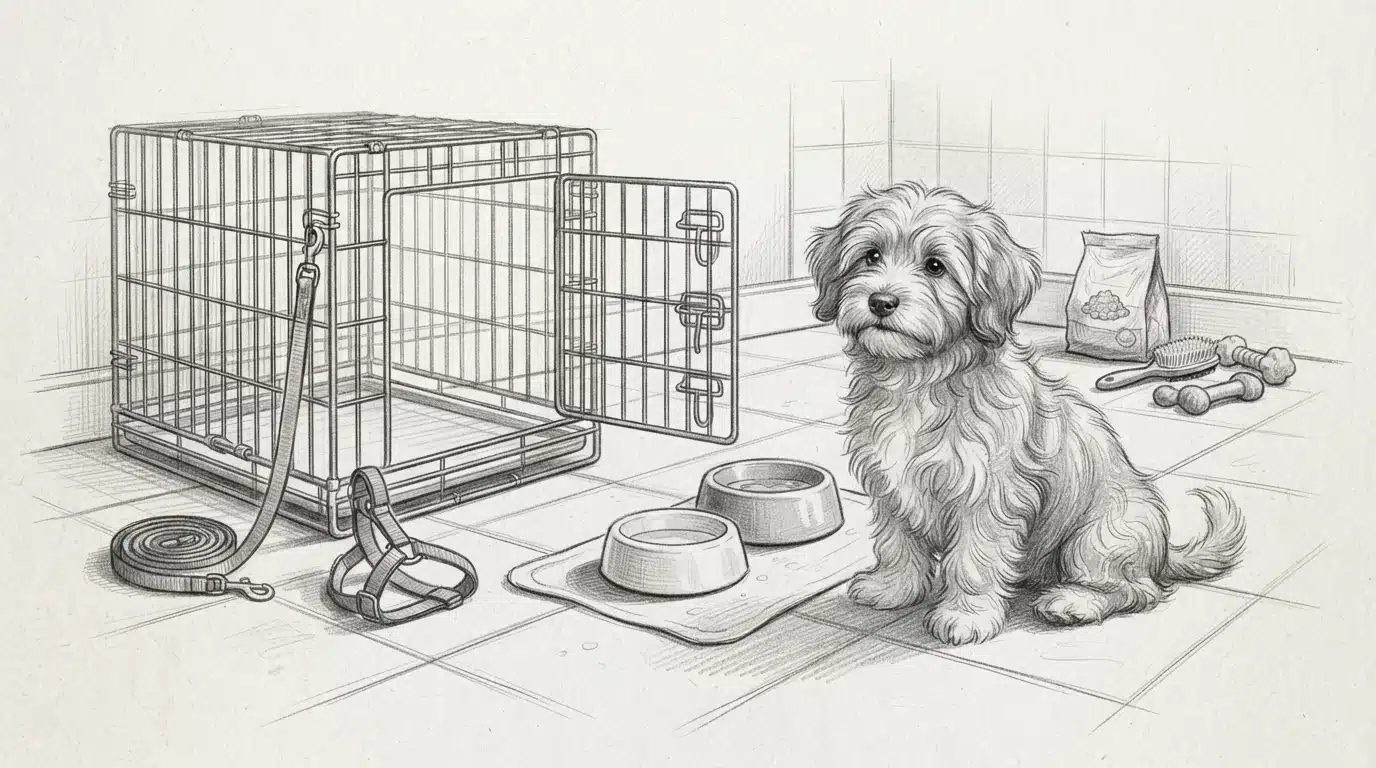
A well-bred Havanese, Havapoo, or Cavapoo puppy typically costs more than a large-breed puppy from a similar program. At Sage Puppies, our range is $3,500 to $4,500, which is one honest data point among many. That price reflects real work: health testing of the parents, prenatal care, whelping support, early socialization, first vaccinations, deworming, and the microchip. Smaller litters mean each puppy carries more of that cost. You are also paying for careful pairing and early handling, which shape the dog you live with for years. You can see how our pricing works on the pricing and reservation page. Budget another $300 to $500 for a crate, bowls, a harness, toys, and food before the puppy arrives.
Rescue vs breeder: how the upfront math shifts
Adoption flips the script. Most shelters charge $50 to $500, and that fee usually covers spay or neuter, vaccines, and a microchip. The catch is predictability: mixed adult rescues can be wonderful, but you may not know the breed mix, health history, or early care. A breeder purchase costs more on day one and buys you documented parents and a known start. Compare paths using our guide on choosing a small breed puppy for your home.
Food and Everyday Supplies: Where Size Quietly Doubles the Bill
Upfront price gets all the attention. Food is where size keeps charging you, month after month, for a decade or more.
Kibble and treat volume by weight
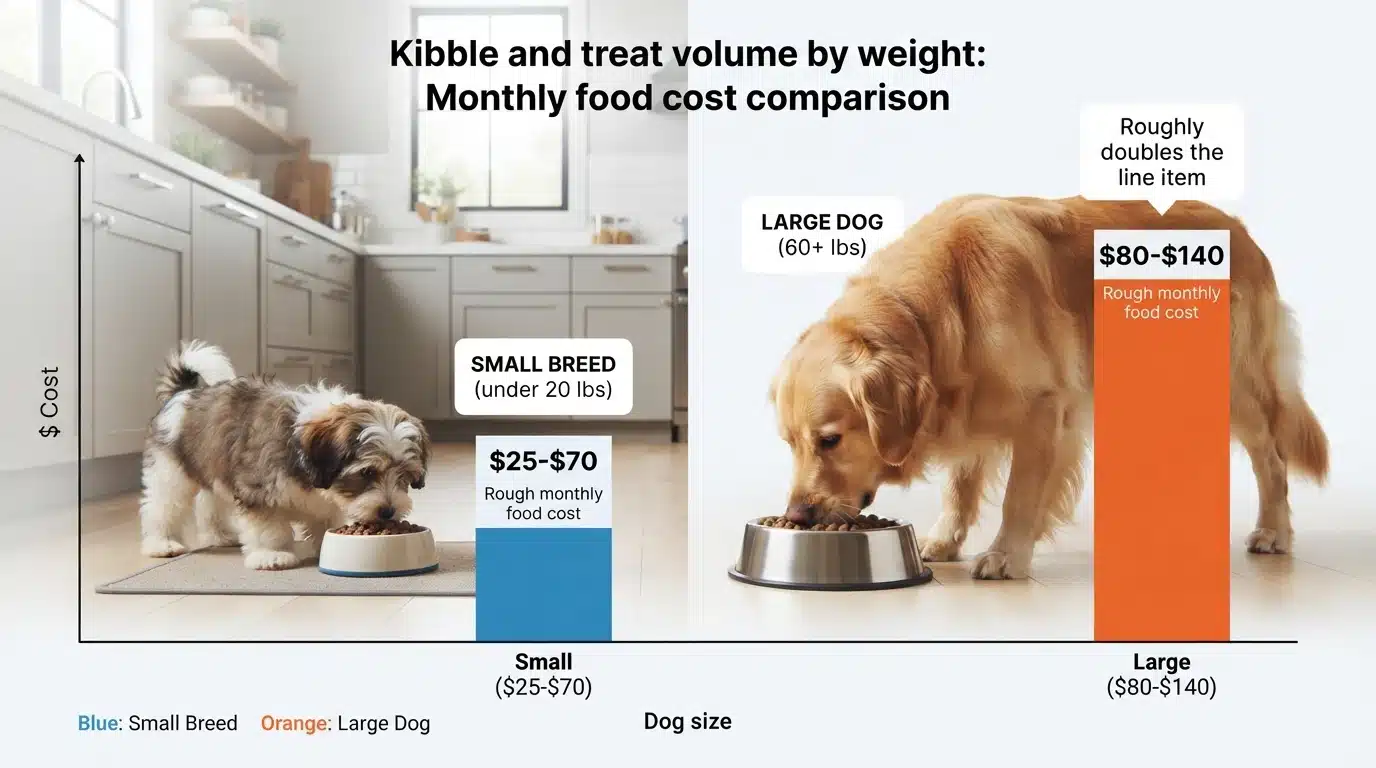
A big dog simply eats more. A 70-pound Labrador can go through 30 pounds of kibble a month; a 10-pound Havanese may need 5 or 6. That math shows up fast. The AKC puts average annual costs at $3,321 for giant dogs versus $1,831 for small dogs, and food is a major driver of the gap. Rover’s figures land in a similar place: about $1,111 to $2,870 per year to feed a medium-to-large dog, with large breeds at the high end. Treats scale the same way, so a bigger dog roughly doubles this line item every single year.
| Dog size | Rough monthly food cost |
|---|---|
| Small (under 20 lbs) | $25-$70 |
| Large (60+ lbs) | $80-$140 |
Beds, crates, toys and replacement costs
Size taxes everything else too. A large-breed crate costs two to three times more than a small-dog crate, and an XXL bed can run $100 or more. Chew toys for a powerful jaw disappear in days, while a Havanese’s plush toy lasts months. Leashes, harnesses, and even replacement bowls cost more in large sizes. None of these are huge alone, but across 12 years the small-dog savings quietly add up to thousands. If you’re still weighing sizes, our guide to compact homes and small puppies covers how little space and gear the little ones really need.
Veterinary Care: Routine Visits Are Cheaper, But Emergencies Are Not
Here’s the surprise with vet bills: the routine stuff doesn’t differ much by size. Vaccines, wellness exams and parasite preventives cost about the same for a Havanese as a Labrador. Where size really shows up is dose-based products and emergency surgery, which scale with weight.
Preventive care and parasite control
Most clinics charge one exam fee, then adjust for weight. A puppy series runs three or four visits: core vaccines, a spay or neuter, and a microchip. Heartworm and flea preventives are dosed by body weight, so a 10-pound puppy pays a fraction of what a 90-pound dog pays, often $8 to $15 a month versus $20 to $30. Dental cleanings are where small breeds quietly win, since their own mouths still need care. Some buyers compare what’s included when reserving a puppy before budgeting for year-one vet visits.
Emergencies large dog owners should plan for
Emergency medicine charges by weight. A bloat surgery on a deep-chested large breed can run $5,000 or more. Cruciate ligament repair, common in bigger dogs, often costs $3,000 to $7,000 per knee. Even routine surgeries cost more when a bigger body needs more anesthesia.
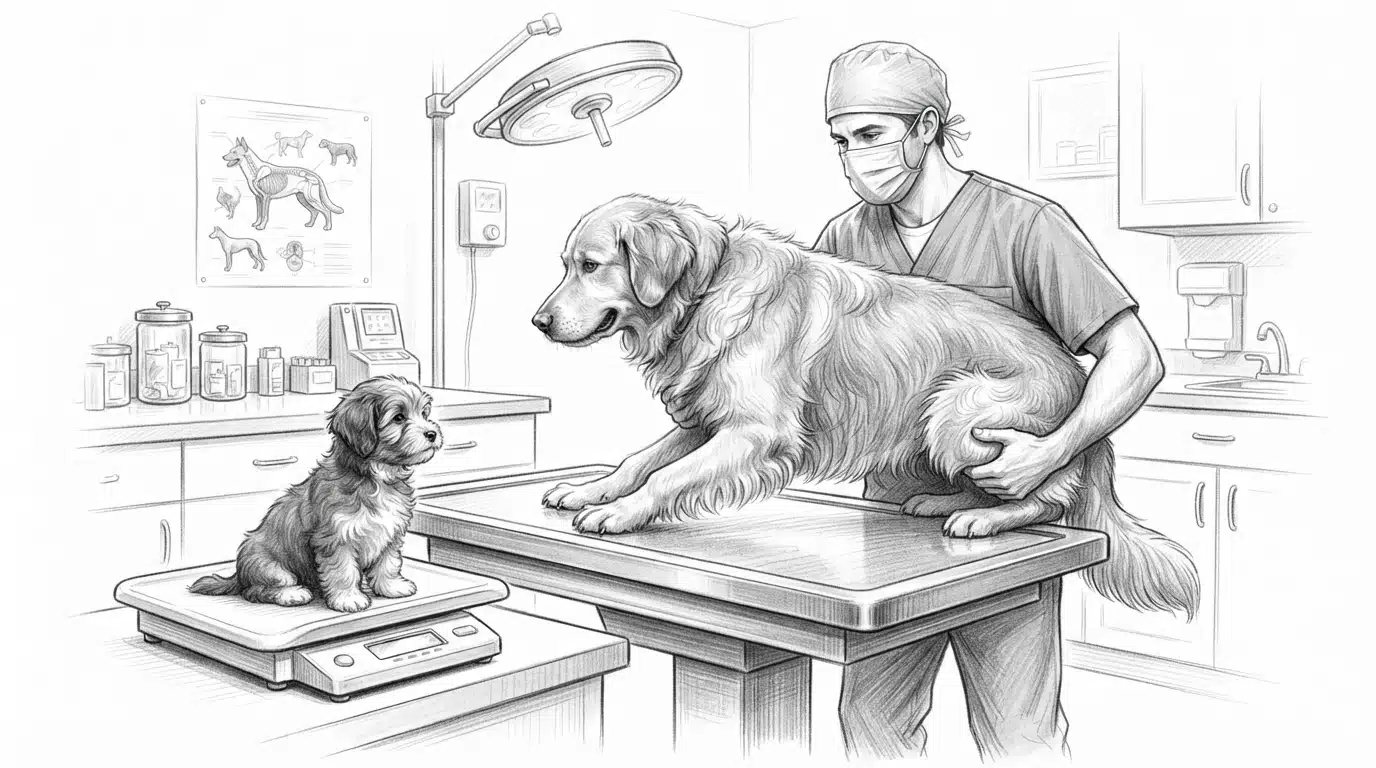
Plan a pet emergency fund of $1,500 to $3,000 no matter the size, but budget toward the high end with a large dog. Pet insurance premiums run roughly $30 to $70 monthly, and large breeds sit at the top of that range. Small breed puppies like Havanese, Havapoo and Cavapoo still break bones from jumps off the couch, so skip the false economy and keep coverage either way.
Dental, Grooming and Preventive Maintenance
Dental cleanings and anesthesia: the small-breed tax
Small dogs win on food but lose on teeth. Crowded little jaws trap plaque faster, so small breeds need professional cleanings more often, sometimes every year instead of every two or three for a large dog. A routine cleaning under anesthesia usually runs $300 to $700, and it climbs past $1,500 once X-rays and extractions enter the picture, according to PetMD’s cost breakdown.
Because the anesthesia, bloodwork and X-rays are billed the same for any size dog, that per-cleaning price hits small breeds harder per pound. Over a 15-year life, expect several of these. The fix is cheap by comparison: brush a few times a week and use dental chews, and many owners stretch the gap between cleanings to two or three years.
Coat care: visits per year and per-visit price
Havanese and doodle coats grow continuously, so they need a full groom every four to eight weeks. That is six to ten visits a year at roughly $60 to $100 each, or $500 to $900 annually. Add daily brushing at home or mats form fast, especially behind the ears and under the collar.
Large short-coated dogs need almost none of this. A bath and nail trim a few times a year keeps them fine.
Budget grooming and dental as a pair: together they often add $1,000+ a year for a small long-coated breed, the single biggest recurring gap you control with home care.
Training, Boarding and Travel: Costs That Scale With Size Too
Size quietly shapes these bills too, just less dramatically than food or vet care.
Boarding, daycare and pet-sitting by size
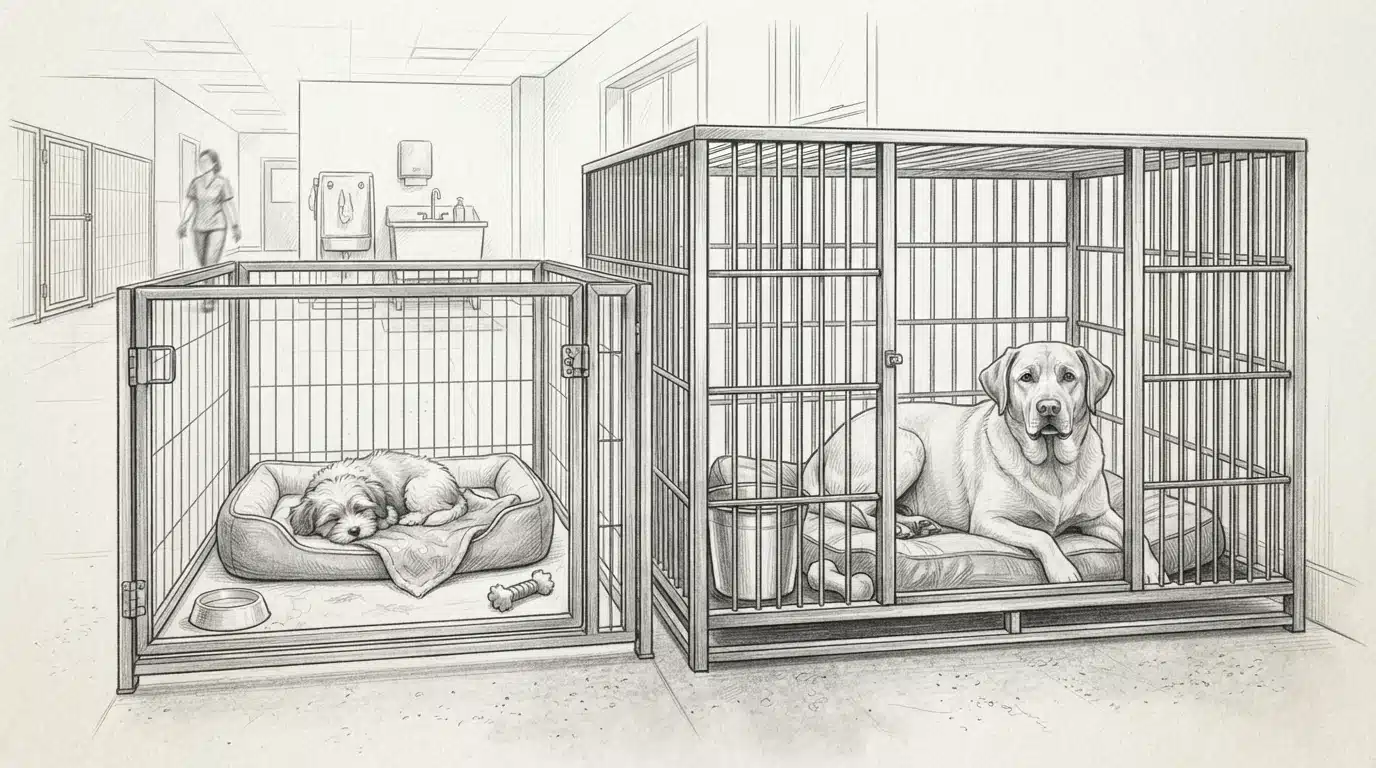
Most boarding kennels and daycare centers price by size and weight, not just by day. A small Havanese or Havapoo often lands in the lowest rate tier, while a large dog pays more for a bigger run and more handling time. Expect roughly $25 to $50 per night for small breeds and $40 to $75 or more for large dogs in many areas. Pet sitters charge the same way; a small dog is easier to lift, walk and transport. That gap of $15 to $30 per stay adds up fast if you travel several times a year.
Training, day-to-day travel and gear
Group puppy training classes usually charge one flat rate per dog, so a Havanese puppy pays the same as a Great Dane. Private lessons and board-and-train programs are the exceptions; large breeds often need extra sessions for pulling and strength. Travel also tilts in small dogs’ favor: most airlines only allow small pets in the cabin. Gear closes the loop. Crates, harnesses, beds and even doses of flea and tick prevention all cost more as size climbs, so the savings keep arriving year after year.
Lifetime Math and Hidden Buckets Most Buyers Forget
The Rover and AKC lifetime numbers, honestly read
The sticker price is the smallest part of the bill. Rover’s 2026 numbers put lifetime care at about $39,350 for a medium dog, ranging from roughly $19,840 for a small breed up to $58,875 for a large one, according to Rover’s report. Older AKC figures show about $2,100 in one-time setup costs and $2,500 per year after that.
Read those honestly. Averages hide breed, size and region, and a large dog eats far more over the same lifespan. But big dogs live shorter lives, so per-year cost matters more than the total. Either way, a small breed’s lower food and dose-sized vet bills narrow the gap that a higher puppy price seems to open.
Buckets nobody budgets for until it is too late
Four buckets catch new owners off guard:
- Dental care. Small breeds build tartar fast, and a professional cleaning under anesthesia often runs $500 to $1,000.
- Grooming. A Havanese or Havapoo needs a full groom every four to six weeks, roughly $70 to $100 each visit, for a decade or more.
- Boarding and daycare. Family trips add up quickly at $40 to $75 per night.
- Emergencies. One surgery or foreign-body scare can top $3,000, so insurance at $30 to $60 a month earns its keep.
Tip: Budget about $200 a month for care beyond food, and the surprises shrink.
These repeat every year, which is why the lifetime number dwarfs the puppy price you started with.
Which Should You Choose: Small Breed Puppy or Large Dog?
Pick a small breed puppy if…
Your space, budget, and daily routine fit a compact companion. Small breeds like Havanese, Havapoos, and Cavapoos cost less to feed, need smaller doses of medication, and often live longer, which spreads lifetime care costs across more years. They adapt well to apartments, travel easily, and their grooming bills stay predictable with a regular schedule. First-time owners usually find them easier to handle on walks and at the vet. If upfront price matters most, a small breed puppy typically costs more to buy but less to keep. Browse current litters on the available puppies page to compare.
Pick a large dog if…
You have the room, the vehicle, and the budget for bigger numbers. Large dogs eat more every month, so food alone can double or triple your annual cost. Vet care, boarding, and equipment all scale up with size, and joint issues like hip problems add real expense as they age. They usually need more exercise and training time, too. But the trade-off can be worth it: many large breeds are calm at home, gentle with kids, and wonderful for active families. If that life fits yours, the higher lifetime cost is simply part of the plan.

Now that you can see the real lifetime cost gap, the next step is simple: find a small breed puppy that fits your budget and your family. Meet our current Havanese, Havapoo and Cavapoo litters at Sage Puppies, then start your application when a pup feels right.
Frequently Asked Questions
Q1: How much does a small breed puppy cost to adopt?
Well-bred Havanese, Havapoo and Cavapoo puppies typically range from $3,500 to $4,500 from a boutique program like Sage Puppies. Adoption or rehoming fees at rescues usually run $200 to $800 instead.
Q2: What is the lifetime cost of owning a small dog vs large dog?
Small dogs often cost $17,000 to $25,000 over a lifetime; large breeds reach $30,000 to $45,000. The gap comes mostly from food, medication dosing, boarding and gear sized for bigger frames.
Q3: Are small breed puppies cheaper to maintain than large dogs?
Yes, usually by $500 to $1,500 a year. They eat less, need smaller doses of preventatives, and fit cheaper crates and beds. Grooming is the exception, since doodles and Havanese need regular professional trims.
Q4: Why do small breed puppies sometimes cost more upfront?
Because responsible breeders produce small litters and invest heavily in health testing, prenatal care and early socialization. Low-volume programs rarely break even, so the price reflects quality rather than markup.
Q5: Should I budget for pet insurance with a small breed?
Worth it. Small breeds are prone to dental disease and luxating patellas, and insurance runs $30 to $50 monthly. Enrolling while your puppy is young locks in lower premiums before any conditions appear.
Q6: What hidden costs catch first-time small dog owners off guard?
Professional grooming every four to eight weeks, routine dental cleanings under anesthesia, and training classes. Budget $100 to $150 monthly for the first year beyond food and basic supplies.
Final Thought
The sticker price only tells part of the story. A small breed puppy often costs more up front, but lower food bills, modest grooming and smaller medication doses narrow the gap over a lifetime. Large dogs bring bigger food, boarding and joint-care costs, so neither size is automatically “cheaper.”
What matters most is matching the dog to your budget, space and daily routine. Run the numbers for ten to fifteen years, not just day one, and keep an emergency fund aside. Do that honestly, and whichever breed you choose, you will be ready for the real cost of ownership.