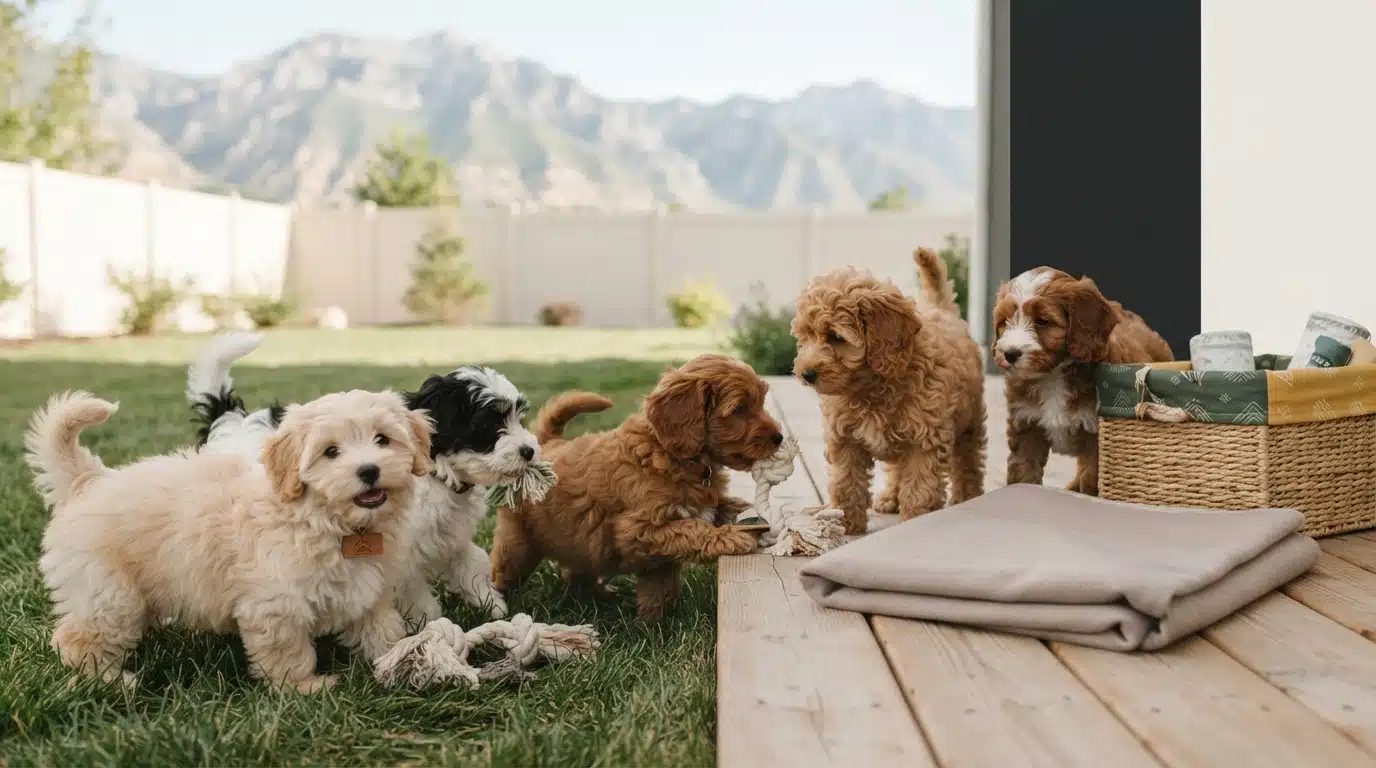
Quick Summary: Utah families choosing between a breeder and a shelter are really weighing two different starting points: a $3,500-$4,500 health-tested small breed puppy like a Havapoo from an in-state program such as Sage Puppies, or a $60-$500 mixed-breed or older dog from a local shelter like Best Friends. The breeder path delivers documented parent health screening, known adult size, and direct post-pickup support, while shelter adoption is faster, cheaper, and covers vaccines and spay or neuter but leaves breed, size, and history mostly unknown. Both paths are valid, and the right call depends on whether a household needs predictability or simply a lower-cost companion.
Search “puppies Utah near me” in 2026 and you will find two very different answers. A $150 shelter puppy from Best Friends in Salt Lake City and a $3,500 to $4,500 health-tested Havapoo from a small in-state breeder are not competing products. They are two different doors into dog ownership, and the right one depends on what your household needs over the next fifteen years.
Most online comparisons treat this as a debate. It is a decision, and Utah families, many of them first-time small-dog owners, deserve a clear way to make it. This guide walks both paths across the things that shape daily life with a dog: real cost over time, health transparency, how predictable size and temperament will be, age at adoption, support after pickup day, and the Utah context, from local shelter intake to verified breeder practices. As a small Utah program that breeds Havanese, Havapoos and Cavapoos, I will respect both choices and help you pick the right one.
Buying a Puppy from a Utah Breeder vs Adopting from a Local Utah Shelter: At a Glance
| Buying from a Utah breeder | Adopting from a local Utah shelter | |
|---|---|---|
| Upfront cost in Utah | $3,500 to $4,500 for a small-breed companion puppy such as a Havanese, Havapoo, or Cavapoo, with separate guardian and reservation scopes | Roughly $60 at South Ogden City, $100 to $150 at Best Friends Salt Lake City, up to about $500 at Utah Humane |
| Predictability of adult size and breed | High; pedigree, parent weights, and breed standard are documented | Low; many are adolescent mixed-breed dogs with limited history |
| Health screening and vet records | Documented parent health testing, vaccine and deworming history, and a written contract | Intake exam, spay or neuter, rabies and core vaccines, microchip; behavioral notes only |
| Age at adoption or pickup | Typically 8 to 12 weeks, after early socialization in the breeder’s home | Usually older puppies, adolescents, or adults; true eight-week-old small-breed puppies are rare |
| Time to bring a puppy home | Often weeks to months on a waitlist, matched by application | Often same week, after application, interview, and meet-and-greet |
| Post-adoption support | Direct line to the breeder for questions, contract-based health guarantees, and return or rehoming options | Varies by organization; behavior helplines, return options, and community resources where offered |
How Buying from a Utah breeder and Adopting from a local Utah shelter Compare
Buying from a Utah breeder
This is a private purchase from a small, in-state breeder who raises one to three companion breeds at home and places puppies at eight to twelve weeks with records and a contract. It suits families who want predictable adult size, documented health testing, and breeder support. Search “puppies Utah near me” and you’ll find waitlists, so apply early.
Key strengths
- Predictable breed and adult size, backed by pedigree and parent weights
- Written contract, vaccine history, and parent health screening
- Ongoing breeder guidance and rehoming options
Adopting from a local Utah shelter
This path gives a home to a dog already in care at a Utah municipal or nonprofit shelter, with fees covering spay or neuter, vaccines, and a microchip. It fits families open to older puppies or mixed-breed dogs and a fast timeline. Searching “puppies Utah near me” rarely surfaces shelter puppies, since true eight-week-old small breeds are uncommon here.
Key strengths
- Lower upfront cost, often $60 to $500
- Same-week placement is possible after a meet-and-greet
- Spay or neuter, microchip, and core vaccines usually included
What Utah Families Are Up Against: The Starting Picture in 2026
If you are choosing between a breeder and a shelter right now, you are really comparing two different starting points. Here is what the Utah landscape actually looks like.
Utah shelter intake and adoption volume today
Utah shelters took in roughly 60,000 dogs and cats in 2023, and about half of those were dogs, according to data compiled by Shelter Animals Count. Most of those dogs are adults or mixed breeds of unknown background. Puppies do show up, but they are often claimed within days, and breed-specific puppies like a Havanese or Cavapoo are essentially unheard of on the adoption floor. Waitlists and quick turnaround are the norm.
The realistic price range for a Utah breeder puppy
A small-breed companion puppy from a Utah breeder typically runs $2,500 to $5,000. Boutique programs like Sage Puppies sit in the $3,500-$4,500 range, which covers health testing, early socialization, and hands-on matching. You can browse current puppies for sale in Utah to see what that looks like in practice.
Why the two price tags are not really comparable
The shelter’s adoption fee, usually $50 to $300, covers spay or neuter, vaccines, and a microchip. A breeder’s price covers a known pedigree, health-tested parents, and early training. You are not paying more for the same dog. You are paying for different, and often unknowable, starting information.
Predictability, Health Transparency, and What You Actually Know on Day One
The honest answer: a breeder purchase tells you far more up front. An adoption gives you a wonderful dog and fewer early answers. Both paths deserve a clear-eyed look.
What a documented breeder health picture looks like
A responsible breeder hands you paperwork on day one: parent health testing results, a written vet exam, vaccination and deworming dates, and often a health guarantee. You can meet the mother dog and see how she moves and behaves. With small breeds like a Havanese or Cavapoo, that history matters. Ask any breeder for these documents before you pay, and read the safe buyer tips for Utah puppy buyers first.
What a shelter intake record covers, and what it does not
Shelter records usually show what happened after arrival: a basic vet check, core vaccines, deworming, and a spay or neuter date. That is real care, but it rarely includes parent history, breed background, or early health notes from the first eight weeks. Dogs are often surrendered with no paperwork at all. You adopt the dog in front of you, which many families do gladly, knowing the gaps.
Predictability of adult size and temperament
Predictability is the breeder’s real advantage. Purpose-bred small breeds have known adult weight ranges, coat types, and typical temperaments, so a family planning around an apartment, allergies, or young kids can choose with confidence. Shelter puppies are usually mixed breeds of unknown origin, so adult size is an educated guess. A 12-pound puppy at ten weeks may reach 40 pounds, or stay small. Ask staff what they know; some records or vet estimates help.
Age at Adoption, Timeline, and What Life Looks Like the First Six Months
The eight-to-twelve-week window on the breeder path
Responsible small-breed breeders keep puppies with the mother until 8 to 12 weeks. Those extra weeks matter. Littermates teach bite control, and mom teaches calm. At Sage Puppies, puppies go home no earlier than eight weeks, often a bit later for tiny Havanese and Cavapoo pups. You will usually know your go-home date weeks ahead, which makes planning work, school and vet visits simple. Our new puppy guide walks through that first-week setup.
What “adopt a puppy” usually means in Utah
Utah shelters and rescues list puppies of many ages. Some arrive as young strays at six or seven weeks, though most adoption groups prefer homes after ten weeks when litters exist. The bigger surprise is timing: young, small-breed puppies are rare in shelters here, and litters often adopt within days of posting. Families hoping for a specific breed or age usually join waitlists, so the actual wait can stretch weeks or months. Mixed-breeds and adolescent dogs come home fastest.
Time to bring a puppy home
| Path | Typical wait | Puppy age at home |
|---|---|---|
| Boutique breeder | Weeks to a few months | 8-12 weeks |
| Utah shelter or rescue | Days to months, breed-dependent | 6 weeks to 6 months |
Plan either way for crate training, vaccination visits and the first-night crying. It fades faster than you expect.
Cost Over the First Year, Lifetime Cost, and the Real Budget Picture
First-year cost on each path
The gap is real, but it is smaller than the sticker price suggests. Shelter puppies in Utah usually carry adoption fees of $50 to $500, and Utah adoption fees often include spay or neuter, a microchip and first shots. A breeder puppy from Sage Puppies runs $3,500 to $4,500, then add supplies, vet visits and food for both paths.
| Cost | Shelter adoption | Sage Puppies |
|---|---|---|
| Upfront | $50-$500 | $3,500-$4,500 |
| Year one extras | $1,000-$1,500 | $1,000-$1,500 |
Lifetime cost envelope for a small breed
Small breeds cost less to feed but live longer. Plan on $12,000 to $18,000 over a 13-to-15-year life, including routine vet care, food, grooming and a dental cleaning or two. Pet insurance softens surprises; expect $300 to $600 a year for a young Havanese or Cavapoo. The big number is age eight and beyond, when care ramps up. Check our pricing and reservation details before you set a total budget.
What the upfront gap really buys
The extra thousands buy known parentage, early socialization and a puppy matched to your home rather than a waitlist lottery. That is a fair trade for some families and not for others. If a Sage puppy sounds right, start with current availability, then submit an application.

Support After Pickup Day: Who You Call at 11 p.m.
A puppy gets sick or stops eating at night. Who answers your call depends on where you got the puppy.
Direct breeder support and return terms
A small local breeder knows your puppy’s history, so many will answer a late text or call. Ask before you pay: How long do you take a puppy back? Sage Puppies offers a clear application and owner contact, so you always know who is on the other end. With a big broker or an out-of-state seller, support often ends at the transaction.
Shelter post-adoption resources
Shelters and rescues usually cannot offer one-on-one phone help. What they do provide is a network: adoption counselors, handouts, and often a list of partner vets. Some rescues do check in, but the depth varies widely. If you adopt, ask the staff early which vet partners and training classes they recommend. Then save those numbers before pickup day, because staff turnover is real and the person you meet may not be there in a month.

What first-time owners actually use
Most new owners lean on three things in the first month: their vet’s emergency line, a local trainer, and a breeder or rescue contact. A vet relationship matters more than any return clause, so book a new-puppy exam within 48 hours of pickup or adoption. That exam gives you a trusted 11 p.m. number, whichever path you chose.
Ready to talk through what life with a puppy looks like first? Start an application and ask us anything.
Ethics, Welfare, and the Bigger Picture for Utah Dogs
Where the adopt-vs-shop argument actually lives
The real debate is not about whether families deserve a puppy. It is about how that puppy came into the world. Bad actors exist on both sides: puppy mills that breed constantly in poor conditions, and casual “accidental litter” sales with no vetting at all. Rescues and shelters in Utah do genuine work rehoming dogs, so the argument only makes sense when you compare responsible sources against each other, not worst cases.
What responsible breeding looks like in Utah
Look for small programs that breed rarely, raise puppies in the home, and can walk you through health testing for both parents. Ask to see where the puppies live and meet the mother if it is local. Ethical breeders will also interview you. If someone offers any breed, any time, with no questions asked, that is your answer.
Why the choice is usually about the household, not the dog
A shelter dog can be a wonderful match, especially for patient families open to an adult or mixed history. A purpose-bred puppy fits families who need predictability: known size, temperament, and grooming needs. Neither path is more loving. The kindest choice is the honest one for your home.
Which Path Is Right for You in Utah, and When to Consider Each
Adoption tends to fit when the fit is clear. If your family is flexible on breed, age and coat, a shelter or rescue puppy can be a wonderful match. It also fits when you want to give an older puppy or a mixed-age dog a second chance, and you can meet the dog in person first.
A breeder purchase tends to fit when predictability matters. If you need a known small breed, a health-tested background and a puppy raised for companion temperament, a breeder makes sense. This is especially true for first-time owners of Havanese, Havapoo or Cavapoo puppies, where adult size, coat type and grooming needs shape daily life.
How to vet a Utah small-breed breeder before you apply
Ask to visit, or request a video call. Meet the mother. Ask for health testing on both parents, vaccination records and references from past families. A trustworthy breeder welcomes these questions.
If a breeder refuses a visit, can’t show the mother, or always has “new litters available,” walk away.
If a Sage-style match sounds right, start here
Browse current available puppies and review pricing and reservation details. Then submit an application so Cassie can match you with the right litter.

Still weighing a shelter adoption against a breeder? Both can be right, and the honest path is knowing which fits your family. When you’re ready to explore a well-matched Havanese, Havapoo or Cavapoo, visit Sage Puppies and see how careful matching works.
Frequently Asked Questions
Q1: comparing breeder purchases vs rescue adoption?
Breeder purchases give you known breed, health history, and early training. Shelter adoption offers lower cost and a home for a dog in need. Both can work; the right choice depends on your priorities and lifestyle.
Q2: How much does a puppy from a breeder cost in Utah?
Most small breeds run $3,500-$4,500. Shelters typically charge $100-$300.
Q3: Are shelter puppies cheaper overall?
Often yes upfront, but budget for vet care, training, and supplies either way.
Q4: Which option suits first-time owners better?
A known-breed puppy offers predictable size and temperament, which helps beginners.
Q5: Can I adopt a specific breed from a Utah shelter?
Occasionally, but waits are unpredictable and mixes dominate.
Q6: What should I ask a breeder before reserving?
Ask about health testing, parent dogs, socialization, and pickup or delivery options.
Q7: When should I submit a puppy application?
Early. Responsible breeders match litters in advance, so apply before puppies arrive.
Conclusion
Buying from a breeder or adopting from a Utah shelter both lead to a good outcome when the fit is right. A breeder offers known parentage, early socialization and breed traits you can predict. A shelter offers a second chance and a lower upfront cost, with a bit more guesswork on history.
The honest difference comes down to lifestyle. Small, home-raised breeds like a Havanese, Havapoo or Cavapoo suit first-time owners who want predictable size and temperament. Whatever you choose, visit in person, ask hard questions and trust what you see over what you are told. Utah families have strong options on both paths.