
Our Program • New Puppy Transition
Bringing a Puppy Home
Bringing a puppy home should feel exciting, prepared, and calm. Whether your Sage Puppies puppy is delivered nationwide or picked up near South Jordan, Utah, this guide walks you through go-home day, the first night, and the first-week routines that help your puppy settle in with confidence.
- Family-raised puppies from South Jordan, Utah
- Nationwide delivery and local pickup guidance
- Calm first-week routine for new puppy owners
- Havanese, Havapoo, and Cavapoo puppies only

Your calm go-home plan
A successful transition is built on preparation, gentle structure, and realistic expectations for the first few days.
- Confirm delivery or pickup details before go-home day.
- Prepare a quiet crate, playpen, potty area, and starter supplies.
- Schedule your puppy’s first vet visit with your local veterinarian.
- Keep the first week calm, consistent, and low-pressure.
The Big Picture
A smooth puppy transition starts before go-home day.
Your puppy is joining a whole new home, routine, scent map, sleep pattern, and family rhythm. The goal is not perfection on day one. The goal is a safe, predictable start that helps your puppy learn, rest, bond, and trust you.
Confirm the details
Finalize timing, handoff details, food notes, records, payment steps, and the best contact method before your puppy travels or is picked up.
Prepare the space
Set up a crate, playpen, potty area, food and water station, and a quiet place where your puppy can decompress after arrival.
Keep arrival calm
Skip the big welcome party. Start with a potty break, water, a short gentle introduction, and a simple first evening routine.
Build the routine
Use short, repeated patterns for potty breaks, crate time, naps, meals, play, handling, and bedtime. Consistency is what helps your puppy settle.

A calm nap space helps your puppy decompress after travel, new smells, and new family routines.

Before your puppy arrives, prepare a cozy crate, playpen, or gated area where rest feels safe and predictable.
Delivery & Pickup
Most Sage Puppies families bring their puppy home through delivery.
Sage Puppies serves families locally in Utah and nationally across the country. Most puppies are matched with families outside Utah and are delivered, while a smaller number are picked up locally near South Jordan.
First 24 Hours
Keep the first day simple, quiet, and predictable.
Your puppy may be playful, sleepy, unsure, curious, or a mix of all four. That is normal. The first day is about safety, potty rhythm, food and water, rest, and gentle bonding.
Start with a potty break.
Before showing your puppy the whole house, go straight to the planned potty area. Use calm praise, then move into one prepared puppy-safe space.
Offer water and a quiet introduction.
Let your puppy sniff, rest, and observe. Introduce family members slowly, keep voices gentle, and avoid passing the puppy around.
Keep food familiar.
Use the feeding notes provided at go-home and avoid sudden diet changes. Small, predictable meals are easier on a puppy’s stomach during transition.
Choose routine over excitement.
A short play session, potty break, calm crate introduction, and bedtime routine will help more than a busy first-night celebration.
Expect adjustment sounds.
Some puppies whine or fuss at night. Keep potty breaks boring and calm, then return your puppy to the crate or sleep space without turning it into playtime.
Schedule your puppy’s first vet visit with your local veterinarian soon after arrival. Your vet should guide vaccine timing, public exposure, parasite prevention, diet changes, and any medical questions specific to your puppy.
Puppy Prep
Have the essentials ready before your puppy arrives.
A prepared home lowers stress for everyone. Focus on a secure setup, easy cleanup, safe routines, and supplies you will actually use in the first week.
Home setup
- Appropriately sized crate
- Playpen or gated puppy area
- Washable bed or crate mat
- Food and water bowls
- Designated potty area
- Baby gates for unsafe rooms
Daily supplies
- Current puppy food
- Training treats
- Leash, collar, or harness
- ID tag once name is final
- Enzyme cleaner
- Poop bags and cleanup supplies
Comfort & enrichment
- Soft blanket or towel
- Safe puppy chew toys
- Food puzzle or slow feeder
- Brush or comb for coat care
- Nail trimmer or grinder plan
- Quiet nap space
Health planning
- Local veterinarian selected
- First vet visit scheduled
- Records folder prepared
- Emergency vet saved in phone
- Vaccine questions written down
- Pet insurance decision reviewed
Travel day
- Secure carrier or travel crate
- Towel or washable liner
- Water available after arrival
- Calm route home planned
- No unnecessary errands
- Low-stimulation handoff plan
Family rules
- One potty phrase
- One crate routine
- Clear nap schedule
- Safe kid handling rules
- No rough play
- Visitor limits for week one
The first-week rhythm
- Potty: take your puppy out after waking, eating, drinking, playing, and before crate time.
- Crate: use short, positive sessions throughout the day instead of saving the crate only for bedtime.
- Naps: protect sleep. Puppies get mouthy, wild, or emotional when overtired.
- Meals: keep portions and timing consistent while your puppy adjusts.
- Training: use tiny sessions: name response, recall, handling, sit, crate entry, and calm praise.
- Socialization: focus on safe sounds, surfaces, people, handling, and gentle exposure. Avoid unsafe public dog areas until your vet clears them.
First Week
Routine helps your puppy feel secure.
The best first week is not packed with outings, visitors, or new experiences. It is structured, affectionate, and boring in the best way: potty, meals, play, naps, crate practice, gentle handling, and repeat.
You are teaching your puppy what life with your family feels like. Keep the expectations fair, the schedule predictable, and the environment safe.
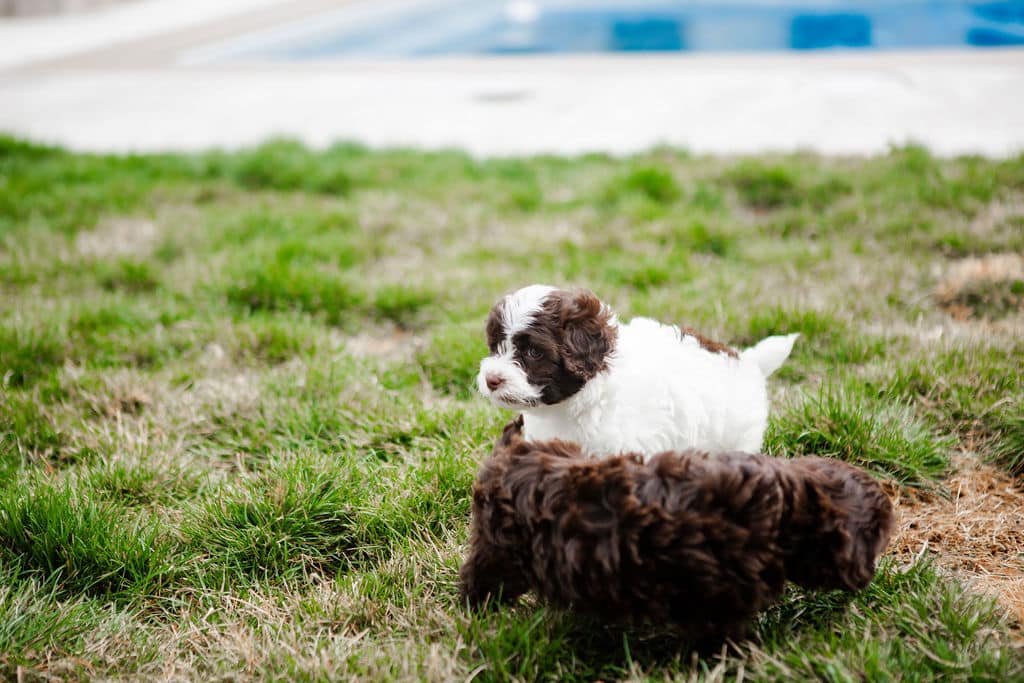
Potty rhythm: outdoor breaks should be calm, supervised, and consistent.

Safe exposure: choose controlled experiences while your veterinarian guides public-dog-area timing.
Breed Notes
Transition tips for Havanese, Havapoo, and Cavapoo puppies.
Every puppy is an individual, but small companion breeds usually do best with gentle handling, close family connection, consistent routines, and thoughtful grooming habits from the beginning.
Havanese
Havanese puppies are often people-oriented and sensitive to household rhythm. Start with gentle bonding, predictable crate routines, and calm handling around brushing, paws, ears, and face.
Havapoo
Havapoo puppies can be bright, affectionate, and eager to engage. Keep training short, reward calm choices, and introduce grooming as a normal part of family life.
Cavapoo
Cavapoo puppies are often social and soft-natured. They benefit from steady routines, gentle confidence-building, careful introductions, and nap protection when the home gets busy.
Common Mistakes
What to avoid during the first week home.
Most early puppy stress comes from too much freedom, too much excitement, too many changes, or too little sleep. Keep the first week intentionally simple.
Avoid full-house freedom.
A new puppy should not have access to every room. Use a crate, playpen, gates, and supervised time so potty training and safety are easier.
Avoid big introductions.
New relatives, neighbors, pets, and busy outings can wait. Let your puppy learn your immediate family and home first.
Avoid sudden food changes.
Transition diets only with a thoughtful plan. Sudden changes during go-home week can upset your puppy’s stomach.
Avoid skipping naps.
Puppies need a lot of rest. If your puppy is biting, zooming, whining, or unable to settle, overtiredness may be part of the problem.
Avoid unsafe public dog areas.
Ask your veterinarian when public places are appropriate. Until then, choose safe exposure instead of dog parks, pet-store floors, or unknown potty areas.
Avoid waiting to call the vet.
If your puppy is not eating, has persistent vomiting or diarrhea, seems unusually weak, or something feels wrong, contact your veterinarian promptly.
Helpful Next Reads
Plan the full path from puppy search to go-home day.
Bringing Puppy Home FAQ
Common questions before go-home day.
How do Sage Puppies families usually bring their puppy home?
Most Sage Puppies families are outside Utah and bring their puppy home through coordinated delivery. Local pickup near South Jordan, Utah is also an option for some families. Delivery or pickup details should be confirmed before go-home day so the transition is smooth and low-stress.
What should I do before my puppy arrives?
Prepare a crate, playpen or gated area, potty spot, food and water bowls, puppy-safe chew toys, cleaning supplies, and a quiet place for naps. Choose a local veterinarian and schedule your puppy’s first visit before or shortly after arrival.
What should the first night with a new puppy look like?
Keep the first night calm. Offer a potty break, water, a simple meal if appropriate, gentle bonding, and a predictable crate or sleep routine. Some whining is normal during transition. Keep overnight potty breaks quiet and return your puppy to the sleep space without play.
How soon should I take my puppy to the vet?
Schedule a first wellness visit with your veterinarian soon after arrival. Your vet should review records, guide vaccine timing, discuss parasite prevention, answer diet questions, and tell you when public socialization areas are safe.
Can my puppy meet visitors and other dogs right away?
Keep introductions limited during the first week. Your puppy should first learn your home, family, crate routine, potty routine, and sleep pattern. Ask your veterinarian when it is safe to visit public dog areas or interact with unfamiliar dogs.
What is the biggest mistake new puppy families make?
The most common mistake is giving too much freedom too soon. A new puppy needs structure, supervision, naps, and a small safe area. Gradual freedom makes potty training, bonding, and confidence-building much easier.
Ready for the next step?
Find the puppy who fits your home, rhythm, and family.
Whether you are looking for a Havanese, Havapoo, or Cavapoo puppy, the best next step is to view current availability or complete the application so Sage Puppies can learn more about your family.