Quick Summary: Before adopting a Havapoo in Utah, you need two layers of proof: the puppy’s own vet exam record and documented health testing of both parents, since a clean checkup at eight weeks can’t predict future conditions like patellar luxation or progressive retinal atrophy. Ask breeders for specific OFA records, DNA panel results, and vaccination dates you can verify, and check them yourself on the OFA database. Book your own vet visit within three days of bringing the puppy home, and be wary of breeders who resist sharing paperwork or give vague answers.
A Havapoo can leave a Utah home with a clean exam sheet and still carry questions that sheet cannot answer. A Havapoo vet checkup covers the puppy as it is today: heart, eyes, knees, weight, and parasites. It says nothing about the health history behind the litter.
That gap is the problem this guide solves. Before you adopt, you need two layers of proof. The first is the puppy’s own puppy vet visit record. The second is documented parent screening, including Havapoo genetic testing results for conditions both Havanese and Poodle lines can carry.
We raise Havapoo puppies in South Jordan, Utah, and we walk families through both layers on every adoption. This guide shows you exactly what to ask for, what to read on each record, and what to follow up on with your own vet.
A puppy’s first vet visit and the parents’ health testing answer two different questions. Many first-time buyers mix them up, so here is what each one covers.
What a puppy exam can tell you
A Havapoo vet checkup looks at the puppy in front of you. The vet listens to the heart for murmurs, checks the eyes, ears, and bite, and feels the knees and hips for looseness. Small breeds like the Havapoo can carry early signs of luxating patellas, so this hands-on exam matters.
Ask for the visit in writing. A solid record lists weight, temperature, findings, deworming dates, and vaccines given. If a breeder hands you a “vet checked” claim with no paperwork, ask for the actual exam summary before you commit.
What a puppy exam cannot do is predict the future. A clean checkup at eight weeks says your puppy is healthy today. It says nothing about conditions that appear later in life.
What parent screening adds
Health testing on the parents fills that gap. DNA panels can show whether either parent carries genes linked to conditions common in Havanese and Poodles, such as progressive retinal atrophy or cardiac issues. Hip and patella evaluations on the adults add another layer, because joint problems often run in family lines.
At Sage Puppies, we share parent health records openly so families can see the testing behind each litter. If a breeder resists showing them, treat that as a signal, not a formality.
Here is the simplest way to think about it: the puppy exam confirms current health, and parent screening estimates lifelong risk. You want both. Our Havapoo puppy guide walks through what to request from any breeder before adoption day.
Review Health Testing for Both Havapoo Parents
A Havapoo puppy inherits genes from two sides: the Havanese parent and the Poodle parent. So a responsible breeder screens both, not just one. At Sage Puppies, health testing of the parents comes before any breeding decision, and we walk families through the records during their visit or call.
Ask for specific tests and identifiable results
Vague answers like “the parents are healthy” tell you nothing. Ask the breeder to name the exact tests each parent completed and when. Then ask for proof you can verify.
The key items to request:
- OFA health records with each parent’s registered name or number
- Patella (knee) certification, done after age one
- Hip X-rays, evaluated after age two
- Annual CAER eye exams by a board-certified ophthalmologist
- Genetic panel results for conditions relevant to each breed
Here’s the good news: you can check these yourself. The OFA keeps a free public database of test results, and the Havanese Club of America requires CHIC numbers for both parents before a breeder can join its referral list. Look up each parent by name and confirm the results match what the breeder told you. A CHIC number only means tests were done and shared publicly, so read the actual results too.
Tip: Ask for the parents’ registered names before you visit. Five minutes on the OFA site tells you more than an hour of conversation.

Use ancestry-specific recommendations carefully
There is no single universal test panel for every Havapoo. The right checks depend on which breeds sit in the puppy’s background.
For the Havanese side, the parent club recommends three core tests for a CHIC number: an annual eye exam, a hip X-ray, and patella certification. You can review the full list in the HCA health and testing guide.
For the Poodle side, Poodles of any size share their own concerns, so ask about eye exams and patellas there as well. Toy and Miniature Poodles are often screened for progressive retinal atrophy through DNA testing.
A few practical guardrails:
- Match each test to the parent’s breed, not to “doodle” marketing language.
- Treat DNA tests as one tool. Eye, knee, and hip exams still matter because not every condition has a DNA test.
- Be wary of any breeder who says testing is unnecessary for mixed breeds. Heritage still drives inherited risk.
Pair this review with a thorough havapoo vet checkup of your own after adoption, and keep the parents’ records with your puppy’s file for your veterinarian to reference.
Check the Puppy’s Veterinary and Care Records
Health records tell you what the puppy has actually received, not just what a seller claims. Before you commit, ask to see the full packet and review it closely. A well-raised Havapoo puppy comes with a documented vet history, and any hesitation to share it is a red flag worth slowing down for.
Match records to the puppy and the exam date
Start by checking that the paperwork belongs to your puppy. Every legitimate record should list the puppy’s name or ID, birth date, breed, and microchip number. Compare those details against what you see in person. A mismatch, or a record with blank fields, means the documents may not describe this puppy at all.
Next, look at the dates. A newborn exam or deworming entry should fall within days of the puppy’s stated birth date, and the most recent wellness visit should be recent, not months old. Real vet records also carry the clinic’s name, address, and phone number. Call the clinic to confirm the visit happened. Any honest breeder will expect this call, and at Sage Puppies we encourage it.
You can also check for signatures. Vaccination entries should be initialed or signed by the treating veterinarian, not typed in with no trace of who gave them. If a breeder hands you a photocopy, ask for the original or a clinic-stamped copy before pickup or delivery day.
Confirm routine care and what remains due
Now review what care has actually been completed. A typical Havapoo puppy should have had its first round of puppy vaccines, usually the DHPP shot around eight weeks of age. Deworming typically happens at two, four, and six weeks, sometimes more. Some breeders also give a preventive for parasites before the puppy goes home.

Then list what remains. Rabies shots, boosters, and spay or neuter are usually still ahead, so budget for those vet visits. Our guide to Havapoo puppy costs breaks down typical first-year care spending so nothing surprises you.
Tip: Before pickup, ask for written instructions on when the next vaccine is due. Skipping or stacking shots too early can put your puppy’s immune system at risk, and your vet will want the exact dates your puppy received each dose.
Bring the records to your puppy’s first vet visit within a few days of arriving home. That appointment confirms the breeder’s work and sets your puppy’s care schedule from day one.
Ask Clear Questions Before You Commit
Good questions do two things. They show the breeder you are serious, and they surface the records you need to see. Ask in a way that gets you an answer you can check, not just a yes or no.
Use questions that invite verifiable answers
Vague questions get vague replies. “Are the parents healthy?” invites a friendly “yes.” Instead, ask for proof:
- “Can you send me the parents’ health test results from OFA or a DNA panel?”
- “What did the vet check at the puppy’s last exam?”
- “Which vaccines has the puppy had, and when is the next one due?”
- “Can you share how the puppies are raised in your home?”
Each of these points to a document or a date you can confirm. A breeder who tests their dogs will answer fast, and you can ask for the paperwork. That is also how we handle things at Sage Puppies: parents have documented screening, and records go home with every puppy. If a breeder hesitates on records you can verify, treat that as information too.

Know when to pause for more information
Most breeders welcome questions. If one gets defensive, rushes you, or dodges basic record requests, slow down. That does not always mean something is wrong, but it means you need more time before you commit.
Also pause if answers are vague, prices change without explanation, or no one can tell you when the puppy saw a vet. A short wait costs little. A rushed decision can cost a lot.
Before you send a deposit, make sure you understand how puppy pricing and deposits work. Then move forward only when every answer checks out.
Plan the First Veterinary Visit After Adoption
Book your puppy’s first vet visit within the first few days home. Early exams catch small issues before they become big ones, and they give you a clean baseline for your Havapoo’s health going forward.
Bring the records and your questions
Your Sage Puppies puppy comes home with a health record folder. Bring every page: vaccination dates, deworming history, and any notes from the vet who examined the puppy before it left South Jordan. Your new vet will want to see exactly which shots were given and when.
Make a short list of questions before you go. Good ones include:
- Which vaccines does my puppy still need, and on what schedule?
- Is my puppy’s weight and growth on track?
- What heartworm and flea prevention do you recommend for a small breed?
- Are there any foods or treats I should avoid at this age?
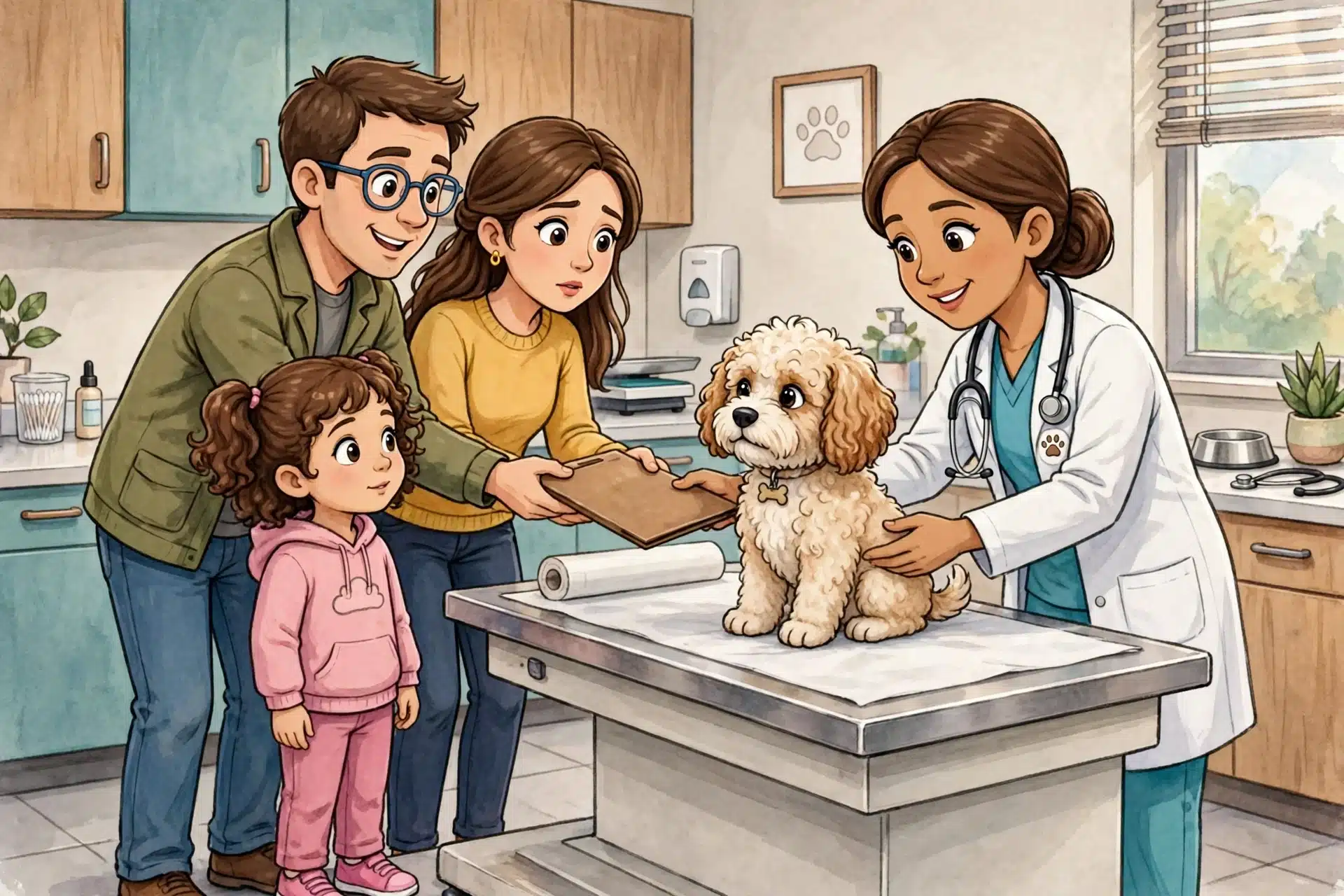
Ask the vet to confirm the vaccination dates in your records match their clinic’s system. If anything looks unclear, contact the breeder before the appointment so the answers are ready.
Keep the folder in one place at home. You will add to it at every visit, and future vets will thank you for the complete history.
Make a follow-up plan with your veterinarian
Before you leave the clinic, book the next appointment. Most puppies need booster shots every three to four weeks until they finish the puppy series around 16 weeks of age. Getting the date on the calendar now prevents a missed booster later.
Also ask about:
- A spay or neuter timeline for your puppy’s size
- When to start dental care and nail trims
- What symptoms would mean a same-day call
Put the booster dates in your phone with reminders. Consistent early care, starting with that first visit, sets up years of good health. To plan for routine costs like these, see our guide to Havapoo puppy costs.
Common Mistakes When Reviewing Havapoo Health Information
Do not treat one test or exam as the whole picture
The most common slip is judging a puppy by a single document. A clean vet check at eight weeks only tells you how the puppy looks that day. It says nothing about the hips, hearts, or eyes the parents passed down.
Flip the mistake around too. Parent DNA panels matter, but they don’t cover every condition. A breeder who shows you both parts is giving you the full story: parents screened for inherited risks, plus a puppy exam that confirms the pup is thriving right now. That’s the standard we hold at Sage Puppies for every Havapoo and Havanese litter.
Ask for all of it together:
- Parent health testing results
- The puppy’s vet exam record
- Vaccination and deworming dates
Do not confuse a record with a promise
A record tells you what happened. It is not a guarantee that a dog will never get sick. Even puppies from fully tested parents can face health issues later, because no screening catches everything.
Some families assume a stamped paper means the breeder stands behind the puppy. It doesn’t. Look for breeders who explain what their testing covers, what it doesn’t, and how they’d help if a problem showed up. Honest answers about limits build more trust than a stack of paperwork.
Reviewing records with that mindset keeps you calm and clear-headed through the adoption process, and it helps you spot breeders who are truly transparent rather than just well-documented.

A health checklist only works when the answers are easy to find. At Sage Puppies, we share parent testing, vet records, and exam details before you commit. Browse our available Havapoo puppies, submit an application, and plan your pickup in South Jordan or nationwide delivery.
Frequently Asked Questions
Q1: What health tests should a Havapoo puppy have before adoption?
Your puppy should have a vet exam, first vaccinations, deworming records, and a fecal test. Parents should have health screening for hips, eyes, and heart. Ask to see both records before you commit.
Q2: What health issues are Havapoos prone to?
Watch for hip dysplasia, patellar luxation, progressive retinal atrophy, and ear infections. Health-tested parents lower these risks, which is why breeder screening records matter so much.
Q3: How do I know if a Havapoo breeder is reputable?
Look for written health records, parent testing, home-raised litters, and open answers to your questions. Breeders like Sage Puppies share records up front and welcome visits or video calls.
Q4: When should my Havapoo puppy see a vet after adoption?
Within the first three days. This visit confirms the breeder’s records, checks weight and heart, and sets up your vaccine schedule.
Q5: How much do puppy health checks cost in Utah?
Expect $50 to $150 for an initial puppy exam, plus vaccine and deworming costs. Some clinics bundle a new-puppy package for first visits.
Q6: Should I buy pet insurance before bringing my puppy home?
Yes. Enroll before the first vet visit so any covered issues found early qualify. Most plans cost less for young puppies.
A Clear Health Check Before Bringing Your Havapoo Home
A good health check comes down to three layers: health-tested parents, a clean puppy exam with up-to-date records, and your own follow-up vet visit within the first few days. Verify paperwork directly with the breeder and your vet rather than trusting a stack of printouts. Ask questions, and walk away from any breeder who seems annoyed by them. Ethical programs welcome that scrutiny. If you want to see how health testing fits into the bigger picture of budgeting and care, our guide to Havapoo puppy costs in Utah covers it in detail. Do the checks now, and you set your puppy up for a healthy start.