
Quick Summary: A California breeder’s health guarantee and return policy are separate documents, with state law setting minimum protections like a 15-day window for pre-existing illness and one year for hereditary conditions. Buyers should read the contract’s deadlines, exclusions, and proof rules carefully, and document everything if a puppy gets sick. The article advises relying on the law for sick arrivals, the guarantee for long-term health, and the breeder’s transparency for everything else, with ethical breeders like Sage Puppies putting terms in writing.
Your puppy is home in California for two weeks, and your vet finds a heart murmur. Now what? The fast answer: a breeder health guarantee depends on the exact written terms, while state law may offer separate remedies for qualifying conditions. Many buyers assume phrases like “health guarantee” or “no returns” settle every outcome. They do not. A sick puppy, an inherited condition, and a family that simply cannot keep the dog are three different situations, each treated differently. This guide separates a breeder health guarantee from a puppy return policy, explains what health guarantee coverage usually includes, and gives you a calm checklist for reviewing contracts. It is general information, not legal advice.
California Health Guarantees vs Return Policies: At a Glance
| Breeder health guarantee | Puppy return policy | |
|---|---|---|
| Primary purpose | Sets contractual health terms for specified conditions. | States when and how a puppy may be returned. |
| What may trigger it | Only events and diagnoses defined by the written terms. | The policy’s stated circumstances; may differ from health coverage. |
| Coverage source | The breeder’s written agreement and applicable law. | The seller’s written policy and applicable law. |
| Possible remedy | As stated in the contract; law may provide separate remedies. | As written; statutory health remedies may be separate. |
| Key buyer action | Review coverage, deadlines, exclusions, and notice steps. | Clarify whether it covers illness, inability to keep, or both. |
How Breeder health guarantee and Puppy return policy Compare
Breeder health guarantee
A breeder health guarantee is a written commitment that spells out which health events are covered, which ones are excluded, and how long you have to act. It sets the contractual health terms for specific conditions, so what triggers it is defined by the agreement itself, not by general good will. Before you sign, review the coverage, deadlines, exclusions, and notice steps closely.
Puppy return policy
A puppy return policy states when and how a puppy may go back to the seller or be rehomed. It may cover illness, a change in family circumstances, or both, and those triggers can differ from health coverage. Ask the seller to clarify exactly which situations the policy handles before you commit. Ethical breeders, including home-raised programs like Sage Puppies, put these terms in writing.
- Key strengths
- Covers reasons beyond illness, like a family’s inability to keep the puppy
- Gives clarity on rehoming and return steps up front
What California Law and a Breeder’s Guarantee Each Do
The statutory baseline is not the same as a contract promise
California gives you a safety net called the Pet Buyer Protection laws, often called “puppy lemon laws.” These set the minimum a seller must do. Under the state’s protections, if a vet confirms in writing that your puppy was ill from a condition that existed before the sale, you may qualify for a refund, a replacement puppy, or vet bill reimbursement. Illness tied to a pre-existing condition must surface within 15 days of delivery. Congenital or hereditary conditions get a longer window of one year.
Sellers of dogs must also give you a written notice of your rights, and you sign it to confirm you read it. The California Attorney General’s office urges buyers to insist on a written health guarantee and to ask whether the animal can be returned, since a seller who offers both is more likely to stand behind the puppy. You can read the AG’s buyer guidance and your statutory remedies in this consumer alert and in the breeder warranty text itself (Health and Safety Code, Article 1).
| Protection | Source | Typical Window |
|---|---|---|
| Illness from pre-existing condition | State law | 15 days |
| Congenital or hereditary defect | State law | 1 year |
| Temperament, returns “for any reason”, training support | Breeder contract only | Set by breeder |
A breeder’s own health guarantee sits on top of that baseline. It can add longer genetic coverage, more generous reimbursements, or return options the law never requires.
What changed for buyers in 2026
Three new laws took effect January 1, 2026, after a Los Angeles Times investigation into out-of-state dogs resold as “local” home-bred puppies. The rules ban middlemen from reselling puppies to Californians and close loopholes left from the state’s 2019 pet store ban. The practical takeaway for buyers: ask where the puppy was actually bred, and expect clearer paperwork. California’s tightening rules are summarized in this report on the new laws.
Also Read: 7 California Puppy Search Filters for Better Local Results
Health Guarantee Coverage: Illness, Hereditary Conditions, and Limits
Separate acute illness from inherited or congenital conditions
A puppy health guarantee usually splits health problems into two buckets. Each bucket has its own clock and its own rules, and mixing them up is the most common way buyers lose a valid claim.
Acute illness means sickness that shows up fast, usually within the first days or weeks at home. Think parvo, kennel cough, giardia, or coccidia. Most guarantees cover these only if a vet diagnoses them during a short window, often 72 hours to 15 days from pickup. The point of the window is simple: the puppy should have been healthy when it left the breeder.
Hereditary and congenital conditions work differently. These are problems the puppy was born with, like a heart defect, bad hips, or a luxating patella. They may not show up for months. So contracts give them a longer runway, often one year, and often require a vet to certify the condition plus proof that it needs surgery or caused death. California’s own pet purchase law uses a similar split, with a 15-day window for illness and a one-year window for genetic conditions, which is why the state’s consumer alert on puppy sales tells buyers to see a vet right away.

Read the contract’s clock, exclusions, and proof rules
Before you sign, read the guarantee like a checklist, not a promise. Three things decide whether a claim actually pays out.
- The clock. Note every deadline in writing: how many days for illness, how many months or years for inherited conditions, and how fast you must notify the breeder. Missing the notice deadline can void the claim even if the problem is covered.
- The exclusions. Most guarantees carve out injuries after pickup, parasites without symptoms, and anything a breeder disclosed in writing before the sale. Conditions the parents were health-tested for may be excluded too.
- The proof. Expect to need a written vet diagnosis on a specific form, records of your follow-up visits, and proof you followed feeding and care instructions. Some breeders require their vet to review the file first.
A breeder dispute FAQ explains that California law sets minimum windows and remedies for covered sellers, but your contract can add stricter notice and documentation rules on top.
Also Read: 10 Red Flags to Avoid When Visiting a Local Puppy Breeder
Return Policies Are Not All Health Guarantees
A store-style return policy and a breeder’s health guarantee are two different documents. They cover different problems and work on different clocks. A general return policy usually addresses buyer’s remorse or a puppy that does not fit the household. A health guarantee addresses genetic or congenital illness found after you take the puppy home. California law adds a third layer, and none of the three replaces the others.
Health-related return and inability-to-keep terms
Read the contract for three specific situations. First, what happens if the puppy is diagnosed with a covered condition? Look for who pays treatment, whether the breeder refunds, replaces, or offers credit, and what deadline applies. Some guarantees expire in days, not months.
Second, ask what happens if you simply cannot keep the puppy, whether from illness, a move, or a family change. A strong breeder contract includes a clause requiring the puppy to come back to the breeder rather than be resold or surrendered to a shelter. This protects the dog more than it protects you, but it tells you a lot about who you are buying from.
Third, check the vaccination and vet-visit requirements. Many guarantees require a vet exam within 48 to 72 hours of pickup. Miss that window and some coverage disappears. Write those dates on your calendar before the puppy ever arrives.
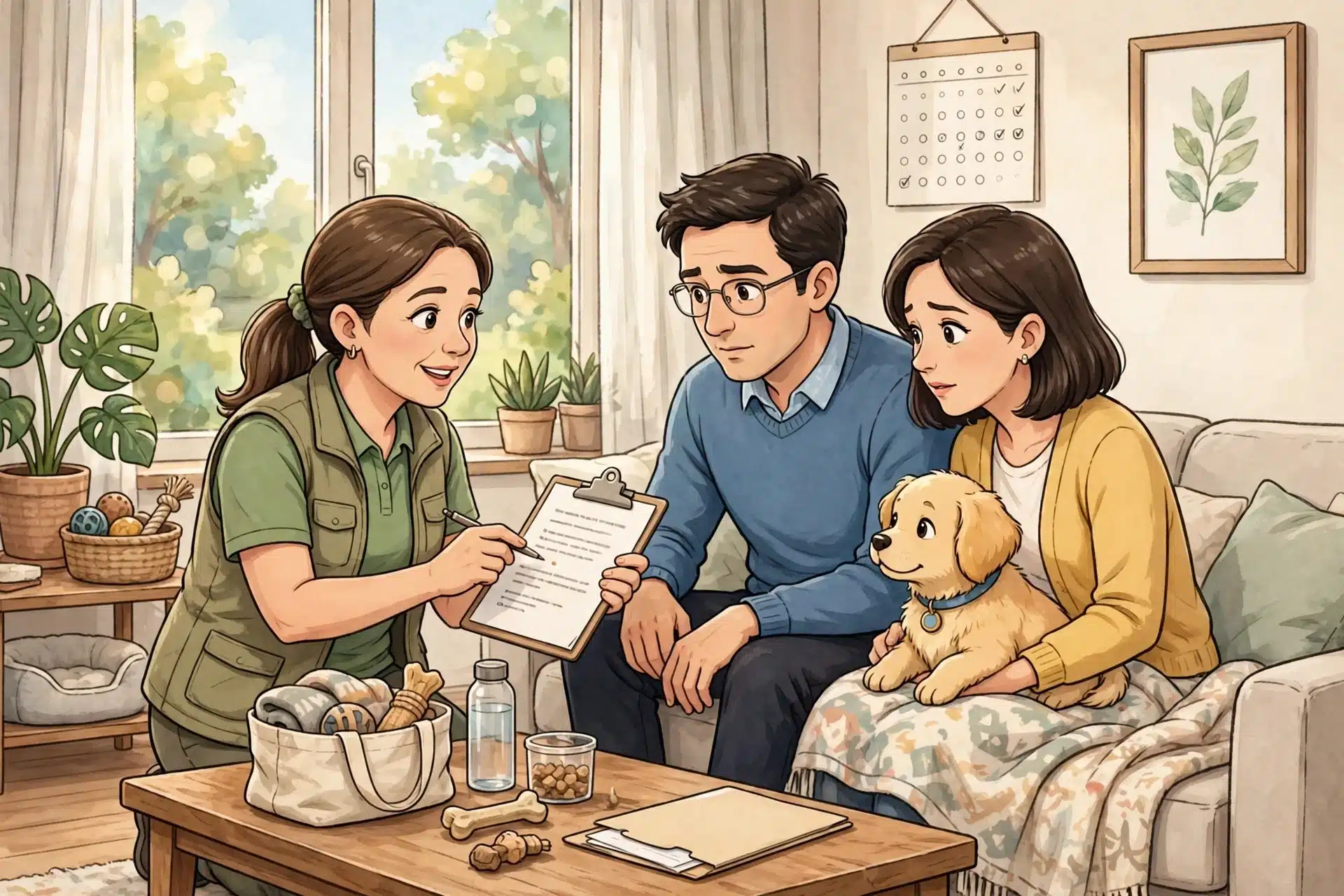
Questions to ask before signing
Bring this list to the conversation and get answers in writing:
- What conditions does the guarantee cover, and what does it exclude?
- How long does coverage last, and does it differ for genetic versus infectious illness?
- Do you refund, replace, or offer credit, and who chooses?
- What vet-exam deadline applies, and what records must I provide?
- If I cannot keep the puppy, will you take it back at any age?
- Are delivery-related stress symptoms covered, or only diagnosed disease?
A transparent breeder answers these without hesitation. At Sage Puppies, we put health terms and return expectations in plain language before families commit, because a confident decision starts with a clear contract.
If a California Puppy Becomes Sick: A Calm Documentation Plan
A sick puppy is scary. A panic move can cost you your rights. If your puppy shows signs of illness, do two things in order: get care first, then protect the paper trail.
Prioritize care and preserve the record
Call your veterinarian the same day. Early symptoms like coughing, diarrhea, or low energy can point to serious conditions, and a prompt exam protects your puppy and your claim. California’s protections work on a clock, so waiting even a few days matters. Under state law, a licensed veterinarian must document illness within 15 days of possession for a claim tied to a pre-existing condition, and within one year for congenital or hereditary problems (California DOJ).
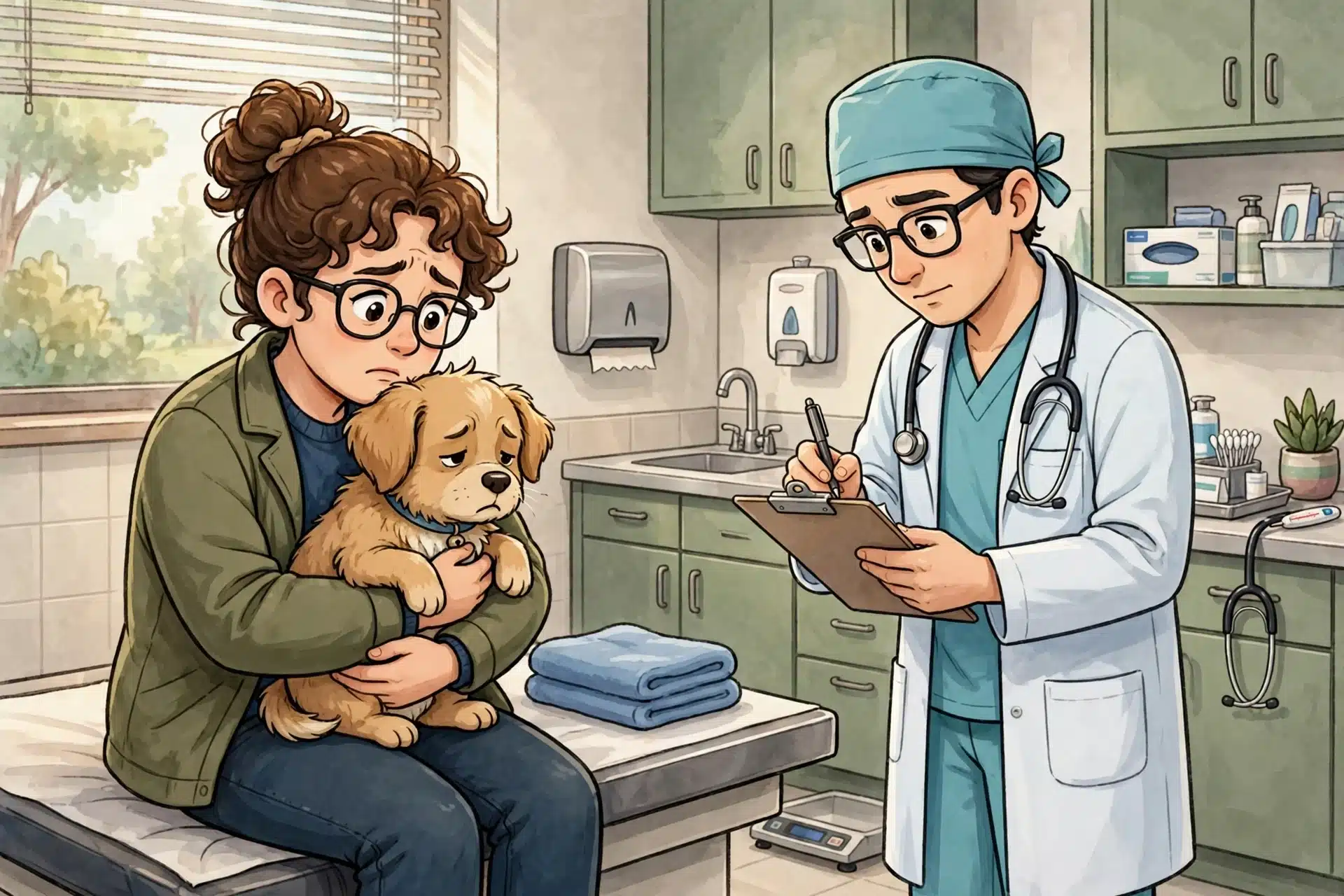
During the visit, ask your vet to state three things in writing: the diagnosis, the date symptoms appeared or the exam occurred, and whether the condition likely existed before delivery or is hereditary. This written statement is the core of any remedy request.
Keep everything from day one:
- Receipts for the purchase price, sales tax, and every vet bill
- Medical records, including vaccines and deworming given before pickup
- Photos and videos of symptoms, with dates
- A simple log of what you saw, when, and who you told
Tip: Ask for records in writing from day one. A short email after each vet visit creates a timestamped record you can rely on later.
Notify the seller and verify the relevant deadline
Tell the seller in writing as soon as your vet flags a problem. Email works well because it creates a dated record. Attach the vet’s statement and your receipts, then state clearly which remedy you are asking for.
Check the deadline that applies to your situation before you make demands. The 15-day window covers illness that existed at the time of sale. The one-year window covers congenital or hereditary conditions that harm the dog’s health. A written claim usually needs to fit the right window, and the seller may request a second exam if they dispute it (Justia, Cal. Health & Safety Code).
Keep your tone calm and factual. Most ethical breeders resolve these claims quickly, and a clear, organized file makes that easy.
Also Read: Havanese, Havapoo & Cavapoo Puppy Care Blog
Which Protection Should You Rely On When Choosing a Breeder?
Rely on all three layers, but for different things. California’s Puppy Lemon Law protects you when a puppy arrives sick. The breeder’s health guarantee covers the longer term, like inherited conditions that appear in the first year or two. The return policy covers the “this isn’t working” scenario, which has nothing to do with health at all.
Here’s the practical way to weigh them.
- Check legal compliance first. Any breeder selling into California must follow state sick-puppy rules. This is your floor, not your goal. A breeder who barely meets it isn’t a plus.
- Read the health guarantee like a contract, because it is one. Look at how long it lasts, what conditions it covers, and what proof you need, such as a vet exam within a set number of days.
- Ask about the return policy in plain words. “If my family can’t keep this puppy, what happens?” A good answer should come easily and match what’s written.
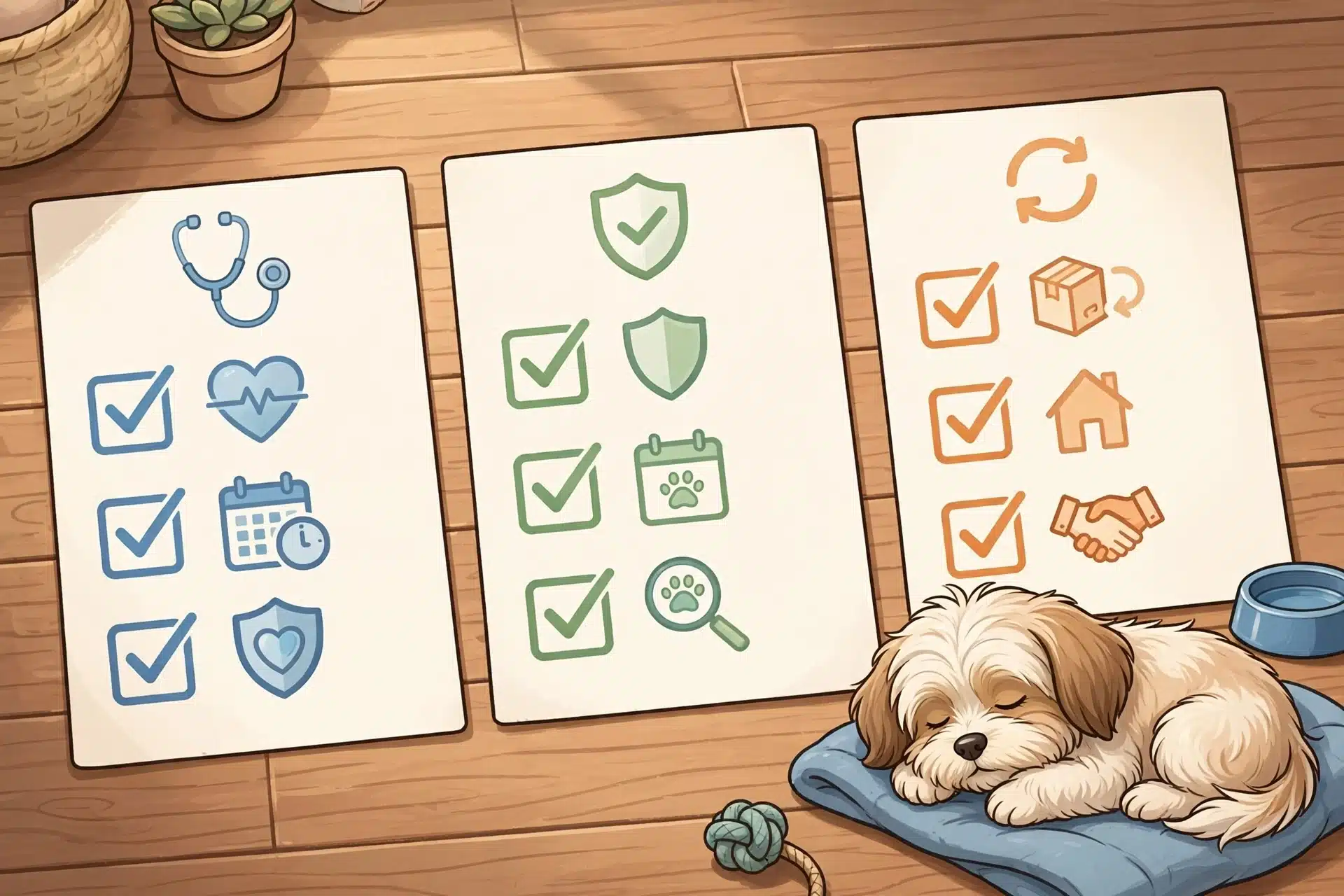
The strongest signal is a breeder who puts everything in writing and explains it without you pushing. Ethical programs, including home-raised breeders like Sage Puppies, usually pair health-tested parents with clear written terms because they rarely need the paperwork, not because they fear it.
Bottom line: Trust the law for sick arrivals, the guarantee for health over time, and the breeder’s transparency for everything else. If any layer feels vague, ask before you pay.

Before you sign anything, ask your breeder to put every guarantee and return term in writing. At Sage Puppies, we keep the process transparent from day one. Browse our health-tested Havanese, Havapoo, and Cavapoo puppies, review our terms, and apply when you’re ready.
Frequently Asked Questions
Q1: What does a California puppy health guarantee legally cover?
State law lets you return a puppy found with a serious illness within a set period after purchase. It typically covers congenital or hereditary conditions, not common mild issues like worms or kennel cough.
Q2: What are my rights if I buy a sick puppy in California?
You can return the puppy for a refund, exchange it, or keep it and seek reasonable vet costs, if you have a signed vet exam and written diagnosis within the law’s timeframe.
Q3: How long does a California breeder health warranty last?
The statute gives a short window, usually days, while breeder contracts often extend coverage for genetic conditions to one year or more. Check your contract first.
Q4: Do I need a vet visit right after pickup?
Yes. A prompt exam protects your rights under the warranty and gives your puppy a clean baseline. It also documents anything to raise with the breeder quickly.
Q5: Can a breeder’s return policy differ from the legal guarantee?
It can. Contracts may be stricter or more generous than state minimums, so read the health section and refund terms before you place a deposit or sign anything.
Q6: Do out-of-state buyers still get California-style protections?
No. The law applies to sales under California contracts. If you buy from an out-of-state breeder like Sage Puppies, coverage comes from that breeder’s written health guarantee, not California’s statute.
A Clearer Way to Compare Puppy Protections
California’s pet buyer law, a breeder’s health guarantee, and a return policy are three different things. The law sets a floor. The contract adds coverage, and the return terms decide what happens when a puppy truly isn’t the right fit.
Read all three before you sign. Ask which conditions are covered, how long the window lasts, and who pays for vet care. Ask for everything in writing.
An ethical breeder answers these questions plainly. That clarity is part of what you’re paying for, and it protects your family as much as it protects the puppy.





