Quick Summary: Unethical puppy breeders hide warning signs in plain sight, from polished websites and multiple breeds at rock-bottom prices to pressure to wire money fast. The article walks through verification steps for each red flag, including checking parent health records in the OFA database, meeting the mother dog, waiting until at least eight weeks, and reading a written contract with a health guarantee and return clause before any deposit. It frames transparency, home-based raising, and active screening of buyers as the real standard, using its own Havanese, Havapoo, and Cavapoo program in South Jordan, Utah as an example of what that looks like in practice.
If a listing shows six breeds at rock-bottom prices, a half-dozen puppies ready today, and a sob story about needing to rehome fast, trust your gut. We hear those same phrases from buyers who later found out they were dealing with a scam. Unethical puppy breeders count on first-time buyers not knowing what to check, so the warning signs hide in plain sight.
This guide pairs each red flag with a simple verification step you can take before any money changes hands. You will learn how to read listings and websites, what a health contract should actually say, and which questions separate a caring breeder from a puppy mill.
We raise Havanese, Havapoo and Cavapoo puppies at our home program in South Jordan, Utah, and we wrote this for the questions our own puppy families ask most. When you are ready to see what transparent breeding looks like, browse our available puppies or review our pricing and reservation process.
What Counts as an Unethical Puppy Breeder
An unethical puppy breeder puts profit ahead of the dogs. The signs range from crowded kennels to sloppy paperwork, but the pattern is always the same: puppies are products, not family members. Learning where unethical puppy breeders hide helps you avoid heartbreak before you pay.
Puppy Mills, Backyard Breeders, and Brokers, and Why the Lines Blur
A puppy mill breeds many dogs in poor conditions, often in wire cages with little vet care. A backyard breeder keeps dogs as pets but breeds casually, skipping health tests and screening. A broker sells puppies from outside breeders, usually without ever seeing where they were raised.
The lines blur because all three can look charming online. A polished website can front for a mill. A friendly small-scale seller can skip every health test. A broker may claim “we breed our own” while reselling. So judge the practices, not the story. Ask who raised the puppy and whether you can see the mother.

Why “Registered” and “Licensed” Are Not Enough
Registration papers just confirm a puppy’s parents were purebred. They say nothing about health, housing, or care. A USDA license allows large commercial breeding; it does not promise a high standard of welfare. Either label can sit on a poor operation. Papers prove identity, not quality. Ask instead about health testing, vet visits, and how puppies are raised during the first eight weeks.
What a Responsible Small-Breed Program Looks Like Instead
A good breeder answers questions openly, welcomes visits, health tests parent dogs, and keeps litters in the home. Support continues after pickup. That is the standard we hold at Sage Puppies, and what health-tested puppy parents should look like. When you are ready, apply to adopt a puppy.
Health Testing Red Flags and What to Ask For
Health testing means certified screening of the parents, not just a quick exam of the puppy. A breeder who can only show a shot record is telling you something, even if they mean well.
The Difference Between a Vet Check and Real Health Testing
A vet check is one visit. Someone listens to the heart, looks in the ears, and says the puppy looks fine that day. It catches nothing hidden. Real health testing happens years before a litter exists. Parents get x-rays, eye exams, heart clearances, and DNA tests for conditions they could pass on. If a breeder calls a routine puppy exam “health tested,” that is a red flag.
What Records You Should Ask to See, and How to Verify Them
Ask for the parents’ OFA certificates by registration number. OFA, the Orthopedic Foundation for Animals, keeps a public database where you can look up any dog yourself in minutes. Search the dam’s and sire’s names and confirm the results match what the breeder claimed.
A trustworthy breeder hands these over without hesitation. Vague answers, a promise to “email everything later,” or a claim that testing “isn’t needed for this breed” should slow you down.
You can also see how verification works in practice with this walkthrough.

Breed-Specific Priorities for Havanese, Havapoo, and Cavapoo Buyers
Small companion breeds carry their own risks, so the test list is not the same for every dog. The Havanese Club of America lists hips, eyes, cardiac, and patellar luxation, a kneecap that slips out of place, as core screenings. Patellar issues are common in small breeds, so ask for that clearance by name. For Cavapoos and Havapoos, also ask about DNA tests the poodle and Cavalier sides can add, including progressive retinal atrophy. Written contracts should back all of it.
Living Conditions, Socialization, and the Puppy’s First Eight to Twelve Weeks
A puppy’s first two months shape the dog you will live with for years. Where the litter was raised, who handled it, and when it left its mother all matter more than a pretty website ever will.
Why You Should Always See Where the Litter Lives
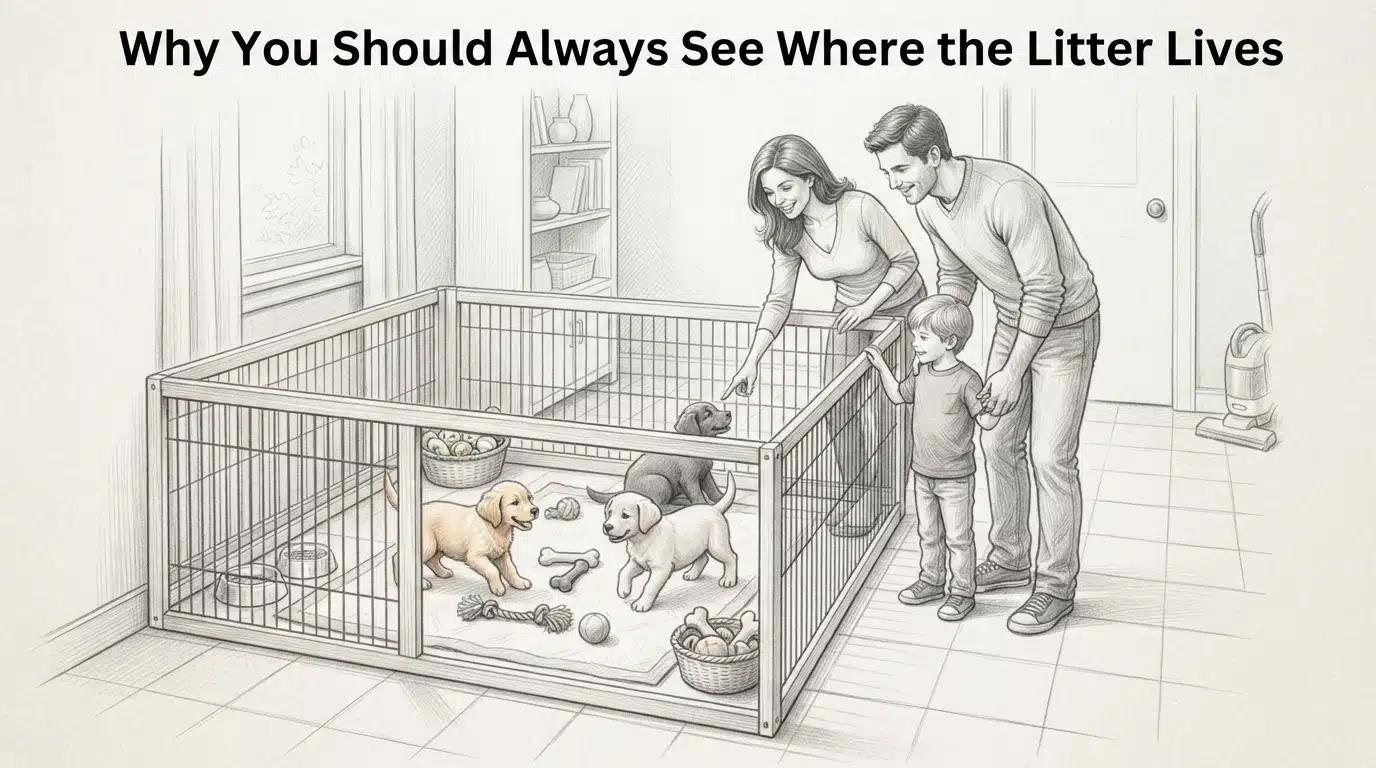
Ask to visit, or request a live video tour if you live far away. Puppies raised inside a clean, busy home meet ordinary life early: vacuums, doorbells, kids, tile floors. Puppies kept in a garage, barn, or outdoor kennel miss all of it. That gap shows up later as fear, house-training struggles, or noise sensitivity. Look for a space that smells fresh, has soft bedding, and gives puppies room to play.
Meeting the Parents and Reading Their Temperament
You should always meet the mother, at minimum. Her calmness or nervousness is your best preview of your puppy’s adult personality, because temperament is partly inherited. Watch how she greets strangers. A mother who is relaxed, curious, and handled often usually raises puppies who feel the same way. If a breeder refuses to show the mother, or offers a vague excuse, treat it as a serious warning sign. Some programs use stud dogs they do not own, which is normal, but the dam’s environment is never negotiable.
Eight Weeks Is the Floor, Not the Ceiling
Never take a puppy home before eight weeks. States including Utah regulate the minimum age because early separation harms development. Those extra weeks with littermates teach bite inhibition, patience, and confidence. Many small-breed breeders keep puppies until ten or twelve weeks, which benefits tiny breeds like Havanese and Cavapoos. Later is fine; earlier is not. If you are weighing timing against other breeder questions, our puppy application guide walks through what to ask before you commit.
Contracts, Guarantees, and the Money Conversation
A good breeder puts the deal in writing before you pay anything. The contract should spell out the health guarantee, what it covers and for how long, and exactly what happens if a vet finds a serious problem in the first days. It should also name both parties, list the puppy’s microchip and date of birth, and state the total price with no surprise fees.
Clauses a Good Contract Always Includes
Read for five things. First, a health guarantee with a real timeline, usually 72 hours to a year. Second, a clear return clause saying the breeder takes the dog back at any age. Third, spay or neuter requirements for pet-quality puppies. Fourth, a statement of what voids the guarantee, such as skipped vet visits. Fifth, the breeder’s contact details and signature. If any clause is missing, ask why before you send money.
Pricing Pressure, Deposits, and Common Scams
Scammers rush you. A “puppy is available today, wire funds now” message is a classic red flag. Never pay by gift card, wire transfer, or payment app with no buyer protection. Use a written receipt for any deposit, and ask what it covers. Honest breeders keep pricing and reservation terms easy to find and explain them plainly.
How Pricing Should Compare Across Small-Breed Programs
Small breeds like Havanese, Havapoo, and Cavapoo usually cost more because litters are small and health testing is expensive. A fair range today runs $3,500 to $4,500. Prices far below that often mean skipped testing; prices far above it need a clear reason.

Before you commit, see current available puppies and start with an application so every term is clear up front.
Communication Style: When a Breeder Should Be Screening You Just as Hard
A good breeder interviews you. If someone answers every question with “yes, we have puppies ready,” walk away. Careful breeders protect their dogs, so they want to know who is taking one home. Our own matching process starts with an application for exactly this reason.
What a Good Breeder Wants to Know About You
Expect questions about your home, work schedule, kids, other pets, and experience with small breeds. A Havanese needs company, so a breeder may ask who is home during the day. They should also ask about your yard, your vet, and how you plan to handle grooming. Good questions signal a thoughtful match, not an interrogation.
Questions You Should Ask, in This Order
Start broad, then get specific. This order reveals how a breeder really operates.
- How long have you bred this breed? Look for real history, not vague claims.
- Can I visit, or see a video call? Ethical breeders say yes or offer live video.
- Where do the puppies live? You want inside the home, not a kennel shed.
- What health testing do the parents have? Ask for proof, such as OFA records.
- What does your contract include? It should cover health terms and a return clause.
- Can I speak with past buyers? A confident breeder offers references.
Warning Phrases in Texts, Emails, and Calls
Be careful with phrases like “deposit saves your puppy today,” “we ship anywhere, no visit needed,” or “both parents on site, no papers needed.” Vague answers about testing, pressure to pay fast, and refusal to video call are classic red flags. A trustworthy breeder answers patiently and puts details in writing.
Online Listings, Marketplaces, and Delivery Logistics
A polished listing tells you nothing on its own. Scams live on beautiful websites, so treat every ad as a claim you still need to prove.
How to Vet a Listing Before You Ever Reply
Check three things first: a real address, a live video call where you see the puppy and its mother together, and dates that match the puppy’s age. Search the breeder’s phone number and kennel name for complaints. Ask which registry, vet, and program stands behind the litter. No answer to any of these is your answer.
Pickup, Flight Nanny, and Ground Transport, and What Each Should Look Like
Pickup should happen at the breeder’s home, not a parking lot, so you can meet the dam and see where puppies were raised. A flight nanny means your puppy rides in the cabin with a person, never as cargo. Ground transport should be small, direct, and documented with updates. Each option needs a written plan: dates, handler name, and who pays if travel slips.
Warning: Anyone pushing full payment before you’ve seen the puppy on video is moving too fast. Slow down or walk away.
State-Specific and Distance-Buying Considerations
Buying across state lines is normal for small breeds like Havanese, Havapoo, and Cavapoo puppies, but the details matter. Confirm the health record travels with your puppy, request your state’s required paperwork in advance, and read the contract before the deposit, not after. We keep delivery terms simple and in writing for every reservation, because distance should change logistics, not protections.
Common Mistakes Buyers Make When Vetting a Breeder
Most bad breeders don’t hide their red flags. Buyers just skip past them because they fall in love with a photo or jump at a low price.
Trusting Cute Puppies and Stock Photos
A sweet puppy picture proves nothing about how the dog was bred. Ask for recent videos of the puppies with their mother, and confirm the photos show the actual litter, not recycled images used across listings.
Paying a Deposit Before Seeing a Contract
A deposit should never come before paperwork. Read the full contract first: health terms, return policy, and what happens if the puppy gets sick. A breeder who resists sharing the contract early is telling you something. Reputable programs, including our own at Sage Puppies, put terms in writing before any money changes hands.
Choosing the Cheapest Listing in the Search Results
Price alone is a poor filter. Suspiciously cheap puppies often come from high-volume operations with weak vet care, and you pay the difference later in vet bills. Expect small breeds like Havanese and Cavapoo puppies to run a few thousand dollars, and treat pricing that’s far below that range as a warning sign.
Before you commit anywhere, review the application process at Sage Puppies to see what thorough vetting looks like in both directions.
A Final Buyer Checklist for Choosing a Healthy, Ethical Small-Breed Puppy
Your Ten-Point Pre-Purchase Checklist
Before you commit, confirm all ten:
- You met the dam (and sire, if present) in photos or video
- Health testing results are shared in writing
- Vaccination and deworming records match the puppy’s age
- Puppies are raised in the home, not a kennel run
- The breeder asks you questions, too
- A written health guarantee comes with the contract
- You can visit or request a live video call
- No pressure to pay same-day
- References from past puppy families check out
- Your gut says yes
When You’re Ready to Apply, and What Comes Next
A good breeder makes the next step simple. At Sage Puppies, you start with an application, then Cassie reviews it personally and matches you with a puppy that fits your home, schedule and energy level. Pricing and reservation details are shared up front, so nothing surprises you later. Take your time, trust what you’ve verified here, and choose the breeder who welcomes your questions. Wisely bred, beautifully loved puppies are worth the wait.

Now that you know the red flags, choose a breeder who welcomes your questions. At Sage Puppies, every Havanese, Havapoo and Cavapoo is bred wisely and raised with love. Ready to meet your puppy? Start your application today.
Frequently Asked Questions
Q1: What are the biggest red flags when choosing a puppy breeder?
No health testing records, no visit options, puppies always available, and pressure to pay fast. A good breeder asks you questions too and shares vet records willingly.
Q2: How can I tell if a puppy breeder is a scam?
Watch for stock photos, prices well below normal, only wire or gift card payments, and refusal to video call. Ask to see the puppy live with its mother.
Q3: What questions should I ask a puppy breeder before buying?
Ask about parent health tests, vaccinations, socialization, the return policy, and what food the puppy eats. Honest breeders answer clearly and welcome follow-up questions.
Q4: Is a written contract really necessary?
Yes. It should cover health terms, spay or neuter expectations, and return rights. No contract means no protection if problems appear.
Q5: Should I meet the puppy’s mother?
Absolutely. Her temperament and condition reveal a lot. A breeder who refuses likely did not raise the litter on site.
Conclusion
Spotting an unethical breeder comes down to one habit: verify everything. Red flags like no health testing, always-available litters, vague online listings, pressure to pay fast, and contracts with no return clause each have a simple check behind them. Ask for OFA and eye-test records, visit in person or on video, read the contract before you deposit, and walk away when answers get fuzzy.
Small breeds like the Havanese, Havapoo and Cavapoo deserve this extra care because they are bred closely and pass traits on quickly. A good breeder welcomes your questions and keeps in touch after pickup. Trust your gut when something feels off. A patient search protects your family and your future puppy.