Quick Summary: California puppy breeders’ health claims often hide gaps. Always demand the exact registered names, OFA numbers, and test dates for both parents-then cross-check them against public OFA records, since a vague ‘health tested’ label or CHIC number doesn’t guarantee anything. For example, a Havanese parent needs current OFA hips, patellas, and a CAER eye exam, while a Poodle parent in a Havapoo mix must have its own breed-specific tests. If records conflict, names don’t match, or the breeder refuses to share full original reports before a deposit, walk away-no amount of paperwork can replace verified, breed-appropriate testing on the actual dogs producing the litter.
A polished PDF labeled “health tested” is not enough. Before you commit, ask whether it names the exact Havanese, Havapoo, or Cavapoo parents and matches a public, verifiable record.
California puppy breeder health tests can sound reassuring while leaving key gaps. A certificate may be outdated, tied to a different dog, or show a test that does not fit the breed. This guide shows you how to verify breeder health certificates, compare names and registration details, check public OFA records, and read CHIC results correctly.
You will also learn what to request before sending a deposit, including sale and transport documents. For Havanese breeder health records, details matter. Families should expect clear proof, not broad claims. California puppy breeder health tests deserve the same careful review whether you plan local pickup or delivery.
Step 1: Request the Complete Health File for Both Parents
Ask for the Sire and Dam by Their Exact Identifiers
Ask for each parent’s registered name, registration number, microchip number if listed, and OFA number. “Health tested parents” is not enough to verify California puppy breeder health tests.
Search the exact names in the OFA health database guidance. Match the breed, sex, age, and test result to the breeder’s file.
Request copies of:
- OFA certificates or result PDFs
- DNA lab reports with the parent’s identifier
- Eye, heart, and patella exam records when applicable
- A pedigree that names both parents
A CHIC number means the dog completed its breed-required screening list and the results are public. It does not mean every result was normal. Read each result yourself. OFA explains CHIC requirements.
Separate Parent Testing from Puppy Veterinary Records
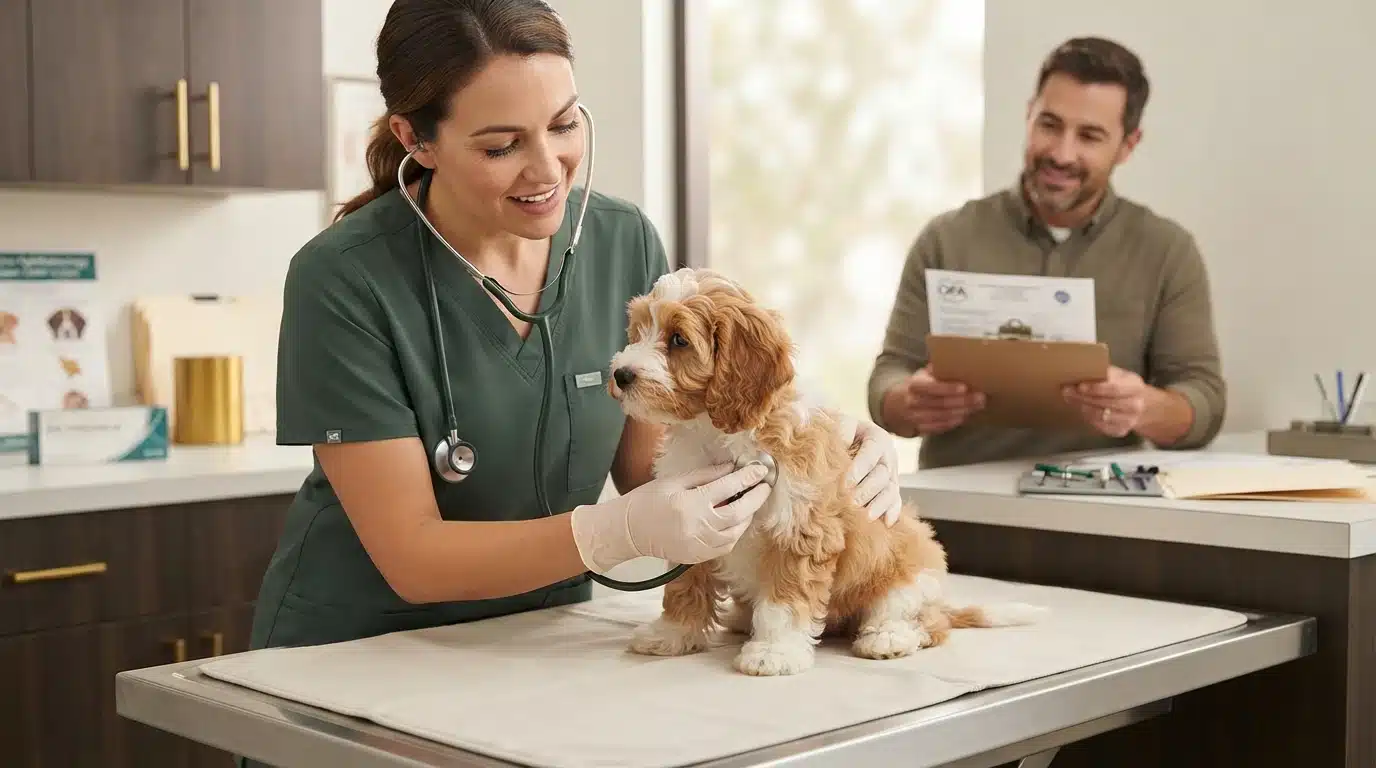
A puppy wellness exam, vaccine record, or fecal test is valuable, but it does not replace testing on the sire and dam. Keep the files separate.
| Record | What it shows | What it cannot prove |
|---|---|---|
| Parent health tests | Breeding dogs’ screened traits | The puppy’s current wellness |
| Puppy vet record | Puppy’s exam and care to date | Parents’ inherited-risk screening |
Ask the breeder to label every file with the parent or puppy’s full identity.
Request Results Before You Pay a Deposit
Review the complete file before sending money or signing a reservation. A clear breeder can share records without pressure.
Use this short message: “Please send the sire and dam’s registered names, OFA links or certificates, DNA reports, and the puppy’s vet record.”
Pause if names differ across documents, results are cropped, or the breeder will only offer a summary.
Also Read: 10 Must-Ask Questions Before Buying a Puppy Locally
Step 2: Check Whether the Tests Fit the Parent’s Breed
Use Havanese Recommendations as a Specific Reference Point
Match each record to the parent, not just the puppy’s mix label. For a Havanese parent, ask for OFA hip and patella results plus a current CAER eye exam. The Havanese Club of America health guide lists those three as current CHIC requirements. BAER hearing testing can also be a useful added record.
Check dates, registered name, and microchip or registration number. A current eye result matters because CAER exams are repeated each year.
| Havanese parent record | What to confirm |
|---|---|
| Hips | OFA result, permanent record, correct registered dog |
| Patellas | OFA result completed at the proper adult age |
| CAER eyes | Board-certified eye exam with a current date |
| BAER hearing | Optional added screening, one result per dog |
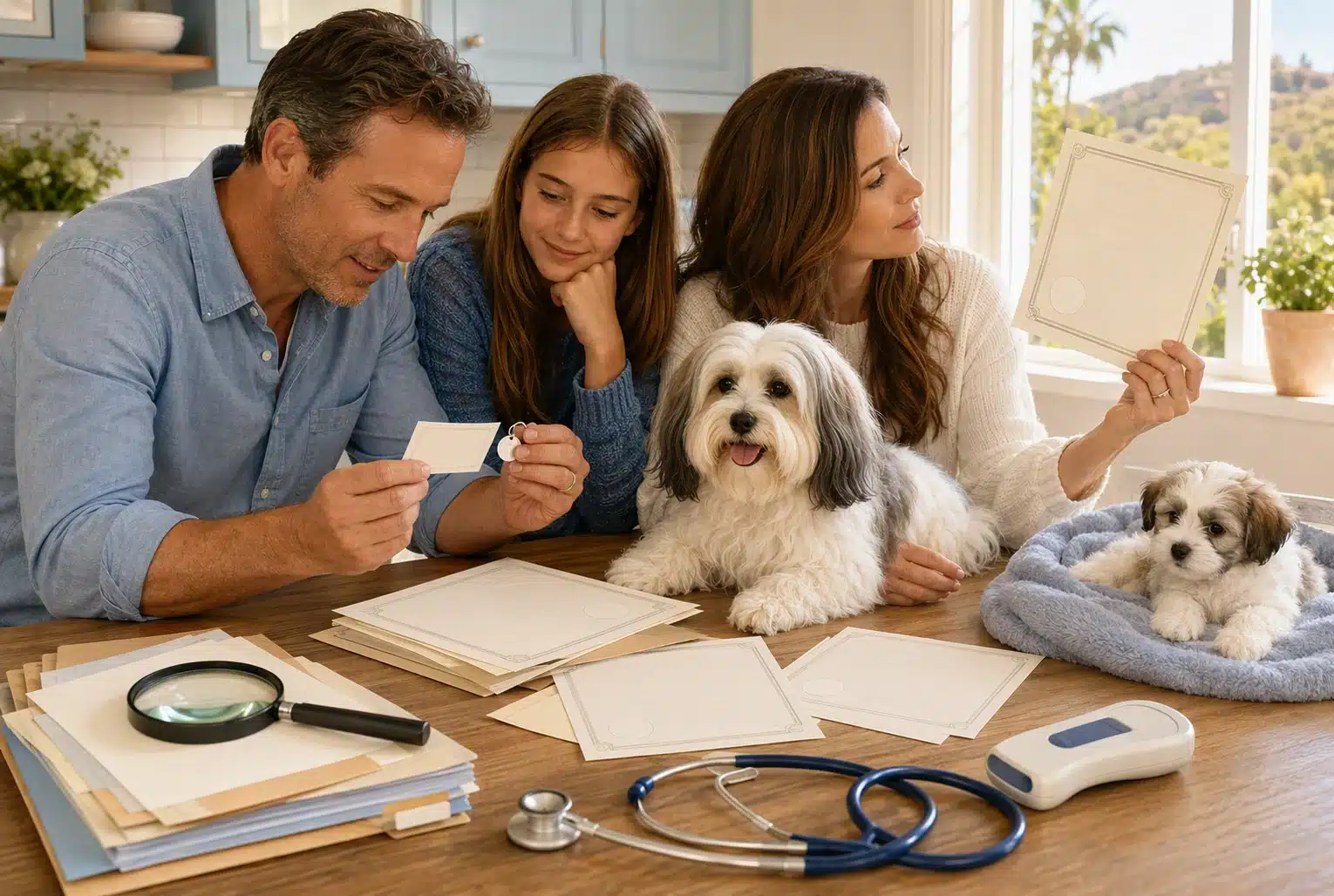
A polished health summary is not proof. Ask for the original reports and compare every identifier.
Ask What Was Tested on the Havanese and Poodle Parents
For a Havapoo, both parents need breed-fit testing. Do not accept a Havanese-only list for the Poodle parent, or the reverse.
Ask the breeder:
- What tests were completed on the Havanese parent?
- What tests were completed on the Poodle parent?
- Which results are public in OFA?
- Are any eye exams now due for renewal?
- Can you send each report before a deposit?
A thoughtful breeder can explain why each test fits that dog’s breed, age, and role in the pairing.
Know the Difference Between Screening, DNA Results, and a Guarantee
A physical screen checks the dog at that time. A DNA panel looks for named gene variants. Neither promises a puppy will never become ill.
CHIC also means required tests were submitted, not that every result passed. The Havanese Club of America states this clearly in its CHIC testing policy.
Read the contract separately. Health testing lowers risk. A written guarantee sets the breeder’s response if a covered issue occurs.
Also Read: 10 Adorable Havapoo Colors You Need to See (2026)
Step 3: Verify OFA and CHIC Records Yourself
Search the Exact Dog, Not Just the Breeder’s Name
Ask for each parent’s registered name, registration number, and OFA number. Then use OFA’s record search yourself. A breeder name can return many dogs, while an exact name helps you find the right sire or dam.
Check these details before you rely on a result:
- The dog’s full registered name and breed
- Sex, color, and date of birth, if shown
- The test type, result, and test date
- Any permanent ID suffix, such as PI or VPI
A missing public record needs a clear answer. OFA notes that normal results are generally public, while owners may choose whether to publish some abnormal results. OFA explains its public-record policy here.
Match Every Result to the Document You Received
Set the breeder’s certificate beside the live OFA record. The names and numbers should match exactly, not just look close.
| Checkpoint | What should match | Why it matters |
|---|---|---|
| Dog identity | Registered name, breed, sex | Confirms the record belongs to that parent |
| Test record | OFA number and test category | Shows the claimed screening is real |
| Timing | Test date and dog’s age | Helps spot preliminary or outdated results |
| Result | Clear status or grade | Prevents vague claims like “health tested” |
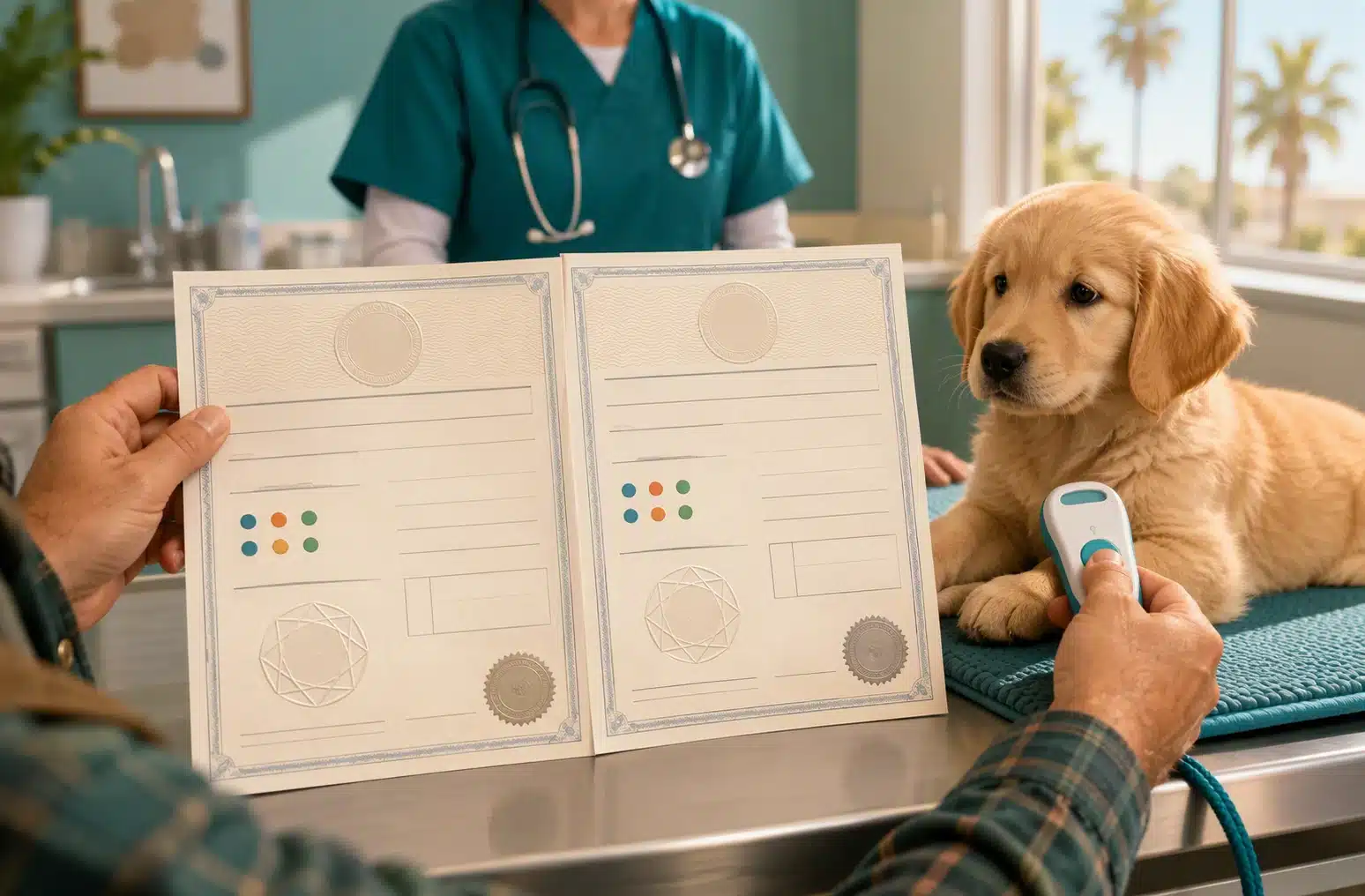
Warning: A genetic panel from a private lab is not the same as an OFA hip, patella, eye, or cardiac record. Ask what each document actually tests.
If a certificate uses a call name only, request the registered name. If the record is under a prior owner, ask for the ownership link and confirm it is the same dog.
Interpret CHIC Without Treating It as a Passing Grade
A CHIC number means the dog completed the breed club’s required screenings and the results were made public. It does not mean every result was normal. OFA states that CHIC is based on completing the required breed-specific tests with public disclosure. Review each individual result before deciding. See OFA’s CHIC program details.
Look at Relatives and Ancestors for Context
Open the pedigree links when available. Look at parents, full siblings, and prior offspring.
- Repeated, current testing across close relatives is a good sign.
- One strong record does not erase weak or missing family data.
- Ask the breeder how results shaped the pairing.
Also Read: Puppy Health Guarantees: What Good Breeders Include
Step 4: Validate Genetic Reports and Laboratory Details
Check the Dog, Laboratory, Panel, and Date
Ask for the original genetic report, not a cropped screenshot or a breeder summary. Match the registered name, registration number, microchip number, or other ID to the parent dog you were shown.
Check these details:
- The laboratory name and report number
- The exact diseases included in the panel
- Each result: clear, carrier, at-risk, or untested
- The sample and report dates
- Whether the report belongs to the sire or dam
OFA notes that DNA test panels can differ by lab, so confirm that the named condition was actually included in the panel through the laboratory test listing.
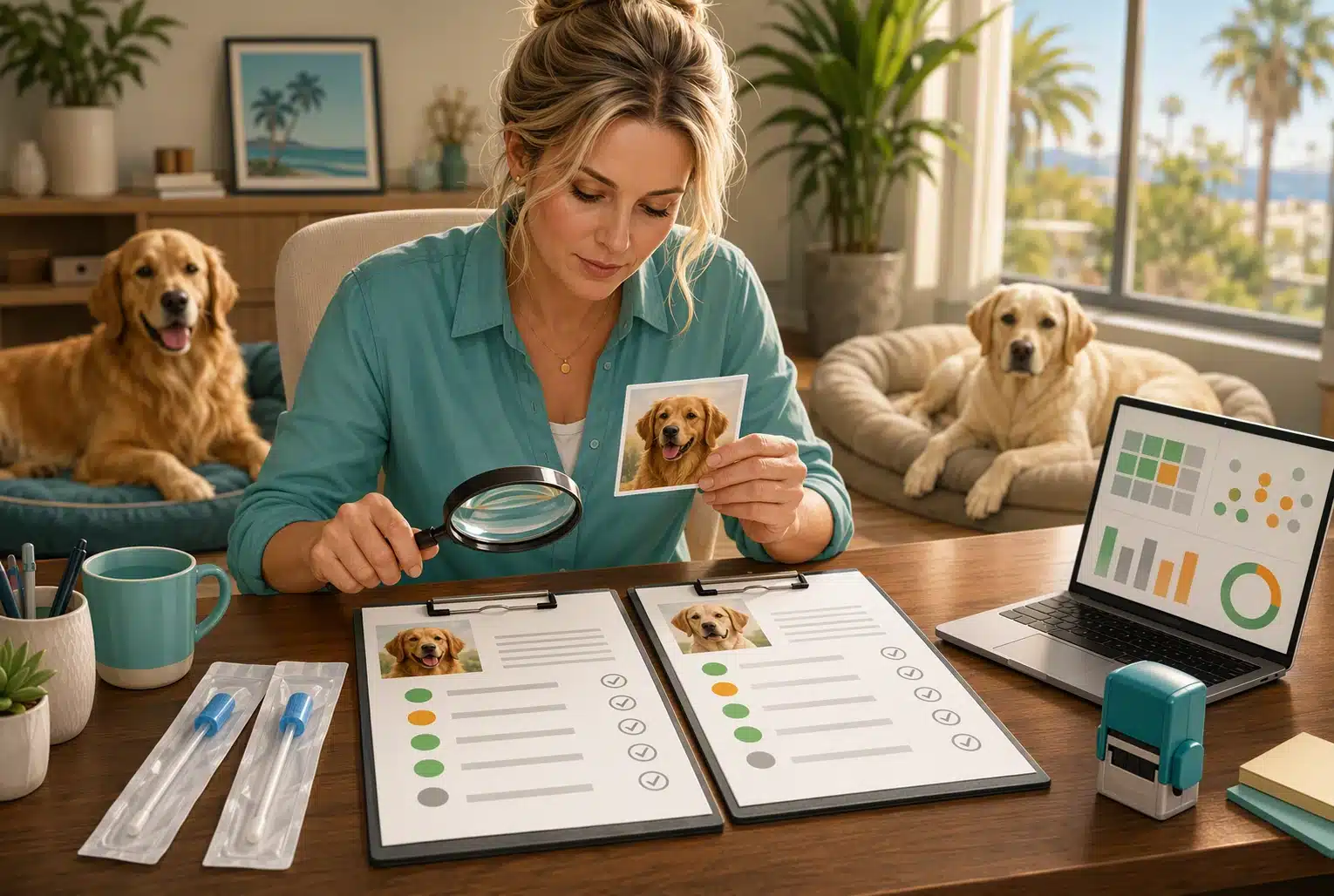
A report with the right breed but the wrong dog name does not verify the parent.
Ask How the Pairing Uses the Result
A carrier result is not automatically a reason to walk away. What matters is the mate’s result and the breeder’s plan. A clear-to-carrier pairing should not produce affected puppies for that specific recessive condition.
Ask:
- Which parent carries the variant?
- Was the other parent tested for that same variant?
- Can you send both reports together?
- Does the planned pairing avoid affected puppies?
A careful breeder can explain this in plain language without dodging the question.
Do Not Confuse a DNA Panel with Complete Health Testing
DNA panels check specific inherited variants. They do not replace orthopedic, eye, heart, or patella exams. OFA explains that DNA tests identify genotype, while other health concerns need separate evaluations and records for puppy buyers to review.
Treat DNA as one part of the file, not the whole health-testing story.
Also Read: Havanese, Havapoo & Cavapoo Puppy Care Blog
Step 5: Confirm California Sale and Delivery Paperwork
Review the Written Puppy Disclosure
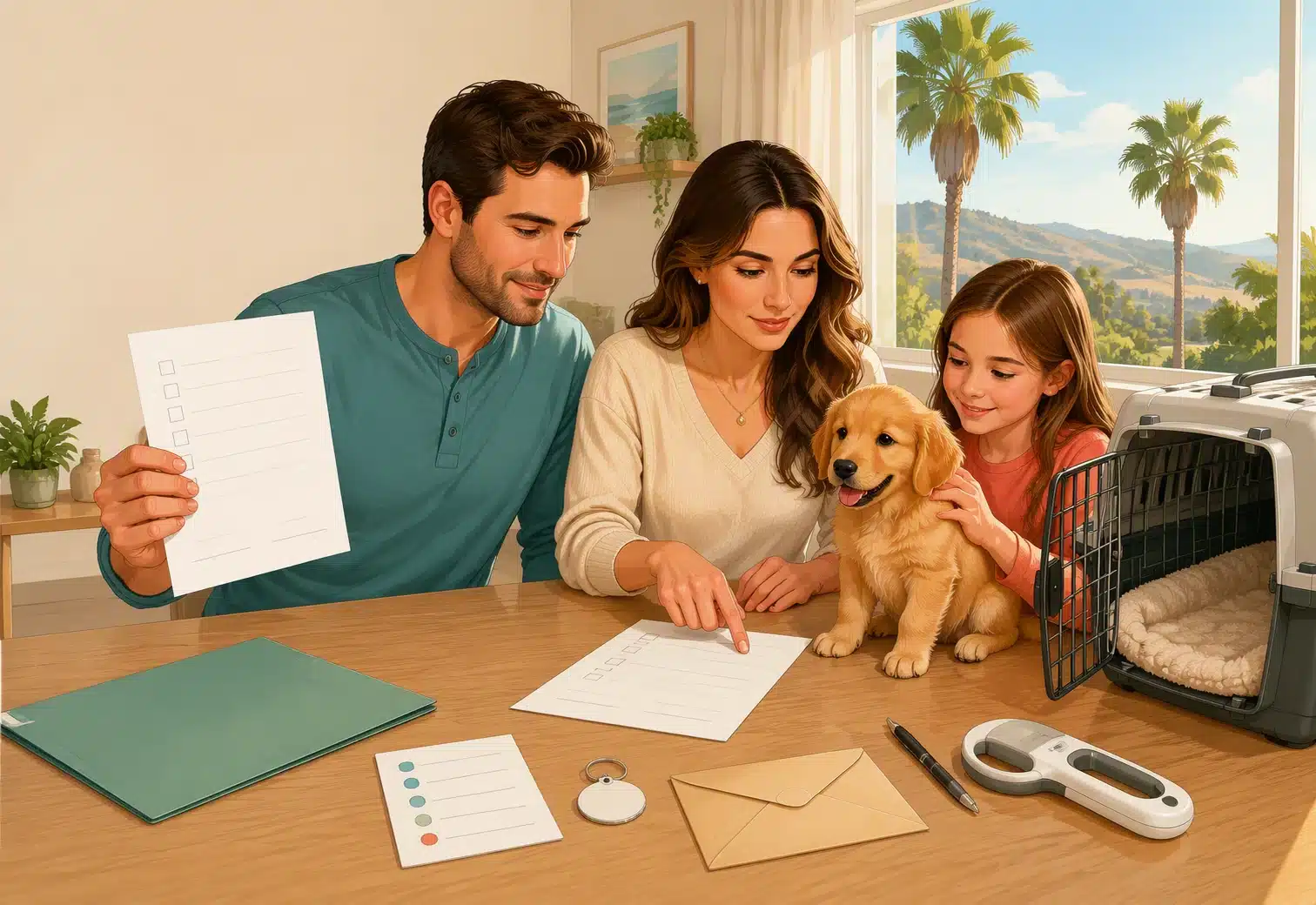
Read the sale agreement before you send the final payment. It should identify the exact puppy by sex, birth date, breed mix, color, and microchip number if one is assigned.
Check that it also states:
- The breeder’s legal name and contact details
- Purchase price, deposit terms, and pickup date
- Known health concerns or treatment
- Vaccines, deworming, and vet records given
- What happens if delivery plans change
| Record | Match it against |
|---|---|
| Puppy name and sex | Photos, video call, and vet record |
| Birth date | Litter details and vaccine timeline |
| Parent names | OFA records and health-test reports |
| Microchip number | Vet paperwork and final contract |
Warning: A contract cannot replace proof of parent testing. Keep the sale papers and original health records in the same folder.
Ask About a Certificate of Veterinary Inspection for Imported Dogs
If a puppy will enter California from another state to change owners, ask whether a Certificate of Veterinary Inspection (CVI) will travel with the puppy. California says the certificate must be completed within 10 days before arrival and signed by an accredited, licensed veterinarian. It also notes that, from January 1, 2026, these health certificates must go to the CDFA Animal Health Branch. See California’s pet import guidance.
Ask for the CVI number, exam date, veterinarian name, and a copy before delivery.
Separate Pickup, Delivery, and Parent Testing Questions
Keep these topics separate:
- Pickup: Who hands over the puppy and records transfer?
- Delivery: Who transports the puppy and carries the CVI?
- Parent testing: Which original OFA and DNA reports support this litter?
Clear answers protect you from rushed decisions.
Also Read: Health-Tested Puppies for Sale Near Me: Buyer Checklist
Step 6: Resolve Missing, Conflicting, or Outdated Records
Ask for Clarification Before Drawing Conclusions
A missing result can have a simple cause. A record may use a registered name, a prior kennel name, or a microchip number. Ask the breeder to send the original report and explain the match.
Check the dog’s registered name, date of birth, test date, lab or OFA number, and permanent ID. OFA says its database can be searched by name, breed, and health screen type through its records search tools.
A clear answer with matching paperwork is reassuring. A vague answer is not.
Recognize Red Flags That Deserve a Pause
Pause the process if you find any of these issues:
- The report names a different dog or shows a different birth date.
- A breeder shares cropped screenshots instead of full reports.
- Test dates fall after the litter was bred, with no clear reason.
- One parent has no records and the breeder says testing is “not needed.”
- A claimed CHIC number does not match the dog or required screens.
- The breeder will not share both parents’ records before a deposit.
CHIC confirms that required breed-specific screens were completed and made public. It does not mean every result was normal or promise a healthy puppy. Read the OFA CHIC explanation with that distinction in mind.
Use a Simple Go, Clarify, or Walk-Away Decision
| Decision | What you found | Next move |
|---|---|---|
| Go | Records match both parents and dates make sense | Review the sales and delivery documents |
| Clarify | A name, ID, or upload date is unclear | Ask once for the original record and explanation |
| Walk away | Records conflict, stay missing, or answers shift | Do not send a deposit |
You do not need to prove wrongdoing. If the records do not give your family confidence, choose another breeder.
Also Read: 8 Tips for Buying Puppies for Sale in California Safely
Step 7: Turn Verified Records into Better Questions for the Breeder
Ask How Health Information Influenced the Pairing
Once names, dates, and results match, ask what the breeder did with that information. A good answer is specific, not a vague promise of “healthy lines.”
- “Which results mattered most in choosing this sire and dam?”
- “What strengths did each parent add to this pairing?”
- “Were there any risks you worked to avoid?”
Health records should guide breeding choices, not just fill a folder. OFA notes that breeders can use parent and pedigree data to assess health strengths and weak spots in a planned litter through its health database guidance.
A CHIC number shows that required tests were completed and made public. It does not mean every result was normal or guarantee a puppy’s future health.
Connect Testing with Temperament and Puppy Development
Ask how the breeder matches a well-tested pairing with early care:
- “How are the puppies raised and socialized each day?”
- “What have you noticed about this puppy’s energy, confidence, and handling?”
- “What support will I receive before pickup or delivery?”
Testing lowers some inherited risks. It does not predict personality. Calm, honest details about each puppy’s start matter just as much.
Know What a Trustworthy Next Step Looks Like
A trustworthy breeder welcomes clear questions and gives you time to review answers. Ask to see the purchase agreement, vet record, and pickup or delivery plan before sending final payment.
At Sage Puppies, families can use verified parent records as a starting point for a thoughtful conversation about the puppy, the pairing, and the transition home.

Ready to choose with confidence? Sage Puppies gives families clear parent health information, a transparent adoption process, and home-raised Havanese, Havapoo, and Cavapoo puppies. Review available puppies, ask your questions, and plan local pickup or nationwide delivery when the fit feels right.
Frequently Asked Questions
Q1: What health tests should California puppy breeders provide for Havanese, Havapoo, and Cavapoo parents?
Ask for breed-relevant eye, patella, heart, hip, and DNA records. Mixed-breed parents still need testing for their own breed risks.
Q2: How do I verify OFA or genetic test results for a California puppy breeder’s dogs?
Match the registered name, microchip or ID, birth date, and test date. Ask for original lab reports, not cropped screenshots.
Q3: What red flags should I watch for when checking a California puppy breeder’s health testing?
Watch for vague claims, missing parent names, expired eye exams, altered records, or results that do not match the dog shown.
Q4: Does CHIC mean a breeder’s dog is healthy?
No. CHIC confirms required tests were completed and recorded. Read each result, since a tested dog can still have a non-passing result.
Q5: Should I request records before paying a reservation fee?
Yes. Review parent records, the contract, veterinary details, and pickup or delivery terms before sending money.
Conclusion
Buy only after the breeder’s records and public data tell the same story. Match each sire and dam’s registered name, ID number, breed, test date, and result to the original documents and OFA record.
A CHIC number shows that a dog completed its breed-required screenings with results made public. It does not promise a puppy will never face health issues, as OFA explains.
Before you commit, confirm:
- Parent tests fit the breed or mix
- Records are current and match the dogs shown
- The contract, vet record, and transport details are ready
- The breeder answers clear follow-up questions
A careful review protects your family, your budget, and your future puppy.