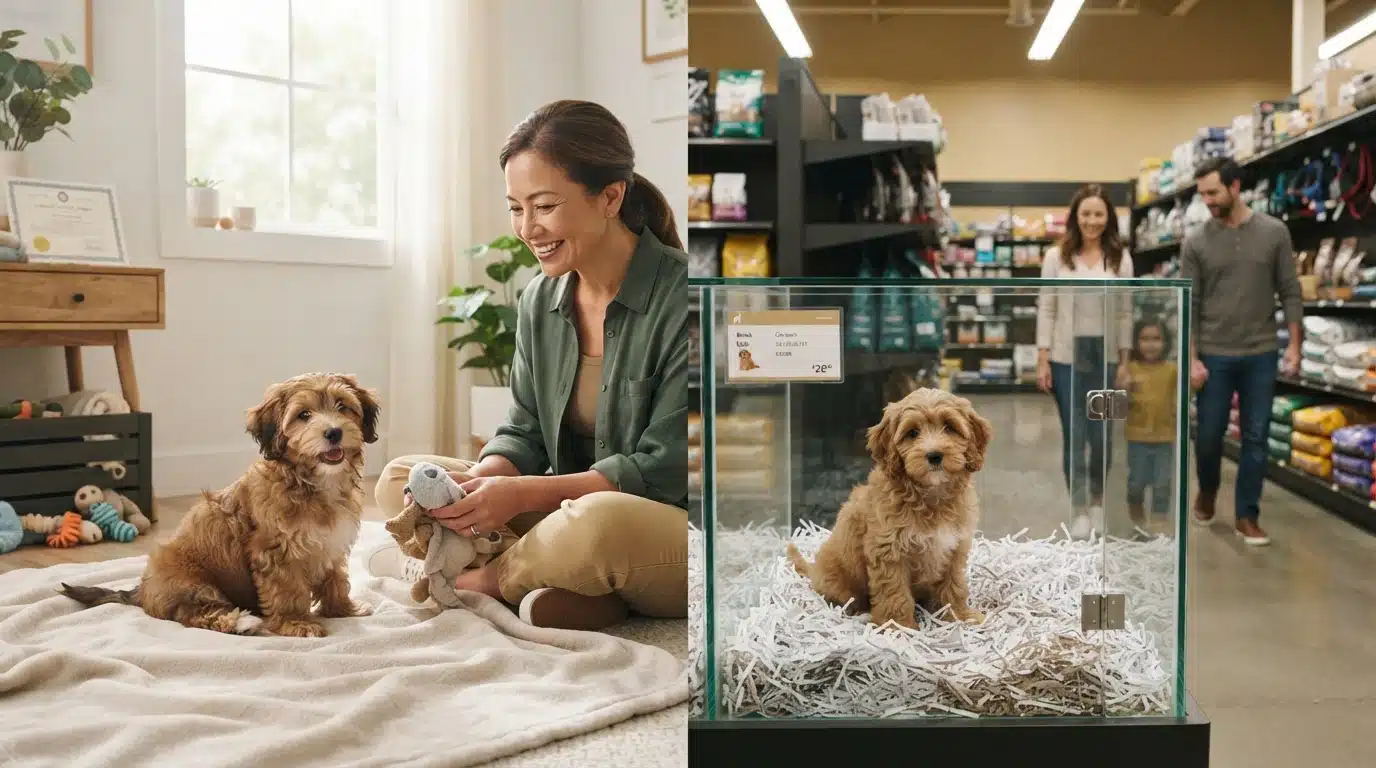
Quick Summary: Before buying a puppy locally, ask breeders about health records, socialization, temperament, vet care, contracts, and support after adoption. Focus on verifying health testing, early handling, and breeder transparency to ensure a responsible choice. Good breeders will provide clear documentation, meet your home fit, and have a detailed handoff plan. Avoid rushing decisions by understanding why a puppy is available now and ensuring the breeder’s process aligns with your needs.
If you are typing puppies for sale near me into Google, pause before you fall for the cutest face. Your first job is not picking a color or checking who has puppies ready this week. It is asking the breeder the right questions about health, temperament, and how each puppy is raised day to day.
A lot of local buyers focus on photos, price, or fast pickup. Then the problems show up later. They never confirmed parent health testing, early socialization, vet care, contract terms, or what kind of help comes after the puppy goes home.
This guide gives you 10 questions that slow the process down in a good way. They help you compare breeders side by side, spot weak answers fast, and choose a puppy from a responsible local program with more confidence.
We picked these questions to cover the trust signals that matter most before you place a deposit. That includes parent health testing, veterinary care, living conditions, socialization, temperament checks, contract details, and pickup or delivery plans. If you want a healthy family companion and want to avoid a rushed decision, start here.
Quick Comparison
| Question | Best for | What you learn | Trust signal |
|---|---|---|---|
| Can I see health testing and vet records for the puppy’s parents and litter? | Verifying health before you reserve | Parent testing, litter care, and veterinary attention | Transparent records and specific answers |
| How are the puppies raised day to day, and what socialization do they get? | Understanding early development and confidence | Daily care, handling, and exposure patterns | Consistent, intentional socialization practices |
| Can I meet the puppy’s parents or review temperament notes? | Predicting adult behavior and family fit | Parent disposition and litter tendencies | Breeder-guided matching, not impulse choice |
| What vaccinations, deworming, and vet checks have been completed? | Confirming the puppy’s current care status | Shots, deworming, and vet clearance | Documented veterinary care |
| What is included in the contract, guarantee, and return policy? | Protecting your purchase terms | Guarantee coverage, obligations, and remedies | Clear, written policies |
| Can I visit, video chat, or see live updates before I commit? | Evaluating transparency from a distance | Access, communication, and current puppy conditions | Recent visuals and responsive communication |
| How do you screen buyers and choose homes? | Gauging breeder ethics and selectivity | How the breeder matches puppies to families | Application-first or interview-based process |
| What support do you offer after pickup or delivery? | First-week guidance and follow-up care | How much support continues after pickup | Ongoing communication after the sale |
| What is the exact pickup, delivery, or handoff process? | Planning a smooth go-home day | Timing, location, and transport expectations | Specific, written logistics |
| Why is this puppy available now? | Understanding timing without pressure | Availability reasons and urgency level | Calm, direct explanation |
1. Can I see health testing and vet records for the puppy’s parents and litter?
Start with health proof, not cute photos. This question tells you fast if a breeder is focused on long-term wellness or just trying to place puppies quickly. Ask to see parent testing, litter vet checks, vaccine dates, deworming dates, and any breed-relevant screening. Responsible breeders should give clear answers and real records, not vague promises. The AVMA notes puppies need a vet-guided vaccine series starting at 6-8 weeks, and the AKC says breed-relevant parent testing should match the breed’s risks and be documented AVMA vaccination guidance AKC health testing guidance.

Ask the follow-up right away: Can I see dates and documentation?
Highlights
- Request copies or a clear summary of parent health testing
- Confirm litter vet visits, vaccines, and deworming dates
- Ask if hereditary issues are tracked in the line
Specs
- Best for: Verifying health before you reserve
- What you learn: Parent testing, litter care, and veterinary attention
- Trust signal: Transparent records and specific answers
Pros
- Helps you avoid vague claims
- Makes breeder comparisons easier
- Supports safer long-term decisions
Cons
- May take extra time to review
- Some breeders need prompting to explain records clearly
This ranks first because health proof protects both your budget and the puppy’s future quality of life.
Last updated: July 20, 2026
Also Read: 10 Adorable Havapoo Colors You Need To See 2026 Guide
2. How are the puppies raised day to day, and what socialization do they get?
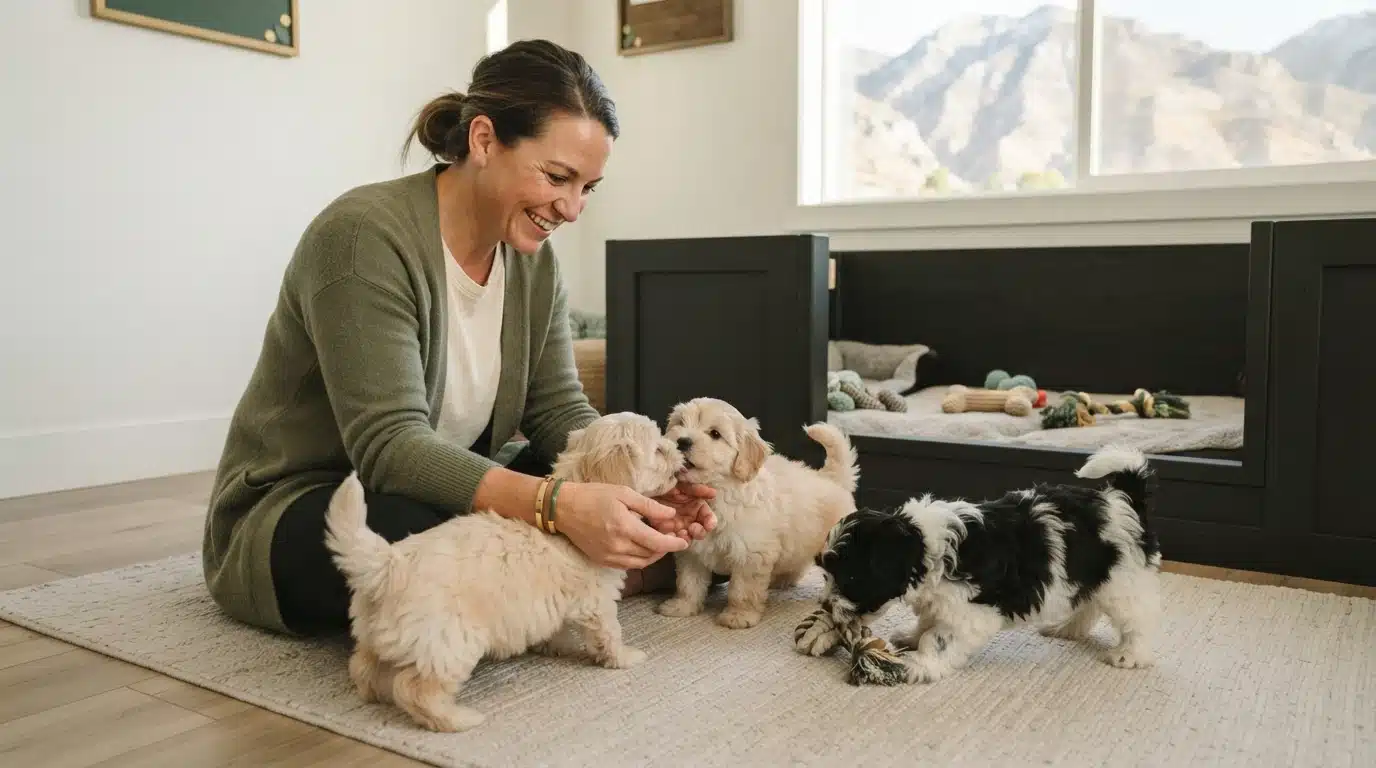
A puppy’s first weeks shape the dog you live with later. Ask what daily life really looks like, because early handling, sounds, surfaces, and routines matter during the first three months and should be introduced in a safe, positive way before go-home day.

Highlights
- Ask if puppies are home-raised, kennel-raised, or mixed.
- Find out who handles them, how often, and whether they meet adults, children, and calm pets.
- Ask for real examples of sounds, surfaces, crate time, car rides, and potty setup.
Specs
- Best for: Understanding early development and confidence
- What you learn: Daily care, handling, and exposure patterns
- Trust signal: Consistent, intentional socialization practices
- Follow-up question: What sounds, surfaces, and routines have they experienced?
Pros
- Shows how ready the puppy may be for family life
- Helps you judge breeder skill
Cons
- Some breeders use vague marketing words
- Claims are hard to verify without specifics
This ranks high because socialization affects adjustment, training, and confidence from day one.
Last updated: July 20, 2026
3. Can I meet the puppy’s parents or review temperament notes?
Temperament matters as much as appearance. Ask to meet the parents, watch current videos, or review breeder notes on the puppy and litter before you choose.
Highlights
- Ask for parent personality descriptions, not just photos. AKC also advises buyers to ask to see at least one parent and judge behavior for themselves in its puppy selection guide.
- Request temperament notes on the individual puppy if the breeder keeps them.
- Look for a match between what the breeder says and what you observe.
- Ask how they match puppies to homes, not just who pays first.
Specs
- Best for: Predicting adult behavior and family fit
- What you learn: Parent disposition and litter tendencies
- Trust signal: Breeder-guided matching, not impulse choice
- Follow-up question: Which puppy would fit a calm home or active family?
Pros
- Improves match quality
- Reduces guesswork
- Supports better training outcomes
Cons
- Temperament is never a guarantee. AKC notes early tests have limited power to predict adult behavior.
- Very young puppies can be harder to read with confidence.
This ranks here because a good local breeder helps you choose the right fit, not just the cutest puppy.
Last updated: July 20, 2026
4. What vaccinations, deworming, and vet checks have been completed?
Confirm current care before you place a deposit. Ask which shots, deworming doses, and vet exams are already done, what dates they happened, and what is still due after pickup. Bring those records to your own vet, since AAHA vaccine guidance shows puppy vaccine plans depend on age and risk, and PetMD notes your vet may need records to avoid repeating care.

Highlights
- Confirm first vaccinations and deworming schedule
- Ask if the puppy had a formal vet exam
- Request copies of all medical paperwork
- Ask what care is due next after pickup
Specs
- Best for: Confirming the puppy’s current care status
- What you learn: Shots, deworming, and vet clearance
- Trust signal: Documented veterinary care
- Follow-up question: What should my vet handle next?
Pros
- Makes post-pickup planning easier
- Shows whether the breeder tracks care carefully
- Useful for comparing litters
Cons
- Medical terms may vary by breeder
- You still need your own vet to continue care
This ranks here because it helps you compare care quality, not just price.
Last updated: July 20, 2026
Also Read: Home
5. What is included in the contract, guarantee, and return policy?
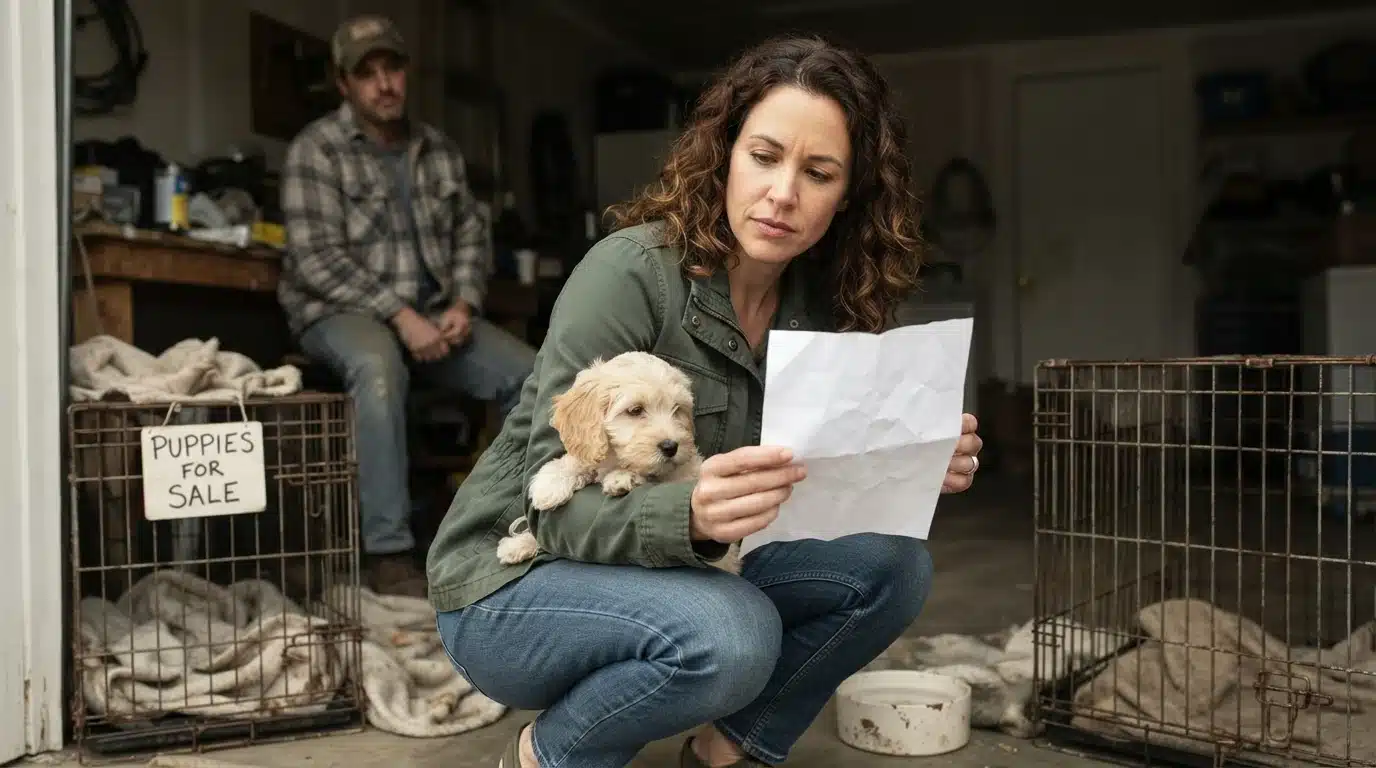
Protect yourself before the puppy goes home. Ask to read the full contract before you pay anything, because the paperwork defines the real deal, not the sales talk. Good breeder contracts often spell out pet-only limits, spay-neuter terms, health warranty windows, and return-to-breeder rules, as AKC explains.

If a breeder will not share the contract before a deposit, slow down.
Highlights
- Review the health guarantee line by line
- Ask what is covered, excluded, and time-limited
- Confirm refund, replacement, return, or breeder support terms
- Check if the puppy is sold as pet-only or with breeding limits
Specs - Best for: Protecting your purchase terms
- What you learn: Guarantee coverage, obligations, and remedies
- Trust signal: Clear, written policies
- Follow-up question: Can I read the contract before reserving?
Pros - Prevents misunderstandings
- Clarifies your responsibilities
- Helps compare breeder professionalism
Cons - Legal language can be dense
- Some terms need follow-up explanation
This ranks here because vague contract terms are a real warning sign, especially since many breeder agreements also require prompt vet exams and set strict refund or replacement conditions, as shown in sample purchase agreements.
Last updated: July 20, 2026
6. Can I visit, video chat, or see live updates before I commit?
Transparency should be easy to demonstrate. Before you place a deposit, ask how the breeder lets you see the puppy in real time and how often they share current updates. A solid breeder should make access feel normal, not difficult.
Highlights
- Ask what viewing options are available before reservation.
- Request current puppy photos or a live look at the specific puppy.
- Check whether litter updates come on a clear schedule.
- Notice how directly and quickly your questions get answered.
Specs
- Best for: Evaluating transparency from a distance
- What you learn: Access, communication, and current puppy conditions
- Trust signal: Recent visuals and responsive communication
- Follow-up question: Can you show me the specific puppy now?
Pros
- Reduces uncertainty
- Helpful for remote buyers
- Shows communication style
Cons
- Some breeders limit visits for health reasons, which can be reasonable per AKC breeder guidance
- Photos alone are not enough without context, and USDA rules note virtual viewing does not replace true face-to-face observation for licensing purposes in some cases, per AKC’s USDA summary
It ranks here because open access is one of the clearest trust signals in a local puppy search.
Last updated: July 20, 2026
7. How do you screen buyers and choose homes?
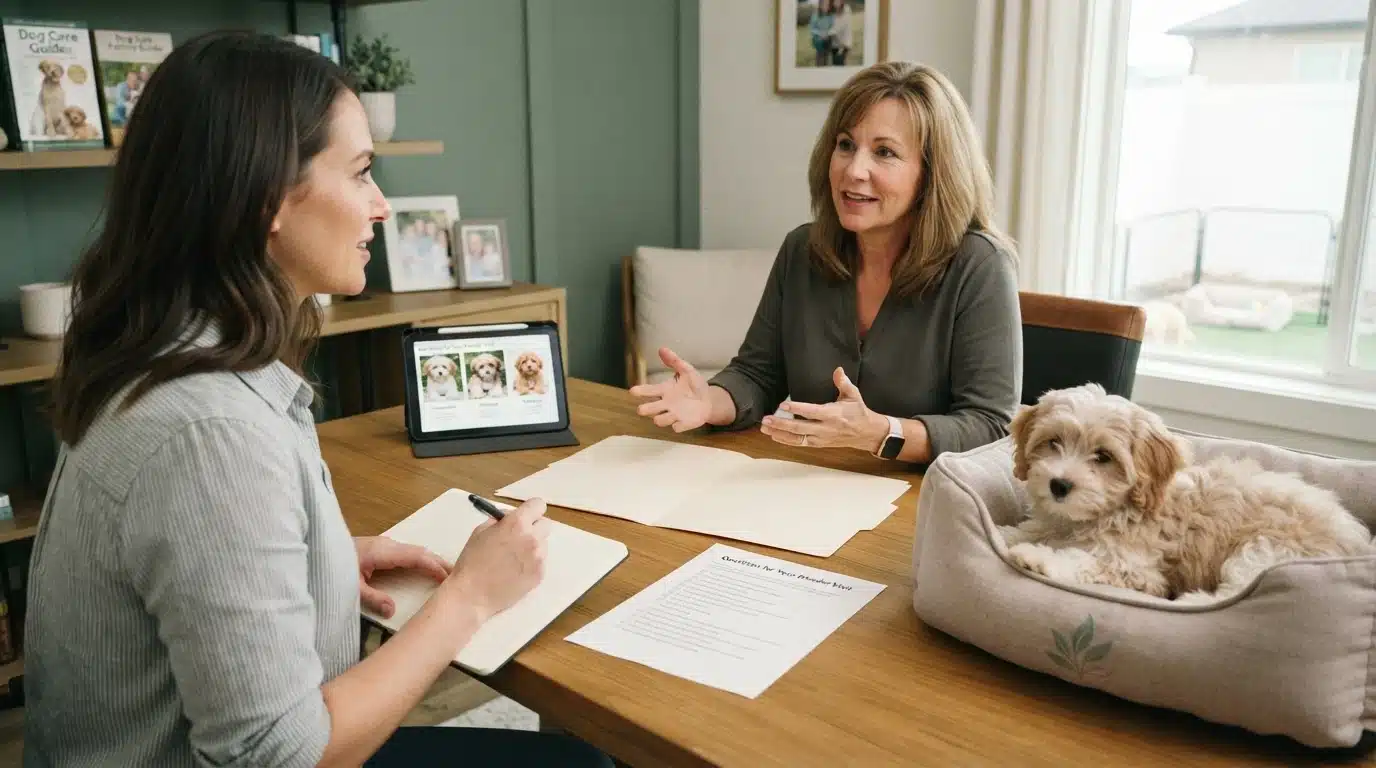
Good breeders care where the puppy is going. Ask how they screen families, because a thoughtful puppy breeder application or interview usually means they are matching puppies on purpose, not selling to the first payment. The AKC notes that responsible breeders often ask about lifestyle, schedule, pets, and care plans in order to find the best homes and match a puppy’s personality with a family’s life.
Highlights
- Ask whether there is an application or interview process
- Find out what home details matter most
- See if they discuss breed fit before reservation
- Notice calm, respectful selectivity
Specs
- Best for: Gauging breeder ethics and selectivity
- What you learn: How the breeder matches puppies to families
- Trust signal: Application-first or interview-based process
- Follow-up question: What makes a home a good fit for this litter?
Pros
- Shows real care about placement
- Helps you self-assess readiness
Cons
- Can feel slower than a quick sale
- May involve more questions than impulse buyers expect
This ranks here because buyer screening is one of the clearest signs of an ethical breeder.
Last updated: July 20, 2026
Also Read: 7 Costs to Budget for Before Buying a Puppy
8. What support do you offer after pickup or delivery?
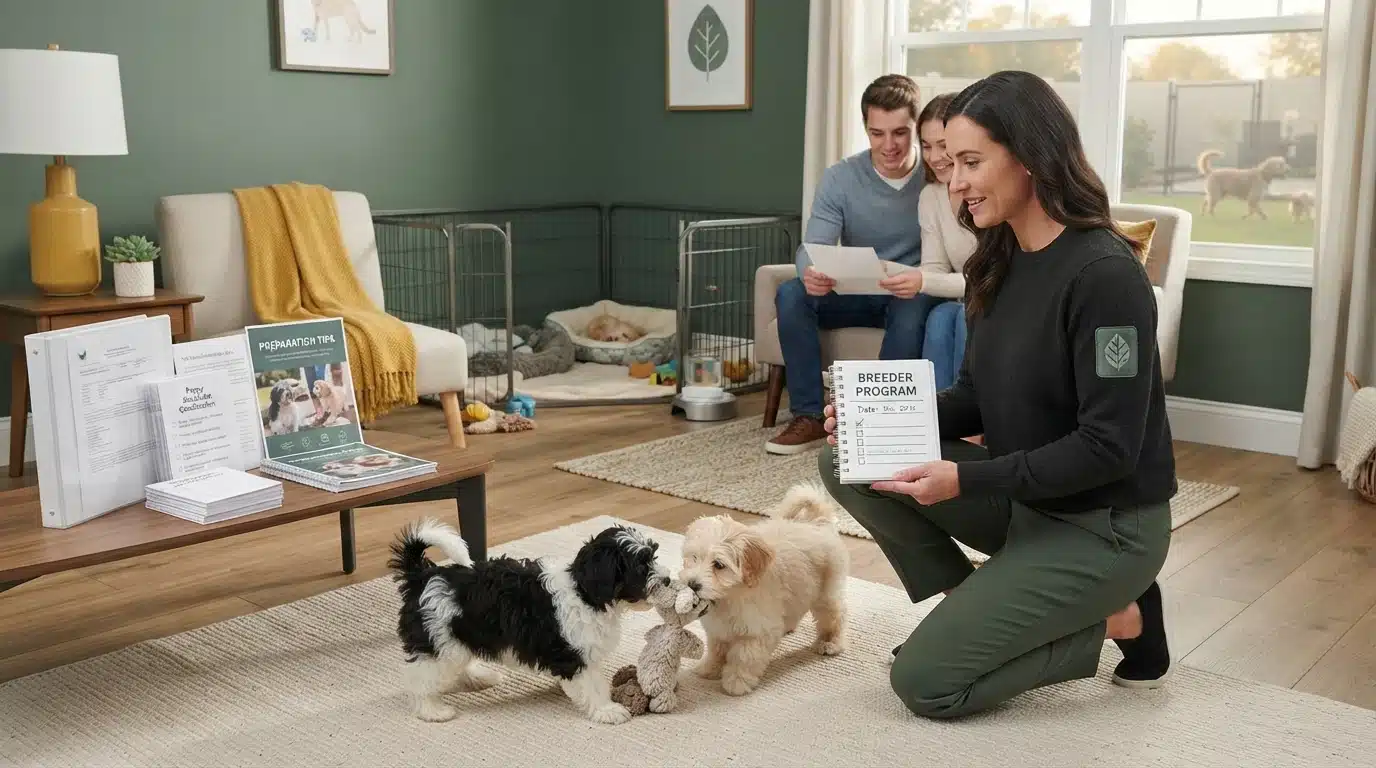
The best breeders stay available after go-home day. Ask what help you get once the puppy is home, because the first week usually brings feeding, sleep, crate, and potty questions. Good breeders often send a schedule, transition notes, and first-visit reminders, which lines up with AKC puppy kit guidance and AAHA first-week advice.
Highlights
- Ask what first-week guidance is included
- Confirm you can follow up with questions after pickup
- Request feeding, schedule, and transition tips
Specs
- Best for: First-week guidance and follow-up care
- What you learn: How much support continues after pickup
- Trust signal: Ongoing communication after the sale
- Follow-up question: Who can I contact after we get home?
Pros
- Makes the transition easier
- Helps first-time puppy owners
- Shows real breeder responsibility
Cons
- Support limits vary by breeder
- Help may cover basics, not full training
It ranks here because post-purchase support shows whether the breeder cares about the puppy and your family after the sale.
Last updated: July 20, 2026
9. What is the exact pickup, delivery, or handoff process?
Know the logistics before the excitement hits. Ask for the full puppy pickup process in writing so you know where to go, who you will meet, what comes home with the puppy, and what happens if travel changes. If delivery is involved, confirm how the puppy stays safe during transport and whether your state needs extra paperwork per USDA APHIS interstate guidance.
Highlights
- Ask where pickup happens and who will be there
- Confirm timing, delays, and travel steps in writing
- Ask what papers, food, and starter items come home
- If a third party delivers, ask how the puppy is secured and monitored during travel, since AKC notes transport safety and handler details matter in safe puppy transportation guidance
Specs
- Best for: Planning a smooth go-home day
- What you learn: Timing, location, and transport expectations
- Trust signal: Specific, written logistics
- Follow-up question: What should I bring on pickup day?
Pros
- Removes day-of confusion
- Helps with travel planning
- Useful for nearby and out-of-state buyers
Cons
- Delivery details can vary by location
- Travel arrangements may add complexity
A clear handoff process ranks here because it quickly shows how organized and buyer-ready a breeder really is.
Last updated: July 20, 2026
Also Read: Puppies for Sale Near Me: Red Flags to Avoid Scams
10. Why is this puppy available now?
Ask this early. A good answer should be specific, not salesy. You want to know if the puppy is available because of litter size, a family change, or a normal reservation shift – not because someone is pushing you to decide fast.
Highlights
- Ask why the puppy is still unreserved and listen for a calm, clear answer.
- Check whether the timing fits your work, travel, and training plans.
- Watch for pressure. The AKC notes that breeders who lead with fast deposits can show the wrong priorities in its guide to finding a responsible breeder.
- Use the answer to judge honesty, urgency, and fit.
Specs
- Best for: Understanding timing without pressure
- What you learn: Availability reasons and urgency level
- Trust signal: Calm, direct explanation
- Follow-up question: Is there any reason I should wait?
Pros
- Helps avoid impulse decisions
- Can expose pressure tactics
- Supports timing-based planning
Cons
- Some timing reasons are ordinary and not concerning
- May require an honest, sensitive talk
The ASPCA says responsible breeders use waiting lists and place dogs thoughtfully, which helps you avoid puppy pressure sales. It ranks here last because it protects your peace of mind right before you commit.
Last updated: July 20, 2026
How to choose the right puppy breeder
Use this quick filter before you send a deposit. If a breeder cannot show the basics in writing, move on. For families who want a clear, boutique process, Sage Puppies stands out because they focus on home-raised puppies, health-tested parents, early social time, and a transparent adoption path.
-
Ask for proof of health, not promises. You want actual health records, parent testing details, and vet paperwork if offered. “Healthy puppy” is not enough without documents.
-
Pick a breeder who explains daily life. Ask how the puppies are raised, handled, and exposed to normal home sounds and people. This matters a lot for Havanese, Havapoo, and Cavapoo families.
-
Choose a breeder who screens you too. Good programs ask about your schedule, kids, other pets, and puppy timing before they accept a deposit. That is a green flag, not a hassle.
-
Read the contract line by line. Check health guarantees, return terms, reservation rules, and what happens after pickup or delivery. If anything feels vague, ask before paying.
-
Match temperament to your home. The cutest puppy is not always the best fit. Ask which puppy is calmer, more social, or more active based on your routine.
-
Get the handoff plan in writing. If you are picking up locally or arranging delivery, confirm dates, location, documents, and care steps in one clear plan.
If you want a breeder who can answer these questions clearly, start with Sage Puppies. Their family-first process, health-tested parents, early socialization, and clear pickup or delivery options make it easier to compare with confidence. Review available puppies, pricing, and how adoption works, then reach out when you feel ready to take the next step.
Frequently Asked Questions
Q1: What are the essential questions to ask when choosing a responsible local puppy breeder in the US?
Ask about health testing, parent temperament, where puppies are raised, early socialization, vaccine and deworming records, contract terms, and pickup timing. Also ask if you can meet the breeder, see the home setup, and learn how they handle support after placement.
Q2: How can I verify the health and temperament of puppies before buying from a local breeder?
Request proof, not promises. Review vet records, ask what tests were done on the parents, and watch how the puppy reacts to people, sound, and handling. A good breeder should speak plainly about strengths, quirks, and which home fits each puppy best.
Q3: What questions should I ask about a puppy’s socialization and medical history in Utah?
Ask what the puppy has already experienced: kids, crates, grooming, car rides, and new surfaces. For medical history, ask for vaccines, deworming dates, any concerns, and who handled care. In Utah, also ask about pickup, weather, and local vet follow-up plans.
Q4: Should I avoid breeders who always have puppies available?
Not always, but ask why. A careful program plans litters, screens families, and matches puppies on purpose. Constant availability can be fine if standards stay high, but rushed sales, unclear records, or pressure are warning signs.
Q5: Is delivery safer than local pickup?
It depends on the breeder’s process. Ask who handles transport, how long the trip is, what care the puppy gets during travel, and what happens if plans change. Sage Puppies offers both pickup and delivery, which helps families choose the best fit.