Quick Summary: A reputable Utah puppy breeder should prove the puppy’s vet history, both parents’ OFA or CHIC health screenings, and DNA-verified pedigree before payment. Buyers should review a written contract and deposit terms, confirm records directly with OFA and AKC, visit or request a live video tour, and walk away from sellers who pressure them, hide paperwork, or use borrowed photos. Sage Puppies is presented as meeting this standard through documented health testing, parentage records, an application process, and clear pickup or delivery options.
Two Utah breeders can both hand you a health certificate and still be telling you very different things. One is showing a CHIC number, which confirms health testing was submitted. The other is showing the puppy’s actual exam and care history from the vet who examined it. Reputable puppy breeders in Utah welcome that distinction, because their paperwork is built to be checked. The challenge for families is knowing which records matter, who was tested, and what a fair contract looks like. This guide walks through each document, from OFA results and parent DNA to deposits and puppy purchase contracts, with special notes for Havanese, Havapoo and Cavapoo buyers. Whether you plan a local pickup in Utah or delivery to another state, you will finish with a clear checklist for verifying a breeder before any money changes hands.
What Actually Makes a Utah Puppy Breeder Reputable
A reputable Utah puppy breeder proves three things with documents: each puppy has real records, both parents passed health screening and DNA checks, and the sale follows a written contract. The rest is marketing. Here is how to tell the difference when searching for reputable puppy breeders in Utah.
Why Utah Buyers Have to Verify Rather Than Assume
A clean website proves nothing. Some programs advertise puppies they never see, shipping from third-party kennels they won’t name. That gap between the photo and the kennel is where buyers lose money. Anyone selling Havanese, Havapoo or Cavapoo puppies should let you see the actual breeder, the parents’ test results and where the litter was raised. Before you pay a deposit, ask how the program runs its reservation process and who answers your questions.
The Seven Signals That Distinguish a Reputable Breeder
- Health testing records for both parents, not just claims
- DNA parentage results that verify the pedigree
- OFA and CHIC listings you can look up yourself
- A written puppy purchase contract with clear terms
- A structured application before any deposit
- In-person visits or video calls on request
- Honest answers, including what the breeder doesn’t guarantee
What Reputation Looks Like Online and Offline
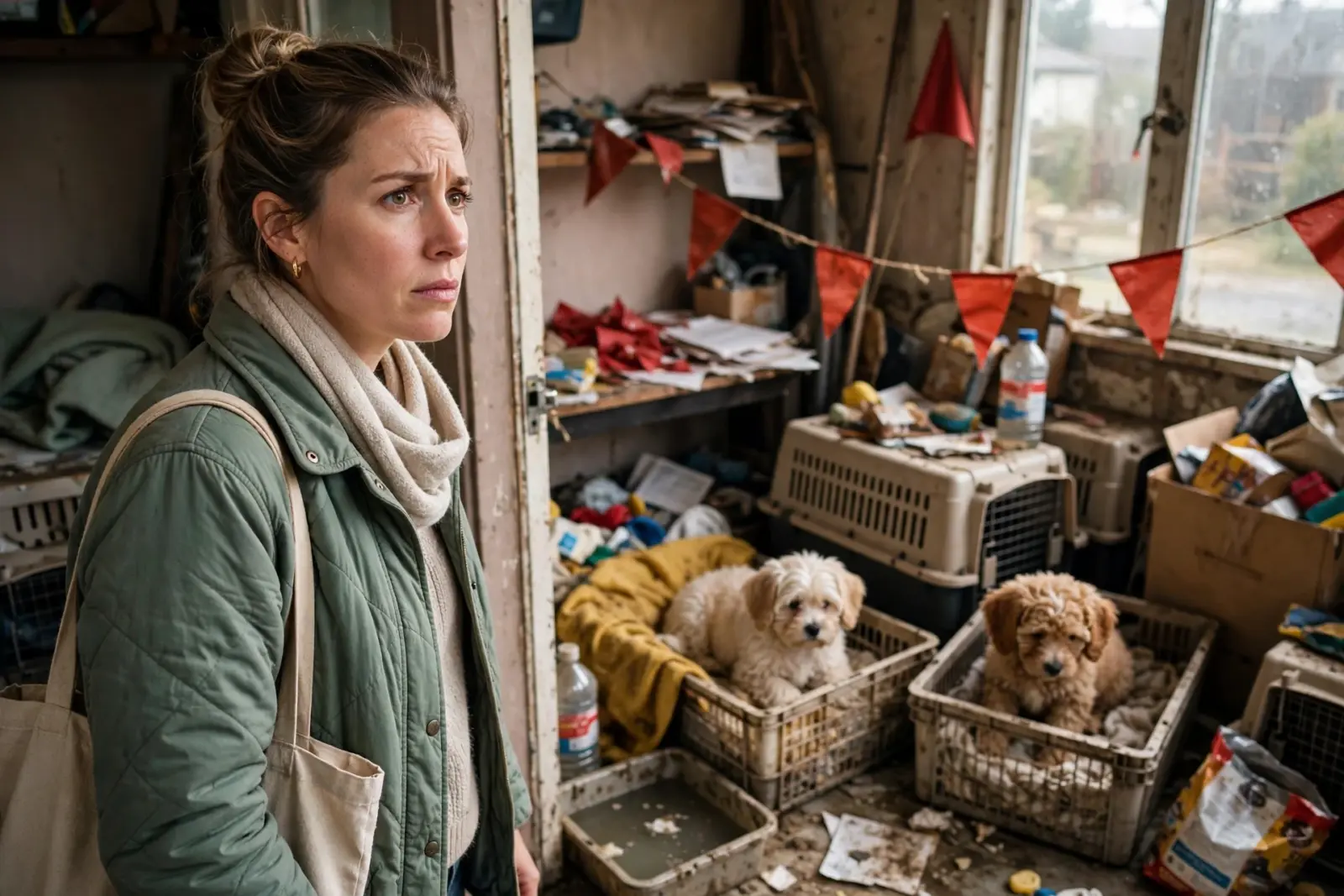
Offline, reputation means a home you can visit, a vet who knows the program and past families willing to talk. Online, it shows up in reviews that mention follow-up support, not just cute photos. Watch for classic puppy scam red flags: deposit-only payments, no video access and pressure to pay quickly.
Health Testing Standards for Havanese, Havapoo and Cavapoo
Verifying health testing means reading three separate record types, not one stack of paperwork. Ask for the puppy’s own exam records, the parents’ clinical screening results, and the DNA reports that rule out inherited variants. Each document proves something different, so a folder with only a vet note tells you very little.
Three Different Records Buyers Often Confuse
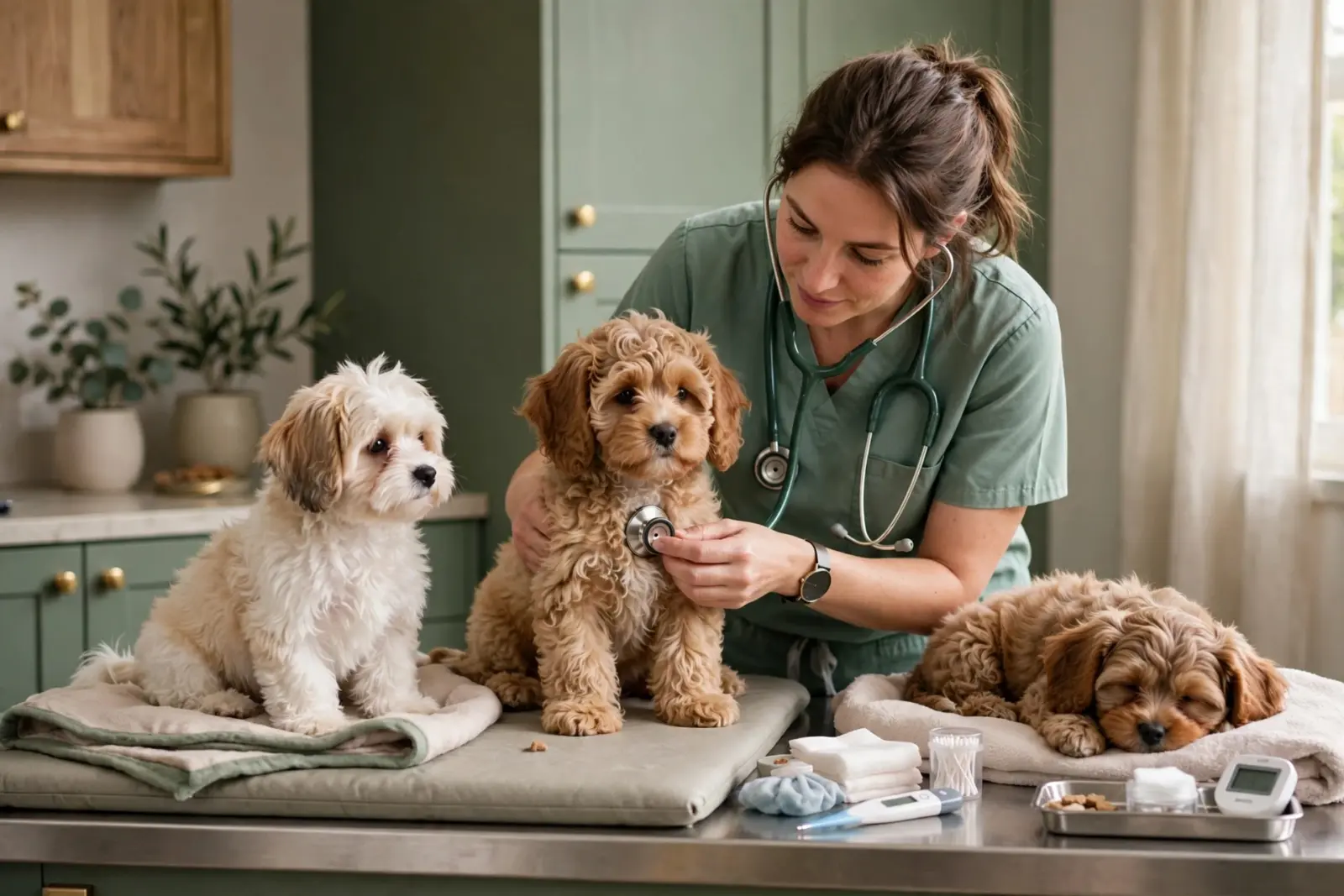
Buyers often mix up three documents. Puppy records cover only that pup: vet exams, deworming and first shots. Parent screening shows the mother and father’s OFA eye, knee and hip results. DNA results list inherited variants each parent carries. A breeder who can produce all three is showing real accountability. One vet check on a puppy proves none of the parent health work.
Current CHIC Requirements for Havanese
The Havanese Club of America sets the breed’s baseline, and the OFA’s CHIC database tracks it. Havanese need an ophthalmologist eye exam, patella (kneecap) evaluation and a cardiac exam, with hip X-rays optional but common. Each result posts publicly on the OFA site under the dog’s registered name, so you can search it yourself. If a breeder claims testing you cannot find there, ask for the paperwork.
Applying the Standards to Havapoo and Cavapoo Crosses
Mixed breeds do not carry one parent-club checklist, so hold each parent to its own breed’s standard. That means Havanese eye, knee and heart testing on one side and Cavalier heart and eye screening or poodle hip and eye testing on the other. DNA panels should rule out known variants from both parent breeds. Breeders like Sage Puppies document each parent’s results before breeding, which is the standard to expect from any Havanese, Havapoo or Cavapoo program.
Verifying Ancestry and Pedigree Records
A strong pedigree is one you can trace yourself, not one you take on faith. Good breeders hand you registered names and numbers, then let the records do the talking.
Registration Papers Versus Verified Parentage
Registration papers prove ancestry only if the parents are genuinely the puppy’s parents. Ask whether the litter is registered with the AKC and whether parentage was confirmed by DNA. The Havanese Club of America advises that both parents be AKC registered, with a copy of the pedigree sent home. You can check any dog’s public records yourself on OFA.org by its registered name.
Looking Beyond the Parents
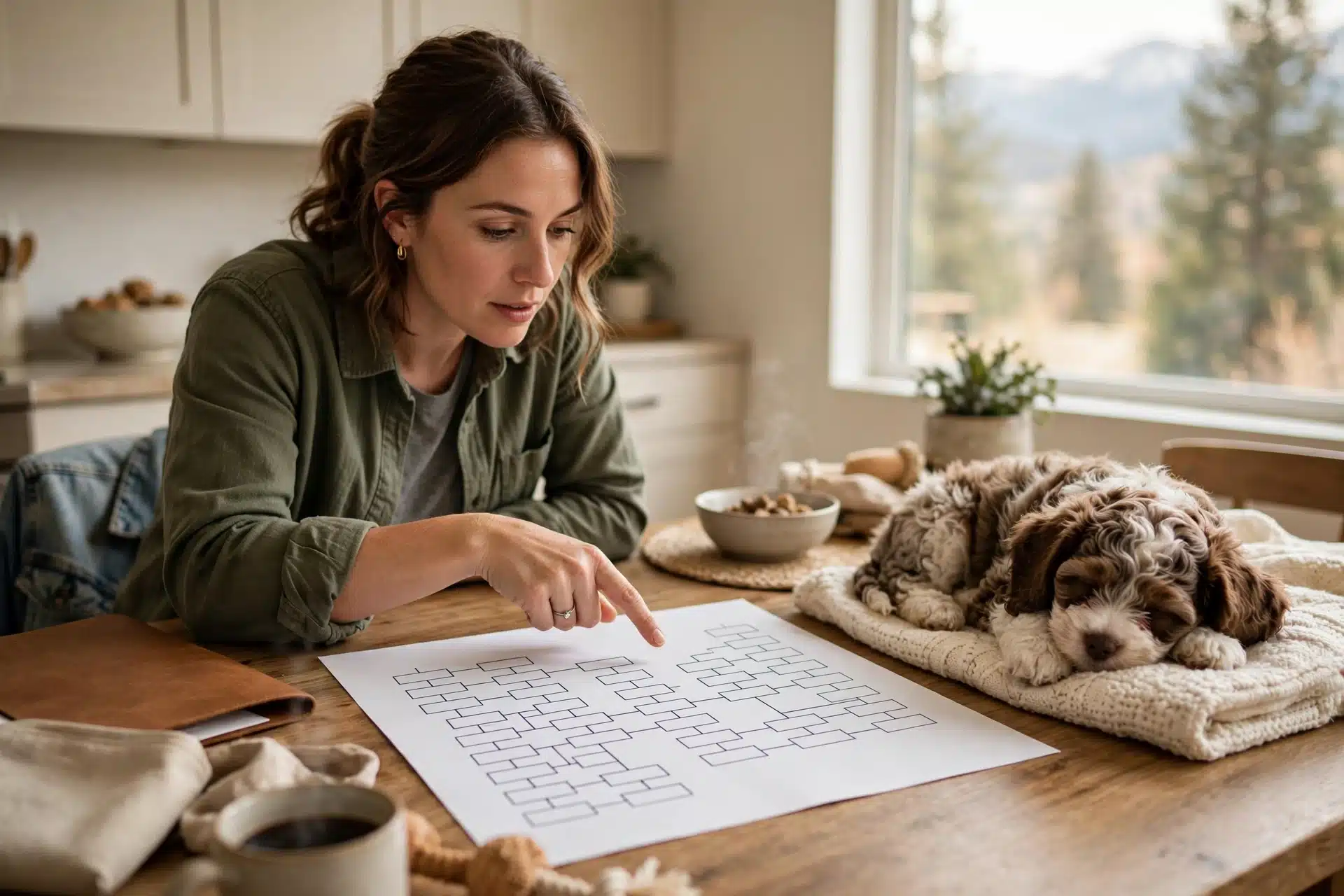
Two registered parents tell you nothing about grandparents or earlier lines. Ask to see at least a three-generation pedigree. The AKC notes that a certified pedigree traces a dog’s family tree by registered names and numbers. Scan it for repeated names, which can signal careful linebreeding or careless inbreeding, and for health-testing titles earned across generations.
Questions That Expose a Thin Pedigree
- “Which registry is the litter registered with?” Vague answers to a simple question are a problem.
- “Can you email the parents’ pedigrees before I place a deposit?” Refusal is a red flag.
- “Which relatives have CHIC or OFA records?” You can verify health testing on those names yourself.
If the breeder answers all three with names, numbers and dates, the pedigree holds up.
What a Utah Breeder Contract and Application Should Include
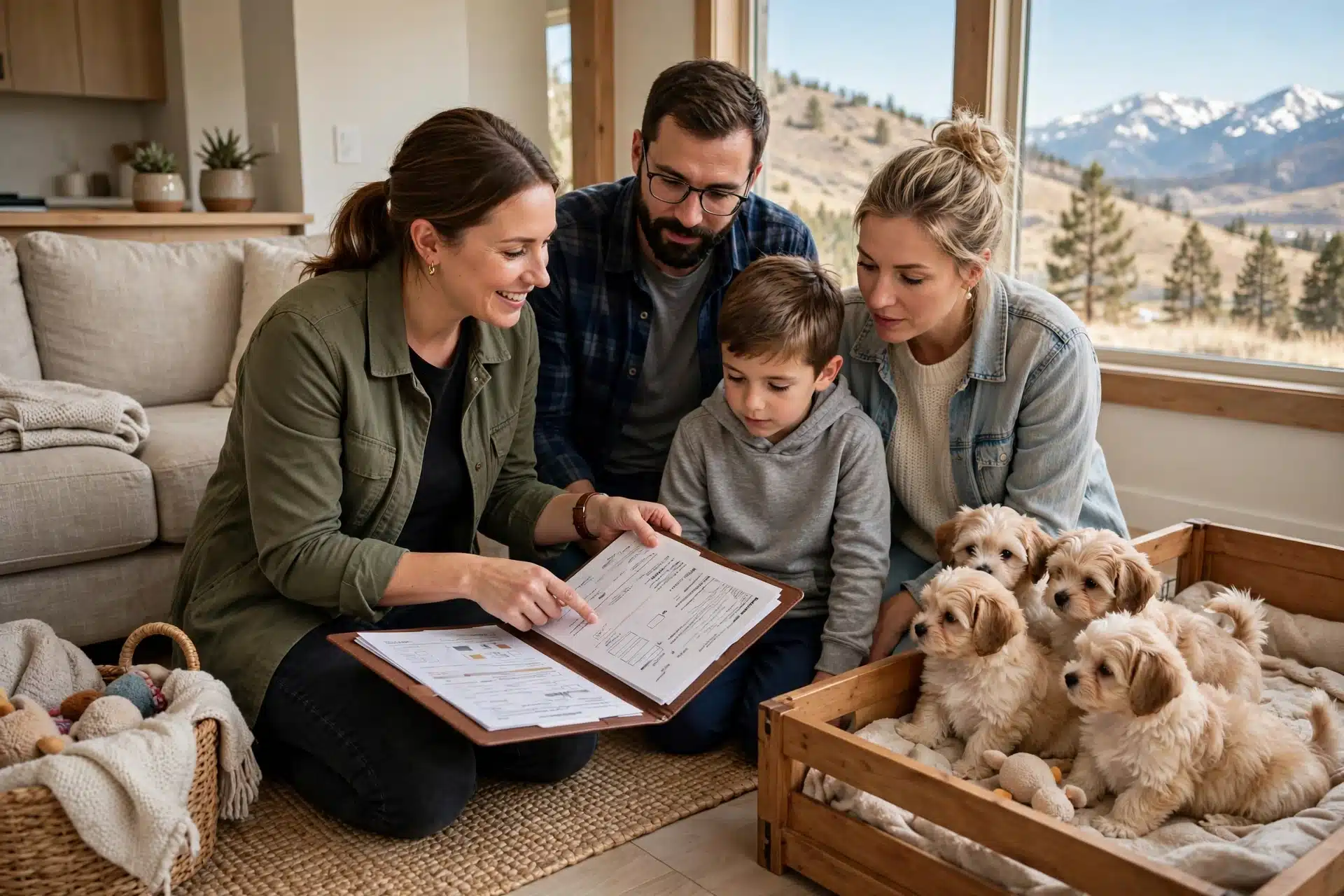
A Utah puppy purchase contract should cover price and payment schedule, health record requirements, spay or neuter terms, return policy, and what happens if a health issue appears. Ask for these terms in writing before you pay anything.

Contract terms worth reading line by line:
- Health guarantee period and exactly what it covers
- Return or rehome clause, not just a refund promise
- Spay/neuter requirements and timing
- Registration or pedigree documentation you will receive
- Buyer and breeder contact information, both signed
Deposits, reservations and refund conditions:
Ask whether a deposit is refundable, transferable to a future litter, or forfeited entirely. A responsible breeder explains this in writing before you pay, not after. If the answers shift between your first call and your deposit, treat that as a warning sign. For context on how a structured reservation should work, see Sage Puppies’ reservation process as a reference point, then compare it to what other breeders tell you.
Why a good breeder screens you:
A breeder who asks about your home, schedule, experience, and plans for the puppy is protecting the dog, not being difficult. Screening questions also tell you how the breeder thinks. If nobody asks anything except when you can pay, that tells you something too.
Visiting a Utah Breeder: In Person and by Video
A visit tells you more than any website. Whether you walk through the door or join a live video call, watch how the puppies live, not just how they look in photos.
What to Look at in the Home or Kennel
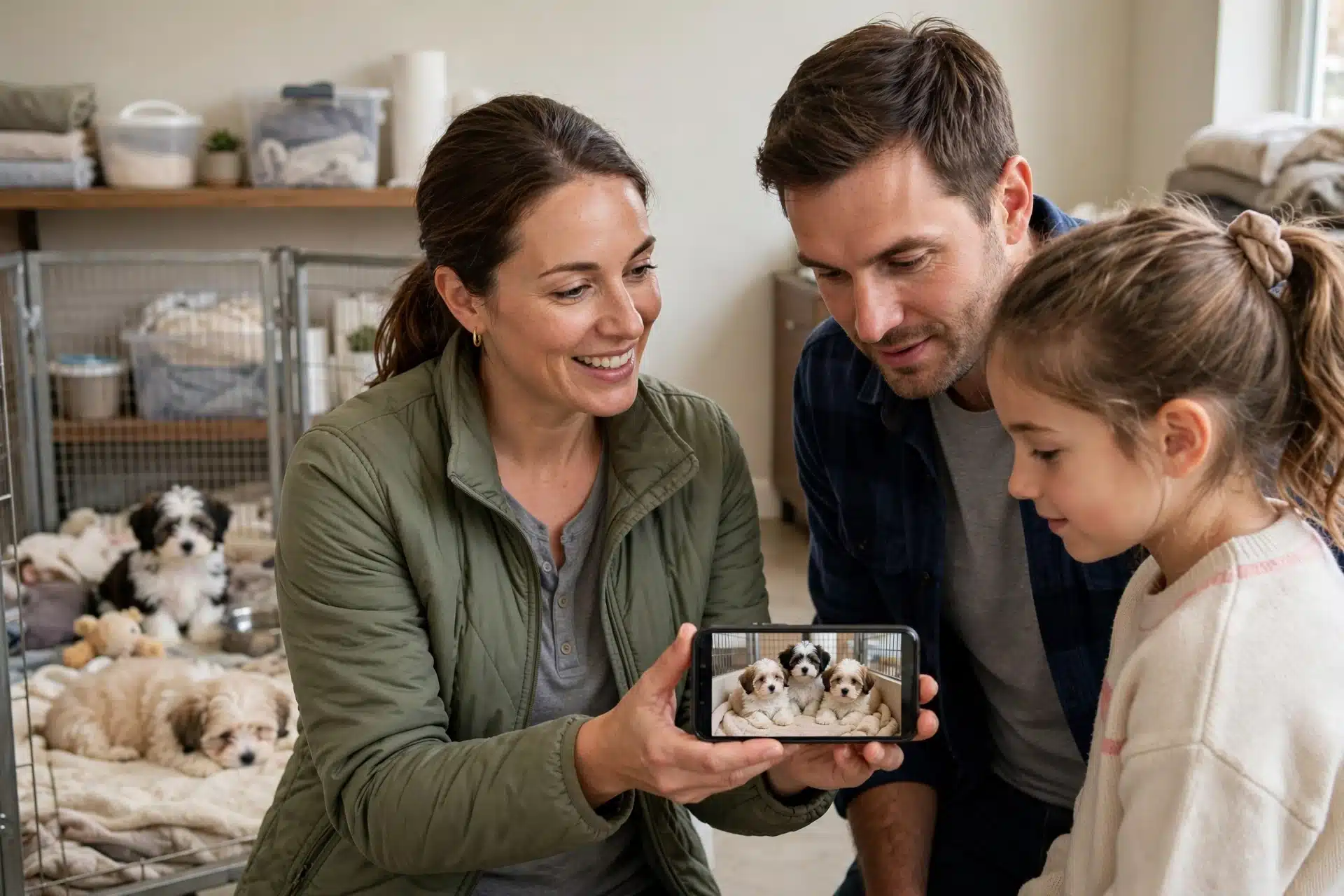
Start with the puppies’ space. It should be clean, warm and not overcrowded, with bedding, toys and room to play. Watch how the litter reacts to people. Confident puppies approach you. Also ask to see the mother and check her body condition and temperament. A breeder who raises Havanese, Havapoo or Cavapoo puppies in the home will usually invite that.
Making a Video Tour Work
If distance keeps you away, ask for a live video call, not a edited clip. Request a walk-through of the whelping area and a close look at each puppy’s eyes, coat and movement. Ask the breeder to hold the puppy so you can see size and posture. Live video also lets you ask questions in the moment.
Planning Travel for a Utah Pickup
Flying or driving in? Your home state may require a current health certificate for a dog crossing state lines, so check the USDA state-to-state travel rules before you book. Utah pickup trips work best when you plan two visits: one to meet the litter, one to take your puppy home.
Red Flags and Warning Signs of Puppy Scams
Most puppy scams follow the same pattern: rushed payment, borrowed photos, and missing paperwork. Watch for:
- Payment red flags: wire transfers, gift cards, third-party apps, or extra fees for crates and delivery that never happen
- Photo red flags: stock images, the same puppy listed in several states, or a refusal to video chat
- Record red flags: hesitance to share registration papers, health results, or a written contract
Pressure Tactics and Payment Red Flags
Pressure is the clearest sign. A scammer may claim other families are waiting, or that the puppy will be rehomed unless you pay today. They often ask for wire transfers or prepaid cards, which offer no protection. The AKC notes that an anxious, rushed seller is a classic warning. A legitimate breeder, like any ethical program, lets you take your time and never demands same-day deposits.
Photos, Pedigrees and Stock That Do Not Add Up
Reverse-image search the puppy photos before you send money. Stolen pictures appear on multiple fake listings, sometimes in different states on the same day. Ask for a live video call so you can see the puppy move and interact in real time. If the seller refuses, walk away. Vague pedigrees are another signal: a real breeder can name both parents, share their registration numbers, and explain how parentage was verified.
Records, Contracts and Age Problems
Paperwork questions trip up scammers fast. Ask for a written puppy purchase contract, vaccination and deworming dates, and parent health screening results, such as OFA or CHIC records. Hesitance to provide papers usually signals a problem, per the AKC. Also check ages carefully. Puppies shipped or handed over younger than eight weeks raise welfare and legal concerns in many states, and scammers often use tiny “teacup” puppies to excuse the early age. Do not accept excuses, screenshots in place of documents, or delivery fees tacked on after your deposit, a tactic state attorneys general warn about. Verifying records yourself, rather than trusting forwarded photos, is the safest path.
Local Pickup and Nationwide Delivery from Utah
Choosing Between Pickup and Delivery
Pickup lets you meet the breeder, see where the puppy was raised, and start bonding on the drive home. Delivery saves a long trip, which matters for East Coast or Midwest families. Many Utah families choose pickup for that first meeting, while buyers nationwide rely on a flight nanny or courier. Ask which option a breeder offers before you pay a deposit.
Travel Safety for a Young Puppy
Small breeds like Havanese, Havapoo and Cavapoo puppies travel best in a soft, ventilated carrier sized to the puppy. Keep rides short, offer water often, and plan potty breaks every two to three hours. Most airlines will not accept pets in the cabin until eight to ten weeks old, and the AVMA advises discussing travel plans with a veterinarian first. Never improvise restraints or fast a puppy for a car trip.
State and Federal Rules When a Puppy Crosses State Lines
Each state sets its own entry rules, so check them before a puppy travels. The USDA APHIS pet travel page explains that many states require a current health certificate, sometimes called a certificate of veterinary inspection, issued by a licensed vet shortly before travel. Ask for a copy, confirm the puppy’s age and vaccinations match the paperwork, and keep the document with your records and contract.
A Buyer Evaluation Framework for Utah Breeders
Use documents, not charm, to judge a breeder. A reputable program can show health testing, pedigree and DNA results for both parents, plus a written puppy purchase contract Utah buyers can read before paying anything.
The Ten-Point Documentation Checklist
Ask each breeder for these items and keep copies:
- OFA CHIC records for both parents
- Eye exam results dated within a year
- Patellar luxation scoring, standard for Havanese lines
- DNA parentage verification on the pedigree
- Proof the sire and dam match the papers
- Vaccination and deworming dates for the puppy
- A veterinary exam record for your puppy
- A written contract with a return clause
- Receipts showing your deposit and balance
- References from past puppy families
Evaluating a Utah Program Like Sage Puppies
Small Utah programs should walk you through each record before you commit. A boutique breeder such as Sage Puppies uses an application and owner-managed matching process, which means you can review ancestry and health documents before any deposit. Ask who raised the litter, where the puppy lives, and who handles Utah puppy pickup versus delivery. Clear answers on all three are a good sign.
When to Walk Away
Leave if a breeder refuses video calls, ships a puppy before you see its paperwork, or pressures you to pay same-day. A puppy scam red flag is always price-only talk with no health records behind it. Multiple litters always available, no vet details, or a contract that cannot be shared early all point to risk.

If you want a Havanese, Havapoo or Cavapoo from a Utah breeder who documents health testing and answers your questions before any deposit, start the application at Sage Puppies. Cassie will walk you through each step, from matching to pickup in South Jordan or delivery to your door.
Frequently Asked Questions
Q1: What makes Utah puppy breeders reputable?
A reputable Utah breeder proves three things with documents: complete puppy records, health screening and DNA results for both parents, and a written contract. They welcome verification through OFA and CHIC lookups, video calls, and clear answers before any deposit.
Q2: How do I verify a puppy breeder’s OFA records?
Search each parent’s registered name on OFA.org. CHIC listings show eye, patella and cardiac results. If claimed testing is missing, ask for paperwork.
Q3: What should a puppy purchase contract in Utah include?
Price, payment schedule, health guarantee terms, spay/neuter requirements, a return or rehome clause, and registration documentation. Read it fully before paying.
Q4: What are common puppy scam red flags?
Wire transfers, gift cards, borrowed photos, refused video calls, and pressure to pay same-day. Also avoid sellers shipping puppies under eight weeks old.
Q5: Are deposits refundable with reputable breeders?
Terms vary, so ask in writing first. A trustworthy breeder states upfront whether a deposit is refundable, transferable to another litter, or forfeited.
Q6: Can I get a Utah puppy delivered to another state?
Yes, many programs offer flight nannies or couriers. Most states require a current health certificate issued by a licensed vet shortly before travel.
Conclusion
Reputable puppy breeders in Utah prove their claims with documents, not charm. Check three record types separately: your puppy’s own vet history, both parents’ OFA and CHIC screening results, and DNA parentage verification behind the pedigree. Read the puppy purchase contract and deposit terms in writing before you pay anything. Trust a breeder who welcomes video calls, answers questions about where the litter lives, and screens you in return. The ten-point checklist in this guide gives you a way to compare any Havanese, Havapoo or Cavapoo program fairly, so the breeder you choose matches the care your puppy has already received.