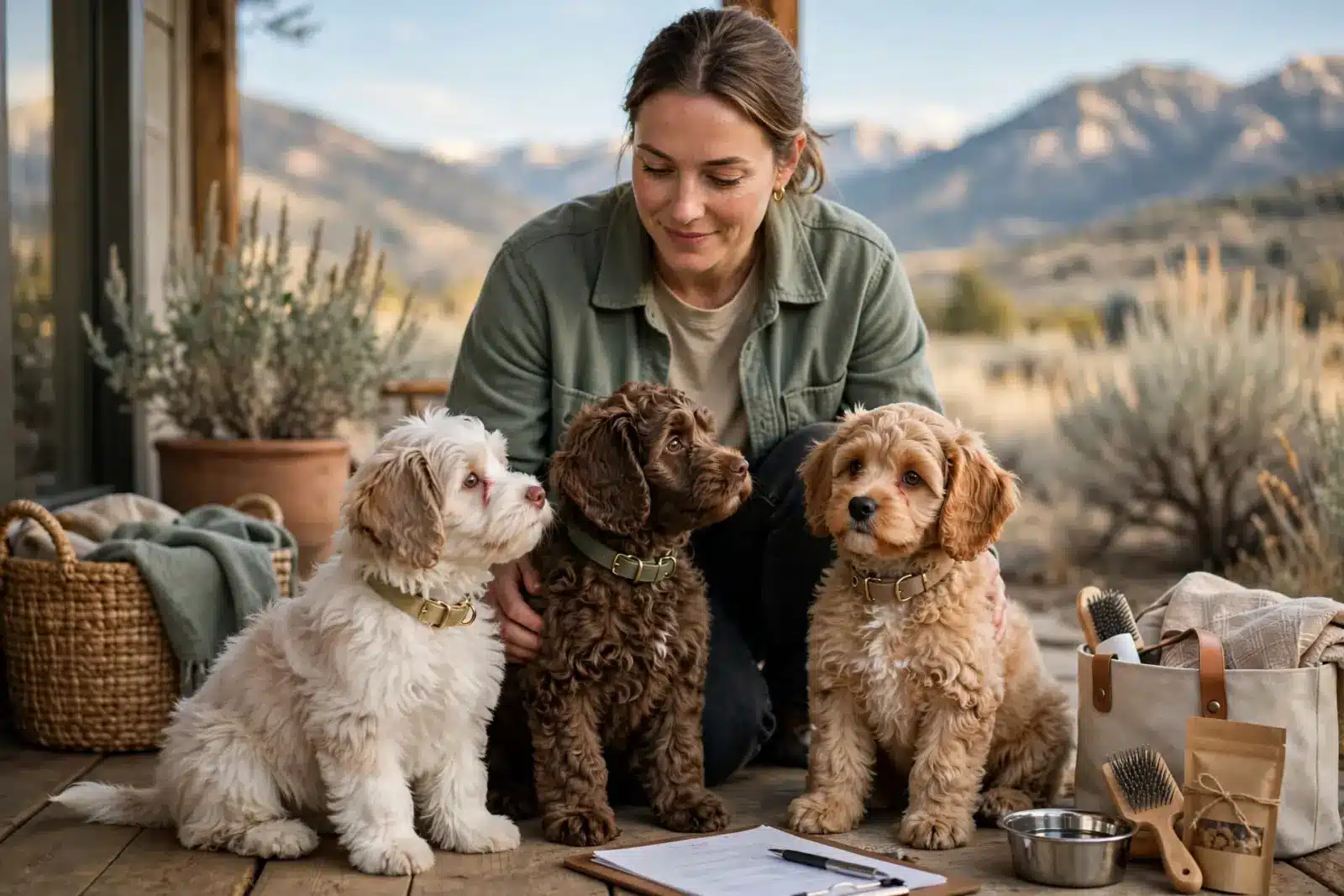
Quick Summary: Check whether a breeder needs a license, then verify its number, name, address, status, and inspection history through official USDA, state, county, and city records. Many small breeders with four or fewer breeding females do not need a federal license, so Utah buyers should verify local kennel permits, business licenses, and state registrations instead. Ask for health tests, pedigree records, and inspection reports in writing before paying a deposit, and do not proceed if records are missing, mismatched, expired, or refused.
The moment that tells you the most is not the kennel tour. It is the pause after you ask for a license number, when the breeder says someone else will call you back. That hesitation usually means one thing: no one has ever checked their puppy breeder registration, and they are not sure it exists.
This guide shows you how to run a proper check before you pay a deposit. You will confirm whether a breeder needs a license at all, search federal and state breeder registration records, and read a USDA inspection report without getting lost in the jargon. We also cover what to do in states like Utah, where many small hobby breeders are exempt from licensing, and how to verify credentials through county filings instead. Every step uses official sources, so the answer you get matches the records.
Step 1: Work Out Whether This Breeder Actually Needs a License
Do all puppy breeders need a license to sell puppies? No, and this surprises most buyers. Federal law only requires an Animal Welfare Act Class A breeder license for breeders with more than four breeding females who sell puppies sight-unseen, such as online or by delivery. Many small programs fall under the exemption, so a missing puppy breeder registration is not proof of a problem on its own. Here is how the rule works:

- 5 or more breeding females, selling without the buyer seeing the dog: USDA license required
- 4 or fewer breeding females: no federal license needed
- Face-to-face sales only: the retail pet store exemption can apply even at larger scale
The four-female threshold comes from the 2014 retail pet store rule, and the AKC’s licensing summary spells out each exemption.
The federal rule in plain language
The USDA licenses breeders who sell “wholesale,” meaning the buyer never meets the puppy in person. A breeder with five or more breeding females doing that needs a Class A license and gets inspected. Someone selling four or fewer females’ puppies, or selling in person, can be fully legitimate with no federal number at all.
Why Utah buyers have to look closer at county and city rules
Utah has no statewide breeder license you can pull up on one website, so the paper trail lives closer to home. Local governments handle this through a kennel permit, sometimes called a hobby kennel license, plus a standard business license. A state breeder license lookup may come up empty for a Utah breeder, and that alone tells you nothing. Ask which city or county issued the breeder’s permit, then confirm it with that office directly.
The other records that are not licenses but matter
A license proves legal operation, not healthy dogs. Also ask for a state business registration, health records, and documented health testing on the parents. If you want a fuller picture of what separates careful programs from careless ones, our guide to reputable breeders vs puppy mills covers those signs.
Step 2: Search the USDA Animal Care Public Search Tool
The federal puppy breeder registration search takes about five minutes. Open the USDA Animal Care Public Search Tool, then:
- Choose License/Registration Type and pick Class A breeder.
- Enter the breeder’s last name or business name.
- Add the state filter to narrow the results.
- Click search and open the matching record.
That record is the official version of the number the breeder gave you.
Searching by name, number and state
Start with the license number if the breeder supplied one. It is the fastest match, because numbers are unique. If you only have a name, use the state filter. Many breeding businesses share family names, so a Utah search with the last name alone beats a nationwide search. Try spelling variants too, since records sometimes list a kennel name instead of a person’s name.

Matching what the tool shows against what the breeder told you
Once you find a record, compare these details side by side:
| Detail | What the record shows | Red flag if |
|---|---|---|
| License number | Exact certificate number | Numbers do not match |
| Name | Legal or business name | Different business entirely |
| Status | Current or expired | License lapsed last year |
| License type | Class A breeder | Class B dealer instead |
| Address | Site location | Ships from another state |
A breeder can hold a valid number that belongs to someone else, so the name and address matter as much as the number itself.
Finding the inspection reports
Click View Inspection Report on the record to download each PDF. Inspectors visit licensed breeders and note violations, from minor paperwork issues to serious care problems. Read the most recent reports and note repeat findings. No reports at all usually means the license is new, so ask when the first inspection happened.
Breeders who keep only a few dogs, like a boutique program raising Havanese or Cavapoo litters, may fall under the four-or-female threshold and hold no federal license at all, which step 1 already covered.
Step 3: Pull State, County and Business Registration Records
State, county and business filings show you who legally stands behind a puppy breeder registration claim. In Utah, which has no state breeder license, these local records are your main paper trail.
- Find the state agency that keeps breeder records
- Check county kennel permits and city business licenses
- Verify the registered business name matches the breeder
Finding the right state agency
Start with your state’s agriculture department, since most keep kennel or commercial breeder records. Some states also require pet sellers to register with a consumer protection office. The Michigan State Animal Legal Center publishes a table of state commercial pet breeders laws that shows what each state requires. If your state lists nothing, move down to the county level.
A Utah worked example: kennel permits, business licenses and zoning
Utah sets no statewide breeder license, so checks happen locally. Counties issue kennel permits: Carbon County, for example, requires one for four or more dogs and cats, issued through animal services Carbon County’s kennel licensing page. Cities add their own rules. North Salt Lake requires breeders to hold a kennel permit with approved zoning compliance city pet licensing page. So ask a Utah breeder which county and city they operate in, then call that county’s animal services to confirm the permit and check the city’s business license lookup. A breeder who hides their county has something to hide.
Verifying the business behind the breeder name
Many small programs operate as an LLC, like Sage Puppies, LLC. Search your secretary of state’s business name database for that exact entity. A match confirms the name on the contract belongs to a real, registered business, so any written guarantee points to someone accountable.
Step 4: Ask the Breeder for the Numbers Behind the Claims
A license search only tells you what a breeder registers. The next move is asking them directly for their puppy breeder registration numbers and the documents behind them. A confident breeder answers fast and puts it in writing. A vague answer is a red flag when buying a puppy.
The six questions to ask
Ask these in one message so you have a written record:
- Do you hold an Animal Welfare Act Class A breeder license, and what is the number?
- Do you have a state breeder license, kennel permit, or hobby kennel license? Utah does not issue a statewide license, so ask what local permits apply.
- May I see your most recent inspection report or veterinary records?
- Which OFA or health tests were done on both parents, and can you share the results?
- Are both parents registered with the AKC or another registry?
- Can you verify the puppy’s ancestry back at least two generations?
When the number and the record do not match
Compare every number they give you against the USDA Public Search Tool and your state agriculture department breeder records. If a license number comes back expired, belongs to a different kennel, or does not exist, stop. Do not pay a deposit while the paperwork is unresolved. Ask for the correct document in writing and give them a chance to explain a simple error, such as a typo or a recently renewed license.
Verifying ancestry and health claims alongside the license
Registration and health go together. Confirm the pedigree through the registry the breeder names, then match each parent’s health test results on the OFA database. Reputable programs, including small breeders like Sage Puppies, document both. An application that asks for this level of detail protects you as much as it screens buyers.
Step 5: Read the Result and Decide What It Means
A clean result, an incomplete result and a failed check
Three outcomes cover most searches. A clean result is an exact name and license number match with no open issues. An incomplete result means the breeder does not need a federal license, likely because they keep 4 or fewer breeding females, so a missing entry is normal. A failed check is a mismatched number, a name that returns nothing, or a license marked canceled or revoked. Only the middle outcome is routine, so ask questions about the other two before you move forward.
What inspection findings do and do not tell you
Read USDA inspection reports with context. A report that says no noncompliant items were found is the strongest signal, and a clean inspection can leave the record nearly blank. Findings fall on a range from paperwork issues to direct violations that affect an animal’s welfare right now. One minor citation from years ago means far less than a pattern of recent repeat findings. A large number of findings suggests weak day-to-day care.
Recording your decision for later
Write down the license number, the name it matched, the inspection date and the outcome. Screenshot each page. If a breeder clears this step, most guides to deposit safety before you pay a Utah breeder recommend getting the agreement in writing next. Your notes turn a vague memory into proof if something changes later.
Common Mistakes to Avoid
Six verification mistakes trip up buyers more than any others. Each has a quick fix.
| Mistake | Why It Hurts | The Fix |
|---|---|---|
| Trusting a screenshot of a license | Images are easy to fake | Verify the number yourself in official records |
| Assuming no USDA result means fraud | Breeders with 4 or fewer females need no federal license | Ask which rules apply to their program |
| Stopping at the federal check | Most small programs fall under state or county rules | Check state agriculture and business license records |
| Skipping the inspection report | The number may exist but show violations | Read the full report, not just the listing |
| Paying before seeing paperwork | Deposits are hard to recover | Get records first, then send money |
| Confusing registration with licensing | Kennel club papers prove pedigree, not care standards | Treat each credential as a separate check |
One more slip: relying on paperwork alone. A clean file tells you the breeder met legal minimums, but you still want to see how the puppies are raised. Ask about health testing, meet the mother when you can, and read the answers alongside the documents. Numbers and reports confirm identity; the visit confirms character.
Next Steps After Verification: Contract, Deposit and Meeting the Puppy
What the contract and deposit terms should say
A good contract names the puppy or litter, the total price, and the deposit amount. Look for clear terms on when the deposit is refundable, when the balance is due, and what health exam the puppy has had. It should also state what happens if the puppy gets sick, and how a return works. Review key contract terms for family-raised puppies before you sign anything. Never pay by wire, gift card, or payment app with no written agreement behind it.
Seeing the litter and the environment
Ask for a live video call if you cannot visit in person. Watch how the puppies move, eat, and react to people. A trustworthy breeder shows you the mother, the whelping area, and where puppies sleep and play. Vague answers, staged photos, or a refusal to show the dam are red flags. Many breeders add weekly photo and video updates to the contract, so ask for that in writing.
A transparent example from a Utah small-breed program
Sage Puppies in South Jordan runs a written application, an owner-managed match, and published pricing, so buyers know the deposit steps before they commit. Programs like this, along with guides covering Utah puppy payment, contract and deposit basics, show what transparency looks like. If your breeder cannot match that clarity, keep looking.

Now that you know how to check licenses, registrations, and USDA records, put that method to work before you pay any deposit. If you want a Havanese, Havapoo, or Cavapoo from a program that welcomes these questions, visit Sage Puppies to see how our application and matching process works. Wisely Bred. Beautifully Loved.
Frequently Asked Questions
Q1: How do I check if a puppy breeder is licensed?
Start with a puppy breeder registration check in the USDA Animal Care Public Search Tool, then ask the breeder which federal, state, county or city permits apply to their program. Compare every number they give you against official records.
Q2: How do I look up a breeder’s USDA license number?
Open the USDA APHIS Public Search Tool, pick Class A breeder as the license type, then enter the number, the breeder’s last name or business name, and a state filter. Open the record and confirm the name, address, status and license type all match.
Q3: Do all puppy breeders need a license to sell puppies?
No. Federal law only requires an Animal Welfare Act Class A breeder license for breeders with five or more breeding females selling sight-unseen. Face-to-face sales and programs with four or fewer females can be fully legitimate without one.
Q4: What if my state has no breeder license, like Utah?
Use local records instead. Ask which county and city issued a kennel permit or hobby kennel license, confirm it with the county’s animal services office, and run a business license lookup through the city and the secretary of state.
Q5: Is AKC registration the same as a license?
No. Kennel club papers prove pedigree only. A license proves legal operation, so verify ancestry with the registry and care standards through permits, inspection reports and health testing on the parents.
Q6: What should I do if a breeder refuses to share records?
Treat refusal as one of the clearest red flags when buying a puppy. Ask in writing, wait a reasonable time for a simple error, and stop before paying any deposit if the paperwork stays unresolved.
Conclusion
A puppy breeder registration check comes down to five moves: confirm whether the breeder needs a license at all, search the USDA APHIS Public Search Tool, pull state and county breeder registration records, ask for every number in writing, and read the inspection report before deciding. Remember the key exception: breeders with four or fewer breeding females, including many small Havanese, Havapoo and Cavapoo programs, can be fully legitimate with no federal license. In states like Utah, kennel permits, city business licenses and the secretary of state’s records carry the proof instead. Match every document, keep screenshots, and only send a deposit once the paperwork and the breeder agree.