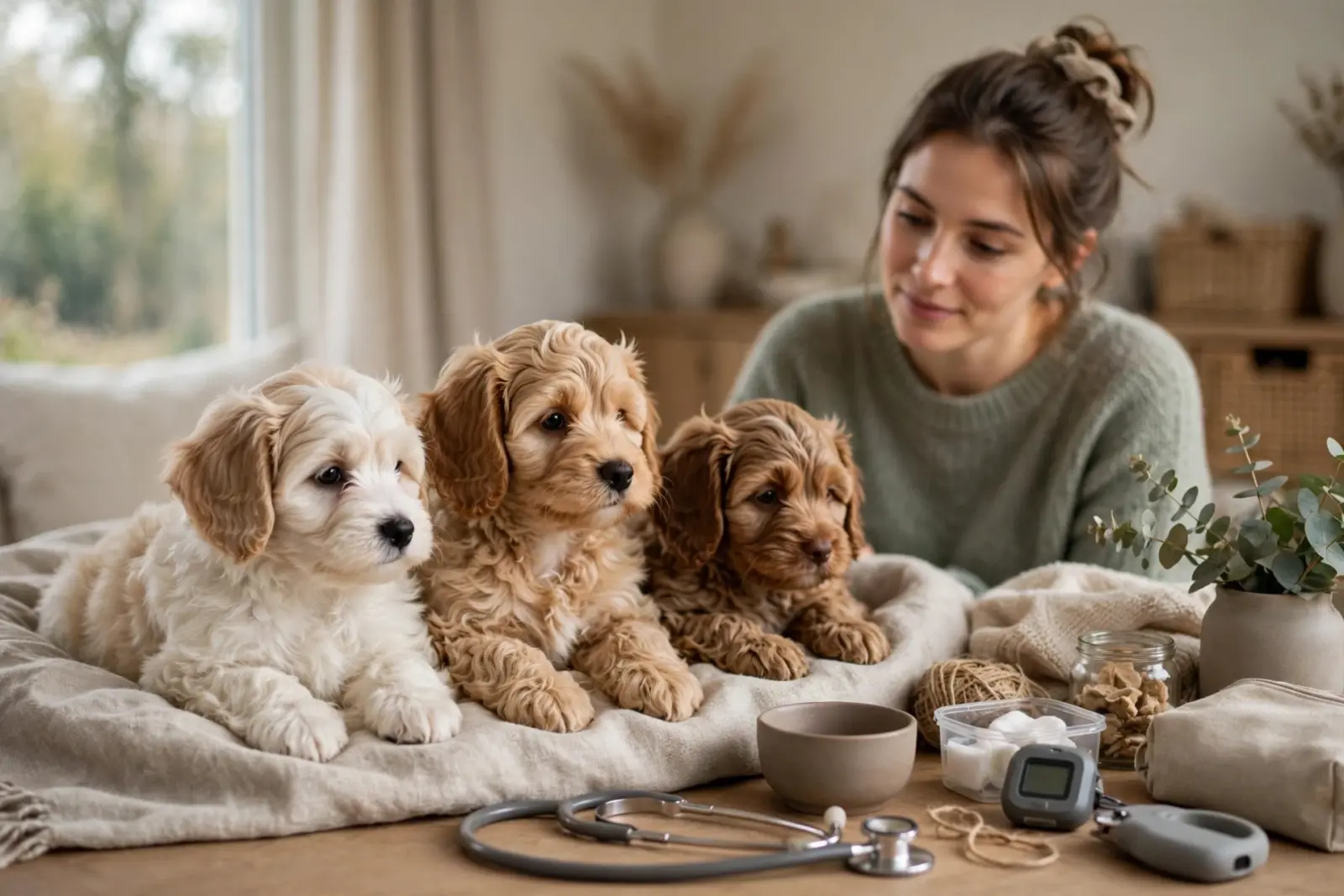
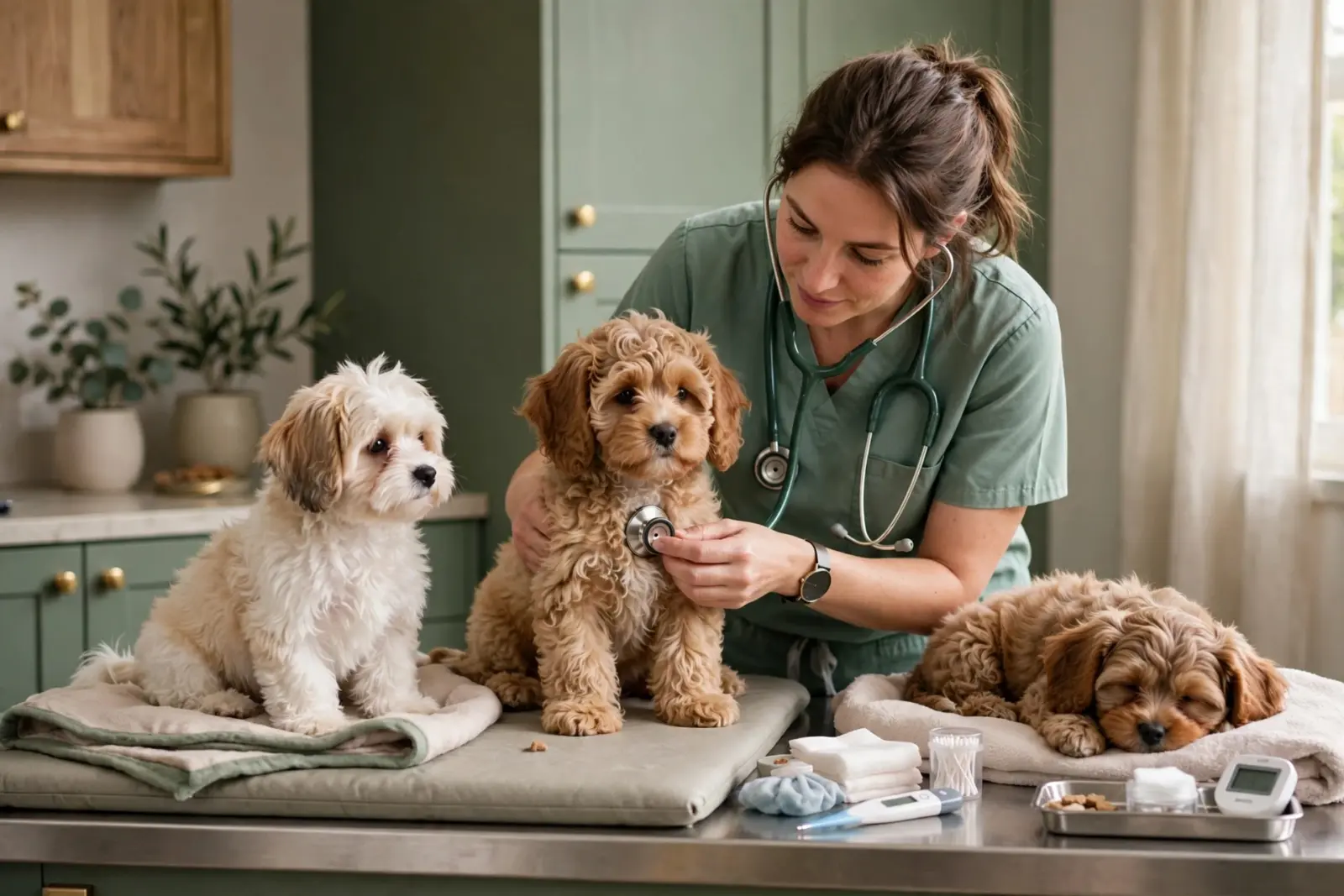
Quick Summary: Judge puppy health claims through verifiable records, not promises: request each parent’s DNA, orthopedic, eye, and hearing test results, plus the puppy’s vaccination and deworming records, before paying a deposit. Check certificates directly on OFA.org, and remember that a CHIC number only confirms testing was completed, not that every result was normal. Sage Puppies supports this approach by publishing documented parent results for its Havanese, Havapoo, and Cavapoo puppies.
Two Havapoo litters can look identical online and differ completely in the paperwork behind them. One breeder can show hip evaluations, patella certifications, eye exams, and DNA panels for both parents. The other offers a page of adjectives and a photo from a single vet visit.
That gap is the problem this guide solves. Many buyers don’t know which puppy health screening tests list items matter, or how to confirm them. Below you’ll find the complete list of tests worth requesting, what each result means, and simple verification steps for breeder records. We breed Havanese, Havapoo, and Cavapoo puppies at Sage Puppies in South Jordan, Utah, and we wrote this for buyers, not breeders, so you can ask the right questions before you pay.
What Puppy Health Screening Can and Cannot Tell You
A full puppy health screening tests list covers three areas: physical exams, breed-specific testing, and routine care. Knowing what each record proves, and what it does not, helps you judge a breeder’s program with confidence.
Three Different Kinds of Records Buyers Will See
Buyers usually see three kinds of paperwork. Veterinary exam records confirm a puppy looks healthy today. Parent health clearances, such as OFA eye and patella results, show what the parents were tested for and when. Vaccination and deworming records document routine care. Each answers a different question, so ask for all three rather than a single “health certificate.”

Screening Reduces Risk, It Does Not Eliminate It
Screening lowers the odds of inherited disease, but no test predicts every puppy’s future health. A cleared parent can still pass conditions nobody tested for, and some problems appear later in life regardless of results. Think of testing as informed risk reduction. A breeder who screens and explains results honestly gives you better odds, not a promise.
Why Breed and Cross Differences Matter
Purebred and crossbred puppies carry different risks, so the tests should differ too. Havanese lines get checked for eyes, hearing, and knees, while a Cavapoo adds Cavalier King Charles Spaniel heart considerations to the Poodle side. Program like Sage Puppies that breed only Havanese, Havapoo, and Cavapoo can tailor screening to each pairing, which matters more than a generic checklist.
The Complete List of Puppy Health Screening Tests
A complete puppy health screening tests list covers four categories: DNA-based genetic tests, orthopedic screening for hips, patellas, and elbows, an eye examination by a veterinary ophthalmologist, and a hearing test such as BAER. These tests apply mainly to the parents, so ask the breeder for each parent’s paperwork. Here is what each one involves.
DNA-Based Genetic Tests
DNA tests identify inherited diseases a dog carries, and breeders screen the parents rather than the puppy. For Havanese, Havapoo, and Cavapoo families, relevant panels check for conditions like heart disease, eye disorders, and clotting problems. You want both parents clear for the same condition, or one clear parent, so no puppy can be affected.
Orthopedic Screening: Hips, Patellas, and Elbows
Orthopedic screening uses X-rays and hands-on exams to catch joint problems early. Patellar luxation, a kneecap that slips out of place, matters most for small breeds like Havanese and Cavapoos. The OFA requires hip and elbow X-rays at 24 months or older, while patella evaluations can start at 12 months, so a young parent dog may not have every orthopedic result yet.
Eye Examinations
Eye examinations must come from a board-certified veterinary ophthalmologist, not a regular vet visit. The ophthalmologist checks for inherited eye disease, including cataracts and retinal problems that appear in both Havanese and Cavalier lines. A passing result earns an OFA eye certification, which renews annually, so ask whether the parent’s exam is current.
Hearing Screening
The BAER hearing test measures brain responses to sound and detects deafness in one or both ears. Doodles with white or merle coats benefit most. Not every breed requires BAER, so a clear explanation of why it was or wasn’t done is a fair answer.
Ask to see certificates, not summaries. For guidance on what to request, see these questions about health-tested puppy parents, and confirm results directly on the OFA website.
Breed-Specific Requirements for Havanese, Havapoo, and Cavapoo
Each breed mix brings its own testing priorities, so the right checklist depends on the parents. Havanese parents need three tests for a CHIC number, according to the Havanese Club of America:
- Patellar luxation evaluation, where the vet checks the kneecaps
- CAER eye exam by a board-certified veterinary ophthalmologist, repeated yearly
- BAER hearing test, which records the brain’s response to sound
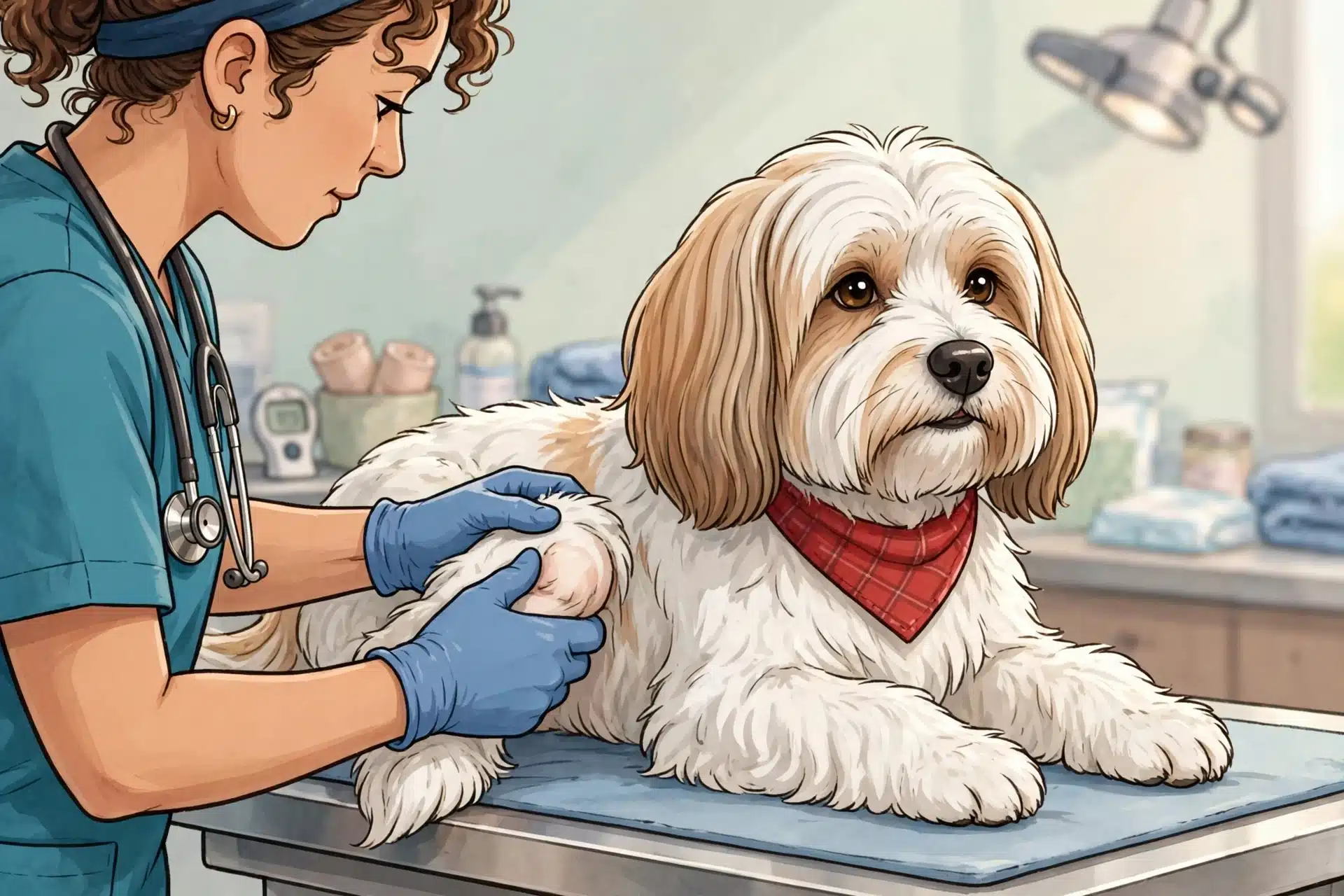
Havanese and Poodle Contributions
In a Havapoo, the Havanese side carries the kneecap, eye, and hearing risks above, while the Poodle side adds hip and eye concerns, including progressive retinal atrophy. DNA screening matters here, because a clear, carrier, or affected result changes what two parents can safely produce together. When we prepare parent records for a Havapoo litter, we review each line against both parent breeds’ lists, so families know exactly what was done and what it found.
Cavalier and Poodle Contributions
Cavaliers add a heart focus. Responsible Cavalier breeders use yearly exams by a veterinary cardiologist to screen for mitral valve disease, along with eye exams and patella checks. Combine that with the Poodle’s hip, eye, and DNA profile and a Cavapoo parent needs the widest testing list of the three. Always ask which tests each parent has, not just the litter.
How to Read the Results
A test result is only useful if you know what the words mean. Breeders hand over paperwork full of terms like “clear,” “carrier,” and “fair,” so it helps to decode them before you compare litters.
Understanding Clear, Carrier, and Affected
DNA tests sort each dog into three groups. Clear means the dog carries no copy of the mutated gene, so it cannot pass the condition on. Carrier means one copy exists without symptoms, which matters only if the mate is also a carrier. Affected means two copies, so the dog likely shows or will show the disease.
What a CHIC Number Does and Does Not Mean
No, a CHIC certificate does not mean every result was normal. It only confirms the dog completed its breed’s required tests and the owner published the results, even the failing ones. The OFA states this plainly on its CHIC program page. So ask for the individual results, not just the number.
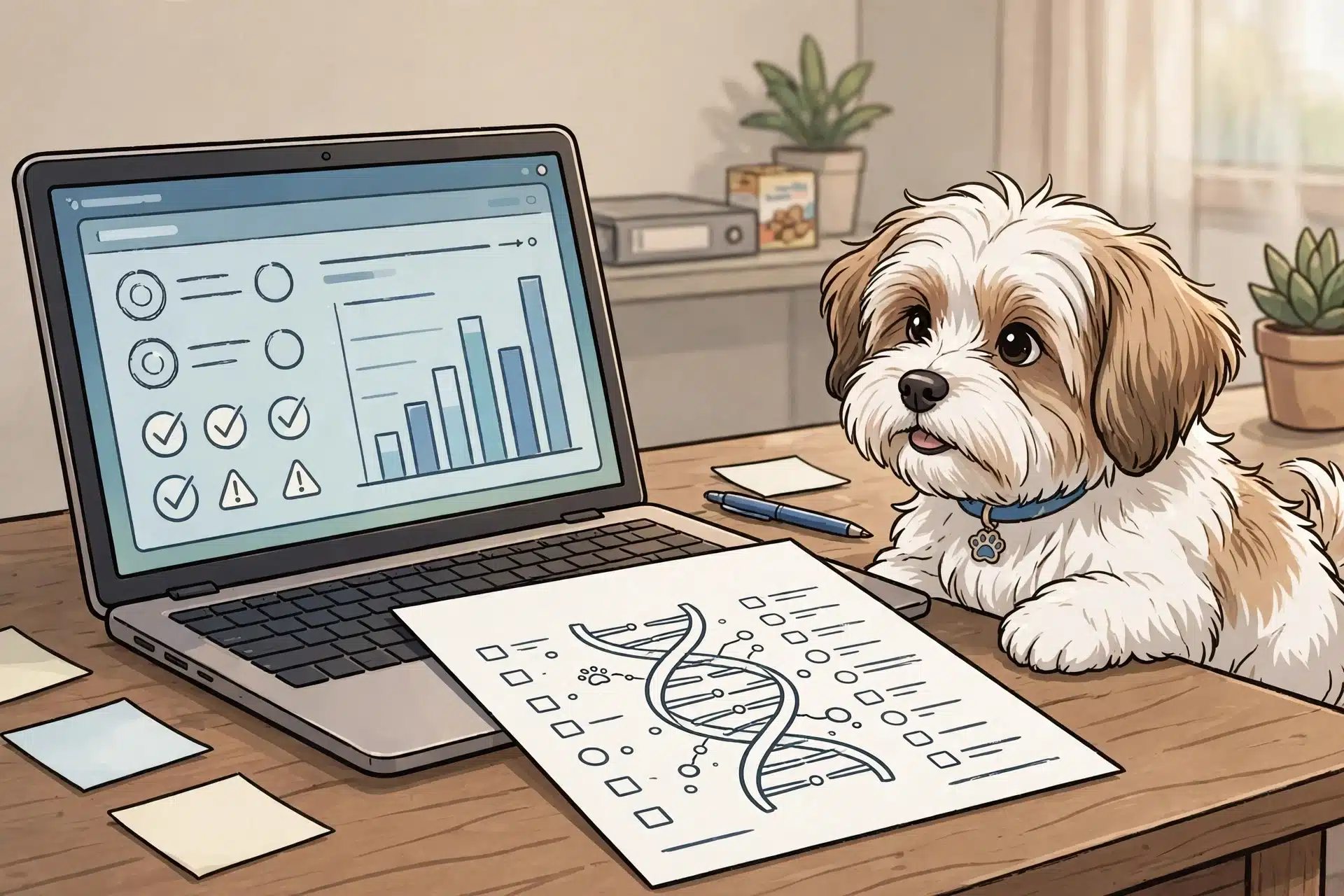
Reading a Genetic Panel Critically
Panels vary in scope, so read the lab name and the exact conditions tested. A short panel can look clean while skipping a breed-relevant disease. Ask which tests were run, match them against the breed list above, and confirm results on the lab’s public lookup when possible.
Verifying a Breeder’s Records Before You Pay
You can verify a breeder’s health test results in three steps: request the records in writing, look each result up yourself in a public database, and compare what you find against what the breeder claims. If a result cannot be confirmed independently, treat it as unverified.

Documents to Request in Writing
Ask the breeder to email you copies before you place a deposit, not at pickup. You want the parents’ OFA certificates, eye exam forms from a board-certified ophthalmologist, BAER hearing results, and DNA panel reports. Also request each puppy’s vaccination and deworming records with dates and the vet’s name. Written copies create a paper trail. Our guide to questions to ask about health-tested puppy parents covers this in more depth.
Running the Records Yourself
Anyone can check a result on the OFA’s public database. Go to OFA.org’s search page, enter the parent’s registered name or registration number, and read the results yourself. Match the dog’s name, breed, and birth date exactly. A claimed “clear” DNA result that never appears in the registry is a reason to pause. Screenshots from the breeder do not count; run the search on your own device.
Questions to Ask and Red Flags to Note
Ask who performed each test, when, and which lab processed the DNA sample. Then watch for the warning signs:
- Refusal to share results in writing
- “Clear by parentage” claims with no listed parents
- Results under a different dog’s name
- Pressure to pay before records arrive
A confident breeder welcomes the check.
The Puppy’s Own Veterinary Record and First Weeks Home
Ask for the puppy’s paperwork before you fall in love with a face. A complete record answers “What records should I get with my new puppy?” It should include a dated health exam by a licensed veterinarian, vaccination dates and vaccine names, deworming dates and products used, any medications given, and notes on the puppy’s weight. You should also receive a written copy of any health guarantee and feeding instructions.
What a Healthy Litter Record Should Include
A solid litter record covers every puppy, not just yours. Look for vaccination and deworming dates, the vet’s exam notes, microchip or identification numbers, and a litter-level health history. Many reputable programs also share parent screening results with puppy buyers, so you can match each document to the certificates discussed earlier in this guide.
Scheduling an Independent Examination
Book your own vet visit within a few days of pickup or delivery, even if the puppy already has a clean record. An independent exam gives your puppy a baseline and confirms the vaccinations and deworming you were told about. Bring the records with you, and ask your vet to review them line by line. Most vets will also set a vaccine schedule and discuss parasite prevention during this first visit.
Using Screening History in Ongoing Care
Parent test results matter after go-home day too. Give copies of the parents’ patellar, eye, cardiac, and DNA results to your vet so they know what to watch for as your puppy grows. For example, a Havanese line with a history of luxating patellas deserves a knee check at every wellness visit. Share your puppy’s full history at each appointment, and your vet can spot breed-specific issues early.
What Health Testing Costs and How Long It Takes
Health testing is not cheap for a breeder, and the price depends on the test. The OFA charges $45 per dog for a hip or elbow evaluation, $50 for both together, and $35 for hip prelims, according to its published fee schedule. The vet visit and sedation needed for hip X-rays add more, often $170 to $300 depending on the clinic.
Why Prices Vary by Test Type
Each test has a different price tag. Orthopedic evaluations combine OFA fees with X-ray and sedation costs, so they cost the most. Eye exams require a specialist, and BAER hearing tests need special equipment. DNA panels usually run a cheek swab to a lab. Higher costs reflect more skill or equipment, which is exactly what makes the results worth trusting.
Timing From Test to Result
DNA panels often return within one to three weeks. Orthopedic results depend on X-ray scheduling and OFA processing. Eye exams happen on one day with results on the spot. Some results, like patellar luxation checks, can come before a parent turns two, while hip and elbow finals wait for that age.
Where Screening Fits in the Total Purchase Cost
For a Havanese, Havapoo, or Cavapoo, a full parent panel costs the breeder hundreds to over a thousand dollars per dog. That work is built into a fair puppy price rather than charged separately, so it helps to know what a program’s price includes before you compare listings.
Common Mistakes Buyers Make With Health Testing
Overestimating What a Panel Covers
A DNA panel only reports the genes it checks. Some breeders call a parent “fully tested” when the panel skipped a condition common to the breed, such as cardiac disease in Cavaliers. Panels also can’t catch hip or eye problems, which need a hands-on exam. So treat genetic results as one piece of the record, never the whole picture.
Documentation Errors and Shopping Shortcuts
Verbal claims (“both parents are clear”) are not proof. Ask for the actual OFA, CERF or BAER certificate numbers, then look each one up yourself on the registry’s site. Also watch for out-of-date tests: a parent cleared for eyes years ago may have developed a condition since. A trustworthy breeder will share records without hesitation, as explained in the Havanese parent testing guide.
Where to See Documented Examples
Good breeders list each parent’s test results by name and registry number, so you can confirm every entry. When you compare litters, favor programs that publish results over those that describe them loosely. That habit alone filters out most weak claims, and it gives you a baseline for questions you may want to ask a new breeder later.

Ready to meet a puppy backed by real health testing? At Sage Puppies, every Havanese, Havapoo, and Cavapoo parent has documented results you can review. Browse available puppies, check current pricing, and submit your application to get matched with your next family member.
Frequently Asked Questions
Q1: What is a complete list of health screening tests for puppies?
A full puppy health screening tests list includes DNA genetic panels, orthopedic checks for hips, patellas, and elbows, a CAER eye exam by a veterinary ophthalmologist, and a BAER hearing test. These apply mainly to parents, so request each parent’s certificates and verify them on OFA.org yourself.
Q2: What health tests should Havanese, Havapoo, and Cavapoo parents have?
Havanese parents need patella, CAER eye, and BAER tests for a CHIC number. Cavapoo parents also need yearly cardiac exams for mitral valve disease plus hip and DNA screening. Havapoo parents add hip and progressive retinal atrophy checks.
Q3: How do I verify a breeder’s health test results?
Ask for written copies before paying a deposit, then search each parent’s registered name on OFA.org’s public database yourself. Match the name, breed, and birth date exactly. Screenshots don’t count.
Q4: What does clear, carrier, and affected mean on DNA results?
Clear means no mutated gene, so it can’t be passed on. Carrier means one copy without symptoms, which matters only if both parents carry it. Affected means two copies and likely disease.
Q5: Does a CHIC number mean the parent is healthy?
No. CHIC only confirms the dog completed its breed’s required tests and the results were published, even failures. Always read the individual results.
Q6: How old should parent dogs be for hip testing?
The OFA requires hip and elbow X-rays at 24 months or older. Patella evaluations can start at 12 months, so younger parents may lack finals.
Q7: What records should come home with my puppy?
Expect a dated vet exam, vaccination and deworming dates with product names, microchip details, feeding instructions, and any written health guarantee.
Conclusion
Health testing comes down to paperwork you can check, not promises you can’t. Ask for the full record: DNA panels, orthopedic results, a yearly eye exam, and BAER hearing results for each parent. Then verify every certificate yourself on OFA.org before you pay a deposit. Read clear, carrier, and affected results against each breed’s list, and remember a CHIC number proves testing was done, not that everything passed. When you compare litters, favor breeders who publish results openly. For Havanese, Havapoo, and Cavapoo families weighing what a fair price includes, documented parent testing is the clearest sign of a program worth trusting.