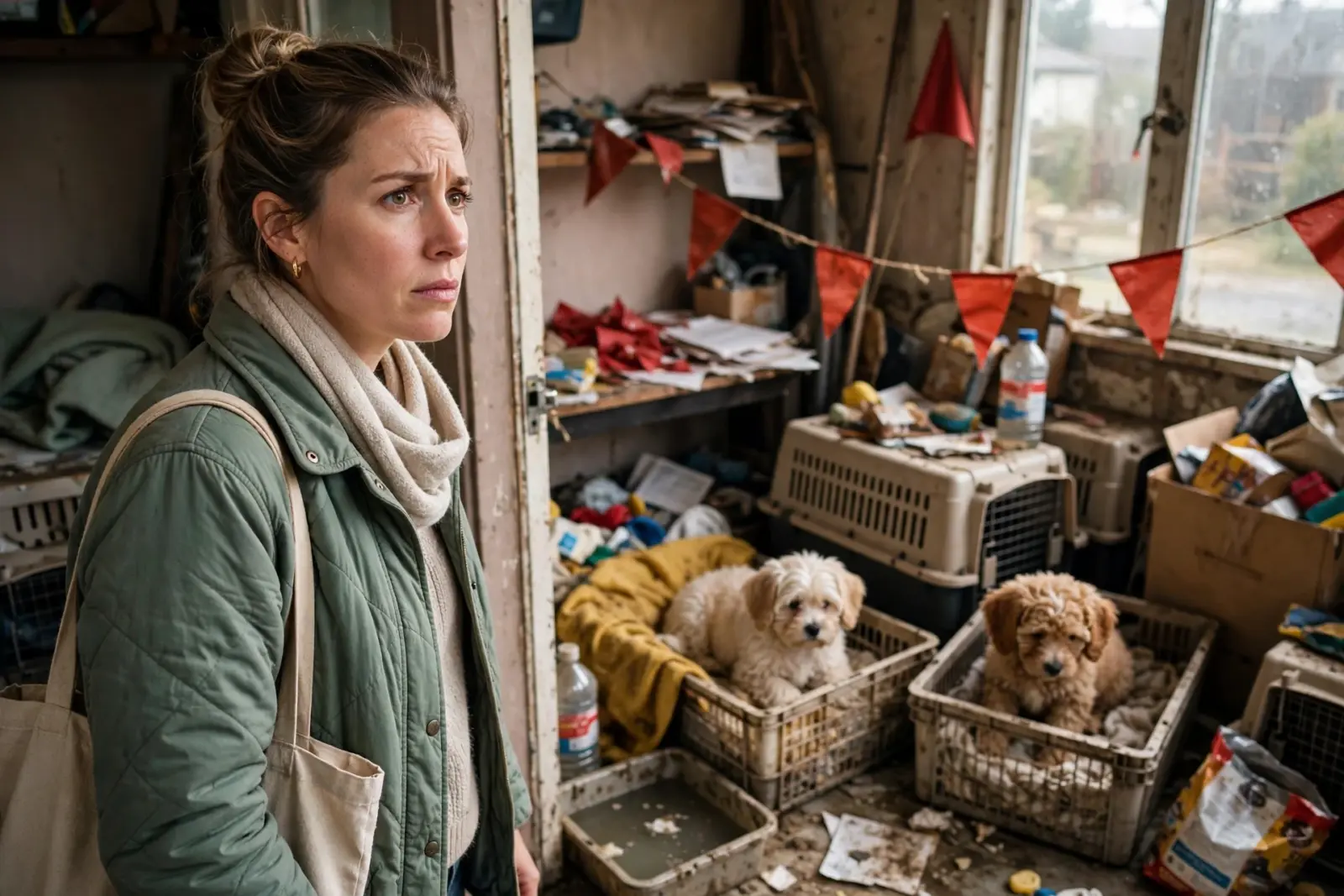
Quick Summary: A puppy’s first eight weeks and daily handling matter more than the “family-raised” label, so verify where the litter sleeps, who handles them, and whether you can see the home and health records before paying. For families, the Havanese offers predictable size, the Havapoo tends to be playful with a lower-shedding coat, and the Cavapoo is usually calmest, but temperament, energy, size, and grooming needs should match your household. Sage Puppies raises these breeds in a South Jordan, Utah home with local pickup and nationwide delivery, while families should also prepare consistent house rules and budget roughly $1,500 to $3,000 for first-year care beyond the purchase price.
Two puppies from home-raised litters can grow into very different family dogs. What happens in the first eight weeks at home shapes temperament more than the word family-raised on a listing, so the term alone tells you little. That’s the challenge this guide solves: knowing which of the best family raised puppy breeds actually fit a home with kids, and how to confirm a litter was truly raised in a house, not a kennel run. You’ll get a clear definition of what family-raised means, a breed-by-breed look at three small companions, the Havanese, Havapoo, and Cavapoo, plus the health records and questions to check before you commit. Every point draws on kennel club and veterinary guidance and on Cassie Milar’s documented experience raising puppies in her South Jordan, Utah home through Sage Puppies. Whether you plan local pickup or delivery elsewhere in the country, you’ll know exactly what to look for next.
What Family-Raised Actually Means in a Puppy’s First Weeks
“Family-raised” describes where a puppy lives before it comes home: in a kitchen, not a kennel row. A family-raised puppy grows up inside a breeder’s household, handled daily by adults and children, hearing dishwashers, doorbells and TV noise. That matters because the first three months are the primary socialization window, and most of it happens while the puppy is still with the breeder.

The everyday exposure a family-raised puppy gets
Think short, repeated moments rather than formal training. A family-raised litter gets picked up, held on laps, stepped over by kids, and carried to different rooms. They meet visitors, other calm dogs, and household sounds like vacuums and doorbells. Every positive touch teaches a puppy that people are safe. Done consistently, this daily contact shapes a calmer adult dog far more than any single training session later.
Family-raised, kennel-raised, and yard-raised are not the same thing
| Raising setup | Where the puppy lives | What it means for you |
|---|---|---|
| Family-raised | Inside the home, around daily family life | Already used to household noise, handling and kids |
| Kennel-raised | In kennel runs or crates, often away from the house | May need extra help adjusting to normal home sounds |
| Yard-raised | Outdoors with the mother, limited people contact | Often under-socialized to indoor life and handling |
These terms overlap in marketing, so the description in the table is the plain difference: home life, housing, and how much contact with people each setup provides.
Questions that turn a vague claim into something checkable
Ask any breeder these five questions before you commit:
- Where does the litter sleep, and where does it spend the day?
- Who handles the puppies, and how often?
- What sounds and surfaces do they meet before eight weeks?
- Can you visit, meet the mother, and see the room?
- What photos or videos can they share of the litter in the home?
If the answers stay vague, the label probably is too. For a fuller breakdown, this guide to family-raised puppies shows what daily household life looks like for a young litter.
Best Family-Raised Puppy Breeds for Family Homes
Three breeds check most family boxes: the Havanese, the Havapoo, and the Cavapoo. All are small, affectionate, and bred to live close to people. The differences come down to coat predictability, energy level, and how much grooming you want to take on.
The Purebred Companion Option
The Havanese is the purebred pick of this group. The AKC breed profile lists the breed as good with young children, good with other dogs, and highly affectionate with family. That combination is rare, and it explains why Havanese appear so often on lists of small breed puppies good with children.
Havanese weigh 7 to 13 pounds, so even a rambunctious toddler is unlikely to be knocked over. They train easily, play hard in short bursts, then settle on a lap. The trade-off is the coat: that silky hair needs brushing several times a week to prevent mats.
The Havanese and Poodle Cross
A Havapoo crosses the Havanese with a Poodle, usually a Miniature or Toy. Breeders pair them for the same loving nature plus a wavier, lower-shedding coat that many families find easier to live with. Havapoos tend to be playful and quick to learn, which helps when kids want a dog that learns tricks.
Because they are a cross, size and coat vary more than in purebreds. Ask to meet the mother and see photos of earlier litters so you know what to expect as the puppy grows.
The Cavalier and Poodle Cross
The Cavapoo blends the Cavalier King Charles Spaniel with a Poodle. Cavaliers are famously gentle and tuned in to people, and Cavapoos often inherit that soft, cuddly temperament. They usually sit slightly lower on the energy scale than Havapoos, which suits quieter households or families with younger children.
Like Havapoos, they need regular brushing and routine grooming appointments. Their sweet nature makes them easy to live with, but they dislike being left alone all day, so they fit homes where someone is usually around.
How to Choose Between Them for Your Household
Match the dog to your routine, not to a photo. Want the most predictable size and a breed with a long pedigree record? Choose the Havanese. Want lower shedding with a playful edge? Look at the Havapoo. Want the calmest lap dog of the three? The Cavapoo usually wins.
For a deeper side-by-side of temperament, size, and grooming needs, the Havanese, Havapoo, and Cavapoo breed comparison breaks down how each one fits different family homes.
Choosing Family Friendly Puppy Breeds for Homes
The best family friendly puppy breeds for homes with children are small, sturdy, people-focused dogs. Three stand out:
- Havanese – calm, patient, and rated highly for tolerance with kids
- Havapoo – a Havanese-poodle mix that blends playfulness with a gentle coat
- Cavapoo – a Cavalier-poodle mix known for its soft, easygoing nature
Breed is only the start. Four factors decide whether a puppy truly fits your family:
- Temperament – patience matters more than size
- Energy level – it should match your family’s daily rhythm
- Adult size – small breeds handle busy homes more safely
- Family raising – a puppy that grows up around people learns to handle noise and handling early
The four things that actually decide a good family match
Ask four questions before you fall in love with a face. First, temperament: the AKC’s breed profile for the Havanese rates its tolerance of children directly, and that kind of documented trait beats a guess. Second, energy: a match for your routine prevents a frustrated dog and a worn-out family. Third, adult size: a 7 to 13 pound Havanese fits laps, cars, and small spaces. Fourth, upbringing: puppies raised inside a home with daily handling arrive already socialized. Weigh all four together, because one strong trait rarely covers the rest.
Matching the breed to the age of your kids
Under age five, prioritize patience over anything else. Toddlers grab, squeal, and fall into a puppy’s space, so you want a breed with documented tolerance and a breeder who socializes early. School-age kids can handle training games, so a clever Havapoo or Cavapoo can grow alongside them. Teens often take over feeding and walks, which opens up slightly more demanding breeds. Either way, teach kids the basics: no pulling ears, no grabbing toys, and always quiet hands. A calm child earns a calm puppy faster than any training session will.
Apartment, suburban, and multi-pet households
Space matters less than people assume, but it still matters. In apartments, small breeds like these three work well because exercise needs are modest and quiet neighbors stay happy. Suburban homes with yards give more room to burn energy, though even then a small breed still prefers company over solo yard time. Multi-pet homes add one more layer: pick a breed noted for getting along with other dogs, and introduce them slowly on neutral ground. A balanced match beats a “perfect” breed every time.
How to Verify a Family-Raised Puppy Before You Commit
Searching for family-raised puppies for sale near me? Judge each breeder on four things: who runs the program, what records they show, whether the puppy lives in a real home, and what the paperwork says. Work through the checklist below before any money changes hands.
Confirm who you are actually buying from
Ask for the owner’s full name and location, how many litters they raise each year, and who cares for the puppies day to day. A family-raised program should have one person accountable, not a middleman or broker. The AKC’s breeder questions and the OFA interview checklist both cover what a straight answer sounds like. If someone dodges basic details about the dam and sire, walk away.
Ask to see the puppy’s records before you pay

Any honest breeder shares health paperwork without being asked twice. Before you send a deposit, request:
- Vet exam record with the puppy’s weight and date
- Vaccination schedule showing what was given and what comes next
- Deworming history
- Parent health testing results, such as OFA or genetic panels
Sage Puppies, for example, documents each puppy’s care in an owner-run application and matching process, so families see the record trail early. That transparency is the standard, not a bonus.
Visit, or see the home the puppy actually lives in
A video call through the puppy’s real living space tells you more than polished photos. You should see the dam, the litter, and where they sleep and play. Ask how the puppies are socialized during the first eight weeks, and who handles them. Request the call live rather than a recorded tour, so you can ask for another angle on the spot.
Understand the contract, deposit, and delivery terms
Read the puppy contract before signing anything. It should state the purchase price, deposit and refund terms, health provisions, and what happens if the puppy must be returned. Utah families often pick up locally, while nationwide delivery may add flight costs, so get those terms in writing too. A clear application to reserve spells out each step, which protects both sides.
Preparing Your Home and Family for a Family-Raised Puppy
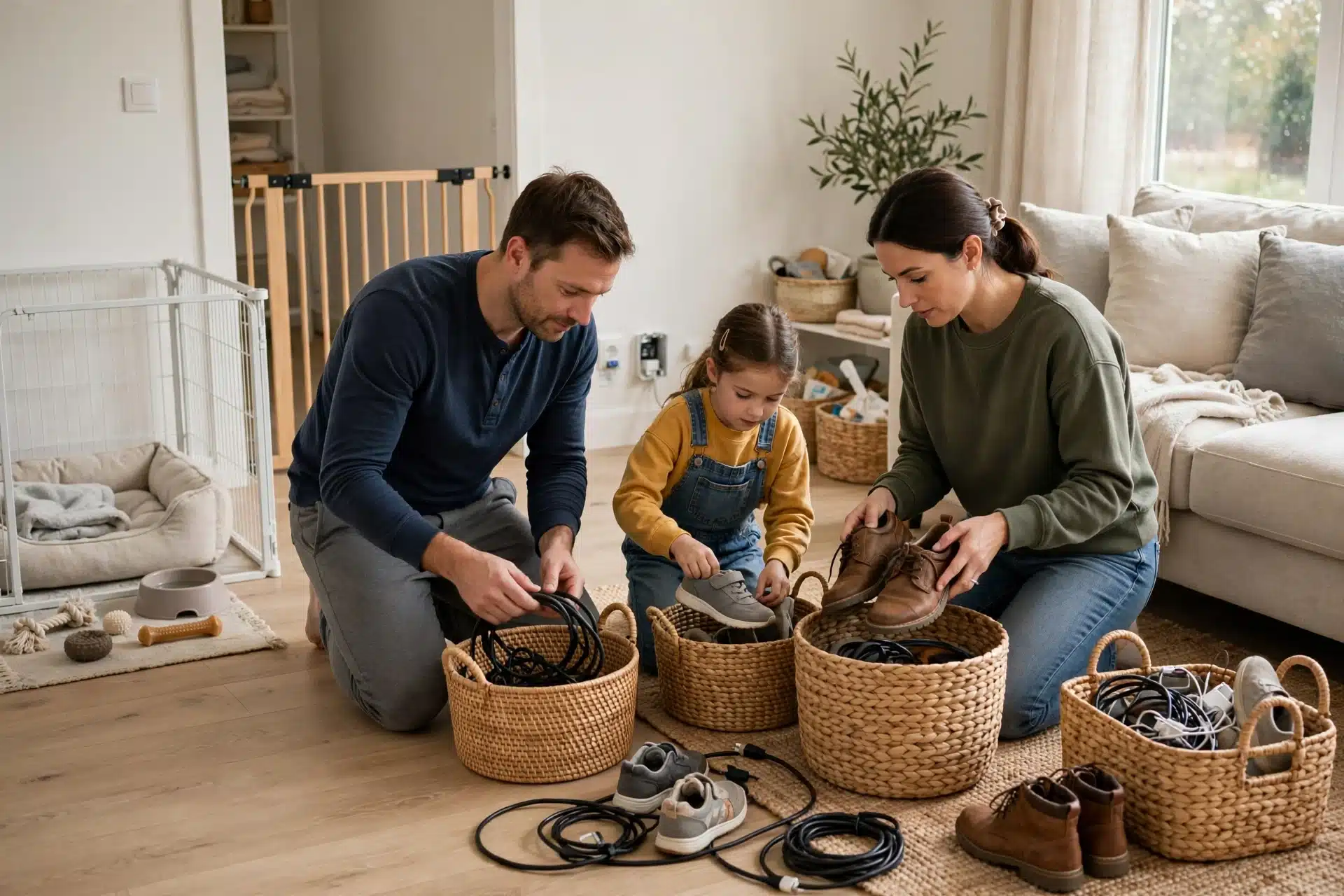
A family-raised puppy arrives knowing household sounds, children, and handling, so your job shifts from crisis control to steady structure. Prepare in three areas: continue the socialization the breeder started, agree on rules before pickup day, and budget for care beyond the purchase price.
Building on the socialization your puppy already had
Family-raised puppies hear vacuums, doorbells, and kids in their first eight weeks, so they handle change well. Keep that momentum going. Carry your puppy to see new places before shots are complete, then introduce short car rides, gentle strangers, and different floor surfaces. Keep sessions brief and calm, and let your puppy retreat when tired. Ask your breeder which sounds and experiences your puppy already knows, so you build on that base instead of repeating it.
Setting house rules the whole family follows
Dogs learn fastest when everyone answers the same way, so hold a family meeting before pickup day. Decide these details together:
- Who feeds, walks, and cleans up, and at what times
- Which rooms and furniture are off limits
- Words every person uses for cues like sit and off
- How kids approach: no grabbing, no waking a sleeping puppy
- What happens during naps and at night
Write the list down. Consistency in the first two weeks shapes habits that last years.
Vet care, feeding, and the first-year budget
How much does a family-raised puppy cost in year one? Plan on roughly $1,500 to $3,000 beyond the purchase price, since first-year puppy cost planning covers more than food. AKC estimates one-time costs like spay or neuter and emergency visits on top of everyday supplies.
| Item | Illustrative cost |
|---|---|
| Vet visits and vaccines | $300 to $700 |
| Spay or neuter | $150 to $400 |
| Crate, bed, and gear | $200 to $500 |
| Food and treats | $300 to $600 |
| Grooming and training | $300 to $800 |
Check your vaccination schedule against the puppy health records your breeder provides, then book a vet visit within the first few days.
Common Mistakes to Avoid
Treating family-raised as a guarantee
“Family-raised” describes how a puppy starts, not a promise about temperament. Every dog still needs training, socialization, and patience in your home. Ask breeders what they do during the first eight weeks, then continue that work yourself.
Paying before reading the terms
Read the puppy contract, deposit, and refund terms before you send money. Confirm the price, what it covers, and what happens if a health issue appears. A trustworthy breeder will send the agreement first and answer your questions calmly.
Skipping the household preparation
Waiting until pickup day to get ready makes week one harder than it needs to be. Before your puppy arrives, set a routine, agree on house rules, and buy the basics: crate, bed, food, and ID tag. Budget for first-year costs too, roughly $1,500 to $3,000 beyond the purchase price. A prepared home settles a puppy faster than anything else.

Ready to meet a family-raised Havanese, Havapoo, or Cavapoo? Sage Puppies matches each puppy with the right home through a clear application and owner-managed process. Apply today, then plan pickup in South Jordan, Utah or ask about nationwide delivery.
Frequently Asked Questions
Q1: How do I go about choosing family friendly puppy breeds for homes?
Match temperament, energy, adult size, and upbringing to your routine. Small breeds like the Havanese, Havapoo, and Cavapoo suit most homes with children when they are family-raised.
Q2: What does family-raised mean for a puppy?
The litter lives inside the breeder’s home, handled daily by adults and kids, hearing household sounds during the first eight weeks.
Q3: Which is better for families: Havapoo vs Havanese vs Cavapoo?
Havanese offer predictable size, Havapoos add a lower-shedding coat, and Cavapoos are usually the calmest.
Q4: How much does a puppy cost in the first year?
Plan roughly $1,500 to $3,000 beyond the purchase price for vet care, gear, food, and grooming.
Q5: Can family-raised puppies be delivered outside Utah?
Yes. Many breeders offer nationwide delivery alongside Utah pickup; confirm flight terms in the contract.
Conclusion
The label on a listing matters less than the eight weeks behind it. Ask where the litter sleeps, who handles the puppies, and what records the breeder can show. Then match the breed to your home: a Havanese for predictable size, a Havapoo for lower shedding, or a Cavapoo for the calmest lap. Confirm temperament, energy, adult size, and raising setup before you pay, and read the contract first. When you search for the best family-raised puppy breeds, Sage Puppies raises Havanese, Havapoo, and Cavapoo litters inside a South Jordan, Utah home, with local pickup and nationwide delivery for families across the country.