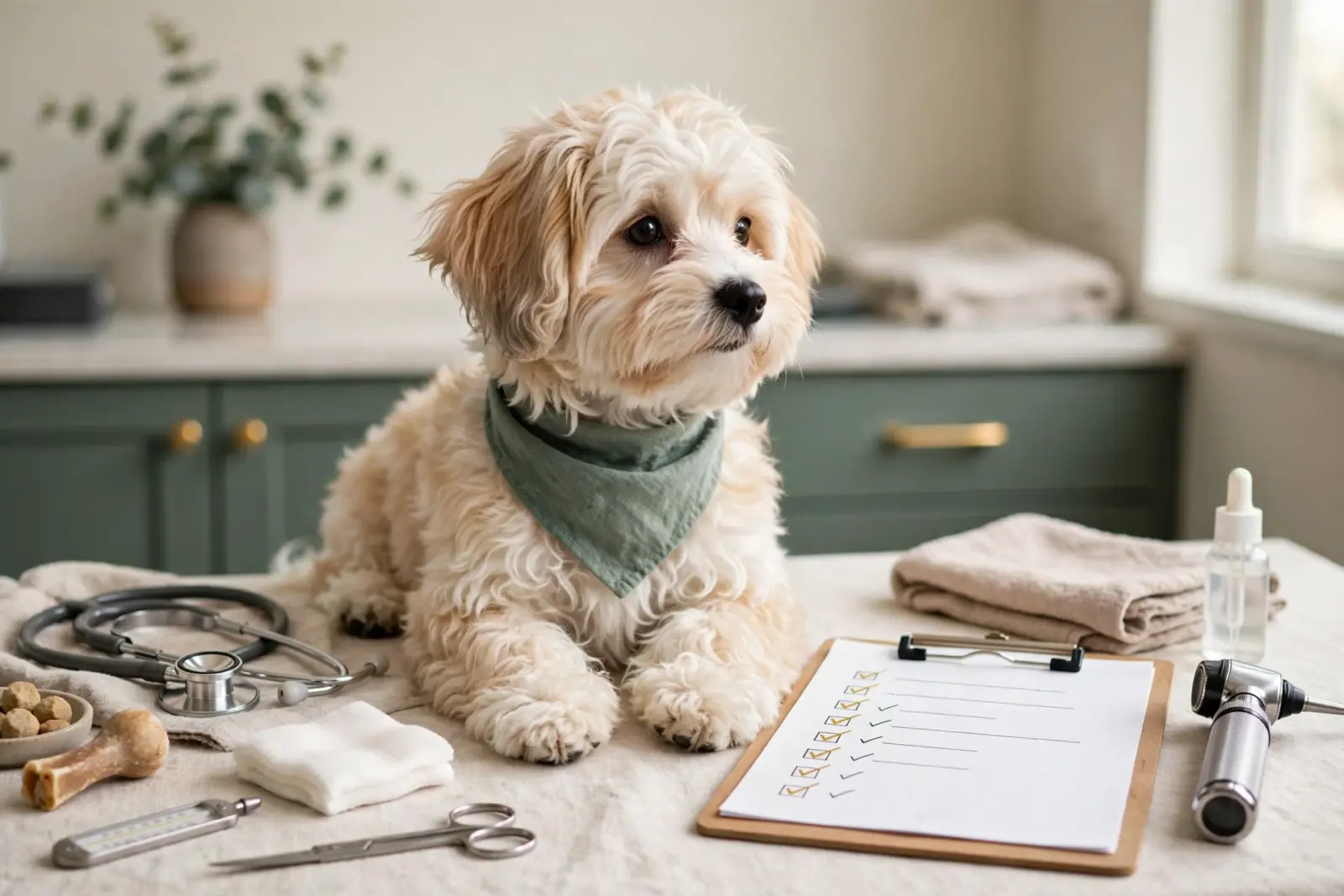
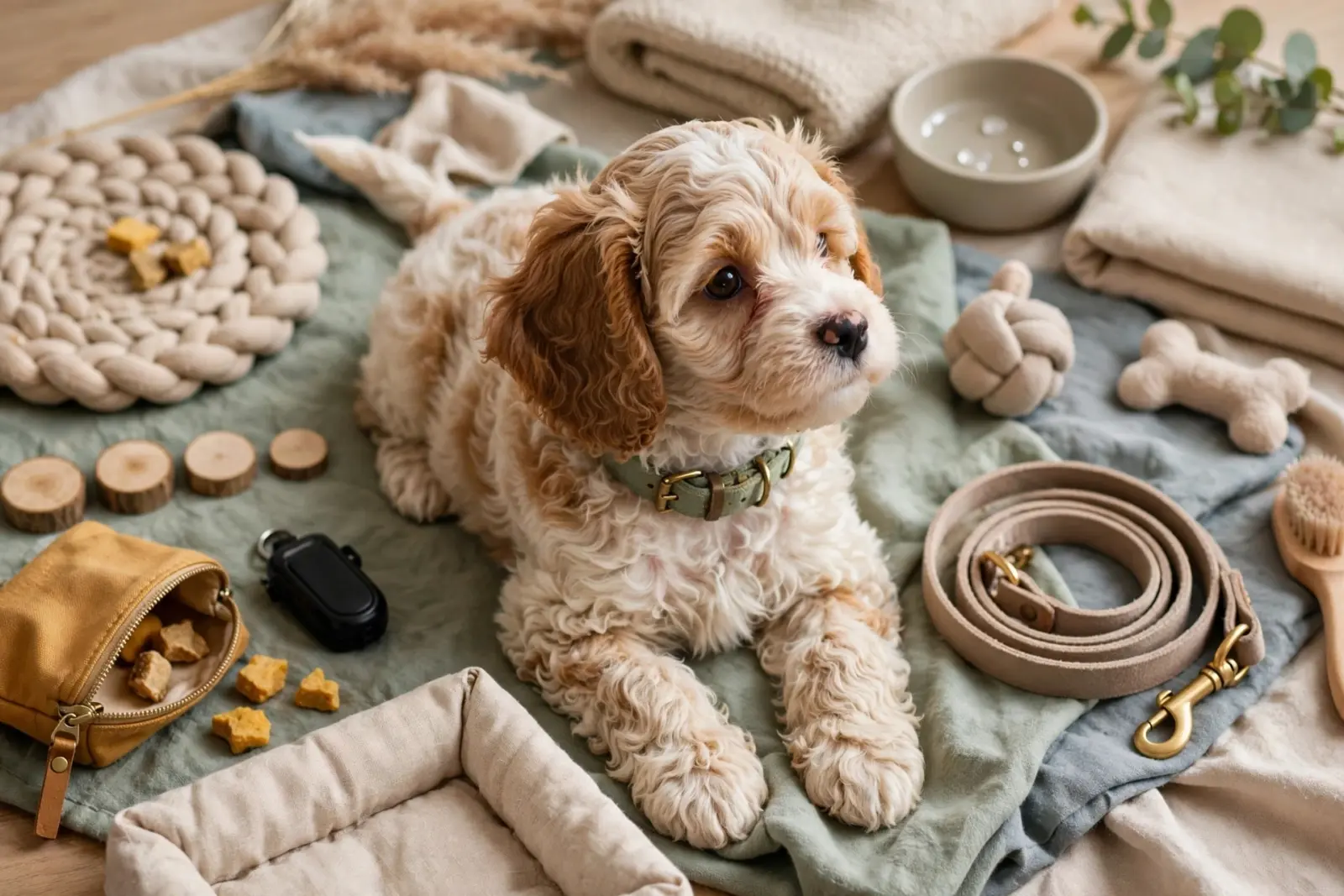
Quick Summary: Family-raised puppies get a head start on household life, including familiarity with everyday sounds, surfaces, handling, crate routines and housetraining practices during the 3-to-14-week socialization window. Sage Puppies and other responsible breeders can provide this exposure, but the label does not guarantee training, calm temperament or good health, so buyers should verify handling details, parent health testing and records. A family home is a useful starting point, not a substitute for continued socialization, training and careful matching to the new household.
A puppy that has slept through television noise, trotted across kitchen tile and been woken by a 6 a.m. alarm arrives home already fluent in household life. That familiarity is what the phrase family-raised promises, and it is the real difference buyers pay for. The problem is that the label appears on nearly every breeder’s website, yet few explain what it actually means or how much it can honestly deliver. This guide breaks down the benefits of family raised puppies: what early exposure to people, sounds and handling does for a puppy’s development, what research from veterinary behavior groups supports, and where the label’s guarantees end. You will also get a practical checklist for verifying a breeder’s claims before you pay. It draws on the daily experience of Sage Puppies, a small Utah program raising Havanese, Havapoo and Cavapoo litters inside a family home.
What Family-Raised Puppies Actually Means
The best age for a puppy to leave its litter is usually 8 to 10 weeks. That fits the AVSAB socialization window, which opens around 3 weeks, and a puppy should already be eating, playing and handling some time alone before it moves in. Individual readiness matters more than the calendar.
Family-raised simply describes how a puppy spent those first weeks: born and reared inside someone’s home, not in a separate building. Search “family raised puppies for sale near me” and most sellers mean daily contact with people, kitchen sounds, and early exposure that builds the benefits of family raised puppies covered later in this guide.
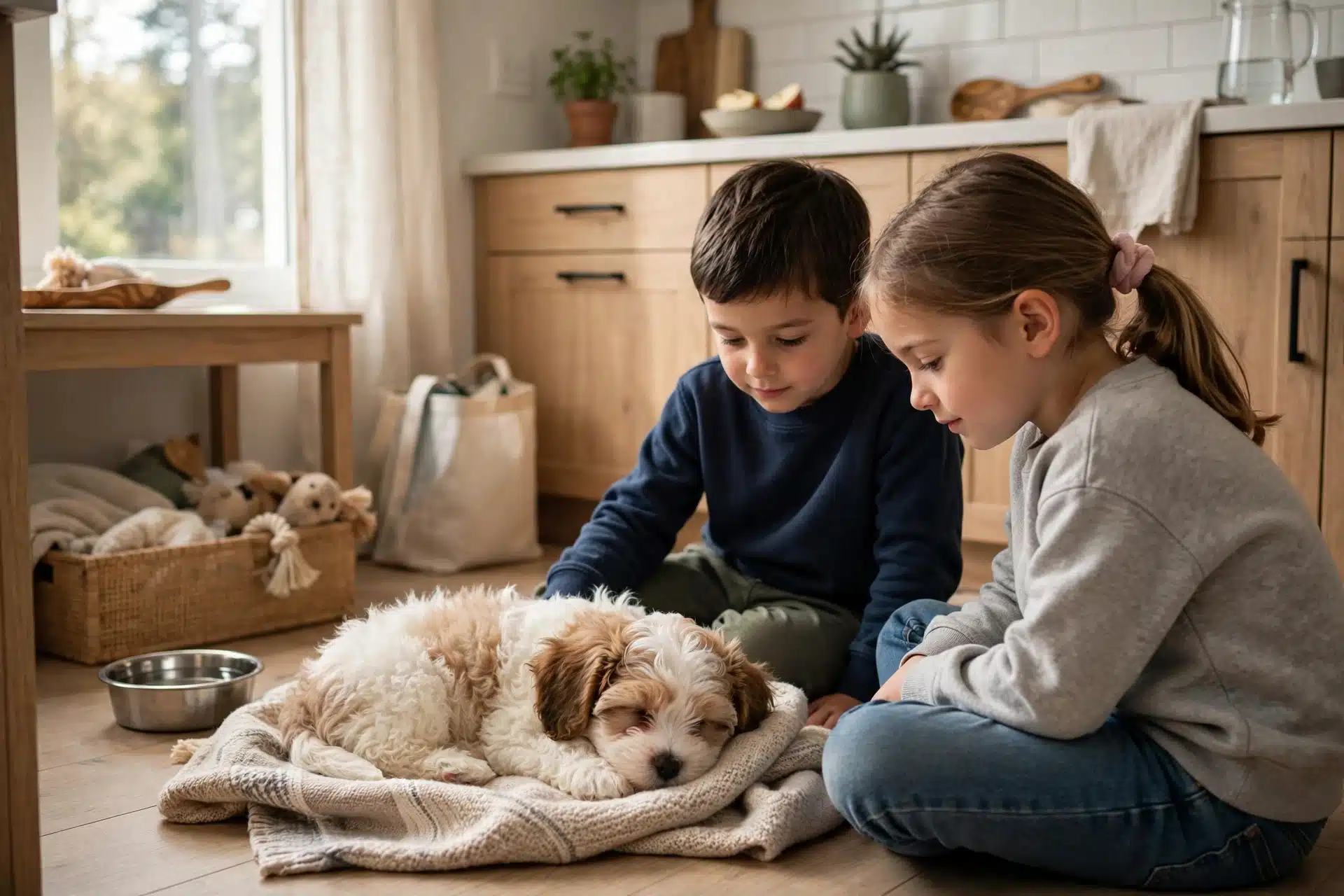
How a family-raised environment differs from a kennel or garage
A kennel-raised puppy lives where noise is distant and handling is scheduled. A garage or barn setup often means wire flooring, little household sound, and brief human contact. A truly home-raised puppy meets vacuum cleaners, doorbells, bare feet and daily mess before eight weeks, so early learning happens where life actually happens. Many home breeder pages describe exactly these conditions.
Foster care and rotating caregivers: a middle category
Some programs whelp elsewhere, then place litters in foster homes. Done well, this still gives household exposure, but the puppy meets several routines instead of one. Ask who handles the puppy, how often, and from what age.
What the family-raised label does not promise
The label says nothing about parent health testing, breeding ethics or follow-up support. One marketing phrase can’t guarantee a calm adult dog, either. Treat it as a starting claim to verify, not a certificate.
The Core Benefit: Socialization That Actually Transfers
The main benefit of family-raised puppies is that socialization has already started before pickup day. Puppies raised inside a home typically show six early advantages:
- Handling tolerance from daily touch, grooming starts, and nail trims.
- Household sound habit to vacuums, doors, and voices.
- Comfort with children when raised near gentle, supervised kids.
- Early housetraining and crate foundations from a consistent routine.
- People skills with visitors of different ages and appearances.
- Emotional resilience from varied, positive daily experiences.
Why the first three months matter most
The socialization window runs roughly from 3 to 14 weeks of age. During it, puppies learn faster and accept new things more easily than they ever will again. AVSAB’s position statement calls the first three months the primary window, because sociability outweighs fear during this period. A puppy that misses it often needs months of careful rehab later. One that uses it keeps those skills for life.
How a home delivers socialization without drills
A family home does this work automatically. Puppies hear dishwashers and doorbells, get picked up by different hands, and learn that handling ends well. No formal sessions needed. A good breeder just folds exposure into normal life, and a plan like a puppy socialization checklist for the first 12 weeks picks up where pickup day leaves off.
What the research on home-raised puppies actually shows
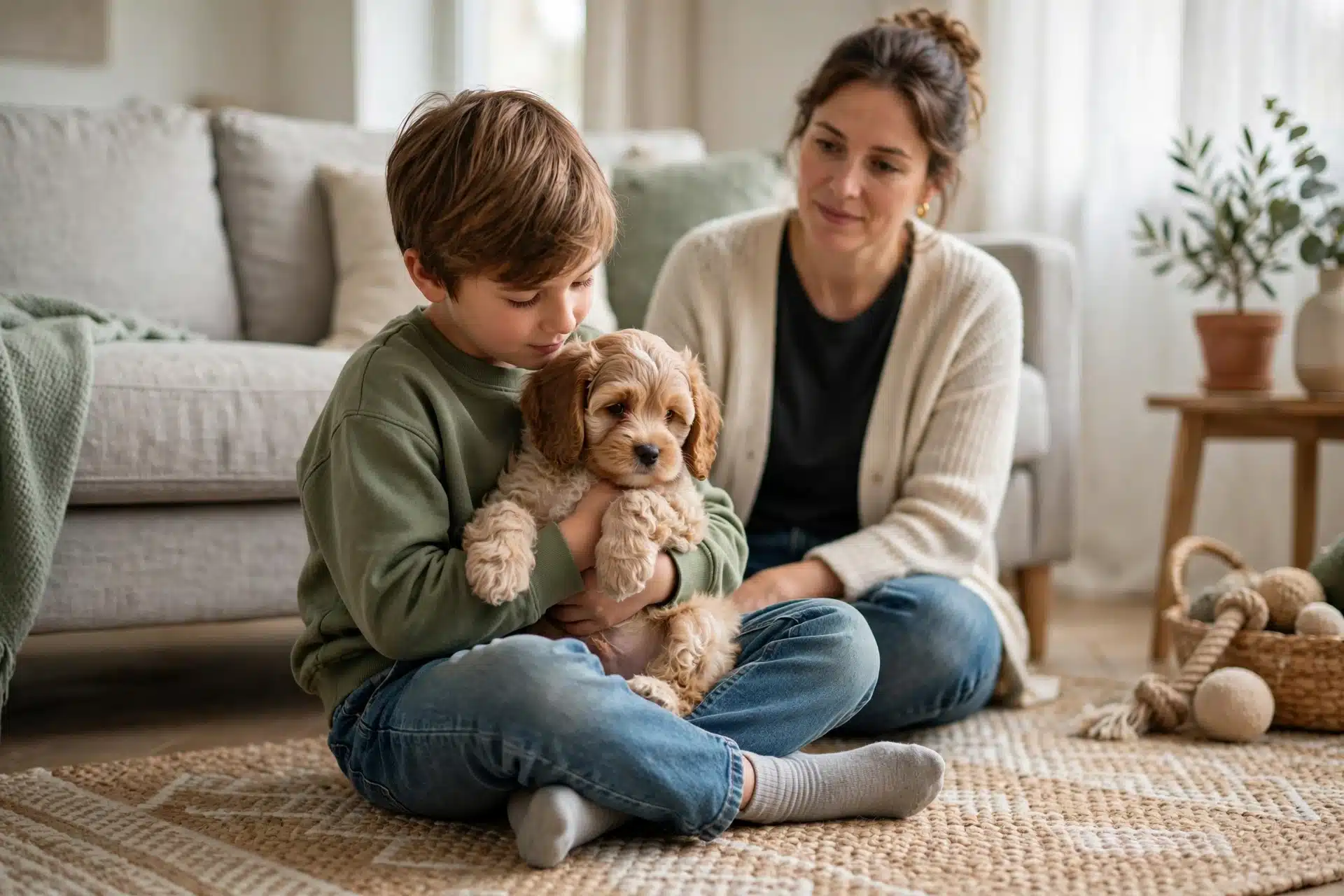
Studies consistently link early, varied exposure with fewer behavior problems in adult dogs, and Purdue’s summary of the AVSAB statement supports socializing puppies before full vaccination. Home-raised litters get this exposure naturally, so the benefit shows up as confidence rather than as a trained trick.
Household Soundness: Noise, Surfaces and Daily Routine
Why everyday household sound stops being scary
A family home is loud. Dishwashers, doorbells, vacuum cleaners and kids playing upstairs all run on a schedule a puppy can hear daily. Puppies raised in a home meet these sounds while young, so they treat them as background noise instead of threats. Kennel-raised dogs often meet a vacuum for the first time at 12 weeks or later, which is why some freeze, bark or bolt at ordinary sounds.
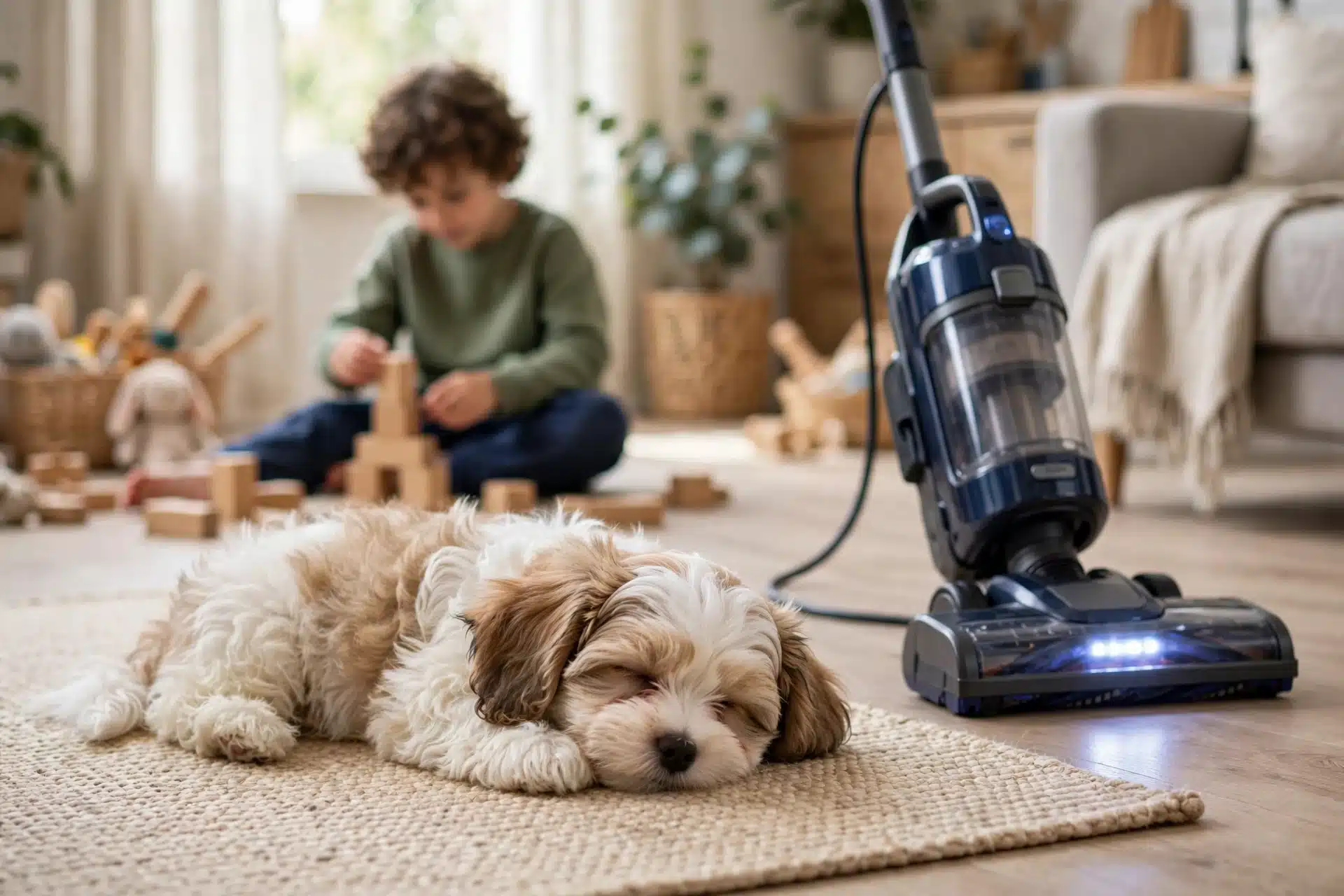
Surfaces, thresholds and small spaces
Texture matters too. A family-raised puppy has already walked kitchen tile, hardwood, carpet, stairs and maybe gravel before pickup day. That matters for small companion breeds like the Havanese and Cavapoo, where hesitation at a threshold or slick floor can turn into a lasting fear. Ask a breeder which surfaces their puppies cross each day; a confident answer tells you more than any phrase on a website.
Settling into a household routine
Routine is the third piece. Puppies who have lived through mealtimes, naps, short absences and a bedtime wind-down adjust faster to crate training and housetraining in your home. That head start pairs well with a plan for the first weeks with a small breed puppy, because continuity at home is what turns early exposure into lasting confidence.
Handling, Bite Inhibition and Children in the Home
Bite inhibition and why practice with people matters
Bite inhibition is a puppy’s ability to mouth softly instead of clamping down. Puppies learn it from each other, but the lesson only sticks when it also happens with human hands, in AVSAB’s words, during safe, positive interaction with varied people. A pup raised indoors gets that practice every day, so it arrives knowing that human skin is fragile and that teeth end games.
Handling for grooming, nails and vet exams
The handling benefit shows up later at the groomer, the nail trim and the vet exam. Family-raised puppies are already used to being picked up, paws touched, ears checked and held still for a moment. Small companion breeds such as Havanese, Havapoo and Cavapoo need regular coat care, so early tolerance saves stress for both of you. Start gentle handling at home during the first week with your puppy, and pair every touch with a treat.
Growing up alongside children
A puppy that has lived with kids since birth reads childish movements better: quick arms, shrieking, dropped toys. It learns that small humans are part of normal life, not something to fear or chase. That does not replace supervision, though. Even a well-socialized puppy needs an adult nearby, and children still need coaching on how to treat a dog. You can read more in our family-raised buyer guide.
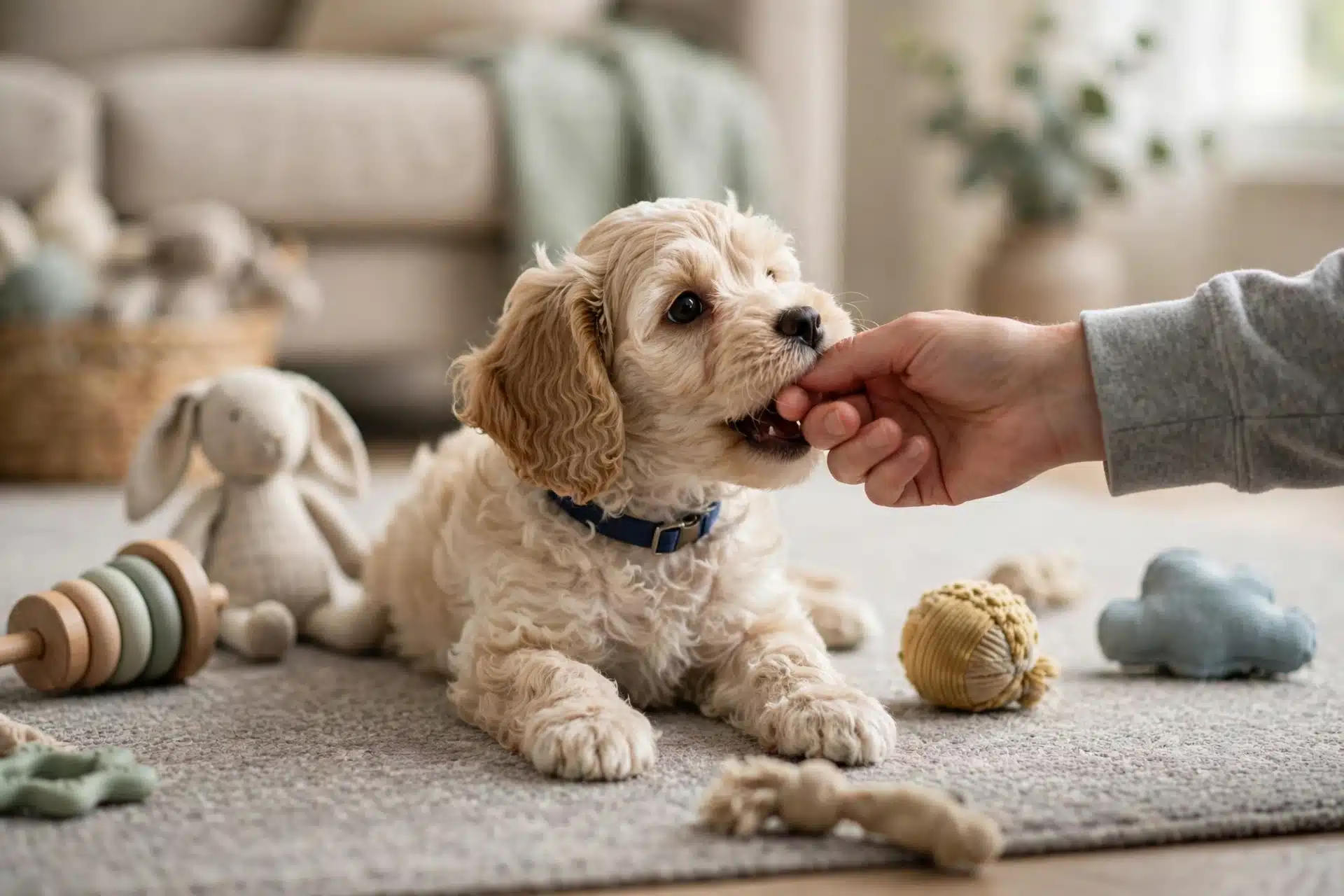
Cassie’s program includes family-raised litters precisely because this everyday contact shapes temperament in ways a kennel cannot. But the label is a strong head start, not a finished product. The habits above are what turn that start into a calm adult dog.
Early Manners: House Training, Crate Comfort and Early Training
Yes, family-raised puppies are usually easier to train, because they arrive with a head start. A puppy that has lived in a house already knows the rhythm of that life: people eat at a table, doors lead to the yard and naps happen in one spot. It has not learned perfect manners, but it starts from a calmer place than a puppy raised in a kennel run.
A home-raised puppy typically starts with:
- Following people to the door, a first step toward house training
- Comfort with a crate or bedding area used for naps
- Getting used to name responses during everyday play
- Gentle mouth habits from handling by children
Toilet habits a family-raised puppy already has
A family-raised puppy does not come house trained, but it comes pre-loaded with the basics. It has been taken outside after meals and naps, so it links going potty with grass or a pad instead of carpet. Good breeders start a routine on a schedule, and that pattern transfers quickly once you keep it consistent at home.
Crate comfort and sleeping through the night
Crate work often goes faster with a family-raised puppy because the crate was already part of daily life. Many have napped in a crate or pen for short stretches, so the first nights feel familiar rather than scary. That alone can save a week or two of crying, though every puppy is different and some still take time.
What the first weeks of training at home still involve
Early exposure is not early training. The first weeks still involve short sessions on name response, sit, come and loose-leash basics, plus steady potty trips. Family-raised simply means fewer unknowns at the start, and a calm puppy learns new cues faster than a stressed one.
Why It Matters Most for Small Companion Breeds
Small companion breeds like the Havanese, Havapoo and Cavapoo live almost entirely indoors. They share your couch, your kitchen and your car, so a puppy raised in a home already knows the sounds, surfaces and routines it will meet every day. A kennel-raised puppy has to learn all of that after it arrives, which is a harder start.
Small breeds as indoor household members
Because these dogs stay small, they rarely live outside or spend hours alone in a yard. They sit under the dinner table, nap through doorbells and ride along on errands. A family-raised puppy has already practiced all of this during the socialization window, which runs roughly from 3 to 14 weeks of age, so the first week at your house feels familiar instead of frightening.
Coat care and handling that starts in week one
Havanese, Havapoos and Cavapoos need regular brushing, nail trims and gentle handling for the rest of their lives. That work goes far better when it started early. Puppies raised in a family home get held, brushed and touched by children and adults long before they leave, so grooming feels routine rather than scary.
Asking better questions of any small-breed program
Ask any breeder exactly who touches the puppies each day, and what sounds, surfaces and handling each litter has experienced before eight weeks.
A tidy website does not answer those questions. Sage Puppies raises each litter inside the home, but whatever program you choose, ask for specifics: who handled the puppies, how often, and what they saw, heard and practiced. Honest breeders answer easily, with details, because the work was real. Vague answers deserve a follow-up visit or a different breeder.
How to Verify a Family-Raised Puppy Near You
A puppy was really raised in a home when the breeder can answer eight things directly: where the litter slept, who handled the puppies and how often, which household sounds they heard daily, what Housetraining foundations they practiced, how they met children or other pets, the exact weaning setup, each parent’s screening results, and what paperwork comes home with the puppy. If those answers come quickly and in detail, you are likely talking to a genuine family breeder.
What to look for on a listing or website
Real family-raised listings show the puppies in a kitchen, living room or yard, not stacked in runs. Look for photos and videos with furniture, people and normal clutter in the background. A credible site names the parents, lists health screening, explains the application process and states pricing clearly. Vague stock photos, “puppies ready now” on every page and no breeder name are reasons to keep searching. Our buyer’s guide walks through each listing element.
Questions to ask before you pay
Ask a mix of handling, routine, health and paperwork questions:
- Handling: Who holds the puppies, and how many hours a day are they out?
- Routine: What sounds and surfaces do they meet, and are they crate-started?
- Health: Which parent screenings were done, and what did the vet exam find?
- Paperwork: Do you provide a contract, vaccination record and health certificate?
A confident breeder answers without hesitating. Hedges or missing records belong on the red flags list.
Local pickup and delivery, plus warning signs
Seeing the home is the strongest proof, so Utah families near South Jordan can visit in person before a deposit. Out-of-state buyers should ask for a live video call inside the actual whelping area, not a rehearsed clip. Warning signs include pressure to pay by gift card, refusal to video chat, meetings in parking lots and puppies shipped under eight weeks. Sage Puppies offers Utah pickup and nationwide delivery with owner-managed matching, and any program you choose should allow that same level of verification before money changes hands.
Where Family-Raising Is Not Enough
Socialization continues long after pickup
A great start is not a finished puppy. The socialization window closes around 14 weeks, so the weeks after pickup still count. Keep introducing new people, places, sounds and gentle handling, and follow a plan like a puppy socialization checklist for the first 12 weeks to keep progress moving. A family-raised breeder like Sage Puppies hands you a head start, not a shortcut.
When a home environment is a poor fit
Honest limits matter here. A puppy raised around calm adults may still struggle in a chaotic household with small, loud children. Temperament also varies within a litter, so ask how a breeder matches each puppy to each family. If your home includes toddlers or long hours alone, say so during the matching process rather than after.
Health is a separate conversation from raising style
Loving care does not test hips, hearts or eyes. Even the best family environment cannot prevent inherited conditions in Havanese, Havapoo and Cavapoo lines, so ask for puppy health records and proof of parent health testing. For breeder-side guidance, see the AVSAB position statement on breeder responsibilities, which pairs socialization with health screening.

A family-raised puppy walks into your home already comfortable with noise, handling and everyday chaos, so the first weeks feel like joining, not adjusting. If that’s the start you want for your family, meet our Havanese, Havapoo and Cavapoo puppies at Sage Puppies and start the application today.
Frequently Asked Questions
Q1: What are the benefits of puppies raised inside a family home?
They arrive familiar with household sounds, surfaces, handling and routines. That head start usually shows up as calmer crate nights, easier grooming and quicker adjustment in your first weeks together.
Q2: Are family-raised puppies easier to house train?
Usually, yes. Most have already been taken outside after meals and naps, so the pattern transfers fast when you keep a consistent schedule.
Q3: Does family-raised mean the puppy is trained?
No. Early exposure is not training. You still teach name response, sit, come and potty habits once your puppy is home.
Q4: How can I verify a breeder’s family-raised claims?
Ask where the litter slept, who handled the puppies and what sounds they heard daily. Confident, detailed answers are a good sign; vague ones belong on a red flags list.
Q5: Does family-raising guarantee a healthy puppy?
No. Health depends on parent screening and veterinary care, so always ask for puppy health records and proof of health testing.
Q6: Is family-raising enough on its own?
It is a head start, not a finish line. Keep socializing new people, places and handling until the window closes around 14 weeks.
Conclusion
A family-raised puppy arrives with a real head start: it knows household sounds, walks on tile and carpet without worry, tolerates handling, and has practiced early crate and potty routines. The socialization window from 3 to 14 weeks does the heavy lifting, and a home delivers that exposure naturally. But the label is a claim to verify, not a promise. Ask who handled the puppies and what they experienced, confirm parent health testing, and keep socializing after pickup day. Do that, and you get more than a cute face. You get a confident companion suited to indoor life with Havanese, Havapoo and Cavapoo lines.