Quick Summary: Family-raised puppies grow up in real homes with daily human contact and early socialization, but buyers must verify this through clear records and home visits. Responsible breeders answer detailed questions about health testing, socialization, and routines, avoiding vague claims. The focus should be on health, temperament, and transparency, not just marketing phrases like ‘family-raised.’ Sage Puppies exemplifies a trustworthy program with health-tested parents and transparent processes for local and nationwide families.
If you are searching for Puppies Near Me, the real job is not finding what is available today. It is finding a breeder raising Family-Raised Puppies in a true home setting, with solid health practices, early social time, and clear answers.
That is where many buyers get stuck. Listings can look warm and trustworthy, but not all Home-Raised Puppies get the same daily care, handling, or breeder support. Some sellers use the right words without backing them up.
This guide helps you sort that out fast. You will learn what Family-Raised Puppies really means, how to judge breeder quality, what questions to ask, and how to compare local and nationwide options with more confidence.
We focus on what serious puppy families need in 2026, including health, temperament, transparency, pickup or delivery, and what to expect from reputable Family-Raised Puppies programs.
What Family-Raised Puppies Really Mean
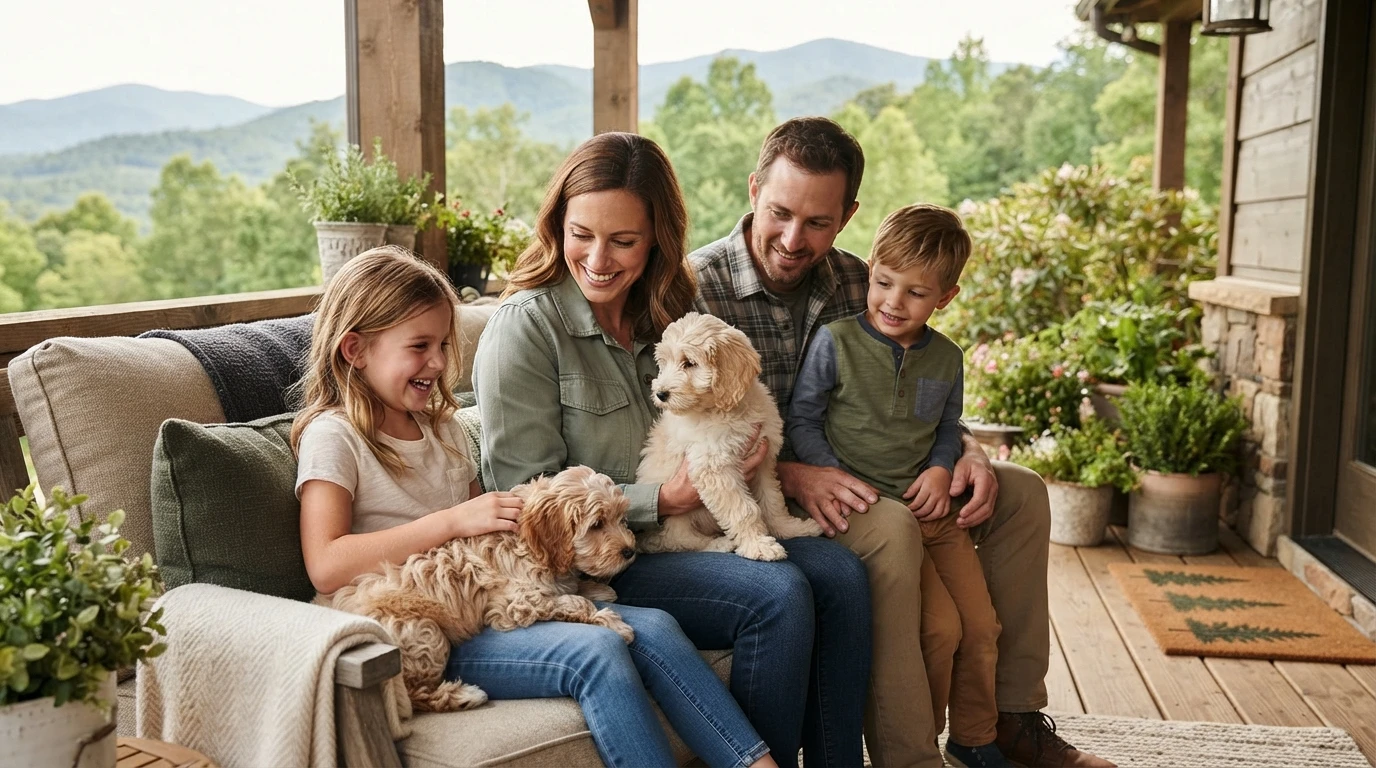
A family-raised puppy grows up inside a real home, not apart from daily life. That means regular human contact, gentle handling, and early lessons that help the puppy feel safe with normal sounds, touch, and routines.
In a good home setup, puppies hear vacuums, doors, kitchen noise, and everyday voices. They also get short, positive handling sessions, new surfaces, toys, and age-fit exposure to people. The American Kennel Club notes that breeders can build confidence early through enriched spaces, handling, grooming practice, and safe new experiences before puppies go home.

That is very different from breeders who only use the phrase as marketing. A backyard breeder may raise puppies at home but still skip health planning, structure, records, and proper socialization. A commercial breeder may meet basic care rules yet still rely on larger-scale systems with less one-on-one time. USDA rules focus on licensing and oversight in certain sales setups, but a license alone does not prove a puppy was thoughtfully raised in a family environment or matched with careful socialization.
A family-raised label matters only if the breeder can show what happens each day.
A premium program should be able to show you clear proof, not just nice wording. Ask for:
- Photos or videos of the puppies inside the home
- A simple outline of socialization steps by age
- Parent health testing and temperament details
- Vet and vaccine records
- Feeding, potty, and crate routine notes
- A chance to ask direct questions about noise, kids, grooming, and handling
Look for specifics, calm transparency, and clean answers. Programs like Sage Puppies should be able to explain exactly how puppies are raised, what they experience, and how that prepares them for family life.
Also Read: Home
How to Evaluate a Breeder Near You
A good breeder is easy to question and hard to rush. If answers feel vague, defensive, or sales-first, walk away.
Questions that should be answered before you reserve
Ask direct questions before you leave a deposit. A responsible breeder should interview you too, not just collect payment. The AKC notes that good breeders ask many questions back and usually do not place puppies before 8 weeks according to AKC guidance.
Use this checklist:
- Why was this litter planned?
- Where are the puppies raised each day?
- Can you meet the mother?
- How do you match puppy temperament to family life?
- What support do you offer after pickup?
- What happens if our family cannot keep the puppy later?
- Can I review the contract before reserving?
If the first big question is “How fast can you pay?” that tells you a lot.
Health testing and veterinary care to verify
Do not settle for “vet checked” alone. You want proof of breed-relevant health testing on the parents, plus clear puppy care records. OFA says breeders should explain inherited risks, show screening results, and let buyers verify health records through breeder interview standards.
Ask to see:
- Parent health testing results
- Vaccine and deworming record
- Vet exam dates
- Microchip details, if included
- Feeding routine and current food
- Any known issue in the line, even minor ones
A simple review table helps:
| Item to Verify | What You Should See | Red Flag |
|---|---|---|
| Parent testing | Named results, breed-specific screens | “Our dogs are just healthy” |
| Puppy records | Dated vet and care notes | No paperwork ready |
| Health discussion | Honest strengths and risks | “No issues ever” |

Visiting in person or reviewing a remote tour the right way
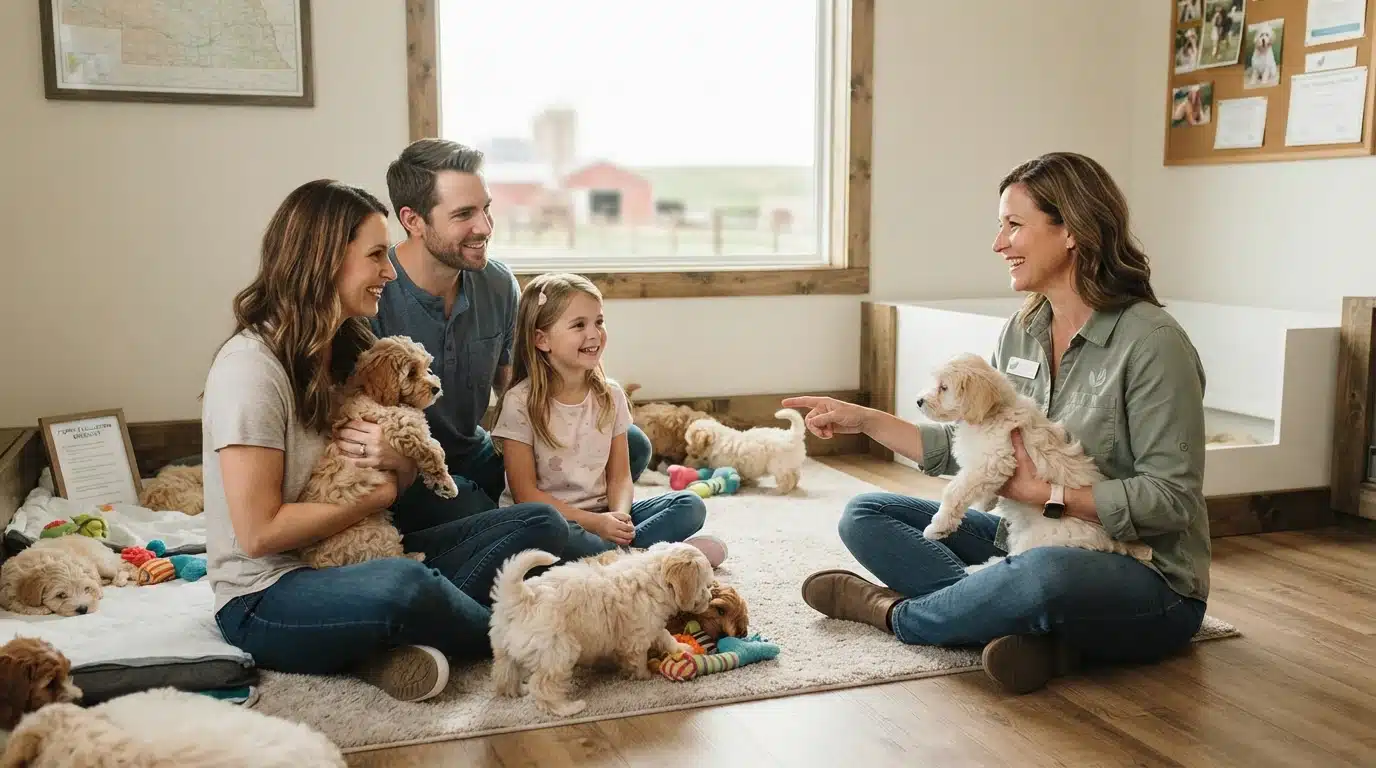
An in-person visit is best, but a live video tour can still tell you a lot. Look for a clean, calm home, puppies that seem bright and curious, and a mother who looks comfortable with her litter. Watch how the breeder handles the dogs. Warm, steady handling matters.
Check these points:
- See where puppies sleep, play, and potty.
- Ask for a live tour, not just edited clips.
- Watch for normal home sounds and human contact.
- Notice odor, crowding, and puppy energy level.
- Confirm who will handle pickup or delivery.
Avoid parking lot handoffs. A breeder who hides the raising space is asking for blind trust.
Choosing the Right Puppy for Your Family
Start with your real life, not the cutest face. The best puppy match fits your pace, space, budget, and patience.
Match energy level and temperament to your home
A puppy should fit how your home actually runs. The AKC advises buyers to compare a breed’s energy, friendliness with kids, and comfort with other pets before choosing the right dog for your lifestyle.
Use this quick check:
- Busy, active family – look for playful, people-focused puppies
- Calmer home or apartment – choose a steadier, easiergoing temperament
- Young kids – pick a puppy known for patience and resilience
- Other pets at home – ask how the litter has been socialized
A great breeder will ask about your schedule, children, and home setup before suggesting a puppy.

Understand size, coat, and grooming commitments
Small breeds can suit many homes, but size is only part of the picture. Adult weight, coat type, shedding, and grooming needs all affect daily life.
Keep these points in mind:
- Size affects travel, crate space, and how sturdy the dog is around children.
- Coat affects brushing, mats, and grooming cost.
- Shedding affects cleanup, but not all allergy risk.
According to Cleveland Clinic’s allergy guidance, no dog is truly 100% hypoallergenic. That matters if someone in your home has pet allergies.
Why breed focus matters in a boutique program
A focused breeder usually knows their breeds better than a seller offering many unrelated types. That can mean clearer expectations for size, coat, and temperament.
Look for programs that stay narrow and intentional, such as Sage Puppies with Havanese, Havapoo, and Cavapoo puppies. Ask:
- Why these breeds?
- What family types fit each one best?
- How are puppies socialized at home?
- What traits do they breed for most?
A boutique program should guide you toward the right puppy, not just an available one.
Also Read: 10 Small Breed Puppies That Stay Friendly And Easygoing
What to Expect From the Buying Process
Application, approval, and matching
A good breeder will screen you before offering a puppy. That is normal, not rude. The goal is to place each puppy in the right home, and the AKC notes that responsible breeders often use questionnaires, phone calls, and lifestyle questions to make that match well according to AKC.
Expect a simple process like this:
- Submit an application
- Have a call or message exchange
- Share your home, schedule, and dog experience
- Wait for approval and litter timing
- Get matched based on temperament, not just color
At a family program like Sage Puppies, matching should feel calm and clear. You should know why a puppy is suggested for your home.
If a seller promises “pick any puppy now” with no questions, slow down.
Reservation, pricing, and what should be in writing
Once approved, you may place a reservation deposit. Before you pay, ask what the deposit does and whether it is refundable, transferable, or tied to a specific litter.
Your written agreement should cover the basics. AKC says puppy contracts often include the purchase price, registration details, microchip ID, health records, and return terms in a solid puppy contract.
Use this checklist:
| Item | What you should see in writing | Why it matters |
|---|---|---|
| Price | Full puppy price and payment schedule | Avoid surprise fees |
| Deposit | Refund and transfer terms | Protects your money |
| Health records | Vaccines, deworming, vet history | Confirms care to date |
| Pickup terms | Date window and location | Prevents confusion |
| Return policy | What happens if you cannot keep the puppy | Shows breeder responsibility |

Pickup, delivery, and go-home preparation
Most reputable breeders send puppies home at the right age, with records and clear next steps. AKC advises buyers not to expect to bring a puppy home before 8 to 12 weeks.
Before pickup or delivery, prepare:
- A crate
- Food the puppy already eats
- A leash, collar, and ID tag
- Cleaning supplies
- A vet visit within the breeder’s stated window
If your puppy is traveling from outside the U.S., rules can be stricter. The CDC says a dog entering the U.S. needs a CDC Dog Import Form, and air travel requires the receipt before boarding. For most family buyers inside the U.S., though, delivery is simpler and should include timing, transport details, and a safe handoff plan.
Never accept vague delivery plans, missing records, or pressure to pay the full balance before you have written terms.
Common Mistakes to Avoid
Choosing speed over proof is where many buyers get burned. A cute puppy and a fast reply are not proof. Ask for health testing, parent details, vet records, and clear videos of the puppy in its home setting. The AKC says good breeders share screenings and let you see how puppies are raised in person or clearly documented online through transparent updates AKC breeder guidance.
Assuming “family-raised” automatically means ethical is another common miss. That phrase is not regulated. A puppy can be raised in a home and still get poor socialization, weak matching, or little breeder support. The ASPCA notes that responsible breeders pair home raising with transparency, careful placement, direct sales, and lifetime accountability ASPCA responsible breeding criteria.
Skipping the long-term fit check causes stress later. Temperament, grooming, barking, travel tolerance, child readiness, and daily care matter more than coat color. Make one adult the main caregiver. Match the breed and energy level to your real schedule, not your ideal one.
If a breeder pushes for a deposit before answering basic questions, slow down.
Also Read: Family-Raised Puppy Contracts: Key Terms to Review First
How a Trusted Family-Raised Program Builds Confidence
A trusted family-raised program helps you feel calm before you commit. You can see how puppies are paired, raised, matched, and sent home instead of guessing.
Health-first pairing and early care
Confidence starts before a puppy is born. Strong programs choose parent dogs for health, temperament, and family fit, not just looks or trend value.
Early care matters too. The American Veterinary Medical Association notes that puppies benefit from positive exposure during key early weeks, and that early socialization can lower later fear and behavior problems according to this AVMA socialization review.
Look for signs like:
- health-tested parents
- clear records and go-home details
- daily handling in a home setting
- gentle exposure to normal sights and sounds
- honest talk about breed traits and grooming needs
At Sage Puppies, that health-first approach is part of the program story, not a hidden detail.
If a breeder talks a lot about color but very little about parent health or early development, slow down.
Boutique communication and family matching
Good breeders do not push fast sales. They ask questions, explain timing, and help you pick a puppy based on temperament and fit, not impulse.
That boutique feel shows up in simple ways:
- You get direct answers.
- Expectations stay clear.
- The breeder explains next steps.
- Matching feels thoughtful, not rushed.
This matters for first-time buyers and busy families. A calm process lowers stress and helps you prepare for training, sleep, grooming, and routine.
| Trust signal | What it tells you |
|---|---|
| Application process | The breeder screens for fit |
| Temperament guidance | Matching goes beyond appearance |
| Clear updates | You know what to expect |
| Transparent pickup or delivery details | Go-home planning is organized |
Local Utah roots with national reach
A strong local base builds trust. A broader reach adds convenience. The best programs do both well.
Sage Puppies is based in South Jordan, Utah, with local pickup and nationwide delivery options. That can work well for families outside Utah, but only when travel is handled with care. USDA APHIS says puppies transported by air must be at least 8 weeks old and fully weaned, as explained in its pet air travel guidance.
Local roots give you accountability. A clear national process gives you access without feeling risky.
Questions Families Ask Before They Apply
Family-raised usually means puppies grow up in a home, around daily sounds, people, and handling. That is different from many larger breeder setups. Rescue dogs can be wonderful too, but their early history may be less known.
A healthy, well-started puppy should look bright, clean, curious, and comfortable being handled. Ask for vet records, vaccine details, and proof of early social work. The Merck Veterinary Manual says to watch for clean eyes, ears, coat, and friendly behavior.
Yes, you can find trustworthy family-raised puppies near South Jordan, Utah, but slow down and check the source. Visit if you can, ask to see where puppies live, and confirm how pickup or delivery works. Sage Puppies is one local example with a home-raised focus in South Jordan.
Before you place a deposit, review the contract, health terms, refund rules, and what happens if timing changes. The BBB puppy buying guide also warns buyers to research sellers, verify records, and avoid rushed payment decisions.
Also Read: 10 Unique Care Tips For Small Breed Puppies In Urban Settings
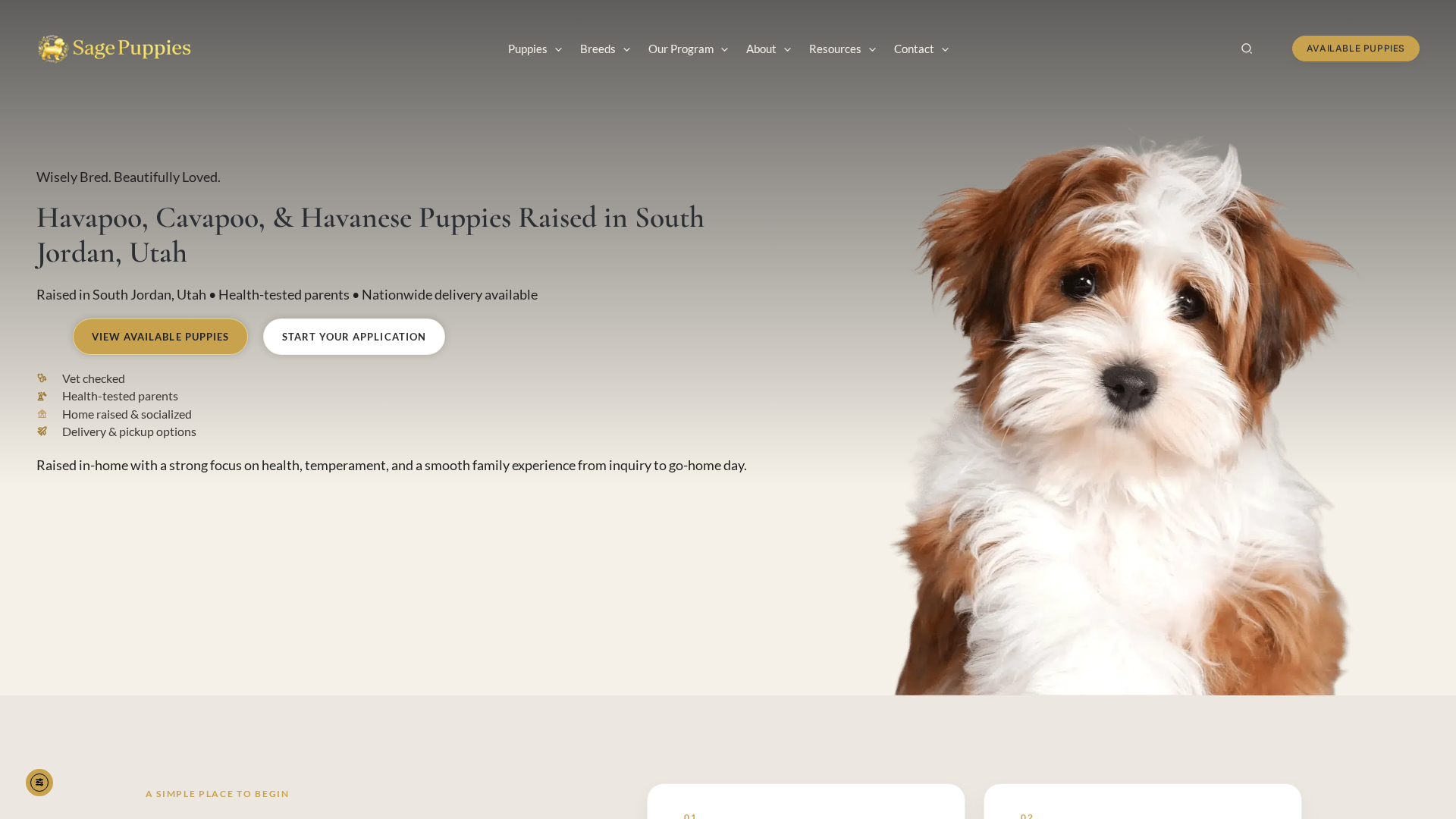
If you want a family-raised puppy without the guesswork, start with a breeder that shows you how puppies are raised, socialized, and matched. Sage Puppies helps families do that with health-tested parents, clear next steps, local pickup in Utah, and nationwide delivery.
Frequently Asked Questions
Q1: What makes family-raised puppies different from those from breeders or rescues?
Family-raised puppies grow up in a home, with daily handling, household sounds, and regular people time. Good breeders can also raise pups this way. The key is not the label. Ask how the puppies live, what social steps happen early, and how health testing is handled.
Q2: How does Sage Puppies ensure healthy and socialized family-raised puppies for sale?
Sage Puppies focuses on health-tested parents, home raising, and early social work. That means puppies get human contact, gentle routines, and a family setting from the start. Ask for clear details on parent health, temperament goals, pickup or delivery steps, and what support comes next.
Q3: Where can I find trustworthy family-raised puppies near South Jordan, Utah?
Start with local breeders near South Jordan, then widen your search if needed. Look for home-raised care, clear communication, health testing, and a transparent process. Sage Puppies is one Utah option. You can also compare breeders carefully if you need pickup or nationwide delivery.
Q4: What should I ask before I put down a deposit?
Ask about parent health testing, puppy raising setup, socialization, contract terms, timeline, and total cost. Also ask who to contact after pickup. A good breeder answers plainly and does not rush you.
Q5: Can a family-raised puppy still have behavior issues later?
Yes. Early raising helps, but your home matters too. Sleep, potty training, boundaries, social outings, and gentle handling shape behavior. A well-started puppy still needs steady training and realistic expectations.
Conclusion
A good puppy search comes down to three things – health, temperament, and trust. “Family-raised” should mean real daily handling, a clean home setting, early social time, and a breeder who can clearly explain how puppies are raised. It should not be just a warm phrase.
A strong breeder also screens you, shares records, and stays clear about pickup or delivery. The AKC notes that responsible breeders start early socialization and buyer screening, which helps puppies grow into stable companions according to AKC guidance. You also need to watch for scam signs, since the FTC warns that fake puppy ads often push upfront payment and urgency in its consumer alert.