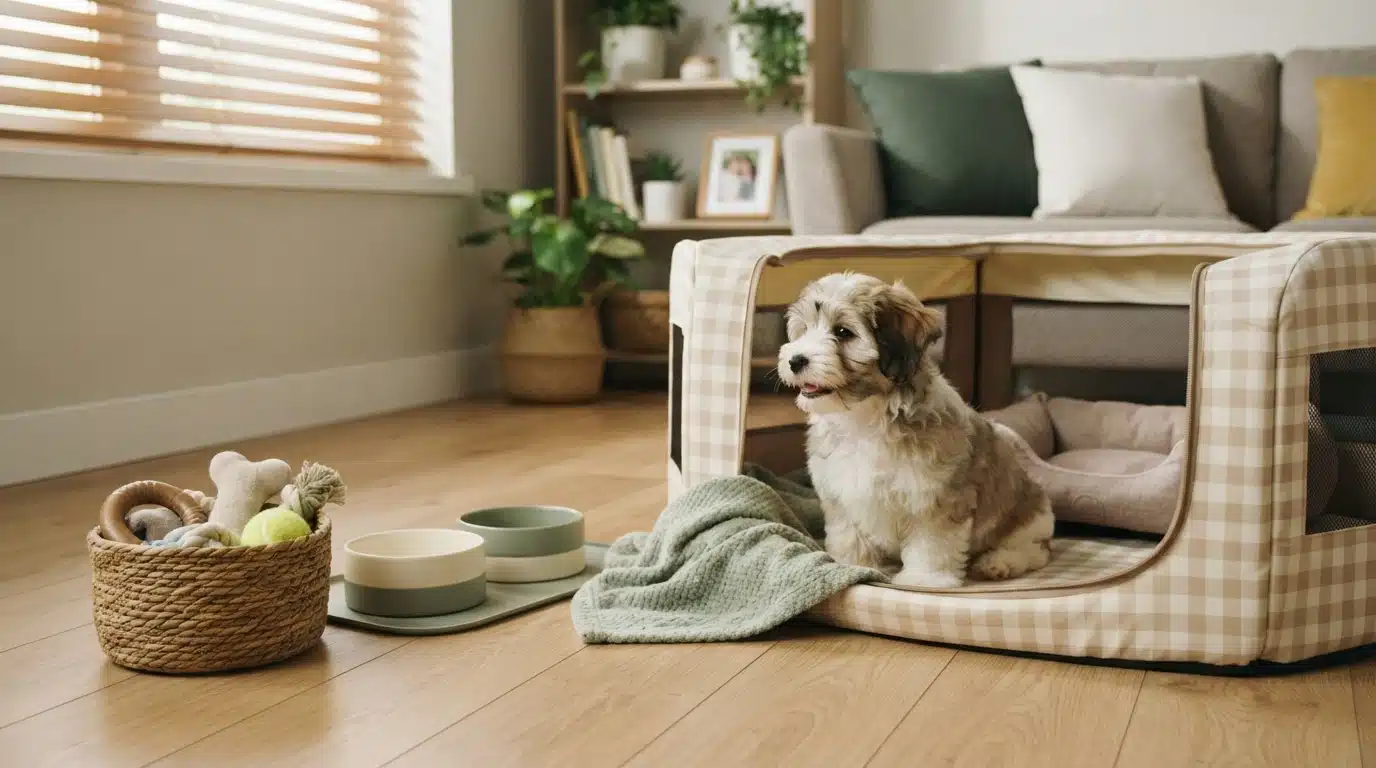
Quick Summary: The first month with a small breed puppy depends on tight routines: four measured meals daily, frequent potty breaks after naps, meals, and play, and a home checked at puppy height for reachable food, cords, pills, and toxic plants. Keep the puppy calm, crate near your bed at night, begin gentle handling and brushing early, and use brief, positive socialization and training sessions. Schedule a vet visit within days, bring all breeder records, and treat wobbliness, weakness, or a limp after a missed meal as possible hypoglycemia needing prompt help.
A Havapoo puppy weighs less than a house brick, and on pickup night that fact rearranges your whole house. A counter that stayed out of reach for a toddler now takes one easy hop. Yesterday’s spilled coffee is today’s safety incident. The first weeks with a small breed puppy look nothing like the advice written for Labradors.
This guide covers those first weeks small breed puppy owners actually face: measured meals to guard against low blood sugar, a day-and-night rhythm that works in an apartment, standing-height hazards, coat care from week one, and socialization done safely. You will find step-by-step routines for days 1 through 30, sized for a puppy taken home at 8 to 12 weeks.
At Sage Puppies in South Jordan, Utah, we place Havanese, Havapoo and Cavapoo puppies with first-time families, so these pages draw on what new owners ask us most.
Pickup Day: What to Do in the First 12 Hours
The first hours shape the whole first week. Your goal is simple: keep your small breed puppy fed, warm, calm and close. Skip the zoo of neighbors and kids for day one. Everything else can wait.
Transport and the First Meal
Ask the breeder what and when the puppy last ate, then plan a meal within an hour of pickup. Small breeds burn through blood sugar fast, and stress speeds that up. Pack a small portion of the food the puppy already knows, plus water and a towel-lined carrier. If the drive runs long, offer a break midway.
Watch for low blood sugar. Weakness, wobbliness or a limp puppy in a toy breed is urgent. Rub a little corn syrup on the gums and call your vet right away, per American Red Cross first aid guidance.
The Settling Room
Set up one small room before you leave to get the puppy. It should hold a crate, water, a soft bed and nothing fragile at nose height. Carry the puppy in, let it sniff, then sit on the floor and stay quiet. Keep these first weeks small breed puppy routines boring on purpose: one room, one family, low noise. Calm now means easier sleep later.
The First Night
Expect crying. It is normal, not a crisis. Take the puppy out for a potty break right before bed, then settle it in the crate near your bed so it can hear you. A ticking clock or a warm (not hot) snuggle pad helps. Offer a small meal close to bedtime, since many toy breed pups sleep better with food on board, a tip vets repeat for preventing overnight drops in blood sugar. If the puppy whines, one calm hand through the crate bars beats pulling it into your bed, which starts a habit that is hard to break later.
Set Up the House for a Puppy That Reaches Counter Height
A toy breed puppy can stand on a dining chair or couch arm and reach things a bigger dog never could. Before your puppy’s first weeks at home begin, walk through each room at their eye level, not yours.
Standing-Height Hazards
Crouch to about knee height and look around. That is where a 10-week-old Havanese lives. Human food, medication, and trash can lids all sit within reach if the puppy climbs, so never leave food unattended on a low table. Chairs pushed back from the counter become ladders. Push them in. Keep purses, supplement bottles, and children’s snacks off coffee tables and window sills. A loose power cord at puppy height looks like a chew toy; tuck it behind furniture or cover it.
Floor-Level Risks Small Puppies Investigate First
Then drop to your hands and knees. On the floor you will find the real trouble: dropped pills, stray kibble, lint, coins, and electrical cords. Sweep and vacuum the day your puppy arrives, because a puppy explores the floor with her mouth first. Move houseplants like pothos and philodendron out of reach, since several common plants are toxic to dogs. Secure curtain cords and pick up children’s toys with small parts. Choose chew toys sized for tiny mouths so nothing can wedge in her throat.
Doors, Windows and Car Safety
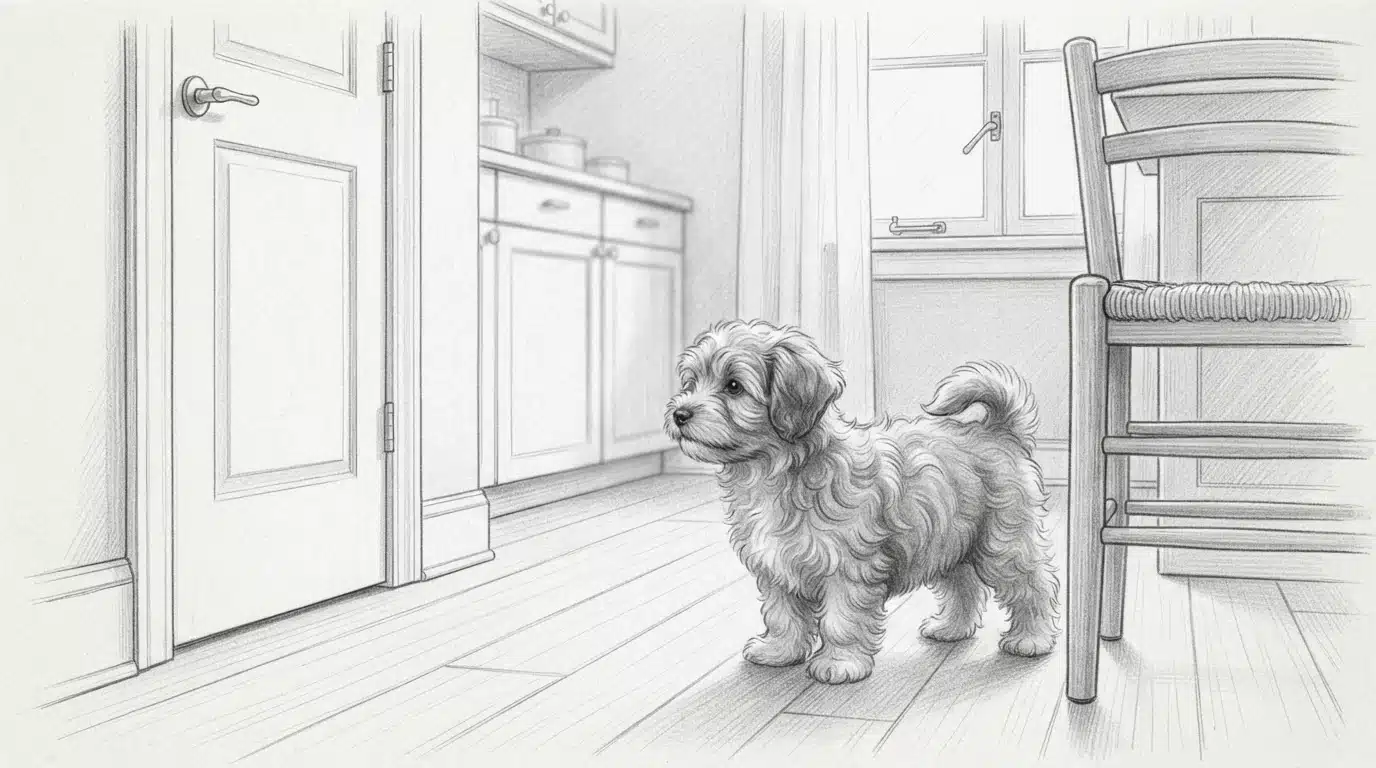
Doorways deserve a plan. Teach everyone in the house that the puppy never rushes an open door, because a dachshund-sized gap is enough for an escape. Check window and balcony screens for loose edges, and keep low windows closed or latched on warm days.
For car rides, use a small crash-tested crate or a properly fitted harness clipped to the belt system, placed on the floor or belted seat. Small dogs slide under dashboards in hard stops. If you are still preparing your home, our guide to buying a small breed puppy safely covers more bring-home steps.
Toilet lids stay down. A puppy can fall in and climb nothing out.
Feeding Through the First Weeks
Feeding a first weeks small breed puppy looks different from feeding a Labrador. Your puppy’s stomach is the size of a golf ball, so the food that keeps a big puppy going all day has to be split into small, timed meals. Get the rhythm right in week one and everything else, from potty training to sleep, gets easier.
Four Measured Meals, Not Free Access
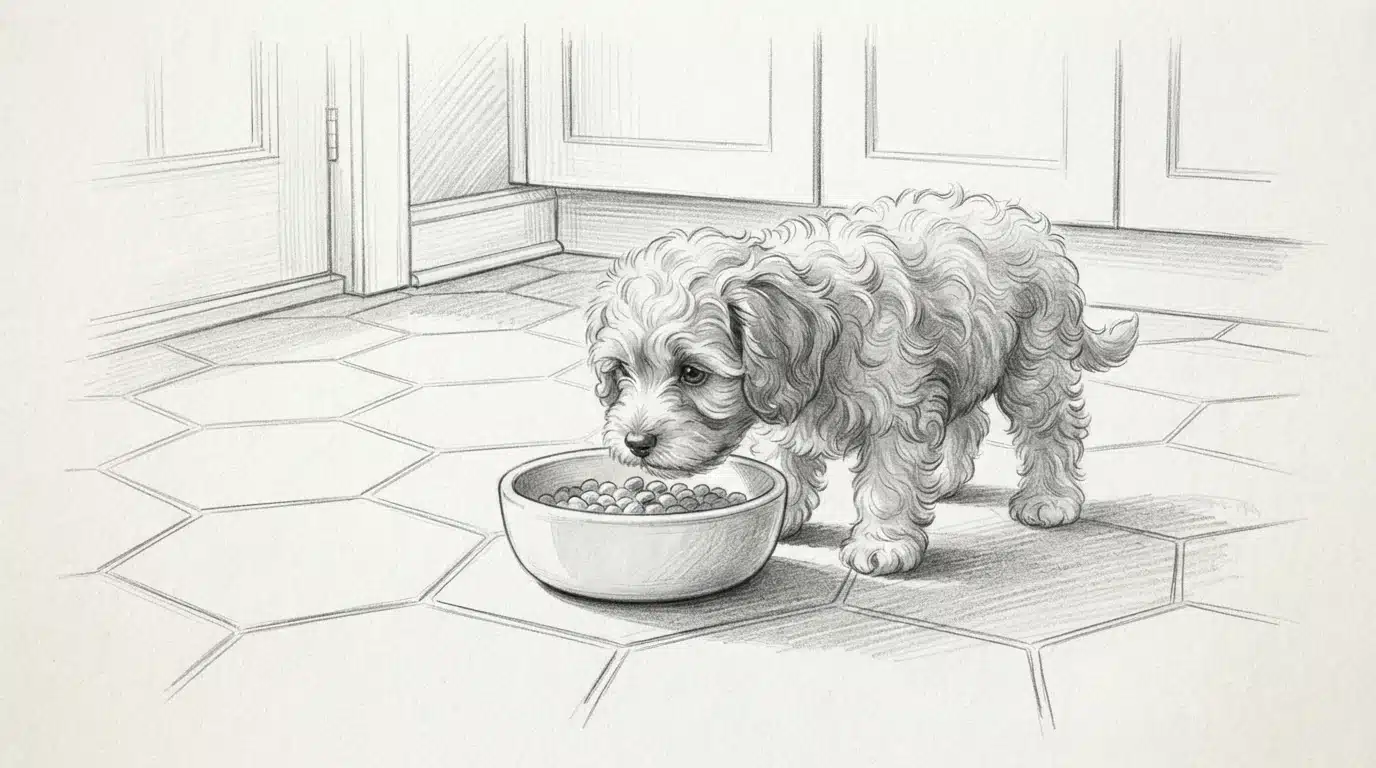
Plan on four measured meals a day for the first weeks, spread roughly four hours apart. Veterinarians recommend three to four meals for young puppies because small volumes fit a small belly better than one big bowl (VCA Hospitals). Set a schedule like 7 a.m., 11 a.m., 3 p.m., and 6:30 p.m., then measure each portion with a kitchen spoon or cup. A 10-week-old Havanese might eat only a quarter cup a day at first, split across those meals.
Free feeding, leaving food down all day, works against you. It blurs potty timing, invites grazing, and hides the moment your puppy stops eating, which is often the first sign something is wrong. Pick the food up after 15 minutes if it goes untouched.
Low Blood Sugar Risk in Small Breeds
Toy and small breed puppies can develop hypoglycemia, a dangerous drop in blood sugar, when they go too long between meals. Their bodies store very little glucose and they burn it fast through play. Watch for wobbliness, glassy eyes, weakness, or a limp, sleepy puppy after active play or a missed meal.
If you see these signs, rub a small amount of honey or corn syrup on the gums and call your vet right away. Skipping meals is never a safe trade with a small breed puppy, even one who is being picky.
Food Transitions and Treats
Whatever food the breeder sent home, keep your puppy on it for at least the first week. Switch gradually over seven to ten days by mixing in more of the new food a little at a time, which protects a sensitive small stomach.
Keep treats tiny, pea-sized or smaller, and count them as part of the daily food. Training treats add up fast in a puppy who eats a quarter cup a day. If you want a deeper walkthrough, the week-one feeding schedule covers portion sizes meal by meal.
Toileting, Sleep and the Crate
Build Toilet Trips Into the Wake Cycle
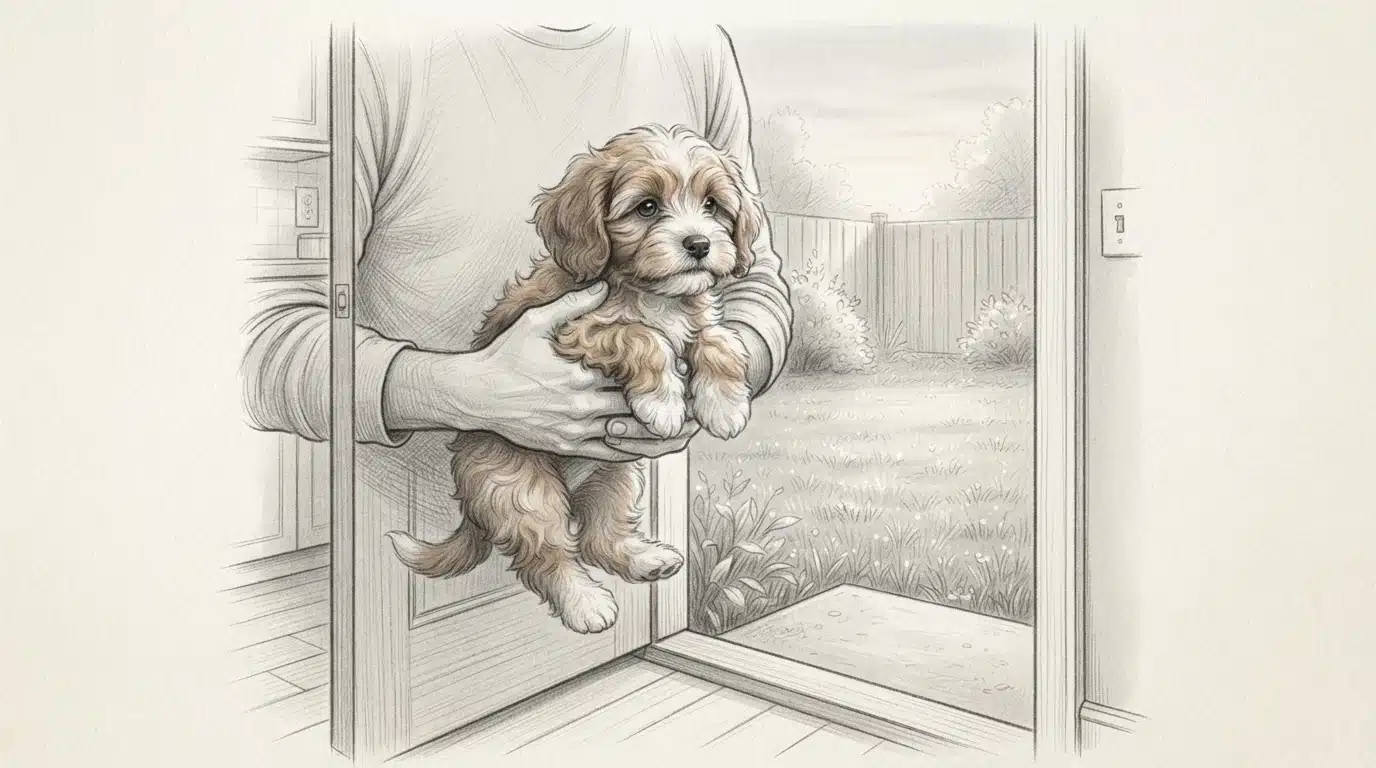
A small breed puppy at 8 to 12 weeks can only hold its bladder for short stretches, so plan outings around every wake-up rather than the clock. Carry the puppy outside the moment it wakes from a nap, right after every meal, and after play sessions end. The puppy finishes eating, you head straight out.
Small breeds need more trips than the usual “once an hour” advice suggests. A 10-week-old Havanese may need to go out every 45 minutes during active periods. Watch for sniffing, circling, or sudden wandering, and get to the door before the accident happens. Praise quietly once the puppy goes in the right spot, then bring it back in. For apartment dwellers without quick yard access, our apartment potty training guide covers pad and porch routines that fit the same wake-cycle logic.
What Consistency Actually Looks Like
Consistency means the same door, the same patch of grass, and the same phrase every single time. Ohio State’s housetraining guidance stresses a dedicated spot and a steady routine as the core of the method. Swap who takes the puppy out between family members, but keep the route and cue words identical. Accidents get cleaned with an enzymatic cleaner, never scolded, because punishment teaches puppies to hide their accidents instead of holding them.
Introduce the Crate or Playpen Awake
Start crate work while the puppy is calm and awake, not exhausted and crying. Toss a few kibble pieces inside, let the puppy walk in on its own, and feed meals near the open door for the first few days. Next, close the door for one minute while you sit beside it, then build up gradually from there. Vets suggest young pups stay crated no more than about four hours at a stretch, so pair the crate with a playpen for longer daytime setups. At night, keep the crate next to your bed for the first weeks so you can hear a midnight toilet request.
Coat, Grooming and Handling in Week One
Two-Minute Handling Sessions
Start handling work on day one, before any coat problem exists. Short sessions work best: two minutes of gently touching paws, ears, mouth and belly, then stop and let the puppy go. Do this several times a day. The goal is simple. Your puppy should learn that being held and examined is boring, not scary. Pay special attention to the feet, because nail trims get harder with a squirming adult. Pair each touch with a soft voice and a small treat.
Brushing Early and Coat-Specific Notes
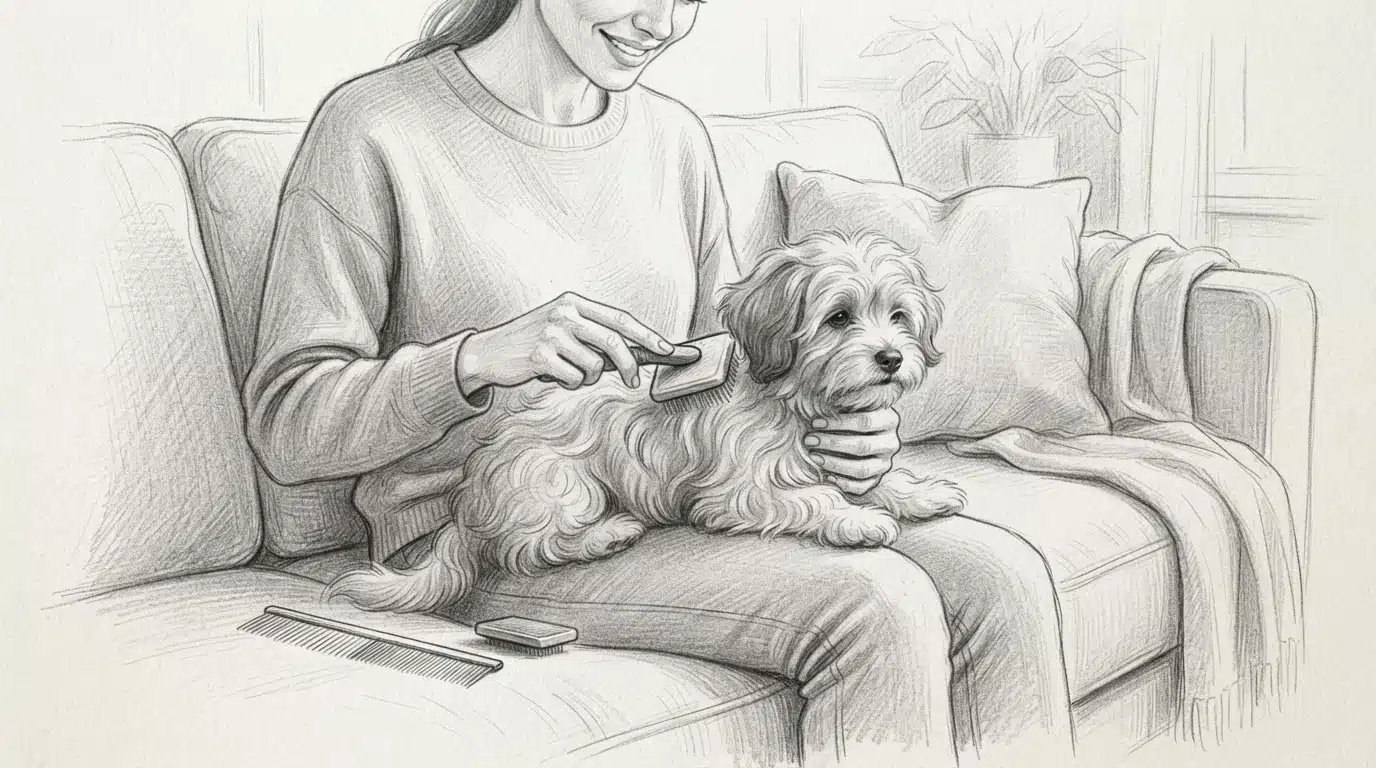
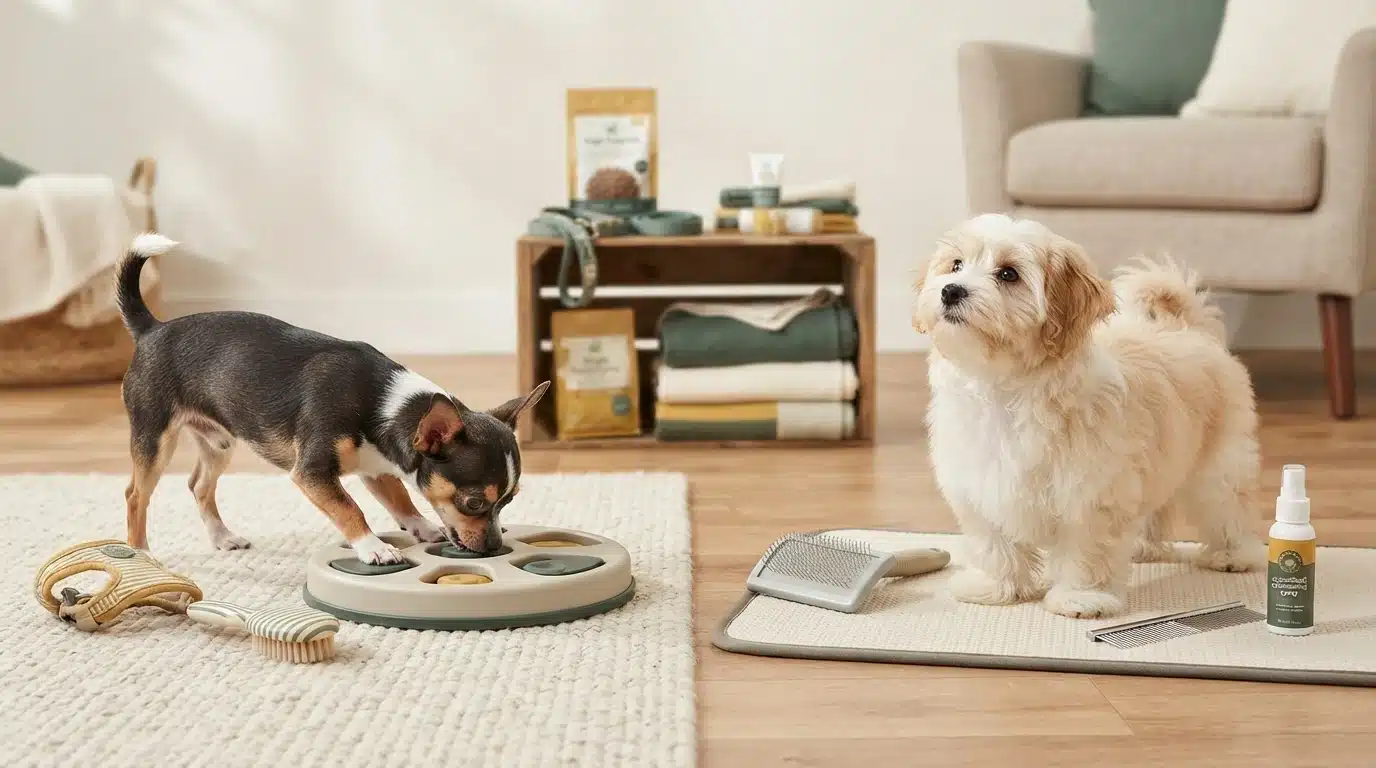
Brush from the first week, even though an 8-week-old coat looks easy. Havanese have a double coat that mats at the underlayer, while Havapoo and Cavapoo coats lean curlier and trap debris. Use a slicker brush plus a metal comb, and comb through to the skin so you catch tucks before they tighten. Two or three short sessions a week is enough at this age. Keep each one calm and end on a win.
A matted coat behind the ears and in the armpits is the most common first-month miss. Check those spots every time you brush.
Bathing and Nail Trims
Bathe only when needed, every three to four weeks at most, with puppy shampoo and a towel dry. Trim nail tips weekly, just a sliver, so quick trims stay routine rather than a wrestling match.
Socialization, House Rules and the First Month of Training
Socialization Is Gradual and Ongoing
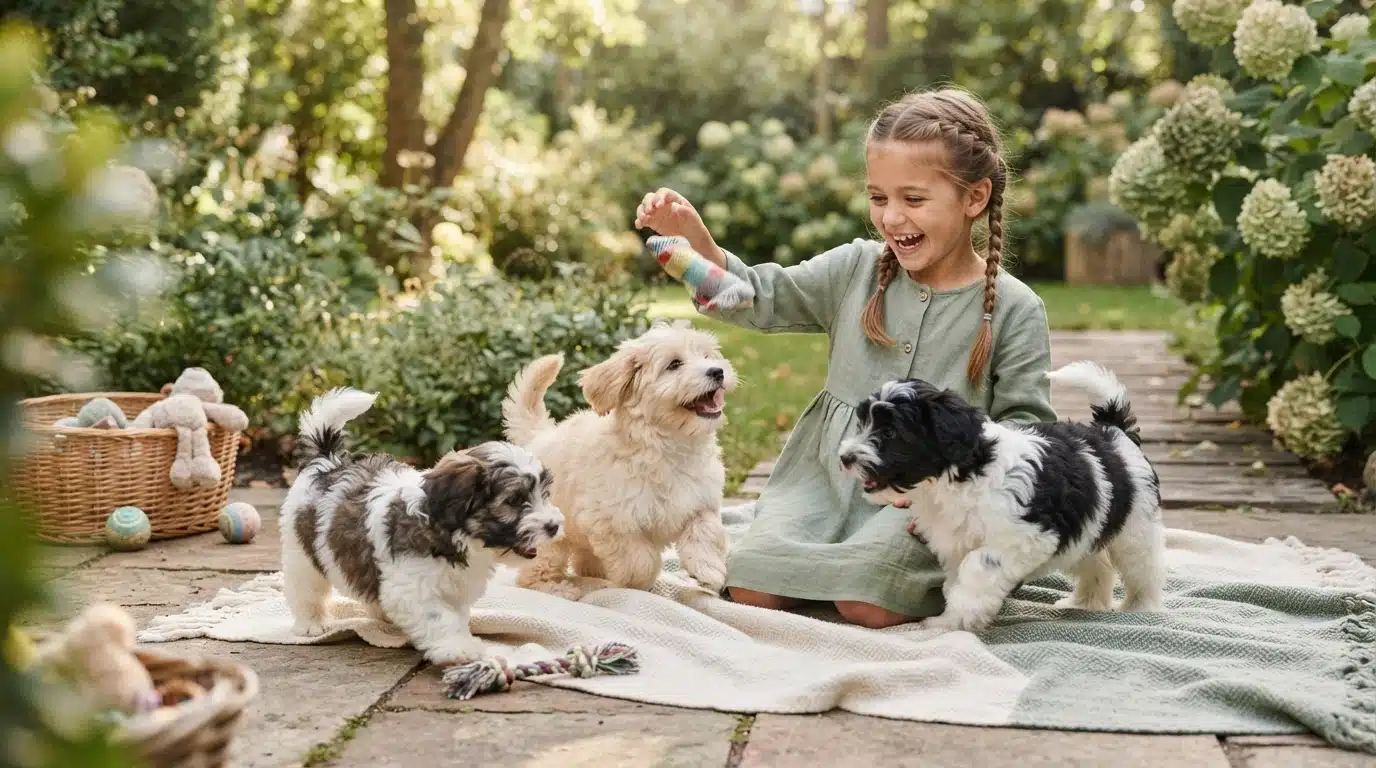
Socialization is not a class you finish in week one. It is a slow buildup of safe, positive experiences that continues well past the first month. The AVSAB position statement supports socializing puppies before they finish vaccinations, because behavioral problems are a far bigger risk than infection in a managed setting. Keep outings short and carry a small puppy that is not fully vaccinated. Let it watch traffic from your arms, meet one calm person at a time, and hear household sounds like the dishwasher and vacuum. Watch your puppy’s body language. If it hides, back up a step and pair the trigger with treats. Choose environments you can leave if your puppy gets overwhelmed.
Callout: Quality beats volume. One calm, happy meeting teaches more than a busy afternoon of handling by strangers.
House Rules and Visitor Management
Decide now what the rules will be as an adult dog, then apply them from day one. If the couch is off limits later, it is off limits today. Ask visitors to greet calmly, keep greetings low-key, and ignore jumping rather than rewarding it with attention.
Short, Positive Skill Sessions
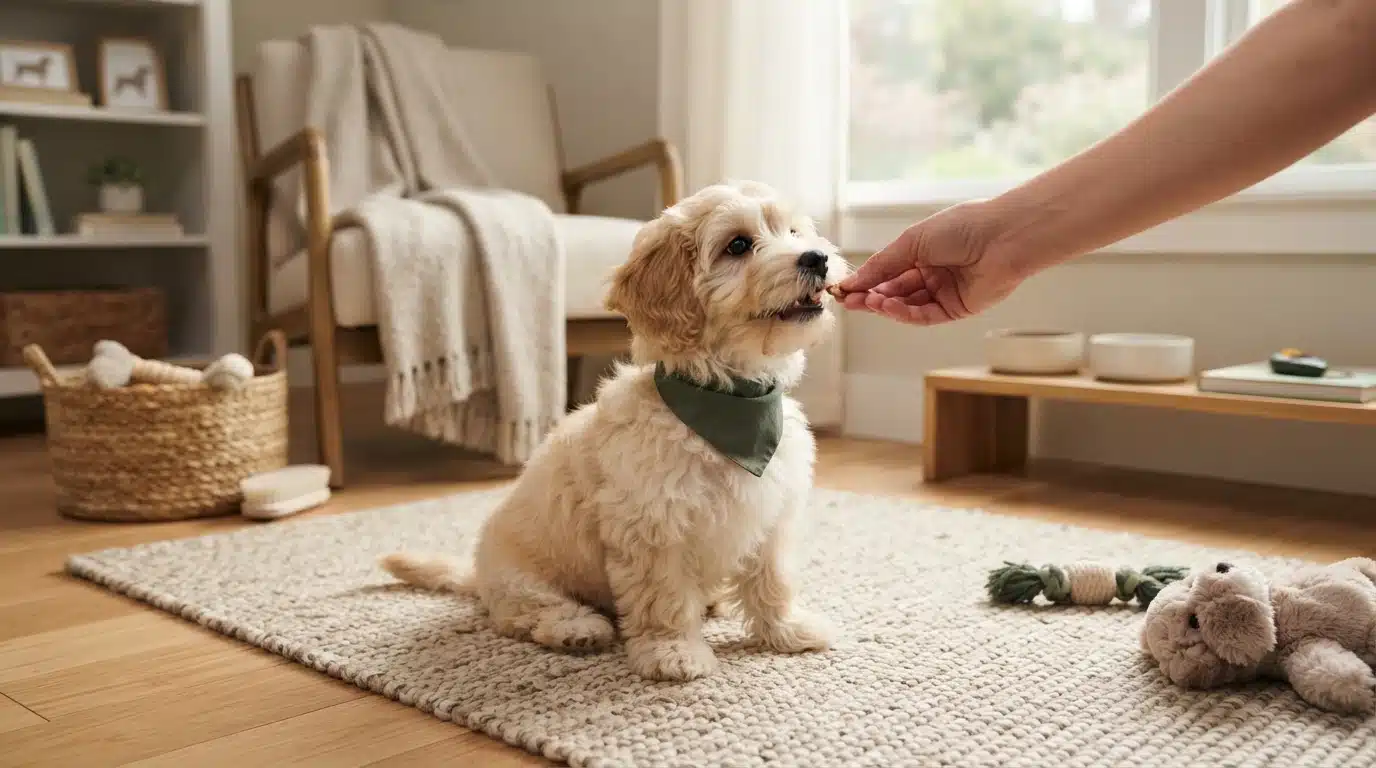
A young puppy’s attention span runs one to three minutes, so keep sessions tiny and end on a win. Teach name response, a sit, and a hand target with small food treats. Reward-based methods are the safest choice, per the AVSAB humane training position. Three mini sessions a day beat one long one, and skipping a day costs you nothing.
Health Records, First Vet Visit and What to Watch For
Turn the Breeder’s Paperwork Into a Baseline
Book your vet visit within the first few days home, and bring every document you received. A good breeder packet includes the vaccination dates, deworming history, any vet check the puppy had before pickup, and the food you’ve been using. Hand it all to your vet so it goes into one file. If you bought from a program like Sage Puppies, that record should be complete and dated, so ask for anything that’s missing before pickup rather than after.
What the First Visit Is For
This visit is a baseline, not a fix-it trip. The vet checks heart, lungs, teeth, ears, hips, knees and weight, confirms the vaccine schedule, and rules out parasites with a stool sample. Bring one if you can, ideally fresh within a few hours. Expect advice on the next round of shots, flea and tick timing, and spay or neuter windows. According to AKC’s first vet visit guide, bringing breeder records and a written list of questions makes this appointment far more useful.
Know-Good vs Call-Today Signs
A healthy small breed puppy eats each small meal, plays hard, naps hard, and gains weight weekly. Call the vet the same day for refusal to eat two meals in a row, vomiting more than once, watery diarrhea, wobbliness or collapse, labored breathing, or a bloated belly. In toy breeds, low blood sugar from a missed meal can look like limpness or shivering, so rub a little honey on the gums and call right away.

Those first thirty days go smoother with a plan you can follow. Sage Puppies offers Havanese, Havapoo and Cavapoo puppies raised with care, plus guidance for new owners. Visit Sage Puppies to see available puppies and start your application today.
Frequently Asked Questions
Q1: What should I know during the first weeks with a small breed puppy?
Feed four measured meals daily, guard against low blood sugar, keep outings tied to wake-ups, and brush from week one. Small breeds need tighter routines than big puppies.
Q2: How often should my 10-week-old puppy eat?
Four meals a day, about four hours apart. Measure each portion, and never skip meals, since small breeds can develop hypoglycemia quickly.
Q3: How long can a small breed puppy hold its bladder?
Often just one to three hours at 8 to 12 weeks. Take it out after every nap, meal, and play session rather than watching the clock.
Q4: When should I take my puppy to the vet?
Book a visit within the first few days home. Bring breeder records, a fresh stool sample, and written questions.
Q5: How much crate time is too much?
Keep daytime crating under about four hours at a stretch, pairing the crate with a playpen for longer periods.
Conclusion
The first weeks with a small breed puppy come down to a few habits. Feed four measured meals and never skip one, because toy breeds can drop into hypoglycemia fast. Tie potty trips to wake-ups, not the clock. Walk your rooms at knee height and clear what a climbing puppy can reach. Start two-minute handling and brushing in week one, and treat socialization as slow, positive exposure without a deadline. Book the first vet visit within days and bring every breeder record. None of this needs perfection, just repetition. Small routines, kept steady through days 1 to 30, are what turn a fragile 10-week-old into a confident family dog.