Quick Summary: Small breed puppies need four daily meals plus an overnight feed in week one to prevent hypoglycemia, with no food switch for the first three days. Day 1 is about settling in, day 4 is the earliest safe point to start a gradual food change, and by days 6 and 7 the routine should feel steady. Missed meals, dehydration, and fast eating are the three small-breed traps to watch for, and Sage Puppies in South Jordan pairs every Havanese, Havapoo, or Cavapoo puppy with a written feeding plan that matches this schedule.
You brought home a two-pound Havapoo on Saturday. The kibble bag sits on the counter, and now it’s Sunday morning and you have no idea how much to scoop, or whether eight hours of sleep is even safe to attempt tonight.
That uncertainty is normal. Most age-based puppy feeding chart advice assumes a 20-pound Lab, not a tiny companion breed whose blood sugar can drop fast between meals. The usual chart also skips the small-breed traps: long overnight gaps, sudden food switches, and skipped feedings that lead to hypoglycemia.
This guide gives you an hour-by-hour feeding plan for days one through seven. You’ll find exact puppy feeding amounts by weight, when to feed, how to handle the breeder-to-your-home food switch, and when puppy bottle feeding or a vet call is the right move.
We’re Cassie and Matt Milar of Sage Puppies in South Jordan, Utah. We send Havanese, Havapoo, and Cavapoo puppies home with written feeding plans, so every schedule here matches what our own breeders hand off at pickup.
Step 1: Map the First 48 Hours Onto an Hourly Timeline
Small breed puppies need food every 4 to 6 hours at 8 weeks old, and their blood sugar can drop fast between meals. That means your first two days at home are really a timing problem. Write the hours down before pickup day so you are not improvising at midnight.
Hour 1 – Welcome Home, Skip a Meal, Then Settle
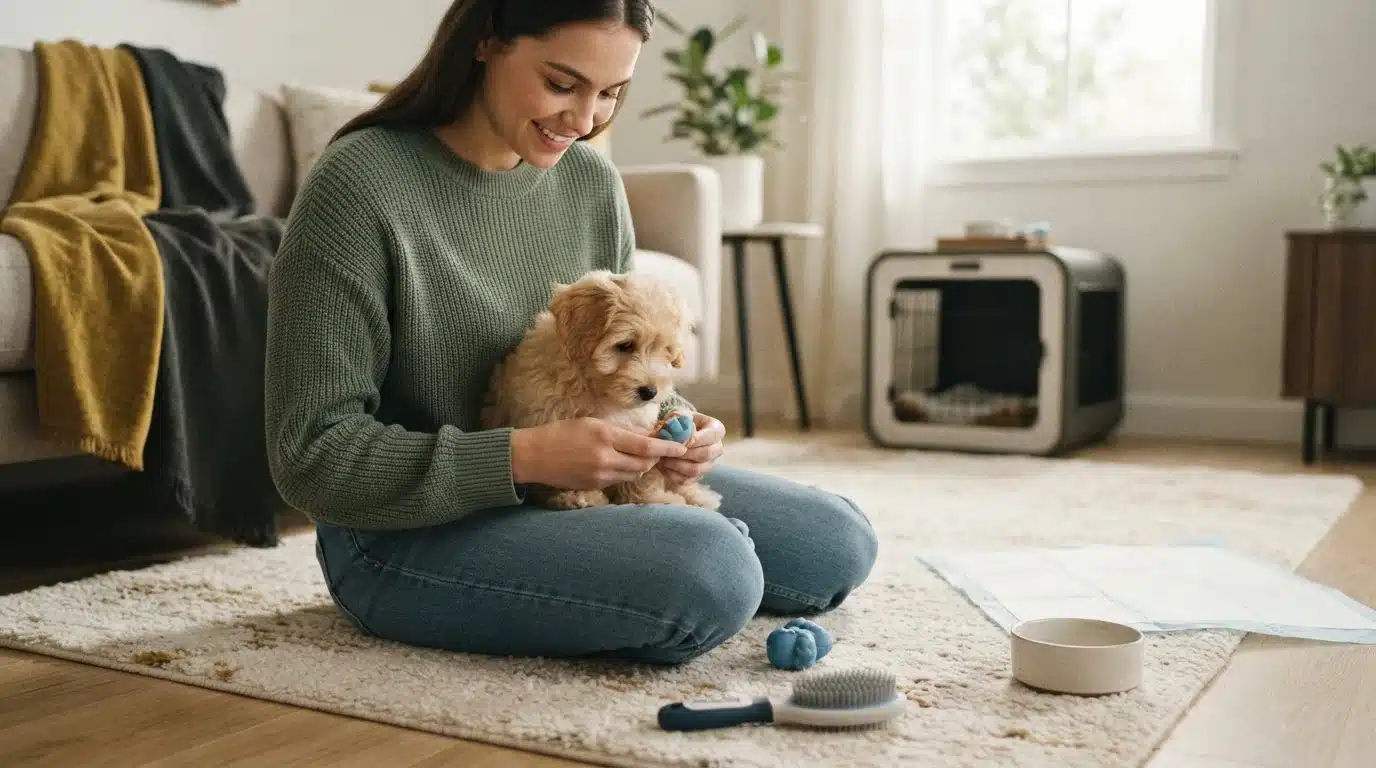
Let your puppy explore the area you prepared and go outside for a potty break first. Keep the ride home calm and quiet. Feed a small meal about 30 to 60 minutes after arrival, not the moment you walk in, because excitement plus a full stomach can cause an upset. Use the same food the breeder sent home with you. A new kibble can wait a week; the first night is not the time for a food switch.
Late-Night Meal: Why Week One Sleep Looks Different
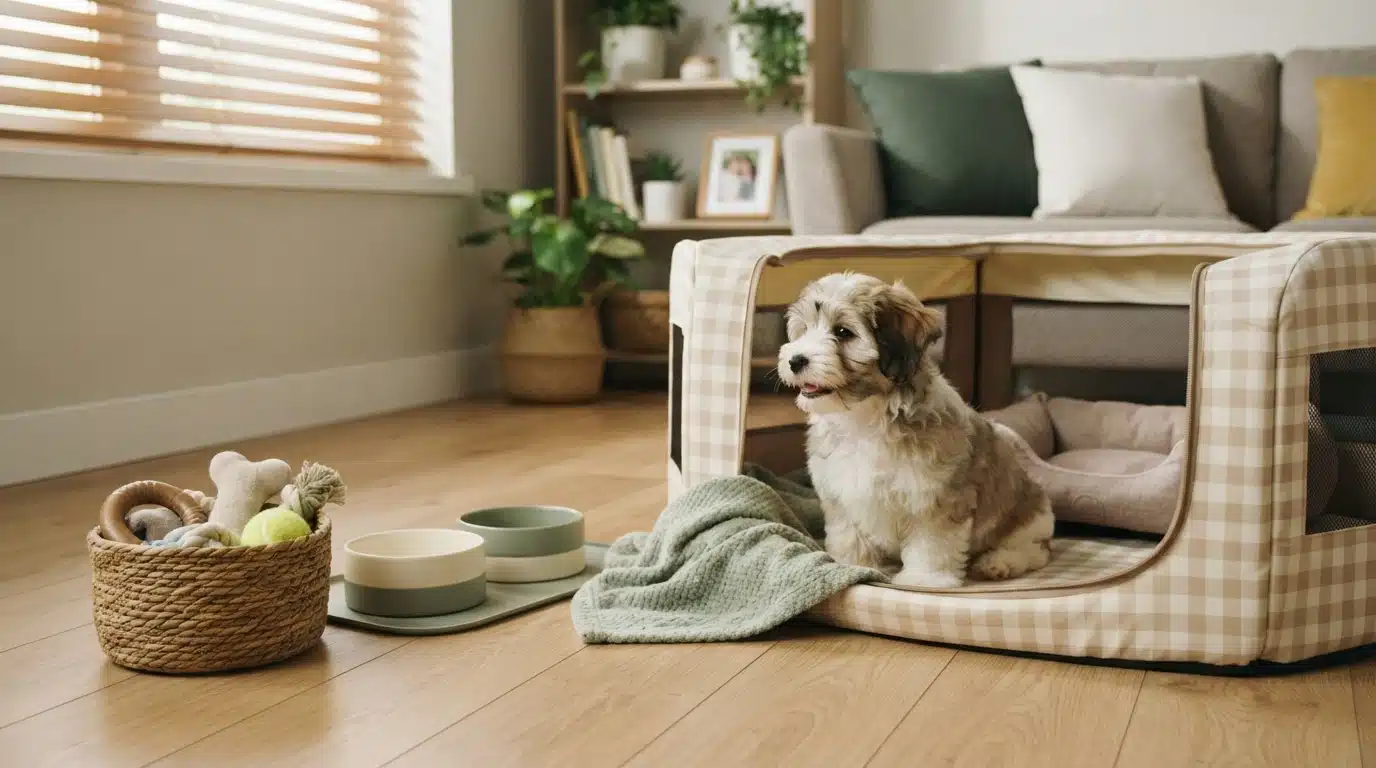
Tiny breeds cannot go eight hours without food, so plan a late meal around 10 p.m. and, for the first few nights, one small feeding around 2 or 3 a.m. This is the small-breed trap most age-based charts skip. An 8-week-old puppy waking to cry at 2 a.m. is often hungry, not misbehaving. Keep the overnight feed boring: same food, small portion, low lights, straight back outside for a potty break, then into the crate. By the end of week one you can push that 2 a.m. feed later by 20 to 30 minutes each night until your puppy sleeps through. Slow stretches of sleep are what keep blood sugar steady, so this little midnight meal is not spoiling your puppy. It is preventing hypoglycemia.
Internal Link: Sage Puppies Small Breed Puppy Feeding Chart Pillar
This hourly timeline is week one only. Once your puppy is eating reliably, the full puppy feeding chart breaks down portions and meal counts from 8 weeks through adulthood, and the team at Sage Puppies builds it around toy-breed blood sugar needs rather than a generic chart.
Step 2: Build a Daily Four-Meal Rhythm for Days 3 Through 5
By day 3, the chaos of arrival has settled. Now the goal is rhythm: same food, same times, four meals spread evenly so your puppy’s blood sugar never rides a long dip.
Read the Breeder’s Handoff Sheet Before You Read the Bag
Your breeder’s feeding notes outrank the bag. The handoff sheet tells you the exact food your puppy has been eating, the daily amount, and the meal times the litter already knows. Keep that brand for at least the first week, because a fast switch is one of the three classic small-breed traps and it almost always means diarrhea on top of an adjustment period.
If your breeder is Sage Puppies, Cassie’s handoff notes list the current food and amounts for each puppy, so you are not guessing. If your sheet and the bag disagree on quantity, follow the sheet and confirm with your vet at the first checkup.
Turn “1/4 Cup Per Day” Into Four Equal Meals
Whatever the daily total is, divide it into four equal portions. Toy and small breeds do best on four meals a day until around six months, then three, according to Chewy’s puppy feeding guide. For an 8-week-old, aim for something like 7 a.m., 11:30 a.m., 4 p.m., and your late meal around 10 p.m., plus the overnight feed from days 1 and 2 if your puppy still wakes for it.
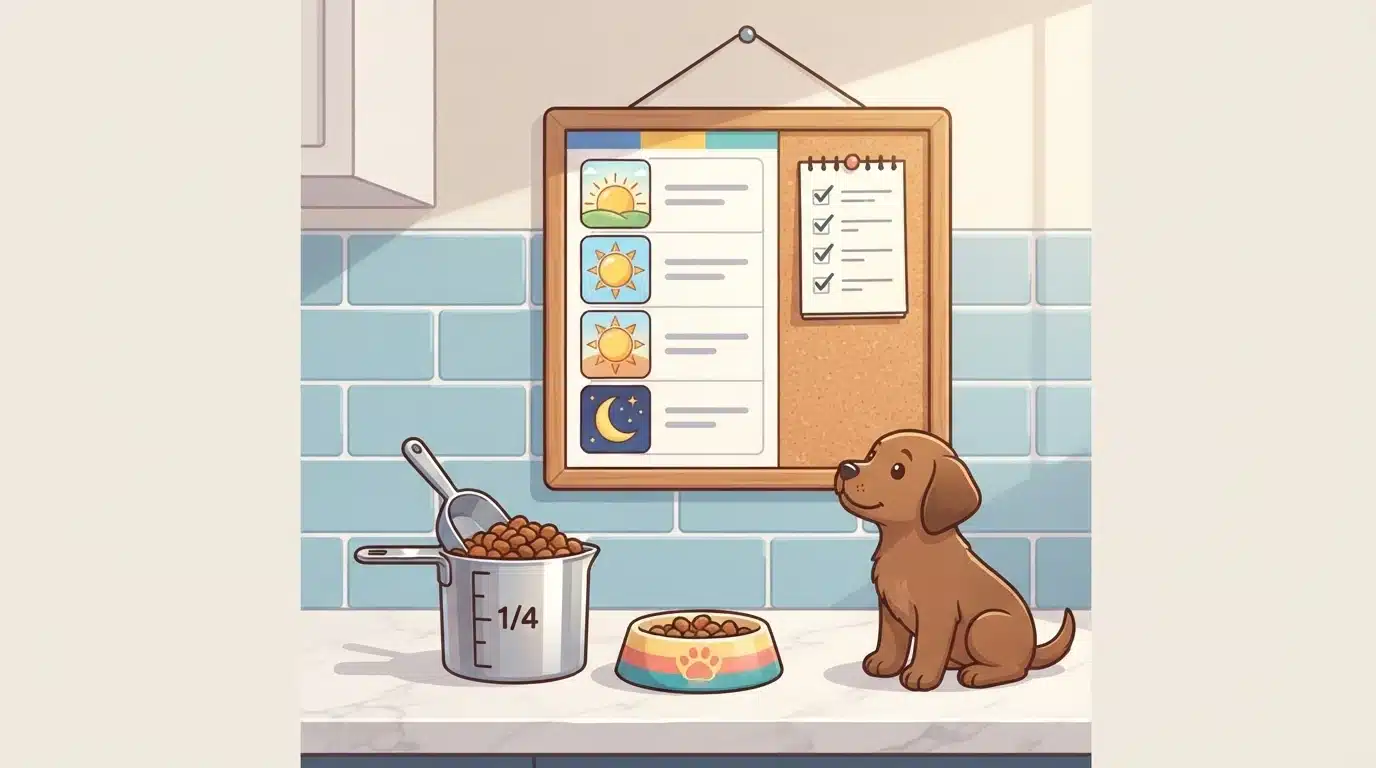
Set phone alarms for every meal. A tiny puppy cannot tell you it is hungry, and a 40-minute miss matters more at 3 pounds than at 30.
Check Body Condition on Day 4, Not Day 1
Day 1 weight reflects stress and travel. By day 4 you have a baseline. Weigh your puppy at the same time each morning, before the first meal, and feel the ribs: you should feel them easily under a thin fat layer. Ribs showing sharply means slightly larger portions; a rounded belly after every meal may mean too much. If weight stalls for two straight days, call your vet rather than cutting back on your own.
Step 3: Start a Two-Week Food Switch on Day 4
Day 4 is your window for a food change, if one is needed. By now your puppy eats on schedule, and you have a baseline weight and stool pattern. That makes this the safest point to introduce new kibble, because you can tell the difference between switch-related upset and arrival stress.
Why Day 1 Is the Wrong Day to Switch
A new home already stresses a puppy’s gut. Travel, new sounds, and a strange bed all add up, and your breeder sends food your puppy has been eating for weeks. Stack a brand-new food on top of that and you invite diarrhea, which at 3 pounds dehydrates fast. Research on puppies found that gradual diet changes most likely reduce diarrhea compared with abrupt swaps, per a 2023 study in PubMed Central. Change nothing for three days.
A 7-Day Mixing Plan You Can Tape Inside a Cabinet
Once you start, go slow. HillsPet’s transition guide suggests mixing 25% new food into 75% old on days one and two, then moving to half and half. Here is a simple ramp:
| Days | Old Food | New Food |
|---|---|---|
| 1-2 | 75% | 25% |
| 3-4 | 50% | 50% |
| 5-6 | 25% | 75% |
| 7+ | 0% | 100% |
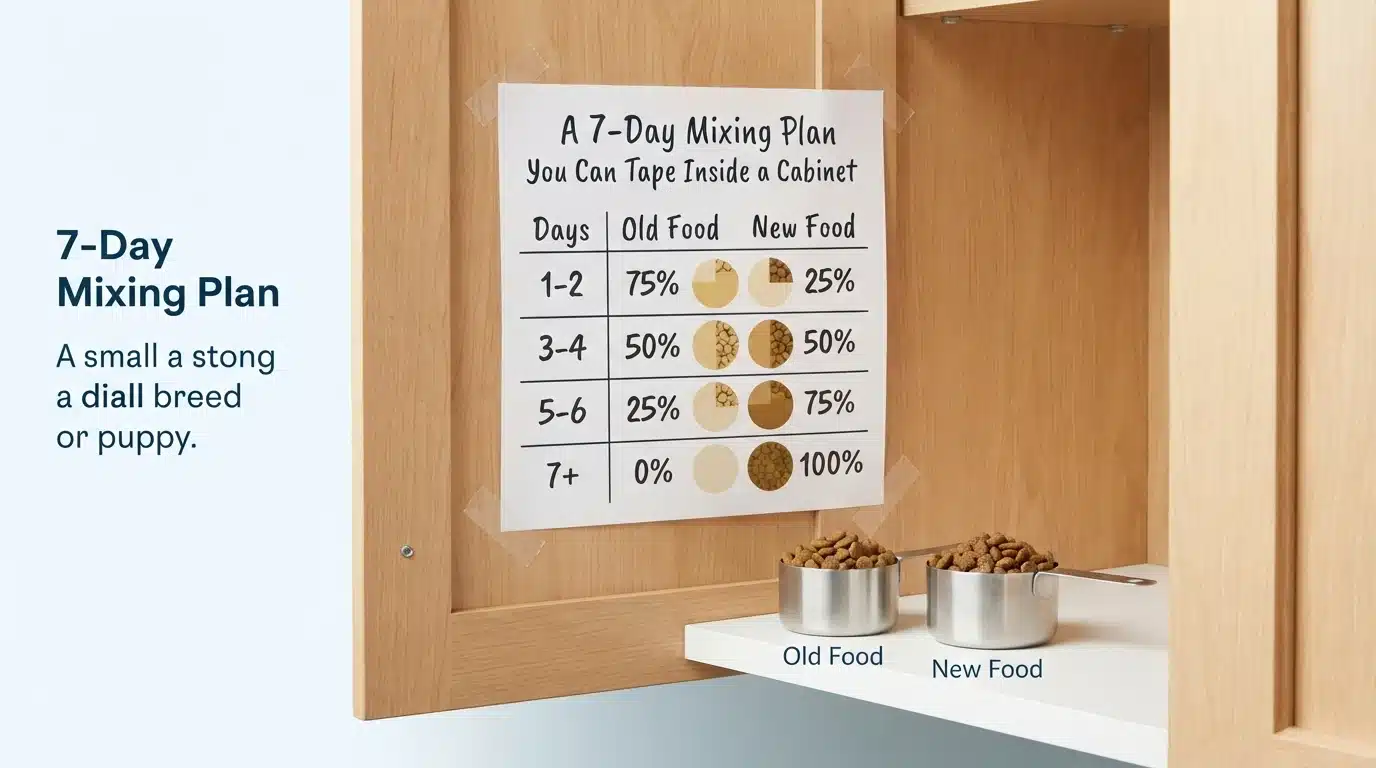
For breed-specific portion sizes as you blend, this Cavapoo nutrition and feeding schedule breaks down daily amounts by age and weight.
When Loose Stool Means Slow Down, Not Run to the Vet
Soft stool mid-switch is common. Drop back to the previous ratio for two days, then try again. Call your vet if you see blood, vomiting, lethargy, refusal to eat two meals, or watery stool lasting more than a day. Tiny breeds crash quickly, so trust the warning signs.
Step 4: Plug the Three Week-One Safety Gaps
The schedule handles most of week one, but three specific gaps catch new small-breed owners off guard. Each one is easy to fix once you know to look for it.
Why a Missed Meal at 3 a.m. Can Be an Emergency
Tiny puppies run on very little fuel. A 3-pound Havanese has almost no reserves, so skipping the overnight feed is not the same as an adult dog sleeping through dinner. Puppies, especially very young or very small ones, can develop low blood sugar when they go too long without eating, vomit, or have diarrhea, according to the American Red Cross pet first aid guide.
Know the warning signs: unusual sleepiness, wobbling, trembling, or a glazed look. If you see them, offer a small bite of food right away and call your vet if your puppy does not perk up within minutes. Set the 2 a.m. alarm for days 1 through 3 even if your puppy does not cry. A sleeping puppy will not announce a blood sugar drop.

Many New Puppies Drink Less Than They Should
Travel, a new home, and a new water bowl all cut intake. Dehydration hits tiny dogs fast, so check daily: pinch the skin at the scruff gently. It should snap back in about a second. If it stays tented, call your vet. Keep water down all day, refresh it at every meal, and skip the water-free crate advice some owners repeat. Wet kibble mixed with warm water adds moisture without changing your food plan.
Fast Eaters: Why a Flat Bowl Beats a Deep Bowl for Tiny Puppies
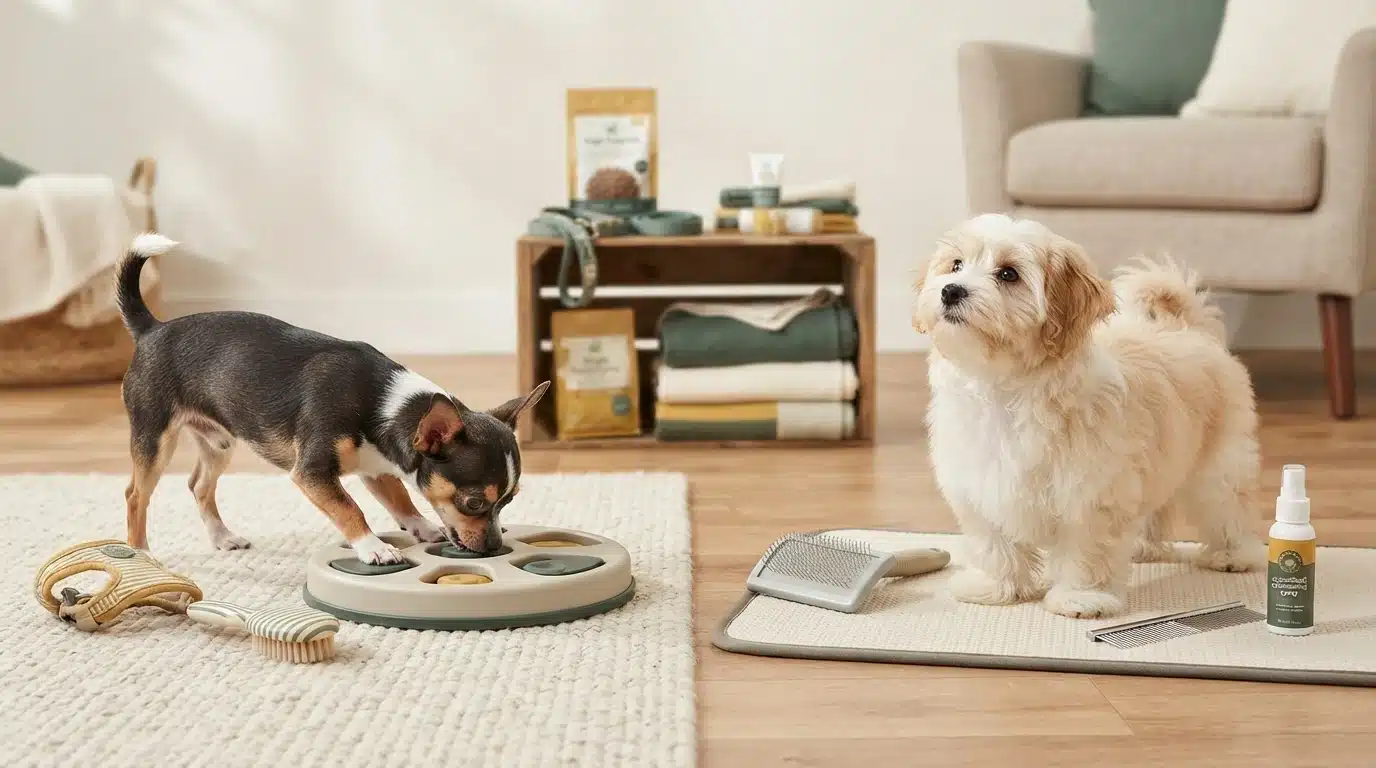
Havanese, Havapoos, and Cavapoos often gulp food, and a deep bowl makes it worse because the puppy has to plunge its whole face in. A wide, flat dish spreads the kibble into a thin layer, which slows eating and cuts gulped air. That means less hiccups, less gas, and a lower chance of an upset stomach during an already stressful week. A snuffle mat or a baking sheet works too. This is one of those small-breed details discussed in guidance for first-time small breed owners, and it costs almost nothing to get right.
Step 5: Get Days 6 and 7 Working Without a Hitch
The last two days of week one are about proving the routine holds, not changing it. If days 1 through 5 went well, days 6 and 7 should feel almost boring, and that is the goal.
A Clean Day 6 That Looks Like Day 1, On Purpose
Run day 6 exactly like day 1: same four meals, same times, same bowl, same spot. Your food mix now sits at 75% new and 25% old if you started a switch on day 4, so watch stools closely through the evening. Keep the 10 p.m. meal and the overnight feed if your puppy still wakes for it. Consistency now is what lets you stretch the 2 a.m. feeding later in week two.
How to Log Growth Without a Baby Scale

A bathroom scale will not register a 3-pound puppy, so borrow or buy a digital kitchen scale that reads in grams or ounces. Weigh your puppy at the same time each day, ideally before breakfast, and write the number down. Day 1 weight reflects travel and stress, so what matters is the trend from your day 4 baseline onward. A steady climb, even a slow one, means your portions are working. A flat or falling weight across two days is a call-your-vet sign, not a wait-and-see one. Some breeders, including Sage Puppies, share each puppy’s go-home weight so you have a real starting number to compare against.
End-of-Week Call to Your Veterinarian
Book a first checkup if you have not already, and bring your feeding log and weight notes. Ask three things: Is the portion size right? When should the overnight feeding stop? And when do vaccine visits start? Growth charts like those from WALTHAM help track progress between visits, but your vet turns week-one notes into a plan for weeks two through twelve.
Step 6: Hand Off Week One Cleanly to Week Two
What Carries Forward Into Week Two
Keep the core structure you built: four meals a day, the same food, the same bowls, the same quiet spot. Weigh your puppy weekly now instead of daily, and keep the late 10 p.m. meal until your vet says otherwise. The food switch schedule, if you started one on day 4, still has a few days to run.
What You Can Stop Doing by Day 14
The overnight feeding is the first thing to drop. Push that 2 a.m. feed later by 20 to 30 minutes each night until your puppy sleeps through, usually by 12 to 14 weeks for a Havanese or Cavapoo. You can also stop setting timers for midday meals and stop recording every bite. What stays: fresh water out all day, portion control, and watching stool quality after any food change.
If Week One Did Not Go to Plan
Missed meals, loose stools, and crying through the night are common in week one, and none of them mean you failed. The fix depends on the problem. If your puppy skipped meals, go back to the breeder’s food completely and restart any switch after a full day of clean eating. If diarrhea appeared, slow the food transition ratio by one stage and call your vet if it lasts past 24 hours. Write down what happened, when, and what helped, so week two starts from data instead of guesswork.

A missed meal matters more at 3 pounds than 30, so keep this day-by-day plan on your fridge and follow it through day seven. Want a schedule built around your actual puppy? Visit Sage Puppies, where Cassie Milar’s Havanese, Havapoo and Cavapoo program pairs every family with honest preparation guidance.
Frequently Asked Questions
Q1: How often should I feed my small breed puppy during the first week?
Four meals a day, plus one small overnight feed around 2 or 3 a.m. during days 1 through 3. Tiny puppies can’t go long between meals, so even spacing keeps blood sugar steady.
Q2: What is the best feeding schedule for an 8-week-old small breed puppy?
Aim for 7 a.m., 11:30 a.m., 4 p.m., and 10 p.m., plus the overnight feed early in the week. Set phone alarms so no meal gets missed.
Q3: How much food should a small breed puppy eat per day?
Follow your breeder’s handoff sheet first, then the bag. Split the daily total into four equal portions and confirm the amount at your first vet checkup.
Q4: When can my puppy sleep through the night without a feeding?
Usually by 12 to 14 weeks. Push the 2 a.m. feed 20 to 30 minutes later each night.
Q5: Can I switch puppy food during week one?
Wait until day 4, then blend new food in gradually over at least a week.
A Calm End to Week One
Week one comes down to three habits. Feed four small meals on a fixed clock, with a 10 p.m. meal and a short-lived overnight feed so blood sugar never dips. Keep the breeder’s food for at least three days, then blend any switch in slowly over a week. Watch weight and stool from a day 4 baseline, and treat a missed meal at 3 pounds as urgent, not minor.
The traps most charts skip, like hypoglycemia, fast food switches, and long overnight gaps, are all preventable with timing you control. Follow the plan day by day, keep notes, and by day seven you will have a puppy who eats on schedule and a routine that carries straight into week two.