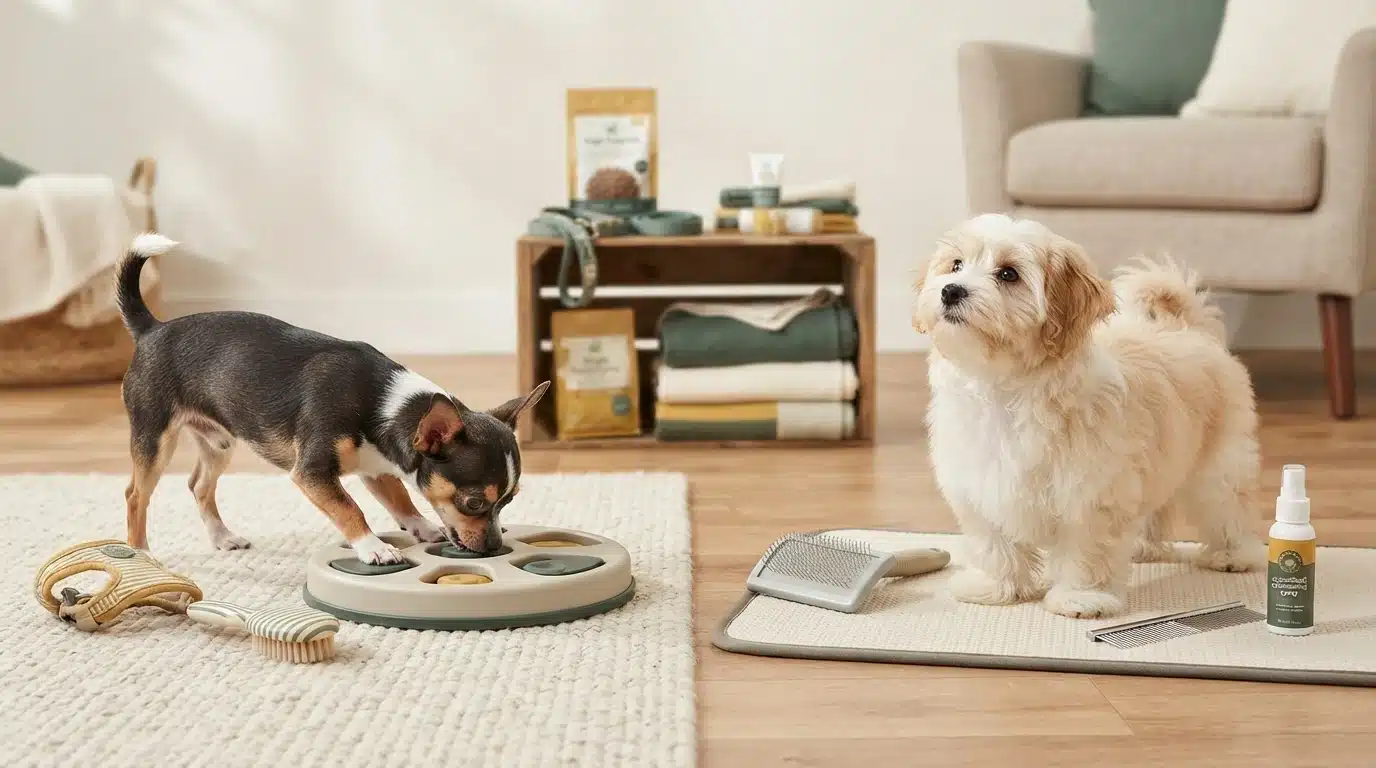
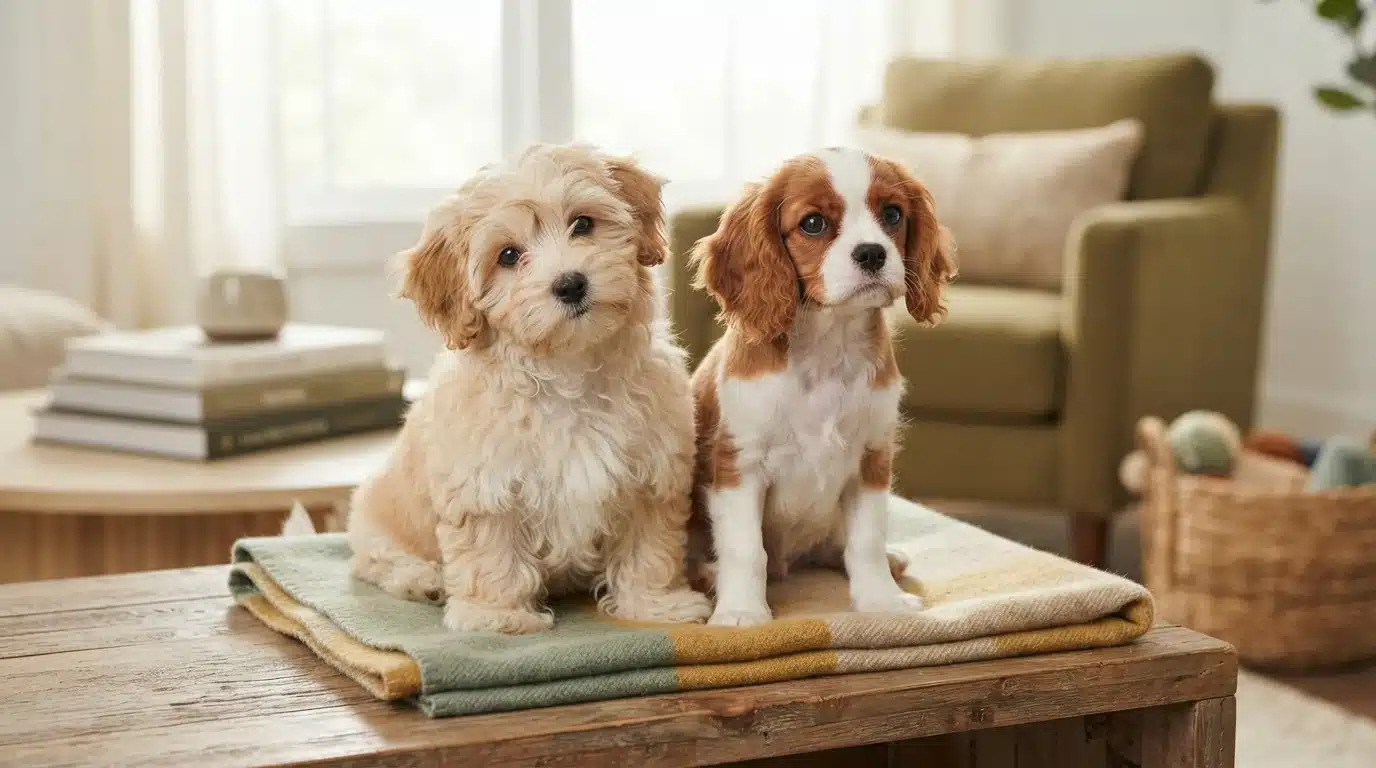
Quick Summary: Start Havanese socialization between 8 and 20 weeks with calm, controlled exposure rather than waiting for full vaccinations. Use short sessions, a planned list of 20 people, carried outings, size-matched puppy classes, and leashed parallel dog introductions, while keeping play and handling under ten minutes. Let the puppy choose when to approach, pair new experiences with treats, and respond to fear by slowing down and rebuilding from a greater distance.
A Havanese puppy who meets 20 friendly people in his first month home usually grows into a dog who settles at a cafe table. One who spent those same weeks on a lap indoors often does not. The window between 8 and 20 weeks is short, but breed temperament makes it unusually workable, so good Havanese puppy socialization ideas pay off fast.
The challenge is doing it safely before vaccines are finished. This guide gives you a week-by-week plan, play ideas sorted by setting, and recovery steps for fear periods. Every suggestion follows veterinarian-grade safety gates and breed-specific handling notes, drawn from our program’s documented experience raising Havanese litters in South Jordan, Utah. First-time owners and families can use it the day a puppy comes home.
Step 1: Set Up the First Two Weeks at Home
Good Havanese puppy socialization ideas start inside your house, before the outside world enters the picture. The first two weeks set the pace. Your puppy is adjusting to a new family, new smells, and a new schedule all at once, so build the setup before you chase big outings.
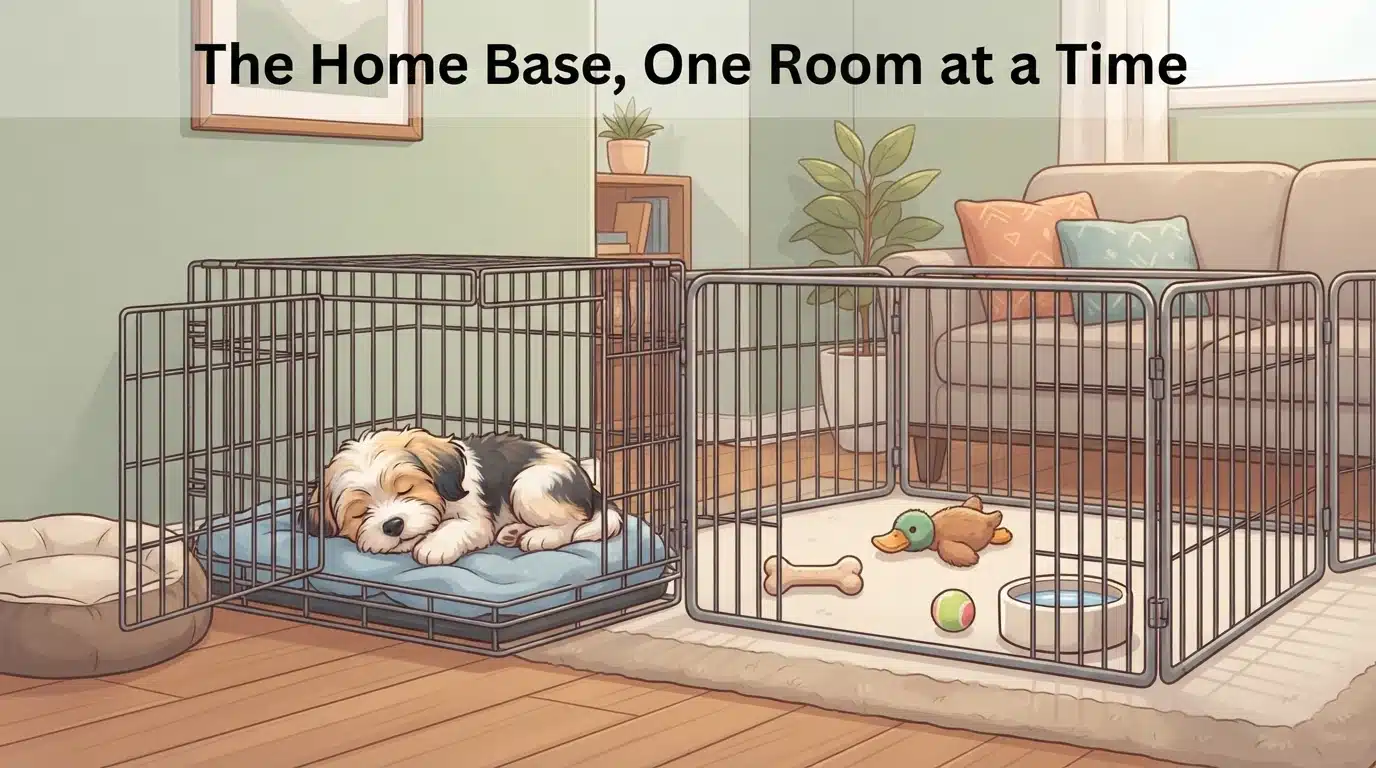
The Home Base, One Room at a Time
Pick one quiet room with easy-to-clean floors and make it your puppy’s default space. A crate, a playpen, water, and a chew-safe mat are enough. Put the crate where the family spends time, not in an isolated corner, so the puppy learns that alone means calm, not abandoned. Place the crate in a lived-in area, which helps your puppy settle, a method recommended in Humane World’s crate training guide. After a few days, expand access one room at a time. Havanese dogs want to be near people, so a home base in the middle of daily life suits them well. If you want the wider picture first, the Havanese buyer guide covers what to expect before pickup day.
Sounds, Surfaces, and Objects Worth Naming
Turn ordinary household life into gentle practice. Run the dishwasher, drop a soft spoon on carpet, and let your puppy walk on tile, rugs, and grass. Name each thing out loud in a happy voice: “door,” “car,” “bath.” Keep every session under a minute and watch for loose body language. If your puppy backs away, pause and let him watch from a distance instead. This is where simple Havanese puppy socialization ideas earn their keep, because the breed tends to bounce back quickly when new things stay low-key. Add one new sound or surface per day, not five.
Keep a Simple Positive Log
Tape a sheet to the fridge. Write down each new thing your puppy met and how it went: great, unsure, or scared. The list shows what to repeat and what to slow down on. It also keeps the whole family consistent, which matters more than any fancy gear.
Step 2: Meet People on Purpose, Not by Accident
A Havanese who greets new people calmly does not get that way by chance. Random visitors help, but a short, planned list of people works better. The AVSAB position statement notes that the first three months, when sociability outweighs fear, are the main window for learning that strangers are safe. If you want a full structure to work from, our puppy socialization checklist for the first 12 weeks lays out one new experience per day.
Build a People List, Not a Crowd
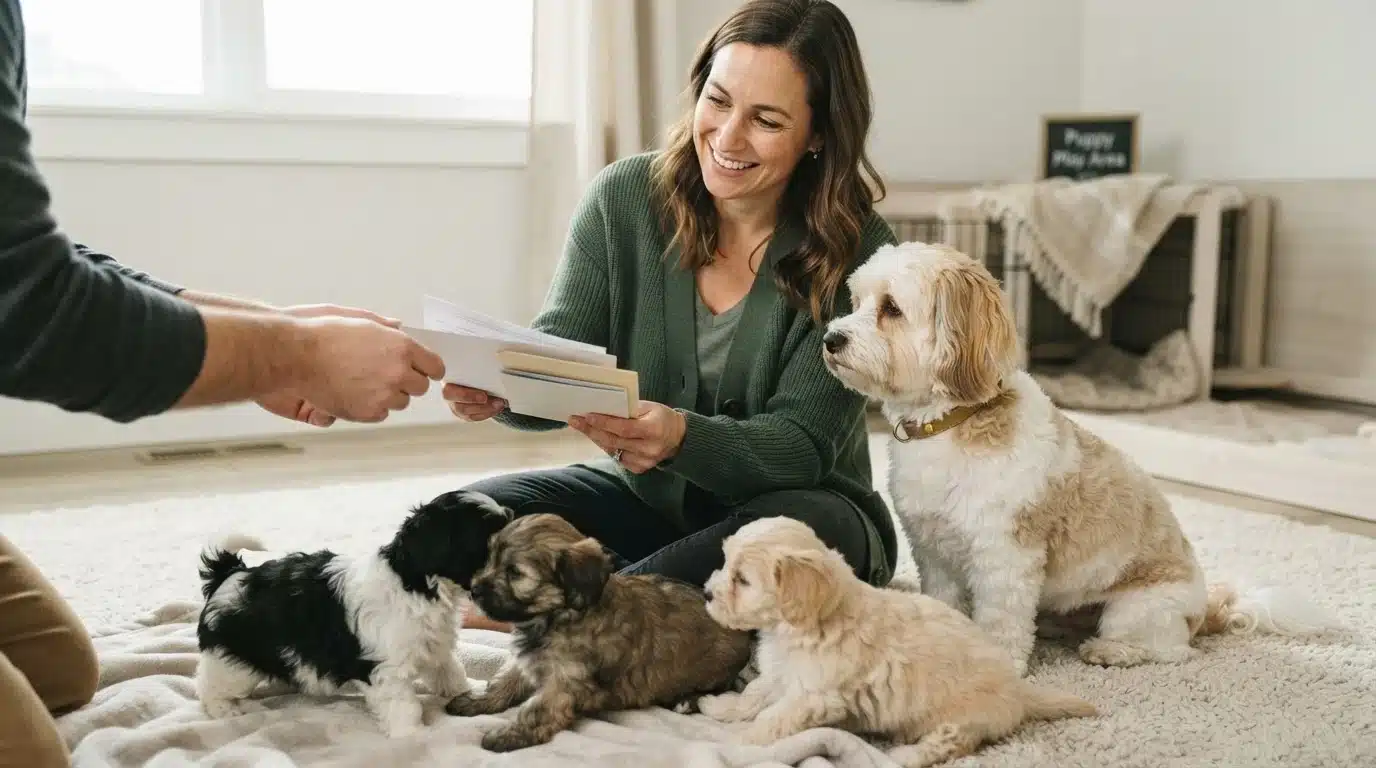
Write down 20 people your puppy can meet before 20 weeks. Aim for variety: men with beards, teenagers, someone with a cane, kids who can sit still, a person in a hat, sunglasses, and a uniform. Ask each one for five quiet minutes, not a puppy party. One or two new people per outing is plenty. Before the visit, have treats ready and a mat set up so your puppy has a spot to settle. Your vet’s lobby, a friend’s porch, and a calm parking lot all count as venues.
The Three-Step Greeting
Keep every greeting the same so your puppy learns the pattern. First, the new person ignores the puppy completely and drops a treat on the floor. Second, if the puppy approaches, the person pets the chest or side, never reaching over the head. Third, you end the greeting before your puppy gets wiggly or tired. Short and sweet beats long and loud. Repeat with the next person on your list, and always let your puppy choose to approach.
When Your Puppy Takes a Treat and Backs Away
Backing away is not failure. It is information. Your puppy is saying the person feels big, fast, or strange, so give him space and try an easier version next time: same person, greater distance, quieter voice. Never push him forward or hold him still for petting, because that teaches him greetings are traps. Havanese puppies are typically people-focused, so most bounce back within a few calm sessions. If your puppy hides instead of taking the treat, end the visit and lower the difficulty.
Step 3: Play Ideas for a Havanese Puppy at Home
At home, play does double duty: it burns puppy energy and quietly builds skills your Havanese will use for life. Because this breed is small and people-focused, most of what he needs fits in a hallway, a kitchen, or a corner of the living room.
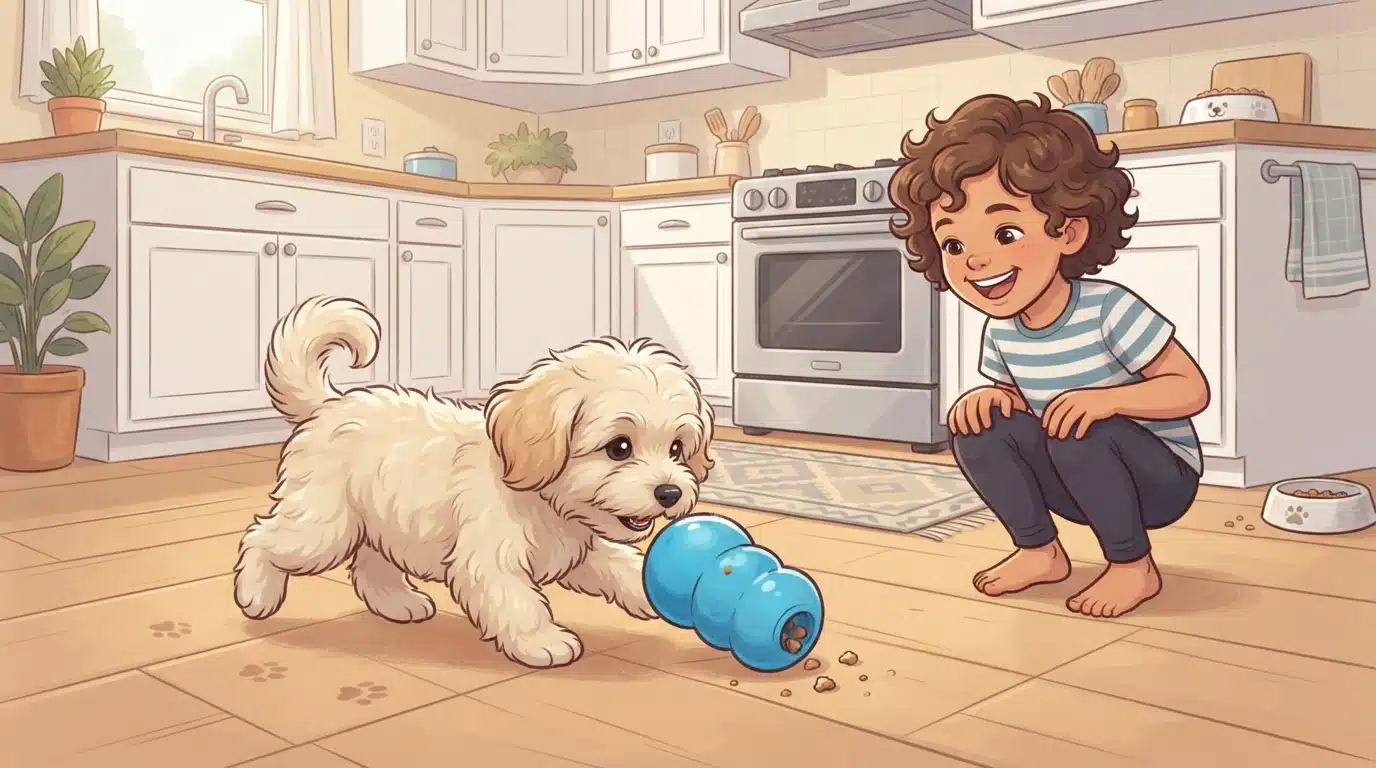
Five Indoor Play Routines Worth Repeating
- Find it. Toss a treat, say “find it,” and let him hunt. Easy, and it teaches him to check in with you.
- Toy retrieval. Roll a soft ball a few feet. Reward the return, not just the chase.
- Name the toys. Hold up two toys and pay him for grabbing the one you name. Havanese love this game.
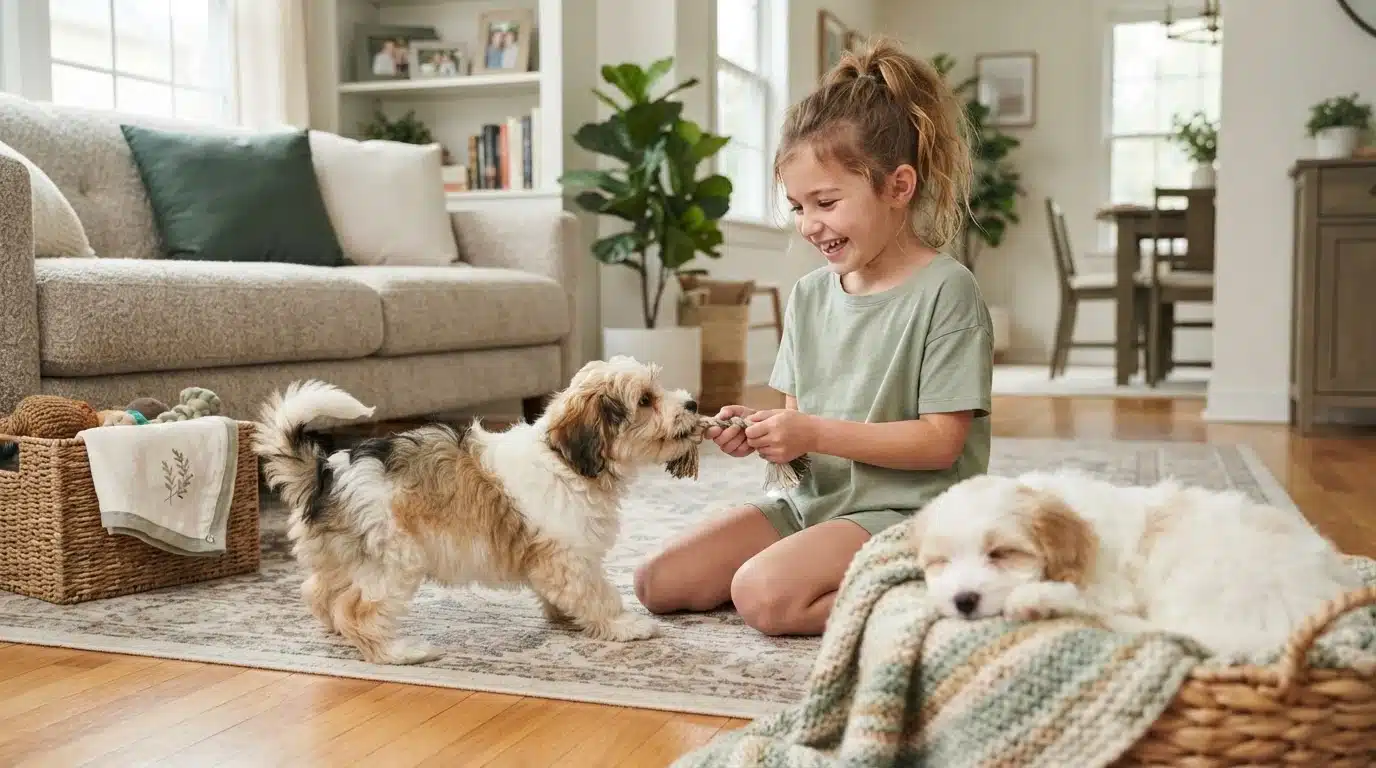
- Gentle tug. Use a long toy, never your hands, and let him win sometimes.
- Two-minute training plays. Sit, spin, touch your palm. Short bursts tire a puppy faster than a long walk.
Keep sessions brief. Five to ten minutes, then a rest in the pen, matches a small puppy’s stamina. For how daily play fits into growth and rest, our Havanese daily play guide breaks the balance down.
Scent and Foraging Games
A Havanese nose is a better tired-maker than your arm. Scatter kibble in a towel and let him snuffle it out. Hide one treat under three cups and shuffle slowly. Roll kibble into a snuffle mat before dinner so one meal becomes ten minutes of work.
Rotate two or three simple puzzles rather than buying many. Novelty is the fun part, so swap games every few days. End each round while he still wants more, and he’ll greet the next round eagerly.
Rough Play, Bite Inhibition, and Size
Mouthing is normal puppy play, not a flaw to punish. The ASPCA notes it’s expected but shouldn’t carry into adulthood, so teach a soft mouth early: yelp briefly if a bite lands hard, then redirect to a toy. Never wrestle with your hands, since a seven-pound puppy who learns to pounce on arms becomes a problem he can’t unlearn. With big dogs, supervise everything; his size, not his confidence, sets the limits.
Step 4: Dog-to-Dog Socialization for a Small, Careful Breed
Havanese usually enjoy other dogs, but their small size means one rough greeting can teach lasting fear. Your job is to control who meets your puppy and how, at least until he finishes his core vaccines. Watch for play that looks equal: turns, self-handicaps, and easy breaks. Step in when one dog pins, chases nonstop, or your puppy hides behind you.
The Leashed Parallel Walk Intro
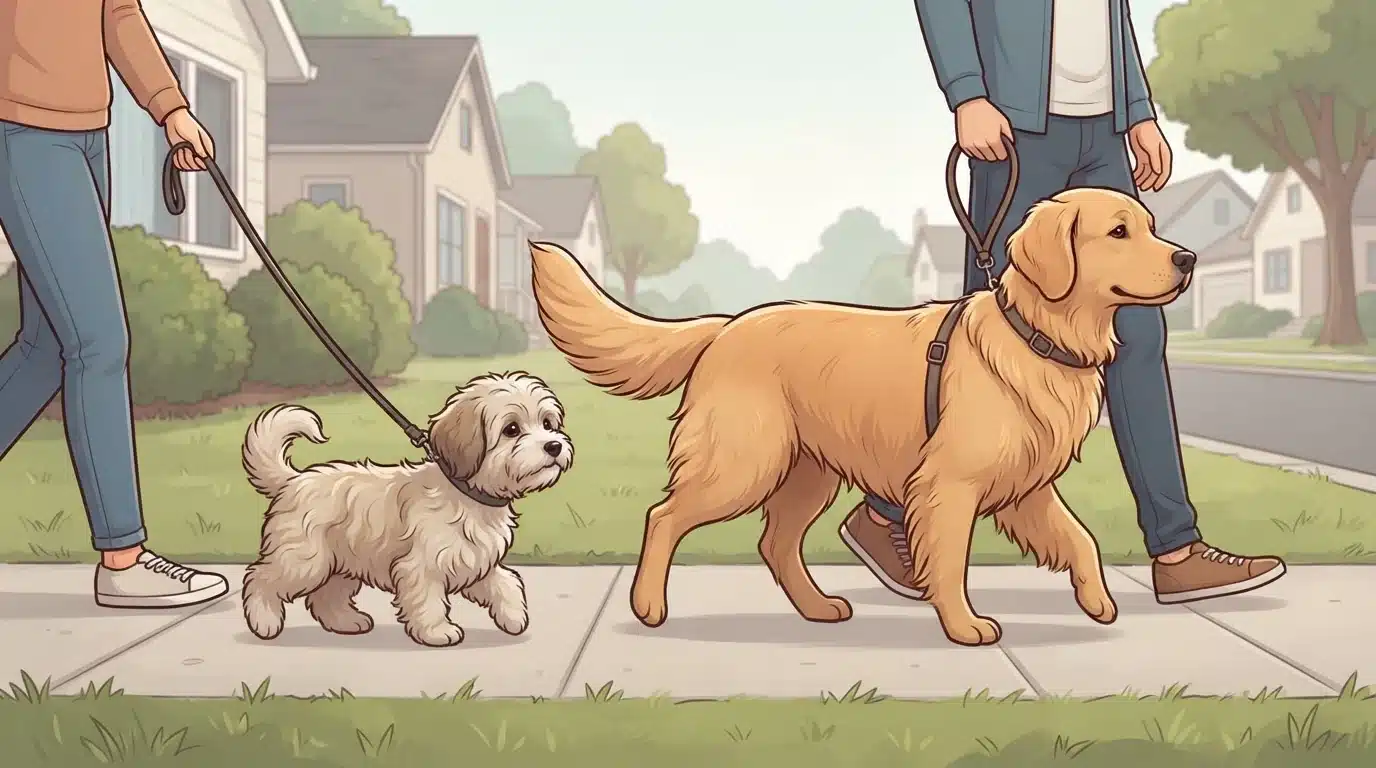
The safest first meeting happens side by side, not face to face. Ask a calm, vaccinated adult dog and owner to walk with you, both dogs on loose leashes about 10 feet apart. Walking in the same direction lowers tension far more than a head-on hello, which dogs often find rude. After a few minutes, let them sniff briefly, then keep moving. Short and boring beats long and exciting. End while your puppy still wants more, and you build a dog who assumes new dogs are fine.
Puppy Classes and Small Breed Social Hours
A well-run puppy class is the best upgrade you can buy. AVSAB advises starting classes early, with at least one vaccine set and a deworming done seven days before the first session. Look for small groups, size-matched play, and a trainer who enforces breaks instead of letting puppies “work it out.” Some pet stores and training centers also host small breed social hours, which suit a 3-pound Havanese far better than mixed-size free play. Ask to observe one session before you enroll. Our guide to the benefits of family-raised puppy socialization explains why early, gentle dog exposure matters so much in the first weeks.
Dog Parks, Pet Stores, and Places to Wait
Skip dog parks until your puppy is fully vaccinated and solid with dogs. Even then, a Havanese does better watching from a shaded bench than joining a pack of big, fast players. Pet stores are a gray zone: carry your puppy, keep paws off the floor, and treat the trip as people-watching. Carry him through store entrances and past carts rather than letting strangers sweep him up, and let unfamiliar dogs pass at a distance while he eats treats. If an off-leash dog approaches, stay calm, put your body between them, and leave. Waiting is a valid socialization choice, because a bad first fight costs more than a missed party.
Step 5: Outings to Sounds, Surfaces, and Everyday Places
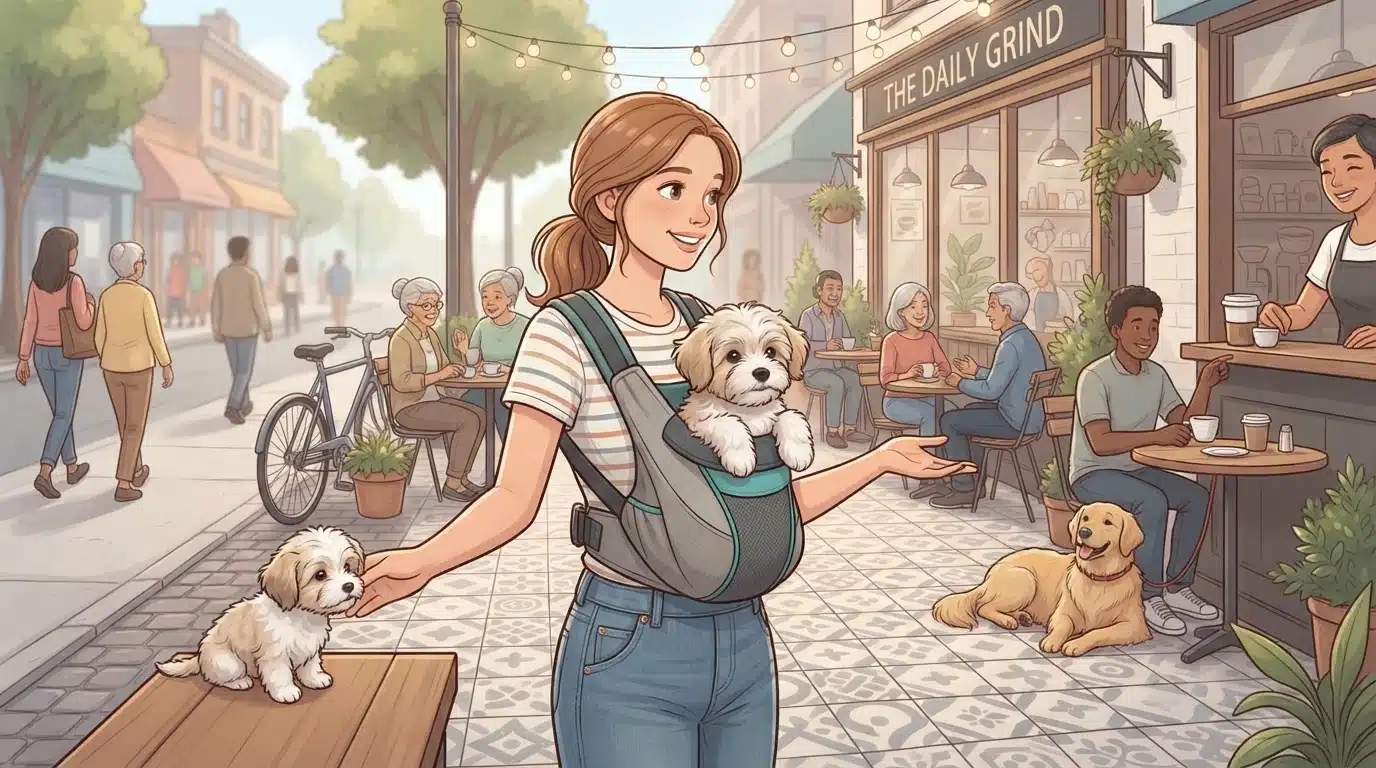
Real socialization happens out in the world, not just at home. Once your Havanese has handled new people and dogs, take the show on the road. Keep trips short and positive, and let your puppy watch the world from your arms or a carrier when the ground itself feels like too much.
Neighborhood Walks With a Purpose
A walk is only socialization if you plan it. Pick three or four things per outing: a storm drain, a grate, a stroller, a kid on a scooter. Cross the street if your puppy looks stiff or hides, then try again from farther away. Pair each new thing with a treat so the world predicts good news.
Cafes, Waiting Rooms, and Delivery Doors
Patios, pet store lobbies, and hardware stores are gold mines for sounds and surfaces. Ask your puppy to sit on metal, concrete, wood deck, and rubber mats. Feed a few pieces of kibble for calm watching. Delivery doors that ding and swing are worth a separate visit because Havanese alert easily, and early practice keeps watchdog barking from becoming a habit.
Car, Crate, Grooming Table, and Vet Visits
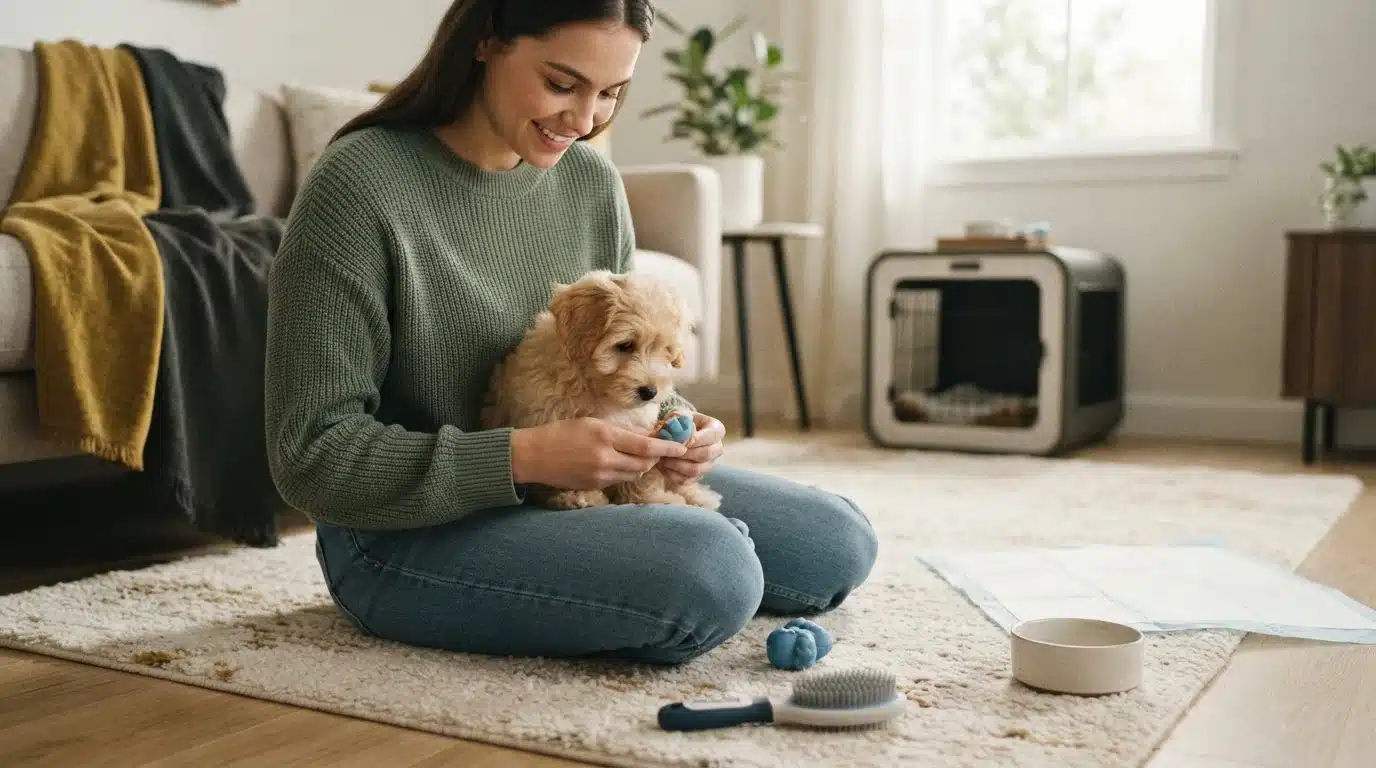
Havanese need regular grooming their whole lives, so treat it as socialization from week one. Run an electric trimmer nearby, touch paws and ears, and let your puppy stand briefly on a non-slip bath mat. Take short car rides that end somewhere fun, not just the vet clinic. Keep vet visits sweet with treats and calm handling. Happy visits now prevent stress later.
Step 6: Put It on a Week-by-Week Calendar
A plan you keep beats a plan you admire. Sketch your calendar before homecoming day, then adjust as you learn your puppy’s pace. The AVSAB position statement backs early, safe exposure before vaccines are finished, so start the week your puppy comes home.
Weeks 1-2 After Homecoming
Keep it gentle and close to home. Handle paws, ears and mouth daily, let your puppy ride in the car, and introduce household sounds like the vacuum at low volume. Carry him to a quiet parking lot to watch the world. Aim for one new, calm experience per day and end every session before he tires.
Weeks 3-6
Now widen the circle. Work through your list of 20 people, book a puppy class or small-breed playgroup, and add surfaces such as grass, gravel and metal stairs. Ask your vet which public spaces are safe at this stage; many puppies can start class around 8 to 10 weeks after a first vaccine.
Weeks 7-12 and Beyond
Practice in real settings: a cafe patio, a busy sidewalk, a friend’s house. Watch for a fear period, usually a sudden worry about familiar things. When it hits, slow down, return to easy wins and pair the trigger with treats. By 20 weeks you want your full list of people met, because the window closes quickly after that.
Step 7: Play and Socialization Mistakes to Avoid
The Errors That Cost the Most
The biggest error is waiting. AVSAB’s position statement supports socializing puppies before full vaccination, so skipping class “until shots are done” wastes the most valuable weeks. The next is flooding: pushing a worried puppy into hugs, loud crowds, or rough play with big dogs. Havanese read pressure quickly and can learn to distrust hands. Other costly mistakes include letting puppies “work it out” in rowdy groups, skipping positive handling of paws and ears, and forcing a greeter who wants no part of it.
What To Do After a Bad Experience
Don’t panic, and don’t avoid the trigger forever. A fear period is a temporary phase, roughly 8 to 10 weeks onward, where one bad moment sticks. Pause that setting for a few days, then return at a greater distance with treats and a calm, familiar dog as a buffer. Keep sessions short and end on success. If your puppy hides, avoid scooping him up to “show him it’s fine.” Let him observe from a safe spot, reward relaxed body language, and rebuild the experience in small, easy steps.

Socialization works best when it starts early, and it starts with the right puppy. Sage Puppies matches families with well-bred Havanese puppies raised with careful handling from day one. Visit Sage Puppies to see available puppies and start your application, so your first weeks home count.
Frequently Asked Questions
Q1: What are the best socialization and play ideas for Havanese puppies?
Build a 20-person list before 20 weeks, run short indoor games like find-it and toy retrieval, and add scent work such as snuffle mats. Keep sessions under ten minutes and pair every new thing with treats.
Q2: Can my Havanese puppy go outside before vaccines are finished?
Yes, with care. Carry him in public spaces, use your own yard, and ask your vet which settings are safe. AVSAB supports early socialization, so waiting until all shots are done wastes the best weeks.
Q3: When should puppy classes start?
Plan for 8 to 10 weeks, once he has at least one vaccine set and a deworming done seven days prior. Choose small, size-matched groups with enforced breaks.
Q4: How do I handle a fear period?
Pause the trigger for a few days, then return at a greater distance with treats. End on easy wins and let him watch from a safe spot rather than forcing contact.
Q5: Is mouthing during play a problem?
Mouthing is normal at this age. Yelp briefly when a bite lands hard, then redirect to a toy, and never wrestle with your hands.
Q6: What if my puppy backs away from a new person?
Treat it as information, not failure. Increase distance, lower the intensity, and let him choose to approach in his own time.
Conclusion
The 8-to-20-week window is short, and how you use it shapes the adult Havanese you live with for the next 15 years. Start with a calm home base, work through a planned list of 20 people, and keep dog introductions leashed, parallel, and boring. Add short play sessions, scent games, and handling practice for grooming and vet visits, all under ten minutes at a time. Skip dog parks until vaccines are done, never flood a worried puppy, and treat a fear period as a pause, not a setback. Keep the log on the fridge, end every session on success, and the breed’s natural people-focus does the rest.