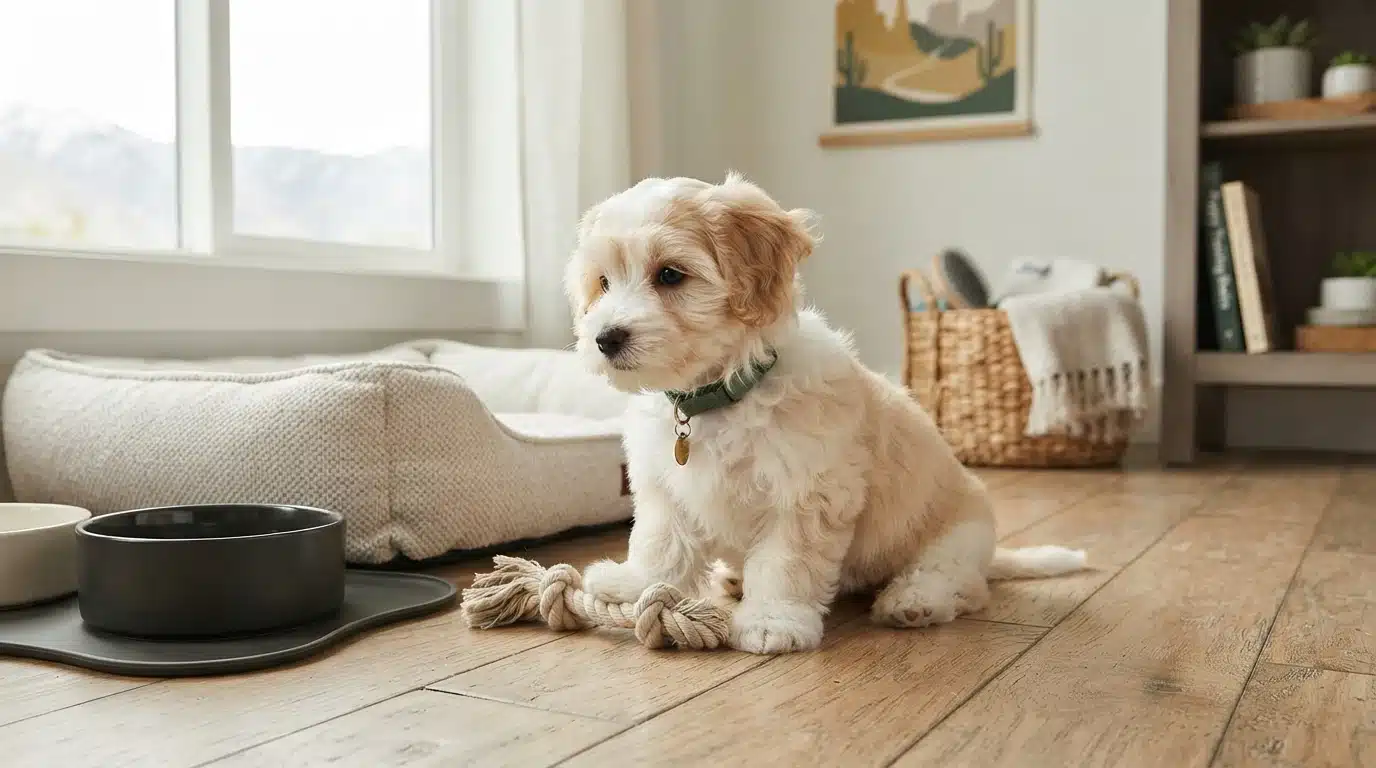
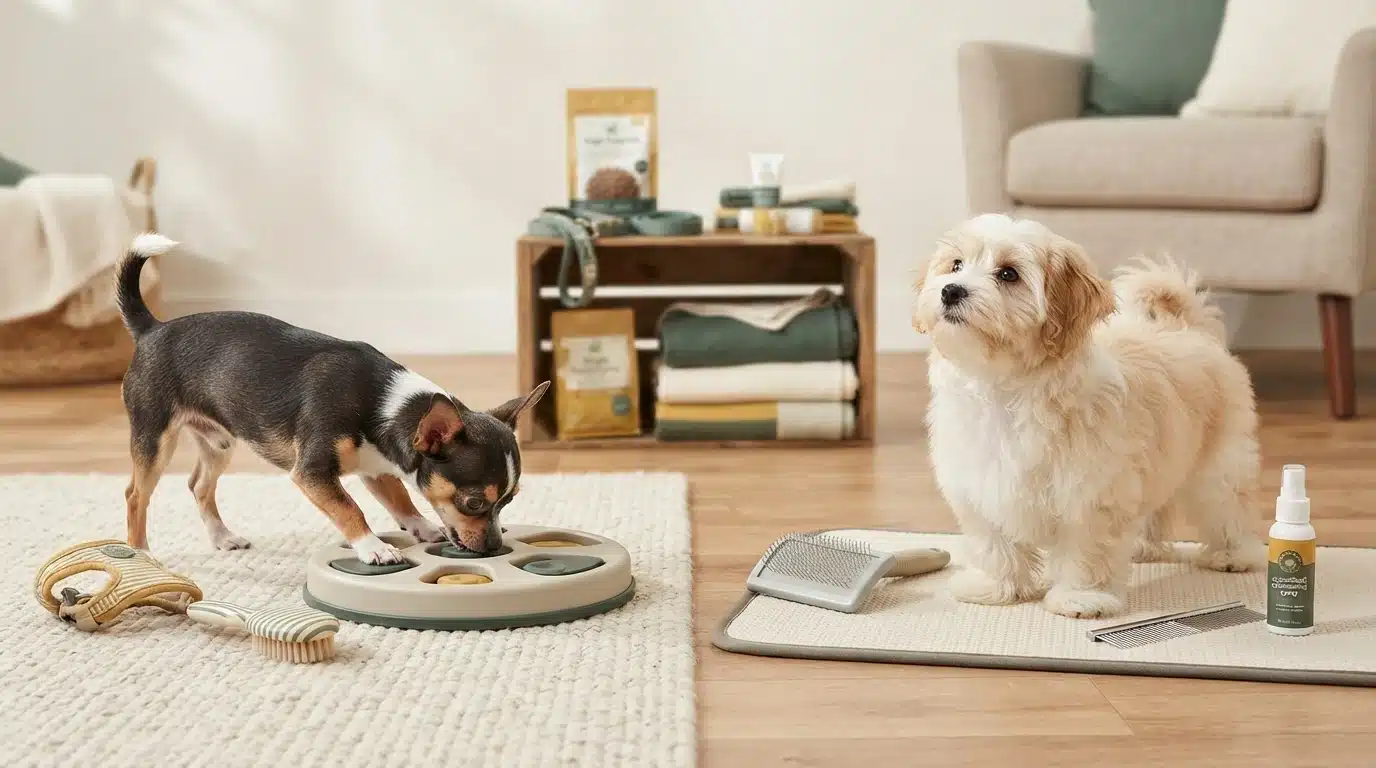
Quick Summary: A family-raised Havanese should experience daily handling, household sounds, gentle grooming, and reward-based learning during its first three months, which can help it settle into a new home. The label alone proves nothing, so buyers should verify where puppies live, how they are handled, and whether the breeder provides health records, parent testing, and a written contract. Havanese coats also require daily brushing from day one to prevent painful mats.
The Havanese puppies advertised as family raised near you probably spent their first weeks in someone’s kitchen, not behind a kennel door. That difference in environment shapes what a puppy hears, sees and handles early on. It is also the easiest claim for a breeder page to make with nothing behind it.
So the real question is not whether a puppy was raised in a home, but what that home actually taught it. This guide walks through what a genuine home-raised Havanese environment involves, why early socialization matters so much during a short window of development, and what the breed’s coat and care needs add to the picture. Just as useful, it covers what a family-raised label does not guarantee, and the questions worth asking any breeder before you commit. Family raised Havanese puppies vary widely, and the difference shows up in your living room.
What Family-Raised Havanese Puppies Actually Means
“Family raised” gets used loosely in the puppy world. It can describe a puppy who grew up in a kitchen, or a kennel-adjacent operation that simply calls itself home-based. Knowing the difference helps you judge a breeder before you fall for a photo.
In-Home Living Versus Kennel-Adjacent Care
A genuinely family-raised Havanese puppy is born and raised inside a lived-in home. The litter hears dishwashers, vacuum cleaners, doorbells, and kids running past. Mother dog stays with the household, not in a separate building or outdoor run. Kennel-adjacent breeders keep dogs clean and fed, but the puppies meet household life late or never. That gap shows up in how a puppy handles your first week together.
Why the Havanese Breed Makes Environment Matter More
Havanese dogs are companion animals by design. They were bred to sit on laps and live beside people, so early human contact shapes them more than it might shape a more independent working breed. The American Kennel Club notes the breed is famously sociable and adaptable. Puppies from AVSAB research-backed programs benefit most when socialization starts before they leave the litter.
What Home Exposure Does and Does Not Tell You
Home life tells you how a puppy copes with noise, handling, and people. It does not guarantee health testing, vaccination schedules, or honest claims. Ask to see both parents, request health clearances, and visit in person when possible. A truthful breeder welcomes questions about what the home label means. You can dig deeper into signs of a truly family-raised puppy breeder before you commit.
That mix of evidence and questions separates real family-raised Havanese puppies from clever marketing.
What Benefits Can Family-Raised Havanese Puppies Offer?
Family raised Havanese puppies spend their first weeks in a home, not a kennel run. That setting shapes how they handle noise, handling and everyday household life. Here is what it can genuinely deliver, and where the honest limits sit.
Comfort With People and Gentle Handling
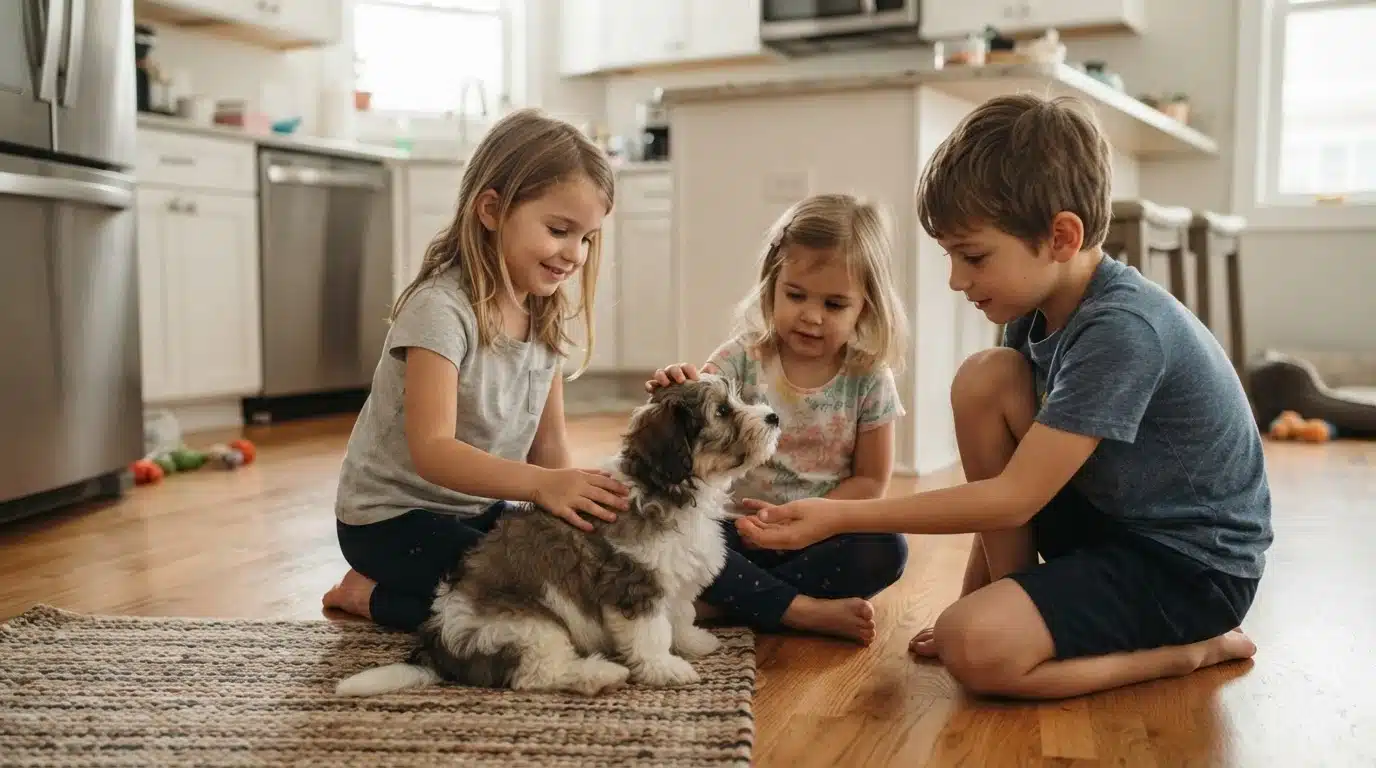
A puppy raised underfoot meets kids, vacuum cleaners, doorbells and dropped pans long before it meets you. The American Veterinary Society of Animal Behavior places the key socialization window in a puppy’s first three months, so a breeder who handles puppies daily is doing work you cannot repeat later. Ask how often each puppy is touched, picked up and carried. Family raised Havanese puppies that already accept paws, ears and grooming tools tend to settle faster in a new home.
Early Reward-Based Learning That Continues at Home
Good breeders start name response, crate familiarity and gentle handling cues before puppies leave. They use food and praise, not corrections, because young puppies learn fastest when the lessons feel safe. Your job is continuity. Keep the same reward-based style, and the puppy treats your living room like a familiar extension of its first home instead of a fresh start from zero.
Reading One Puppy Instead of Guessing From a Breed
Breed descriptions tell you what Havanese are generally like: social, velvety-coated companion dogs. They cannot tell you whether the quiet puppy in a litter is calm or simply cautious, or whether the bold one fits your schedule. A breeder who watches puppies daily can describe each one honestly. When you browse current Havanese puppies with photos and notes from the home, you are choosing a known individual, not a lottery ticket.
Where the Evidence Stops
A home environment supports early development, but it does not guarantee adult temperament, health or trainability. Genetics, your routines and ongoing training all matter after pickup. Treat “family raised” as one strong signal among several, verified with direct questions, not a promise on its own.
The Timeline: What Happens in the First Months
A Havanese puppy’s early weeks follow a fairly predictable path. The first three months of life matter most, because that is when sociability outweighs fear, according to the AVSAB position statement. Breeders who raise puppies at home work inside that window long before you ever meet your puppy.
Weeks One to Three: Handling and Household Sounds
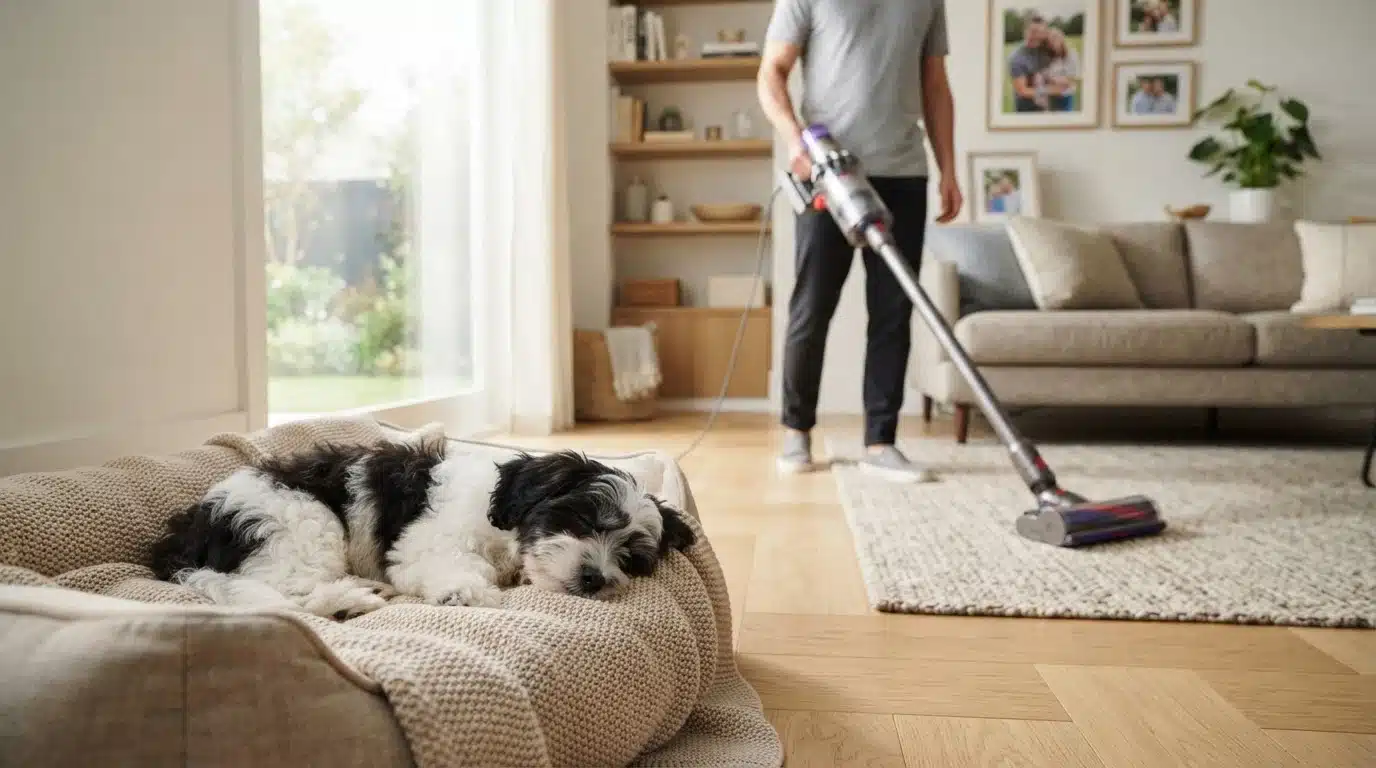
In the first weeks, good breeders focus on gentle handling. Short sessions teach puppies that human touch is safe and normal. Household sounds come next. Puppies hear the dishwasher, the doorbell, kids playing, and the vacuum, so those noises feel ordinary instead of scary. Floors, stairs, and different textures also give the litter its first safe challenges.
The First Three Months as the Key Window
Most puppies go home around eight to ten weeks, so the window is still open when you arrive. The American Veterinary Society of Animal Behavior recommends puppy classes starting at 7 to 8 weeks, even before full vaccination, as long as the puppy has at least one set of shots. Keep exposing your Havanese to new people, car rides, and safe places. Use a socialization checklist for the first 12 weeks to stay consistent.
Continuing Into Adulthood
Early exposure is the foundation, not the finish line. Sociability can fade if positive experiences stop, so keep the habit going. Practice short grooming sessions, walks in new spots, and calm time alone, always at a pace your puppy tolerates. Havanese stay playful and people-focused for life, and steady, kind experiences through the first year shape how they handle change as adults.
What Home Life Does Not Replace: Records, Vet Care, and Daily Grooming
A loving home shapes temperament, but it cannot undo genetics or stop mats from forming. Three things still sit entirely on your shoulders once the puppy comes home: grooming, health documentation, and knowing the limits of early socialization.
Grooming Starts in Puppyhood, Not After
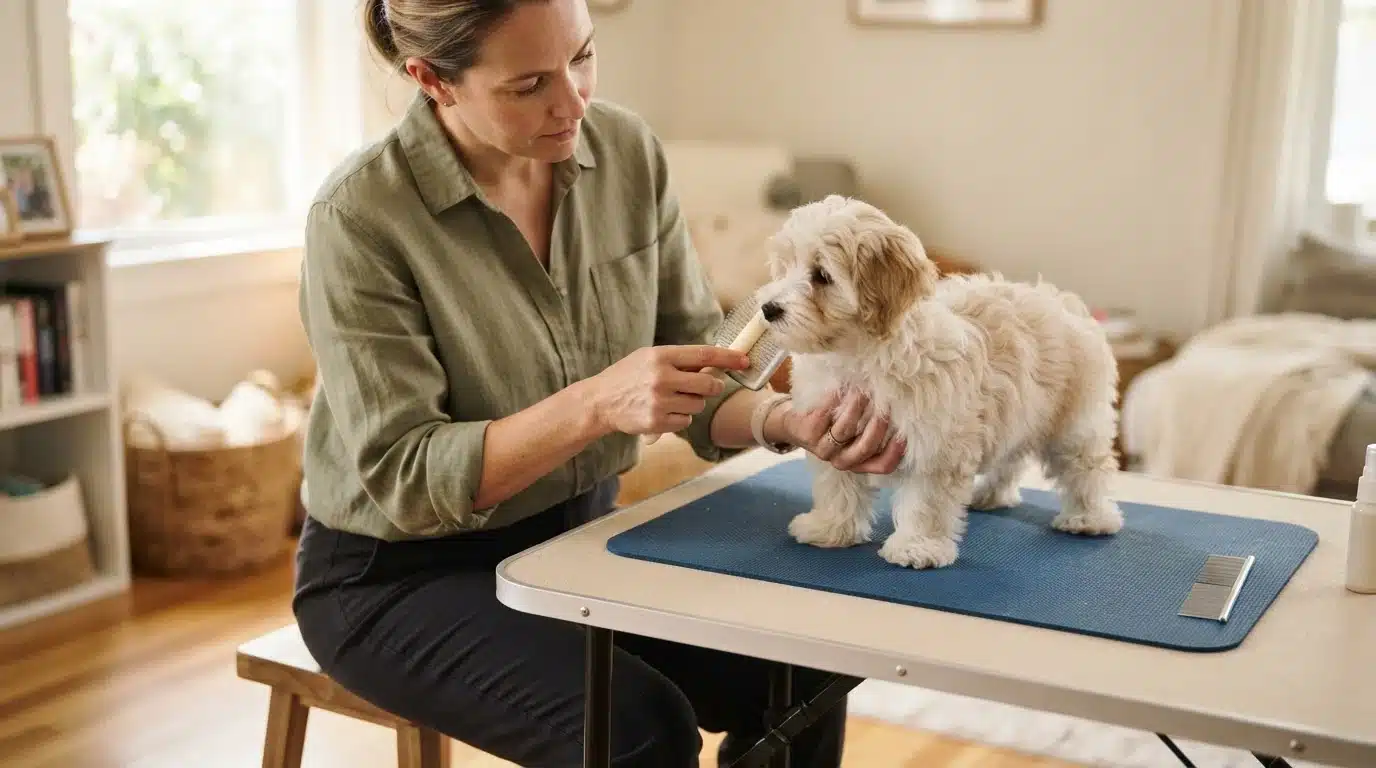
The Havanese coat looks easy and is not. The breed’s long, soft, silky hair needs daily grooming to stay free of mats and tangles, according to the AKC. Skip a few days and knots form close to the skin, where they pull and hurt.
Start brushing routines the first week your puppy is home, even though a young puppy’s coat is still short. Short sessions with a comb and slicker brush teach your puppy that handling is normal. Waiting until the adult coat arrives makes grooming a fight.
We keep coat care expectations by coat type clear before families reserve a puppy, because grooming time is a daily commitment, not a monthly one.
Health Records and Screening Still Come First
Warm homes do not diagnose heart murmurs or clear eyes. Ask any breeder for vaccination and deworming dates in writing, plus results from parent health testing where the breeder does it. A reputable program shares veterinary exam records for each puppy and welcomes your own vet visit within the first few days. Paperwork you can read beats a sweet story you have to trust.
Home Life Has Its Own Limits
Raising puppies indoors builds confidence, but no household can promise a specific adult temperament or a health outcome. Home-raised describes the environment, not a guarantee. Judge the breeder on what you can verify: records, references, and how openly they answer health questions. Environment is one factor among several, and honest breeders say so.
Questions That Verify a Family-Raised Claim
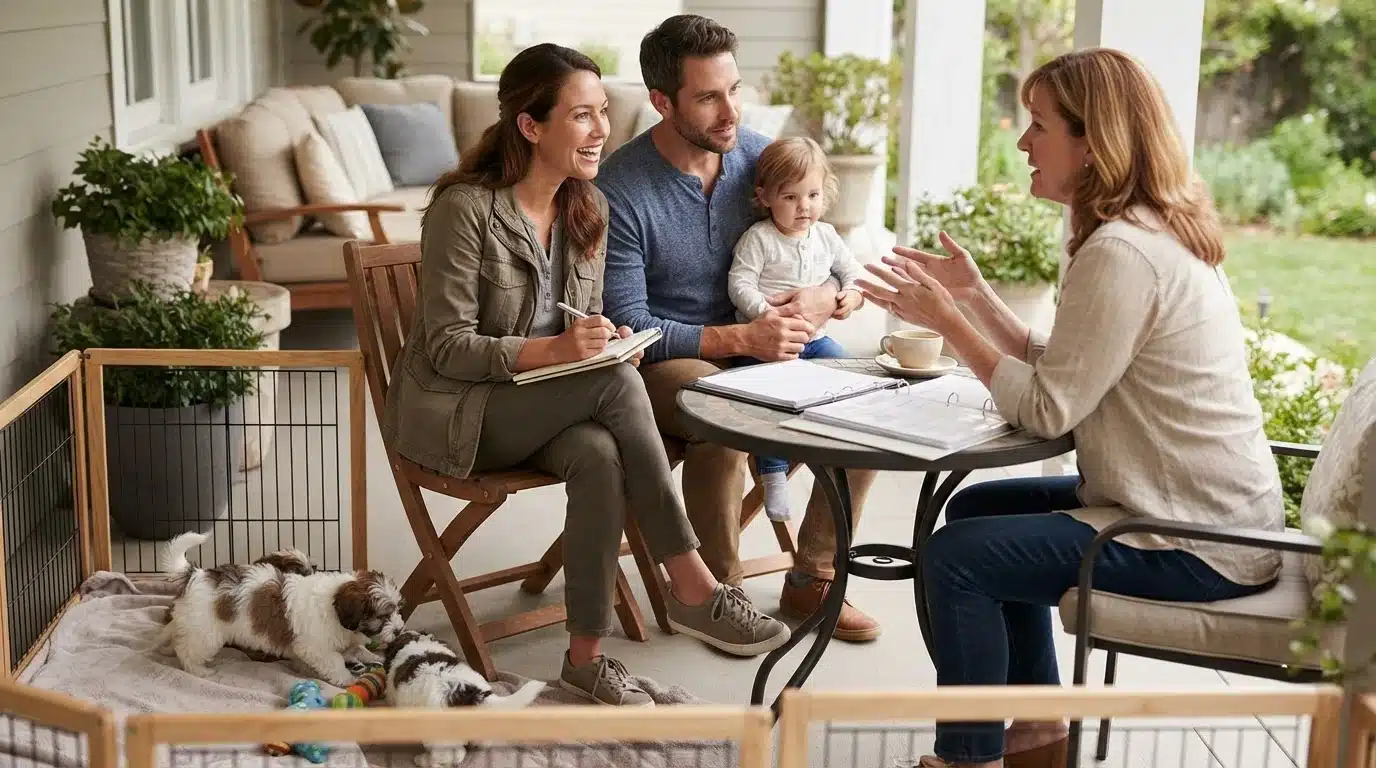
Anyone can put “family raised” on a website. The words cost nothing, so your job is to test the claim with specific questions and watch how the breeder answers. A good breeder welcomes detail. A vague or defensive answer tells you as much as a clear one.
Six Questions to Ask Any Breeder
Ask these before you talk price or timing:
- Where do the puppies sleep and spend their days? You want a specific answer: kitchen, living room, whelping box near daily activity.
- How many litters do you raise per year? One or two fits a true home program. Six suggests a kennel operation.
- Who handles the puppies, and how often? Children, visitors, and daily touch matter in the first 12 weeks.
- What sounds and surfaces have they met? Vacuum, stairs, grass, car rides.
- Can I visit or video call before choosing? A no without a good reason is a warning.
- What health testing do the parents have? Ask for certificates, not assurances.
Tip: Written answers beat spoken ones. Ask for details in an email so you can compare breeders fairly.
Red Flags and Mismatches
Some answers are not disqualifying, just a poor fit. A breeder who raises puppies in a quiet garage may breed honestly but offer less early socialization than your family needs. If the website says “home raised” but visits are refused, pictures are scarce, or the breeder cannot describe a normal puppy day, keep looking.
Watch for pressure tactics too. Deposits before questions, promises of perfect temperaments, or health guarantees covering everything usually signal a seller, not a program. Sage Puppies, for example, uses an application step before any reservation, which gives both sides a chance to ask these exact questions. Whatever breeder you choose, expect the same openness.
Choosing Where Your Havanese Comes From
Three Routes and Their Trade-Offs
Most families find their Havanese one of three ways: a home-based breeder, a commercial kennel or broker, or an online listing that promises a quick ship. Each route shapes the puppy’s first weeks differently.
A home-raised puppy grows up around ordinary household noise, from dishwashers to doorbells to children. That daily exposure supports the early socialization window we covered above. The trade-off is scale. Small programs have few litters a year, so you may wait. A kennel or broker moves faster and often costs less up front, but puppies may spend early weeks in runs rather than a living room. Random online listings carry the biggest risk, because the seller may not exist at all.
The route matters more than the label. Ask to see where puppies actually live, whichever source you pick.
What Happens After You Decide
Once you choose a source, the next step is verification, not payment. Request health records for the dam and sire, ask which vaccines the litter has received, and ask how the breeder handles the first eight weeks. A good program answers before you ask twice.
With a boutique program like Sage Puppies, you submit an application describing your home and schedule, then the breeder matches you with a litter rather than selling to whoever clicks first. If you are still comparing programs, browse the current puppy availability to see how profiles present health and temperament details.
Whichever route you take, get the contract in writing before any deposit changes hands.
Common Mistakes to Avoid
The biggest mistake is waiting until your Havanese is fully vaccinated to start socializing. That window closes early, so pair exposure with your vet’s guidance instead of delaying it.
Another slip is choosing a puppy based on photos alone. Ask to see where the puppies actually live and how they handle noise, visitors, and handling.
Buyers also skip coat prep. The Havanese double coat mats fast without regular brushing, so plan the routine before pickup day, not after.
Finally, don’t treat “family raised” as proof of health screening. Ask for vaccination records, parent health information, and a written contract every time.
Tip: Bring your list of questions to every breeder conversation. A good breeder welcomes them.

If a Havanese raised in a busy, loving home sounds right for your family, the next step is simple. Share your household, schedule and preferences through Sage Puppies’ application, and Cassie will match you with a puppy whose early home life fits yours.
Frequently Asked Questions
Q1: What benefits can family-raised Havanese puppies offer?
Early daily handling, household noise exposure, and basic reward-based learning during the first-three-month socialization window, which helps puppies settle faster.
Q2: When should I start socializing my Havanese puppy?
Immediately after pickup, around eight to ten weeks. AVSAB advises classes from 7 to 8 weeks with at least one vaccine set.
Q3: Does “family raised” guarantee a healthy puppy?
No. It describes the environment only. Always ask for vaccination dates, deworming records, and parent health testing in writing.
Q4: How much grooming does a Havanese need?
Daily brushing. The silky double coat mats quickly, so start short combing sessions the first week home.
Q5: How many litters indicate a true home breeder?
Usually one or two per year. Six or more suggests a kennel operation using home-based language.
Q6: Should I visit before choosing a puppy?
Yes, or request a video call. A refusal without good reason is a warning sign.
Conclusion
A family-raised label only means something when you can see what the home actually taught. The best indicators are daily handling, ordinary household noise, and reward-based start on learning during the first-three-month socialization window. None of it replaces health records, parent testing, or a written contract, and the breed’s silky double coat still needs daily brushing from day one. Ask specific questions, expect open answers, and treat “family raised” as one strong signal, not a promise. A puppy matched to your home and routine, raised underfoot in a real household, tends to settle faster and stay that way. Verify the breeder first; the environment is the bonus, but the paperwork protects you both.