Quick Summary: A truly family-raised puppy should show signs of living in a real home, including calm reactions to household noise, regular handling, and access to the rooms where it sleeps and plays. Verify the claim with a live or in-person visit and request dated veterinary records, vaccination and deworming logs, microchip papers, and health testing for both parents. Home raising can improve confidence and reduce fear, but it cannot replace good genetics, veterinary care, or later training, so avoid breeders that refuse proof or pressure you to pay quickly.
The first thing you notice is not the puppy. It is the noise. A family-raised litter lives inside a house, so by eight weeks a vacuum runs in one room while a toddler argues in another, and the puppy has already learned that a busy home is normal, not frightening. That calm is one of the clearest family breeder signs, and it is hard to fake.
The problem is that nearly every website claims home raising. Photos of puppies on couches prove little, so families who care about avoiding puppy mills need a better way to check. This guide gives you one: a room-by-room visit checklist, questions tied to the records each honest answer should produce, and the paperwork signals most pages skip.
We raise Havanese, Havapoo and Cavapoo puppies in our own South Jordan, Utah home, and we wrote this for anyone comparing a breeder home environment, ours included. Ask these questions everywhere.
What Family-Raised Actually Means (and What It Does Not)
The plain-language definition
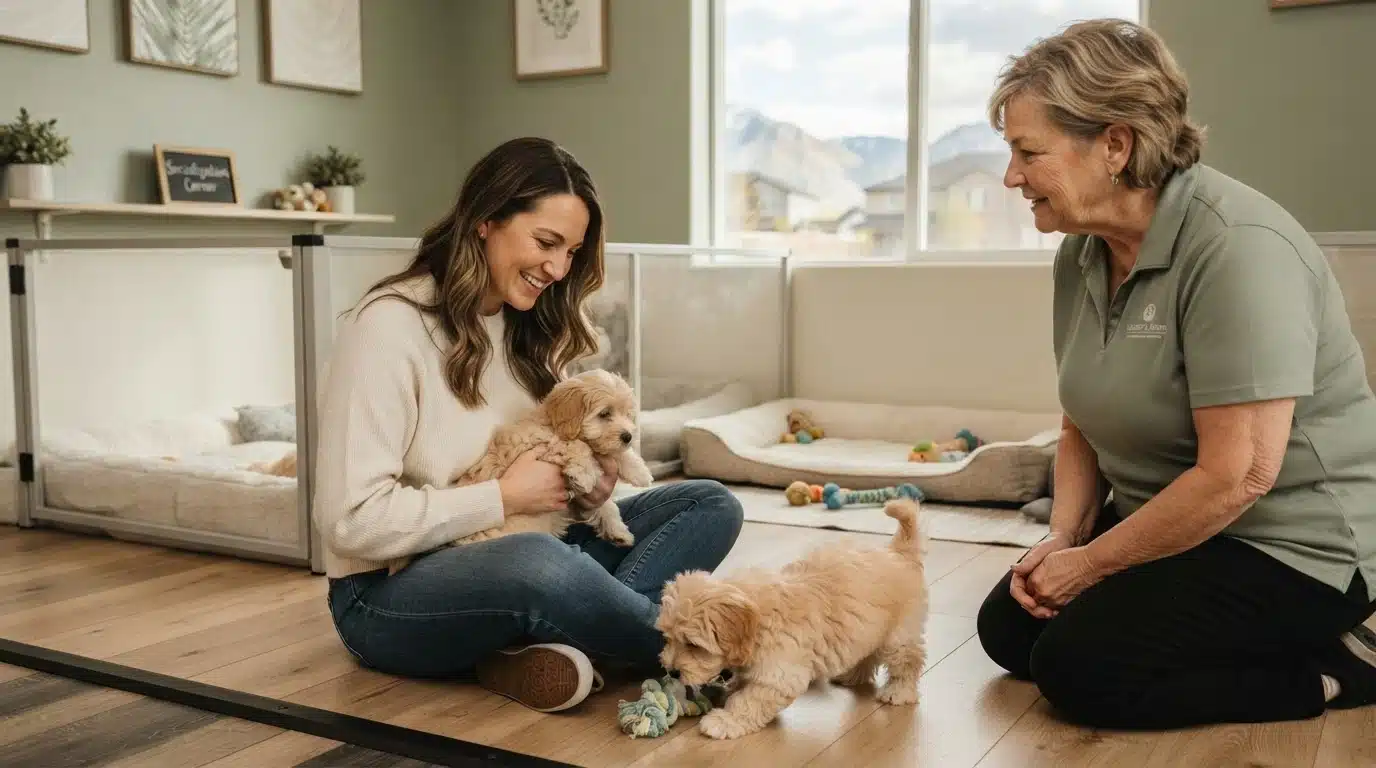
A family-raised puppy grows up inside a breeder’s home, not a kennel building. The litter whelps in a living space, hears daily household noise, and meets people of different ages from the first days. A true family breeder signs this kind of start: the mother lives there too, and you can visit and see both. Programs like Sage Puppies in South Jordan keep the whole litter inside the house for exactly this reason. Watch for more of these signs as you read on.
The myths that cloud this
The label gets borrowed a lot, so separate the myths from the facts.
| Claim | Reality |
|---|---|
| “Home-raised” means the dog lives in the house | Some breeders only move pups indoors for photos before sale |
| A clean website proves a clean home | Paperwork and an in-person visit prove far more |
| Any breeder with kids counts as family-raised | The puppies must actually share that daily space |
Why the first weeks matter
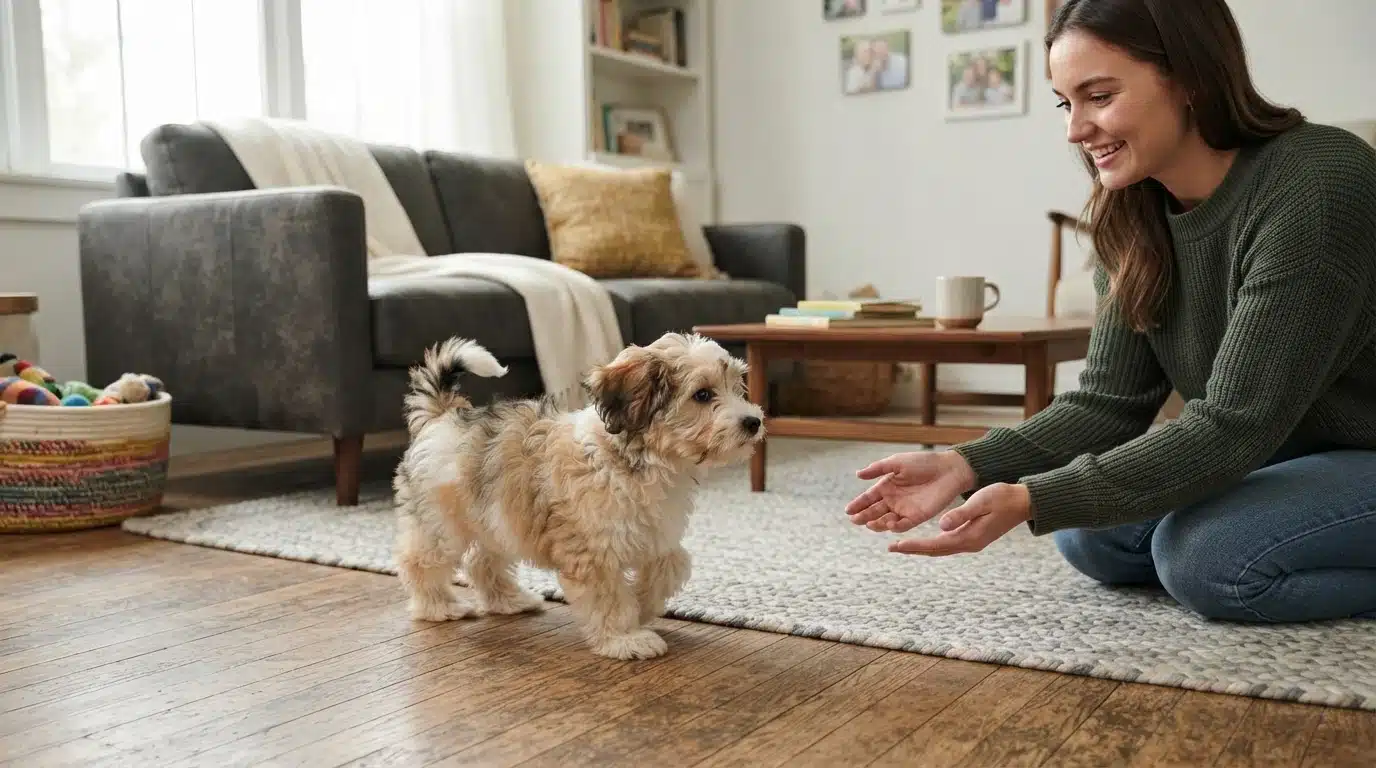
Puppies build their core social skills between about three and twelve weeks of age, according to guidance from the American Veterinary Society of Animal Behavior on puppy socialization. A litter raised around vacuum cleaners, doorbells, and gentle handling arrives home calmer and faster to settle. A kennel-raised pup may need weeks of extra work to feel safe in a normal house. That early environment is one trait no photo can fake.
How to Tell If a Puppy Was Raised in a Home: Seven Concrete Signs
Anyone can put “home raised” on a website. Real family breeder signs show up in the details: where the litter sleeps, what you hear on a video call, and how the puppies react to a stranger. Here are the concrete things to look for.
Ask to see the room the litter actually uses
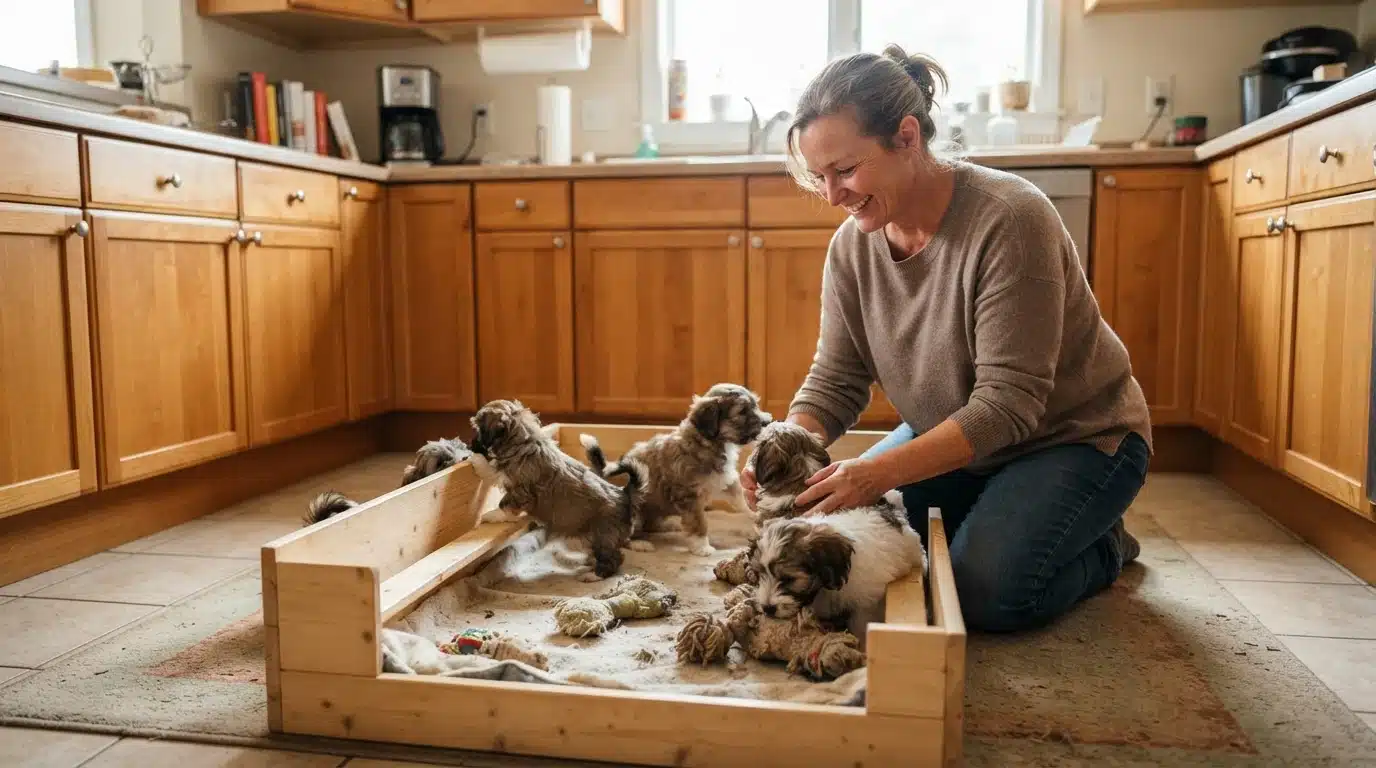
A breeder with nothing to hide will walk you straight to the whelping area, not a cleaned-up corner chosen for the visit. Ask where the puppies were born and where they sleep now, then ask to see both. A real setup shows a whelping box, washable flooring, and puppy-safe toys with some wear on them. Be wary if every photo looks staged, or if the answer shifts from “kitchen” to “den” between calls. Breeders who raise litters in a busy family space, as we do with every Havanese, Havapoo, and Cavapoo litter, can describe the room in plain detail because they live in it.
Listen for the household in the background
Sound gives a litter away fast. On a video call, ask the breeder to walk through the room with the camera on. You should hear normal life: a dishwasher, kids doing homework, a door opening, another dog barking once and settling. Puppies raised around that noise stay calm when it continues. If the call is always silent, or the puppies startle badly at a dropped spoon, they have probably lived somewhere quiet and isolated. Quiet alone is not proof of a kennel, but constant silence plus nervous puppies is worth a follow-up question.
Look at the puppies themselves
Puppies tell you how they were raised. Well-socialized ones approach you with loose bodies and wagging tails, recover quickly from a startle, and tolerate being held for a few minutes. They should look clean but not scrubbed, with no crusted eyes or sore spots. Compare what you see with the first weeks of care every puppy needs: exposure to handling, household sounds, and gentle people. Fear of human touch at eight weeks is a red flag.
Notice who else is in the household
Ask who lives with the litter and who handles the puppies daily. A genuine family-raised breeder names the kids who cuddle them and describes how each person helps. That daily variety, different voices, heights, and hands, is what builds a confident companion dog. If only one person ever touches the puppies, or the breeder cannot say who was home last week, the “family” part deserves a second look. It is also fair to ask whether the litter was raised on site or shipped in from another facility, because some sellers do both.
Questions to Ask a Breeder to Confirm Puppies Are Family-Raised
Good questions do more than fill silence. Each one should produce a specific answer, photo, or record you can check. If a breeder stalls, deflects, or answers only in slogans, treat that as data.

Environment questions
Ask where the puppies sleep, play, and whelp, and who lives in that space. The answer should name real rooms: a kitchen, a family room, a bedroom corner. Then ask for a video or live tour of those rooms, not just the yard. A genuine home breeder shows crates, rugs, and kid clutter without hesitation. Vague replies like “a clean facility” usually point to a kennel, not a household.
Care questions
Ask who handles the puppies, how often, and for what purpose. Listen for routine detail: nail trims, different floor textures, car rides, short visits from friends. Ask what happens when a puppy cries at night and who cleans up after playtime. Family-raised programs describe chores shared by adults and children alike. A paid rotation of handlers, or “staff,” is a clear commercial signal.
Record questions and what each one should produce
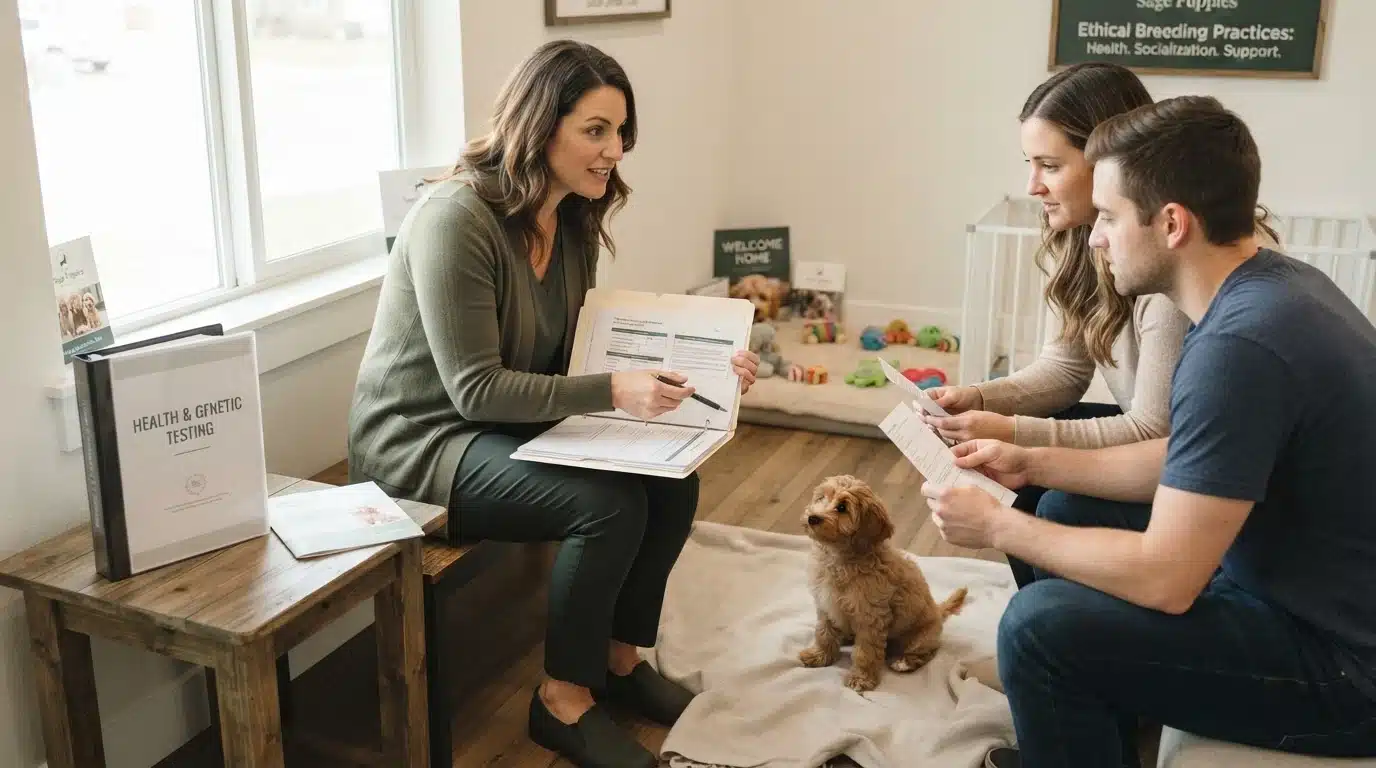
Records turn claims into proof. Ask four things and expect a document for each:
| Question | What it should produce |
|---|---|
| Veterinary exam? | A dated health certificate with the vet’s name |
| Vaccines and deworming? | A written schedule with products and dates |
| Parents’ health testing? | Registration or lab paperwork on the dam and sire |
| Microchip and registration? | Chip number plus transfer or registry papers |
A breeder who says “we do all that” but cannot email the files is asking for your trust instead of earning it.
Process questions
Finally, ask how puppies are matched, priced, and released. A real program uses an application, discusses your home and schedule, and explains pickup or delivery options plainly. It will also name what home raising cannot promise, such as finished house training, because no household can guarantee that. Honest limits are often the strongest proof of all, and programs like ours in South Jordan build their whole matching process around them.
Is a Family-Raised Puppy Healthier Than a Kennel-Raised One?
Family raising clearly helps a puppy’s behavior, and it supports health too, but the honest answer is more layered than most breeder pages admit.
What the research does and does not show
Research favors home raising, but mostly on the behavior side. A study in Applied Animal Behaviour Science found puppies raised in a house grew up more confident and less likely to show fear-based aggression than kennel-raised pups, as Companion Animal Psychology summarized. What it does not show is that home raising alone produces a physically healthier dog. Genetics and vet care carry that weight.
The health side of the question
Kennels still affect health indirectly. Crowded quarters raise exposure to parvo and other contagious illness, and kennel-raised dogs show more stress, which research links to fear-based behaviors later in life according to a 2026 study in PMC. A home-raised puppy also arrives already used to normal household sounds, floors, and handling, which lowers early stress in your house.
The honest caveats
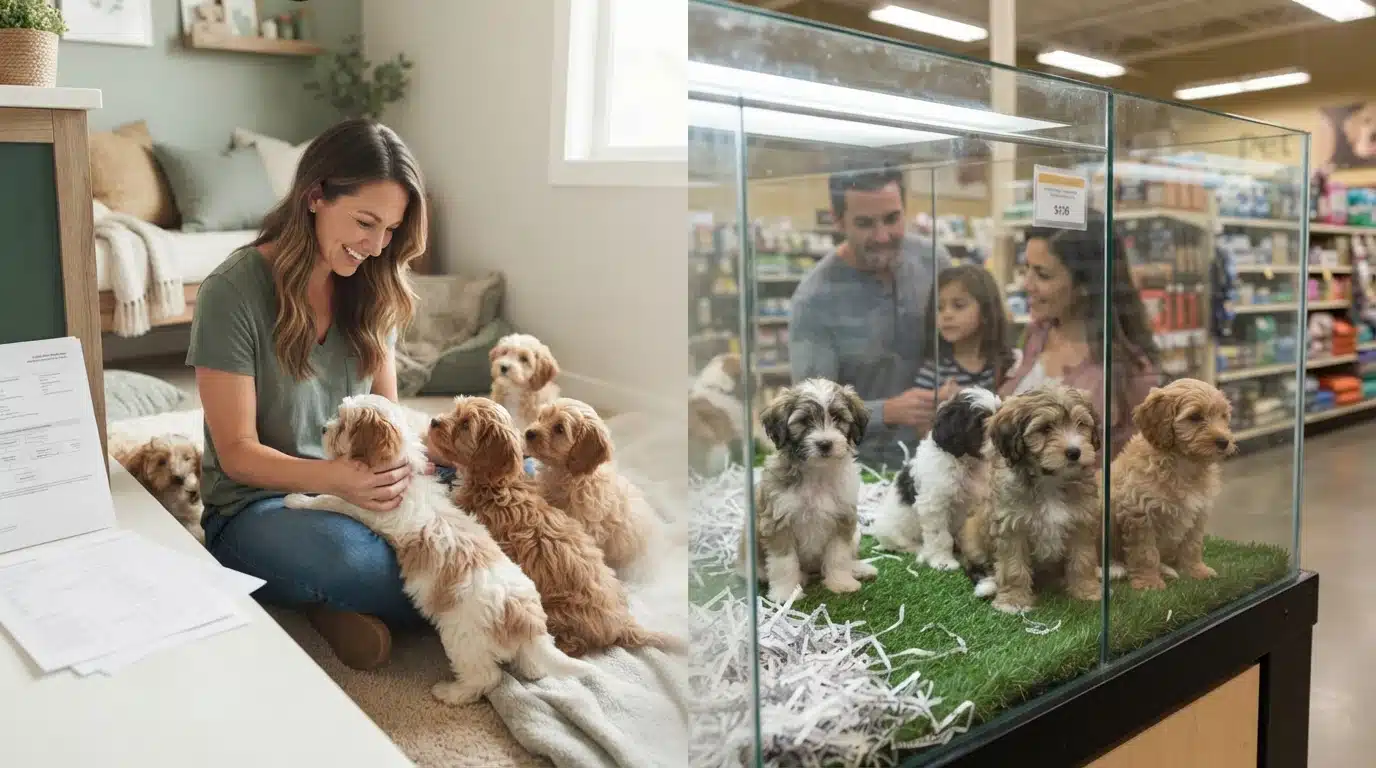
A living room is not a promise. Some breeders use “home raised” as a label while the dogs actually live in a garage kennel, so verify it instead of trusting the phrase. Ask which room the puppies sleep in and who handles them daily.
Also, home raising cannot fix genetics. A loving kitchen cannot undo careless breeding, so health clearances on the parents still matter more than the setting. And home raising does not guarantee a calm adult dog; your own training and socialization in the first months shape that outcome.

The takeaway: treat family raising as a strong signal of a breeder’s care, then confirm it with a visit and paperwork.
Red Flags and Breeds for Caution
Structural warning signs
The property itself tells you more than the website ever will. Walk away from a breeder who meets you in a parking lot, refuses a visit, or shows puppies in a room with no toys, no beds and no family belongings. Other warnings: stacked crates in a garage, a strong ammonia smell, more than two or three litters at once, and no mother on site. Be careful with “home raised” claims from large operations shipping dozens of puppies weekly; genuine small programs, like the reservation process behind a boutique litter, match one family at a time.
Documentation warning signs
Paperwork gaps predict future heartache. A credible breeder hands you veterinary exam records, a vaccination and deworming log with dates, and registration or parentage papers when applicable – at pickup, not “later.” Ask early and watch the answer. Vague responses about health testing, no proof of the parents’ OFA or eye clearances, contracts written on the spot, and pressure to pay by gift card or payment app all point away from a real program. One honest disclaimer beats a stack of glossy guarantees.
Scams have moved online
The biggest risk today is not a bad breeder. It is no breeder at all. Pet scams make up roughly a third of online shopping scam reports to the Better Business Bureau, and most involve puppies. Typical patterns: stock photos, prices far below market, sellers who only text, and sudden “shipping crate” fees after your deposit clears. Before sending money, request a live video call, ask for today’s date on a paper held next to the puppy, and search the puppy’s photo online to see if it appears on other sites.

Trust your discomfort. A breeder who answers slowly once will answer slowly after your check clears, so choose the one whose records, home and temperament all line up.
What Family-Raised Looks Like at Sage Puppies
The household behind the litters
At Sage Puppies, the puppies are born and raised inside Cassie Milar’s own South Jordan, Utah home, not a separate kennel building. They grow up around ordinary family life: footsteps, conversation, children, and daily household routines. That matters because early socialization shapes how confident and adaptable adult dogs become. The program stays small on purpose, working only with Havanese, Havapoo, and Cavapoo litters, so each puppy gets individual attention.
Records, contracts, and how to get started
Family-raised should still come with paperwork. Ask for the dam’s health history, vaccination and deworming dates for each puppy, and a written agreement that spells out what happens after you take your puppy home. Sage Puppies runs an owner-managed application and matching process rather than first-come picking, so families and puppies are paired deliberately. Expect clear pricing, a written deposit policy, and records you can hand straight to your veterinarian.
Local pickup and delivery
Utah families can pick up their puppy in person, which lets you meet the environment the puppy was raised in. Families elsewhere in the country can arrange delivery, coordinated directly with Cassie rather than through a third-party broker. Either way, you should know who is handling your puppy, when travel happens, and what the puppy goes home with before you commit.

Ready to meet a breeder who truly raises puppies at home? Sage Puppies welcomes your questions about our Havanese, Havapoo, and Cavapoo litters. Start the application, see how our process works, and decide for yourself. Wisely Bred. Beautifully Loved.
Frequently Asked Questions
Q1: How can I tell if a puppy was truly raised in a home instead of a kennel?
Ask to see the room where the litter sleeps and whelps, then take a live video walk-through. Real homes show kid clutter, worn toys, and household noise; kennels show stacked crates, silence, and staged photos.
Q2: What questions should I ask a breeder to confirm puppies are family-raised?
Ask where the puppies were born, who handles them daily, and whether you can visit. Each answer should come with proof: a dated health certificate, vaccination records, and parent health-testing paperwork you can verify.
Q3: Is a family-raised puppy healthier than a kennel-raised puppy?
Research mainly supports behavior benefits, like confidence and less fear. Physical health depends more on genetics and veterinary care, so parent health clearances still matter most.
Q4: Can I verify a breeder if I live out of state?
Yes. Request a live video tour with sound on, ask for today’s date held next to the puppy, and never pay by gift card or payment app.
Q5: Should the mother dog be on site during my visit?
Absolutely. If the dam is missing or “at the groomer,” that’s a serious red flag. A genuine family program lets you see mother and litter together.
Q6: What should a puppy come home with?
Expect vet exam records, a written vaccine and deworming log, microchip and registration papers, and a contract, all at pickup rather than promised later.
Conclusion
Telling a true family-raised breeder from a marketing claim comes down to proof, not promises. Visit the rooms the litter actually lives in, listen for ordinary household noise, and watch how the puppies respond to strangers. Ask questions that produce records: a dated vet certificate, a vaccine and deworming log, and parent health-testing paperwork. Treat home raising as a strong signal of care, but remember its limits. It shapes temperament, not genetics, and it cannot promise a finished house-trained puppy. The strongest breeders admit that plainly and let their homes, mothers, and files speak. When a breeder’s answers, environment, and documents all line up, you have found the real thing.