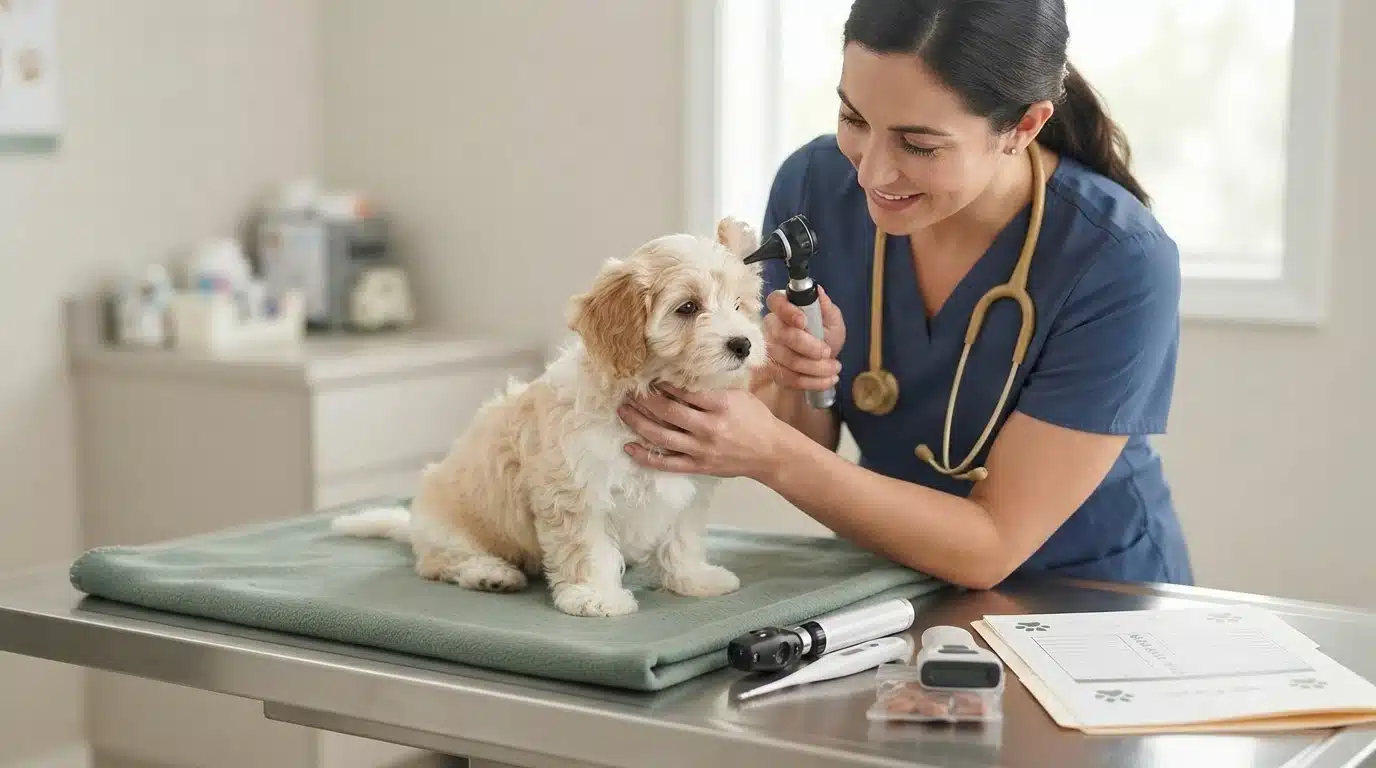
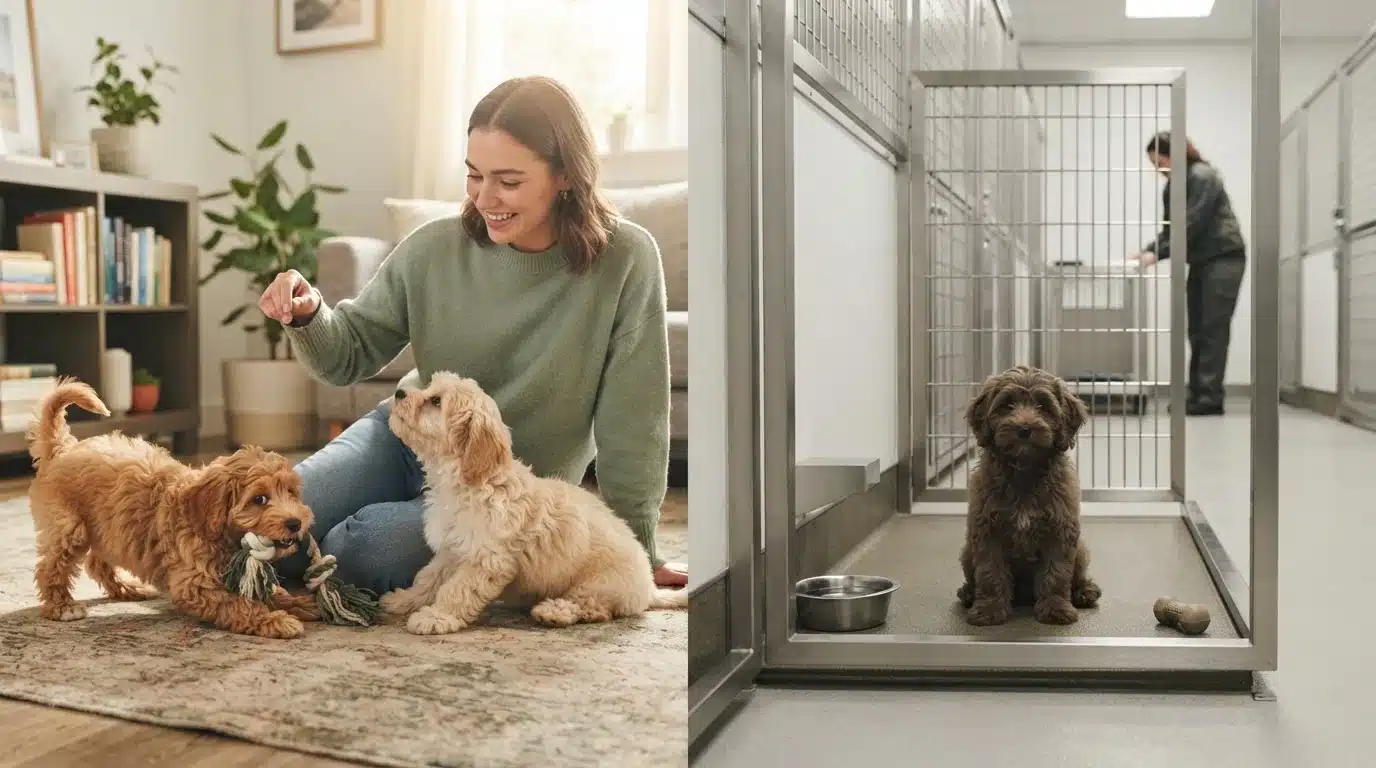
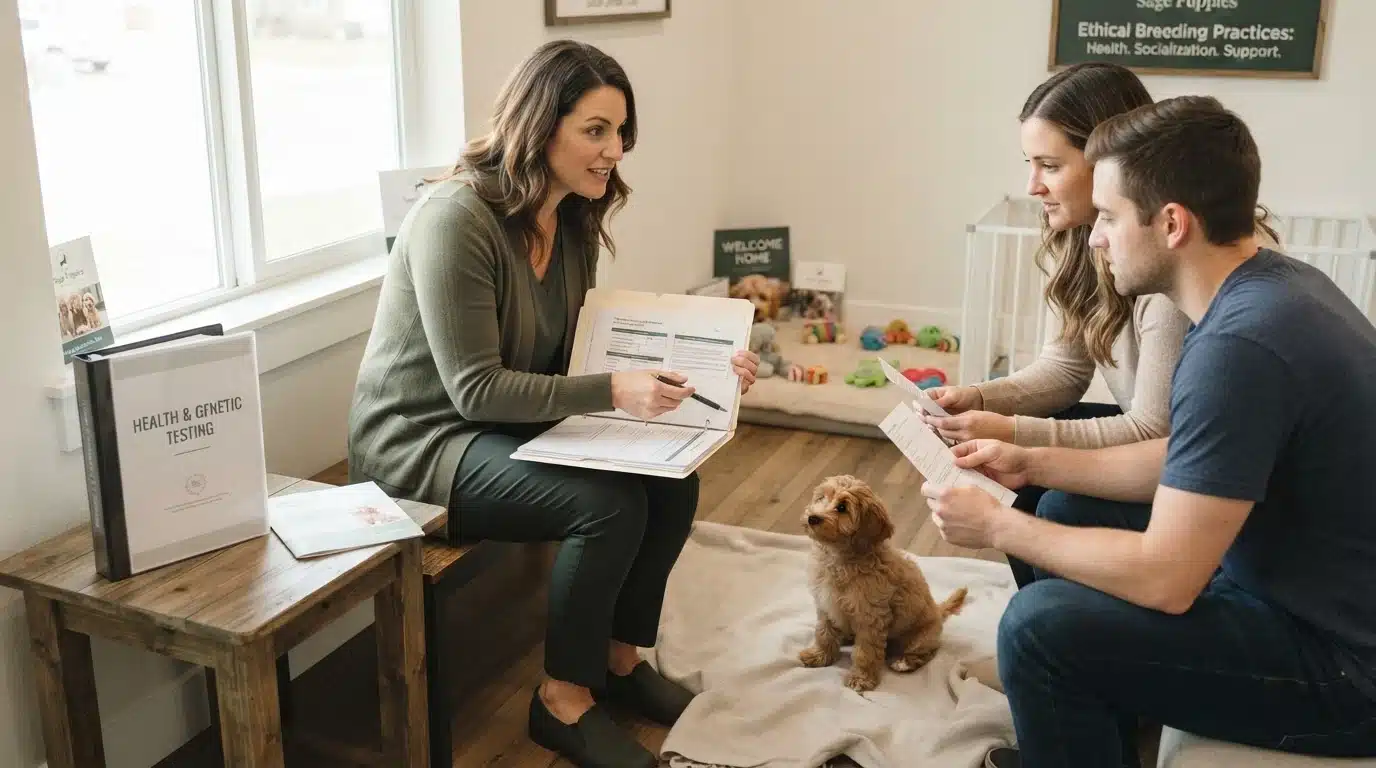
Quick Summary: Treat “family-raised” as a claim you must verify, not proof. Request a live video tour of the whole whelping area, see the mother and littermates together, ask who handles the puppies and what socialization they receive, and confirm they stay with their mother for at least eight weeks. Before paying, check verifiable parent health records, breed-specific risks, the contract and health policy, and use a traceable payment method; repeated refusals or pressure are strong reasons to walk away.
Two breeders can both advertise family-raised Havapoo puppies and mean completely different things by it. The difference usually shows up in the first ninety seconds of a video call, if you know what to look for on screen. The trouble is that most buyers don’t, so they rely on ads and hope. “Family-raised” has no legal definition, which lets a puppy kept in a garage count as long as the website says the right words.
This guide gives you five checkpoints that separate real raised puppy signs from marketing language. Each one comes with scripted Havanese breeder questions you can ask word for word, plus what a strong answer sounds like and what a vague one hides. You’ll learn to read breeder transparency signs: where the puppies sleep, who handles them, and what health records you should see in writing before money moves. We raise Havanese, Havapoos, and Cavapoos in South Jordan, Utah, and we’d rather you verify than take our word for it.
Step 1: Define What Family-Raised Must Mean to You
Anyone can put “family-raised” on a website. Before you compare breeders, decide what that phrase must mean in practice, then ask each breeder to prove it. Vague standards make every puppy look the same, so write your own checklist first.
The Five Parts of a Credible In-Home Claim
A believable in-home story has five parts: the puppies are born inside the home, handled daily by adults and children, exposed to normal household noise, raised with their mother for at least eight weeks, and documented with dated photos or video. Ask for all five. When a breeder can describe the whelping space, name who does the handling, and share recent raised puppy signs like video of littermates playing on kitchen tile, the claim holds up. Missing any part is not a dealbreaker by itself, but it is a question to press. Our guide to family-raised puppy breeder signs walks through each part in more detail.
Why “Raised” Is Not the Same as “Socialized”
These words get swapped constantly, and the difference matters. “Raised” describes where the puppy lived. “Socialized” describes what the puppy experienced there: new surfaces, sounds, people, and gentle handling sessions that build confidence. A puppy can live in a kitchen for eight weeks and still meet almost nothing new. When you evaluate raised puppy signs, ask what the breeder did each week, not just where the litter slept.
Good breeders keep a simple log: week three, car sounds; week five, visitors; week seven, crate introduction. That record, not the adjective, tells you how the puppy will land in your home.
Step 2: Ask to See the Puppies’ Living Space Live
A “family-raised” label means nothing unless you can see where the puppies actually sleep, eat, and play. Serious breeders expect this request and answer it easily. Sellers who hide the room, or the mother, are the classic warning sign: rescue groups note that mills commonly refuse to let buyers see where puppies were raised or to meet the dam, and the ASPCA’s puppy mill guidance says the same in different words. So make the live walkthrough a condition of your purchase, not a bonus if the breeder offers it.

The Three-Minute Video Walkthrough
If you can’t visit in person, ask for a live video call instead of recorded footage. Here’s how to run it:
- Request a scheduled call on FaceTime, Zoom, or Google Meet, not a pre-recorded clip.
- Ask the breeder to walk you through the whelping area, the puppies’ play space, and the mother’s spot.
- Say, “Can you pan around so I can see the whole room?” and watch how they respond.
- Look for clean bedding, fresh water, room to move, toys, and signs the puppies live inside the home, such as family shoes or a kitchen doorway in frame.
- Ask that the mother appear on camera so you can see her temperament and body condition.
A good breeder narrates proudly. They’ll point out details you didn’t ask about, like the potty setup or where the litter naps. Buyers comparing programs remotely, as we do with our own Havanese and doodle families in Utah, should treat this call as non-negotiable. Three minutes of live video tells you more than an hour of text messages. If someone on our breeder checklist fails this step, everything else they claim gets harder to trust.
What a Refusal or a Delay Tells You
Watch the response, not just the answer. “Sure, when are you free tomorrow?” is fine. “I can’t do video, but here are photos” is not. Excuses that sound reasonable at first, like a mess in the room, a sleeping litter, or a sick relative, usually repeat. A breeder with clean conditions has nothing to hide, so each dodge costs them credibility. One delay deserves a follow-up question; two deserve a different breeder.
Photos and Video as Evidence, Not Proof
Recorded clips still have value, but treat them as a starting point. Photos can be old, borrowed, or cropped to hide a crowded pen. Reverse-search a few images, check the dates on posted videos, and compare backgrounds across clips. If every photo shows the same spotless corner, ask to see the rest of the room live. Evidence builds a picture; only a live walkthrough completes it.
Step 3: Confirm the Puppy Is Raised Alongside Littermates and Healthy Adults
A puppy’s first eight weeks shape the dog it becomes. Research on early socialization shows the sensitive window starts around two to three weeks of age, which means a breeder’s home does most of the work before you ever meet your puppy. That is why this checkpoint matters as much as health records.
Why Littermates and Resident Dogs Matter
Puppies learn bite inhibition, patience, and play boundaries from their littermates. Take a pup too early and those lessons go missing. A good breeder keeps puppies together until at least eight weeks, and most keep them to nine or ten.
Resident dogs matter too. Puppies raised near a calm, healthy adult learn canine manners no human can teach. Watch a video tour or visit: littermates should tumble and nap together, and adults should look relaxed, clean, and interested rather than shut away. The AVSAB position statement stresses how much of this window closes before three months.

Meeting the Dam and What Her Condition Signals
Always ask to meet the mother. Her body and behavior tell you more than any claim on a website. A healthy dam has a glossy coat, clear eyes, a healthy weight, and a steady temperament. She may be thin from nursing, but she should move easily and greet people without fear or panic.
Be wary if she cannot be seen at all, or if a “guardian home” dog is offered only through blurry photos. Some breeders, including small programs like Sage Puppies, use guardian families, so the fix is simple: ask for a live video call showing the dam and her space, not just stills.
Ask About Handling Methods by Name
Generic answers hide weak programs, so ask for specifics:
- “Who handles the puppies daily, and who else visits them?”
- “What sounds, surfaces, and textures do they experience each week?”
- “How do you introduce them to your other dogs safely?”
A confident breeder answers in detail and names daily routines. Vague replies like “they’re very socialized” deserve a follow-up question. Our family-raised socialization approach covers what this looks like day to day. Specifics are the difference between evidence and assumption.
Health testing claims are where many buyers relax, and that is a mistake. A breeder’s word about “clear health lines” is not the same as a document you can read yourself. This step separates the paperwork you should insist on seeing from the questions that actually matter for these three breeds.
Three Record Types Buyers Should Never Confuse
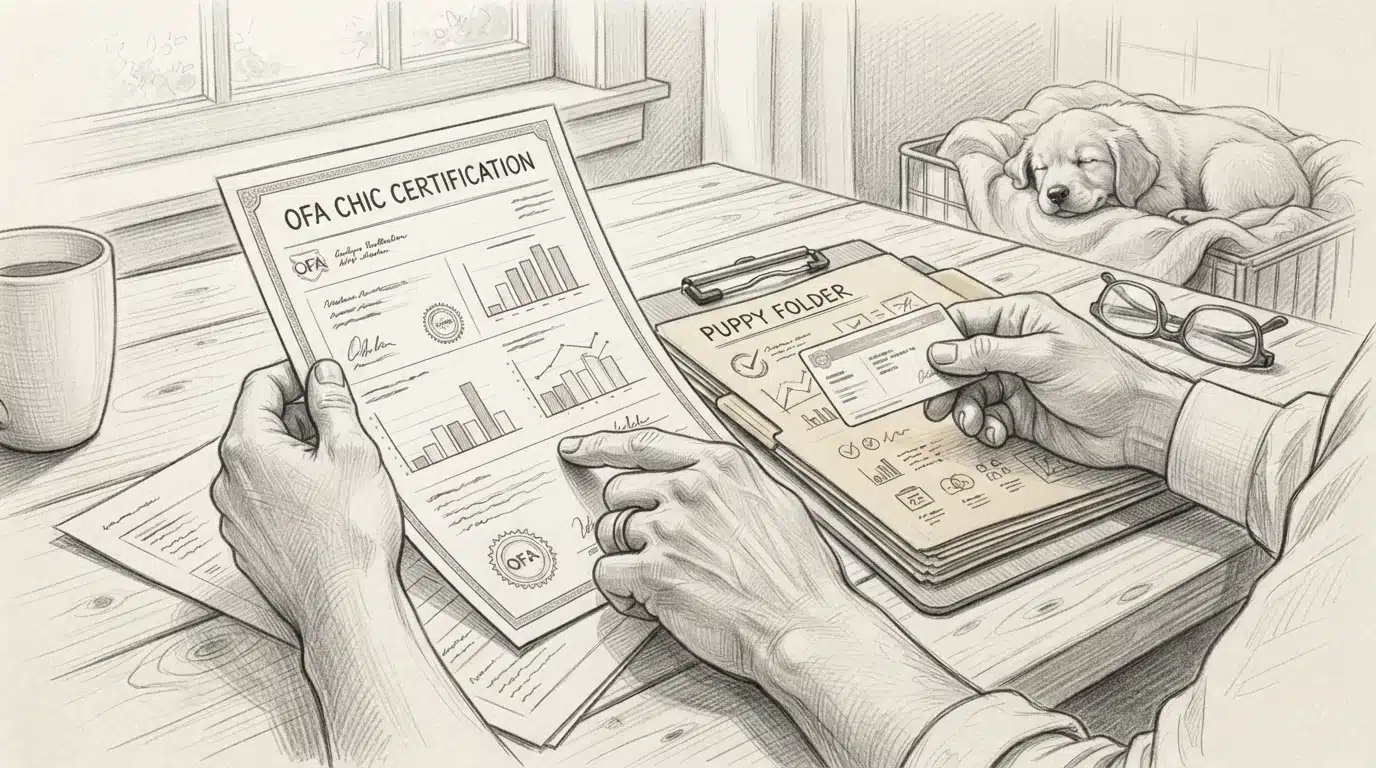
Buyers often mix up three different documents, and breeders sometimes let them. A vet health check is a one-time exam of the puppy, not proof about the parents. A registration paper proves lineage, not health. A health test result is the only one of the three that shows a parent was screened for a specific condition, and it comes from an organization like OFA (Orthopedic Foundation for Animals) or a genetics lab, with a date and the dog’s identity attached.
Ask for parent records by name. “Are both parents OFA or CHIC listed, and can you send the actual certificates?” gets you further than “are they health tested,” because the second question lets a vet exam or pedigree paper pass as an answer.
Questions for Havanese, Havapoo and Cavapoo Buyers
Each breed carries its own risks, so your questions should match. For Havanese, ask about patellar luxation screening, cardiac exams, and hearing tests, since these appear in the breed’s recommended panel. For Cavapoos, the Cavalier side matters most: ask specifically about mitral valve disease in the family line, and whether the Cavalier parent has a recent cardiac clearance from a cardiologist. For Havapoos, ask what both parents were tested for, since this mix inherits risks from both sides.
Two follow-ups cut through vague answers. Ask when the testing was done, because a clearance from years ago may not reflect the dog today. And ask whether you can verify the results yourself on the OFA site using the parent’s registered name. A breeder who welcomes that check is telling you something good.
Tip: If a breeder says testing “isn’t needed for mixes,” that is a red flag. Responsible breeders of Havapoos and Cavapoos test both parent breeds.
Reading Records Rather Than Accepting Claims
Once you have documents in hand, read them slowly. Confirm the parent’s name on the certificate matches the dog you were shown, and check the date falls within a reasonable window, generally the last year or two for cardiac and eye exams. Look for the specific condition listed, not just a passing grade on one test. A certificate for hips tells you nothing about heart or knees.
If any record is missing, ask why. The honest answer is usually short and specific, and the breeder will offer to get it. Long explanations about why testing does not apply deserve more caution than a missing page.
Step 5: Read the Breeder’s Screening and Contract Terms
A Screening Process Cuts Both Ways
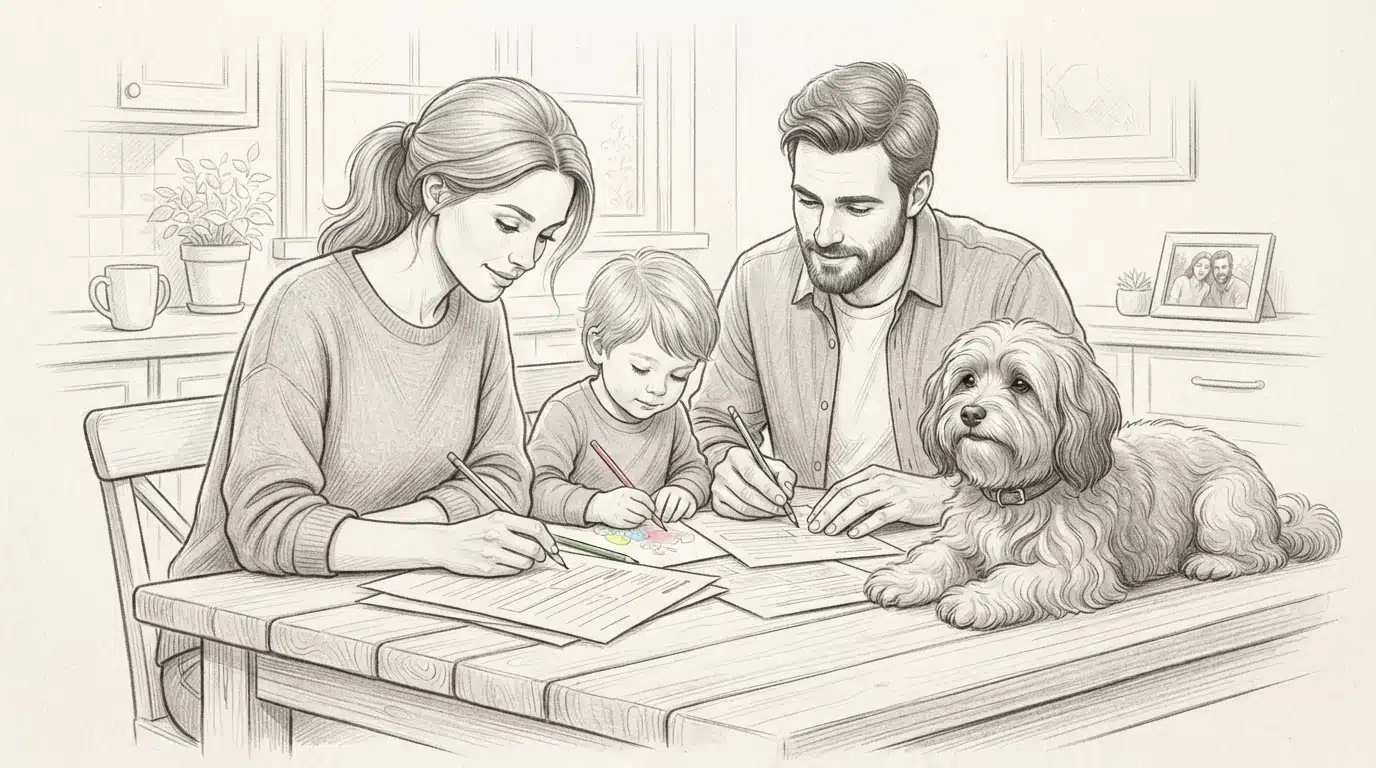
A good breeder screens you as carefully as you screen them. Expect an application with questions about your home, work schedule, kids, other pets and experience with small breeds. If a seller takes your money with no questions at all, that is a warning sign, not a convenience.
Welcome the questions. Honest answers about your lifestyle help the breeder match the right puppy to your family, and a breeder who steers you away from a puppy that does not fit is showing judgment you will want on your side later. Ask for a written copy of their screening and matching process, and note how quickly and clearly they respond. Sloppy communication before the sale usually gets worse after it.
Contract Terms Worth Reading Slowly
Ask for the contract and health policy before you pay anything. A serious program will send it without hesitation. Read for these items:
- Health guarantee window: what is covered, for how long, and what documentation you must provide
- Return clause: whether the breeder takes the dog back at any age, which responsible breeders require
- Spay or neuter terms: timing and any penalties for skipping it
- Deposit terms: whether it transfers to a later litter, and exactly when it is refundable
- Delivery terms: who ships, who pays, and what happens if travel is delayed
Legal resources like the Animal Legal & Historical Center note that research before purchase is your best protection against puppy scams, and a written contract is part of that research. If a breeder refuses to put terms in writing, walk away. Sage Puppies, for example, publishes its reservation and refund terms openly so buyers can read them before committing.
Paying Safely and Resisting Pressure
Pay by a traceable method only: credit card, or a payment platform with buyer protection. Never wire money, pay in gift cards, or send crypto to someone you have not met, because those payments cannot be reversed. The internet-scam FAQ maintained by Michigan State University’s law school lists wire transfers among the most common patterns in online puppy fraud, so treat any request for one as a stop sign.
Resist urgency, too. “Three other families are waiting” is a sales tactic, not a fact you can verify. A healthy litter with a fair waitlist will still be there after you read the contract. Take a day if you need it. A breeder who pressures you into same-hour decisions is telling you how they will treat you once the money clears.
| Payment method | Risk if things go wrong |
|---|---|
| Credit card | Low: dispute rights and chargebacks exist |
| Payment platform | Low to moderate: buyer protection varies by service |
| Wire transfer | High: funds are usually unrecoverable |
| Gift cards or crypto | Very high: no recovery path at all |
Common Mistakes to Avoid
Treating the Label as the Evidence
“Family raised” is a claim, not a fact. Anyone can write it on a website, so the words themselves tell you nothing. Ask what the label means in daily practice: where the puppies sleep, who handles them, and how often. A breeder who answers easily and invites a visit is backing the phrase with proof. One that dodges the question may be reselling puppies from elsewhere.
Skipping the Dam and Parent Records
Even experienced buyers forget to ask for the mother’s records, and that is where problems hide. Request the dam’s age, how many litters she has had, and her health screening results. A dam bred every heat cycle is a warning sign, as is missing paperwork for genetic tests. You can learn which puppy health records matter before you visit, so nothing catches you off guard. Keep copies and read them fully.

You now know what to ask and what proof to expect, so put those five checkpoints to work before any money changes hands. When you’re ready to see how a small, family-based program answers them, visit Sage Puppies and start the application. Cassie will walk you through health records, daily routine, and honest matching for your Havanese, Havapoo, or Cavapoo.
Frequently Asked Questions
Q1: How can I tell if a puppy was really raised inside a family home?
Look for household details in a live video call: family shoes, a kitchen doorway, toys, and normal clutter. Puppies should nap and play with littermates, and the mother should appear on camera in the same space.
Q2: How do I verify a breeder’s ‘family-raised’ claims before buying?
Ask for a scheduled video walkthrough of the whelping area, request dated photos, and get parent health certificates from OFA or a genetics lab. Verify the dam’s name matches the dog you saw on screen.
Q3: Is ‘family-raised’ just marketing language for puppy mills?
Sometimes. The phrase has no legal definition, so buyers who skip the video call and written records can’t tell the difference. Mills commonly refuse live walkthroughs and hide the dam.
Q4: Can I trust photos and videos alone?
Treat them as evidence, not proof. Reverse-search images and compare backgrounds, then ask for a live call showing the whole room.
Q5: What payment method is safest when buying a puppy?
Use a traceable method like a credit card or a payment platform with buyer protection. Never wire money or pay with gift cards, since those funds are nearly impossible to recover.
Conclusion
Spotting a truly family-raised puppy comes down to evidence, not adjectives. Ask for a live walkthrough of the whelping space, confirm the puppies stay with littermates and a healthy dam for at least eight weeks, and get names on the handling routine. Demand parent health records you can verify yourself on the OFA site, and match your questions to the breed: cardiac screening for Cavaliers, patellar and hearing checks for Havanese. Read the contract and health policy before any deposit moves, and pay only by traceable methods. A breeder who welcomes every one of these checks is showing you exactly the kind of program you want to buy from. Verify first, then fall in love.