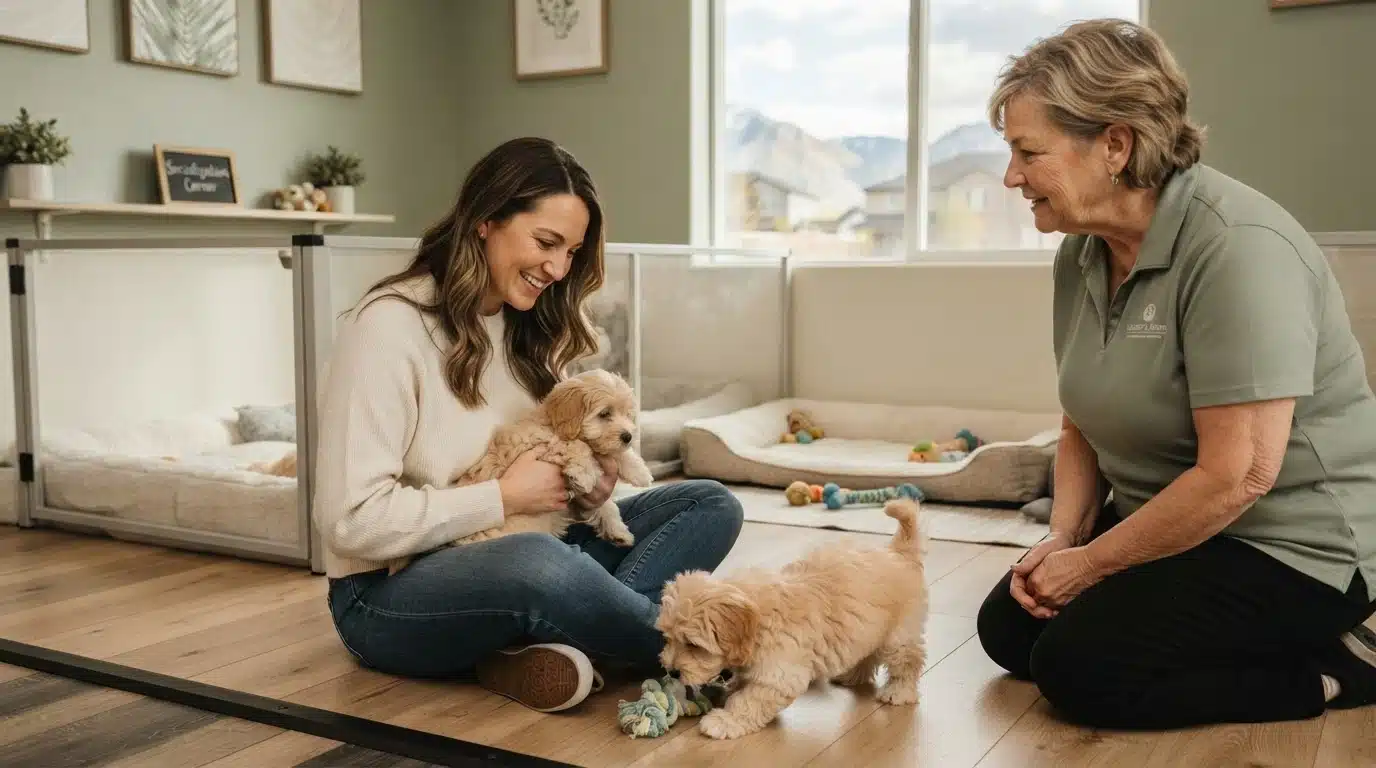
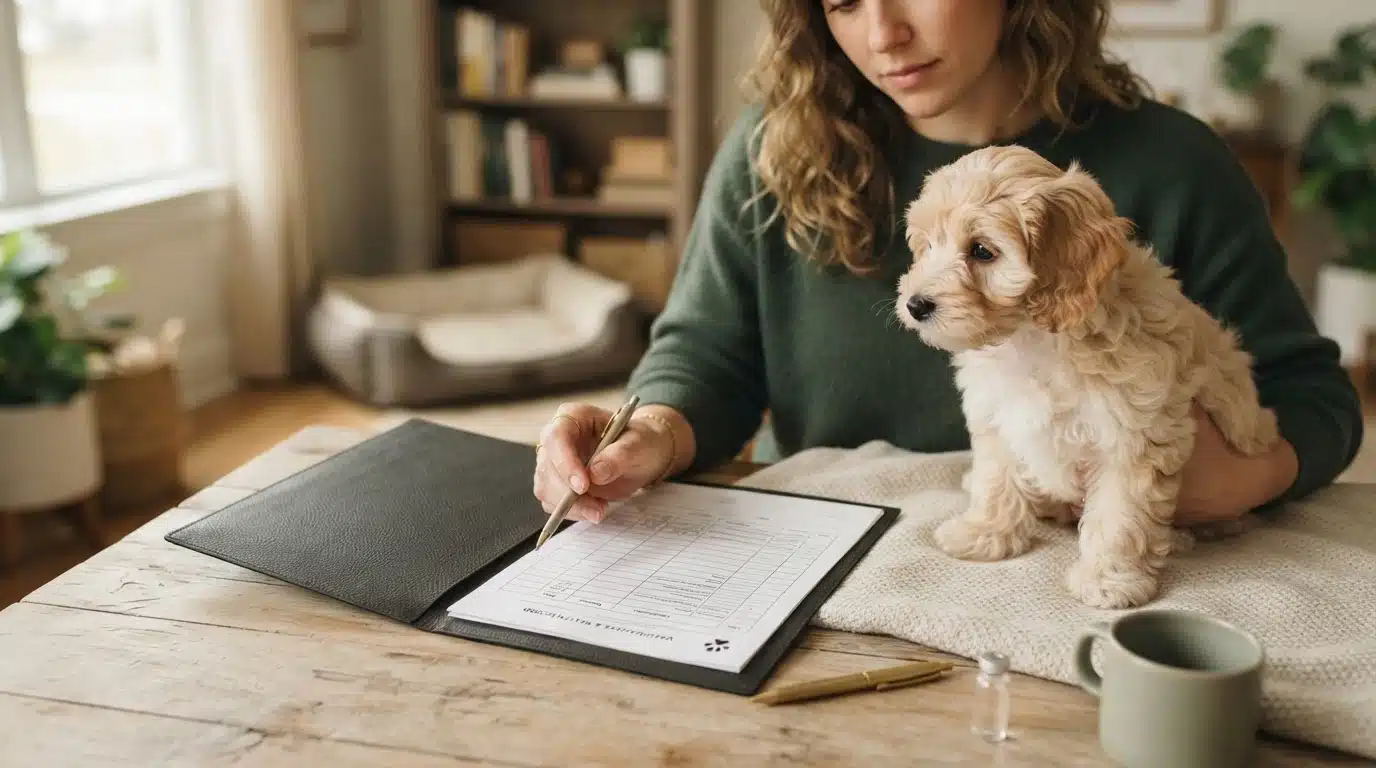
Quick Summary: A Havapoo’s daily routine matters more than whether a breeder calls it family-raised or kennel-raised. During the roughly three-to-14-week socialization window, regular handling, varied household sounds, calm visitors and safe floor surfaces can shape how a puppy responds to life. A well-run kennel can also raise confident puppies, so verify the routine through a live video walkthrough, questions about the litter’s normal day, parent health testing and customer references. Continue gentle handling and short outings after pickup, and judge the breeder’s practices rather than the label.
One breeder’s site says home raised. The kennel down the road says kennel raised. Yet on a video call, both litters of family-raised Havapoo puppies look calm, fluffy, and identical. So what actually changed in those first eight weeks, and how would you know from where you sit? That’s the problem this guide untangles. The label matters less than the daily routine behind it: who handled the puppies, what sounds they heard, and how much household life they saw during the socialization window in their first three months. Below, you’ll see what the research says about early puppy handling, what home raising really involves day to day, and a five-step checklist to run on a live video call before you place a deposit. We draw on Sage Puppies, a home-based Havapoo and small breed program in South Jordan, Utah, to show what the difference looks like in practice.
What Family-Raised and Kennel-Raised Actually Mean
Short answer: A family-raised Havapoo puppy grows up inside a breeder’s home, with daily handling, household noise, and early socialization during its first months. A kennel-raised puppy lives in a separate facility or outdoor run, meeting people mainly at feeding and cleaning times. The difference shows up in temperament, not paperwork.
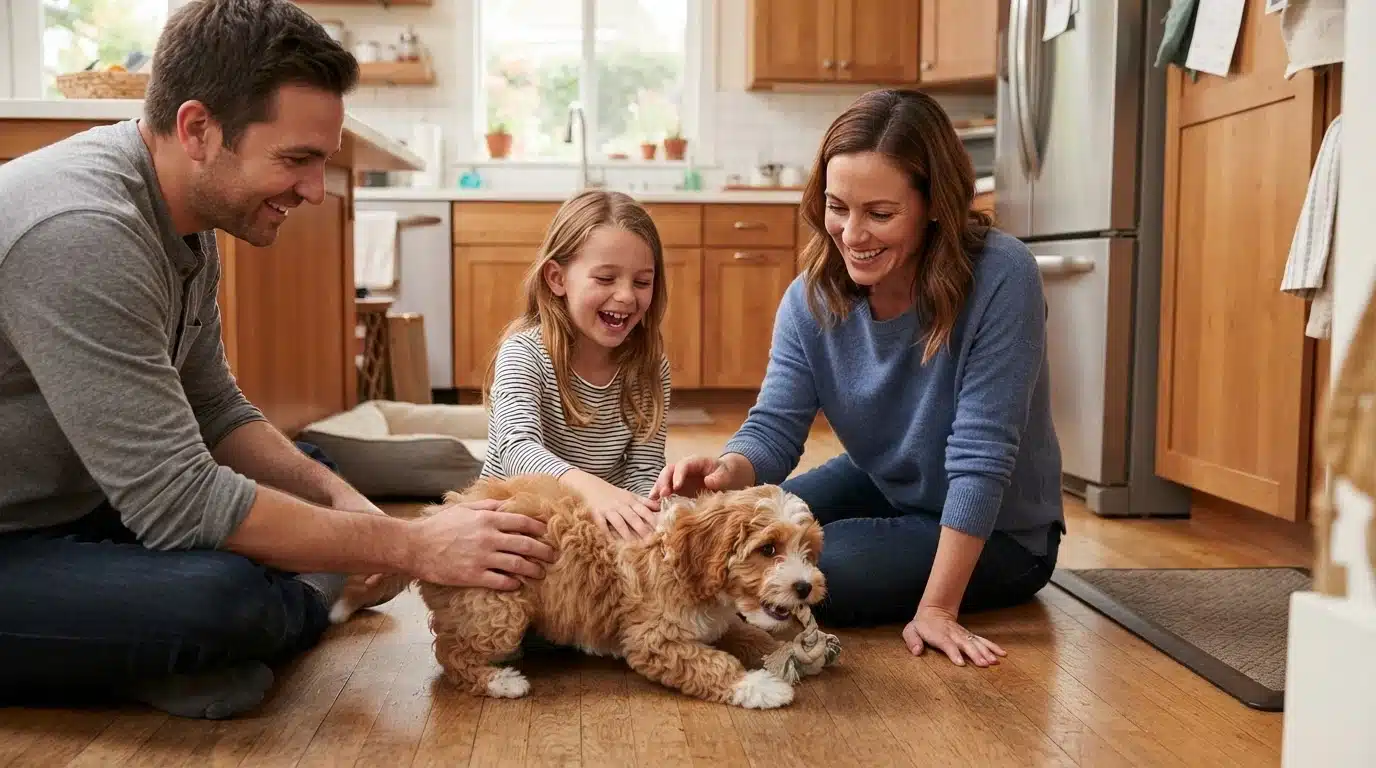
- Family-raised: puppies live in the home, handled daily, exposed to normal family life
- Kennel-raised: puppies live in a kennel, barn, or outbuilding apart from daily household activity
Neither Term Has a Legal Definition
Neither “family-raised” nor “kennel-raised” appears in any federal rule. The Animal Welfare Act only requires a USDA license for breeders with more than four breeding females who sell wholesale or sight unseen, per the ASPCA’s licensing overview. Everyone selling directly to families at retail falls outside that federal net, so the labels describe a breeder’s setup, not a legal standard.
Why It Matters for a Havapoo Specifically
A Havapoo means a Havanese crossed with a Poodle, two breeds bred for close human company. Puppies of both lines bond hardest during the socialization window in the first three months, when handling and household exposure shape how they respond to people for life. A kennel start costs a companion breed more than it would a more independent breed.
Where Marketing Language Outruns Reality
Anyone can write “raised underfoot” on a website. A genuine family-raised Havapoo puppies program means puppies in the kitchen, not a shed with a camera. Ask where the puppies sleep, who handles them daily, and what a normal morning looks like. Then verify it live, the way you would when comparing options in any small breed puppy buying guide. No label replaces watching a puppy react to a vacuum.
The First Eight Weeks, Day by Day
The label matters less than the calendar. Between three and twelve weeks, puppies soak up experience faster than at any other age, so what fills those days shapes the adult dog. In a family-raised home, that means ordinary life: dishes, doorbells, toddlers, hardwood floors. In a kennel run, days can blur together with less variety. Here is what good looks like, week to week.
Noise, Surfaces and Household Rhythm
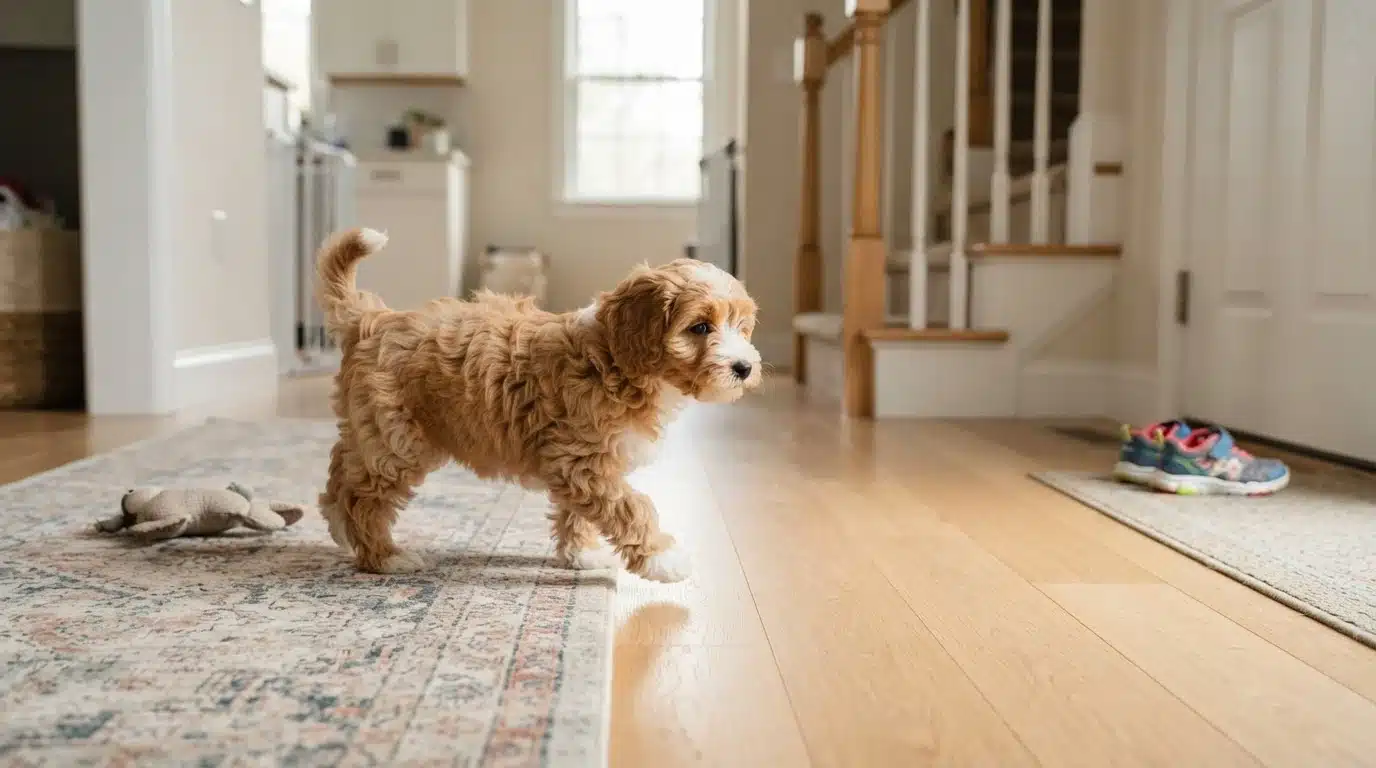
Good breeders start noise and surface work early. By week four, puppies should hear vacuums, televisions and kitchen clatter at low volume. By week five, they walk on tile, carpet, grass and maybe a low wobble board, which builds body confidence. Household rhythm matters too: naps in a crate or pen, meals on a schedule, brief calm stretches between play bursts. Ask your breeder which sounds and surfaces each puppy has already met. A specific answer beats a vague “they’re around everything.”
How Much Handling Each Puppy Gets
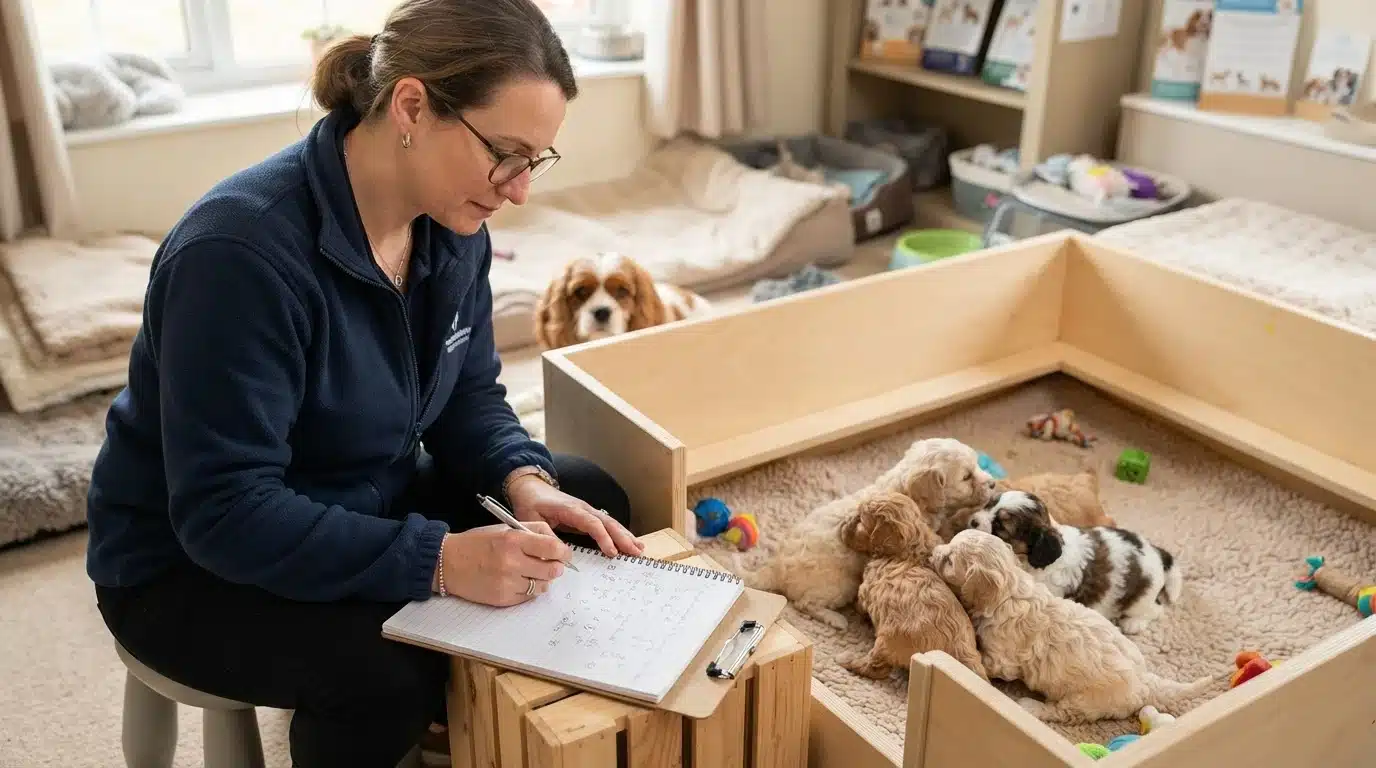
Handling teaches puppies that people are safe and predictable. Well-run programs handle puppies several times a day from birth, in short sessions: a weigh-in, a nail trim, a snuggle, a check of ears and teeth. Different people should do the work, since one familiar person is not enough. By week six, a puppy should accept being held on its back, touched on the paws and examined without squirming or freezing. On your video call, ask who handles the litter, how often, and whether any puppy shies away. At Sage Puppies, that daily record is part of the program, and honest breeders will show you theirs.
Short Trips, Visitors and People Practice
Socialization also means meeting the wider world in small, safe doses. Ask about car rides, even short ones around the block. Ask whether visitors of different ages, including calm children, have met the litter, and whether puppies see people in hats, glasses or uniforms. These small exposures prevent big fears later. Words on a page can’t replace it, which is why families comparing litters should ask these questions directly, as covered in this small breed puppy adoption guide.
What the Research Does and Does Not Show
The First Three Months Are the Sensitive Window
Puppies are most open to new experiences between about three and 14 weeks of age. This socialization window opens around three weeks and closes before most puppies go home. During it, sociability outweighs fear, so positive contact with people, surfaces, sounds and handling shapes how a dog reacts to the world later. Because a Havapoo usually joins a family near the end of that window, what happens in the breeder’s home during the first eight weeks matters as much as what happens after. Penn State’s extension team puts it plainly: the window lasts until roughly 14 weeks, and missed exposure is hard to replace.
What Two Puppy Studies Found, and Their Limits
Two large reviews help here. A 2022 systematic review of canine socialization research found that poor early socialization links to later fear and behavior problems, but also warned that much breeder advice rests on very few controlled trials. The AVMA’s own literature review reached a similar conclusion: exposure from three to 14 weeks clearly helps, yet studies rarely compare one breeder setting against another. So the research supports the value of early handling, not a verdict that every kennel-raised puppy turns out worse.
How a Well-Raised Kennel Puppy Compares
A clean, well-staffed kennel with daily handling and planned enrichment can produce a confident puppy. The difference is variety. A busy household delivers unpredictable sounds, visitors and floor textures on its own, which is why programs like Sage Puppies raise litters in the home. What predicts the outcome is the daily routine, not the label on the website.
How to Verify It in Five Steps
The fastest way to check how a puppy was raised is to see the setting and hear the routine described. Here is how to verify a puppy was family raised, as a numbered list:
- Ask for a live video walkthrough of the home, not a pre-recorded clip.
- Ask what a normal day looks like for the litter.
- Ask where the puppies sleep and which rooms they access.
- Ask the age at pickup and confirm the parents.
- Ask for references from past puppy families.
Each step is easy to fake in a photo and hard to fake in a live call.
The Live Video Walkthrough
A real breeder will say yes quickly. Ask to see the whelping area, the kitchen, and wherever the puppies play. Request the call at an ordinary time, not a staged moment. You should hear household sounds in the background: a doorbell, a vacuum, kids doing homework. Puppies that glance up, calm down fast, and keep playing are showing you the socialization window did its work. Silence and frozen puppies tell you something too.
Ask About a Normal Day
Skip the marketing terms and ask for a schedule. Who handles the puppies, how often, and when? Have they met the vacuum, the dishwasher, car rides, or a slick tile floor? Have they been started on crate familiarity or a potty routine? A family-raised program answers without hesitating because this is just daily life. At Sage Puppies, for example, the puppies grow up inside Cassie’s own home in South Jordan, so the routine is easy to describe.
Age at Pickup and Parentage
Ask exactly when the puppy can come home. Pickup around eight weeks or later fits AVSA guidance and the three-to-14-week window, since those weeks at the breeder’s home are prime socialization time. Then confirm parentage: meet the mother on video, and ask for proof that the Havanese and Poodle parents are health tested. A breeder who dodges either question is telling you something.
(Note: “AVSA” above should read AVSA-corrected in final review; the referenced guidance is from the AVMA.)
The Honest Trade-Offs of Raising in a Home
Is a home-raised puppy always better than a kennel-raised puppy? No. A good kennel run by careful, experienced breeders can turn out steady, well-socialized puppies, and a chaotic home can undo the label’s promise. The setting matters less than the daily routine behind it. That said, raising in a busy house brings real trade-offs you should weigh before you choose.
Noise, Visitors and Busy Households
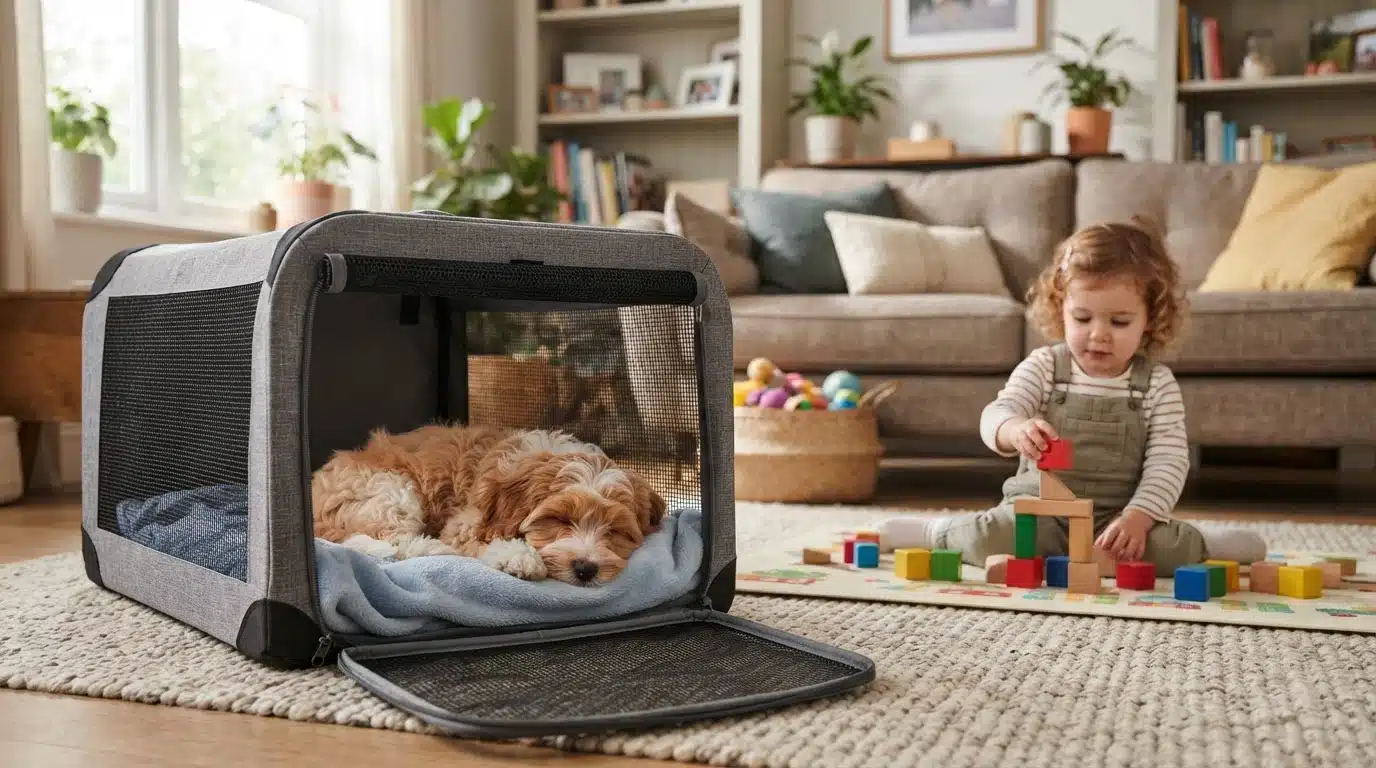
Homes are loud. Doorbells, vacuums, school runs and delivery trucks all become part of a puppy’s normal day, which is a socialization gift. The cost is less control. Household schedules can slip, and quiet crate time takes real effort to protect. At Sage Puppies, Cassie plans that routine deliberately, but any family-raised program should be able to describe exactly how it works.
Resident Dogs and Cats
An adult dog or cat in the home teaches puppies body language and calm greetings. It can also pass on bad habits, such as barking at the window, or share germs if vaccination records lag. Ask which resident animals meet the litter, how often, and whether they are current on shots.
Who Each Setting Suits
Home-raised puppies usually suit first-time owners and families with children who want a puppy already used to household noise. A well-run kennel can suit experienced owners who plan to finish socialization themselves. Either way, judge the routine, not the label. You can see how a given litter is raised on the available puppies page before you commit.
Choosing a Family-Raised Havapoo Puppy in Utah or Nationwide
A Home-Based Havapoo Program in South Jordan, Utah
If you want a Havapoo raised in a real home, ask where the puppies actually live. Sage Puppies is Cassie Milar’s small home-based program in South Jordan, Utah, and it breeds only Havanese, Havapoo and Cavapoo. Puppies grow up amid normal household sounds, daily handling and yard time, which is exactly the exposure that matters in those early weeks. The program stays small on purpose, so each litter gets attention rather than volume. You can see how the matching works through the application process, which starts with a short form and a conversation.
Check Availability and Current Pricing
Small programs rarely keep a standing list of puppies, so availability changes often. Ask what litters are planned, how many puppies remain, and when they can go home. Havapoo puppies from a family program typically run $3,500 to $4,500, but confirm current pricing and reservation steps directly rather than assuming.
For Families Outside Utah
You do not need to live in Utah. Sage Puppies works with families nationwide and can arrange delivery or a planned pickup. Either way, plan a video call first so you can watch the puppies move, play and respond before you commit.
Havapoo puppies for sale from a home-based program go fast. Start the conversation early.
What Happens After Pickup
Keep Building on a Good Start
A family-raised puppy arrives mid-socialization, not finished. Between pickup and about 14 weeks, keep offering gentle handling, car rides, different floors, and calm visitors. Book a vet visit within a few days so your puppy starts a vaccination schedule on time. Short, positive outings work best. Skip busy dog parks until shots are complete, but let your puppy watch the world from your arms.
If You Choose a Kennel-Raised Puppy
A kennel start is not a lost cause; it just means more early work for you. Expect more caution around household sounds, and go slower: one new experience at a time, always paired with treats. Ask your vet about a puppy class that accepts young, partly vaccinated dogs, since structured classes help close gaps. Progress may take weeks instead of days, and that is normal patience, not failure.

Still weighing family-raised against a kennel? At Sage Puppies, our Havapoos grow up in our South Jordan home, handled daily through those key early weeks. Ready to meet your puppy? Start our application, ask us anything on a video call, and see the difference for yourself.
Frequently Asked Questions
Q1: How do family-raised Havapoo puppies differ from kennel-raised Havapoo puppies?
A family-raised puppy lives in the breeder’s home with daily handling and household noise. A kennel-raised puppy lives apart from daily life. The routine, not the label, shapes temperament.
Q2: Are family-raised puppies always better behaved?
No. A well-run kennel with daily handling can produce a confident puppy, and a chaotic home can undo its label. Judge the daily routine and verify it on a live video call.
Q3: How early is the socialization window?
It opens around three weeks and closes near 14 weeks, so most puppies go home before it ends. Keep building after pickup with gentle handling, car rides and calm visitors.
Q4: What should I ask on a breeder video call?
Request a live walkthrough, ask what a normal day looks like, where puppies sleep, the pickup age, and for references. Also meet the mother and ask for parent health testing.
Q5: How much do Havapoo puppies cost from a family program?
Typically $3,500 to $4,500, but confirm current pricing and reservation steps with the breeder directly, since small programs rarely keep standing availability.
Q6: Can I get a puppy if I live outside Utah?
Yes. Home-based programs like Sage Puppies work with families nationwide through delivery or planned pickup. Schedule a video call first to watch the puppies move and respond.
Q7: What should I do the first week my puppy is home?
Book a vet visit within a few days to start the vaccination schedule. Continue short, positive outings, crate naps and handling, and skip dog parks until shots are complete.
Conclusion
The label on a website tells you little. What shapes a Havapoo is the daily routine behind it: daily handling, household sounds and steady exposure during the socialization window in the first three months. Family-raised and kennel-raised puppies can both turn out well when that routine is real, so verify it with a live video walkthrough, a normal-day description and references. A home-raised start suits most families and first-time owners best, since the puppy arrives already used to ordinary life. Then keep building after pickup with a vet visit, gentle handling and short outings. Judge the breeder’s routine, not the marketing, and you will bring home a confident companion.