Quick Summary: A careful Utah breeder visit should let you inspect the puppy housing, meet the mother dog, compare each puppy’s health and behavior, and verify health records before paying any deposit. Check for clean, odor-controlled living space, current vaccination and deworming records, parents’ test results, and a written contract covering price, health guarantees, deposits, returns, and pickup details. Sage Puppies, which raises Havanese, Havapoo, and Cavapoo litters in South Jordan, encourages families to visit, meet the dam, and ask questions without pressure to decide immediately.
The first five minutes inside a Utah breeder’s home tell you more than three months of online listings, yet most families spend them admiring puppies instead of looking at the room around them. Visiting a puppy breeder in person works only if you know what to check: how the dogs live, what the mother acts like, which health papers are real, and what the contract actually says. Visiting a puppy breeder with a plan also keeps you from deciding on charm alone. This guide walks through an ordered, in-the-room evaluation script for Havanese, Havapoo and Cavapoo litters, plus Utah-specific steps to verify before you leave. It draws on Sage Puppies’ experience breeding in South Jordan since 2025, where we invite every family to visit and ask anything. Visiting a puppy breeder this way turns a nervous decision into a confident one.
Before You Start: Confirm the Visit and Set Your Standard
A good visit starts before you leave the house. Confirm who you are meeting, prepare your questions, and set clear boundaries so the drive itself keeps you honest.
Verify Who You Are Meeting Before You Arrive
Anyone can pose as a breeder online, so confirm the business exists before you share money or a home address. Check the Utah Division of Professional Licensing to see whether a responsible breeder license is current, read recent reviews, and ask for the breeder’s full name and address by phone. A legitimate program will answer without hesitation.
Build Your Question List Before the Drive
Write your questions down ahead of time so nothing gets skipped in the excitement of holding a puppy. Cover the mother dog’s health history, vaccination records, socialization routine, and what the puppy purchase contract includes. Working from a list of puppy deposit safety questions keeps the conversation factual instead of emotional.
Decide What You Will and Will Not Do on Site
Set your own rules before you arrive. Plan to see where puppies live, meet the dam, and review paperwork in person. Decide in advance that you will not pay a deposit the same day, and that pressure to decide quickly is a reason to walk away.
Step 1: Read the Room Before You Meet the Puppies
Your visit starts the moment you park, not when a puppy is placed in your arms. Look around before anyone starts talking. A good breeder invites you into the space where the dogs actually live, and that space tells you more than any sales pitch.
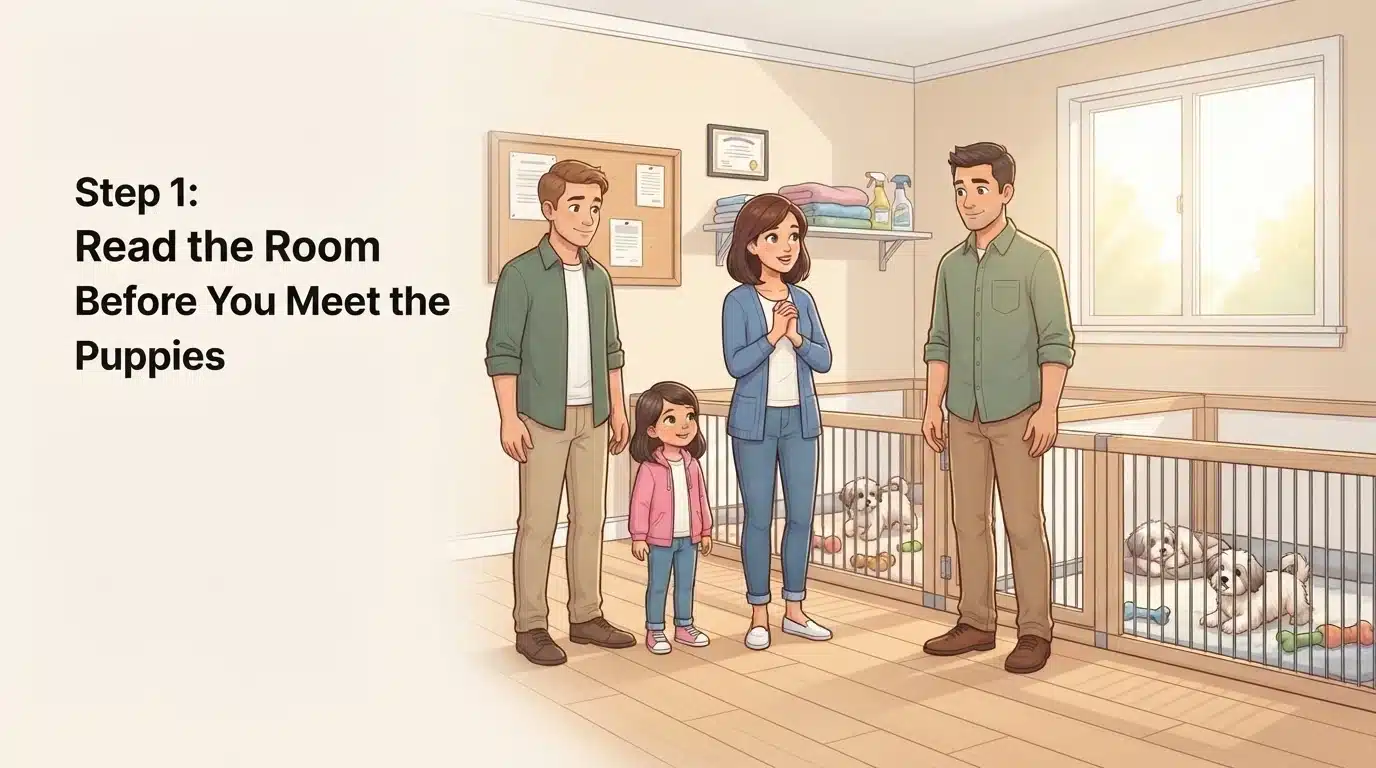
What Clean, Safe Puppy Housing Actually Looks Like
Expect warm, dry, odor-controlled space with solid flooring, fresh water, and bedding that gets washed. A faint doggy smell is normal. A sharp ammonia smell means waste is not being cleaned often, and poor sanitation is how parvo and other diseases spread. Puppies should have room to play, soft surfaces for growing joints, and no wire-bottom cages. Ask where the litter sleeps at night.
How Socialization Should Look in a Home Setting
Well-socialized puppies are curious, wobbly, and eager to check you out. They should not cower in a corner or freeze when picked up. Watch how the mother reacts to strangers too, because her temperament matters. In a home-based program, puppies grow up around normal household noise, kids, and handling. Sage Puppies raises litters inside the family’s South Jordan home for exactly this reason, so ask any breeder you visit where their puppies spend the day.
Questions About the Home You Should Ask Out Loud
Bring these and ask them plainly:
- Where do the puppies sleep, eat, and play?
- How often is the whelping area cleaned?
- How many litters do you raise at once?
- Who handles the puppies, and how often each day?
- Can I meet the mother dog and see the father’s records?
- What household sounds and experiences have they already met?
A confident breeder answers these happily and keeps talking. Vague or defensive answers are your cue to keep looking.
Step 2: Look at the Mother Dog and the Litter Together
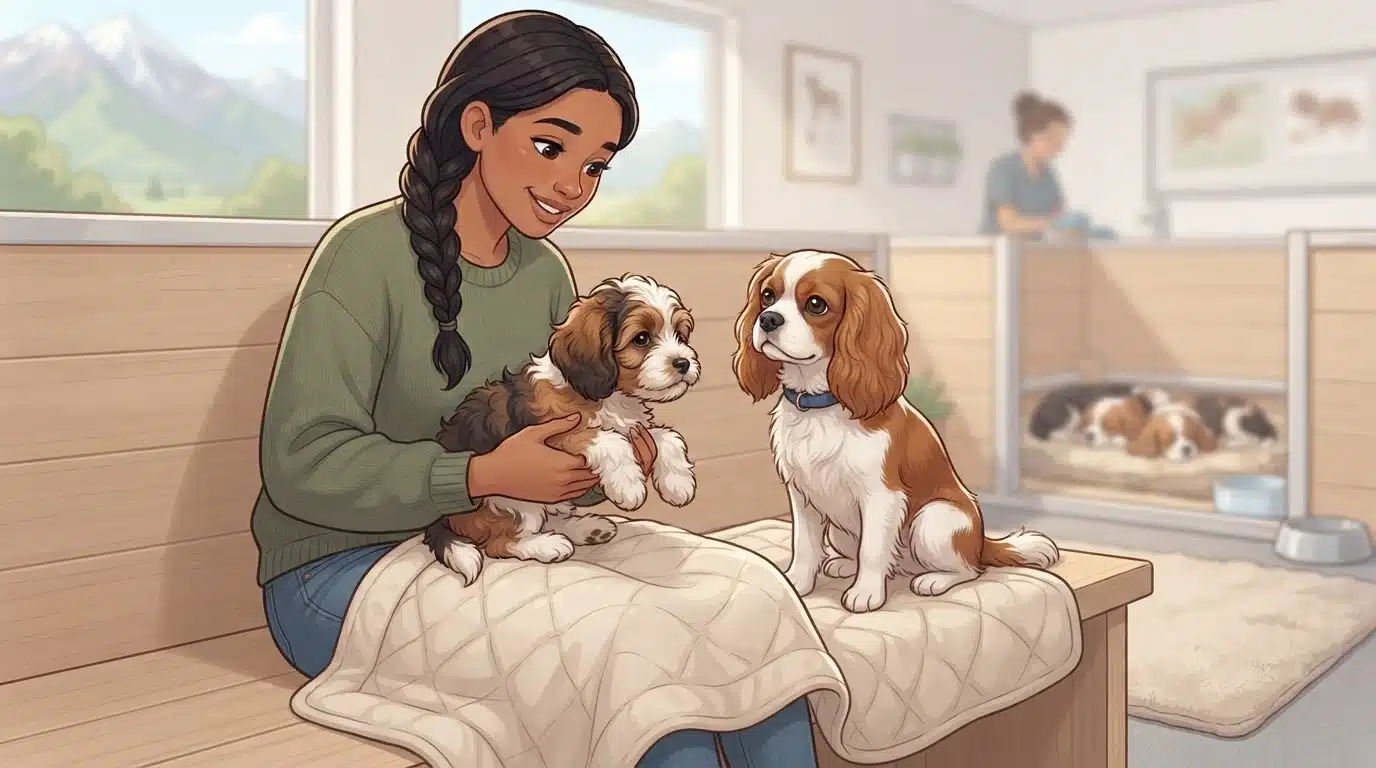
Why Seeing the Dam Matters
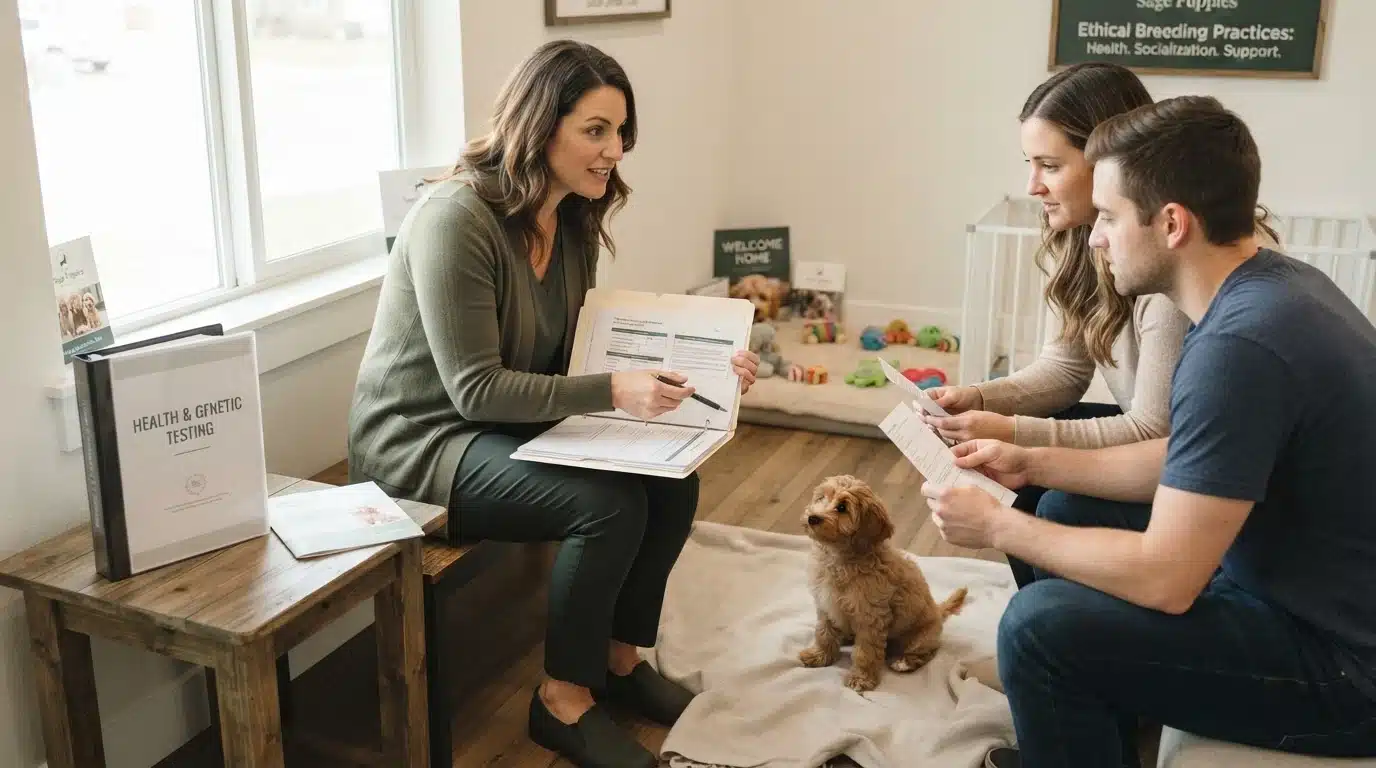
The mother dog, or dam, tells you more than any website can. Her body condition, coat, and calmness around strangers show how she is bred and cared for. Ask to meet her even if the puppies are being kept in another room. A breeder who resists that request deserves a closer look. A well-kept dam with a steady temperament is the strongest single predictor of how her puppies will turn out, and it is worth meeting the parents before any deposit changes hands.
Comparing Puppies Within the Litter
Watch the litter as a group before you pick a favorite. Healthy puppies at this age are curious, round-bellied, and quick to rejoin play after a startle. Note the range: some pups will be bold, others slower to warm up, and both can be wonderful fits depending on your home. Check eyes, ears, and rear ends for cleanliness, and watch for limping, coughing, or a puppy that stays huddled alone. Ask which puppy the breeder would keep and why; the answer reveals a lot.
Handling Tips That Keep the Visit Calm
Ask permission before touching anything. Let the dam sniff your hands first, then handle puppies low to the ground, over a soft surface, and for short stretches. Keep your own children seated and gentle, and skip the visit if anyone feels sick.
Step 3: Review the Health Records With the Breeder
Papers matter as much as the puppies themselves. A good breeder hands them over without hesitation, so ask early in the visit and read everything in the room.
The Records You Should Be Able to See
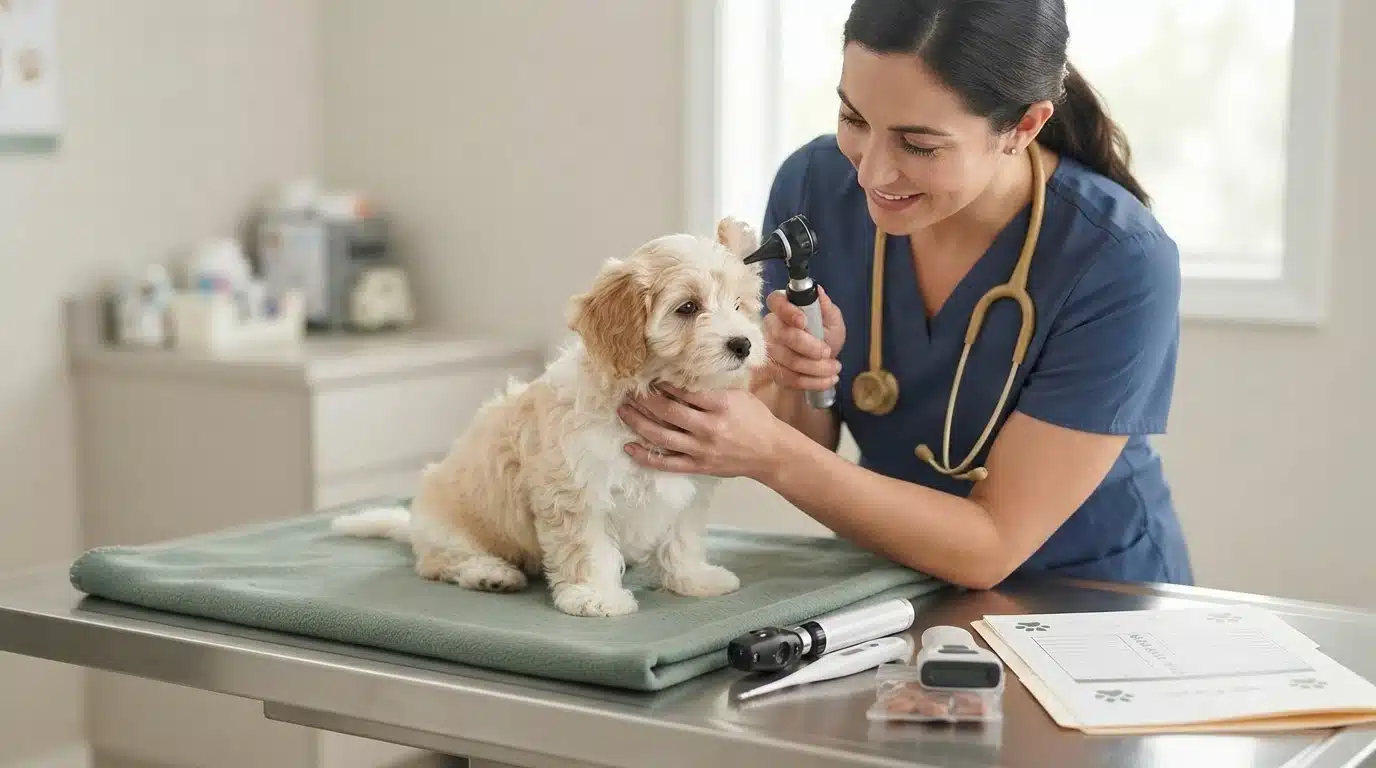
Ask to see four things: the puppy’s health certificate from a licensed veterinarian, dated within about ten days of your visit; the vaccination record showing what was given and when; the deworming schedule; and the parents’ health test results. A certificate alone is not enough. Responsible programs also show full screening results for the parents, and breed clubs like the Havanese Club of America require OFA hips, patellas and annual eye exams for CHIC certification.

Matching Records to the Puppy in Front of You
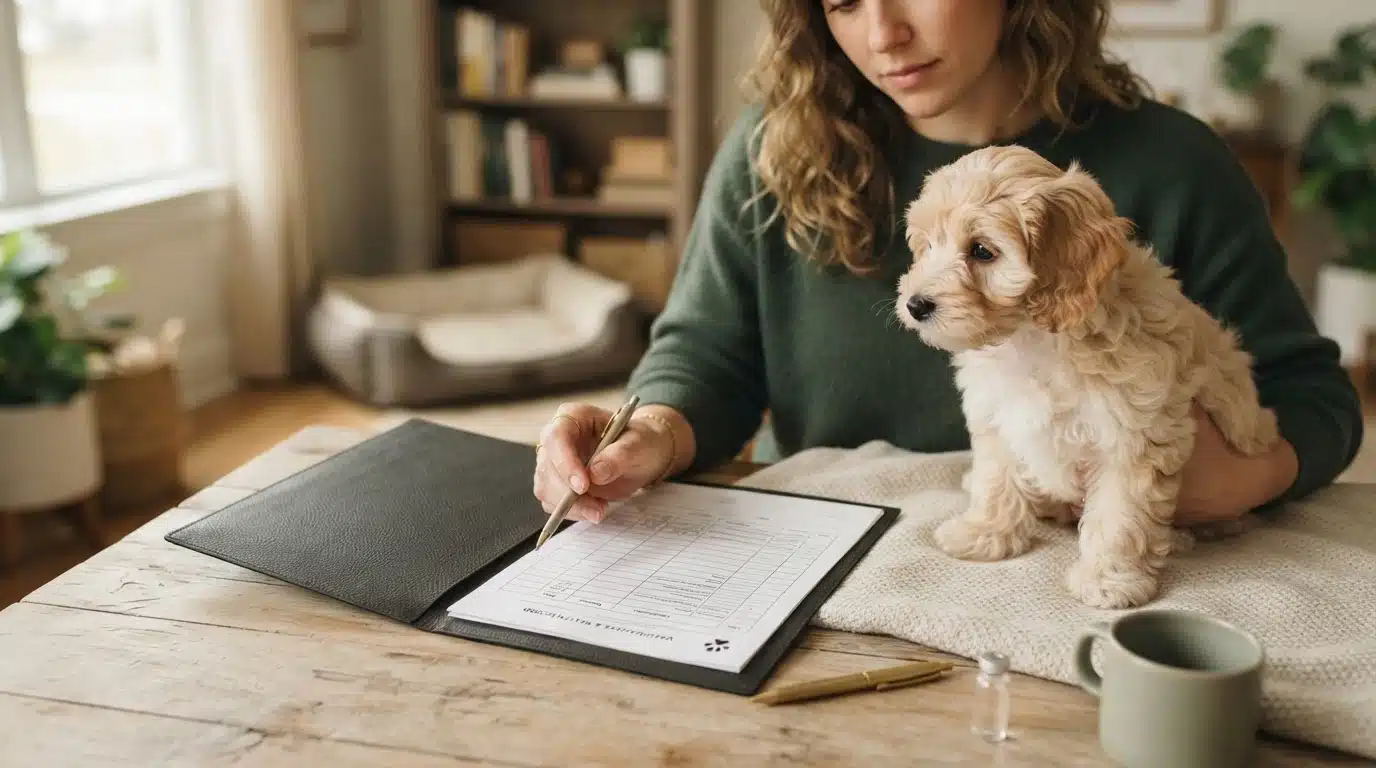
Names and dates should line up. Check that the puppy’s age, sex and description on the certificate match the puppy in your lap, and that the vet’s clinic is a real Utah practice you can call. Vaccines given too early don’t protect, so a record showing shots at six, eight and ten weeks is more believable than everything done in one visit. If anything looks photocopied past the point of reading, ask for a clear copy or the original.
Questions That Reveal the Truth About Testing
Certified results live in a public database, so verification is simple. The Orthopedic Foundation for Animals keeps screening records that anyone can search, and the prospective owner guidance from OFA recommends asking for proof of screening, not just a promise of it. Then ask:
- Which tests did the dam and sire have, and when?
- Can I see the actual results, not just “both parents are tested”?
- Were any results abnormal, and how did you decide to breed anyway?
Evasive answers on testing are a reason to walk away.
Step 4: Watch How the Puppies Behave With People
Temperament shows itself in motion, not in answers. Once you have met the dam and reviewed records, stop talking for a few minutes and just watch the litter.
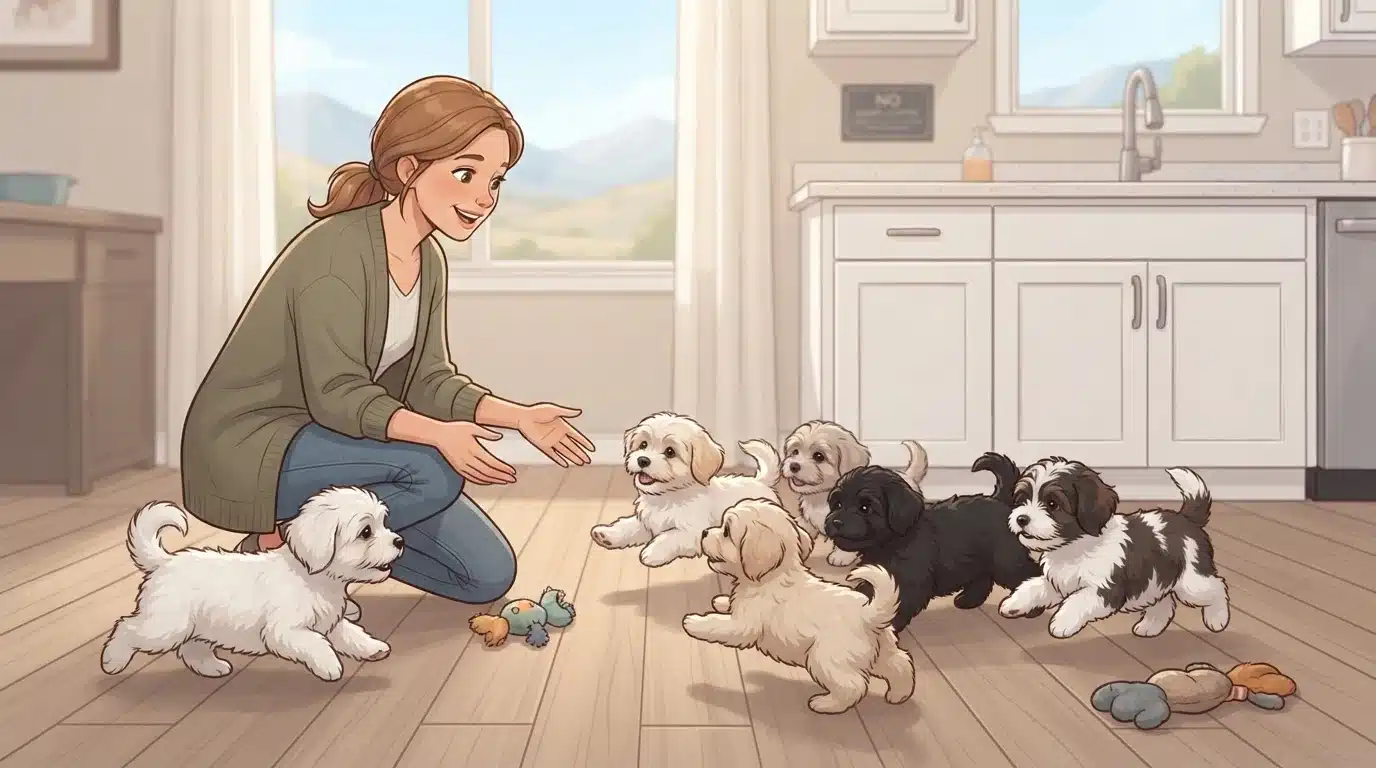
Interactions Worth Watching
Crouch down and see who comes to you. A well-socialized puppy approaches with a loose body, a wagging tail and curiosity rather than freezing or scrambling away. Notice how each pup handles being picked up, held on its back for a moment and set back down. Brief struggle followed by settling is normal. Constant panic is not.
Asking About the First Weeks Home
Ask the breeder what the puppies have experienced so far. Good answers include household noises, different floor surfaces, gentle handling by children or guests, and short car rides. Ask when handling started, because early touch builds confidence. For context on what early socialization should look like, the American Veterinary Society of Animal Behavior publishes socialization guidance for puppies under four months old.
Signs the Visit Went Well
You should leave able to describe each puppy in a sentence or two: the bold one, the cuddly one, the watcher. Puppies that recover quickly from startles and seek people out tend to settle into family life faster. Trust what you saw over what you were told.
Step 5: Get the Business Terms in Writing
Before you pay anything, ask to see the contract itself. A serious breeder will hand it over without hesitation, and the terms should be clear enough that you could explain them to your spouse on the drive home.
What the Contract Should Cover
What should be in a puppy purchase contract from a Utah breeder? At minimum:
- Full purchase price and what it includes
- Deposit amount, refundability, and transfer rules
- A health guarantee with a defined window for a vet exam
- Spay or neuter expectations, if any
- Return terms if you cannot keep the dog, ever
- Pickup or delivery details and who pays
Read every line before you sign. A clear pricing and reservation process should spell these terms out before money changes hands. If a breeder resists putting anything in writing, treat that as your answer.
Documentation You Should Receive Before Leaving
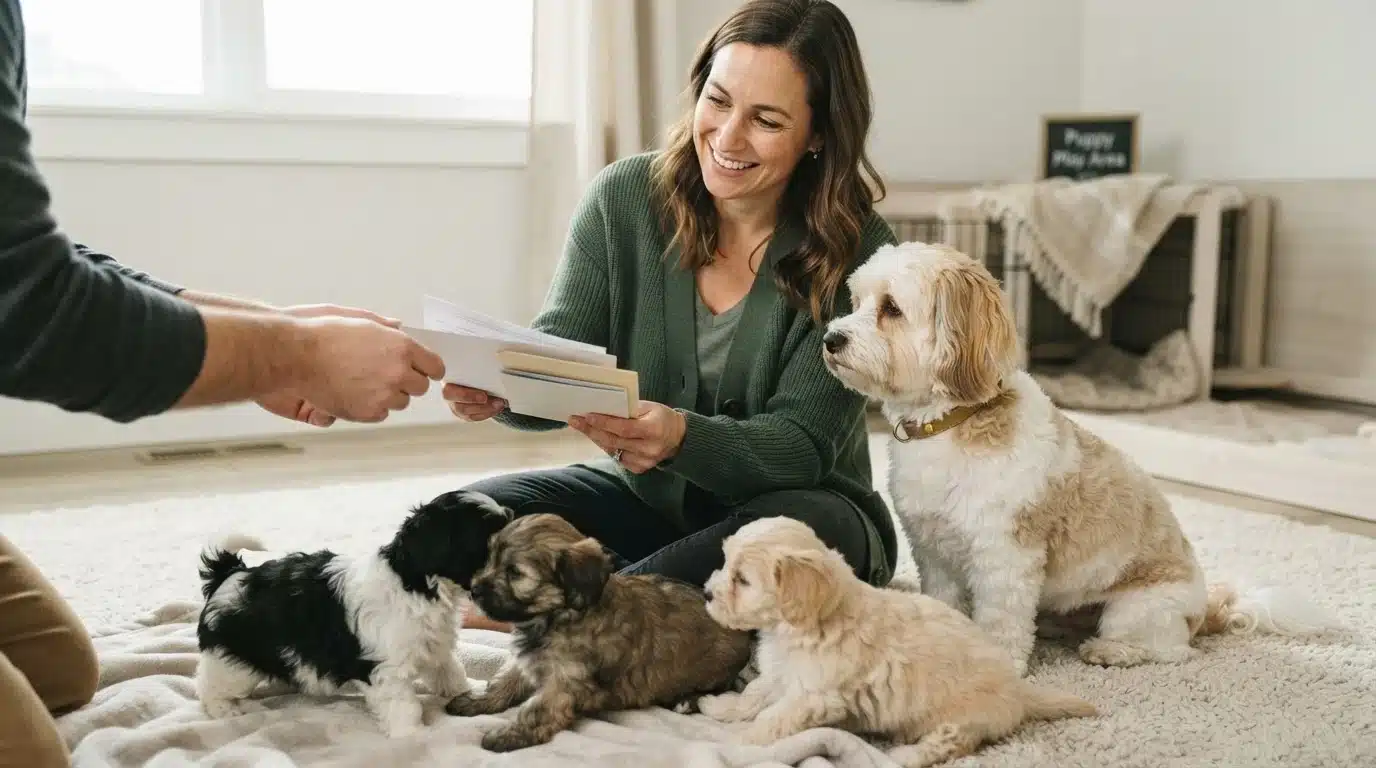
Go home with paper in hand, not promises. You should leave with the signed contract, a puppy health certificate from a licensed vet, vaccination and deworming records with dates, and microchip information for registration transfer. Ask for the parents’ health test results too. Check that names, dates, and the puppy’s description match what you were told. Missing paperwork is a reason to pause, not to rush.
Keeping Pressure Off the Decision
A good breeder wants your family to be sure, and it shows. Expect questions from them, patience with your questions, and no pressure to decide on the spot. Hints like “someone else is coming at five” are tactics, not schedules. If you feel rushed, visit another breeder and compare. The right puppy is worth a second trip, and honest breeders in Utah know that.
Step 6: Settle the Utah Logistics Before You Go
Pickup or Delivery, and What Changes
Confirm before you drive how the puppy gets home. If you pick up in person, you handle travel gear, a seatbelt harness or crate, and water for the ride. If the breeder delivers or uses a flight nanny, ask who holds the leash, what papers travel with the puppy, and when the handoff happens. Sage Puppies publishes its handoff details on its delivery and pickup page, which is a good model for what to request from any program.
Timing the Trip Home
Plan a short first day, especially if you drive in from outside Utah. Puppies tire quickly after a visit, so a four-hour trip is plenty for the first stretch. Stop for bathroom breaks every two hours, skip solid food until you are home, and let the puppy sleep in the car. Guides like PetMD’s puppy travel advice recommend never leaving a puppy loose in a vehicle.
Who Stays Your Point of Contact
Get a name, phone number, and email before you leave. Ask how the breeder handles questions after pickup, what hours they answer, and who covers issues on the weekend. A program that answers clearly before the sale usually keeps answering after it.
Common Mistakes to Avoid During a Utah Breeder Visit
Going Only to Meet the Cute Puppy
Falling for one puppy in a photo is easy. But the visit is really about the environment the puppy grew up in. Watch how the dogs live: clean space, room to play, calm handling. Most of all, meet the mother dog. Her temperament and condition tell you more about your future puppy than any listing of puppies for sale in Utah ever will.
Committing Under Pressure
A good breeder gives you time to think. If someone pushes you to pay a deposit before you have read the contract, seen health records, or asked your questions, treat that as a warning sign. It is fine to say you need a day, or to walk away. Reputable programs, including small in-home breeders like Sage Puppies, expect buyers to review terms carefully. Your answer to “Can I pay a deposit at the end of a breeder visit?” is yes, if the deposit and contract terms are clear, in writing, and you have had time to read both.

A visit tells you more than any website can, so come see for yourself. Apply through Sage Puppies to schedule time with Cassie in South Jordan, meet the dam and her litter, and ask every question on your list in person.
Frequently Asked Questions
Q1: What should I check when visiting a Utah puppy breeder on-site?
Check the mother dog’s condition and temperament, cleanliness of the housing, the puppy health certificate, vaccination records, and the written purchase contract.
Q2: Can I meet the mother dog during a visit?
Yes. A confident breeder introduces the dam willingly. If she is hidden or the request is refused, keep looking.
Q3: Should I pay a deposit the same day?
Wait until you have read the contract, verified health testing, and had time to decide without pressure.
Q4: How do I verify a breeder’s license in Utah?
Search the Utah Division of Professional Licensing website for a current responsible breeder license before visiting.
Q5: What paperwork should I leave with?
A signed contract, health certificate, vaccination and deworming records, and microchip information for registration transfer.
Conclusion
An on-site visit rewards families who arrive with a script: confirm the breeder and license first, read the housing, meet the mother dog, check the health certificate and vaccination records against the puppy in front of you, watch temperament in motion, and read the purchase contract before any deposit. In Utah, verify the responsible breeder license and settle pickup or delivery details before you leave. Trust what you saw over what you were told. If housing, paperwork, or the dam raise doubts, walk away and keep looking. The checklist above works for any Havanese, Havapoo or Cavapoo litter you visit.