Quick Summary: The strongest health evidence combines three records: the puppy’s veterinary exam, both parents’ clinical screenings, and each parent’s DNA results. For Havanese, Havapoo, and Cavapoo puppies, buyers should verify parent names, test dates, and results through OFA before paying, with extra heart screening relevant to Cavalier ancestry. Sage Puppies highlights these breed-specific checks in South Jordan, Utah, while stressing that testing reduces risk but cannot guarantee a puppy’s future health.
You find a listing for a tiny Havapoo nearby. The phrase health tested appears three times, yet the paperwork behind it names a hip radiograph, a patella evaluation and a DNA panel for two dogs you will never meet. That gap between the label and the records is the real challenge of health testing small breed puppies. What do those results actually tell you about the puppy in front of you? This guide breaks it down. You will learn how Havanese, Havapoo and Cavapoo ancestry changes which tests matter most, how parent screening differs from your puppy’s own exam records, and how to verify results in public databases before you pay a deposit. At Sage Puppies, we breed only Havanese, Havapoos and Cavapoos in South Jordan, Utah, and we walk buyer families through these records on every litter.
What Health Tests Should Small Breed Puppies Have?
Health testing small breed puppies comes down to three things: a vet exam of the puppy itself, clinical screening of the parents (eyes, knees, hips), and DNA results showing whether parents carry disease variants. A puppy that passes one layer is not fully covered; you want evidence at all three.
| Record Layer | What It Shows | Who It Belongs To |
|---|---|---|
| Puppy exam and vaccine records | Current health, weight, deworming, shots | The puppy |
| Parent clinical screening | OFA patellas, hips, CAER eye exams | The parents |
| DNA variant results | Carrier or clear status for inherited diseases | The parents |
The Three Record Layers You Should Ask For
Ask each breeder for three separate documents. First, the puppy’s exam record from a licensed vet, plus vaccination and deworming dates. Second, the parents’ screening results, searchable in an OFA records search by registered name. Third, DNA reports. The Havanese Club of America requires an annual CAER eye exam, a hip x-ray, and patella certification for a CHIC number. Breeders who explain these layers clearly, as this overview of Havanese health risks does, make the evidence easy to check.
The Test Categories That Matter Most for Small Breeds
Patella luxation grading tops the list, since loose kneecaps are common in toy breeds. Eyes come next through yearly CAER exams. Hips matter even in small dogs, and cardiac checks catch heart murmurs early. Some breeders add BAER hearing tests, which can be done from six weeks old. DNA panels then flag conditions each ancestry carries, so Havanese, Havapoo, and Cavapoo lines need slightly different panels.
What Testing Cannot Tell You
No test predicts temperament, and a clear DNA panel does not rule out every condition, because some diseases have no known variant marker. Screening also reflects one moment in time; a parent’s status can change as it ages. Treat test results as strong evidence, not a promise, and weigh them alongside how puppies are raised.
DNA Panels, Clinical Screening and Veterinary Exams Compared
A DNA panel reads a puppy’s or parent’s genes for inherited variants. A clinical screening examines the dog’s body, such as hips, eyes or heart, for actual signs of disease. Both matter, and neither replaces the other.
| Test type | What it is | What it tells you |
|---|---|---|
| DNA panel | A lab test on a cheek swab or blood sample that checks genes for known disease variants | Whether a dog carries, has or is clear of specific inherited conditions |
| Clinical screening | A hands-on specialist exam, often scored by OFA, of hips, patellas, eyes or heart | How the dog’s body actually looks and functions today |
| Veterinary exam | A routine puppy checkup by the buyer’s or breeder’s vet | Current health, weight, heart and lung sounds, plus vaccination and deworming records |
Health testing for small breed puppies blends all three layers, and each answers a different question.
How DNA Variant Testing Works for Havanese and Poodle Lines
A lab swabs the dog’s cheek and reads its DNA for specific variants, such as the HC gene that causes Havanese cataracts or the PRA variants found in Poodle lines. Results come back as clear, carrier or affected. A carrier is healthy but can pass the variant on. Good breeding pairs combine carriers only with clear partners, so no puppy can be affected. Our genetic testing for dogs guide explains how breeders use these results as prerequisite testing before breeding.
Hip and Patella Screening for Small Dogs
Small breeds rarely get hip dysplasia as often as large dogs, but patella luxation, a slipping kneecap, is common in Havanese, Havapoos and Cavapoos. Screening is a hands-on exam: a veterinarian grades how easily the kneecap shifts, from normal to severely luxating. You may see patella luxation grading on an OFA record, alongside either standard OFA hip scores or PennHIP measurements, which measure joint looseness differently. For these breeds, parent patella screening matters more than hip scores. Ask to see the parents’ OFA records search results yourself.
Eye, Cardiac and Hearing Evaluations
Eyes, hearts and ears need specialist eyes and tools. A CAER eye exam is performed by a board-certified ophthalmologist who looks for cataracts and other inherited disease, with results filed to OFA. Cardiac exams by a cardiologist check for murmurs and structural problems. Baer hearing testing matters most in lines with a lot of white coat color, where deafness risk is higher.
What the Puppy’s Own Veterinary Exam Covers
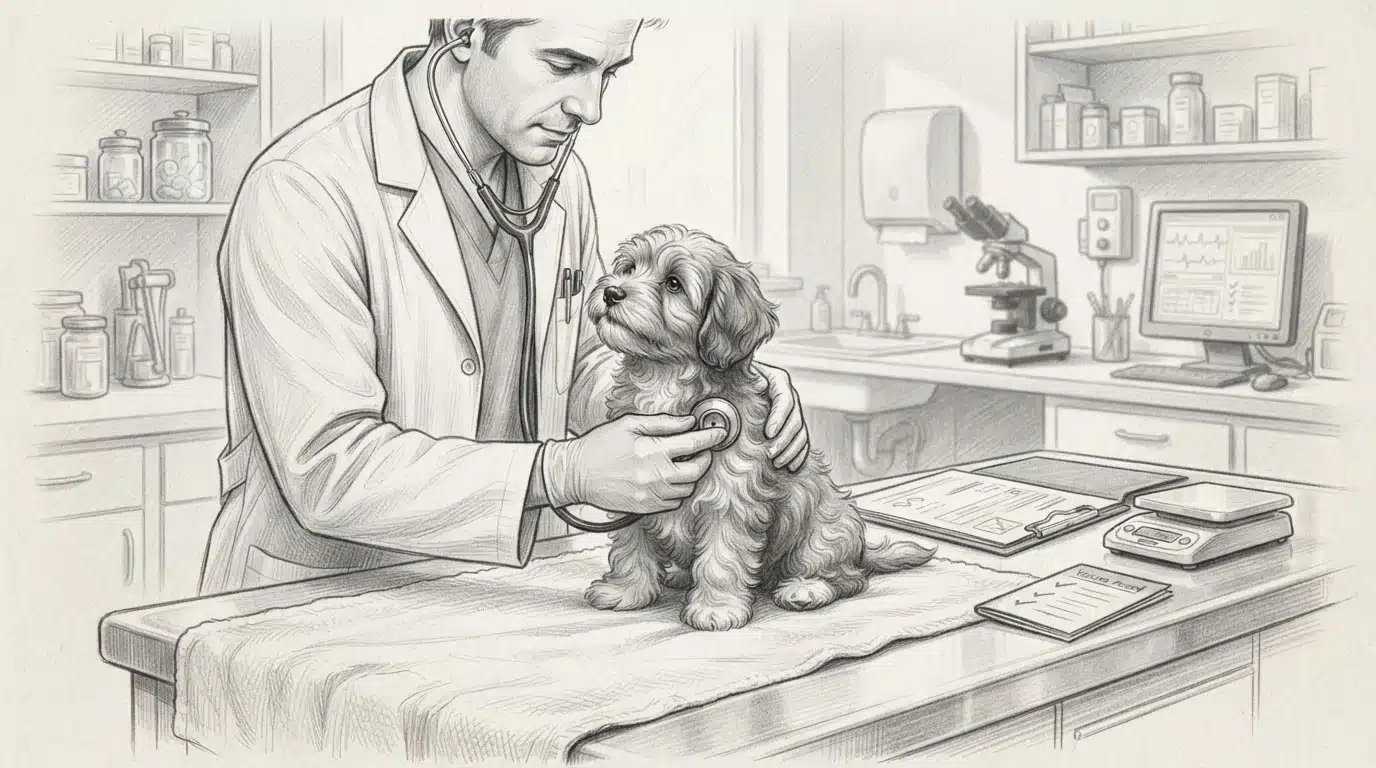
This is different from the parent screening above. The puppy’s own visit records weight, temperature, heart and lung sounds, and checks for hernias or other issues. It also documents the puppy vaccination and deworming records you should take home. Ask for the vet’s name, exam date and any findings in writing.
Breed Priorities for Havanese, Havapoo and Cavapoo Puppies
Health testing small breed puppies looks different for each breed, because each breed club sets its own list. A Havanese needs a short, well-defined set of screenings. A mixed puppy needs the tests for both parent breeds. Here is what matters most for each one.
What the Breed Club Currently Requires
The Havanese Club of America keeps its CHIC list short on purpose. A dog earns a CHIC number with these screenings:
- OFA hip evaluation
- OFA patella luxation grading
- Annual CAER eye exam
That is the whole required list. In May 2022 the club removed the OFA BAER hearing test from CHIC because deafness is rare in the breed, so a breeder quoting the old four-test list is working from outdated guidance. Responsible breeders add extra screens such as cardiac or elbow checks, but the three above are the club’s current baseline.
Havanese and Poodle Ancestry Combined
A Havapoo has no parent club, so the tests depend on what each side contributes. Ask for the Havanese parent’s OFA hip, patella and CAER eye results, then ask the same for the poodle parent. Poodles carry their own risks, including hip dysplasia and several eye conditions, so their screening matters just as much.
Because Havapoo and Cavapoo health issues trace back through both parents, a mixed litter is only as tested as its least-tested parent. If a breeder shows records for one side only, you are missing half the picture.

Cavalier and Poodle Ancestry Combined
Cavalier ancestry raises the stakes. The breed carries higher rates of mitral valve disease and syringomyelia, so a heart exam by a cardiologist and an MRI or eye screening on the Cavalier parent are worth requesting beyond basic OFA records. Add patella and hip checks on the poodle side, plus a CAER exam, and you have a solid screening picture. Cavaliers also test for dry eye and curly coat syndrome through DNA, so ask whether the parent carries those variants.
We breed Havanese, Havapoos and Cavapoos at Sage Puppies, and we match each parent’s screening list to the breed-specific risks above rather than a generic checklist.
How to Verify Health Testing Records Before You Pay a Deposit
Anyone can claim a breeder health-tests their dogs. Verifying it takes about 20 minutes and three steps: get the registered names of both parents, run an OFA records search yourself, and check that the results actually match what the breeder told you.
Run the Parent Names Through Public Records Yourself
Ask the breeder for each parent’s full registered name before you talk money. Then use the OFA records search to look up that name, the breed, and the disease type. OFA is a public database, so you can see hip and patella results, CAER eye exam dates, and DNA test results that owners chose to publish. Cross-check what you find against the breeder’s claims. If a breeder says the dam is OFA certified but no record appears, ask for the certificate number and search again.
Check the Details That Invalidate a Result
A result can exist and still not count. Watch for these:
- Age at testing: hips and patellas should be evaluated at 24 months or older for a permanent rating
- Expiry: CAER eye exams are annual, so check the exam date, not just the pass
- Wrong dog: the registered name on the result must match the parent the breeder named
- Unverified DNA results: labs submit results to OFA, but screenshots in a text message prove nothing

What to Do If Records Are Thin or Withheld
Ask first. Some breeders test through a vet or a lab without publishing to OFA, and they can share lab reports directly. That is workable, though it means you cannot confirm anything independently. What is not workable is vagueness: “the parents are healthy” or “we test what matters” with no paperwork.
A breeder confident in their testing will hand over records the same day. Anyone who resists a simple verification request, or pressures you to deposit before records arrive, is telling you something. Walk away and keep your deposit money.
Understanding the Cost Side of Health Testing
Health testing costs the breeder money long before a puppy is ever listed, and those costs show up in the price of a well-bred litter. Knowing what goes into a testing program helps you judge whether a breeder’s price reflects real work.

What Drives the Cost of a Testing Program
Registry fees are only the start. OFA’s fee schedule lists modest charges, such as $15 for a CAER eye exam registration, but the veterinary work around each test costs far more. Hip and patella X-rays run $200 to $400 once sedation and clinic fees are added, and DNA panels are priced per variant tested. Breeders also repeat eye exams and retest at 24 months for permanent ratings, so a breeding dog’s records often cost $1,000 or more to build.
Who Should Be Paying, and What to Ask
The breeder pays. Testing is a cost of responsible breeding, not an add-on for buyers. What you pay for is a puppy whose parents were screened before breeding, which lowers your risk of inherited disease. Ask which tests each parent has, at what age, and whether results are public on OFA. A CHIC number confirms the required tests were done, though not that results passed. Any breeder charging premium prices should answer those questions without hesitation.
What Happens After Testing: Your First Months With a Small Breed Puppy
Health testing is not a finish line. It is a starting point, and the first few months at home are where a good foundation shows itself. Here is what to do once your puppy arrives.
Scheduling the First Independent Veterinary Visit
Book an appointment with your own vet within a few days of bringing your puppy home. This first visit confirms what the breeder’s records described and gives you a baseline in your vet’s own hands. The exam typically includes weight, heart and lungs, temperature, eyes, ears, teeth and a feel of the knees, which matters for small breeds prone to loose patellas.
Bring the puppy vaccination and deworming records with you. Your vet will set the remaining vaccine dates, usually three to four weeks apart, and check for parasites. If you want a second opinion before a deposit clears, reputable programs such as Sage Puppies welcome calls from your vet. Keeping the same vet through puppyhood also helps them spot small changes early.
Watching for the Things That Were Screened
Parent testing lowers risk, but it cannot remove it. In the first months, watch the hips, knees and eyes the same things the breeders screened for. A skip, hop or bunny-hop gait on stairs can signal patella trouble. Squinting, cloudiness or a watery eye deserves a prompt call.
DNA results are probabilities, not promises. A puppy from clear parents can still show a condition, so early observation matters.
Most screening issues show up gradually, and many small quirks turn out to be normal puppy clumsiness. Track what you see with short notes or phone video, and share anything that repeats at your follow-up visits.

Ready to meet a puppy whose health records are already verified and easy to read? Sage Puppies matches families with health-tested Havanese, Havapoo and Cavapoo puppies, with parent results you can check yourself. Start the application today, or visit us in South Jordan, Utah.
Frequently Asked Questions
Q1: What health tests should small breed puppies have?
Ask for three layers: the puppy’s own vet exam with puppy vaccination and deworming records, parent health screening through OFA (hips, patella luxation grading, annual CAER eye exams), and DNA panel results showing each parent’s carrier status. All three together give the fullest picture.
Q2: Do puppies themselves need DNA testing?
Usually no. Parent results predict what a puppy can inherit, so testing the parents covers the whole litter. Some breeders test puppies for coat color or extras, but that adds little health information.
Q3: What does a CHIC certificate mean?
A CHIC number from OFA confirms a dog completed its breed club’s required tests, like the Havanese list of hips, patellas and CAER eyes. It shows the work was done, not that every result passed.
Q4: Why does parent age matter for test results?
Hips and patellas get permanent ratings only at 24 months or older, because joints keep changing as dogs grow. CAER eye exams expire yearly, so always check the exam date, not just the pass.
Q5: Are PennHIP and OFA hip scores the same thing?
No. OFA grades joint structure on a scale, while PennHIP measures joint looseness differently. Either is acceptable for small breeds; just confirm the evaluation was done at a proper age.
Q6: Can a breeder share DNA results as screenshots instead?
Ask whether results were submitted to OFA so you can verify them yourself. Lab-submitted results appear in a public records search; a text screenshot proves nothing about which dog was actually tested.
Conclusion
Health testing small breed puppies rests on three layers: the puppy’s own exam and records, parent health screening through OFA, and DNA panel results showing carrier status. None replaces the others. Havanese, Havapoo and Cavapoo lines each need a slightly different test list, and Cavalier ancestry adds heart screening to the request. Before you pay anything, run the parents’ registered names through a public OFA records search and check the dates, the ages and the dog behind each result. A clear claim costs nothing; verified records are what lower your risk. Ask questions early, keep your puppy vaccination and deworming records handy, and buy from a breeder who hands over paperwork without hesitation.