Quick Summary: Small breed puppies need four measured meals daily until 12 weeks, then three meals from 3 to 6 months and two meals for life, with portions based on the food bag’s chart and weekly weight checks. Book a vet visit within 72 hours of pickup, repeat vaccine visits every 3 to 4 weeks through at least 16 weeks, and add a spay or neuter exam between 6 and 12 months. A steady routine of toilet breaks, meals, short play sessions and naps supports housetraining, while Sage Puppies provides dated vaccine and deworming records for a smooth handoff to your vet.
What is a puppy care calendar? It is a dated plan for your puppy’s first year that lists when to feed, when to visit the vet and what to do between visits. It matters most in week one, when a Havanese or Havapoo puppy runs on a clock you have never kept before. Meals at 7 a.m., 11 a.m., 3 p.m. and 7 p.m. A vet appointment inside the first three days. A puppy waking every three hours all night, because a small bladder fills fast.
Most first-time owners know the big milestones but miss the dates in between. That gap causes missed vaccine windows, guesswork feeding and costly late-night worry. This guide fixes it with a printable puppy care calendar for all twelve months, built around small breed feeding logic and the puppy vet visit schedule most clinics follow.
It also reflects how we work at Sage Puppies in South Jordan, Utah. Cassie Milar raises Havanese, Havapoo and Cavapoo puppies only, and every puppy goes home with health records you hand straight to your veterinarian. Print the checklist, post it on the fridge and check off each date as it comes.
The Feeding Schedule: How Often to Feed a Small Breed Puppy
The short answer: meal counts by age
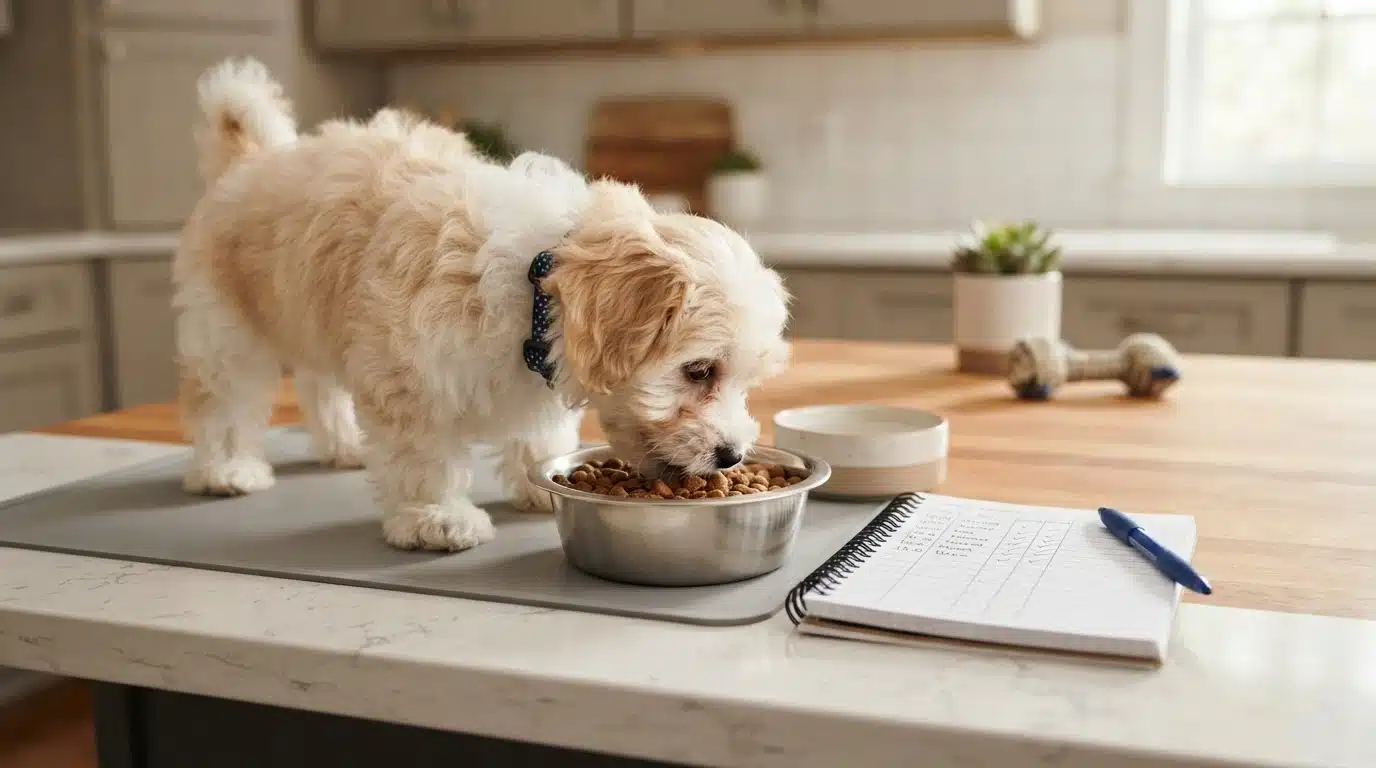
Feed a small breed puppy four measured meals a day until 12 weeks old, three meals from 3 to 6 months, then two meals a day for life. Toy and small breeds need the extra meals because tiny stomachs empty fast. Here is the age-banded breakdown:
| Puppy’s Age | Meals Per Day |
|---|---|
| 6 to 12 weeks | 4 |
| 3 to 6 months | 3 |
| 6 to 12 months | 2 |
| 12 months and up | 2 |
Measured meals beat free-feeding (leaving food out all day) because they build a predictable potty routine and let you spot a missed meal early. The AKC recommends roughly the same progression for most puppies.
Why small breeds eat more often than big dogs
A Havanese or Cavapoo puppy weighs a few pounds at eight weeks. Small stomachs hold little food, yet small breeds burn calories quickly and are prone to low blood sugar if meals stretch too far apart. Many small meals keep energy steady. Large-breed puppies can go longer between feedings because their stomachs hold more.
Timing meals around the workday
Spread meals roughly four hours apart. A common pattern is breakfast at 7 a.m., lunch at 11 a.m., an afternoon meal at 3 p.m., and dinner at 7 p.m. If you work away from home, a midday visit from a neighbor, a dog walker, or an automatic feeder covers the middle meal. Shift the whole schedule by an hour if needed, but keep the spacing even.
Meals, potty breaks and the 10 to 15 minute window
Take your puppy out right after each meal. Most puppies need to relieve themselves within 10 to 15 minutes of eating, so plan the walk before you lift the bowl. Pick the bowl up after about 15 minutes even if food remains; this keeps the schedule honest and helps with housetraining. We share the exact week-one routine we send puppy families home with in our first-week feeding schedule.
How Much to Feed Per Meal Without Overfeeding a Small Breed
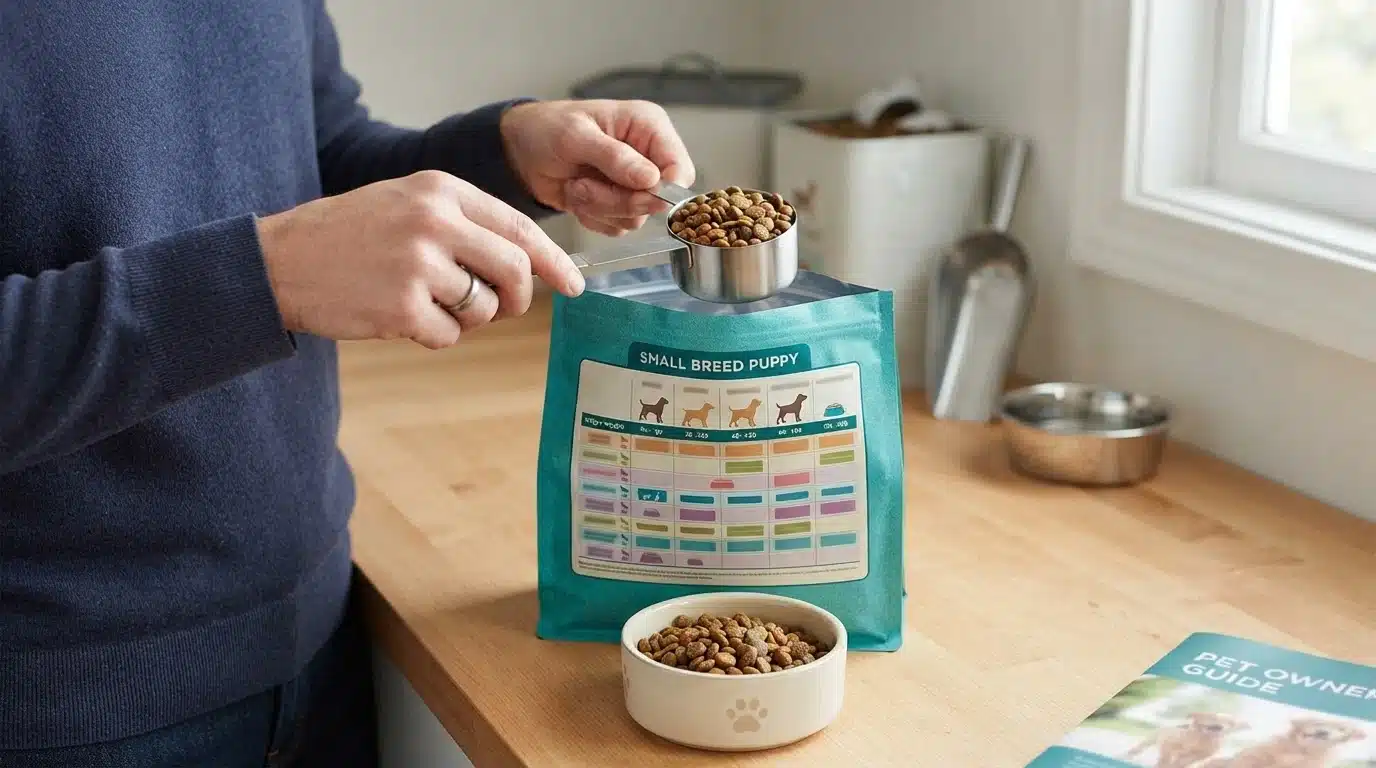
The per-meal amount comes from the daily total on your puppy food bag, divided by the number of meals your puppy eats that day. Work it like this:
- Find the feeding chart on the bag for your puppy’s current weight.
- Add a little for puppies, who burn more energy than adults.
- Divide that daily amount by your number of meals.
- Measure each portion with a real measuring cup or kitchen scale.
A 10-week-old Havanese eating a food that calls for about 1 cup per day gets four meals of a quarter cup each. That’s it. Guessing by eye is how small breeds creep overweight.
Portion size starts with the bag, not the internet
Generic online charts can’t know your food’s calorie density, so your small breed puppy portion size lives on the label of the specific bag you bought. Kibble ranges widely, from about 300 to over 500 calories per cup. Start with the bag’s puppy range for your pup’s weight, feed the low end, and adjust from what you see on the puppy, not the chart.
Dividing the daily total into meals
Split the daily amount evenly across the meals already set in your schedule: four meals until 12 weeks, three from 3 to 6 months, two after that. Treat treats as part of the budget. Training rewards should stay under about 10% of daily calories, so subtract them from meal portions when you use kibble as rewards.
Weighing, body condition and growth checks
Weigh your puppy weekly on a kitchen or baby scale and jot the number down. Steady gain means your portions are right. Run a puppy body condition scoring check: you should feel ribs under a thin fat layer and see a waist from above. Ribs sharp and visible means feed a bit more. No waist and padded ribs means cut back 10 to 15%.
Why free-feeding is risky for Havanese and Havapoo puppies
Free-feeding, leaving food down all day, works against small breeds for three reasons. It hides appetite loss, often the first sign a toy breed puppy is sick. It stalls housetraining, because you can’t predict when a grazed-full belly needs to go out. And it packs on pounds fast; at 6 pounds, one extra pound is serious. Measured meals keep you in charge of the information.
The Vet and Prevention Schedule: Visits, Vaccines and Deworming
How often a puppy sees the vet in the first year
Most small breed puppies see the vet three to four times before their first birthday: a first visit within days of coming home, vaccine visits every 3 to 4 weeks until 16 weeks, a rabies shot around that final visit, and a spay or neuter check near 6 to 12 months. Here is the typical timeline:
| Age | Visit Focus |
|---|---|
| 8 to 10 weeks | First exam, stool sample, DHPP dose |
| 12 weeks | DHPP dose 2, weight check |
| 16 weeks | Final DHPP dose, rabies vaccine |
| 6 to 12 months | Pre-spay or neuter exam |
Core vaccine visits and the 16 week final dose
The last puppy vaccine is given at 16 weeks or older, never earlier. Maternal antibodies from nursing fade at different rates in each puppy, so finishing the series on time matters more than finishing it fast. The DHPP core series (distemper, hepatitis, parainfluenza and parvovirus) starts at 6 to 8 weeks and repeats every 2 to 4 weeks, with the AVMA recommending a final dose at 16 weeks or older. Your vet may add leptospirosis or bordetella based on your plans.
Deworming, parasites and prevention timing
Deworming usually starts before you bring your puppy home and repeats at each vaccine visit, with a fecal test confirming the parasites cleared. Bring a fresh stool sample to every early appointment. After 16 weeks, switch to monthly prevention for heartworm, fleas and ticks, year-round in most of Utah and the country.
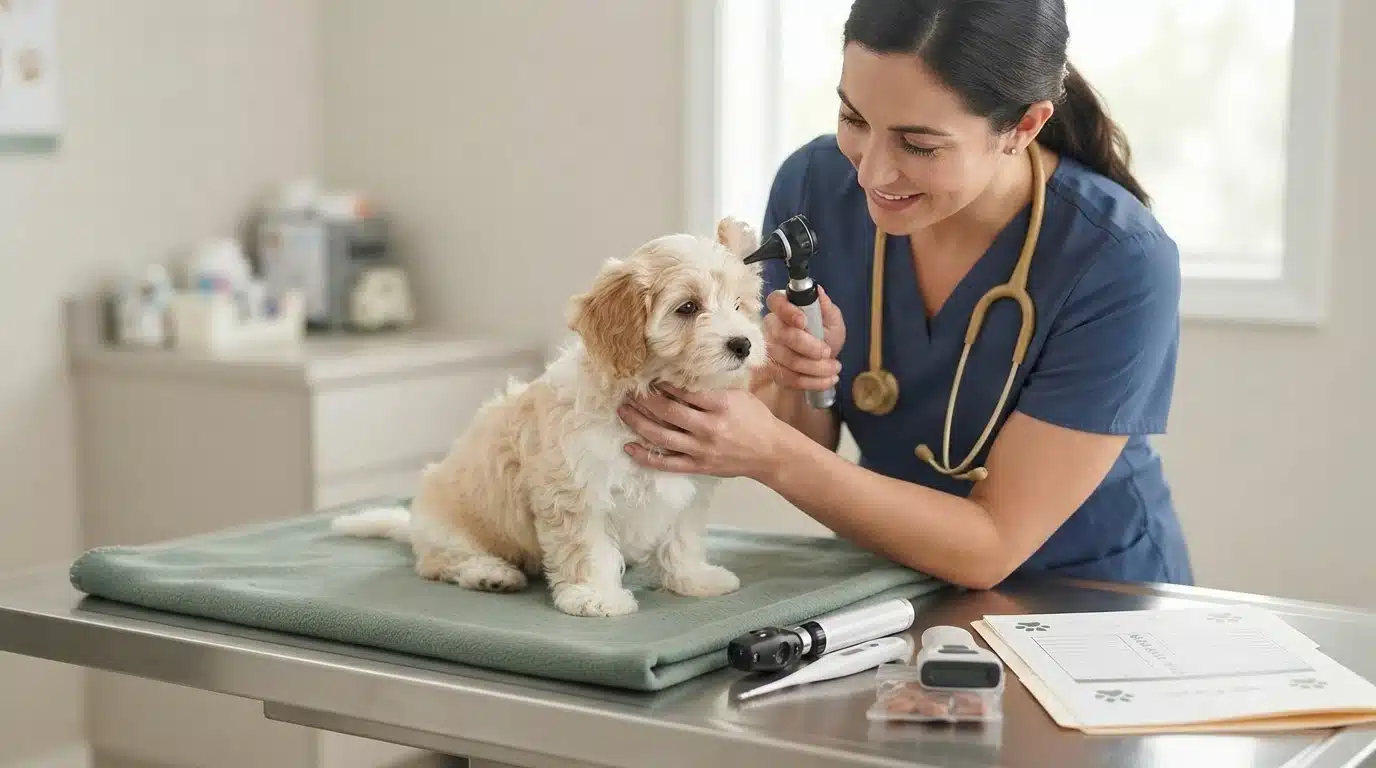
Your first 72 hours and the paperwork handoff
In the first three days, do four things:
- Book the first vet visit within 72 hours of pickup.
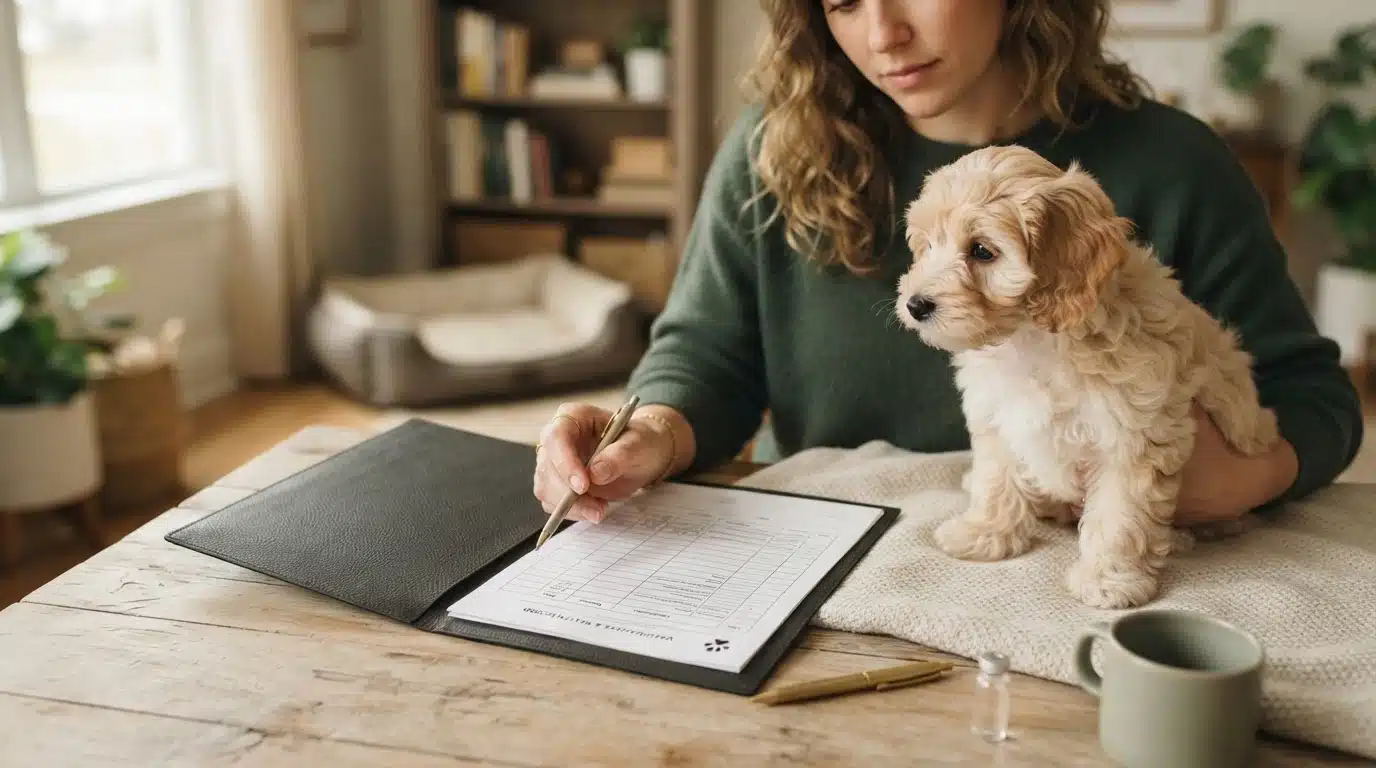
- Bring vaccination and deworming records from the breeder.
- Keep food, routine and handling calm and consistent.
- Watch stool, appetite and energy daily.
A transparent handoff matters here, which is why every Sage Puppies puppy leaves with dated vaccine and deworming records for your vet; our new puppy vet visit checklist walks through what to bring.
The Daily Rhythm: Sleep, Toilet Breaks and Play
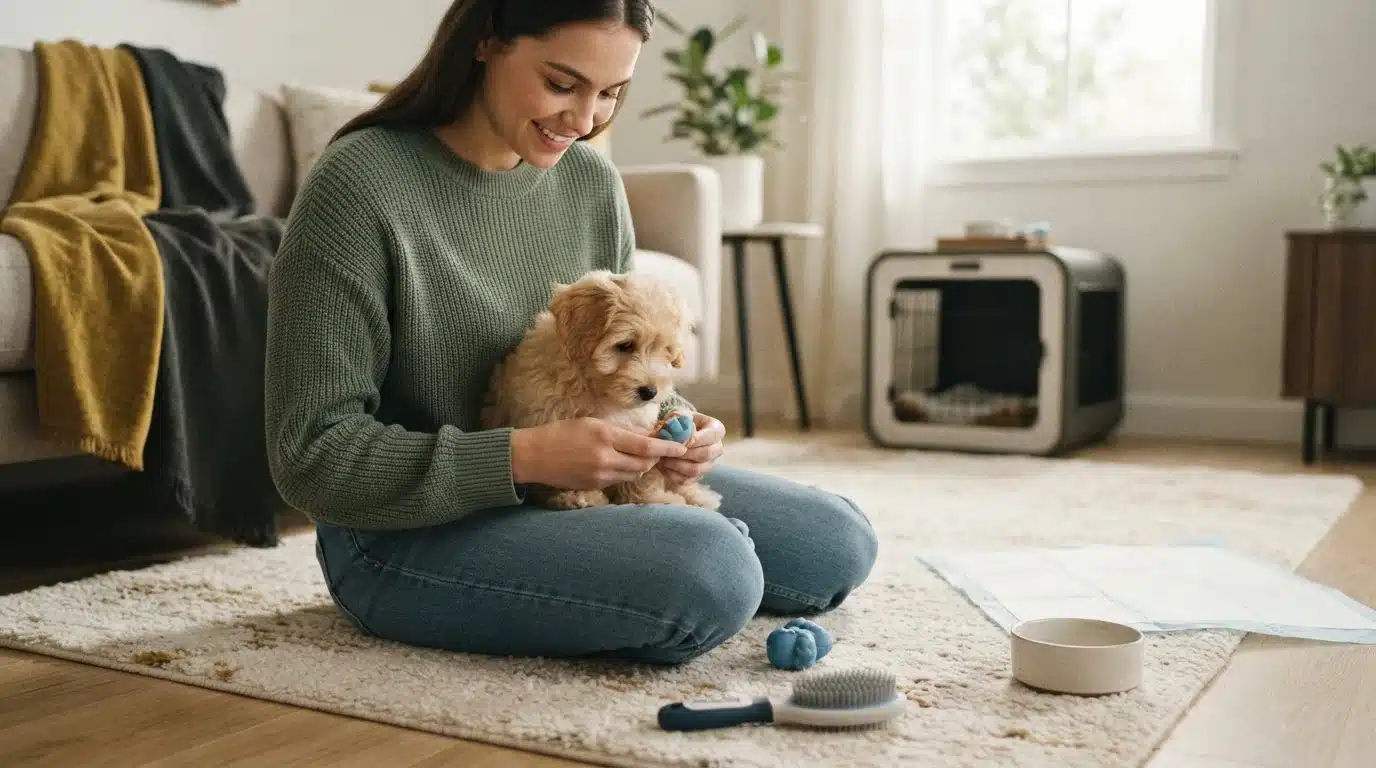
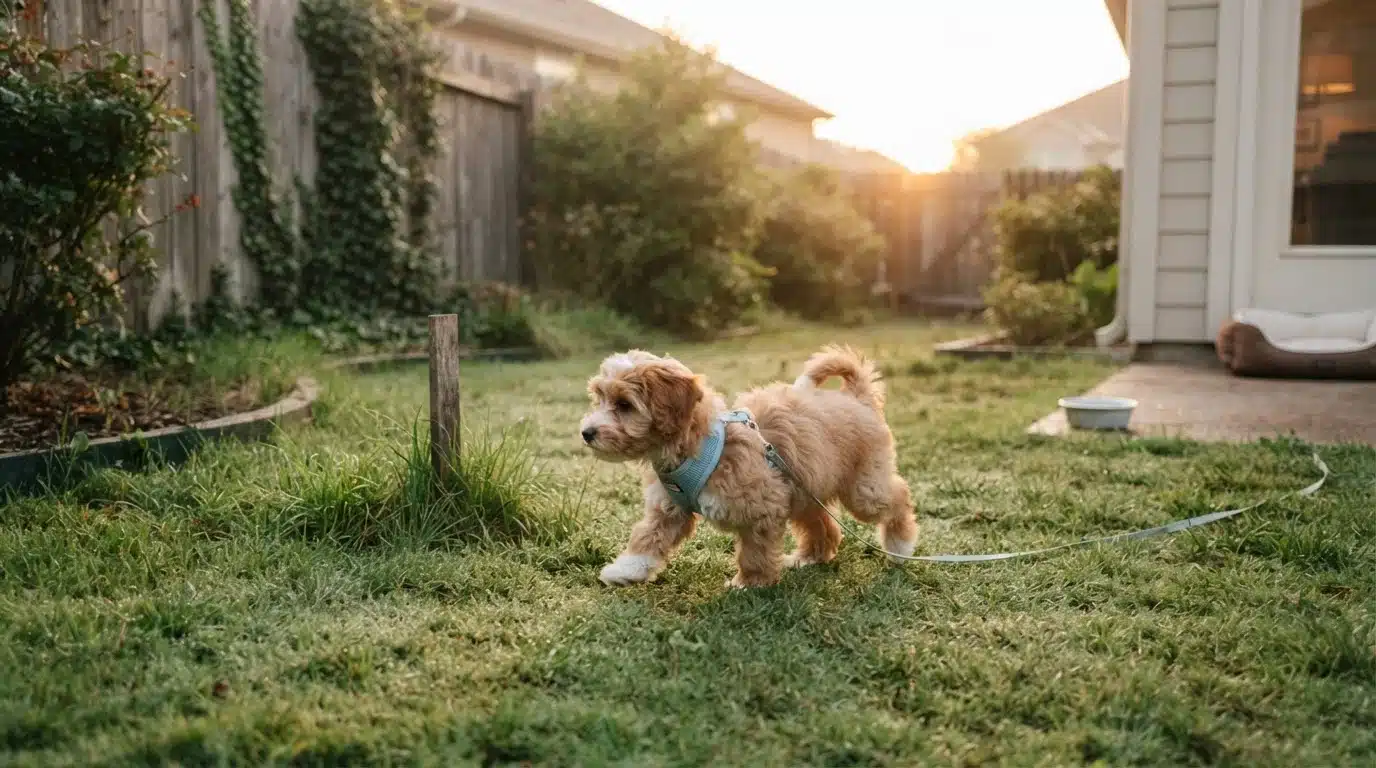
Small breed puppies thrive on a repeatable loop: wake, toilet, eat, brief play, nap. Their bodies run on short cycles, so a fixed routine prevents accidents and overtired meltdowns.
A sample day, hour by hour
Anchor the day to your feeding times. If meals land at 7 a.m., 11 a.m., 3 p.m. and 7 p.m., the loop looks like this:
| Time | What happens |
|---|---|
| 7:00 a.m. | Toilet break, then breakfast, toilet again in 10 to 15 minutes |
| 7:30 a.m. | Short play or training, then nap |
| 10:45 a.m. | Wake, toilet break before lunch |
| 11:00 a.m. to 2:30 p.m. | Eat, play, nap on repeat |
| 6:45 p.m. | Toilet break before dinner |
| 8:00 p.m. | Calm evening play, last toilet break around 10 p.m. |
Sleep cycles and why small breeds wake often
Puppies this age sleep 18 to 20 hours a day, often in bursts of an hour or two, according to veterinary sleep guidance. Tiny bladders and small stomachs mean they also wake at night, so plan one or two quiet toilet trips until about 16 weeks. Keep those trips boring: no lights, no play, straight out and back to the crate.
Play and training that suit a small breed
Short beats long. Aim for five to ten minutes of play per awake cycle, since a 10-week-old tire quickly and a rough session can hurt growing joints. The ASPCA-style humane guidance suggests two brief evening play blocks, which fits a small breed well. Use kibble from meals as rewards and practice name response, sit and crate entry daily. For a Havanese or Cavapoo, sniffing games and gentle tug beat long walks until vaccines are complete.
Small Breed Specifics: Teething, Grooming and Health Watch Points
Small breeds hit a few milestones on their own clock. Teething lands mid-year, coats need steady upkeep, and toy-sized puppies hide early illness well.
Teething, chewing and the calendar entry you will hit around month four
Around 3.5 to 4 months, baby teeth start falling out and adult teeth push through, with the process mostly done by 6 to 7 months. Expect heavy chewing in this window, so stock frozen washcloths and safe chew toys instead of your furniture. Small breeds like Havanese and Havapoos keep their narrow jaws, which makes them prone to retained baby teeth. Ask your vet to check at the 16-week visit; a tooth that stays put beside its adult replacement often needs a simple extraction.
Grooming and coat care for Havanese, Havapoo and Cavapoo
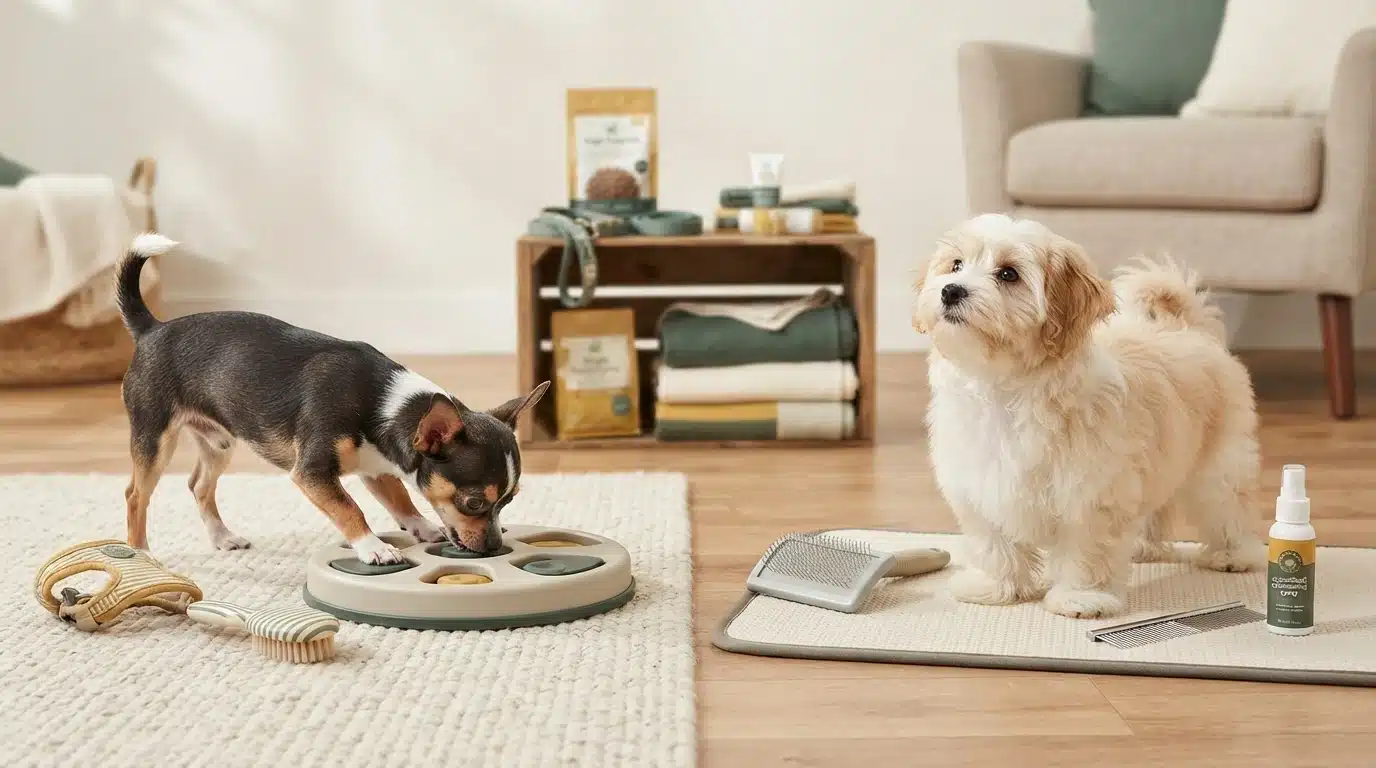
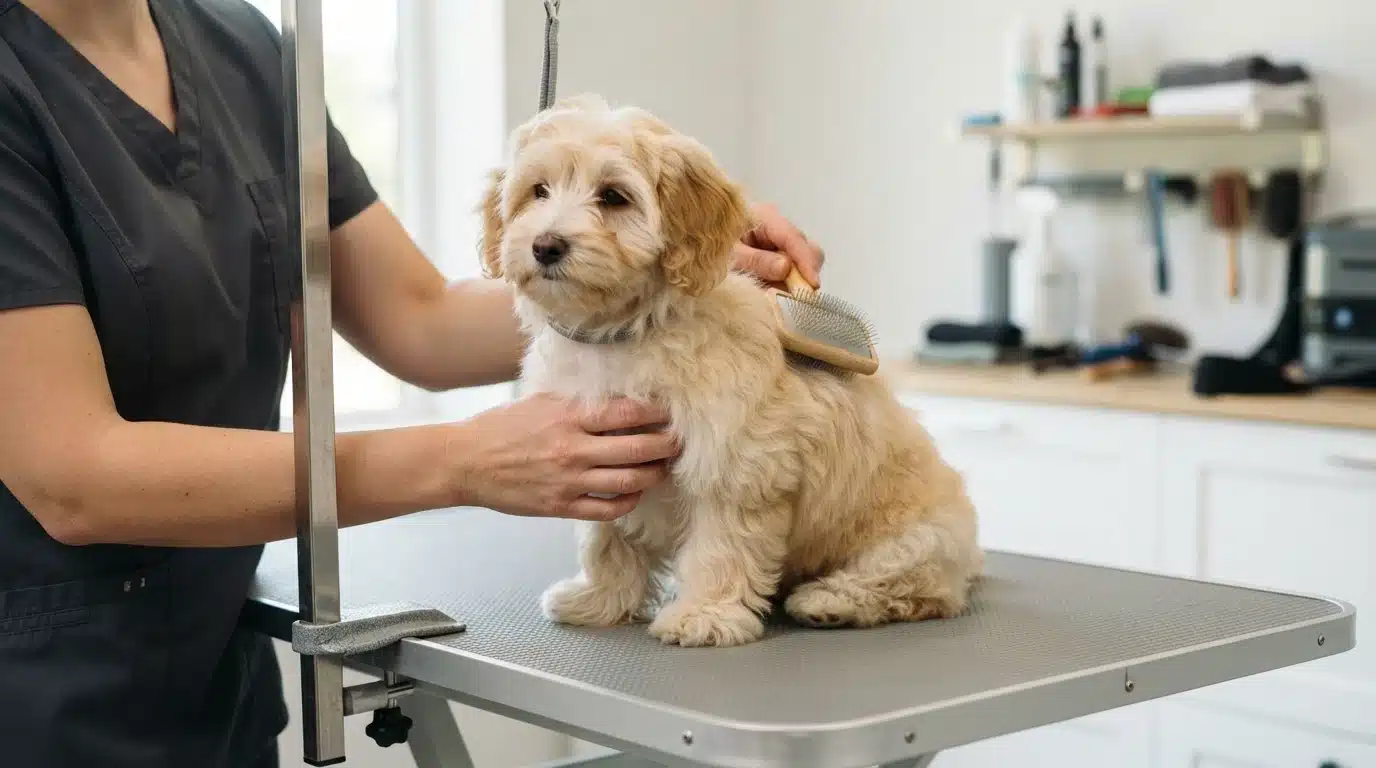
All three of these coats grow continuously and mat fast. Brush two to three times a week at minimum, daily during coat changes, and work down to the skin with a slicker brush. Schedule a professional trim every 6 to 8 weeks and start short, gentle sessions early so grooming feels normal. For a fuller routine, our Havanese grooming schedule by coat type breaks brushing frequency down step by step.
Monthly at-home checks and when to call the vet
Once a month, run your hands over the ribs, check ears for redness or odor, trim nails, and look between the toe pads. Weigh your puppy and feel for that visible waist.
Call the vet the same day for vomiting or diarrhea lasting more than a day, refusing food, limping, or eye discharge. Tiny breeds have little reserves, so treat sudden weakness, wobbliness, or trembling as an emergency. A puppy who seems flat and cold needs immediate care, not a wait-and-see day.
Your First-Year Puppy Care Calendar at a Glance
Month by month from pickup to the one year mark
Small breed puppy care follows a predictable rhythm, so a one-page calendar keeps you ahead of it. Use this as your quick-reference map, then work from the detailed sections above.
- Weeks 8 to 10: Pick up your puppy, book a first vet visit within days, bring a stool sample, and start the DHPP series. Feed four measured meals a day.
- Weeks 10 to 12: Keep four meals, begin short training sessions, and use kibble as rewards. Book the second DHPP dose.
- Week 12: Third vet visit: DHPP dose two and a weight check. Drop to three meals a day.
- Weeks 12 to 16: Continue vaccine boosters every 3 to 4 weeks, which follows the AAHA canine vaccination guidelines.
- Week 16: Final DHPP dose plus the rabies vaccine, which most states require between 12 and 16 weeks.
- Months 5 to 6: Spay or neuter discussion, adult food transition begins, and meals drop to two a day.
- Months 7 to 12: Two meals, monthly weight checks, and a one-year booster reminder.
Where to go next with your new puppy
Print this page and tape it inside a cabinet door. Check off each vet date as you book it, and photograph the record sheet after every visit so you always have a backup. If you are still choosing a breeder, ask what health records come home with the puppy; a clear handoff, like the one Sage Puppies provides, makes your first vet visit easier. Next, build your feeding routine around the portion rules above, and your puppy’s first year runs itself.

A first-year puppy runs on routines, and this checklist gives you the feeding times and vet dates in one printable page. If you’re still choosing your puppy, Sage Puppies raises Havanese, Havapoo and Cavapoo puppies with clear records you can hand straight to your vet. Print the checklist, then visit Sage Puppies to meet your match.
Frequently Asked Questions
Q1: How often should I feed a small breed puppy each day?
Four measured meals a day until 12 weeks old, three meals from 3 to 6 months, then two meals a day for life. Small stomachs empty fast, so frequent meals prevent low blood sugar.
Q2: How much food should my small breed puppy eat per meal?
Divide the daily total on your food bag by the number of meals. Measure each portion with a real cup or kitchen scale, then adjust based on your puppy’s body condition.
Q3: How often should small breed puppies see the vet?
Three to four times in the first year: a first exam within 72 hours of pickup, boosters every 3 to 4 weeks until 16 weeks, and a pre-spay or neuter check at 6 to 12 months.
Q4: When can I switch my puppy to adult dog food?
Most small breeds transition between 9 and 12 months. Mix the new food in gradually over about a week, and time the switch with dropping to two meals a day.
Q5: What should I bring to the first vet visit?
Bring the breeder’s vaccine and deworming records, a fresh stool sample, and your feeding notes. Ask the vet to check for retained baby teeth at the 16-week visit.
Q6: Are treats okay during training?
Yes, but keep them under 10% of daily calories. Subtract treat amounts from meal portions, or use kibble from meals as rewards so the daily total stays on track.
Q7: How long can a small breed puppy hold its bladder overnight?
Until about 16 weeks, expect one or two night toilet trips. Keep them boring: no lights or play, straight out to the potty spot and back to the crate.
Conclusion
Your small breed puppy’s first year comes down to three habits: four measured meals a day until 12 weeks, vaccine visits every 3 to 4 weeks until the 16-week dose, and a steady daily loop of toilet, meals, play and naps. Keep portions tied to the bag’s chart, weigh weekly, and adjust by what you feel on the ribs. Teething around month four and coat care every 6 to 8 weeks round out the calendar. Small breeds hide illness well, so call your vet early when appetite or energy dips. Print the checklist, check off each date, and the whole year stays on schedule.