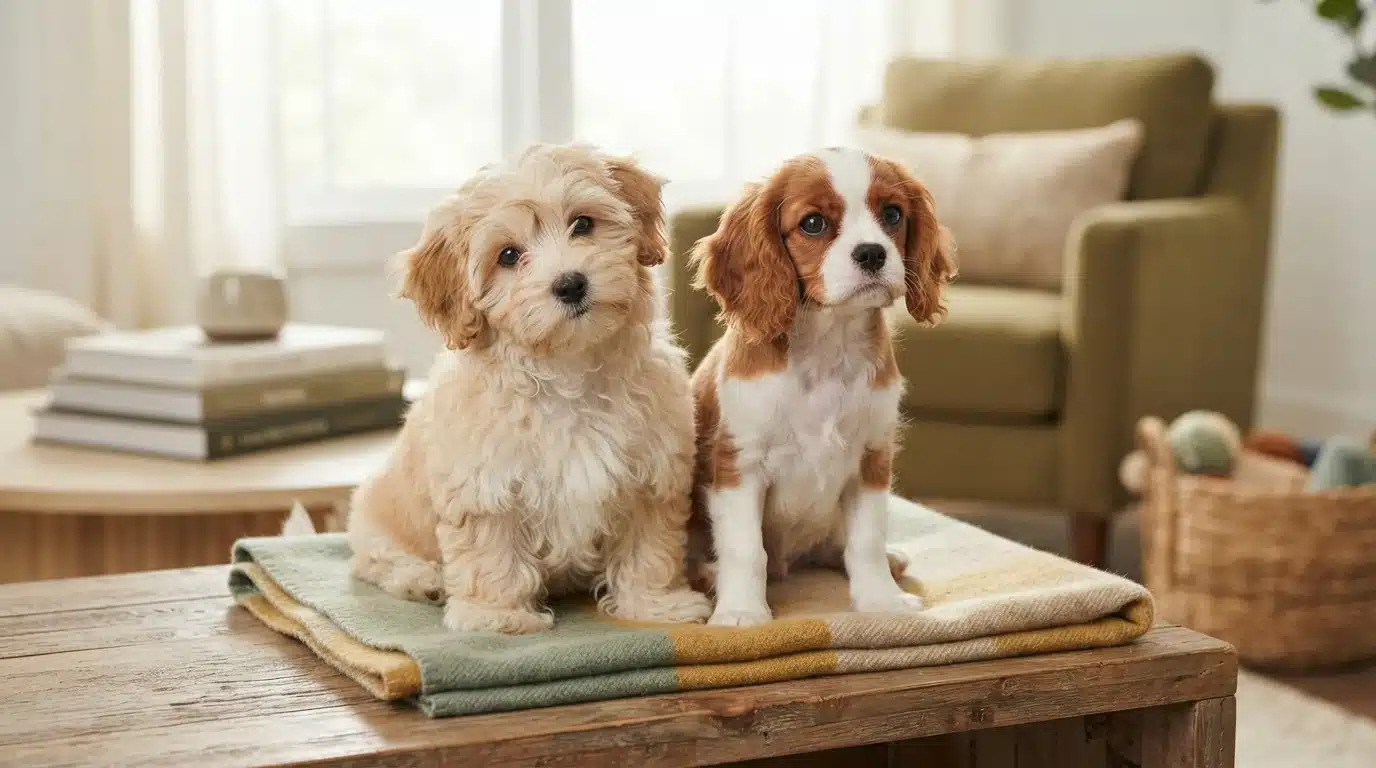
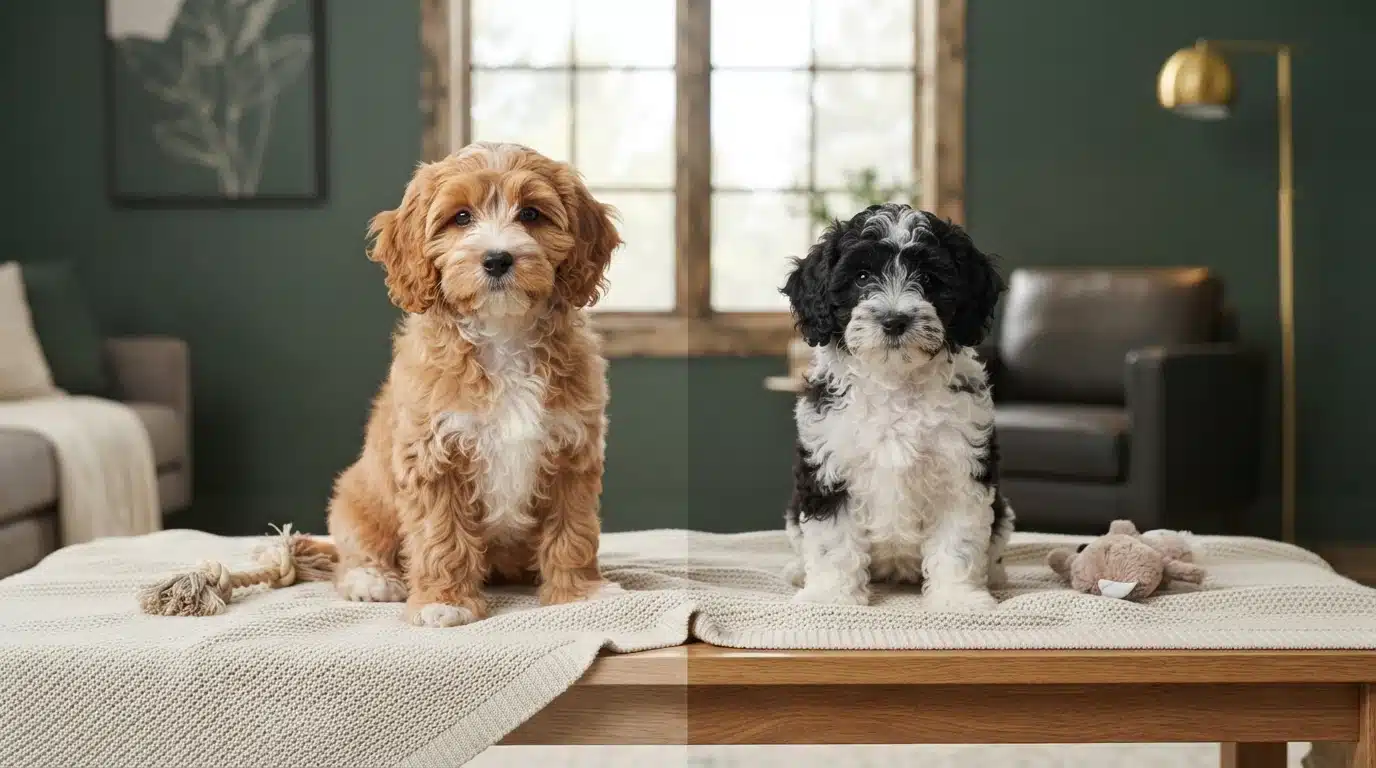
Quick Summary: Small and large breed puppies learn at similar speeds, but their training needs differ because small-dog misbehavior is often accidentally forgiven while large puppies require early leash and impulse control. Reward-based training works for both: use three-to-five-minute sessions, tiny treats and gentle handling for small breeds, and sturdy gear, structured exercise and joint protection for large breeds. Neither size is automatically easier, so choose a puppy that fits your space, schedule and energy, then enforce the same rules from day one.
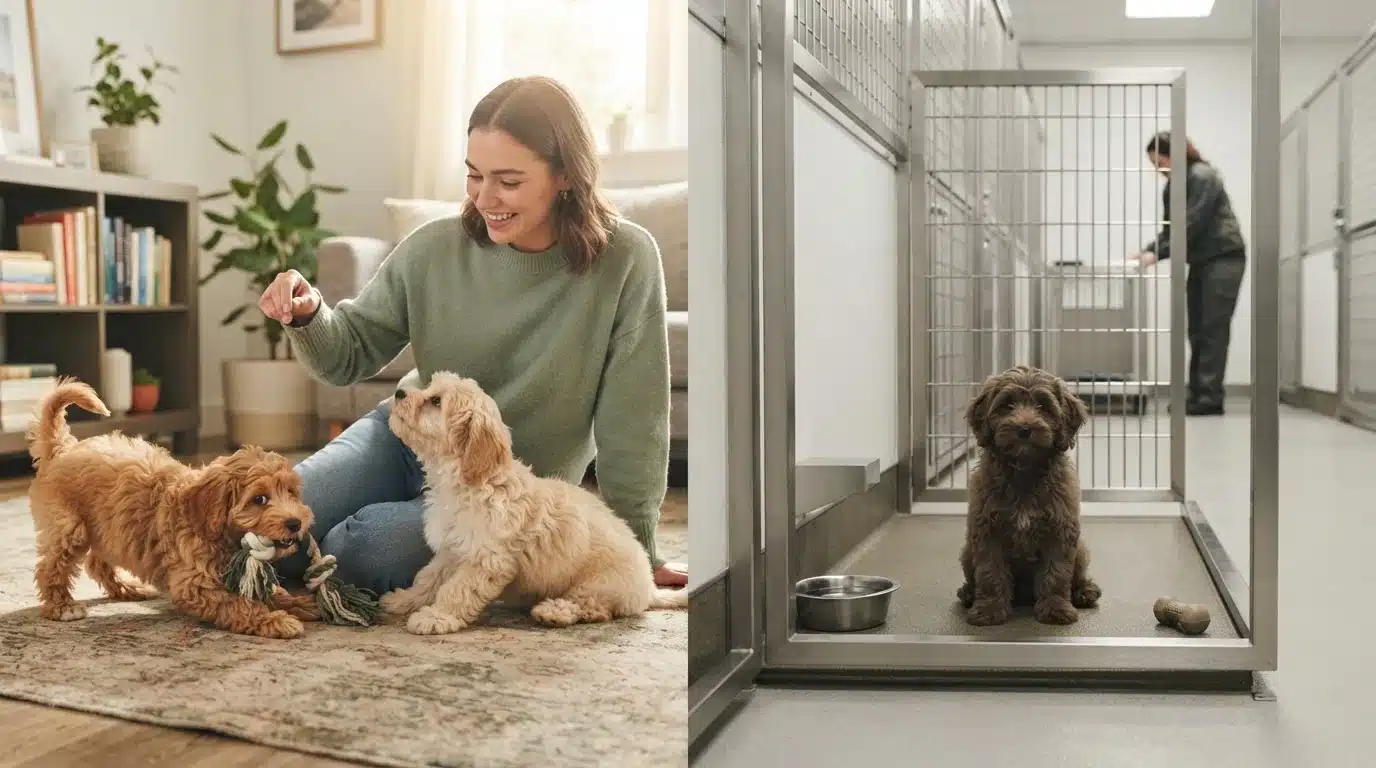
Ask two trainers whether a Havanese puppy is harder to train than a Great Dane and you will get the same honest answer: they are difficult in different ways. Small puppies learn just as fast. They are harder to raise because the behavior is easy to forgive, so it gets accidentally rewarded. That is where puppy training differences really live.
Many new owners hit the same wall. They read that small breeds are stubborn and large breeds are eager to please, try generic advice, and end up with a barker at the mail slot or a leash puller. This guide covers puppy training differences across six areas, answers whether small puppies are genuinely harder, and helps you pick the right size. As a Utah breeder of Havanese, Havapoo and Cavapoo puppies, Sage Puppies starts every litter on reward-based training.
Small vs Large Breed Puppies: Training Needs at a Glance
| Small Breed Puppies | Large Breed Puppies | |
|---|---|---|
| Learning speed and motivation | Often fast and food-motivated, but reinforcement-sensitive; inconsistent human response teaches unwanted habits | Often work-oriented and food-motivated, but need consistent rules because mistakes carry more weight |
| House training demands | Accidents are small and easy to clean, so vigilance is often relaxed too early | Larger accidents and faster scent spread demand earlier schedule and management discipline |
| Exercise and enrichment | Short, frequent sessions and indoor or yard-based mental work suit small stamina | Longer daily walks, structured outlets, and early body awareness to protect developing joints |
| Rewards and training equipment | Tiny high-value treats, finger-feeding, harnesses, low platforms, and ramps | Larger treat portions, high-value chews, sturdy gear, secure gates, and ground-level work |
| Health and safety limits | Fragile tracheas, patella and hip vulnerability, hypoglycemia risk, immature growth plates | Higher joint and ligament injury risk, bloat and heat sensitivity, longer growth period |
| Best suited household | Apartments, first-time owners, travel and schedule-constrained homes, families with young children | Active families with time for daily exercise, yard space, and a plan for leash and door manners |
How Small Breed Puppies and Large Breed Puppies Compare
Small Breed Puppies
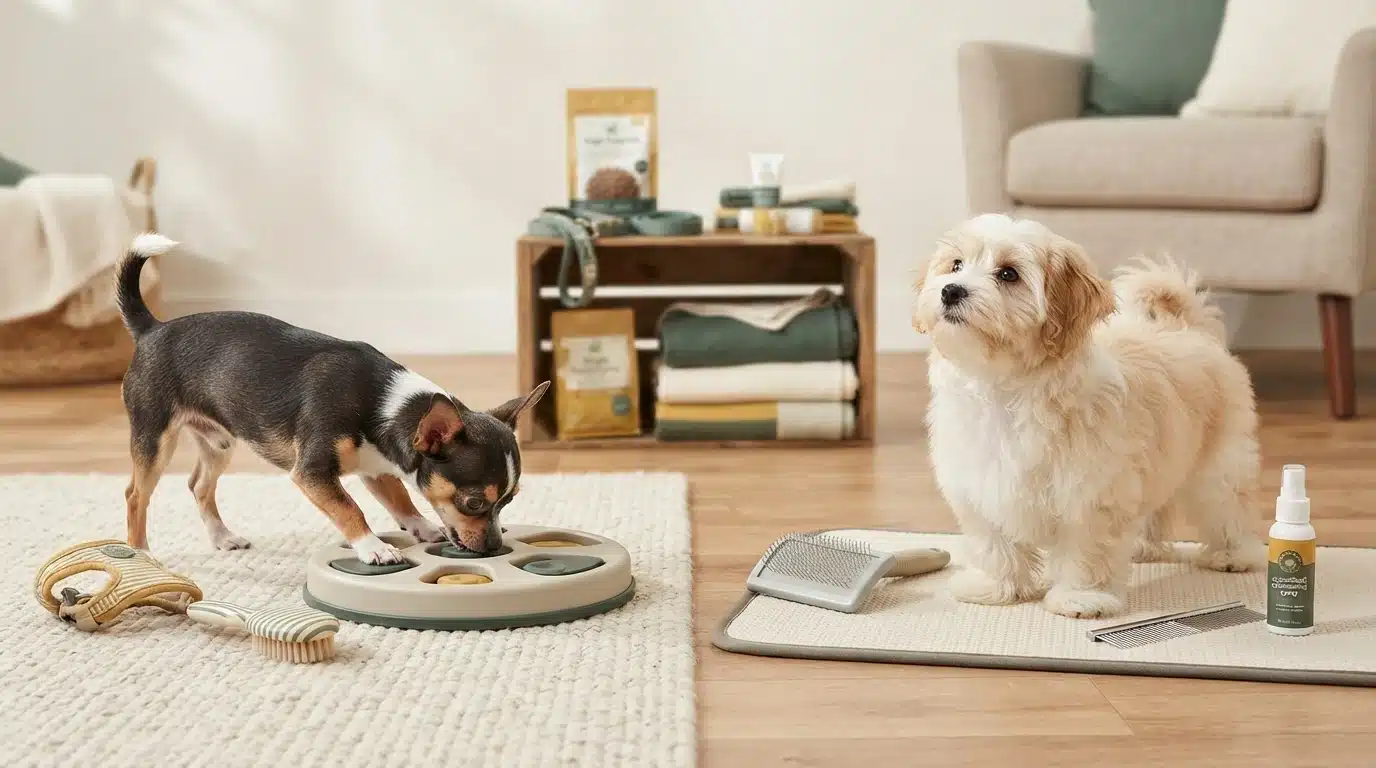
Small breed puppies, like the Havanese, Havapoo, and Cavapoo, stay under roughly 20 pounds and suit apartments, first-time owners, and busy schedules. They learn fast and respond well to positive reinforcement for small dogs, but inconsistent responses teach habits quickly. Puppy training differences here hinge on fragile joints, trachea safety, and staying consistent.
Key strengths
- Food-motivated and quick to learn
- Easy to manage physically
- Short training sessions fit small stamina
Large Breed Puppies
Large breed puppies grow past 50 pounds and shift training toward impulse control, leash manners, and managing a stronger body. They need consistent rules early because mistakes carry more weight. Puppy training differences also include joint protection, bloat awareness, and longer growth periods.
Key strengths
- Work-oriented and eager partners
- Thrive with structured daily exercise
- Reward clear, steady routines
Are Small Breed Puppies Harder to Train Than Large Ones?
No. Small breed puppies are not harder to train than large ones; the skills involved just change. Both sizes learn cues, potty routines, and house rules through the same reward-based methods. What differs is the mechanics: small breeds need better timing, softer cues, and consistent follow-through, while large breeds need leash control and impulse work earlier.
That gap explains why small dogs sometimes seem spoiled. Owners let small dog misbehavior slide because a jumping, barking 8-pound puppy causes no damage, so the dog never learns the rule. The takeaway: the difficulty is not the dog’s brain, it is whether the human bothers to enforce the same standards they would with a 60-pound dog.
Where the Real Difficulty Sits
Difficulty sits with consistency, not size. House training, name response, and calm greetings take the same number of repetitions for a Havanese as for a Labrador. The trap is assuming a small dog will “grow out of it,” so barking, nipping, and door charging go uncorrected. By adulthood, those habits are deeply rehearsed. Hold small puppies to large-dog standards from day one and the gap disappears. Our small breed puppy potty training in an apartment guide works the same routines, just scaled to a smaller bladder and a shorter path to the door.
What Changes With Body Size and Handler Position
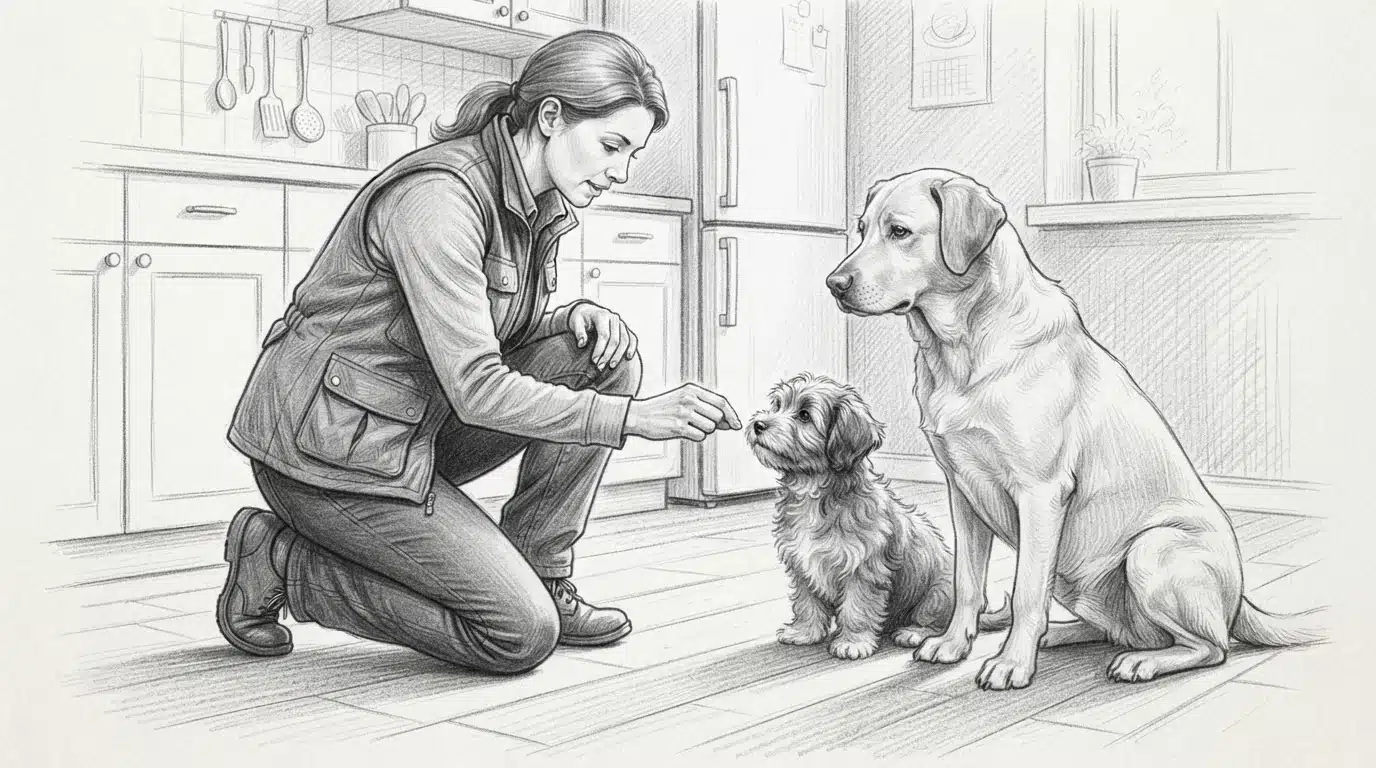
Body size changes how you deliver cues. With a small puppy, you crouch or kneel so your hands and voice stay close, and you use pea-sized treats so rewards stay healthy. A large puppy looks up at you, feels leash pressure sooner, and needs door manners before 50 pounds makes pulling a safety problem. Food motivation stays the same; treat sizing and your body position are what shift.
Motivation, Attention Span and How Each Puppy Learns
Both sizes learn the same way: they repeat what pays off. Food, play, and praise drive puppy learning at every weight, so the difference is not brains. It is what each puppy finds rewarding and how long it can stay focused.
Small breeds, including the Havanese and Cavapoo, often work hard for food but fill up fast. Use pea-sized or smaller treats so a short session does not become a full meal. Large breeds usually bring big food drive and can train longer, but their excitement builds fast, so the handler must channel it.
Session Length and Frequency That Actually Works
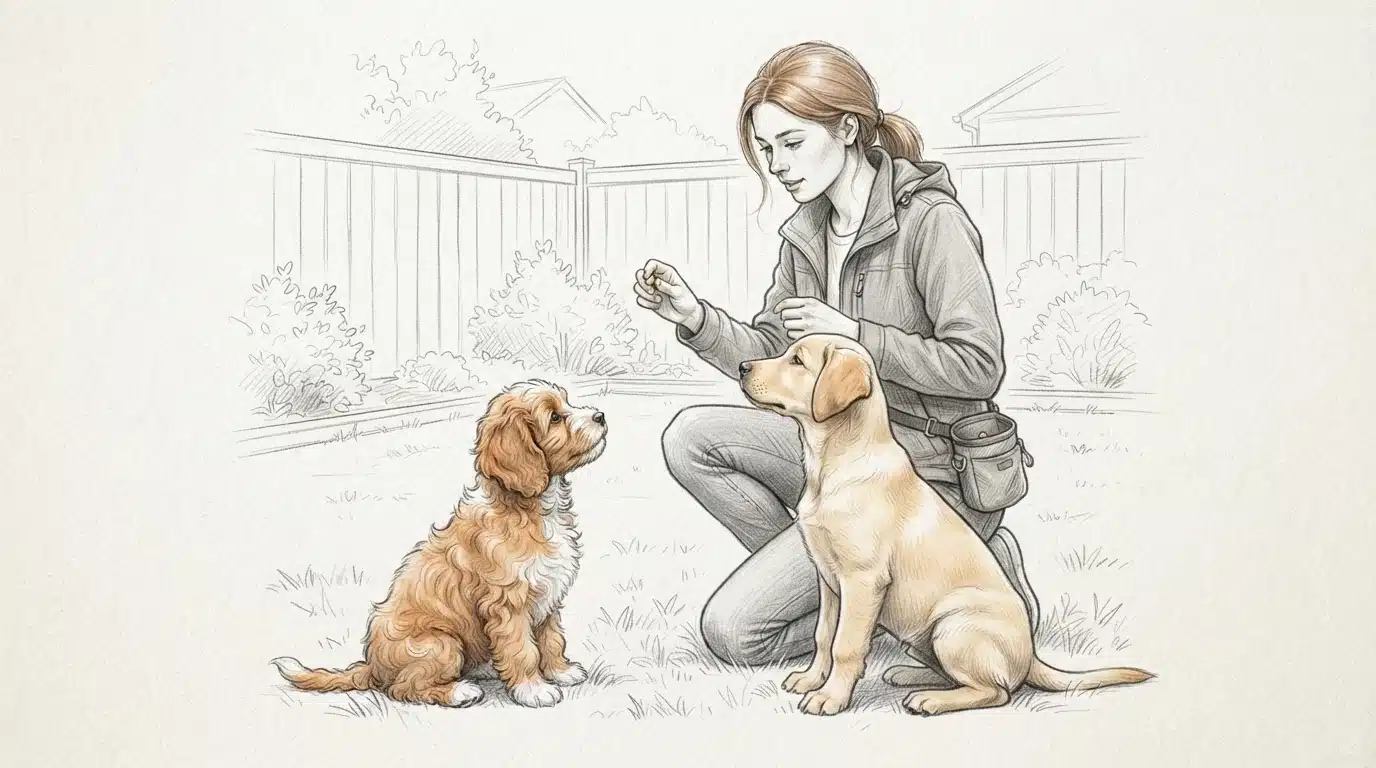
Keep it short. Puppies focus best in brief bursts, so trainers recommend sessions of about three to five minutes for young puppies, repeated a few times a day (PetMD). End while your puppy still wants more.
Split the day instead of stacking minutes. Three or four tiny sessions beat one long block, and every rep still counts. If your small puppy stalls mid-session, stop and try again later rather than pushing through. This rhythm works for both sizes; only the treat budget changes.
Distraction Management Indoors and Outdoors
Start where it is boring: a quiet room, nothing on the floor, no visitors. Add distractions only when your puppy nails a cue indoors. Outdoors, the world smells better than any treat, so use higher-value rewards and shorter asks.
Large puppies need this sooner because a distraction plus 50 pounds of pulling is a safety issue, not just a manners one. Small puppies can practice near distractions with less risk, which makes outdoor work easier to stage. Both sizes learn the same rules; the stakes just scale with the body. Our Havapoo training tips walk through this progression step by step.
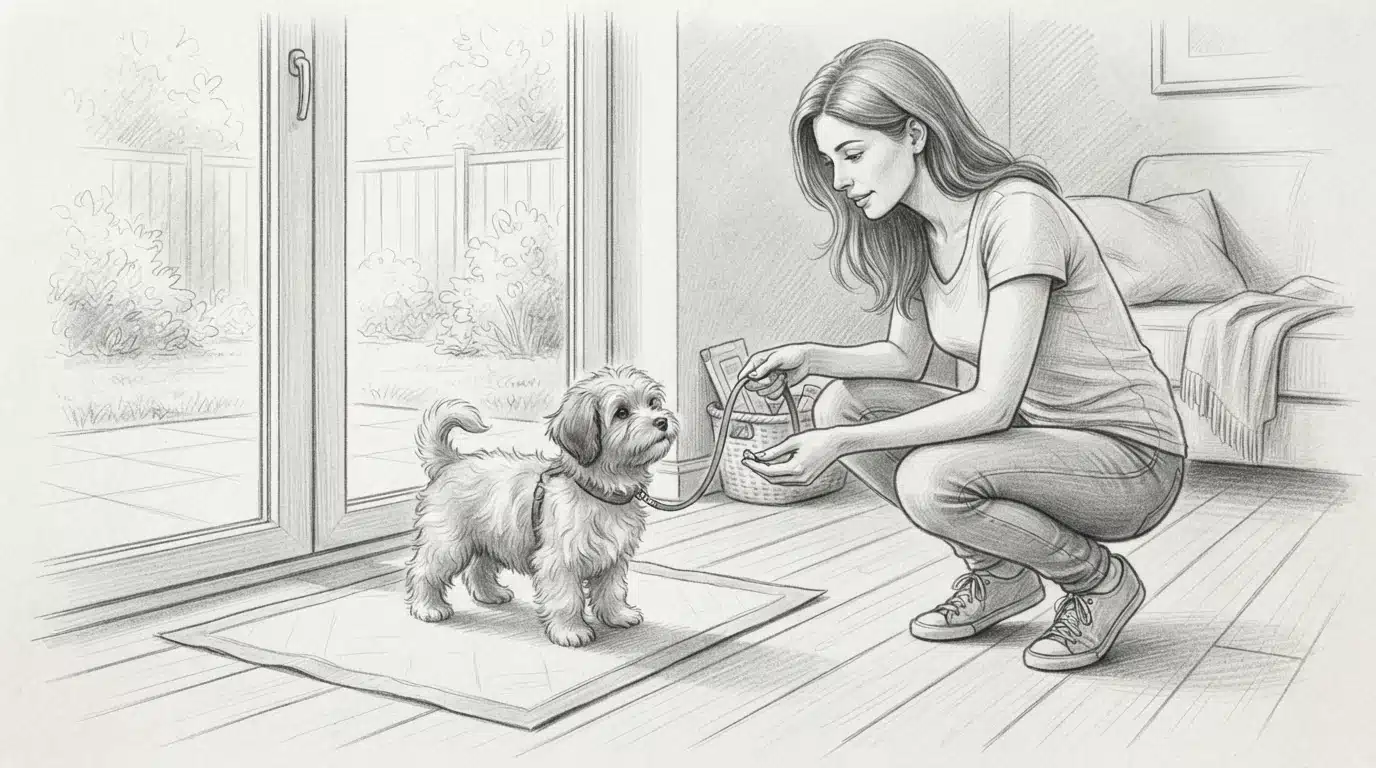
House Training and Potty Schedules Side by Side
House training looks different by size mostly because of timing and cleanup. A general rule says a puppy can hold its bladder about one hour per month of age, so a three-month-old needs a break roughly every three hours. Small breeds often take a little longer to gain full control, while large breeds feel the urge to signal sooner simply because their bladders fill faster relative to their body. The schedule itself stays the same; what changes is how carefully you watch.
Why Small Puppy Accidents Go Unnoticed
Small puppies pee small amounts. A few drops on carpet or behind a couch cushion can dry without you ever seeing it, and because tiny puddles rarely smell like a large dog’s would, the accident never gets cleaned properly. That matters because dogs return to spots that carry a urine scent. Small and toy breeds also struggle with bladder control longer, so Purina’s potty training guidance suggests more frequent trips early on. With a Havanese or Cavapoo, assume an accident happened even when you missed it.
Managing Scent, Schedule and Cleanup
Clean every spot with an enzymatic cleaner, which breaks down the odor a dog can still smell after soap dries. Then anchor the routine: out after waking, eating, playing, and every couple of hours. Praise and treat the moment your pup finishes outside. Big puppies make the stakes obvious because missed breaks mean big messes, so families often stay consistent with them by default. For a size-specific plan, our Havanese potty schedule by age walks through it week by week.
Leash Skills, Greetings and Door Manners
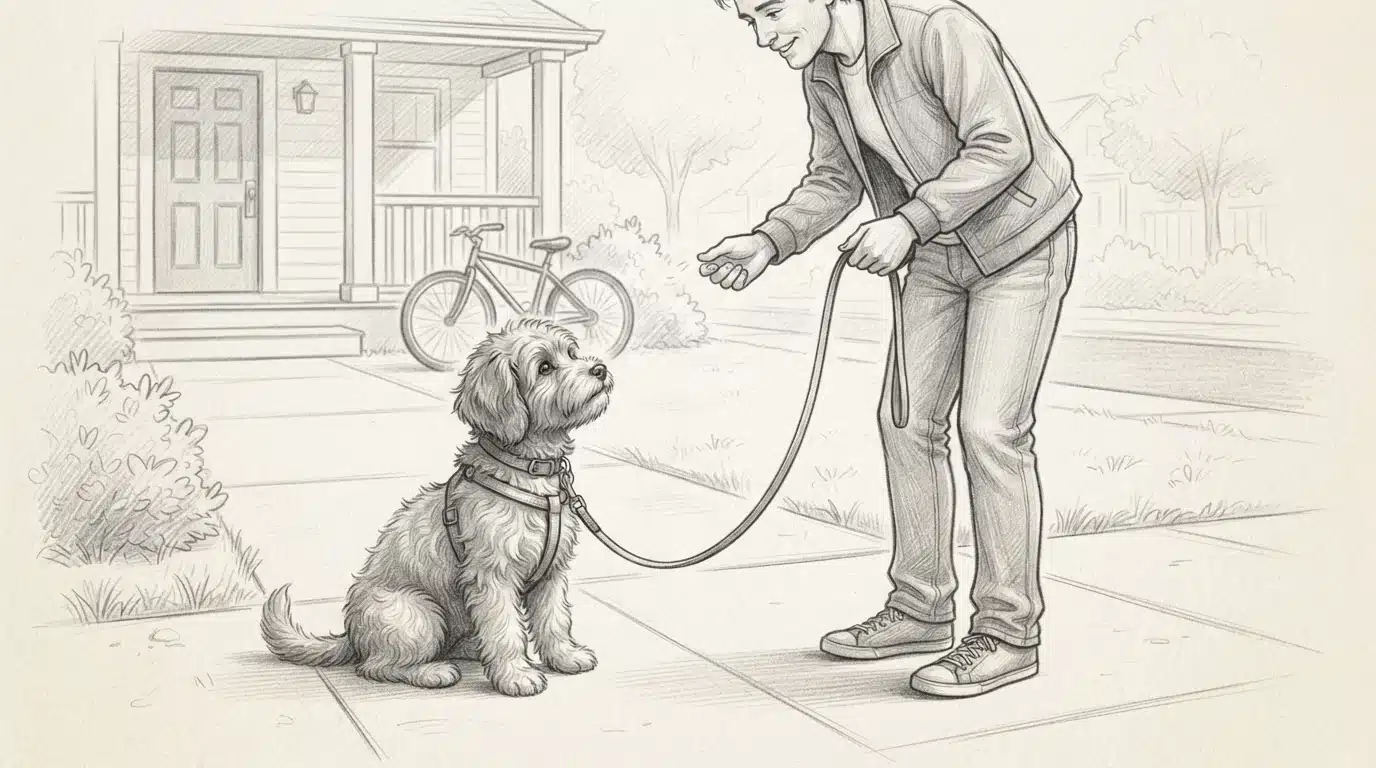
Leash and greeting rules are where size changes the mechanics the most. A small puppy can drag you only so far, but a large one can pull you off your feet, so the timeline and the gear differ even when the method does not.
Equipment Choices That Change the Conversation
The right gear depends on the body you are walking. For small breeds, a Y-front harness protects the throat, because small dogs are prone to collapsing trachea and a collar can press right on that spot. Large puppies do better with a flat collar for ID plus a wide harness or head halter that gives you steering power before they hit 50 pounds.
Skip retractable leashes for both. A six-foot leash teaches a puppy where the end of the line is, and that lesson is the same whether the puppy weighs 8 pounds or 40.
Teaching a Calm Greeting on Both Ends of the Leash
Greet the same way for every size. Jumping gets no attention, and all four paws on the floor earn the reward. With small puppies, enforce the rule for their sake, not just yours, because an 8-pound jumper grows into a 15-pound jumper nobody corrects.
The real challenge is the other end of the leash. Ask the human on the other dog to help, or practice greetings with calm, known dogs first. Door manners follow the same shape: sit before the door opens, walk out after you.
Rewards, Treats and Training Equipment
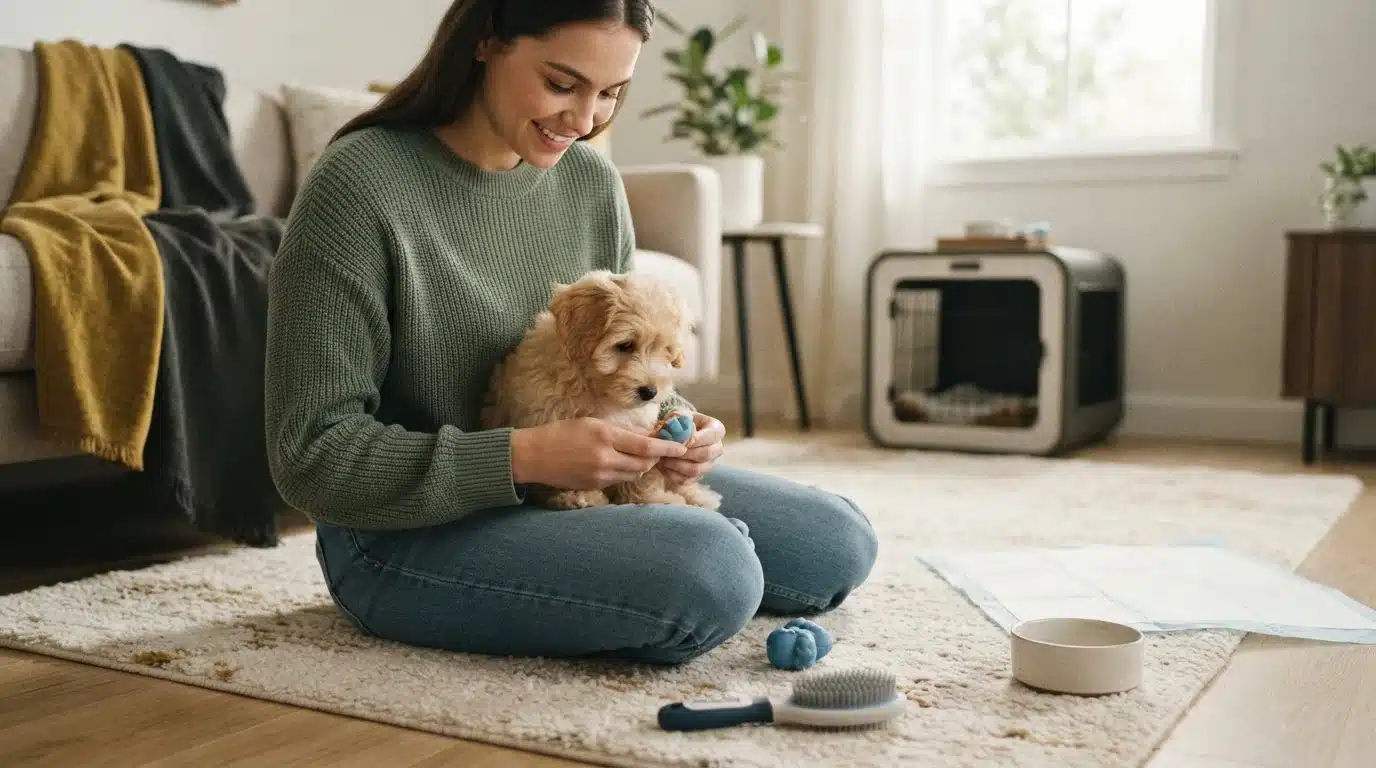
Reward-based puppy training works for every size. The best method for a small breed puppy is simple:
- Use tiny, soft treats so your puppy can chew and refocus fast.
- Mark the behavior with a clicker or a short “yes” word, then pay.
- Keep sessions under five minutes so small puppies stay eager.
- Pay attention to eye level, since small dogs read your crouch and hand signals as part of the cue.
Sizing and Timing Rewards for Small Puppies
Small breeds earn their calories in tiny budgets, so treat size matters. Vets suggest keeping treats under 10% of daily calories, which is easy to blow on a 6-pound puppy with standard biscuits. Pea-sized or smaller pieces work, and kibble from the daily ration counts as free training currency. A treat pouch clipped at your waist keeps rewards fast, and speed matters more than size. Pay within one second or the puppy links the treat to whatever came next.
Keeping a Large Puppy’s Attention Upward
A big puppy follows your hands and food, not your face, so place rewards to build eye contact. Hold a treat at your forehead, mark the glance upward, then deliver it. Use a flat collar for ID plus a wide harness for steering, and keep a six-foot leash. Higher-value food, like chicken, holds focus outdoors where distractions outweigh kibble.
Safety, Health and Physical Limits That Shape Training
Size changes what you protect during training, not how you teach. Small puppies carry fragile joints and airways; large puppies carry growing bones that need careful exercise. The safety rules shape every session.
Protecting Small Puppies’ Joints and Airways
Small breeds have narrow airways, so a collar that presses on the throat can trigger coughing or worse. Use a harness instead, and keep leash pressure soft. Because a Havanese or Cavapoo weighs so little, jumping off a couch or your arms seems harmless, but repeated hard landings stress tiny joints. Also mind treat size: vets suggest keeping treats under 10% of daily calories, and standard biscuits blow past that on a 6-pound puppy, so train with pea-sized pieces. Warm, non-slip surfaces and short sessions protect small bodies while positive reinforcement does the teaching.
Managing Growth and Conditioning in Large Puppies
Large puppies have growth plates, soft areas at the ends of long bones that close between roughly 12 and 24 months. Until then, skip jogging, stairs marathons, and long fetch games that pound the joints, and stick to short free play. Watch food portions too, because keeping a large puppy lean protects those developing joints. Heat and bloating matter as well: deep-chested large breeds face a real bloat risk, so avoid hard exercise right around meals. Train impulse control and leash manners now, since you cannot fix pulling after the bones have finished growing.
Which Should You Choose: Small or Large Breed Puppies?
For a first-time owner, neither size is automatically easier. Small breed puppies tend to suit you if your list includes:
- Apartment or small-space living
- Short training sessions that fit a busy schedule
- A dog under 20 pounds you can lift and manage
Large breed puppies tend to suit you if your list includes:
- Yard space and time for longer leash work
- Strength for a 50-plus-pound dog that pulls or lunges
- Patience for months of impulse control practice
How to Choose the Size That Fits Your Household
Start with your actual day, not the puppy photos. Measure your space, your free hours, and your honest energy after work. A Havanese or Cavapoo fits a small home and short walks; a Labrador-style routine needs room to move and a family who will practice leash manners daily.
Then match the training load. Small breeds need you to enforce rules anyway, because nobody corrects a tiny jumper on their own. Large breeds need impulse control early, before size turns a manners problem into a safety one.
Tip: Budget matters too. Food, gear, and vet costs rise with size, so price the adult dog, not the puppy.
Finding a Breeder Who Talks About Training Fit
Good breeders match puppies to homes using personality, not just color or pick order. Good ones also do some form of temperament testing and early socialization, so ask how they do it, per Chewy’s breeder guide.
Ask which puppy fits a household like yours. A busy first-time family needs a different match than an experienced owner with time for daily leash drills. Breeders who discuss your training goals, schedule, and household before assigning a puppy are showing you exactly the practice that matters, as explained in this guide to how puppies are matched to families. At Sage Puppies, that matching conversation is part of the application process. A breeder who shrugs at those questions is telling you something too.

The puppy you choose matters less than the habits you build in the first weeks. If a small, well-matched companion sounds right, see the Havanese, Havapoo, and Cavapoo puppies at Sage Puppies and start their training from day one.
Frequently Asked Questions
Q1: Are small breed puppies harder to train than large breed puppies?
No. They learn cues just as fast. The work differs: small puppies need consistent follow-through because easy-to-forgive behavior gets accidentally rewarded, while large puppies need leash and impulse control early.
Q2: What training methods work best for small breed puppies?
Reward-based training. Use pea-sized treats, mark behaviors with a clicker or “yes,” keep sessions under five minutes, and crouch to your puppy’s eye level so cues stay clear.
Q3: Why do small dogs get away with bad behavior more than large dogs?
Because a jumping, barking 8-pound puppy causes no damage, owners skip corrections. Habits rehearse anyway, so an adult small dog ends up unrulier than most 60-pound dogs.
Q4: When should I start training my puppy?
The day you bring it home. Start name response, potty routines, and calm greetings in week one; formal cue work can begin right away in short sessions.
Q5: How many treats can a small puppy get during training?
Keep treats under 10% of daily calories. Use kibble from the daily ration or pea-sized soft pieces, so several short sessions never replace a full meal.
Conclusion
Size changes the mechanics of puppy training, not the difficulty. Small and large puppies learn at the same speed through reward-based puppy training, but each needs different management. Small breeds need consistent follow-through, pea-sized treats, harnesses, and rules enforced even when misbehavior seems harmless. Large breeds need early leash manners, impulse control, and joint protection during growth. Neither size is automatically easier, so pick the one that fits your space, schedule, and honest energy. The habits you build in the first weeks matter far more than the puppy you choose.