Quick Summary: Havanese potty training follows a puppy’s bladder, not a fixed chart. At 8 weeks, take her out every 45 to 60 minutes while awake, build around five triggers (waking, meals, play, drinking, crating), and pick one consistent potty spot with a cue word. Stretch to 2 to 3 hours by 10 to 12 weeks, 4 to 5 hours by 5 months, and treat 6 months as a checkpoint rather than a deadline. Sage Puppies in South Jordan uses these same notes for their own litters, so every puppy goes home with a realistic plan that accounts for small-breed bladder limits, common setbacks around 4 months, and when to call a vet for issues like a UTI.
The night your Havanese puppy wakes you at 2 a.m., pads her crate, and looks up like she just won a tiny award, you will start wondering whether anyone has actually mapped a potty schedule that works for a toy breed. Most guides do not. They assume a bigger dog, a bigger bladder, and longer stretches between breaks, which is exactly why Havanese potty training frustrates so many first-time owners.
This guide fixes that with a puppy potty schedule built age by age, from eight weeks through six months. Each stage pairs specific potty breaks with crate and playpen setups that match how a small bladder actually matures. Because Havanese house training depends far more on timing and supervision than on breed stubbornness, you will also learn when to stretch intervals, when to slow down, and how to handle the pups who simply mature on their own calendar. Everything here reflects humane, consistent methods that Cassie Milar uses with her own Sage Puppies litters in South Jordan, Utah.
Step 1: Set Up the 8-Week Potty Routine
At 8 weeks old, a Havanese puppy holds her bladder for about 2 to 3 hours during the day. That is not a training failure. It is how small-breed bladders work before they finish maturing. Your job this week is simple: take her out often enough that accidents almost never happen, so the habit of going outside gets set before bad habits form.
When we send a puppy home from our South Jordan program, we share the same breeder notes on daytime timing, because the first two weeks at home decide the whole routine. The same setup is covered step by step in our Havanese care guide for first-time owners.
Daytime intervals for an 8-week-old Havanese
Use a simple rule: the puppy’s age in months plus one equals the maximum hours she can hold it, and at 8 weeks you should stay under that. In practice, carry her out every 45 to 60 minutes while she is awake and playing. After a nap, go out immediately. Most trainers follow the Humane Society’s guidance on frequent outings for young puppies, because waiting for the puppy to signal rarely works this early.
| Moment | Go outside |
|---|---|
| Right after waking | Immediately |
| After eating or drinking | Within 5 to 15 minutes |
| Mid play session | Every 45 to 60 minutes |
| Before crate time | Right before |
Build the five-trigger daily rhythm
Five moments always demand a trip outside. Make them automatic and most of your schedule writes itself.
- Waking up, from naps or nighttime sleep
- After meals, once the stomach settles
- After play, when excitement gets the bladder moving
- After drinking, within a quarter hour
- Before crating, so she starts with an empty tank
Set phone alarms for the gaps between triggers. At this age, roughly every hour awake. Keep a small log for the first week. You will see her personal pattern within days, and the schedule shifts from guessing to knowing.
Choose and protect your potty spot
Pick one spot 10 to 15 feet from the door and use it every single time. Scent left there tells her brain, this is the toilet. Walk her out on a leash, say one cue word such as potty, and stand still. Do not play or wander. Give her 3 to 5 quiet minutes. The moment she finishes, mark it with a cheerful yes and hand over a treat within two seconds. Then go straight inside or to play. Consistency of place matters more than any fancy bell or spray.
Step 2: Adjust the Schedule at 10 and 12 Weeks
Havanese potty training shifts fast between 10 and 12 weeks. The every-45-minutes routine starts to ease, and you begin stretching intervals based on what your puppy can actually hold.
10 weeks: every two to three hours, with one longer stretch
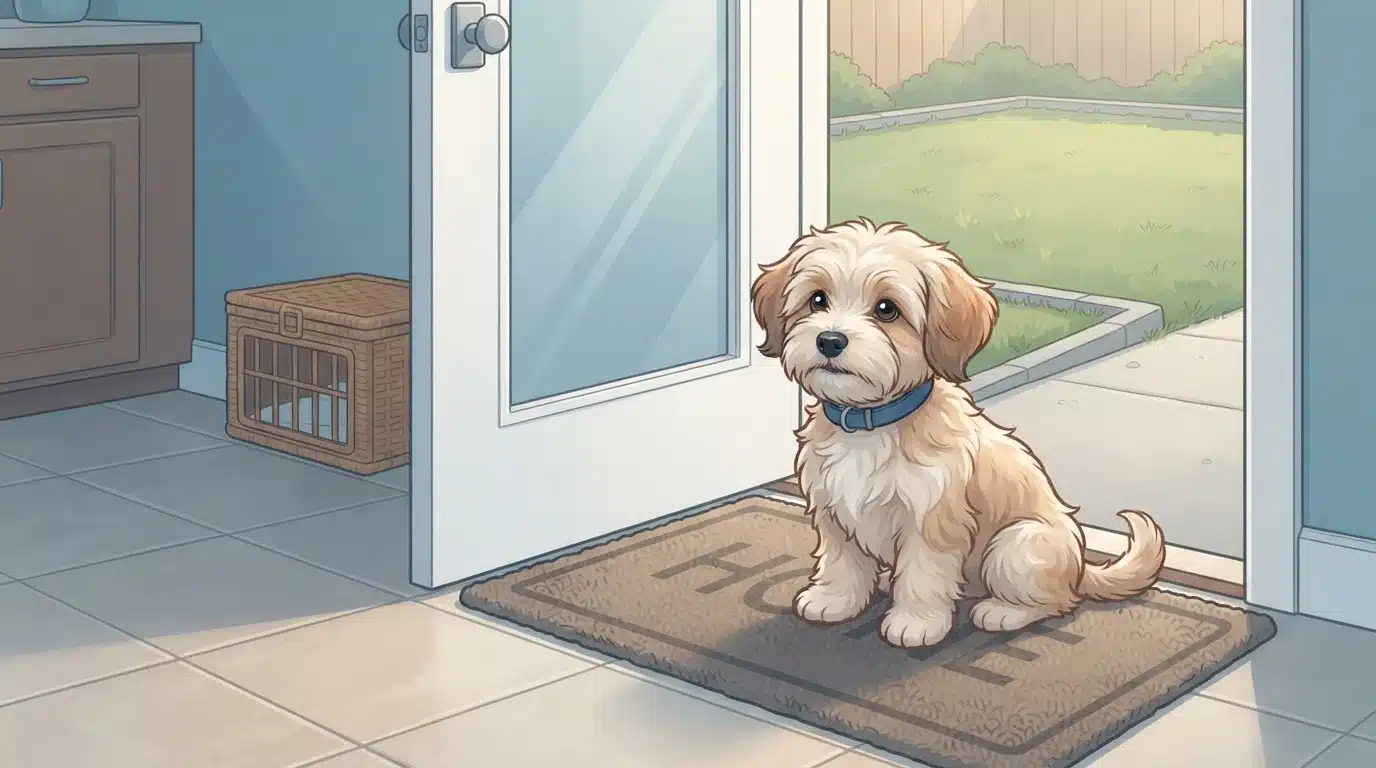
By 10 weeks, most Havanese puppies can wait two to three hours during the day. Plan outings after every nap, meal, and play session rather than on a fixed timer. Overnight, many puppies at this age manage one longer stretch of four hours or so, then need one trip out. Keep the crate small enough that she cannot sleep in one corner and soil the other. If she wakes and whines, take her out quickly, keep it boring, and return her straight to bed.
12 weeks: most puppies hit a real rhythm
At 12 weeks, a real routine usually appears. Expect about three hours between daytime breaks, with a predictable pattern: out on waking, out within 15 minutes of eating, and out after each play block. Accidents drop sharply now, not because your puppy got smarter, but because her bladder simply got bigger. Hold your feeding schedule steady so her output stays predictable too. Loose stools or sudden accidents at this stage usually mean a diet change or tummy upset, not a training failure.
Reading your puppy instead of the clock
Timetables are training wheels. Watch for the signals and you will catch the window every time: sniffing the floor, circling, wandering toward the door, or abruptly leaving play. Some puppies also pace or whine at the crate door. When you see one, go out immediately, even if the last trip was only 45 minutes ago. This individual attention matters more in Havanese potty training than any chart, because two puppies from the same litter can differ by a full hour in bladder control. Adjust to the puppy in front of you, and the schedule will follow.
Step 3: Handle Nights at 8, 10, and 12 Weeks
Nighttime is where most first-time owners lose sleep, so it helps to know what is normal at each age. Bladders mature slowly in small breeds, and your Havanese is no exception. Expect progress in stages rather than one magic night.
What to expect at 8 and 10 weeks overnight
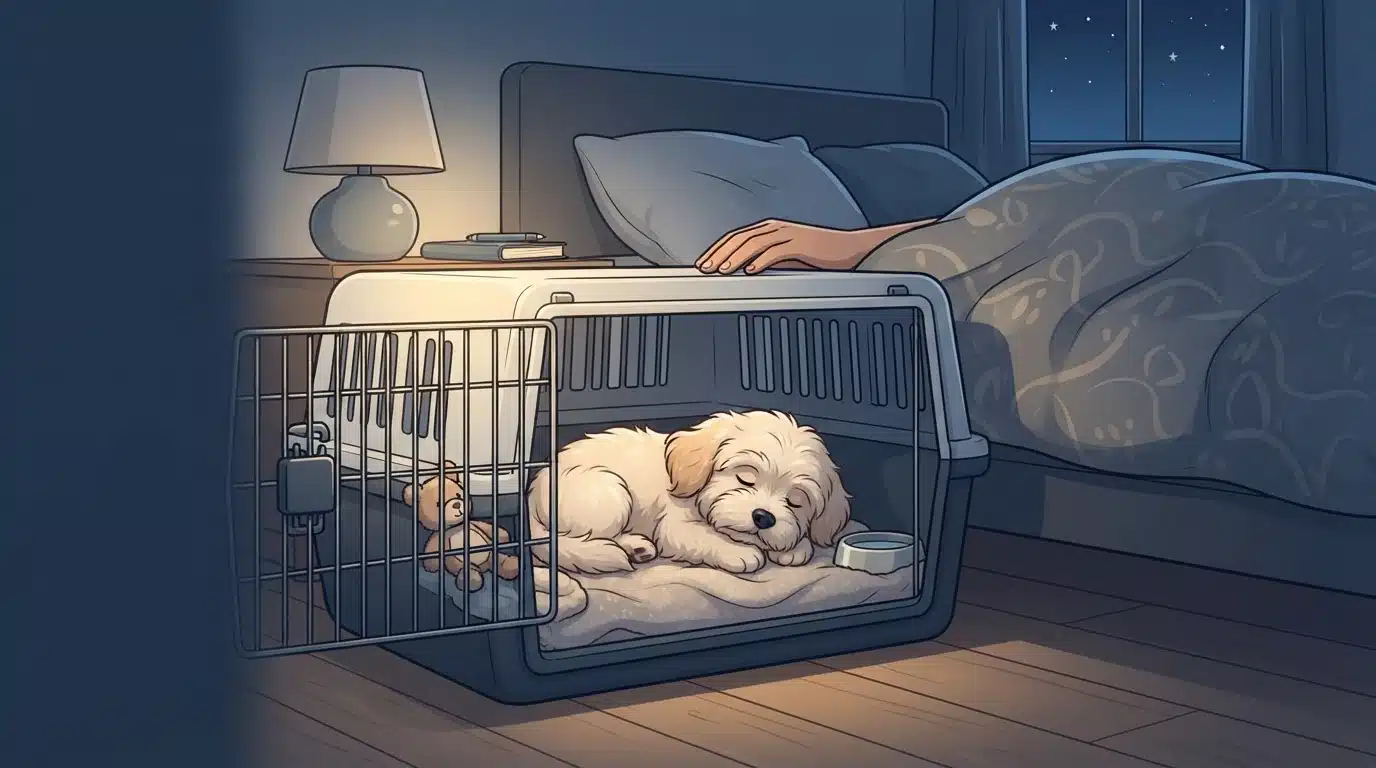
At 8 weeks, plan on one to two potty trips per night. A puppy this age can hold it roughly 2 to 3 hours even while sleeping, so set a soft alarm before you would rather wake to whimpering and a wet crate. Keep the trip boring: leash on, out to the potty spot, quiet praise, straight back to the crate. No play, no lights, no talking beyond a soft cue. By 10 weeks, many puppies stretch to one break around 3 or 4 a.m., and some sleep through if you limit water an hour before bed. Track actual wake times for a few nights; the pattern will show you when to ease off.
The 12-week turning point (with caveats)
Around 12 weeks, most Havanese puppies can sleep 4 to 6 hours, and many make it through the night. But this varies a lot. A puppy who plays hard in the evening, drank a big bowl of water at 8 p.m., or has a smaller frame may still need one trip. Watch what your puppy does, not the calendar. If she wakes and cries, take her out. If she sleeps, do not wake her just to follow a schedule. Nights are the first place you will see her real capacity emerge.
Crate response that does not create new problems
When your puppy whines at night, listen first. Constant fussing the moment you leave the room usually means the crate needs more positive association, not a trip outside. A sharp, urgent cry after a few hours means she genuinely needs to go. As Preventive Vet’s crate training guide explains, responding only to real needs keeps the crate from becoming a signal for attention. Go out, keep it dull, and return her quietly. Consistency here protects both house training and sleep. For more on night one setup, see a safe first night.
Step 4: Move From 4 to 6 Months
The 4-to-6-month stretch is where routines either lock in or drift. Your Havanese can hold it longer now, but her world also gets bigger, and that brings new challenges.
4 months: expect a possible setback
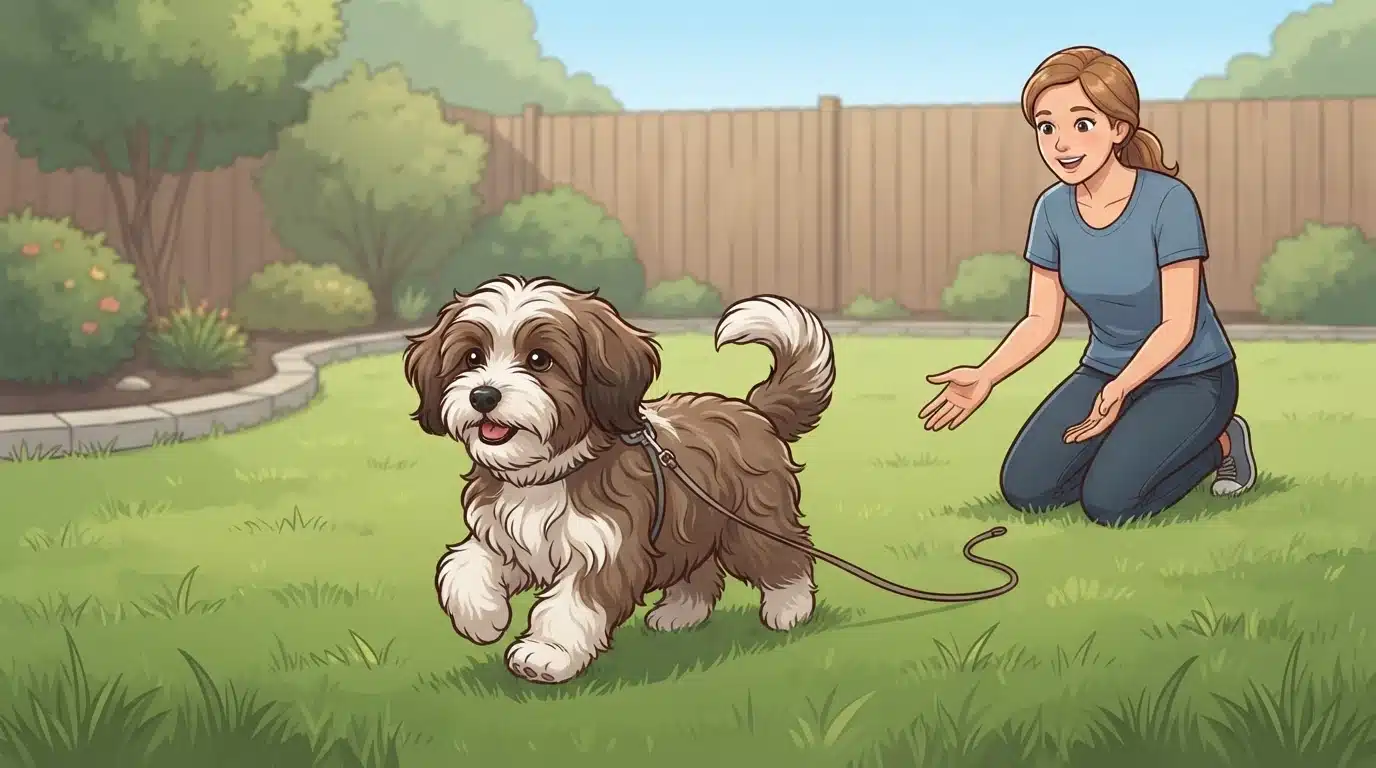
Around 4 months, many Havanese puppies hit a small regression. She was doing great, then suddenly has an accident indoors. This is normal. Teeth are coming in, growth is fast, and her bladder capacity still lags behind her confidence. If a setback happens, do not punish her. Just return to closer supervision and shorter intervals for a week. Check your setup too: a crate that grew too big with her, or a door that now stays closed, often explains the slip. Consistency for a few days usually resets things.
5 months: real reliability starts to show
By 5 months, most small-breed puppies can wait 4 to 5 hours during the day, and many start signaling clearly at the door. Stretch her daytime intervals slowly, adding 30 to 45 minutes at a time. Keep the routine skeleton the same: out on waking, out after meals, out after play. If she signals on her own, praise her calmly and go out right away. Watch for quiet signals too, like sniffing or wandering off, because Havanese often give subtle cues rather than loud ones.
6 months: a useful checkpoint, not a finish line
At 6 months, many Havanese puppies are mostly house-trained, holding it through a workday stretch and sleeping through the night. But adolescence begins now, and distraction accidents can reappear in new places, like a friend’s house or a hotel. Treat 6 months as a checkpoint: review her schedule, tighten anything that slipped, and keep praising outdoor wins. If accidents persist past this point with no pattern, ask your vet to rule out a urinary issue.
Step 5: Add Tools That Make the Schedule Stick
A schedule lives or dies on whether the whole household follows it. A few cheap tools remove the guesswork and keep everyone honest, even on the days when your routine slips.
Doorbells, pads, and a simple log
A potty doorbell gives your puppy a clear way to ask. Hang it on the door handle, ring it yourself right before every trip, and reward her the moment the door opens. Most Havanese figure out the connection within a week or two.
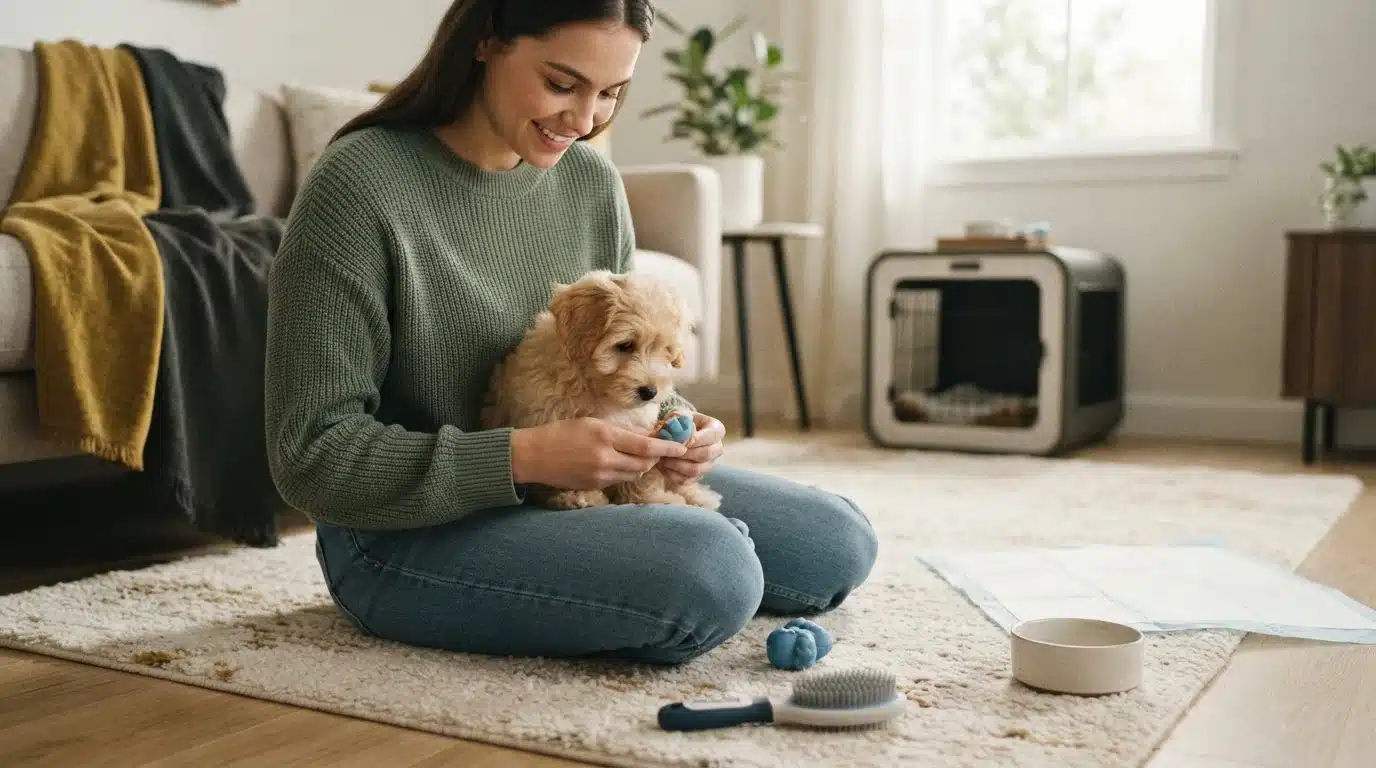
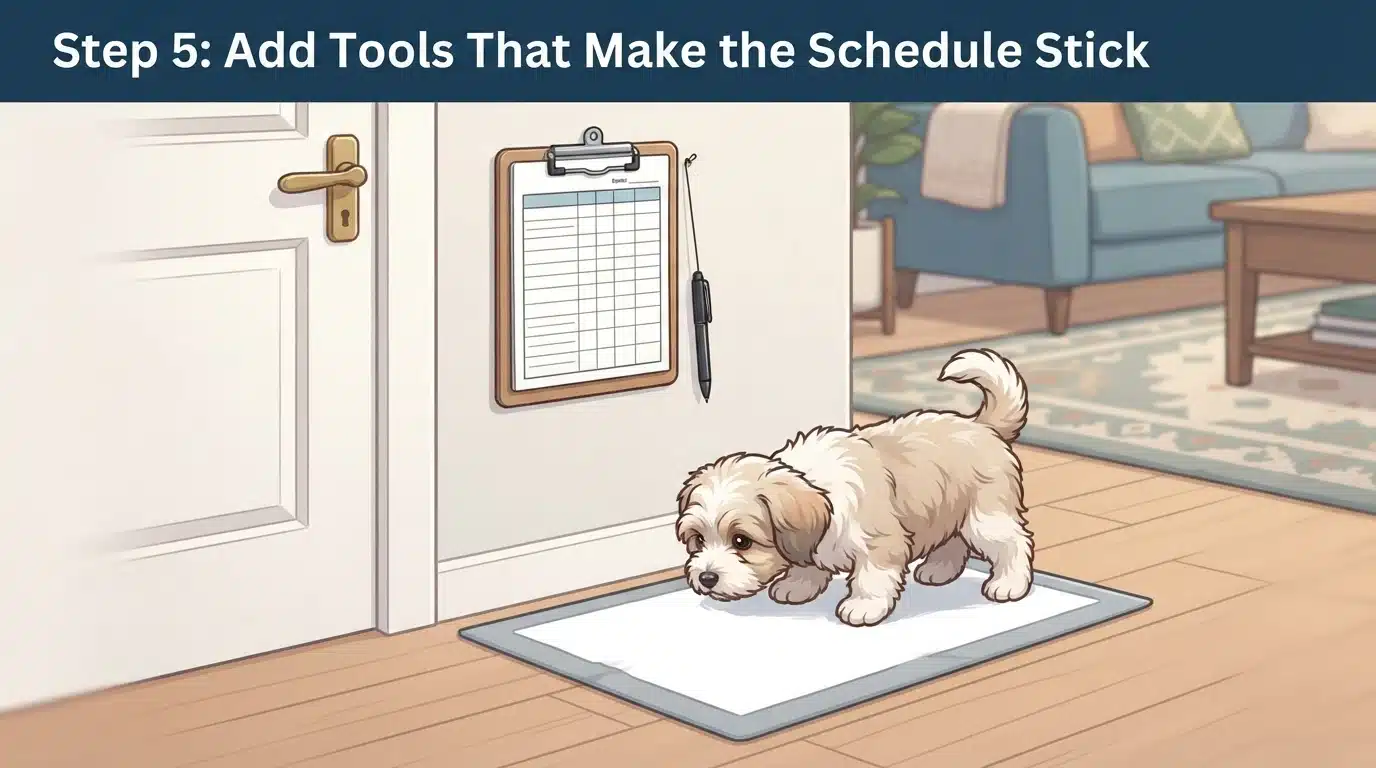
Pads still earn their place early on. Keep one in the playpen for the 8-to-10-week window, when her bladder simply cannot stretch to every outing. If your schedule allows, wean them off soon.
The simplest tool costs nothing: a potty log. Tape a sheet inside a cabinet door and note each trip, pee or poop, and time. Patterns show up fast, like a reliable accident 30 minutes after dinner. It also keeps partners and kids consistent, because everyone can see the last entry.
Moving from pads to fully outside
Once your puppy reliably holds it between outings, usually around 12 to 16 weeks, start the shift. The AKC’s guidance is to move the pad a little closer to the door every few days, then set it just outside.
That’s more setup detail than most new owners expect, which is why the home setup and daily care guide walks through playpen and pad placement too.
Cut the pad in half each week after that. Smaller pads leave less target, and her aim shifts to grass. Keep rewarding heavily outdoors so the good spot stays more appealing than any indoor surface.
Step 6: Track Progress and Adjust for Your Puppy
A schedule only works if you check the results. Keep a simple log on your phone or a notepad: time of each trip, successes, and accidents. After a week, patterns appear, and you can stretch intervals or tighten them based on what your puppy actually shows you, not on a fixed formula.
Weekly review checklist
Once a week, sit down for five minutes and ask:
- Accident pattern: Do mistakes cluster at a certain time, like after dinner or during evening play?
- Location: Are accidents near the door, meaning she almost made it? Shrink the interval by 15 minutes.
- Crate record: Is her crate staying dry overnight and during naps?
- Success rate: Is she going in the same spot outside within her 3-to-5-minute window?
- Progress trend: Compared to last week, is she holding it longer?
Small setbacks during growth spurts or schedule changes are normal. Judge progress over two weeks, not two days.
When to call your veterinarian
Some accidents are not training problems. Call your vet if you notice frequent squatting with little output, straining, blood in the urine, or a sudden return to indoor accidents after real progress. These can signal a urinary tract infection, which needs treatment, not a tighter schedule, and untreated UTIs can lead to serious kidney problems according to PetMD. Increased thirst paired with more urination is another flag worth a checkup, as Petco’s vet team notes. Trust the log you kept; it makes these conversations easier.
Common Mistakes to Avoid
Mistakes that quietly set training back
The biggest Havanese potty setbacks usually come from good intentions. Giving a tiny puppy free run of the house, scolding an accident you found after the fact, or cleaning with an ammonia-based cleaner all teach the wrong lessons. Skipping trips after play, waiting for her to signal, and assuming 8 weeks means a full night’s sleep round out the list.
What to do instead, in one line each
- Confine her to a crate or playpen between outings so she never practices going inside.
- If you catch a mishap mid-stream, interrupt gently and carry her out.
- Use an enzymatic cleaner so old spots stop calling her back.
- Take her out right after every play block, not on a clock alone.
- Watch for sniffing and circling instead of waiting for whining.
- Keep night trips going until she sleeps through on her own.

Tired of guessing when to carry her out? A steady, age-based schedule turns those 2 a.m. accidents into a calm routine both of you can follow. At Sage Puppies, every Havanese puppy goes home with honest preparation guidance, so you can start her potty plan the very first night. Wisely Bred. Beautifully Loved.
Frequently Asked Questions
Q1: What is the best potty training schedule for a Havanese puppy by age?
Follow her bladder, not a fixed chart. Take an 8-week-old out every 45 to 60 minutes while awake, stretch to every 2 to 3 hours by 10 to 12 weeks, then 4 to 5 hours by 5 months. Keep the five triggers (waking, meals, play, drinking, crating) constant at every age.
Q2: How often should a Havanese puppy go potty at 8 weeks?
Every 45 to 60 minutes while awake, plus immediately after naps, meals, and drinks. Set phone alarms so you never miss a gap.
Q3: When can a Havanese puppy sleep through the night without a potty break?
Many manage full nights around 12 weeks, holding 4 to 6 hours. Limit water an hour before bed, but let her sleep rather than waking her on schedule.
Q4: Should I punish my Havanese puppy for indoor accidents?
No. Scolding teaches her to hide accidents. Interrupt gently if caught mid-stream, carry her out, and clean with an enzymatic cleaner.
Q5: When should I remove potty pads completely?
Start fading pads between 12 and 16 weeks once she holds it reliably. Move the pad toward the door, then outside, cutting it smaller each week.
Q6: What if accidents return after months of progress?
Shrink intervals for a week and check your setup. Sudden regression with straining or frequent squatting warrants a vet visit, since a urinary tract infection needs treatment.
Conclusion
A Havanese potty schedule works when it follows your puppy’s bladder, not a fixed chart. Start at 8 weeks with outings every 45 to 60 minutes, stretch to 2 to 3 hours by 10 to 12 weeks, and expect 4 to 5 hours by 5 months. Pair each stage with tight supervision, a right-sized crate, and the five triggers: waking, meals, play, drinking, and crating. Track trips in a log so you can adjust weekly, and treat 6 months as a checkpoint rather than a deadline. Every Havanese matures on her own clock, so watch the puppy in front of you and let the schedule follow.