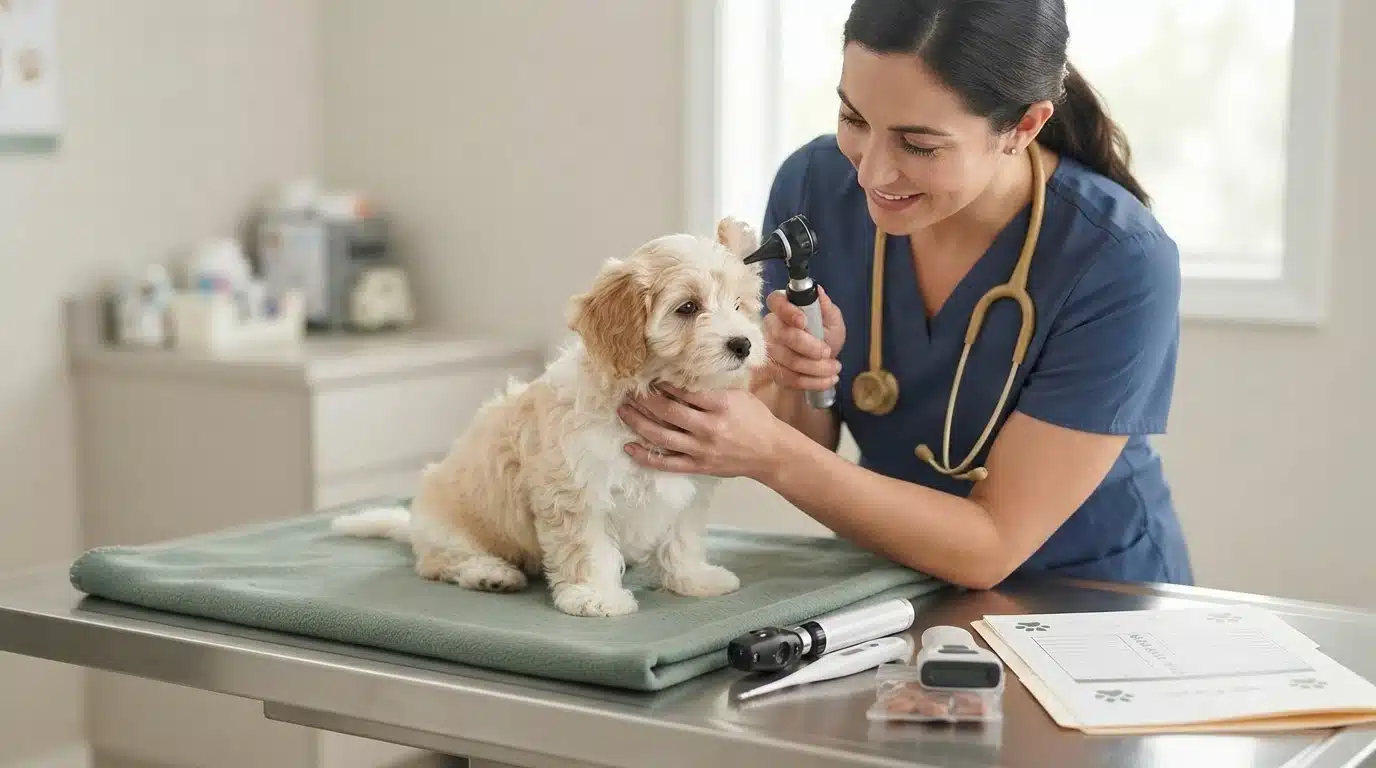
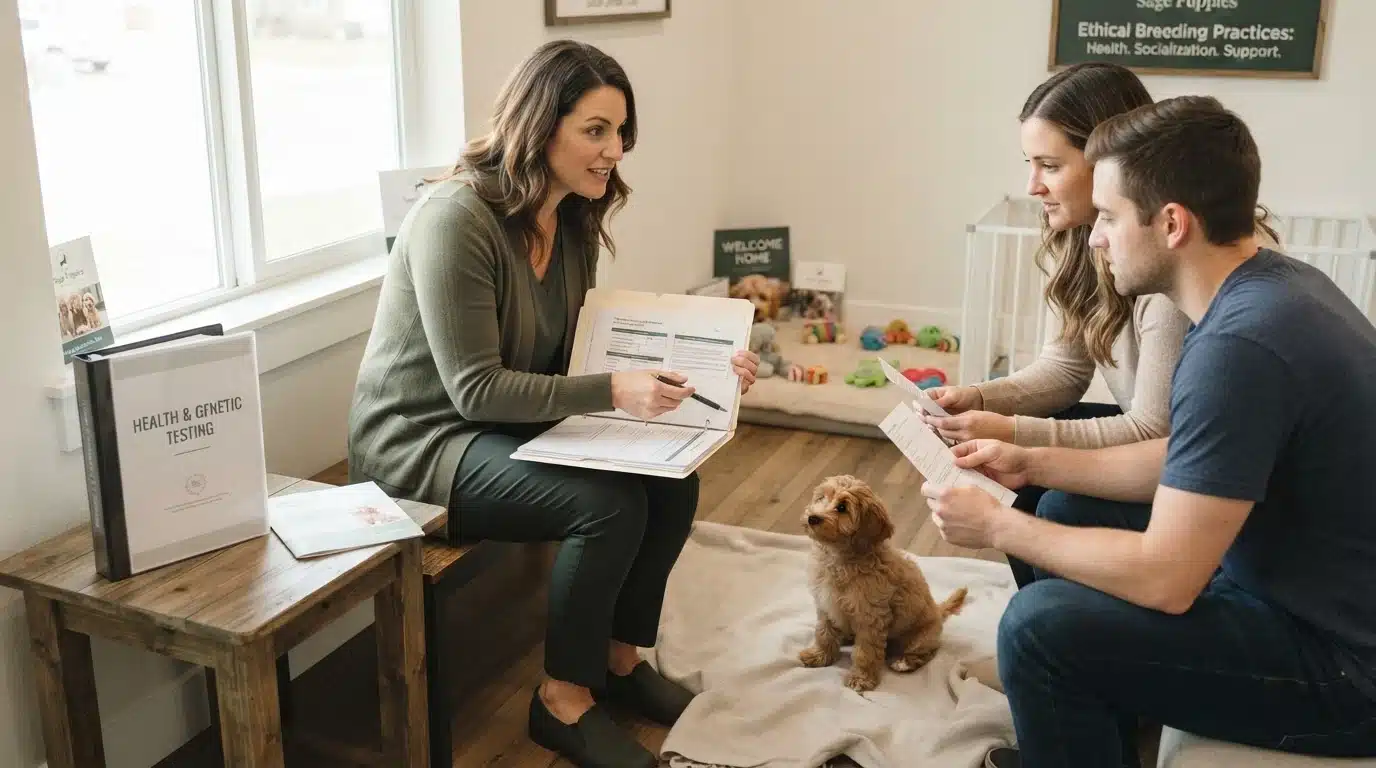
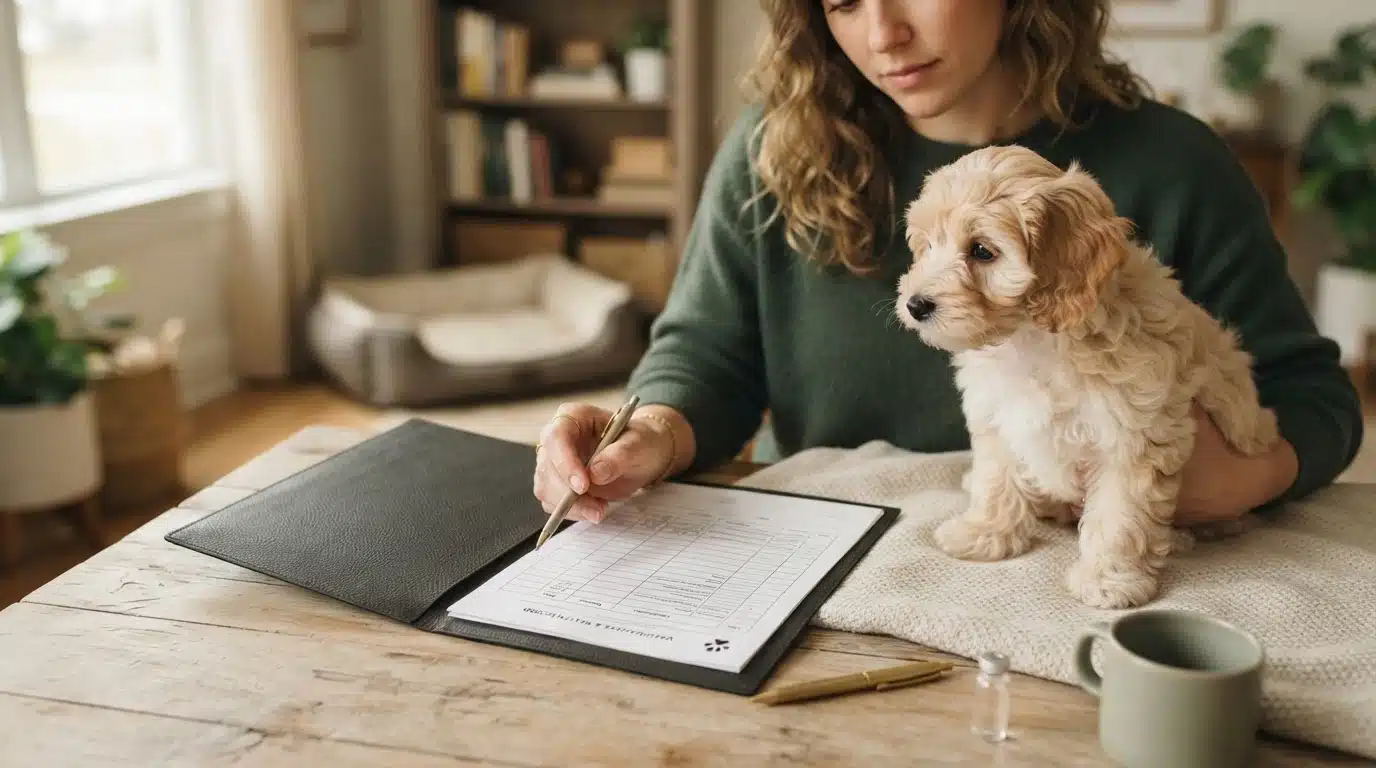
Quick Summary: Puppy deposit scams hinge on one move: getting you to pay before you’ve verified anything, usually through Zelle, wire transfers, or gift cards that are nearly impossible to reverse. Red flags include deposits demanded before a video call or contract, stolen or AI-generated photos, surprise shipping fees from a fake courier, and sellers who dodge paperwork or live video. The safe playbook is simple: reverse-image search the photos, insist on a live video showing the puppy and mother, get vet records and a written contract first, and always pay by credit card. If you’ve already sent money, stop further transfers immediately, document everything, and report to the FTC, the FBI (IC3), your bank, and the listing platform. Legitimate family breeders like Sage Puppies in Utah follow the opposite order, building trust through an application, video calls, and signed paperwork before any deposit is collected.
You message a “breeder” about a Havapoo. The reply comes within the hour, warm and eager, full of cute photos. Then comes the ask: send a $500 deposit through Zelle right now to hold the puppy, before any video call, contract or vet paperwork appears. This is how puppy payment scams begin, and the first message usually holds every warning sign you need.
The real problem is that scammers copy what honest breeders do, so a worried family cannot tell them apart. Fake listings use stolen pictures, and pressure tactics make deposit decisions feel urgent instead of careful.
This guide walks you through that exact moment. You will learn how to read the message, verify the seller, pick a safer payment method, and report fraud if money has already moved.
We raise Havanese, Havapoo and Cavapoo puppies at Sage Puppies in Utah, so we see both sides of these conversations. Here is what a legitimate deposit request looks like, and what it never does.
What Upfront Deposit Fraud Actually Looks Like in 2026
Most puppy payment scams don’t open with a hard sell. They open with a cute photo, a fair price, and one small ask: a deposit to hold your puppy today. Because the first request feels normal, many buyers pay without checking anything else. Here’s how to tell a real deposit from a fake one.
How a Legitimate Reservation Deposit Differs From a Scam Deposit
A legitimate breeder asks for a deposit after you’ve seen the puppy live, on a video call or in person. You get a written contract, a clear refund or transfer policy, and time to decide. Payment usually runs through a traceable method, and the breeder welcomes questions about the parents, the vet, and pickup details.
A scam deposit flips that order. The seller demands money before any call, contract, or paperwork appears, often through wire transfers, gift cards, or payment apps the FTC warns are hard to trace. The price may also sit well below the normal range for the breed. As Michigan’s consumer protection team notes, a purebred priced far under market is a likely scam signal. The AKC adds two more red flags: sellers who avoid phone calls and listings built on stock photos.
The order matters more than the amount. A $500 deposit after a video call and a signed contract is normal. The same $500 before you’ve seen the puppy is not.
The Three Scripts Scammers Reuse Most Often
Scammers copy the same playbooks because they work. Watch for these three.
The shipping fee script. You pay the deposit, then a “courier” texts that your puppy is at the airport and needs an urgent crate or insurance fee. Real breeders don’t collect surprise fees from a third party. The Animal Legal Defense Fund’s FAQ lists extra shipping charges as a classic warning sign.
The too-good price script. A free or deeply discounted puppy, if you just cover the deposit. Scammers use price to rush you past your doubts.
The refundable-deposit script. The seller promises your deposit is “fully refundable,” then stalls or vanishes when you ask for it back. Unless the refund terms are in writing, treat that promise as empty. For contrast, Sage Puppies publishes its reservation terms openly so buyers know exactly where their deposit stands before they commit.
Slow down at the deposit moment and most of these scripts collapse, because they all depend on you paying before you’ve verified anything.
Want to vet a breeder from the start? Our guide to choosing a family puppy breeder in Utah walks through the questions worth asking first.
Run the Verification Protocol Before You Send a Dollar
A $500 deposit after a video call and a signed contract is normal. The same $500 before you have seen anything real is not. Four checks separate the two situations, and every honest breeder will pass them without complaint.
Step 1: Verify the Seller’s Identity, Location and Listing Trail
Start with the basics. Get the seller’s full name, phone number, business name and city, then search each one. Real breeders leave a trail: a website, an address, a breed club listing, past litters, reviews that mention other buyers’ dogs. Compare the phone number’s area code with the claimed location, since many scam operations run from a handful of overseas call centers. Cross-check the listing on a neutral site like the Better Business Bureau’s pet scam pages, which track known patterns. If the “breeder” only exists on one classified ad and one text thread, treat that as a red flag, not an inconvenience.
Step 2: Reverse-Image Search Every Puppy Photo
Scammers steal photos, so make the photo work for you. Save each picture the seller sends and run it through Google Lens or TinEye. The FTC advises doing exactly this, because a real puppy’s photo rarely appears anywhere else.
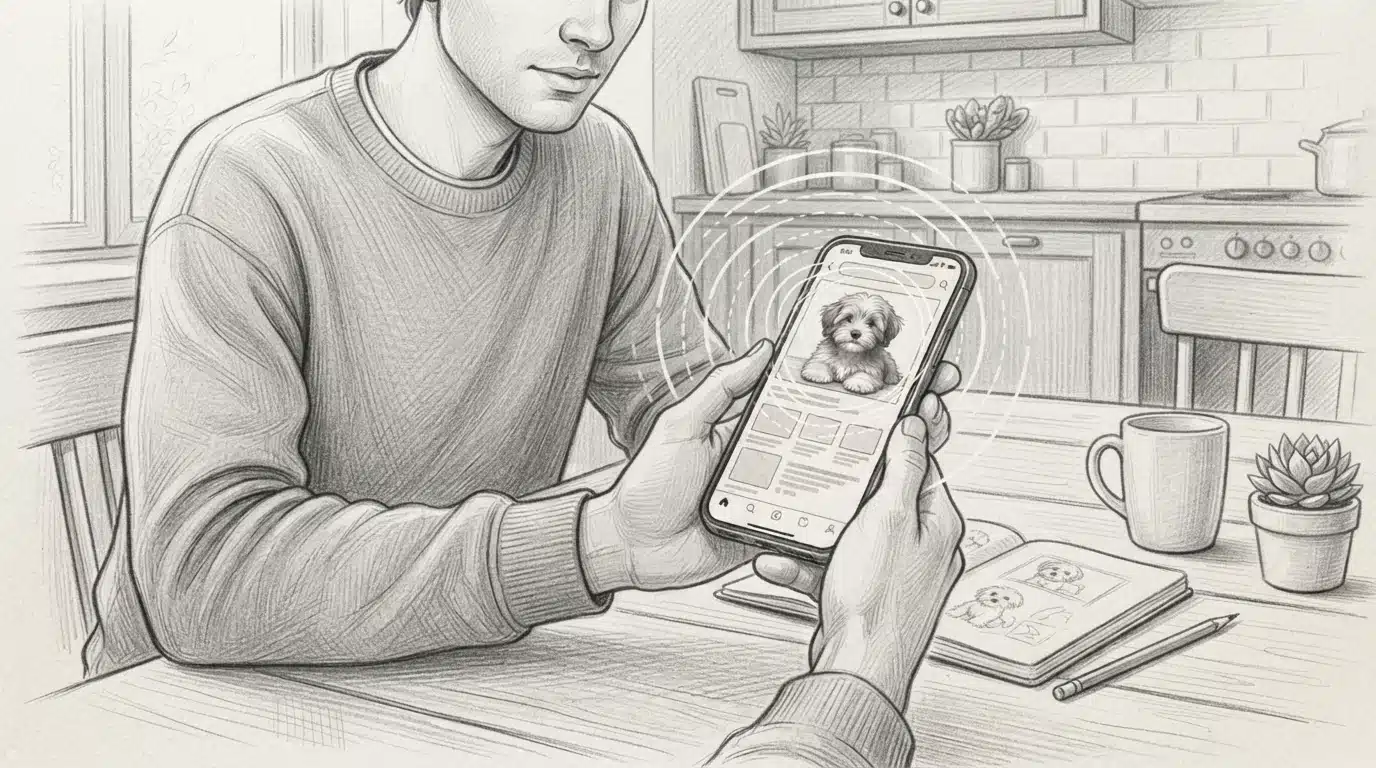
If the same puppy shows up on three sites with three names and three prices, you have found the fraud. AI-generated puppy images are also spreading, so look for odd paws, blurry fur edges or a background that doesn’t match the claimed yard.
Step 3: Insist on a Live Video Call With the Puppy and Dam
A real breeder will happily get on a live video call and show you the puppy moving around, the mother dog, and the space where the litter lives. Ask for it unprompted, then ask small, verifiable questions: hold up today’s newspaper, turn the camera to the window, show the pup’s paws. The FTC lists a video visit as a standard step for legitimate rescues, shelters and breeders alike. Refusals come with excuses, frozen screenshots, a “broken camera,” or demands to pay first because someone else is “waiting.” Anyone who can’t show the dog on a live call doesn’t have the dog.
Step 4: Confirm Health Records, Microchip and Contract in Writing
Before money moves, ask for three documents by email, not text: the puppy’s vaccination and deworming record with your vet’s name on it, the microchip number, and a written purchase contract that states what happens if the puppy gets sick. Legitimate breeders supply all three without being chased. Compare the dates in the vet record against the puppy’s stated age, and check that the microchip number looks complete. This written paper trail is where the verifiable health standards you should expect from any breeder become concrete. If the seller says paperwork will come “after the deposit,” stop. That is the scam’s clearest signal, and you have just avoided it.
The Payment Method Tells You Almost Everything
Before you check a breeder’s references or scrutinize photos, look at what they want you to pay with. The FTC warns that scammers push gift cards, wire transfers and crypto precisely because those payments are hard to trace and nearly impossible to reverse. A legitimate breeder asking for a $500 deposit will usually accept methods that give you some recourse. A scammer needs the opposite.
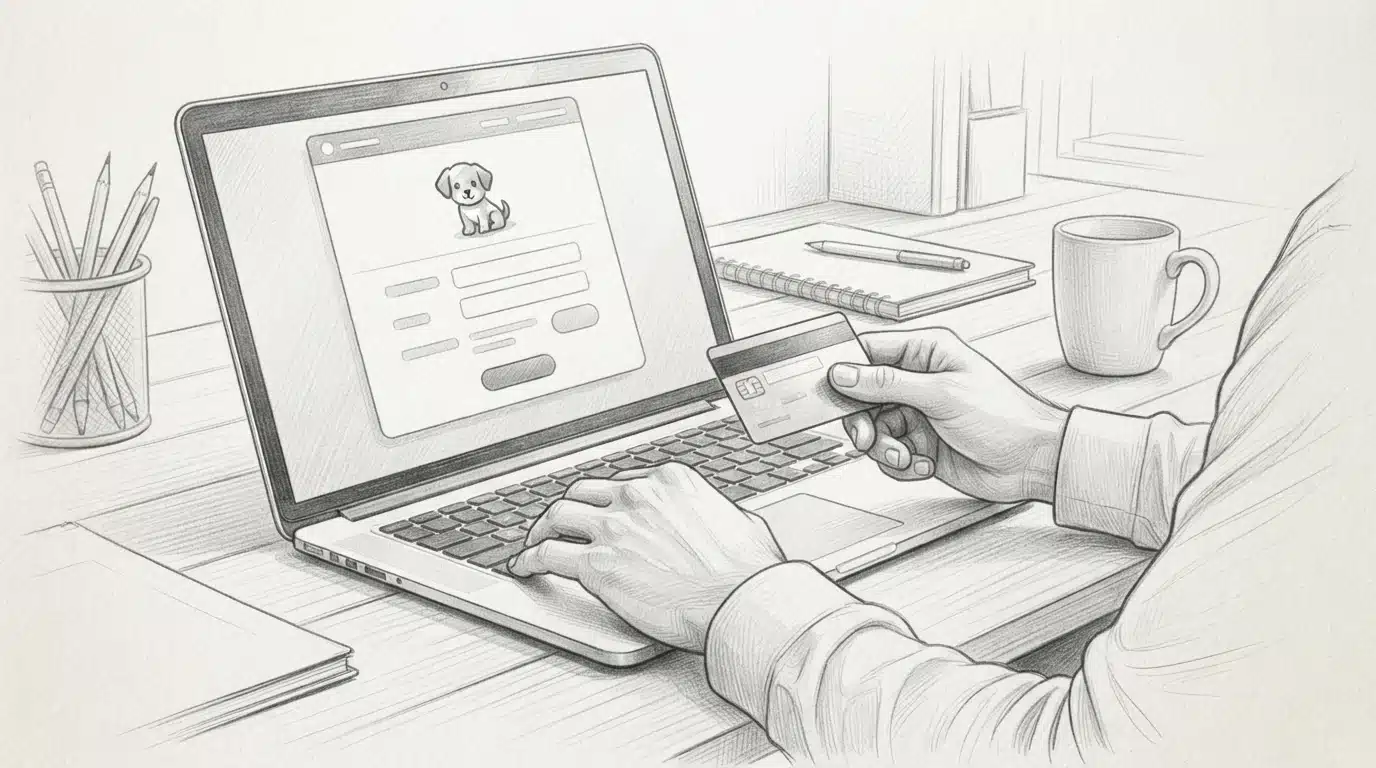
High-Risk Methods: Gift Cards, Wire, Crypto and Payment Apps
Treat any of these as a stop sign:
| Method | Why Scammers Like It | Your Recovery Odds |
|---|---|---|
| Gift cards | Funds are spent instantly and untraceably | Almost none |
| Wire transfer | Cannot be recalled once accepted | Very low |
| Crypto | Anonymous and irreversible | Very low |
| Zelle, Cash App, Venmo | Instant, treated like cash, limited fraud protection | Low to moderate |
If a seller insists on a gift card for a puppy deposit, walk away. No real breeder needs Apple Store cards. The FTC’s gift card scam guidance lists gift cards as a top payment demand across fraud types, and pet scams are a frequent example.
Lower-Risk Methods: Credit Cards and PayPal Goods and Services
Credit cards are the safest option. You can dispute a charge, and card issuers investigate on your behalf. PayPal’s Goods and Services option also creates a paper trail and some protection. A breeder who accepts these is accepting accountability, because you have somewhere to complain. That willingness tells you something before you pay a dollar.
Red-Flag Language Scammers Paste Into Payment Instructions
Watch for copied phrasing like:
- “Deposit is due within 2 hours or the puppy goes to the next family.”
- “We only accept Zelle for our family program.”
- “Send gift card codes so we can book the flight.”
Urgency plus a single high-risk method is the pattern. Honest breeders, including ours, put deposit terms in writing and let you read them first, as any sound puppy deposit policy should.
If You Have Already Paid: A Realistic Recovery Checklist
It happens fast. You sent the money, then a doubt crept in, and now you need a plan instead of panic. Full recovery is not guaranteed, especially with instant apps, but quick action improves your odds and protects the next family.
Hour 0 to 24: Stop Further Transfers and Document Everything
First, send no more money. Scammers often come back asking for a “delivery fee” or “insurance”, and every extra payment is harder to recover.
Next, save the evidence while you still have it:
- Screenshots of the listing, texts, and payment confirmations
- The seller’s name, phone number, email, and any bank or app handle
- The website address and puppy photos
Do not confront the seller yet. A warning gives them time to delete accounts and vanish.

Hour 24 to 72: File Reports and Open Disputes
Now contact the payment provider. Call your bank or card issuer and ask to dispute the charge as fraud. If you used Zelle, Venmo, or Cash App, report the scam inside the app’s help center and keep the case number. Card payments and some apps have formal dispute rules; wire transfers and gift cards usually do not, so set expectations accordingly.
Then file the reports that build a record:
- ReportFraud.ftc.gov takes complaints for the Federal Trade Commission
- IC3.gov is the FBI’s center for internet crime, including pet scams
- Your state attorney general’s consumer office, if it has a form
Also report the seller to the platform where you found them, so the listing comes down.
After 72 Hours: Realistic Expectations and Emotional Recovery
Check your accounts weekly for charges you did not make, and consider a fraud alert if your card details were shared. Recovery can take weeks, and sometimes the money never comes back. That outcome is not your fault. These scams are built by people who do this for a living. Filing reports still matters, because patterns help agencies shut sellers down. When you are ready to look again, a transparent breeder who welcomes video calls, references, and a written contract makes the second try far safer than the first.
What a Legitimate Family-Raised Puppy Program Looks Like
Scams thrive where the seller stays vague. Real programs do the opposite: they show you who they are, put the terms in writing, and never rush your decision. Knowing what “normal” looks like makes the fake version obvious.
Identity You Can Verify, From a Named Person to a Real Address
A trustworthy program leads with a real person. You should find a full name, a physical location, and a consistent history across the website, social media and any breeder listings. Search the person’s name with the program name. Do they appear in the same places for months, not just this week? Ask for a live video call at the breeder’s home, not a staged puppy-only clip. A legitimate seller happily shows the puppies with the mother, the living space and today’s date on screen. Someone who can only send stock photos is telling you something. Scammers recycle the same few images across dozens of listings, so a reverse-image search on any puppy photo is worth the two minutes it takes.

Health Screening, Contracts and Ongoing Support in Writing
Real breeders put their promises on paper. That means a written contract before any money changes hands, plus documentation of health checks, vaccinations and deworming. Many also screen breeding parents for inherited conditions common to the breed. You should be able to see the puppy’s vet records and ask questions without pressure. A deposit is normal at this stage, but it should come with clear written terms about what it covers, when the balance is due and what happens if either side withdraws. Ongoing support matters too: good programs stay reachable after you take your puppy home, because they care where their dogs end up. If a seller dodges every request for paperwork, walk away.
How Sage Puppies Structures a Real Reservation Deposit
Here is one concrete example of how this works in practice. Sage Puppies, a small family program in South Jordan, Utah, starts with a written application, then matches approved families with Havanese, Havapoo or Cavapoo puppies under terms laid out on its pricing and reservation page. Deposits are tied to a specific puppy or waitlist position after conversation and paperwork, never demanded within hours through a payment app. That order of operations, trust first and money second, is the pattern worth copying when you evaluate any seller.

If a deposit request feels off, trust that instinct and keep your money safe. At Sage Puppies, we walk every family through a clear application, an owner-managed match and a signed contract before any payment. Ready for a Havanese, Havapoo or Cavapoo raised the right way? Visit us and meet the process first.
Frequently Asked Questions
Q1: How to spot puppy payment and deposit scams
Demand a live video call showing the puppy and mother, run a reverse-image search on photos, require a written contract, and refuse gift cards, wire transfers, crypto or Zelle before you’ve verified anything.
Q2: Can I get a Zelle deposit back after a puppy scam?
Sometimes. Report it inside the app immediately, then call your bank. Zelle treats payments like cash, so recovery odds are low, but fast reporting helps.
Q3: Is a refundable deposit ever legitimate?
Yes, if the refund terms appear in writing. A verbal “fully refundable” promise that stalls when you ask for money back is a classic scam script.
Q4: What if the seller offers free shipping?
That’s usually a setup. Expect a fake courier to demand surprise crate, insurance or temperature-controlled fees before delivery that never happens.
Q5: How much should a puppy deposit be?
Deposits commonly range from $200 to $500, but the amount matters less than timing. Any deposit before a video call, contract and vet records is a red flag.
Q6: Who do I report a puppy scam to?
File with ReportFraud.ftc.gov, the FBI at IC3.gov, your state attorney general, the payment provider, and the platform hosting the listing.
Conclusion
Puppy payment scams win when they rush you, so the deposit moment is where you hold all the power. Before sending a dollar, run four checks: verify the seller’s identity and listing history, reverse-image search the photos, insist on a live video call with the puppy and mother, and get health records, microchip number and contract in writing. Pay with a traceable method like a credit card, and refuse gift cards, wire transfers, crypto or payment apps from anyone you have not verified. If money has already moved, stop further transfers, document everything, and report it to the FTC, the FBI and your payment provider quickly. Legitimate breeders welcome every one of these steps, because trust should always come before money.