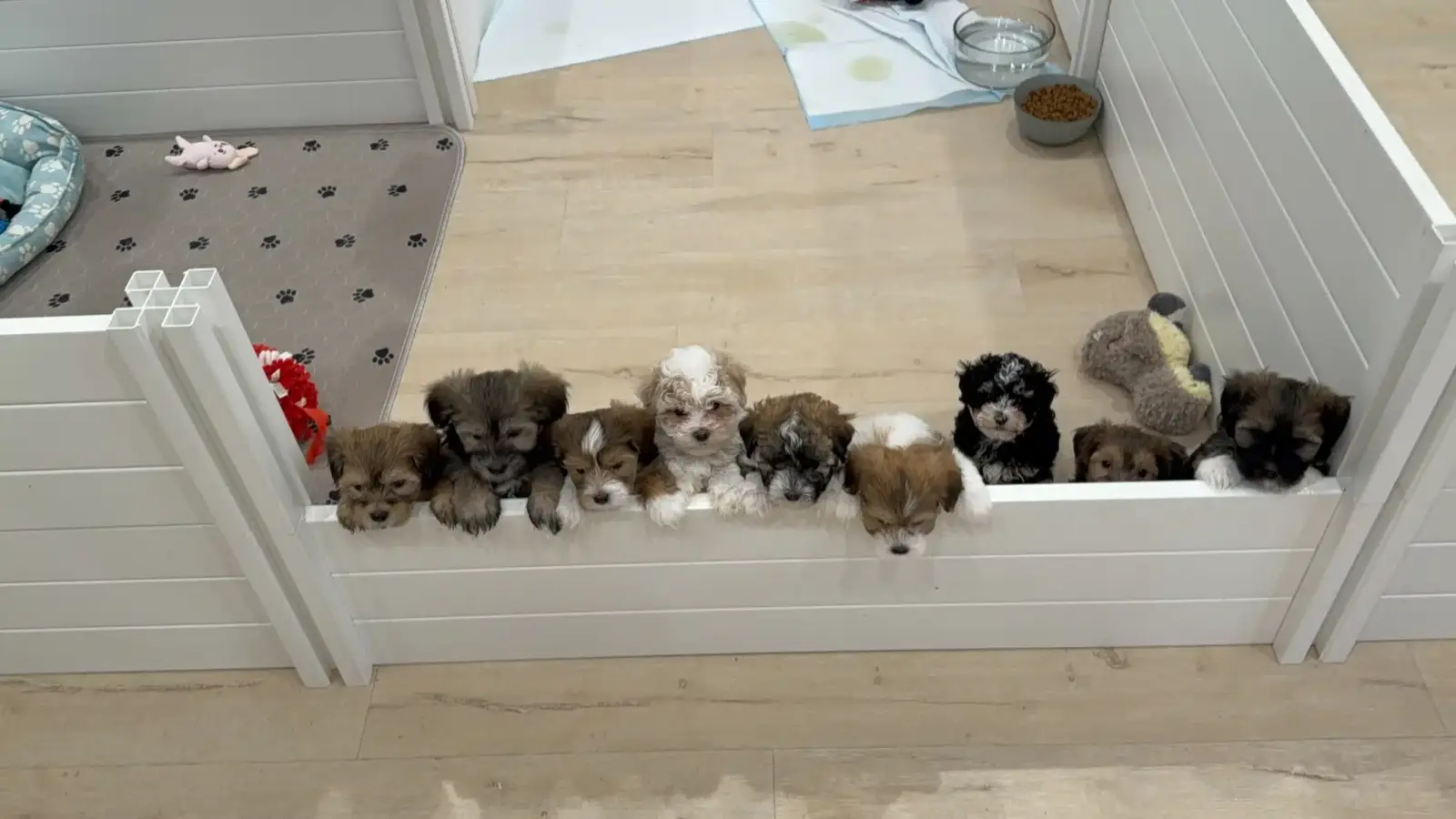
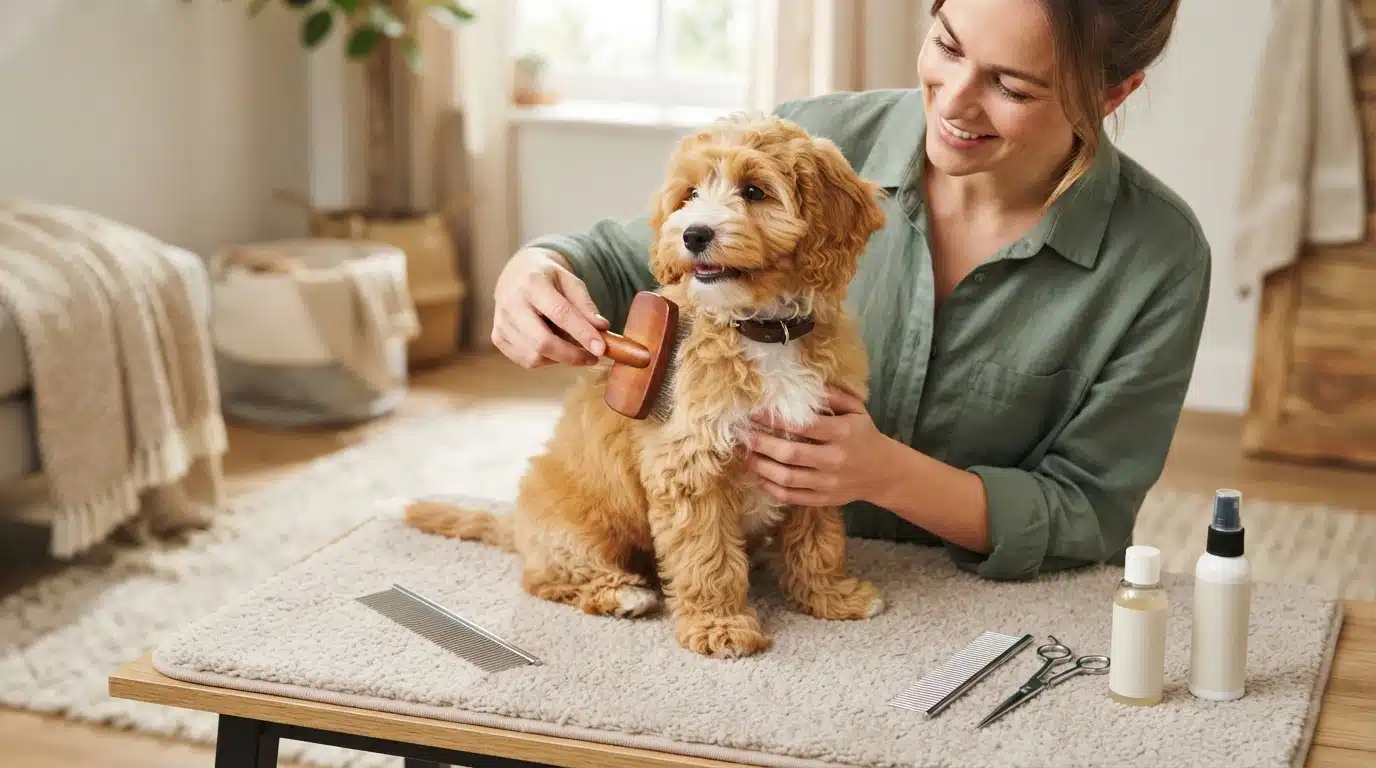
Quick Summary: Prepare everything before your Montana puppy arrives: pack a travel kit, set up a crate beside your bed, and plan a calm, low-stimulation first night. Keep potty breaks short in cold weather, expect one or two overnight trips, and respond to crying calmly instead of letting them ‘cry it out.’ A consistent routine builds trust, and most puppies settle by night two.
Your Havanese, Havapoo, or Cavapoo may arrive tired, overstimulated, and ready to sleep before your family finishes celebrating. A long Montana pickup drive or nationwide delivery takes real energy out of a small puppy. The biggest mistake families make is skipping the setup and hoping the puppy first night goes smoothly on its own.
This guide gives you a simple plan: a prepared sleep space, a calm routine, a crate setup for puppy safe sleep, and a cold-weather potty plan built for Montana nights. We raise these breeds in our home program, so we know what a well-adjusted puppy needs after travel. Good Montana puppy care starts with night one. Here is how to get it right.
Step 1: Pack a First-Night Kit Before Your Montana Puppy Arrives
Your puppy’s first night goes smoother when everything is ready before you arrive. A tired, travel-stressed puppy needs food, rest, and a potty break right away, not a store run. Pack two kits: one for the trip home and one staged at your house.
Pack the travel bag for pickup or delivery arrival
Whether you pick up in person or meet a nationwide delivery, keep a small bag in the car with the essentials. AKC Reunite’s travel checklist recommends the same core items, plus a few extras for winter roads:
- Travel crate or secure carrier (never loose in the car)
- Towels for the crate and two spares
- Bottled water and a small collapsible bowl
- Paper towels, wipes, and a small trash bag
- Poop bags and a lightweight leash
Motion sickness is common on a puppy’s first ride. Towels make cleanup easy, and a crate keeps your little Havanese or Cavapoo safe the whole way. If your drive home from Montana crosses mountain passes, add a warm blanket so the crate stays cozy.
Prepare the sleep and cleanup supplies at home
Before pickup day, set up your puppy’s sleep space and station your cleanup gear nearby. Vets suggest keeping the crate or pen within earshot the first night, so place it near your bedroom.
Your at-home first-night kit should include:
- A correctly sized crate with soft bedding
- Puppy food (the same brand the breeder used) and shallow bowls
- Enzymatic cleaner and pee pads for accidents
- One or two puppy-safe chew toys
- A fitted collar with an ID tag
Set out the food, cleaner, and pads in one spot so midnight potty trips are simple. Everything for the puppy’s first night should be within arm’s reach of the sleep area.
Also Read: 10 Red Flags to Avoid When Visiting a Local Puppy Breeder
Step 2: Set Up a Safe Sleep Space Beside Your Bed
The puppy first night goes best when your new Havanese, Havapoo, or Cavapoo sleeps close to you. Your puppy just left their littermates, so total isolation feels scary. Your breathing, smell, and voice are what calm them.
Choose proximity over isolation
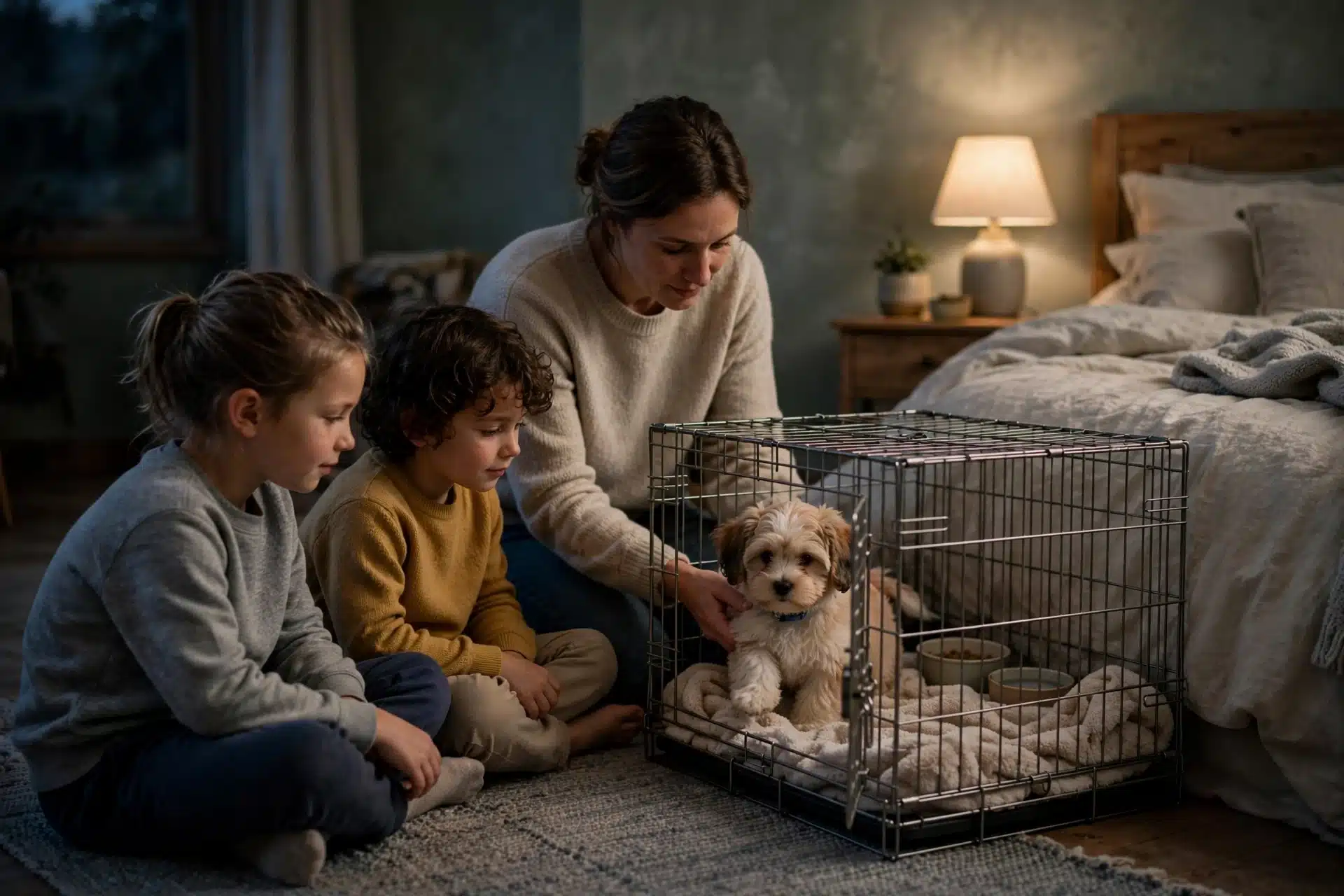
Put the crate or pen right next to your bed for the first one to two weeks. The Animal Humane Society recommends keeping the crate in or near your bedroom overnight so your puppy does not link the crate with being alone. You will also hear a real potty cry at 2 a.m., which beats waking up to an accident.
Skip the laundry room and the kitchen. A puppy left to “cry it out” alone on night one learns the crate means abandonment.
- Place the crate within arm’s reach of your bed.
- Expect one or two potty trips overnight for a puppy under 12 weeks.
- Move the crate to its final spot only after several quiet nights, a few feet at a time.
Make the enclosure secure, comfortable, and appropriately sized
Size matters more than style. The crate should be big enough for your puppy to stand up, turn around, and lie down stretched out. Anything bigger invites potty accidents in a corner. If you buy an adult-sized crate, use a divider panel to shrink the space while your puppy grows.
Set it up so it feels like a den:
- A soft, washable pad or blanket (skip loose fabric if your puppy shreds it)
- A light cover over a wire crate for a darker, cozier feel, with airflow
- One safe chew toy, nothing with small parts
Remove your puppy’s collar before closing the door so it cannot snag. Never use the crate as punishment, since a properly introduced crate should feel like a safe den, not a consequence. Puppies from Sage Puppies arrive well-started on crate rest, so night one is usually about comfort, not panic.
Also Read: Montana Puppy Pickup Checklist for First-Time Out-of-State Buyers
Step 3: Follow a Low-Stimulation Arrival and Bedtime Routine
Your puppy’s first night sets the tone for the whole first week. Keep it quiet, short, and predictable. After hours of travel or a delivery day, even a confident Havapoo or Cavapoo is running on empty. Too many new faces and too much excitement almost always lead to an overtired, accident-prone puppy. The AKC recommends introducing family members one at a time and letting your puppy explore a small area first. Do the same on night one.
Start with potty, water, and one prepared area
Walk your puppy straight to the potty spot before anything else. If you live in Montana, that spot might be snowy or icy in winter, so clear a short path and keep the trip brief. Praise calmly, then come inside.
- Offer fresh water, then pick up the bowl an hour before bed.
- Show your puppy one small, puppy-proofed room. Not the whole house.
- Set the crate or sleep area where it will stay long-term, close enough that you can hear your puppy at night.
Keep food and introductions familiar
Feed the same food the breeder used. Ask ahead of time so it’s waiting at home. If your puppy came from Sage Puppies, you’ll know exactly what food they’ve been eating, which matters more tonight than trying something new. Plan the last meal a couple of hours before bedtime to cut down on overnight potty trips.
Keep people calm too. Kids sit on the floor and let the puppy come to them. No visitors, no trips to show the puppy off.
A quiet puppy first night builds trust. Loud greetings and passing the puppy around can undo weeks of careful socialization.
Then settle into the routine: one last potty break, a short calm cuddle, and into the crate near your bed. Low light, low voices, low expectations. Sleep comes easier for both of you.
Step 4: Plan Potty Breaks and Respond Calmly to Nighttime Crying
Most first-night crying comes from two things: a tiny bladder and a big adjustment. Handle both with a plan, not panic.
Use a calm response sequence when your puppy cries
Puppies often whine when they first land in the crate, and that usually fades on its own. Wait two to three minutes and listen. Fussing that slows down is settling behavior, so let it run its course. Escalating cries after a stretch of quiet usually mean a real potty need, which PetMD’s vet-written guide recommends responding to promptly.
When you do get up, keep it boring:
- Lights low, no talking, no eye contact beyond what’s needed.
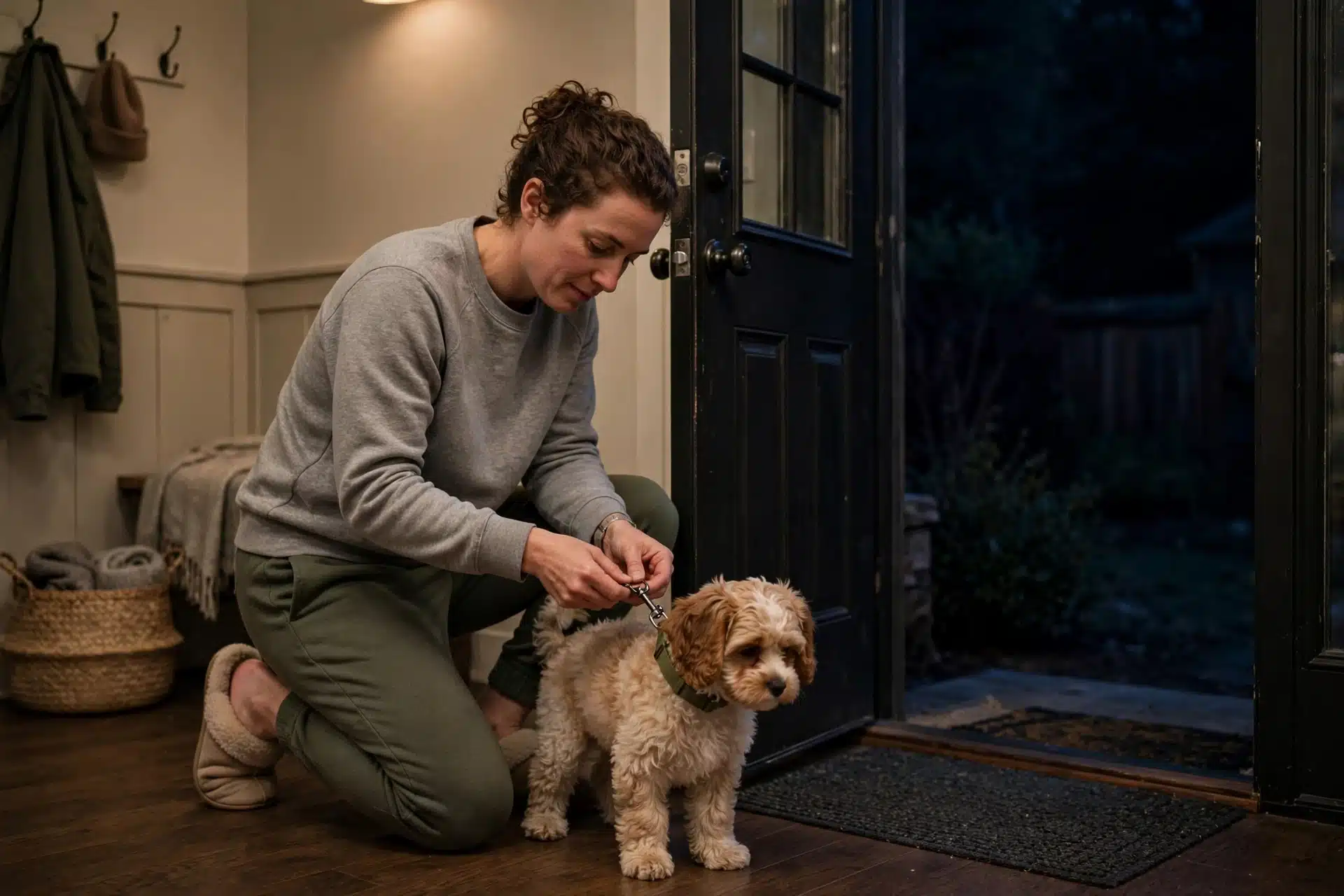
- Clip the leash, go straight to the potty spot, wait quietly.
- Return your puppy to the crate with zero fanfare.
- Leave before any fussing starts again.
This sequence matters because crying that earns play, lights, or a warm greeting teaches your puppy that 2 a.m. is party time. Boring trips keep nighttime functional. Never punish the crying, though. A scared puppy needs calm reassurance, not correction.
Set realistic overnight potty expectations
Young puppies simply cannot hold it all night. A common rule is about one hour of hold time per month of age, plus one. So an eight-week-old puppy manages roughly three hours, and most need one or two overnight trips in the first weeks, as Petful’s night-one crate guide explains.
Plan around that instead of hoping for luck:
- Set an alarm every 3 to 4 hours rather than waiting for crying.
- Expect improvement fast. Many puppies stretch to 4 to 6 hours overnight within a few weeks.
- Know the red flags. If crying worsens after two weeks, or comes with diarrhea or no appetite, call your vet.
If your puppy arrived through our nationwide delivery, factor in travel recovery. A long flight day means more potty stops and a quieter first evening before anyone expects a full night’s sleep.
Also Read: Puppy Care Blog & Resources | Sage Puppies
Step 5: Adjust the First Night for Montana Cold and Travel Fatigue
Make winter potty trips short, dry, and supervised
Montana nights can drop well below freezing, and young puppies cannot regulate their body temperature well. Cornell’s canine health center notes that puppies have little body fat and get cold fast, so keep each potty break to two or three minutes.
Before bedtime, clear a small path to one potty spot. Keep the puppy on a leash so the trip stays on task. Shovel the spot and wipe paws when you come back in. Watch for shivering, paw lifting, or a tucked tail, and head inside if you see them.

| Condition | What to Do |
|---|---|
| Light snow, above 32°F | Short supervised leash trip |
| Below 20°F | Under two minutes, then warm up indoors |
| Wind, sleet, or ice | Use a puppy pad indoors instead |
Let travel fatigue change the pace, not the safety rules
A puppy arriving after a long drive, whether from our South Jordan pickup or nationwide delivery, will be extra tired. Tired puppies sleep deeper and may not wake to signal they need out. Set an alarm for one mid-night potty trip.
Expect some whimpering the first night. Soothe quietly, but keep the same crate rules you started with. Skip big play sessions and let rest do the work. By night two, most Havanese, Havapoo, and Cavapoo puppies settle into the new rhythm.
Also Read: 10 Signs a California Puppy Listing Is a Scam – Sage Puppies
Step 6: Check Your Puppy and Sleep Setup Before Morning
Use a quiet overnight check
If your puppy stirs or whines, go to them quietly. Vets advise against letting a new puppy “cry it out,” since crying usually signals a real need. Check for a potty break first, then offer calm reassurance. Keep the lights low, skip the play, and use a soft, steady voice. A puppy sleeping near your bed should settle faster once they know you are close. Vets recommend keeping the sleep space within earshot so you can hear genuine needs, then moving it farther away as your puppy gains confidence (Chewy).
Start the morning with the same simple rhythm
Wake up before your puppy does if you can. The first morning should mirror last night’s calm: straight outside to the same potty spot, quiet praise, then breakfast. Never punish an overnight accident. Just clean it up with an enzyme cleaner and move on.
Then do a quick setup check:
- Bedding is dry and in place
- Water bowl is fresh and full
- Chew toy survived the night with no loose pieces
- Crate door and latch worked as they should
Keep the rhythm boring and repeat it every day. Puppies learn through repetition, and a steady routine builds trust faster than anything else. That same predictability is how our Havanese, Havapoo, and Cavapoo puppies are raised from day one at Sage Puppies, so your consistency at home simply continues what they already know.
Also Read: Puppy Weather Safety Guide for Heat, Cold, and Severe Storms
Common Mistakes to Avoid on a Puppy’s First Night
Avoid Overwhelming the Puppy
Your puppy just left everything familiar. A parade of neighbors, kids, and phones flashing photos is too much. Keep the first evening quiet and small: your immediate household only. Let the puppy explore one room at a time on a leash. Skip the car ride to show friends, the trip to the pet store, and the wrestling session with the family dog. Handle the puppy gently, speak in low voices, and give it a few minutes alone in its setup to decompress. Calm now builds a confident dog later.
Avoid Unsafe or Confusing Sleep Habits
It’s tempting to let a crying puppy sleep in your bed. Resist it. Bed-sharing sets up a habit that’s hard to break and carries real risks – a small Havanese or Cavapoo can slip under blankets or fall from the mattress. Other common missteps:
- Letting the puppy roam the house overnight unsupervised.
- Placing the crate near a drafty window, a hot vent, or a busy hallway.
- Switching between the bed, a blanket pile, and a crate – pick one spot.
- Forgetting a final potty trip before lights out.
Set the crate beside your bed so the puppy knows you’re close. That reassurance, without confusion, is what makes night two easier.
Also Read: Guides – Sage Puppies
When to Call Your Veterinarian or Sage Puppies
Most first-night quirks are normal. Some are not. Know the difference before bedtime.
Signs that need prompt veterinary guidance
Call your vet right away if you see any of these:
- Repeated vomiting, especially with blood
- Watery or bloody diarrhea lasting more than a day
- Refusing more than two meals
- Lethargy that does not lift after a nap
- Straining to urinate or blood in the urine
- Trouble breathing or pale gums
Puppies can go downhill fast, so don’t wait it out. The AKC’s chief veterinary officer notes that vomiting paired with diarrhea, low appetite, and lethargy may be an emergency, and repeated bloody or watery stools past 24 hours warrant a call. One soft stool after a big day? Usually just stress.
Questions to bring to the breeder and first vet visit
Write these down before your puppy’s first checkup:
- What food was the puppy eating, and when should I switch?
- Which vaccines and dewormings are already done?
- What does the health record include, and when is the next dose due?
- Any temperament notes, like crate habits or nap patterns?
We send every Sage Puppies puppy home with feeding and care details, and we’re happy to answer questions after pickup or delivery. Bring your records to the first vet visit and ask when symptoms mean an urgent call.
Also Read: Havanese, Havapoo & Cavapoo Puppy Care Blog

Your puppy’s first night sets the tone for every night after. At Sage Puppies, our home-raised Havanese, Havapoo, and Cavapoo puppies arrive well-started, socialized, and ready to settle in. Browse available puppies, submit your application, and let’s plan pickup or delivery together.
Frequently Asked Questions
Q1: What should I pack for a puppy’s first night at home?
Have a crate, soft bedding, water bowl, a small blanket that smells like mom, puppy food, and poop bags ready before pickup or delivery day.
Q2: How do I make my puppy’s first night easier?
Keep the evening calm and quiet, offer a potty break before bed, and settle your puppy in the crate with a warm blanket and low light.
Q3: Where should my puppy sleep on the first night?
In a crate near your bed. Close contact comforts your puppy and helps you hear potty cues overnight.
Q4: Should I let my puppy cry at night?
Comfort briefly after 10-15 minutes of fussing, then redirect calmly to sleep.
Q5: How cold is too cold for potty breaks?
Short breaks are fine; most Havanese and Cavapoo puppies handle a minute or two outside, then head right back in.
Conclusion
A safe first night comes down to a few simple moves. Set up the crate or sleep space before your puppy arrives, keep it close to your bed, and plan a final potty trip right before lights-out. Expect some crying. It is normal, and comfort beats “crying it out,” a point veterinary sources stress again and again. In cold Montana weather, keep potty breaks short and give travel-time recovery its due. Positive crate habits started gently now pay off for months, as AAHA guidance on early puppy development makes clear. Stay calm, stay consistent, and trust the routine.