Quick Summary: A smooth Montana puppy pickup hinges on planning before the drive: confirm your destination state’s entry rules, gather all health and ownership records, and pack a secured crate with food, water, and cleanup supplies. Plan quiet, leashed potty breaks every two to three hours, never let the puppy ride loose, and keep the first night at home calm with a familiar routine. The article stresses checking USDA APHIS interstate rules, as each state sets its own requirements, and booking a vet visit soon after arrival.
A happy breeder handoff can turn into a long, tiring drive if you leave Montana without a plan. Your new Havanese, Havapoo, or Cavapoo may soon be sleeping in a secure crate beside you, but the hours before that matter.
A Montana puppy pickup brings real questions for first-time out-of-state families. What papers should you bring? How often should you stop? What keeps a small puppy calm and safe in the car? This guide gives you a clear puppy travel checklist for the handoff, the drive home, and your first night together.
Use these puppy pickup essentials to prepare for a smooth Montana puppy pickup, whether you are returning to Utah or heading elsewhere in the United States. A thoughtful Montana puppy pickup starts well before pickup day.
Step 1: Confirm the Pickup Arrangement and Destination Requirements
Write Down the Pickup-Day Details
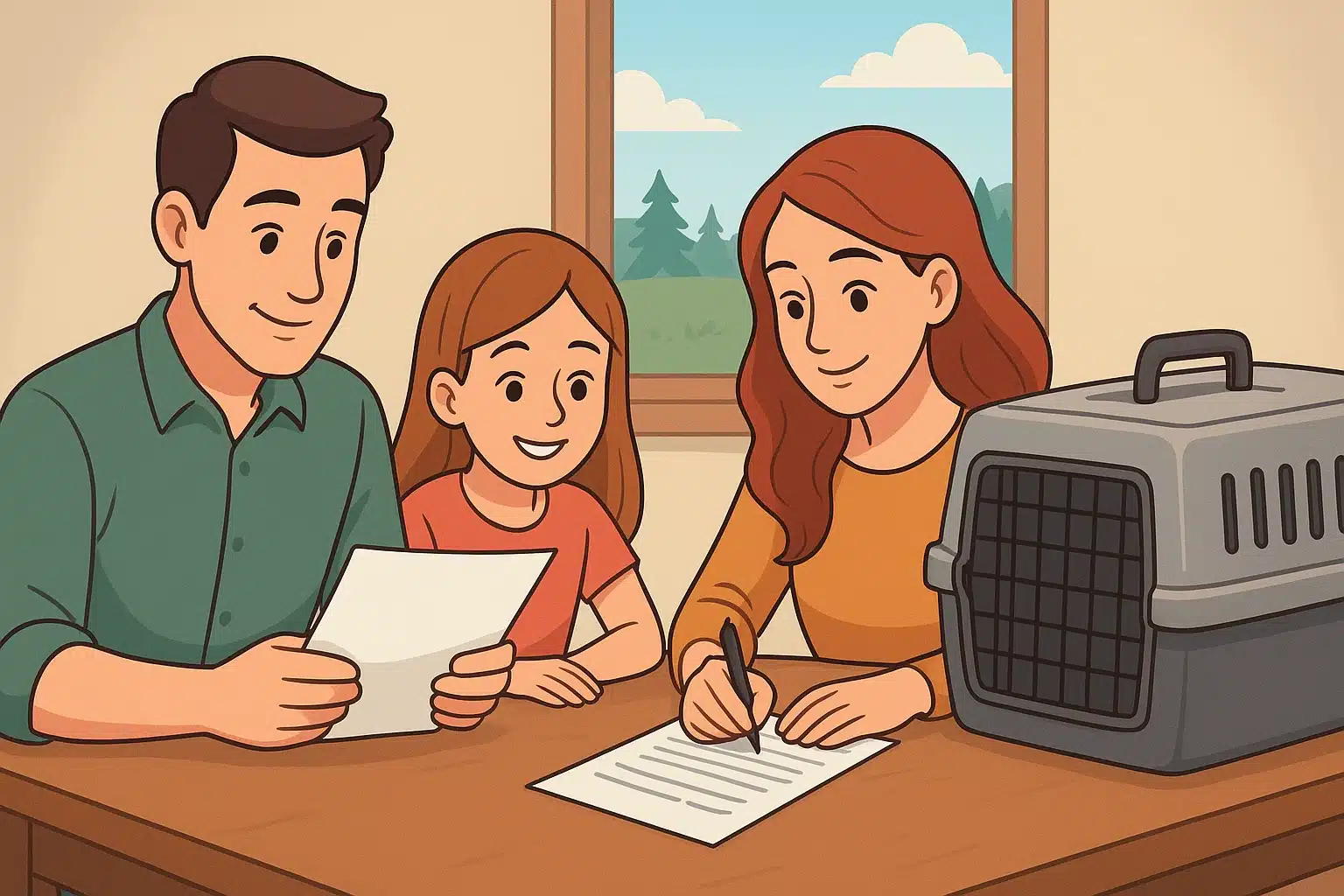
Get the full plan in writing before you leave for Montana. A calm pickup starts with clear details, not last-minute texts.
Confirm these points with the breeder:
- Exact pickup address, date, and time window
- A phone number for day-of travel changes
- Who will meet you and what ID you need
- Your puppy’s records, food, and any take-home items
- When the puppy last ate, drank, and went potty
| Detail | Why it matters |
|---|---|
| Pickup time | Helps you plan breaks and arrival home |
| Paperwork list | Prevents missing health or ownership records |
| Feeding schedule | Lets you keep the first travel day familiar |
Tip: Save the breeder’s number, pickup address, and your route offline before mountain driving.
Check the Rules for the State You Are Entering
Your destination state’s rules apply, even if you drive through several states. The USDA says states set their own entry rules for pets, which may include a health certificate, vaccines, tests, or treatments. Check the USDA interstate pet travel guide before pickup.
Ask the breeder what records will travel with your puppy, then check that they match your state’s current rules. For a Utah-bound family, confirm requirements before leaving Montana.
- Verify whether a Certificate of Veterinary Inspection is needed.
- Check vaccine and age rules.
- Bring printed copies and save photos on your phone.
Warning: Requirements can change. If anything is unclear, contact your destination state’s animal health office before you travel.
Also Read: How to Plan a Nebraska Puppy Pickup From Another State
Step 2: Gather Every Document You Need Before Leaving Montana
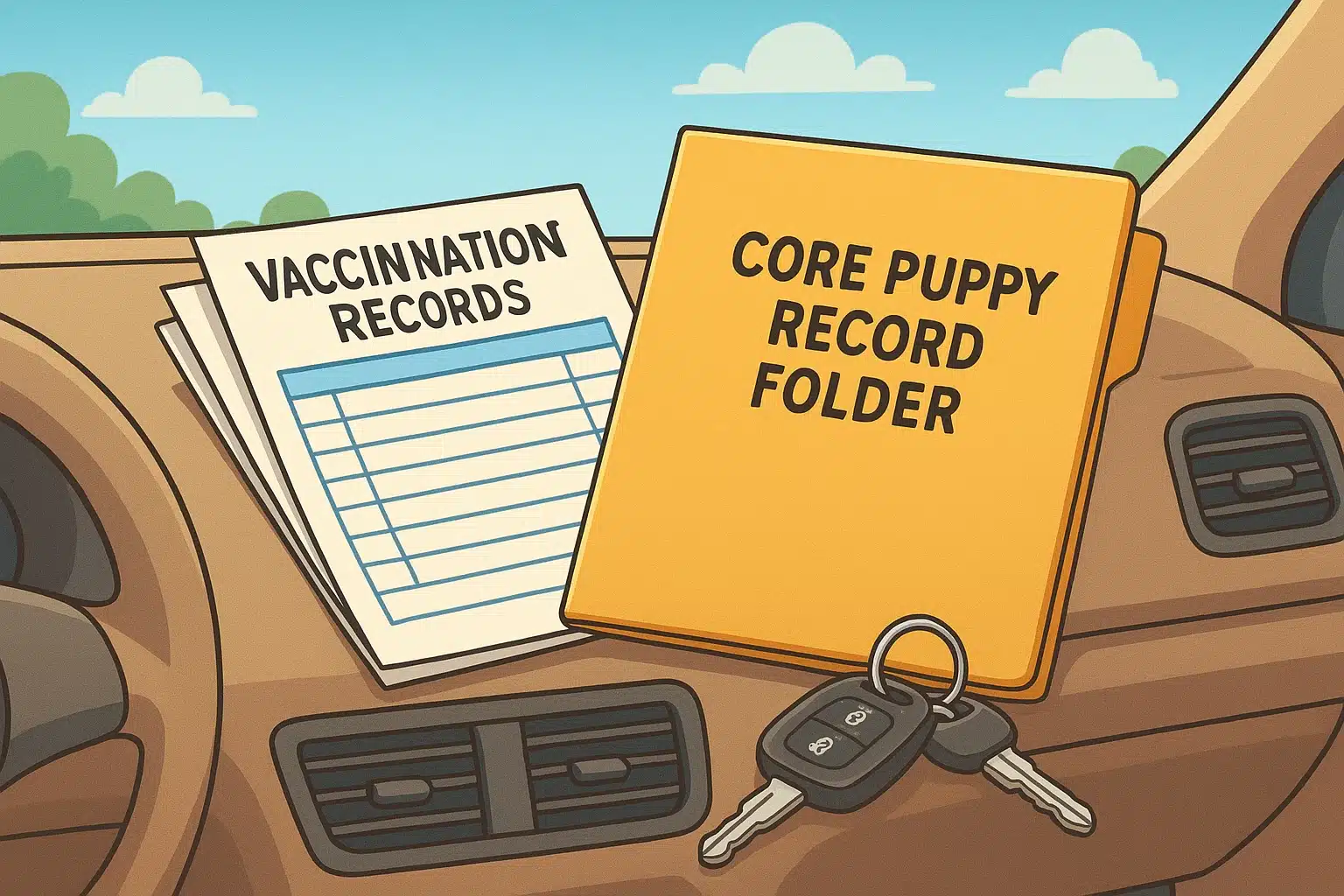
The Core Puppy Record Folder
Do not put paperwork in the trunk. Keep a slim folder in the front seat, then photograph every page as a backup.
Before you leave the breeder, ask for:
- A signed purchase agreement and receipt
- Your puppy’s vaccination and deworming record
- A list of food, feeding times, and current routine
- Parent health-testing details, if provided with your puppy packet
- Microchip details and transfer steps, if your puppy is chipped
- Your breeder’s phone number and after-hours contact plan
Review names, dates, and your home address before you start driving. Fixing a typo is easy at pickup and annoying once you are halfway home.
| Document | Why it matters on the drive home |
|---|---|
| Vaccination record | Helps your home vet set the next care dates |
| Feeding guide | Keeps meals familiar during a stressful first week |
| Purchase agreement | Confirms the terms of your puppy’s placement |
| Microchip details | Lets you complete ownership transfer promptly |
Tip: Keep originals dry in a zip pouch. Put digital photos in a shared family album so another adult can find them if needed.
When a Health Certificate or CVI May Apply
A Certificate of Veterinary Inspection, often called a CVI or health certificate, may be needed for interstate movement. Rules differ by destination, travel method, puppy age, and purpose of travel.
For a family driving home, ask the breeder whether your state requires one and whether its timing fits your departure date. If you are flying, your airline may also set its own health certificate rules.
Use this quick check:
- Confirm your destination state’s entry rules before travel.
- Ask whether a CVI is required for a privately owned puppy.
- Check the certificate’s issue date and expiration window.
- Carry the original with your other records.
- Give a copy to your new veterinarian at the first visit.
Warning: Do not assume Utah rules match another state. If you continue beyond Utah, check the final destination’s animal-entry requirements too.
Also Read: Havanese, Havapoo & Cavapoo Puppy Care Blog
Step 3: Pack the Puppy Travel Checklist, Not Just a Few Supplies
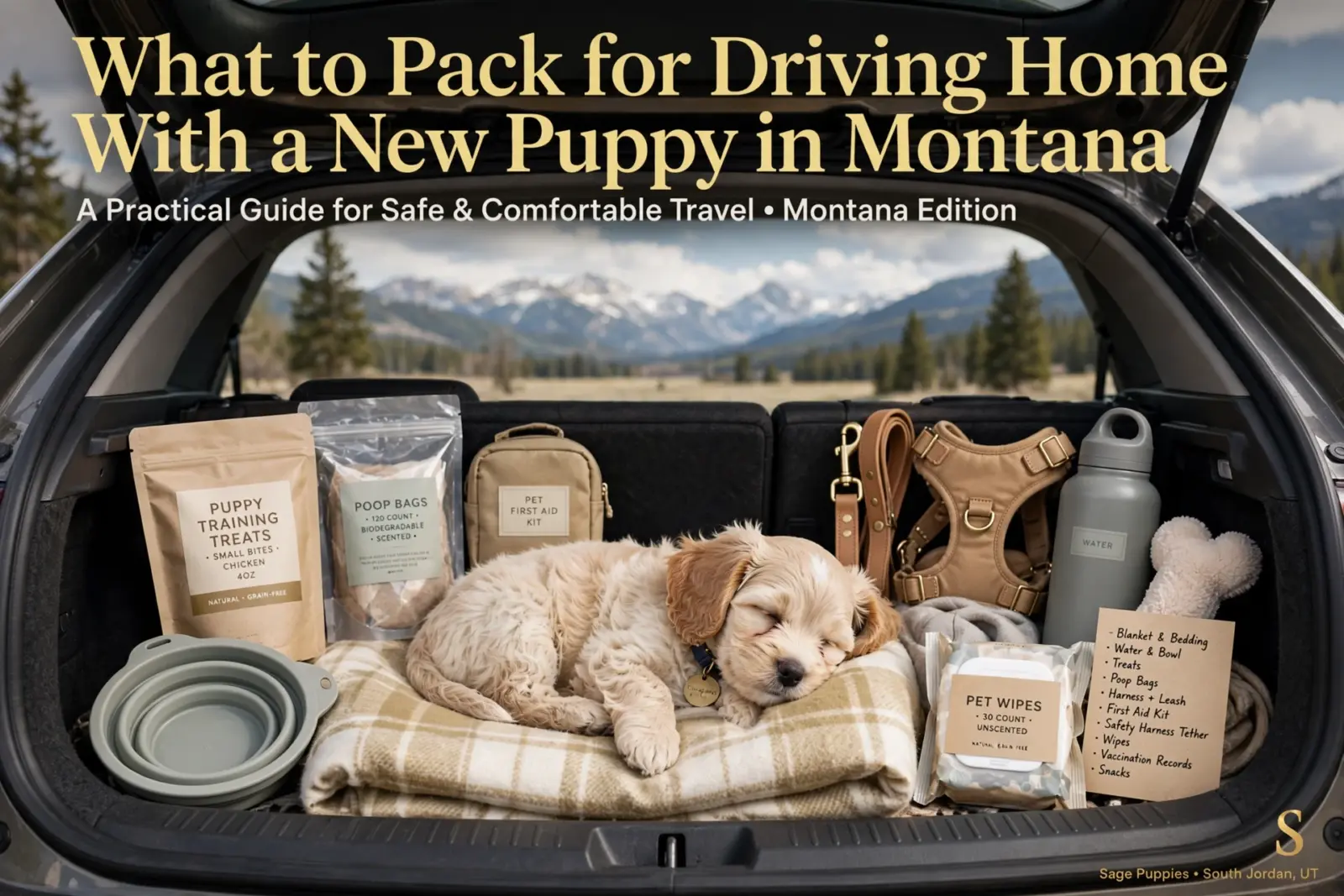
A long drive home works best when everything your puppy needs is within reach. Pack one small tote for the car, not a pile of loose items.
Safety and Comfort Essentials
Use a secure, well-ventilated travel crate that fits your puppy without extra room to slide around. Line it with a washable towel and bring two backups for accidents.
- Crate or puppy car seat secured to the vehicle
- Harness, collar, ID tag, and a standard leash
- Paper towels, puppy-safe wipes, waste bags, and enzyme cleaner
- A familiar blanket or soft toy from pickup
- Spare towel and a light cover for quiet rest
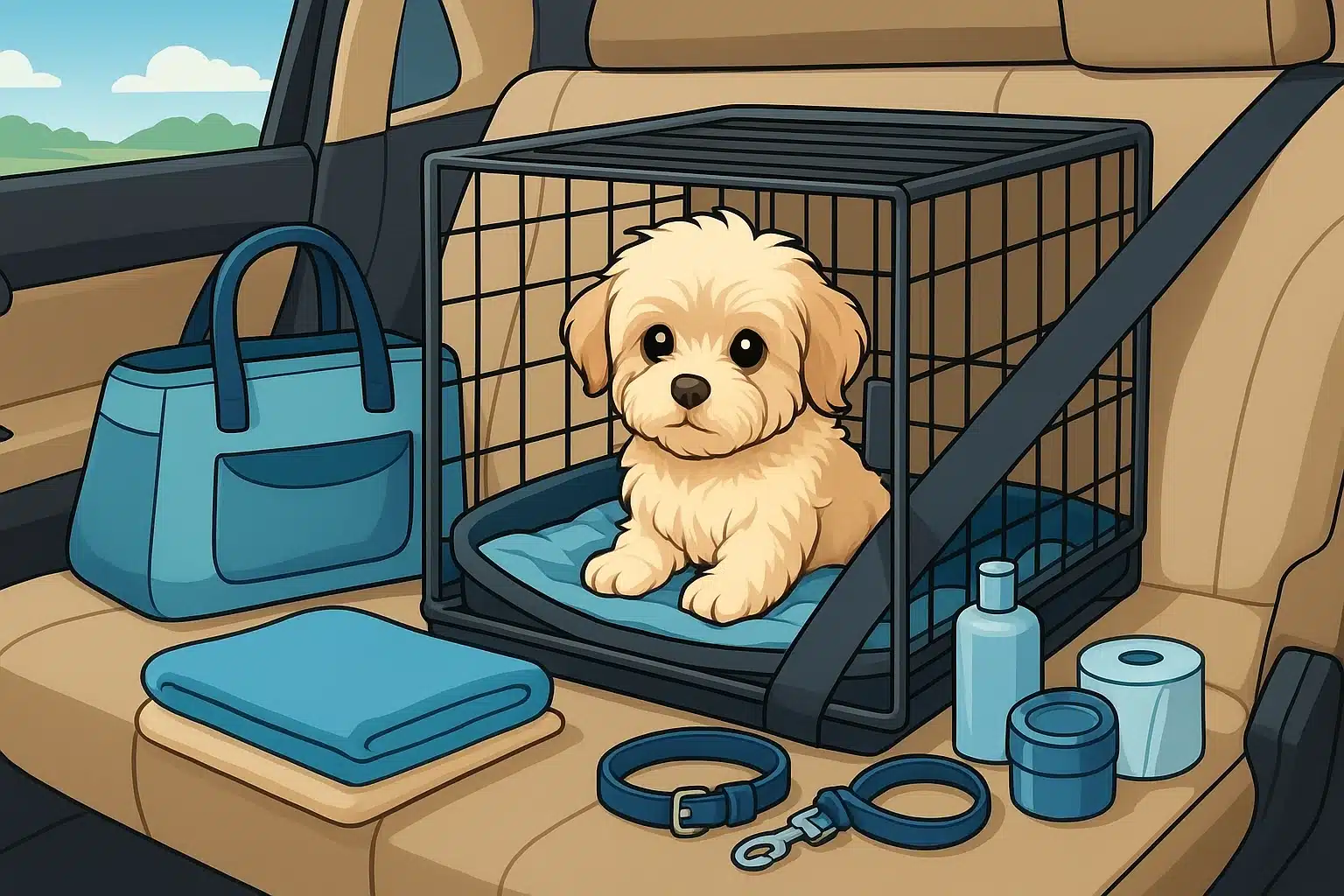
Never let a young puppy ride loose, on a lap, or in the front seat. Keep the car calm and the temperature mild.
Keep health records in a waterproof folder. Your destination state may require paperwork or other entry steps, so check its rules before leaving Montana through the USDA APHIS interstate pet travel guide.
Food, Water, and Routine Supplies
Ask the breeder which food your puppy eats and pack enough for the full trip plus two extra days. A sudden food change can upset a small puppy’s stomach.
| Item | Pack it this way | Why it helps |
|---|---|---|
| Current puppy food | Pre-measured meal bags | Keeps feeding familiar |
| Water | Bottled water and bowl | Offers steady, clean drinks |
| Training treats | Small, soft pieces | Rewards calm potty breaks |
| Chew item | One safe, simple chew | Gives the puppy a quiet task |
Offer water at rest stops. Feed small meals only when your breeder advises it. Plan calm, low-traffic potty breaks, and carry your puppy in unfamiliar areas until your vet confirms it is safe to walk there.
The Family and Vehicle Readiness Kit
Put a phone charger, roadside kit, hand sanitizer, and seat protector in the car. Save the breeder’s number and a nearby emergency vet before departure.
- Assign one adult to watch the puppy.
- Stop before the puppy becomes restless.
- Keep doors closed before opening the crate.
Also Read: How to Keep Puppies Safe During Extreme Weather and Temperature Changes
Step 4: Plan the Long Drive Home Around the Puppy’s Needs
Set a Flexible Departure Plan
Start early, but do not rush the handoff. Give your puppy time to potty, settle into the carrier, and meet the people riding home.
Keep the first driving block short. A young Havanese, Havapoo, or Cavapoo may sleep deeply, then wake up needing a calm break. Plan your route around easy exits, pet-friendly hotels, and emergency vet options.
| Pack within reach | Why it helps |
|---|---|
| Secured carrier and spare towel | Keeps the puppy safe and handles accidents |
| Water, bowl, and familiar food | Avoids sudden changes on travel day |
| Leash, harness, waste bags, and wipes | Makes each stop quick and controlled |
| Health records and breeder contact | Keeps key details easy to find |
Secure the carrier in the back seat or rear cargo area. The AVMA advises using a properly sized, secured crate or carrier, not letting a pet ride loose.
Use Calm, Clean, Supervised Breaks
Choose quiet grass areas away from dog parks, busy rest-stop pet zones, and unknown waste. Your puppy is still building immunity, so carry them through high-traffic areas when possible.
For each stop:
- Clip the leash on before opening the car door.
- Offer a brief potty chance, not a long walk.
- Give small sips of water.
- Check for stress, chill, or motion sickness.
- Return to the carrier before you start driving.
Never leave your puppy alone in the car. Vehicle temperatures can change fast, even in mild weather, according to the American Veterinary Medical Association.
Skip introductions to strangers and other dogs. A quiet, predictable stop is the kinder choice.
Keep the First Night Simple
Arrive, potty, offer water, and show your puppy one small sleeping area. Keep voices low and guests away.
Set the crate beside your bed, use the same food provided by the breeder, and expect a few wake-ups. The goal is not a perfect first night. It is helping your puppy feel safe.
Also Read: 10 Signs a California Puppy Listing Is a Scam – Sage Puppies
Step 5: Complete a Calm, Careful Puppy Handoff
Match the Puppy to the Records
Pause before goodbyes. Confirm the puppy in your arms matches every record you take home.
| Check | Match it to |
|---|---|
| Puppy details | Breed, sex, color, date of birth, and markings |
| Health papers | Vaccine dates, deworming notes, vet exam, and health certificate |
| Identification | Microchip number, if one is listed |
| Your details | Correct name, phone number, and destination address |
State entry rules can differ, so check your destination state’s pet travel requirements before you leave Montana.
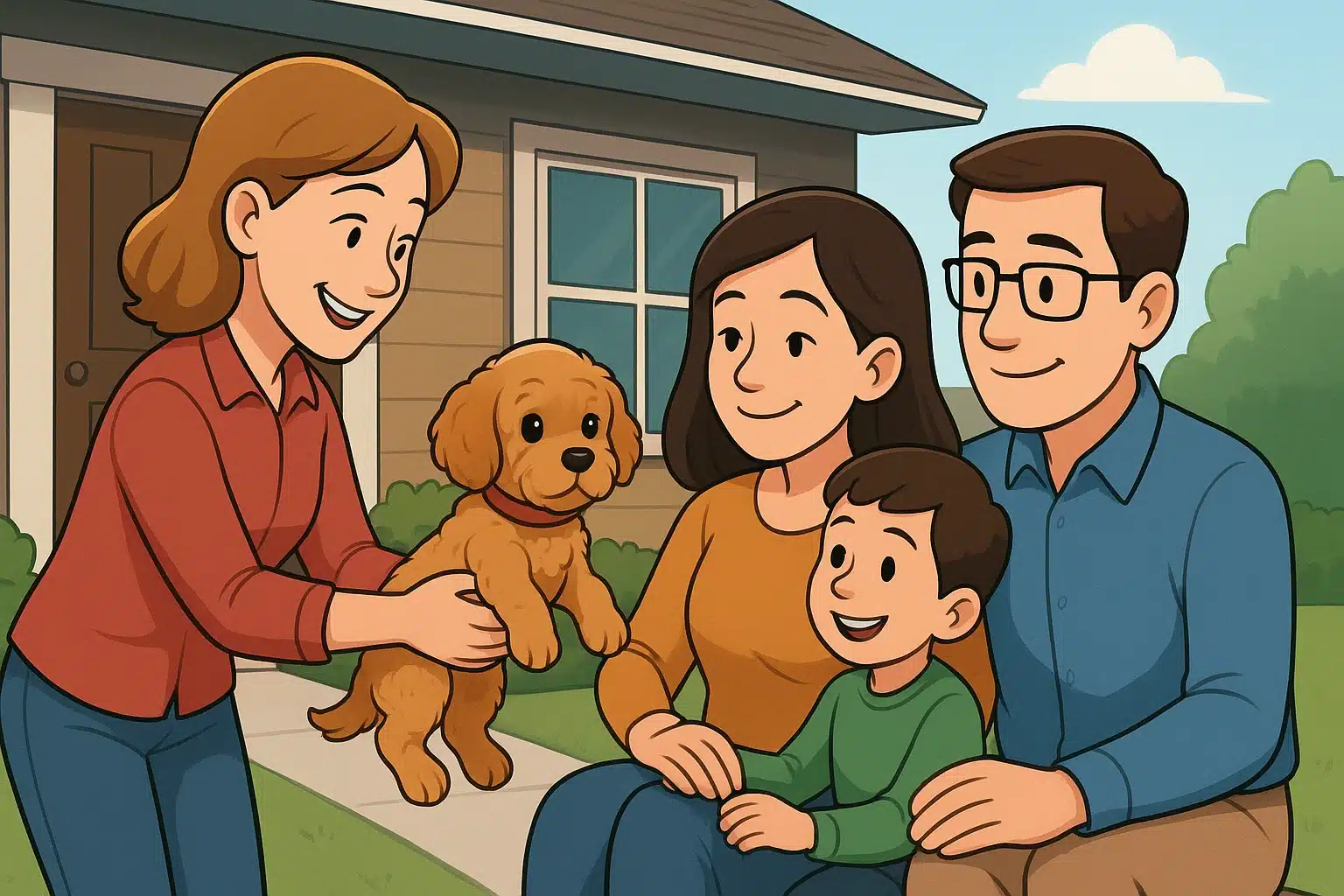
Tip: Take clear phone photos of every document before packing it away.
Ask the Questions That Matter After You Leave
Ask for plain, useful answers. Write them down while the breeder is beside you.
- What food is the puppy eating, and how much per meal?
- When is the next meal, potty break, and nap likely due?
- What normal adjustment signs should we expect during travel?
- Who should we contact if a record question comes up?
- When should we book our first vet visit at home?
Keep the health certificate, vaccine record, and breeder contact details in one easy-to-reach folder. USDA notes that destination states set their own interstate pet rules, which may include health certificates, vaccines, or other steps.
Load the Puppy Before You Load the Extras
Set the secured crate or puppy-safe seat area first. Then bring your puppy to the vehicle calmly, with one adult focused only on them.
- Keep the cabin quiet and cool.
- Offer a brief potty break before departure.
- Pack bags only after the puppy is settled.
Also Read: 10 Red Flags to Avoid When Visiting a Local Puppy Breeder
Step 6: Set Up the First 24 Hours at Home
Keep Arrival Quiet and Predictable
Bring your puppy straight to a prepared potty spot, then into one calm room. Keep the first evening simple. Offer water, the food they already know, a nap space, and gentle potty breaks.
- Limit visitors and loud play.
- Introduce resident pets slowly and with supervision.
- Let children sit quietly and allow the puppy to approach.
- Use the same feeding and bedtime routine from the start.
Your puppy has already handled a big travel day. A quiet home helps them settle faster than a busy welcome party.
Schedule Veterinary Follow-Up and Preserve the Records
Call your home veterinarian before pickup and book a new-puppy visit soon after you return. Bring every paper from the breeder, including the health record, vaccine dates, deworming details, microchip information, and any interstate travel documents.
A hands-on exam helps establish a veterinarian-client-patient relationship, which your vet needs to guide care and prescribe treatment when needed.
| Keep Together | Why It Matters |
|---|---|
| Vaccine and deworming record | Helps your vet plan the next doses |
| Health certificate or CVI | Supports interstate travel records |
| Microchip number | Lets you register current contact details |
| Breeder contact details | Helps your vet clarify early-care history |
Ask your vet about the puppy vaccine schedule. Puppies need a series of doses, and timing matters for full protection, according to the AVMA vaccination guidance.
Common Mistakes to Avoid on Montana Puppy Pickup Day
Leaving Without Reviewing the Records
Before you leave, read each record with the breeder. Confirm your puppy’s name, date of birth, vaccine details, microchip information, and care instructions.
Treating State Requirements as Universal
Do not assume Montana rules match Utah or your home state. The receiving state sets pet-entry rules, which may include health records or other steps. Check the USDA interstate pet travel guidance before pickup.
Packing Supplies That Are Not Accessible
Keep the carrier, water, bowl, paper towels, leash, and cleanup bags within arm’s reach. A packed trunk is not helpful during an unexpected stop.
Planning the Trip Like an Adult Road Trip
Build in short, quiet breaks. Skip crowded attractions and long restaurant stops. Your puppy needs a calm, warm space to settle, not a full travel itinerary.
Allowing Unsafe Stops or Loose Travel
Never let a puppy ride loose in the car or walk through busy rest areas. Use a secured carrier and a fitted harness with leash control.
Keep doors closed before opening the carrier. A frightened puppy can slip away in seconds.
Your Printable Montana Puppy Pickup Checklist
Before Leaving Home
- Confirm pickup time, route, and weather.
- Pack a crate, towels, water, cleanup bags, and a secure harness.
- Check your destination state’s rules. USDA APHIS notes that entry requirements vary by state.
At Pickup
- Collect health records, feeding notes, and breeder contact details.
- Ask about the puppy’s last meal, potty routine, and comfort cues.
- Secure the puppy in the crate before driving away.
On the Drive and at Home
- Keep the car calm and never let the puppy ride loose.
- Stop for quiet potty breaks, using a leash every time.
- Offer small amounts of water. Wait to feed until your planned stop or arrival.
- At home, start with one puppy-safe room and a calm introduction.
Also Read: Puppies for Sale in Montana: Local Buying Options for Families

Ready to plan a smooth puppy homecoming? Sage Puppies helps first-time families with home-raised Havanese, Havapoos, and Cavapoos, plus clear pickup and travel guidance. View available puppies, review the process, and apply when your family is ready.
Frequently Asked Questions
Q1: What documents do I need to pick up a puppy in Montana?
Bring your photo ID, signed purchase or adoption agreement, payment records, and the puppy’s health and vaccine papers. Ask the breeder which records your home state needs before you leave.
Q2: How do I prepare for a long drive home with a new puppy?
Plan frequent, quiet potty stops and secure the puppy in a travel crate. Keep the first day simple. Limit visitors, loud music, and long play breaks.
Q3: What should I pack for bringing a puppy home from Montana?
Pack a crate, towels, water, bowl, leash, harness, waste bags, paper towels, and a small food supply. Bring a chew toy for calm crate time.
Q4: How often should a new puppy stop during the drive?
Stop about every two to three hours, plus after naps, meals, or heavy drinking. Use a safe, low-traffic spot and keep the puppy leashed.
Q5: Should I change my puppy’s food after pickup?
No. Keep the breeder’s food for at least several days. Make any food change slowly to help avoid stomach upset.
Conclusion
A smooth Montana puppy pickup comes down to planning before the drive begins. Confirm your destination state’s entry rules, keep your puppy’s records easy to reach, and set up a safe crate, water, cleanup supplies, and calm rest stops.
The USDA APHIS interstate travel guide notes that pet entry rules are set by the destination state, so check them before leaving Montana.
Keep the first days at home quiet. Let your Havanese, Havapoo, or Cavapoo rest, follow the feeding routine provided, and give your new puppy time to settle with your family.