Quick Summary: Choosing a local Utah breeder or nationwide shipper depends on two separate issues: how the puppy was raised and how it will travel, not distance alone. Verify the puppy’s vet records, both parents’ health screenings, DNA results, written contract, and transport age before paying, since shipping adds stress, costs, and opportunities for brokers or scammers. Sage Puppies offers in-person pickup in South Jordan plus delivery, while nationwide shippers provide broader breed selection and faster timelines.
A Utah family can book a South Jordan pickup on a Tuesday, and a family in another state can have a puppy from the same litter delivered to their door on a Wednesday. So which route is safer? This Utah puppies local breeder vs shipper comparison matters less because of distance and more because of what you can see and verify before the puppy ever travels. A local breeder lets you visit. A shipper offers more breed selection. Each side claims its model is safer, and generic advice rarely settles it. That is why this Utah puppies local breeder vs shipper guide checks five things with either seller: where the puppy is raised, how it travels, the health records you can obtain, the full cost, and breeder verification before you pay a deposit. It also explains where brokers fit and what to ask before booking a flight. If you are weighing Utah puppies local breeder vs shipper options, start with what each seller will show you, not what they promise.
Utah Puppies: Local Breeder vs Nationwide Shipper at a Glance
| Sage Puppies | Nationwide puppy shippers | |
|---|---|---|
| Where the puppy is raised | Home-raised program based in South Jordan, Utah | Varies widely by breeder, including commercial kennels and home-raised programs |
| How the puppy travels | Local pickup by appointment in South Jordan or discussed delivery options | Air or ground transport by the breeder, a carrier, or a transport partner |
| What you can verify in person | In-person meeting at pickup, plus parent and puppy health information shared in writing | Photos, videos, video calls, or a single arranged visit far from home |
| Health documentation | Parent screening discussed alongside puppy wellness records and written health terms | Typically posted online, with records varying widely by breeder |
| Total cost to bring the puppy home | Puppies $3,500-$4,500, with any travel costs quoted separately | Purchase price plus a delivery fee, which can reach into the hundreds of dollars |
| Best for | Utah families wanting pickup, and families nationwide who want a documented, conversation-first process | Buyers far from any breeder who want broad breed selection and a faster timeline |
How Sage Puppies and Nationwide puppy shippers Compare
Sage Puppies
Sage Puppies is a small home-raised program in South Jordan, Utah, founded in 2025. It offers Havanese, Havapoo, and Cavapoo puppies to local families who pick up in person and to national families who prefer a documented, conversation-first process. Any travel costs are quoted separately from the $3,500-$4,500 purchase price.
Key strengths
- Local pickup by appointment in South Jordan
- Parent and puppy health information shared in writing
Nationwide puppy shippers
Nationwide puppy shippers are breeders and sellers that transport or deliver puppies to buyers across many states, often with a larger catalog and shorter waitlists. Raising conditions vary widely by breeder, so you verify through photos, videos, or a single arranged visit. Total cost is the purchase price plus a delivery fee that can reach into the hundreds of dollars.
Key strengths
- Broad breed selection and faster timelines
- Air or ground delivery handled by the breeder or a transport partner
Where the Puppy Is Raised Is Not the Same Question as How the Puppy Travels
Two Questions Hidden Inside One Search Term
Buyers often type “Utah puppies for sale” and treat the results as one decision. They are not. Two separate questions sit inside that search: where the puppy is raised, and how it gets to your door. A breeder two miles away can have weak health testing, while a breeder across the country can run an outstanding program. Distance tells you nothing about the quality of care behind the litter.
Ask about the breeding program first. Travel logistics come second, no matter which route you choose.
What Shipping Cannot Tell You
Shipping, or puppy delivery, is simply transport. A flight or a ground ride says nothing about how the puppy spent its first eight weeks. When you buy sight unseen, you rely on photos, videos and paperwork. That makes verification matter more: ask for health records, parent screening results such as CHIC testing, and a written contract before you send money. Learn to spot common puppy scam red flags, because shipped puppies are the format scammers use most.
What Local Pickup Changes About the Decision
Local pickup, such as a South Jordan pickup, lets you meet the breeder, see the mother and read the puppy’s body language in person. That visit answers questions shipping cannot. But pickup only helps if the program behind it is sound, so run the same checks either way. For a closer look at finding puppies across Utah’s cities, compare your options before you commit.
How the Puppy Travels, and What That Does to a Young Small Breed
The shortest trip is the safest one. Federal rules under the Animal Welfare Act’s transport guidance set the floor: a puppy must be at least 8 weeks old and fully weaned before commercial transport. Responsible breeders wait longer, because an 8-week-old Havanese or Cavapoo is still small enough that a long ride is a real stressor, not just a formality.
What the Ride Actually Involves
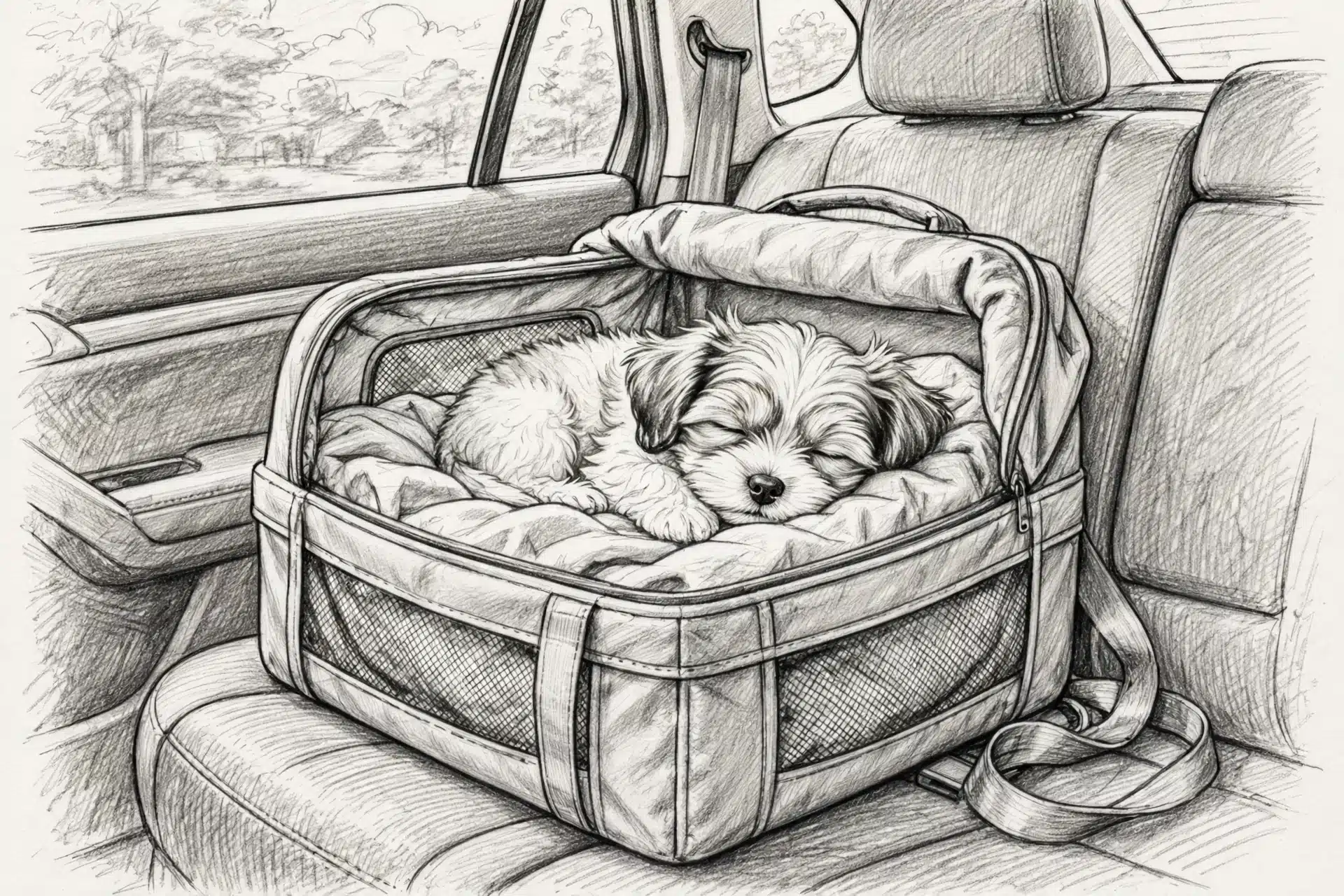
Local pickup means a short car ride, often under an hour for Utah families near South Jordan puppy pickup locations. Your puppy travels with a familiar blanket, rides home in a lap or crate, and settles in the same day. Nationwide delivery adds hours or days: a van route with multiple stops, or a flight with a crate, waiting periods, and handling by strangers. Each leg adds noise, temperature changes, and missed meals for a two-to-four-pound puppy.
Air Travel and the Documentation Behind It
Airlines require a health certificate from a licensed veterinarian, usually issued within 10 days of travel, plus proof of age and vaccines. Some carriers add their own rules on top of federal minimums, so the breeder’s paperwork matters as much as the puppy’s age.
Preparing for Either Handoff
Ask exactly when and where you’ll meet, request the vet records in advance, and have food and water ready. Bring the crate you already set up at home, and keep the first day quiet.
Health Records You Can Actually Hold in Your Hand
Before you pay a deposit, ask for three things: 1) the puppy’s vet exam record with vaccine and deworming dates, 2) health screening results for both parents, and 3) DNA test results for breed-relevant conditions. A breeder who keeps good records hands these over without hesitation.
Three Different Documents Buyers Confuse
Buyers often mix up three papers. The vet health record covers your puppy only: exam notes, shots, deworming. The parent health screening covers the mother and father, such as OFA eye, heart, and knee exams. The DNA panel shows what genes each parent carries. You need all three, because one can’t stand in for another.

What to Ask About Screening, and What to Look Up Yourself
Ask which tests each parent completed and for the actual reports, not a verbal “all clear.” Then check independently. The OFA’s CHIC program keeps public records of a dog’s completed breed-specific tests, so you can search a parent’s registered name and confirm results rather than trusting a photo of a certificate. If a name returns nothing, ask why.
Remote Verification Is Possible but Different
Buying from out of state changes the paperwork, not the standard. Request scanned originals, ask to see records during a live video call, and have your own vet review them. The health records worth asking for apply equally to a South Jordan pickup or a flight across the country, since verification depends on paper trails, not proximity.
What the Puppy Actually Costs to Bring Home
How much does it cost to have a puppy shipped to your state? Expect the purchase price first, then an itemized travel bill: a delivery fee that can reach into the hundreds of dollars, a vet health certificate for the airline, an approved travel crate, and sometimes a ground transport leg. So a $3,500-$4,500 puppy can add several hundred more before it reaches your door.
Purchase Price Is Only the First Line
The sticker price covers the breeding program’s work: health testing on the parents, early care, and first vaccines. It does not cover what happens after you say yes. Both routes carry extra costs, and they show up in different places. Written reservation terms should spell out what the price includes before you pay a deposit, and Sage Puppies lists its pricing and reservation terms so buyers know the total up front.

The Hidden Math of a Delivered Puppy
Shipping a puppy across the country stacks fees. Airlines charge a pet transport fare, often a few hundred dollars. Add the health certificate visit, a crate that meets airline rules, and fuel or flight time for the courier. A long trip also means supplies for the ride and a calm first day at home, because a tired puppy needs quiet more than play.
The Hidden Math of a Local Pickup
A South Jordan pickup looks cheaper, and it usually is. But budget for the drive itself, a safe way to carry the puppy home, and a first vet visit within a few days. Local families save on transport and get to meet the breeder, see where the puppy was raised, and start the relationship in person.
Transparency, Brokers, and How to Spot the Middleman
How the Puppy Pipeline Works
Some websites look like breeders but never breed a dog. They are brokers: they list puppies from several breeding operations, take your payment, then arrange transport from a third party. That model explains why some sites always have dozens of puppies ready to ship this week. A true breeder has litters on the ground, names for each puppy, and a waiting list. If a seller cannot tell you which dog mothered your puppy or invite you to see where it was raised, you are likely talking to a reseller, not the breeder.

Questions That Reveal Who You Are Dealing With
Ask plainly: “Do you breed these puppies yourself?” A real breeder answers fast and offers photos or a video of the mother with the litter. Then ask for the exact address where the puppy lives, the mother’s registered or given name, and the vet clinic that examines the litter. An owner-managed program like Sage Puppies walks families through this on its puppy matching process. Evasive answers, stock photos, or a refusal to video chat are your cue to keep looking.
Red Flags Worth Pausing Over
Watch for these before you send money:
- Always-available puppies of many mixed breeds
- Pressure to pay a deposit same day, often by gift card or payment app
- No video call showing the puppy with its mother
- Health records from a vet clinic they cannot name
Trust your pause instinct. A breeder welcomes scrutiny; a middleman stalls.
Where Sage Puppies Fits in the Utah Landscape
A Utah Program With Both Pickup and Delivery Paths
Sage Puppies is a boutique program in South Jordan, Utah, founded in 2025 and run by owner Cassie Milar. It breeds Havanese, Havapoo, and Cavapoo puppies only, so the program stays small and each litter is raised with hands-on care. Utah families can arrange a local South Jordan pickup, while families in other states can use puppy delivery. The price range runs $3,500 to $4,500, with any travel cost quoted separately from the purchase price.
How the Application-First Process Works
The process starts with an application, not a shopping cart. You describe your home, schedule, and experience with dogs, then Cassie reviews each application herself and matches puppies to families rather than selling first come, first served. You can start with the application to see what questions to expect before any deposit is due. Because matching is owner-managed, you get a clear picture of each puppy’s temperament and needs before you commit.
Who This Model Does Not Fit
This program is not for buyers who want a puppy this weekend, a choice among many breeds, or a breeder with large kennels. If you prefer picking from a big litter lineup on the spot, a larger operation may suit you better.
Which Should You Choose: A Utah Breeder or a Nationwide Shipper?
Pick based on your circumstances, not on a generic list of pros and cons:
- Buy from a local Utah breeder if you live within driving distance of South Jordan or the Wasatch Front and can meet the puppy, the mother, and the breeder in person before you commit.
- Buy from a nationwide shipper if no nearby breeder raises Havanese, Havapoo, or Cavapoo puppies to your standard, and the breeder has a documented, safe delivery process.
- Walk away from either if they dodge questions about health testing, parent dogs, or written terms.
Choose a Local Utah Breeder If
Meeting your puppy before pickup is the biggest advantage. You can see how the dogs are kept, watch how the puppies handle people, and ask questions face to face. Local pickup also removes travel stress entirely: no crate time, no airport, no waiting for a flight. Many Utah families find the short drive to South Jordan pays for itself in peace of mind.
Choose a Nationwide Shipper If
Distance should not force you to compromise on the breeder. If your best match is a Havanese in Utah and you live in Ohio, a careful delivery beats a mediocre breeder down the road. Ask exactly how the puppy travels, who flies or drives, and what health paperwork the airline or carrier requires. A confident breeder answers without hesitation.
The Decision Checklist Before You Pay Anyone
- Vet exam record with vaccine and deworming dates
- Health screening for both parents, including heart and eye checks
- DNA test results in writing
- A written contract covering your reservation and the breeder’s responsibilities
- Proof the puppy is at least 8 weeks old and fully weaned before transport
Whichever route you take, every box should get checked before money changes hands.

Whether you pick up in South Jordan or arrange delivery, the same rule applies: verify first, then commit. Sage Puppies matches Havanese, Havapoo and Cavapoo puppies with families through a clear, owner-managed application, so start there and ask your questions early.
Frequently Asked Questions
Q1: What’s the difference between a local Utah breeder and a nationwide shipper?
A local breeder lets you visit, meet the mother, and pick up your puppy in person. A nationwide shipper delivers, giving you wider breed selection. The program’s quality matters more than distance, so run the same verification checks either way.
Q2: How old must a puppy be to ship or fly?
Federal rules require at least 8 weeks old and fully weaned before commercial transport. Many good breeders wait longer, since a two-to-four-pound Havanese or Cavapoo handles travel poorly.
Q3: What does shipping a puppy across the country cost?
Budget the purchase price plus a delivery fee that can reach several hundred dollars, a vet health certificate, an airline-approved crate, and sometimes a ground leg.
Q4: How do I spot a puppy broker?
Ask, “Do you breed these puppies yourself?” A real breeder names the mother, shares her location, and offers a video call showing her with the litter.
Q5: Which health records should I get before paying a deposit?
Get the puppy’s vet exam record, both parents’ health screening results, and DNA test results in writing. You can also search a parent’s name on the OFA’s public CHIC database.
Q6: Can I verify a puppy remotely before delivery?
Yes. Request scanned originals, watch a live video call showing the puppy with its mother, and have your own vet review the records before money changes hands.
Conclusion
The choice between a local breeder and a nationwide shipper comes down to two separate questions: where the puppy is raised, and how it travels. A Utah puppy pickup in South Jordan lets you meet the breeder and the mother in person, while puppy delivery widens your options when no good program sits nearby. Either way, verify the same things first: vet records, parent health screening, DNA results, a written contract, and an age of at least 8 weeks. A breeder who answers easily earns your trust; one who stalls does not.