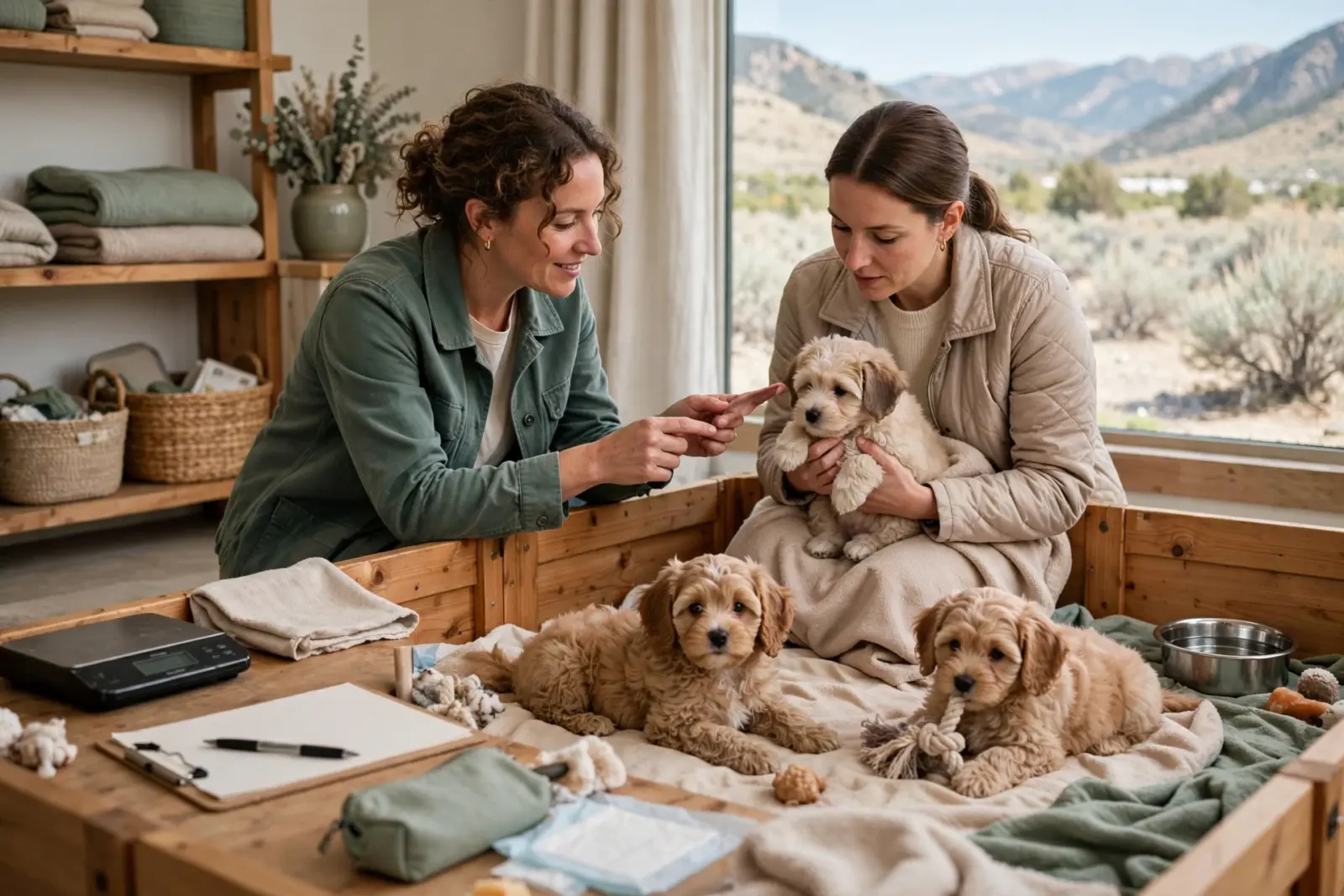
Quick Summary: A calm, structured first week helps an eight-week-old puppy adjust faster. Puppy-proof one quiet room, schedule a vet exam within two or three days, keep regular meals and potty trips, and introduce the crate, name, handling, and handling calmly. In Utah, protect small paws from hot pavement and salted sidewalks, avoid dog parks until vaccines are complete, and ask a breeder such as Sage Puppies for clear support after pickup.
Nobody warns you about the first night. You set an alarm for 2 a.m., and in a Utah home with thin floors you hear every squeak your new Havapoo makes in the crate, 4,300 feet up, in a house that still smells like cardboard and travel.
Your first week with a puppy in Utah goes better with a plan. This guide gives you a day-by-day schedule: puppy proofing before pickup, a vet exam within the first few days, and the AAHA core vaccine series timeline your breeder’s records will follow.
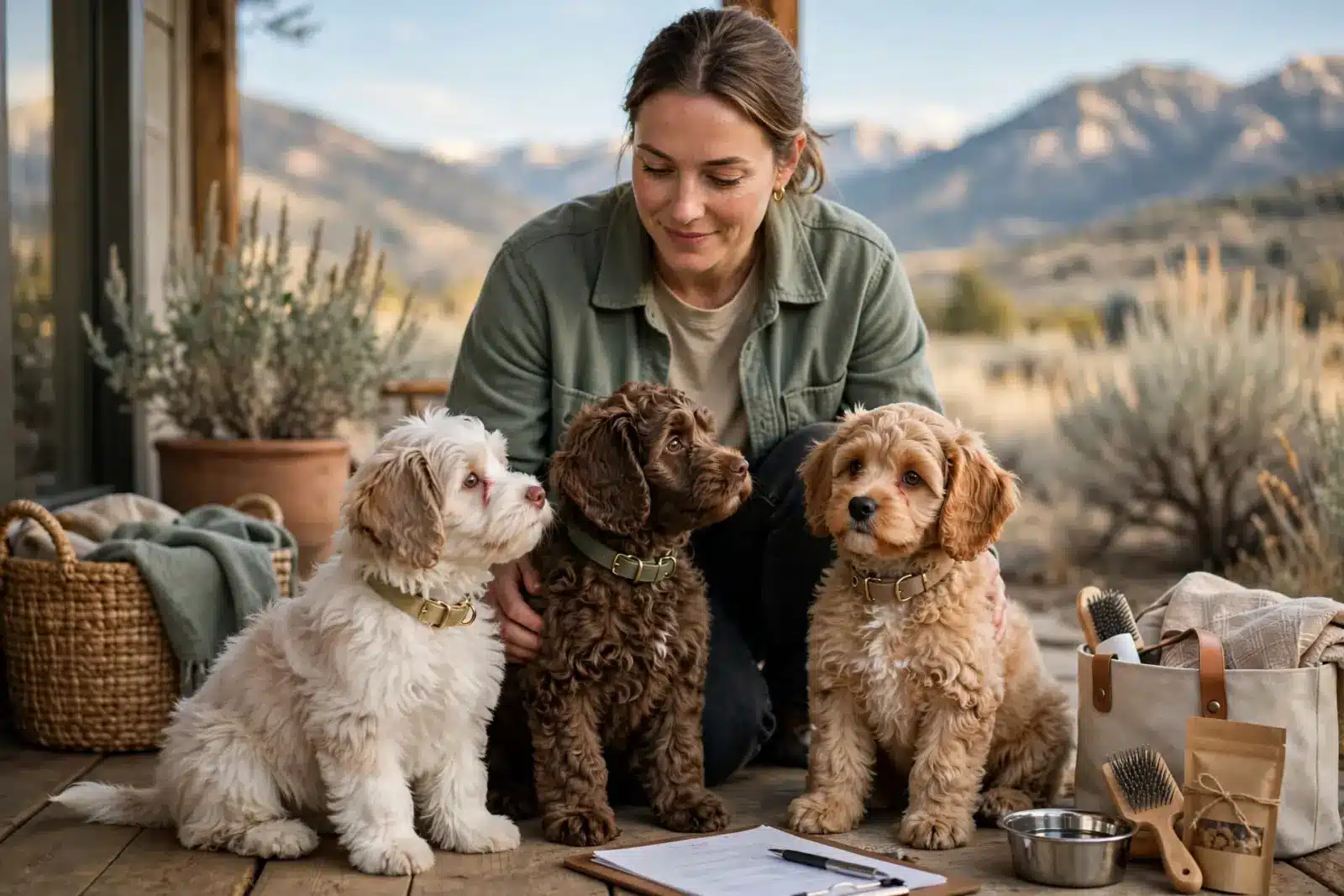
We run a small Havanese, Havapoo and Cavapoo program in South Jordan, and Cassie has walked first-week families through these exact days. Set the routine before the cute stuff. Sleep comes first.
Day 1: The Car Ride Home and the First Three Hours
Puppy pickup day is the start of your first week with a puppy in Utah, and the first three hours set the tone for everything that follows. A small-breed Havanese or Cavapoo leaves everything familiar at eight to twelve weeks old, so your job today is simple: keep the world calm, small and predictable.
Set Up One Small Room Before the Puppy Arrives
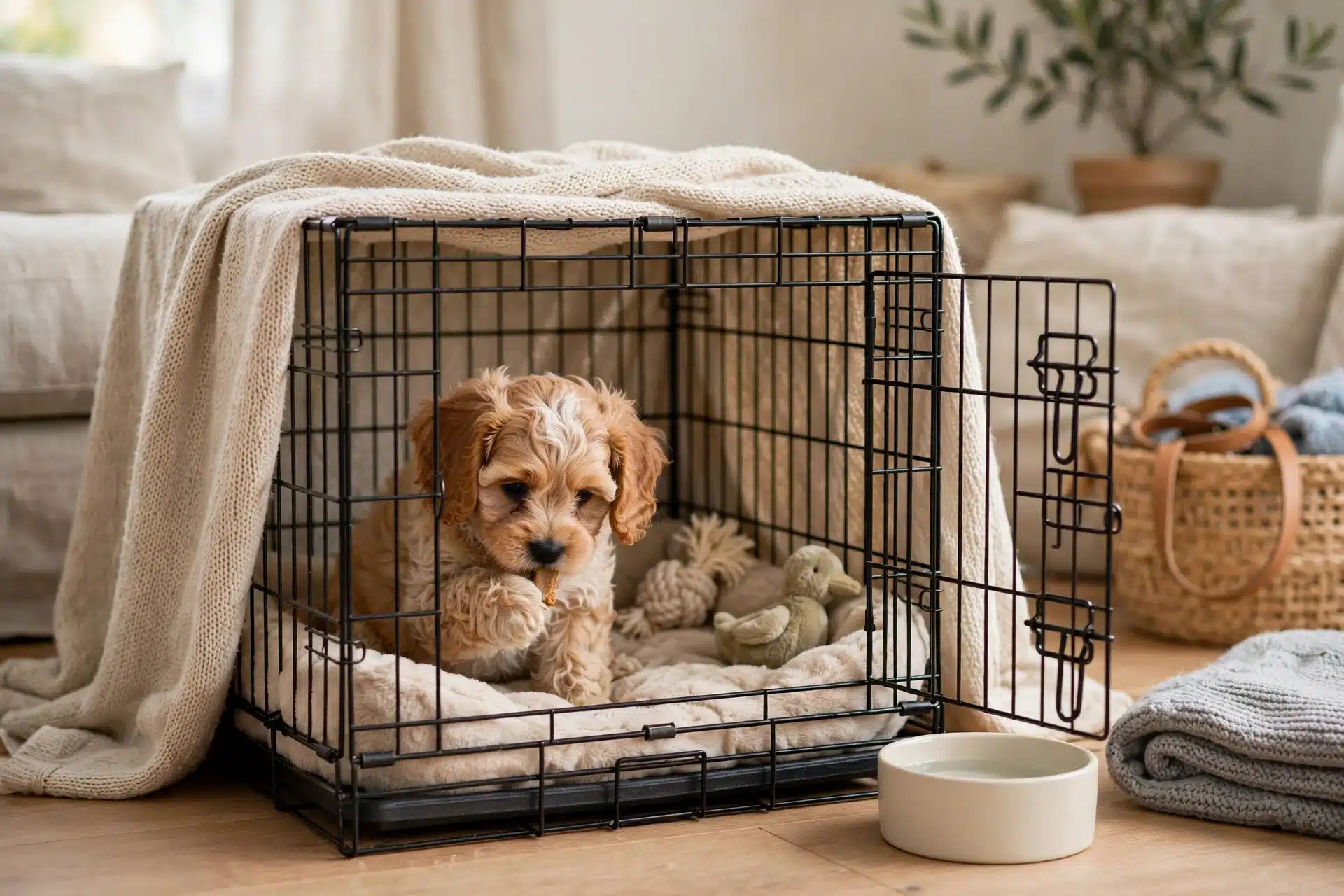
Pick one quiet room and puppy proof it before pickup. Block cords, move plants off the floor and gate the doorway. Set down a crate, a bowl of water, pee pads or a potty spot, and a few toys. Skip the whole-house tour; a small space lowers stress and makes potty training easier from day one.
The Ride Home From South Jordan or Your Pickup Point
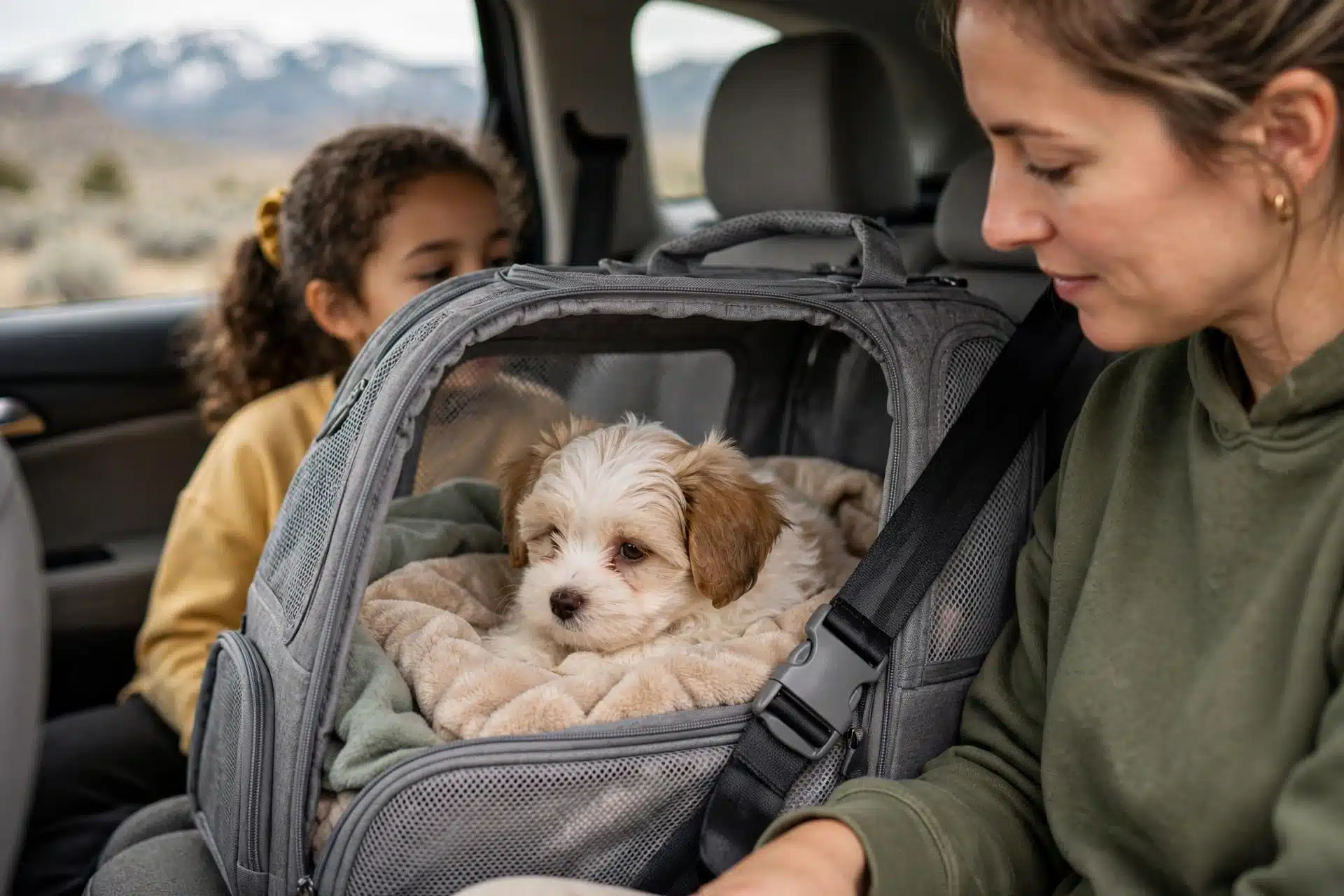
Plan the drive like it matters, because it does. Bring someone else along so a passenger can sit near the crate without holding the puppy on their lap. That’s safer and calmer for the puppy, and improvised setups on a seat or in arms are risky in a sudden stop. Keep the car cool, play soft music, and head straight home; errands can wait. Families receiving a Sage puppy by delivery get a similar rule: the first hours are for settling, not for handling.
The First Night: A Realistic Sleep Plan
Expect waking. Most eight-week-old puppies cannot sleep a full night, so plan on one or two potty trips. Last water about an hour before bed, one final potty break, then crate the puppy near your bedroom. A ticking clock or a warm blanket can help, but expect some crying; it usually fades within a few nights. The 2 a.m. alarm is normal, not a sign you are doing something wrong.
Your First Vet Appointment: Book It Now, Not Later
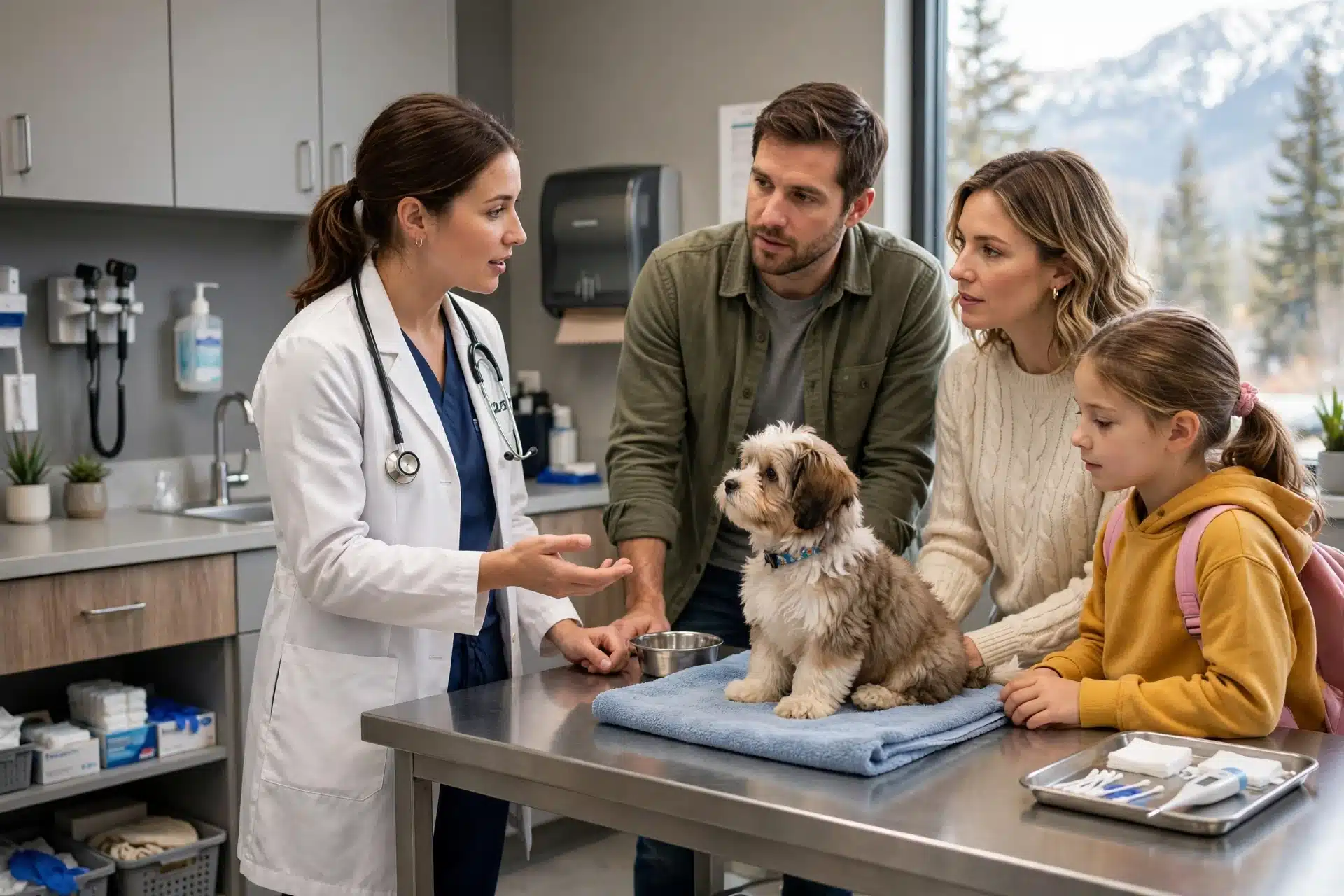
Schedule the first exam for days 2 to 3, before you fall into a routine. Most Utah clinics fill fast, so call today while you still have the paperwork in hand. Bring the puppy vaccination records you received, since your vet will map out the next rounds of the core series and set a rabies date. Ask about weight, stool and a heart check while you’re there. Booking now protects the window AAHA guidance recommends for a first visit, and gives you a baseline before any issues surface.
Call the vet the same day you pick up. A day-2 appointment beats a day-8 scramble.
Days 2 and 3: Food, Potty Routine, and the Vet Exam
Transitioning Food Without Upsetting a Small Stomach
An 8-week-old puppy eats three to four small meals a day; most switch to two meals around 4 to 6 months old, according to Chewy’s puppy feeding guide. Feed at roughly the same times daily: 7 a.m., noon, 4 p.m., and 7 p.m. works well. If you change foods, mix the old food with the new over 7 to 10 days so the gut adjusts. A sudden swap in a 6-pound Havapoo means loose stools, and loose stools sabotage house training.
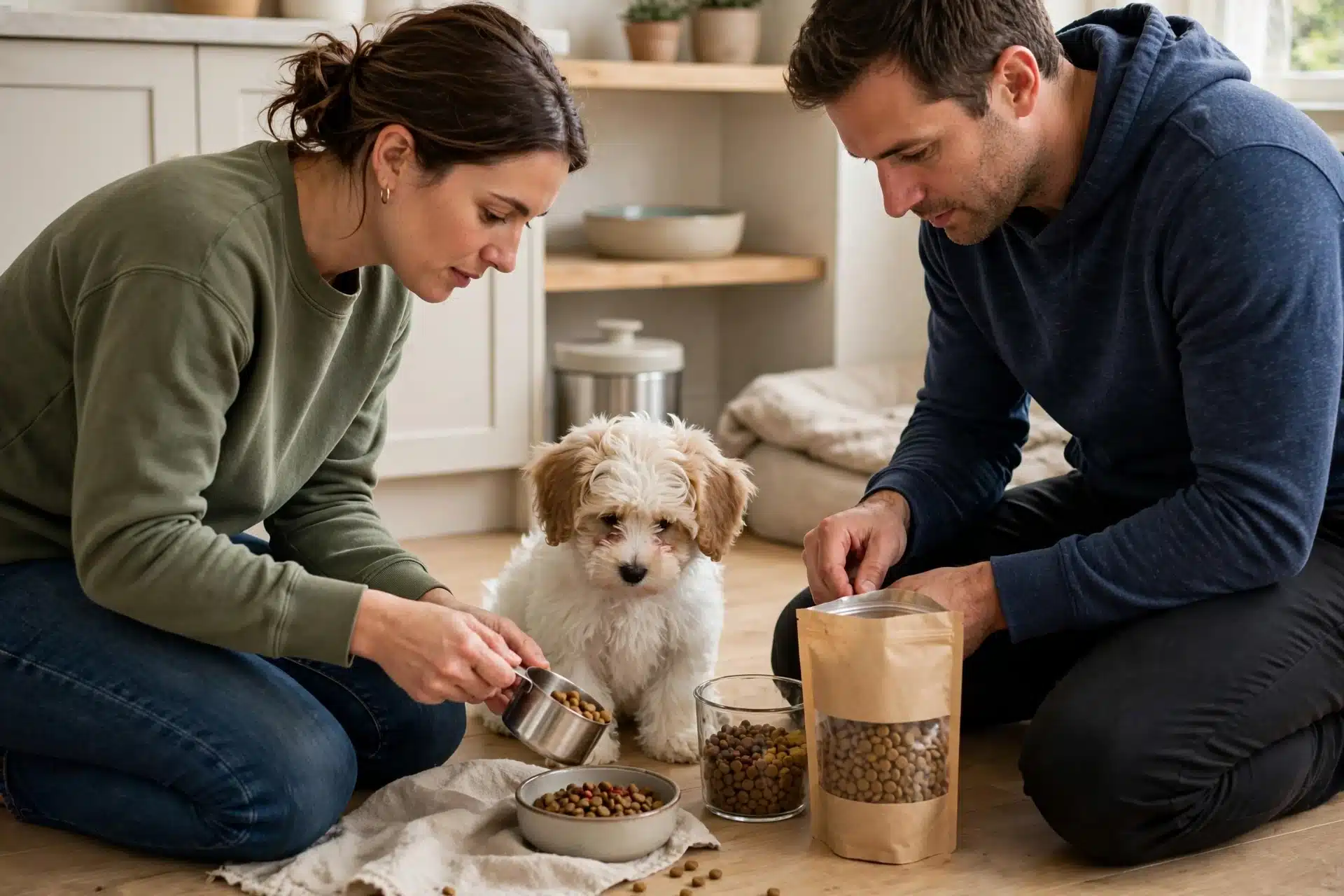
Need a worked example of meal times for a tiny breed? This small breed puppy feeding schedule lays out week-one portions.
A Potty Schedule You Can Actually Keep
How do you housebreak a puppy with no yard in Utah? Follow these steps:
- Carry the puppy out after every meal, nap, and play session.
- Pick one outdoor spot and return to it every time.
- Wait five quiet minutes, then go back in.
- Praise the moment she finishes, not after.
- Use a leash if your apartment faces a shared courtyard, since many Utah townhomes have no fenced yard.
Keep a note of success times for two days. The pattern shows up fast.
What Happens at the First Vet Exam
Book the exam for day 2 or 3, as suggested earlier. Expect a nose-to-tail check, a fecal test, a weight record, and a discussion of the core vaccine series, which is given in rounds every few weeks. Bring the paperwork the breeder sent home, including the shot record and any deworming dates. Ask the vet about Utah-specific risks, such as leptospirosis near water trails, and about heartworm timing along the Wasatch Front.
Handling, Touch and the First Handling Lessons
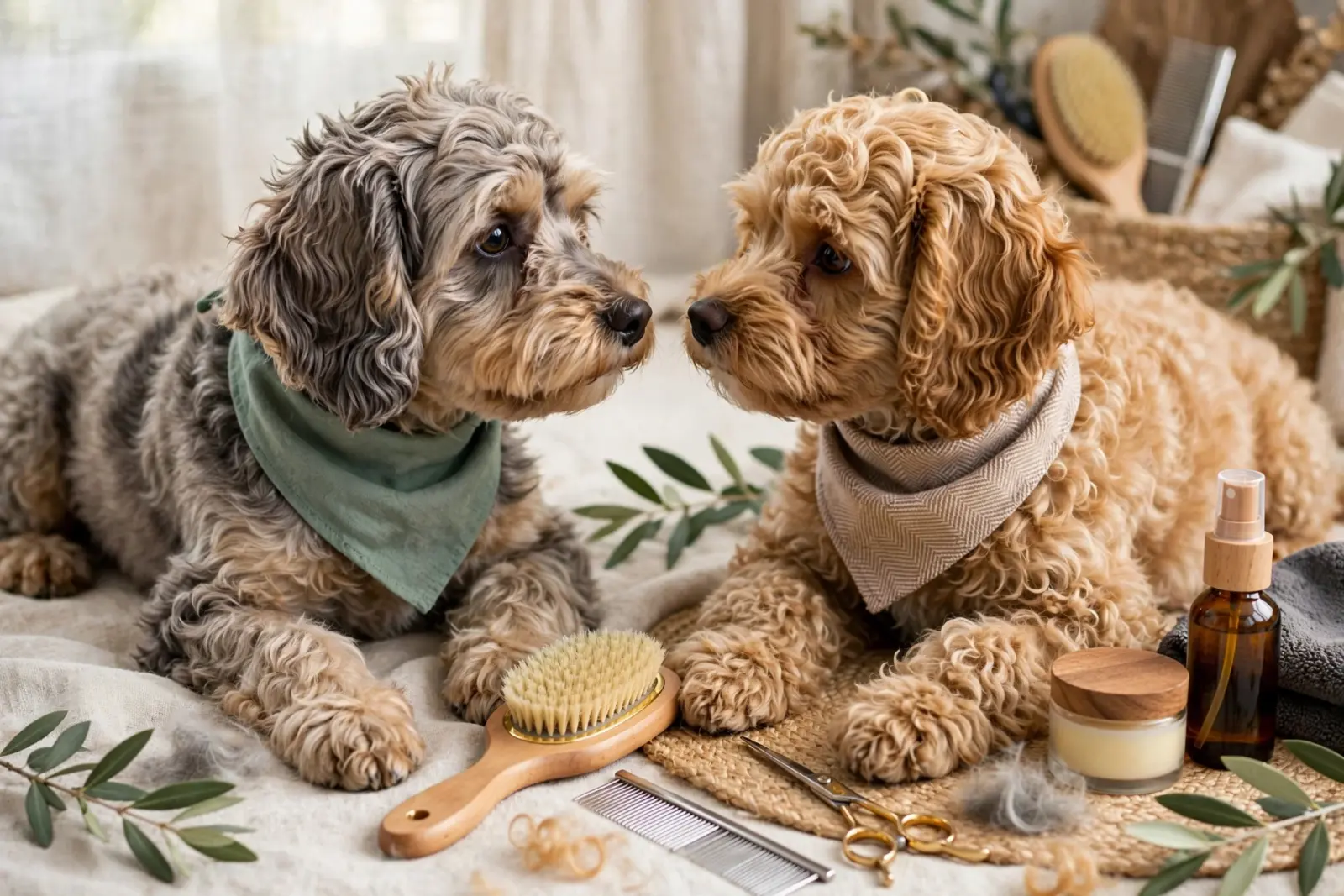
Practice the vet routine at home. Touch paws, open the mouth briefly, and lift the puppy onto a low table. Keep each session under 30 seconds and end with a treat. Pair the touch with food so exams stay calm. Short, daily handling now prevents the squirming that makes later grooming and vet visits stressful for both of you.
Days 4 and 5: Crate Training, the Name, and Your First Real Routine
By day 4, the hard part shifts. Meals, sleep, and potty stops are no longer improvisation; they become a schedule. These two days teach your puppy the crate, their name, and the shape of an ordinary day. Getting this right during the first week with a puppy in Utah sets up house training faster than anything else you could buy.
Make the Crate a Safe Place, Not a Punishment
Feed one meal inside the crate with the door open. Toss treats in throughout the day and let your puppy walk in and out freely. Close the door for short stretches while you sit nearby, then release before any whining starts. Never send a puppy to the crate as discipline, or it becomes a place to fear. The steps look a lot like this Cavapoo crate training guide, which works for any small breed.
The Name and Two Household Words
Pick the name now and use it only for good things: dinner, treats, play. Say it once, clearly, then reward eye contact. Avoid repeating it in a frustrated tone or it loses meaning fast. Choose two household phrases as well, such as “go potty” and “kennel up,” and keep them consistent across every family member. Puppies learn by pattern, not vocabulary.
A Daily Rhythm That Survives Contact
Keep the feeding times you set earlier: 7 a.m., noon, 4 p.m., and 7 p.m. Then anchor the rest around them. Potty immediately after each meal, after every nap, and last thing before bed. Naps go in the crate; play and name practice happen in short five-minute bursts between sleeps. Most 8-week-old puppies sleep 18 to 20 hours a day, according to Just Food For Dogs’ guide, so resist the urge to keep them awake for guests. Write the schedule on the fridge so everyone follows it.
Utah Weather Adjustments to the Routine
Utah’s dry air and temperature swings change a few details. In summer, walk early morning and evening, because pavement on hot afternoons can burn small paw pads; test it with the back of your hand first. In winter, salted sidewalks irritate toes, so rinse paws after walks and keep sessions short. A Havanese or Cavapoo coat insulates well, but small bodies chill quickly, so keep outdoor potty breaks brief on cold days. Snow days often mean more crate and playpen time, so plan an indoor backup such as a grass pad.
Days 6 and 7: What a Good First Week Looks Like
By day 6, most puppies sleep through the stretch from midnight to 4 a.m. That is your reward. These last two days are for checking your work and setting up week two.
Your Week One Scorecard
Run through this list quickly:
- First vet exam done, with the vaccine record filed with your other puppy vaccination records
- Feeding on the 7 a.m., noon, 4 p.m., 7 p.m. schedule
- Crates and pens set up, with puppy proofing checked once more
- Two or three clean potty successes in the right spot
- One short, calm handling session daily
When can my puppy visit a dog park or go on walks? Short answer: not yet. Keep walks to your own yard and quiet sidewalks until your vet says the vaccine series protects him, usually after the final round around 16 weeks. Dog parks come later still.
When to Call the Vet Instead of Waiting It Out
Some things do not wait for a scheduled visit. Call the same day if you see vomiting that repeats, diarrhea lasting more than a day, refusal to eat two meals in a row, coughing, or a puppy who seems limp and uninterested. Small breeds like a Cavapoo drop fast, so trust your gut and make the call.
What Week Two Adds
Week two builds on the routine instead of replacing it. You can stretch awake time in 15-minute blocks, start two five-minute training sessions a day, and let one or two new people meet the puppy at home. Keep meals and potty trips on the same clock. If you are still comparing programs in Utah, this is a fair question to ask any breeder about support after pickup, which we cover in our guide to visiting a Utah breeder.
Starting to Think About Training, Classes, and Chewing
Ask your vet which positive reinforcement puppy classes they recommend, then check whether the class requires full vaccines before enrollment. Keep a chew toy in every room you use, and swap it in whenever teeth find a shoe. Puppies this age chew because they teethe, not because they are stubborn.
Utah First-Week Details Worth Knowing
Registration, Rabies Tags, and Local Rules
Licensing comes later than you think. In Salt Lake County and much of Utah, dogs need a license once they reach the age your county sets, and the paperwork requires proof of a current rabies vaccination. Your puppy gets his rabies shot near 16 weeks, with the rest of the core series, so keep every vaccine record your vet hands you. File them with the puppy vaccination records and rabies certificate you will bring to the county when the time comes. Set a phone reminder now and the license is a ten-minute errand.
Finding a Utah Vet Who Sees Young Puppies
Call two or three clinics before pickup day and ask one question: do you have openings for an 8-week-old puppy within 72 hours? Many fill their schedules fast. Ask whether they treat small breeds, since a Havanese weighs far less than a Lab at this age. Confirm they follow the AAHA core vaccine series and can print records on demand. A clinic that answers these easily is a keeper.
Travel and Busy Week One Schedules
Utah weeks fill up fast: ski trips, family dinners, work travel. Plan week one as if nothing else is happening. A puppy settling in needs short, boring days near home. If you must drive somewhere, skip improvised car restraints and use a secure, crash-tested crate lined with a towel. Keep trips under 30 minutes and bring water.
Where to Go From Here
If you are still choosing a puppy, browse the available Havanese, Havapoo, and Cavapoo puppies, review pricing and reservation terms, and submit the application to start matching. Three steps, one week of prep, and a smooth homecoming.
Common First-Week Mistakes to Avoid
Too Many Visitors Too Soon
Everyone wants to meet the puppy, and everyone will ask. Let one or two people visit at home instead of hosting a crowd. The AAHA notes that gentle daily introductions work better than big events, and visitors who ring the door during nap time undo crate progress fast.
Changing Food, Schedule, and Environment All at Once
Each change alone is small. Together they upset a 6-pound stomach. Keep the 7 a.m., noon, 4 p.m., and 7 p.m. feedings steady, and mix foods over 7 to 10 days if the breeder’s brand differs from your choice. Move the crate once, pick that spot, and leave it there.
Skipping the Vet Visit or the Records
A day-2 or day-3 exam confirms the puppy is healthy and starts the AAHA core vaccine series on schedule. Bring the paperwork home with you and keep every record, including the rabies certificate you will need for a Utah dog license later.
Promising the Puppy Will Be Left Alone
An 8-week-old puppy cannot hold it for a full workday. Plan potty breaks at lunch, or line up a neighbor, friend, or sitter now. Waiting until Monday morning is the mistake.

Your first week sets the tone for years, and a plan beats guesswork every time. When you’re ready to bring home a Havanese, Havapoo or Cavapoo, Sage Puppies will walk you through a clear application and matching process. Browse available puppies and pricing, then apply, so your first week starts on day one, prepared.
Frequently Asked Questions
Q1: How do I set up my home for the first week with a Utah puppy?
Pick one quiet room and puppy proof it before pickup: gate cords, floor plants and exits, then set up a crate, water bowl and one potty spot. Keep the space small, because a contained area lowers stress and speeds house training.
Q2: When should my puppy see a vet?
Book within the first two or three days. Call on pickup day, since many Utah clinics fill fast, and bring your vaccination records so your vet can map the remaining core rounds.
Q3: How often will my puppy need to potty at night?
Expect one or two trips the first nights. Cut water about an hour before bed, crate near your bedroom, and carry the puppy out quietly. Most sleep longer stretches by day six.
Q4: Can my puppy walk outside or visit dog parks yet?
Not yet. Stick to your yard and quiet sidewalks until the vaccine series finishes, usually around 16 weeks, and save dog parks until your vet clears social time.
Q5: What should I do about Utah weather in week one?
Walk early or late in summer, since hot pavement burns small paw pads. In winter, rinse salted paws after short trips and keep an indoor grass pad for backup.
Q6: How long can an 8-week-old puppy be left alone?
Only a couple of hours. Plan lunchtime potty breaks or line up a neighbor or sitter before pickup, because small breeds like a Havapoo cannot hold it through a full workday.
Conclusion
A good first week comes down to three things: a small, proofed space on day one, a vet exam by day two or three, and feeding and potty times that stay the same every day. Add short crate sessions, gentle handling practice, and one or two calm visitors, and your Havanese, Havapoo or Cavapoo settles in faster than you expect. Expect the 2 a.m. potty trips anyway; they fade by day six or seven.
Keep every vaccine record your vet hands you, since Utah licensing requires the rabies certificate later. If you’re still deciding where your puppy comes from, a breeder who answers first-week questions clearly is the one worth choosing.