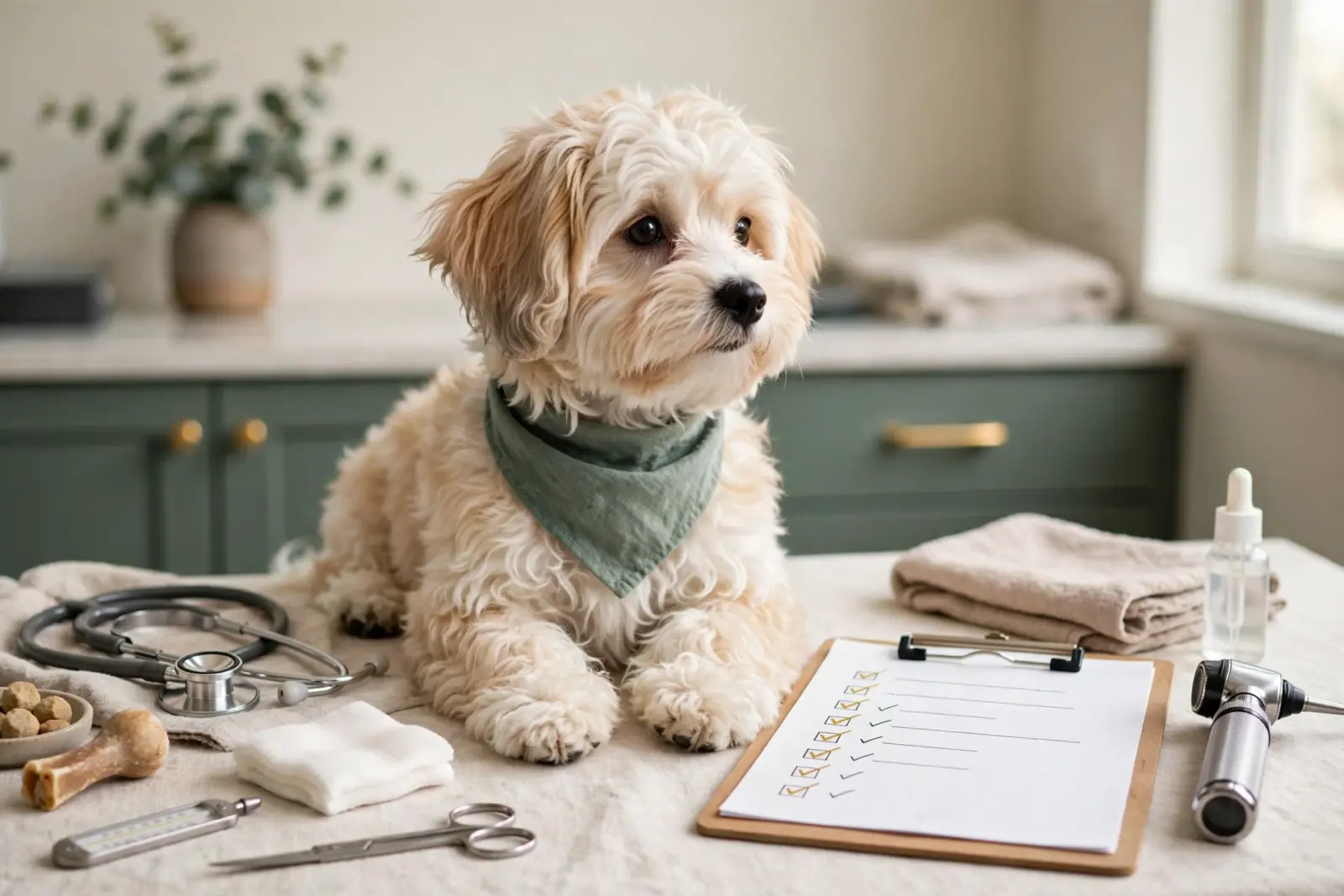
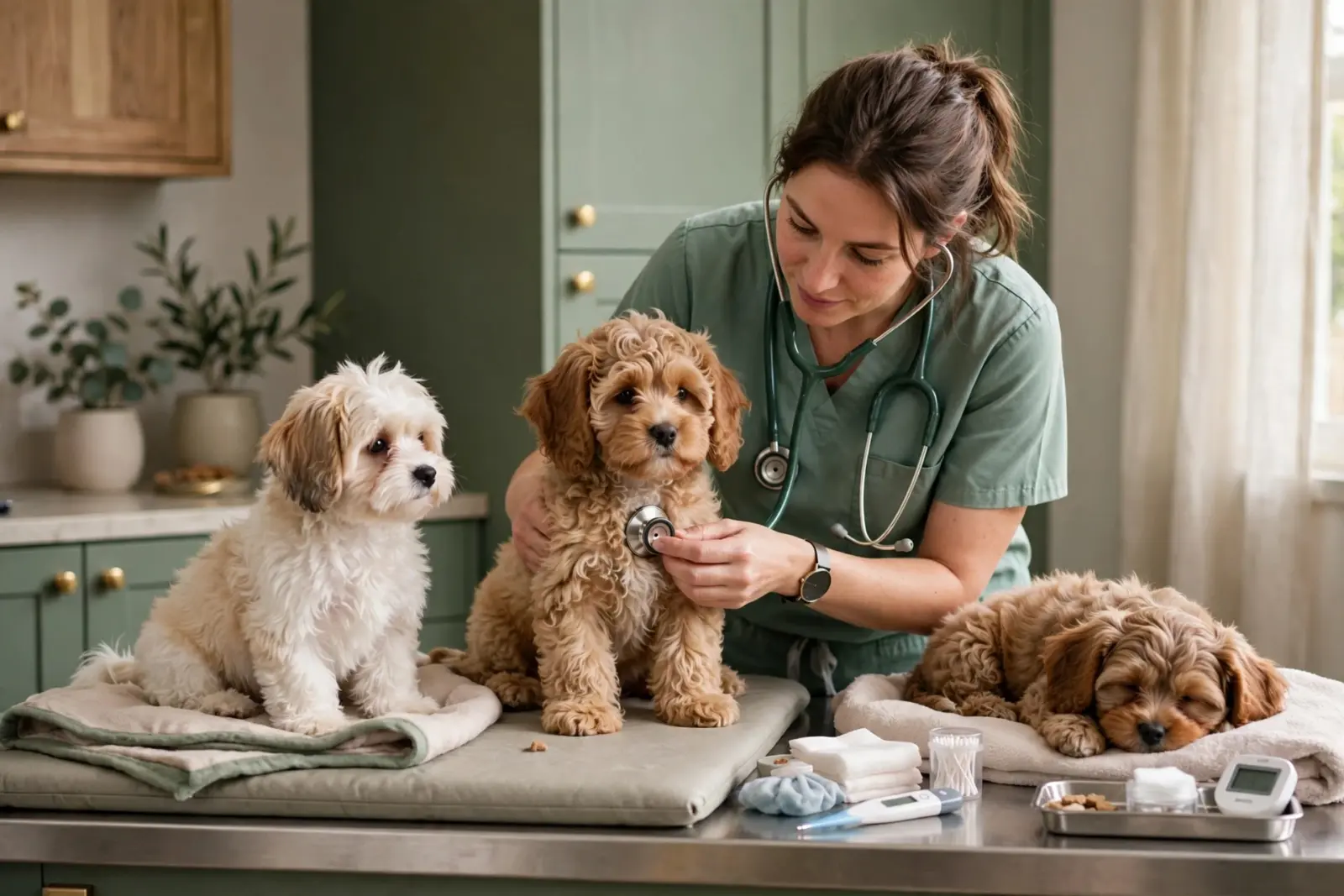
Quick Summary: A healthy Havapoo should show steady weight gain, clear eyes, clean ears, firm stool, playful energy, and smooth, confident movement, but a vet should also check body condition, hydration, heart and lungs, eyes, ears, bite, skin, joints, gait, and reflexes. Ask for written breeder screening for patellar luxation, eye disease, hearing loss, and hip dysplasia, along with fecal testing and baseline bloodwork. Call your vet the same day for poor appetite, vomiting, diarrhea, eye irritation, or a limp, while collapse, seizures, breathing trouble, blue gums, nonstop retching, extreme temperatures, or toxin exposure require immediate emergency care.
Two Havapoo puppies can look equally round, soft, and sleepy at eight weeks. Yet one may carry a luxating patella and the other may not, and a trained examiner can usually tell in under five minutes once they know where to look. That gap between cute and sound is the problem this guide solves. Most families rely on healthy puppy signs they can see, like bright eyes and a wagging tail, and miss the ones a veterinarian checks by feel, by ear, and under the lids. This puppy vet checklist walks through a real wellness exam in the order a vet would run it, then layers in the inherited risks that matter most to Havanese and Poodle lines, from knees to eyes to hearing. You also get a simple triage ladder for what is routine, what needs a prompt visit, and what counts as an emergency. It draws on veterinary guidance and the Havanese Club of America testing program, and it works as a havapoo vet checklist whether you are picking up in Utah or across the country.
Step 1: Note the Healthy Signs You Can Assess Yourself
Before any stethoscope comes out, most healthy puppy signs show up in daily care. You can check coat, eyes, ears, appetite, and energy at home in a few minutes. The first three stations tell you a lot on sight, so start there and take notes you can bring to the visit.
Coat, Eyes, and Ears as Quick Indicators
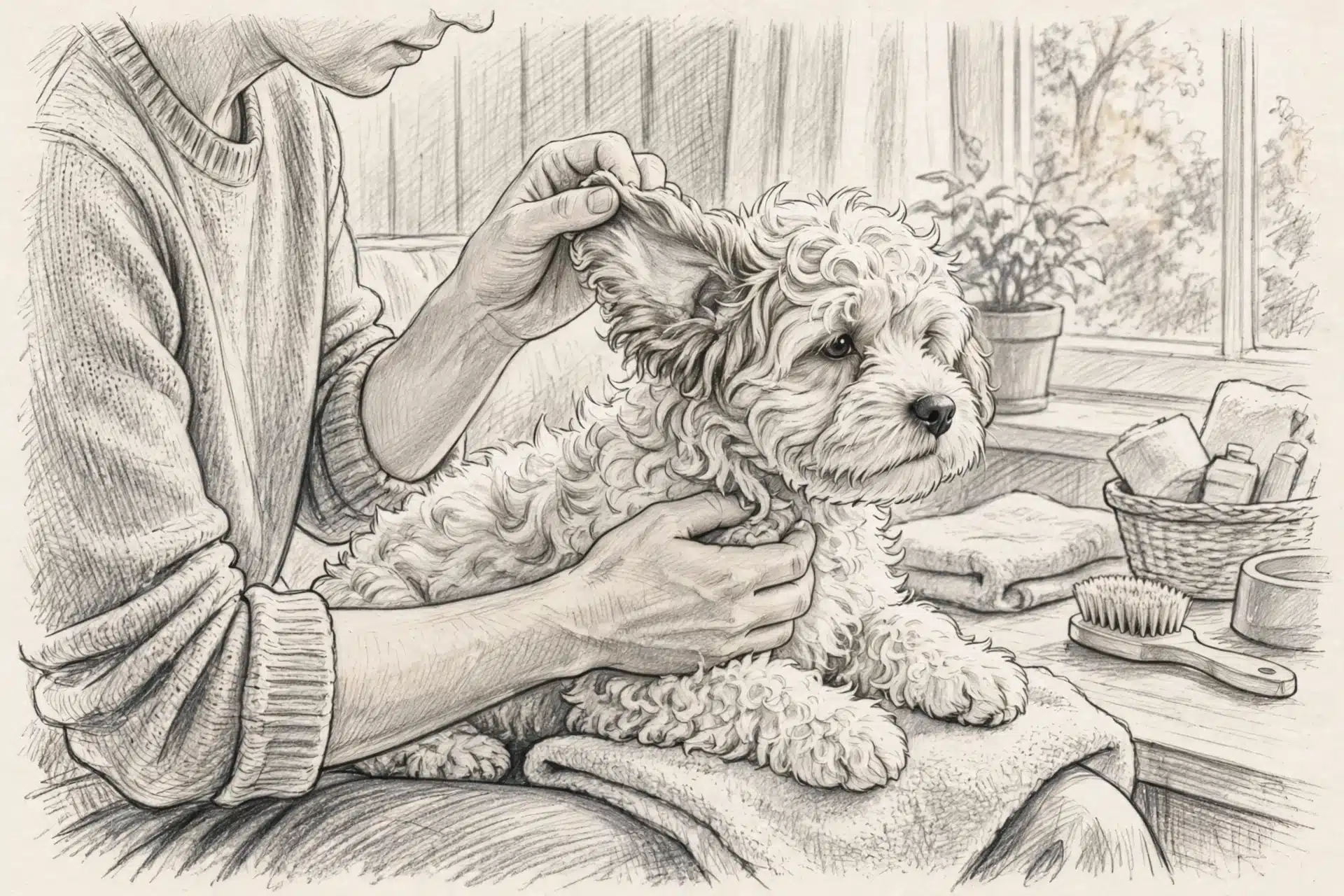
Run your hands through the coat. You want soft, even fur with no bald patches, flakes, or scabs. Havanese-type coats mat easily, so mats behind the ears are common but should sit close to the skin without redness underneath.
Look at the eyes next. They should be bright and clear with minimal tearing. Some light tear staining is normal in pale-coated small breeds, but heavy wet streaks or squinting deserve a mention at the vet. The ears should be clean, pale pink, and free of odor. A yeasty smell or dark wax points to irritation.
Appetite, Energy, Stool, and Weight Trend
A healthy puppy eats with gusto and plays in bursts, then crashes for a nap. Skipping one meal is rarely serious; skipping two, or pairing low appetite with low energy, is a call-your-vet day.
Check the stool too. It should be brown and firm, with one or two bowel movements a day per typical daily health guidance. Track weight weekly on a kitchen scale, since steady gain is one of the clearest healthy puppy signs in young small breeds like those described in this Havapoo traits guide.
Step 2: Watch the Vet Check Weight, Body Condition, and Hydration
Weight, Body Condition Score, and Growth Curves
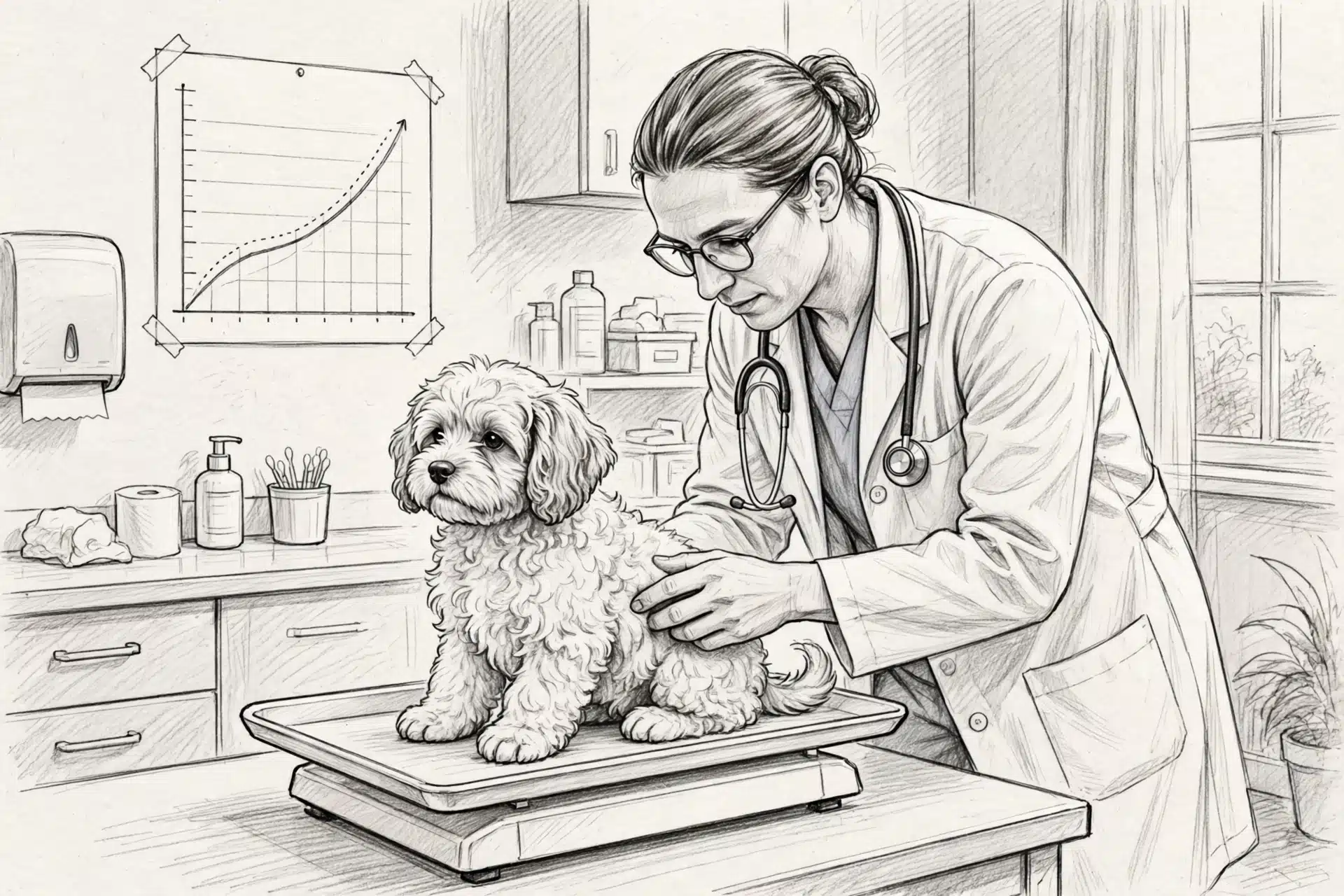
A healthy puppy has weight in range and a body condition score near the middle of the scale. The vet weighs your puppy, then feels the ribs, spine, and waist. On the standard 9-point scale, a score of 4 or 5 is ideal, according to PetMD’s guide to body condition score. Ribs should be easy to feel but not visible, and there should be a slight waist when viewed from above.
Ask for the number, not just a nod. Small breeds like Havanese and Havapoos grow fast, so each visit’s weight builds a growth curve. A puppy who stalls, or one who gains too quickly, needs a feeding plan review.
Hydration, Temperature, and Mucous Membranes
Hydration checks take seconds but catch real problems. The vet lifts a fold of skin over the shoulders; it should snap back right away. If it tents or settles slowly, the puppy may be dehydrated, as VCA Animal Hospitals explains in its body condition guide. Next come the gums. Healthy mucous membranes look pink and feel moist, and capillary refill time runs under two seconds.
The vet also takes a rectal temperature. For puppies, roughly 99.5 to 102.5 degrees Fahrenheit is normal. Dry, sticky gums, pale color, or slow refill all get flagged before you go home. These signs pair well with what you watch for during the first weeks at home, so note what the exam finds.
Step 3: Follow the Head-to-Tail Physical Examination
A wellness exam works best in a fixed order, and your vet will usually move from nose to tail without skipping a station. Watch the sequence and ask about anything that gets a pause, a repeat listen, or a note on the chart.
Heart, Lungs, and Abdomen
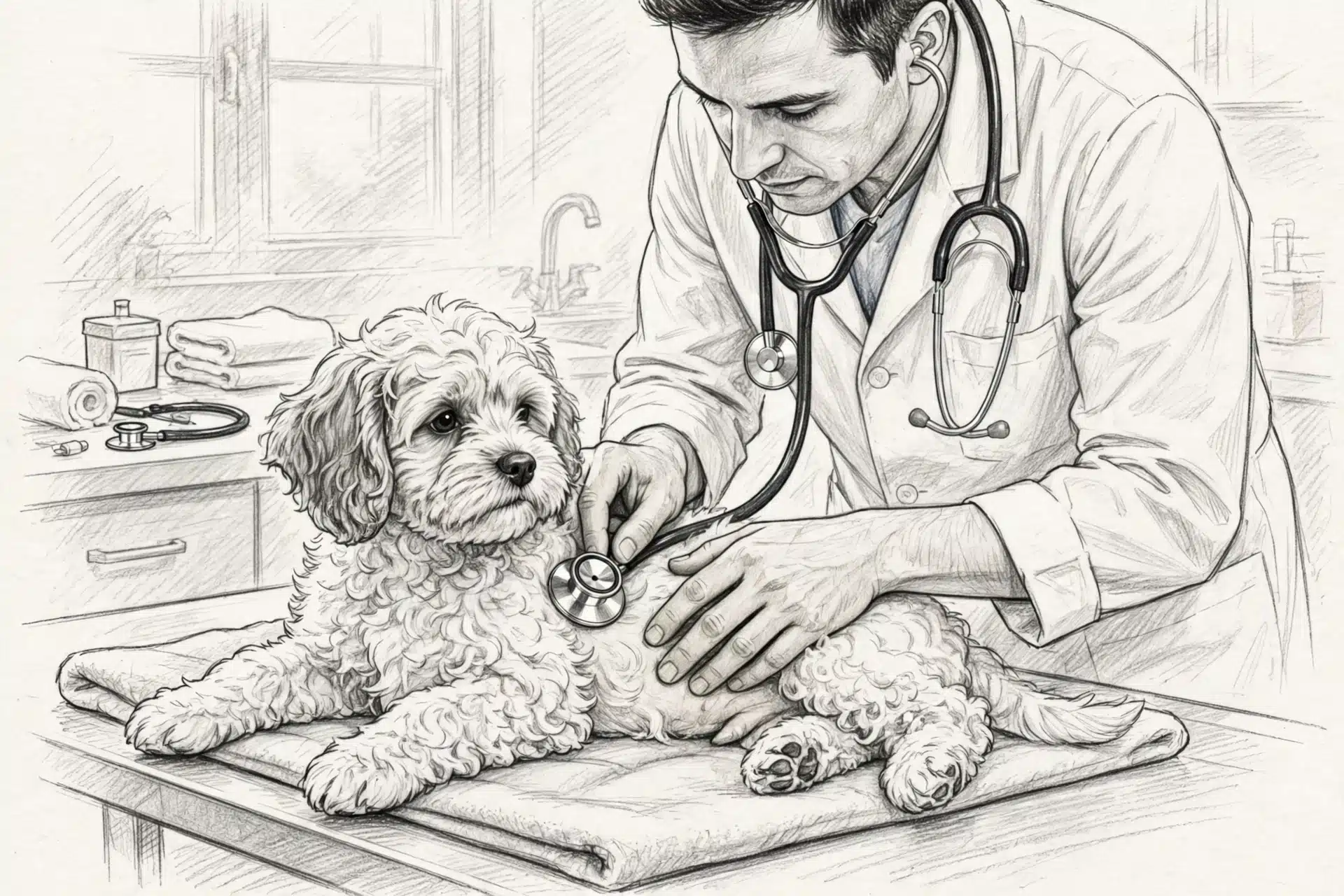
The vet starts with the stethoscope. They listen for a clean heart rhythm and check for murmurs, which are common in young puppies and sometimes fade on their own. A puppy heart should beat fast but steady, with no skipped or whooshing sounds. Next come the lungs, listening for clear air on both sides with no crackles or wheezing. The last part of this station is the abdomen: the vet presses gently to feel the organs and confirm there is no pain, swelling, or unusual firmness. Ask what the heart sounded like, because the answer matters for later checkups.
Eyes, Ears, and Mouth
Eyes should be bright and clear, with equal pupils and no cloudiness or discharge. Mild tear staining is common in light-coated breeds, but heavy staining can point to a tear duct problem worth tracking. The vet may note that Havanese lines carry risk for inherited eye disease, including progressive retinal atrophy, so early exams set a baseline.
Ears get checked for redness, odor, or wax buildup. In floppy-eared puppies, the vet looks at the canal and may discuss a BAER hearing test if hearing has not been confirmed.
The mouth tells its own story. Gums should be pink, the bite should line up, and baby teeth should be arriving on schedule.
Skin, Coat, and Lymph Nodes
The vet runs hands over the whole body, parting the coat to check for fleas, flaking, bald patches, or sores. The skin should feel smooth, not greasy or crusty. Lymph nodes under the jaw and in front of the shoulders should stay small and soft. Swollen nodes deserve a follow-up, not a shrug. Thevet will also check for any lumps or bumps under the skin that feel unusual for a puppy. A healthy puppy’s coat should feel soft and even, and the body should feel well-muscled rather than bony or bloated. The exam finishes with a look at the paws, nails, and tail, closing the loop on the full head-to-tail check.
Step 4: Assess Mobility, Joints, and Nervous System Function
Patellas, Hips, and Gait
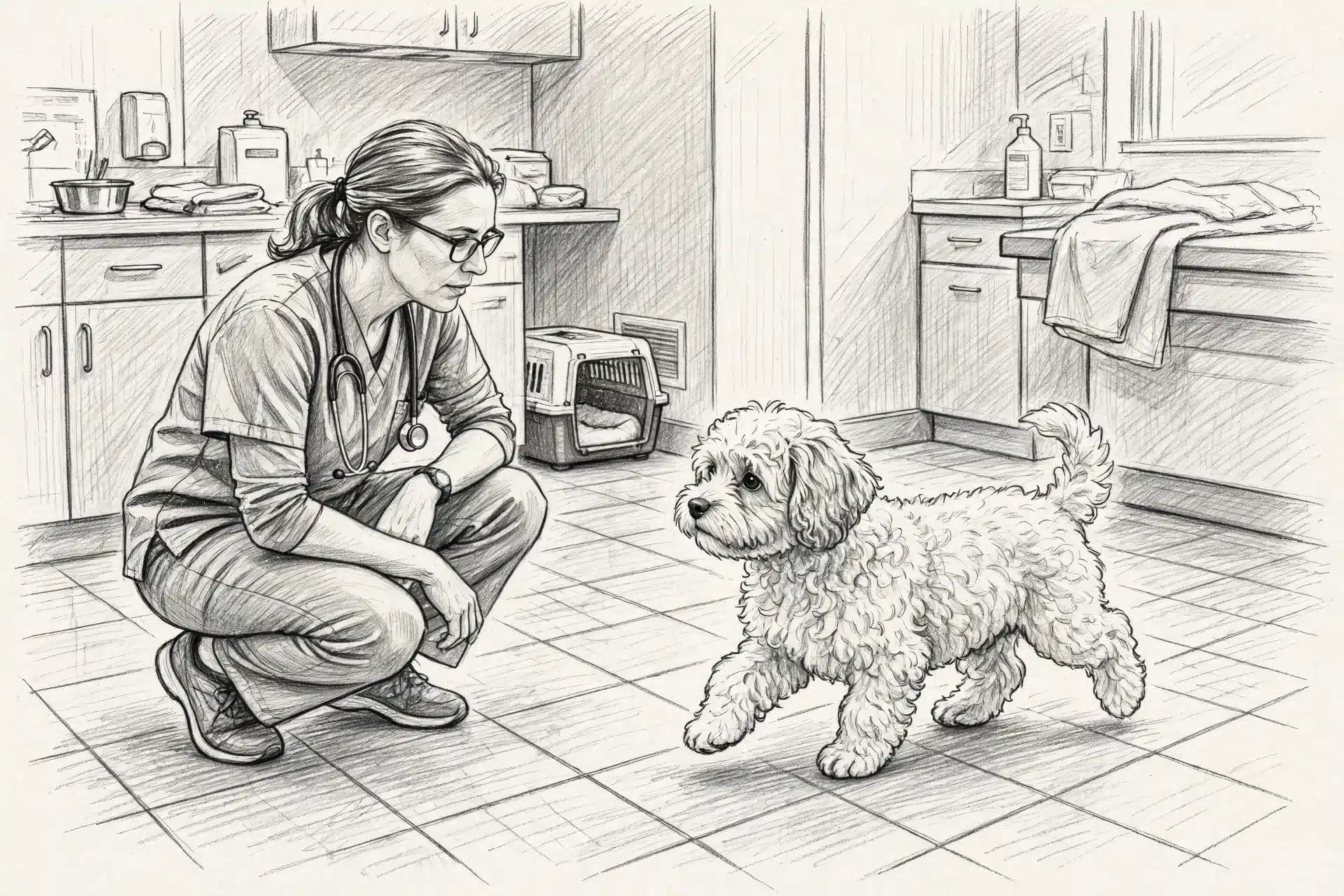
Small breeds carry a real risk of patellar luxation, where the kneecap slips out of its groove. Your vet checks this by feeling each knee and pushing the patella gently side to side. Watch for the classic signs at home too: a “skipping” gait, sudden three-legged hopping that resolves in a few steps, or a knock-kneed stance. Cornell’s canine health center describes that skip as the most common sign of patellar luxation. Let the puppy trot across the floor both ways. Movement should look even and confident, with no head bobbing or dragging.
Spine, Reflexes, and Developmental Milestones
Next, your vet runs a hand down the spine and checks basic reflexes. In Havanese lines, ask whether parents were screened for hip dysplasia through OFA, because breeders who document results can show them. You can compare what health-tested puppies should come with before you commit.
Then watch development. By eight weeks, a healthy puppy walks steadily, plays with balance, and startles at loud sounds. Stumbling that never improves, a head tilt, or dragged paws deserve a vet visit. Seizures, collapse, or a puppy that cannot rise are emergency signs, so skip the waiting period and call your clinic the same day.
Step 5: Ask About the Conditions Havapoo Puppies Are Prone To
Havapoos are generally sturdy, but both parent breeds carry known risks. Ask the breeder how they screen for them, and what results they can show in writing. The Havanese Club of America tracks the breed’s hereditary and genetic health issues, so a good answer names specific tests, not vague reassurances. Ask to see the parents’ eye, hearing, and knee clearances, plus the puppy’s own vet record.
Eye, Hearing, and Coat Concerns
Progressive retinal atrophy sits at the top of the list. This inherited condition slowly destroys the retina and can lead to blindness, and the Havanese and Poodle sides both carry it, which is why PetMD lists PRA as a breed concern. Ask whether parents have had an ophthalmologist eye exam. Cataracts can also appear in both lines.
Hearing matters too. Responsible breeders of small breeds can discuss a BAER hearing test, which measures brain responses to sound and detects deafness in one or both ears. Some Havanese lines also pass on extra eyelashes that irritate the eye, so ask about tear staining and eye discharge. A wavy, matting coat is normal, but persistent redness under the eyes deserves a vet look.
Orthopedic, Dental, and Internal Concerns
Patellar luxation is the most common orthopedic problem in small breeds. The kneecap slips out of its groove, causing skipping steps or a limp, and the Havanese Club of America names it among breed risks. Ask if parents were evaluated for hips and patellas. Hypothyroidism appears in some Havanese lines, so ask about coat quality and any baseline bloodwork. Small breeds also crowd their teeth, so expect a tartar and bite check at each visit. For what to request in writing, our guide covers the health records a breeder should show.
Step 6: Request the Fecal Test, Parasite Screening, and Baseline Bloodwork
Two quiet problems cause most early puppy setbacks: intestinal parasites and missed regional risks. Both are easy to catch when you ask for the right lab work at this visit.
Fecal Testing and Deworming
Ask for a fecal flotation even if your breeder already dewormed. The test spins a stool sample so parasite eggs float and show under the microscope. It catches roundworms, hookworms, and whipworms, and your vet can add antigen testing for Giardia and coccidia. Bring a fresh sample from that morning.
Deworming alone is not proof of a clear puppy. The Companion Animal Parasite Council advises fecal exams at least four times in the first year, because worms shed eggs in cycles and a single negative result can miss an infection. Our health testing guide covers what a breeder’s records should include, so compare theirs with what your vet finds.
A negative fecal test means no eggs showed up that day. Repeat testing is what makes the result meaningful.
Baseline Bloodwork and Region-Specific Screening
Ask about a complete blood count and chemistry panel as a baseline, especially before any spay or neuter procedure. It records your puppy’s normal values early, which makes illness easier to spot later.
Then discuss location. Utah has historically had lower heartworm pressure than the Southeast, but mosquito-borne disease moves, so ask your vet when heartworm prevention should start. Ask about flea and tick protection for your specific area too. Regional screening decisions belong with the vet who knows local case patterns, not a generic chart.
Step 7: Follow the Red Flag Triage: When to Call, When to Rush In
Not every odd symptom needs an emergency visit, but some signs can’t wait until morning. Use this two-tier triage to decide fast.
Same-Day Calls to Your Veterinary Clinic
Call your clinic the same day if your puppy shows any of these. They are worrying but usually not instantly fatal:
- Refusing two meals in a row or drinking far more water than usual
- Soft or bloody stool, especially alongside a round, gassy belly
- Repeated vomiting but still bright and playful between episodes
- Limping that improves with rest, which can point to early patellar luxation
- Eye redness, squinting, or heavy tear staining with discharge
- Fever at the top of the normal range and acting flat
Describe what you see, note when it started, and follow the clinic’s lead. Puppies go downhill faster than adult dogs, so when you are unsure, still call.
Signs That Mean Go Now
Go straight to an emergency clinic, do not wait for a callback, if your puppy has:
- Collapse, seizures, or repeated shaking that will not stop
- Nonstop vomiting or retching, or a hard, swollen belly with unproductive retching
- Pale or blue gums, labored breathing, or choking
- Rectal temperature below 99 or above 103 degrees Fahrenheit
- Straining with no urine, crying out in pain, or sudden inability to stand
- Known toxin exposure: chocolate, xylitol, grapes, or antifreeze
Any of these emergency signs in a Havapoo puppy means minutes matter. Call the clinic on the way so staff can prepare, and bring any packaging if your puppy ate something.

Print the checklist, bring it to your vet visit, and keep it handy for the first week home. If you’d rather start with a puppy raised under that same standard of care, see the available Havapoo puppies at Sage Puppies and begin the application.
Frequently Asked Questions
Q1: What should a vet check on a new Havapoo puppy?
Expect a full nose-to-tail exam: weight and body condition score, hydration, heart and lung sounds, eyes, ears, bite, skin, knees, gait, and reflexes. Ask for a fecal flotation, plus baseline bloodwork and vaccine planning per AAHA guidelines.
Q2: How do I tell if a Havapoo puppy is sick or has health problems?
Watch daily healthy puppy signs: steady appetite and weight gain, firm stool, bright eyes, clean ears, and playful energy. Skipping two meals, low energy, soft or bloody stool, or repeated vomiting all warrant a same-day call.
Q3: Which signs mean a Havapoo puppy needs urgent vet care?
Go immediately for collapse, seizures, nonstop vomiting, a hard swollen belly, pale or blue gums, labored breathing, straining without urine, temperatures below 99 or above 103 degrees Fahrenheit, or known toxin exposure.
Q4: Which vaccines will my puppy need at the first visits?
Core shots include distemper, parvovirus, adenovirus, and rabies, often with bordetella and leptospirosis based on lifestyle. Your vet sequences boosters every three to four weeks until about sixteen weeks of age.
Q5: What should a breeder’s health records include?
Ask for parents’ OFA patella and hip results, ophthalmologist eye exams, and BAER hearing status, ideally within a CHIC listing, plus the puppy’s deworming and vaccine dates.
Q6: Is tear staining in Havapoos normal?
Light staining is common in pale coats, but heavy wet streaks, squinting, or redness can signal a tear duct problem or irritated eyes and deserve a vet look.
Conclusion
A healthy Havapoo puppy shows you the same signs a vet looks for, just at lower volume: steady weight gain, a body condition score near the middle, clear eyes, clean ears, firm stool, and even, confident movement. The exam order matters too. Weight and hydration first, then the nose-to-tail physical, then knees, gait, and reflexes, where patellar luxation shows up most often in small breeds. Layer in the inherited risks from both parent lines, especially progressive retinal atrophy, hearing, and kneecaps, and ask for written screening results rather than reassurance. Finish with lab work: a fecal flotation, deworming records, and baseline bloodwork. Keep the triage ladder close, because knowing which signs need a same-day call and which need the drive to an emergency clinic is what protects your puppy in the weeks right after pickup.