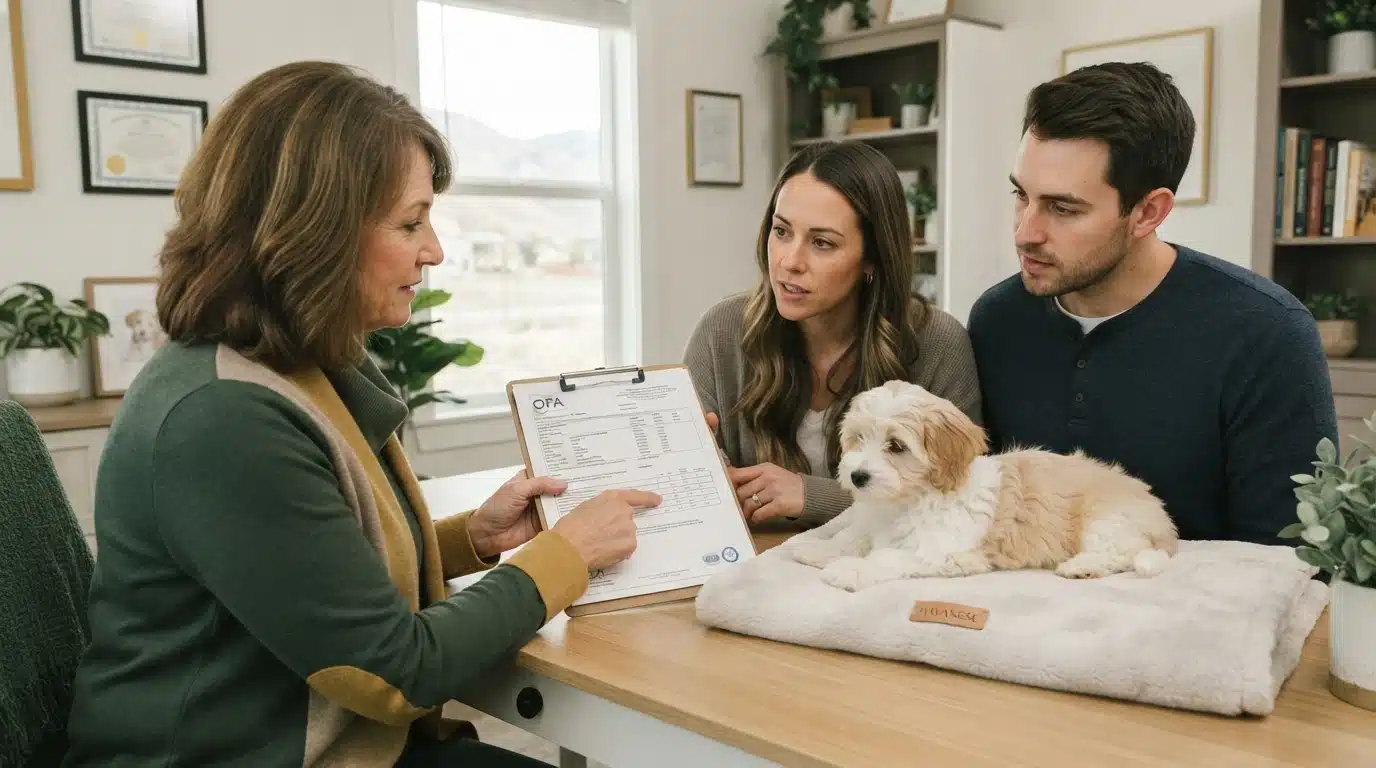
Quick answer: Review parent information, written purchase terms and puppy-specific care records at the appropriate stage. Ask which documents are ready now and which will follow a veterinary visit or go-home preparation. Names, dates and the identified puppy should be consistent.
Before choosing a Havanese, Havapoo or Cavapoo, ask what the breeder can show you about the actual parents, the puppy’s care and the proposed placement. Parent screening, a puppy exam and written health terms serve different purposes.
Review the Sage Puppies program and records
Start with our public health-testing information, parent profiles and early-development approach. Ask Cassie to identify the records relevant to the parents and puppy you are considering.
- Before applying: Read the program and ask questions about breed fit, parent information and your household’s care plans.
- Before a reservation payment: Confirm the puppy or placement position, exact price, included items and written health terms and deposit policy. Ask what records can be reviewed at this point.
- Before pickup or delivery: Confirm the puppy’s available veterinary and care records, transition guidance, handoff details and any travel paperwork applicable to the route. Some puppy-specific records are completed closer to go-home.
Use the checklist below to guide the conversation. Submitting an application begins review; it does not approve a placement or reserve a puppy.
Puppy Breeder Paperwork at a Glance
| Document | Best for | When to review | What it should identify | Main verification question |
|---|---|---|---|---|
| Parent health testing records | Verifying planned, breed-aware breeding decisions | Before applying, reserving, or paying a deposit | The sire, dam, test type, date, provider, and result | Which tests were completed on both parents, and can I verify them? |
| Puppy veterinary examination record | Confirming the specific puppy received veterinary attention | Before pickup or delivery, then again at your first vet visit | The puppy, examination date, clinic, findings, and follow-up | Does this record clearly describe the exact puppy I am buying? |
| Written purchase contract and health guarantee | Understanding rights, responsibilities, coverage, and remedies | Before reservation, payment, pickup, or delivery | The parties, puppy, parents, price, terms, health policy, and return process | What exactly is covered, what is excluded, and what must I do if a concern appears? |
| Vaccination, deworming, and treatment record | Continuing preventive care with your family veterinarian | Before pickup or delivery and at the first veterinary visit | Vaccine, deworming, treatment, date, product, and provider details | What exactly has this puppy received, and what is due next? |
| Puppy identity, microchip, and registration documentation | Matching records and preserving permanent identification | Before final payment and at the go-home handoff | The puppy’s distinguishing details, microchip, parents, and registration status | Do the identity details and microchip number match every relevant document? |
| Delivery, health certificate, and transfer paperwork | Planning a documented local or interstate handoff | Before finalizing pickup or delivery arrangements | The puppy, destination, exam timing, transport plan, and transfer contacts | Which documents are required for this destination, and who is responsible for each step? |
| Written care and transition packet | Supporting a smooth first week at home | Before go-home day and during the first week | Food, routine, care guidance, grooming, socialization, and breeder contact | What routine has this puppy been following, and how should I change it gradually? |
What breeder documents should show
Good breeder paperwork does not promise that a puppy will never face a health concern. It gives you a clear, traceable record of the parents, your puppy’s care, the sale terms, and the responsibilities both sides accept.
For Havanese, Havapoo, and Cavapoo puppies, the strongest packet is easy to read and consistent from page to page. Names, dates, microchip details, and parent information should match.
Ask to review key records before you commit. Clear paperwork helps your family make a calm, informed choice, whether you plan South Jordan pickup or nationwide delivery.
1. Parent health testing records
The strongest breeder documents start with proof about the sire and dam. Ask for records linked to the actual parents of your litter, not a broad claim that a program is health tested.
Highlights
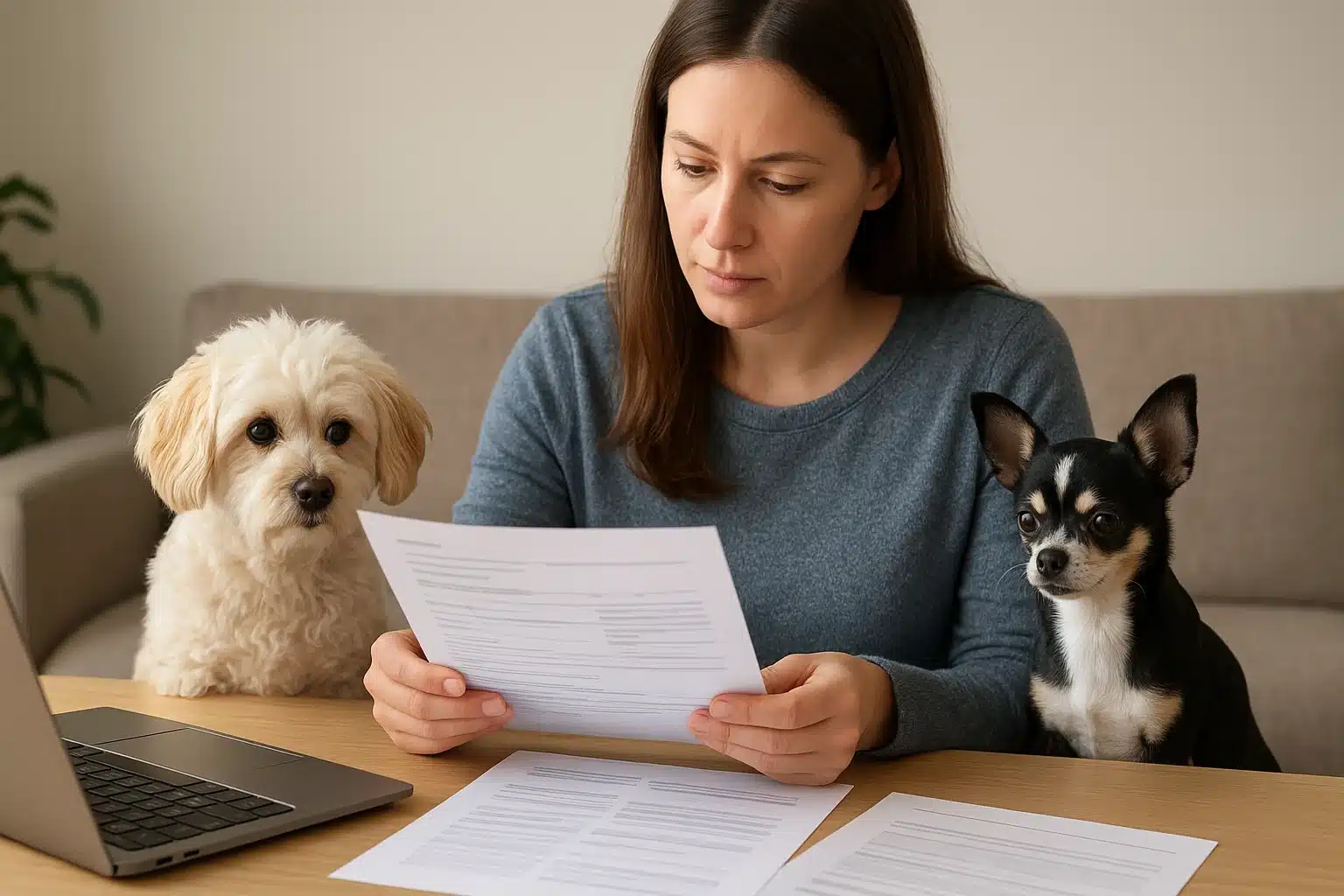
- Match each parent name to the contract or litter details. Names, registration numbers, and test reports should tell one clear story.
- Ask which tests were chosen for the Havanese, Havapoo, or Cavapoo parent lines. A general DNA panel is not a full answer.
- Records should show the test type, date, lab or examining provider, and result.
- You can search OFA records by a parent’s name to verify published results.
- A carrier result does not automatically make a pairing irresponsible. Ask how the breeder selected the other parent and what that means for puppies.
Specs
- Best for: Checking that breeding choices were planned with inherited risks in mind.
- When to review: Before you apply, reserve, or pay a deposit.
- What it should identify: Sire, dam, test type, date, provider, and result.
- Main verification question: Which tests were completed on both parents, and can I verify them?
Pros
- Goes beyond marketing language.
- Helps you discuss inherited health concerns with your breeder and veterinarian.
- Supports breed-aware choices. OFA notes that recommended screens vary by breed and parent club. Review its breed screening guidance before comparing records.
Cons
- Testing lowers risk but cannot predict every future health issue.
- Needed screening can vary by breed, family line, and available tests.
Keep puppy medical records separate from parent testing paperwork. Both matter, but they answer different questions.
This ranks first because responsible breeding decisions begin before puppies are born.
Last updated: September 12, 2026
Also Read: 7 Nebraska Puppy Breeders Offering Health Guarantees and Vet Records
2. Puppy veterinary examination record
A puppy-specific veterinary record connects current health findings to the dog you will take home. Ask for a record from a licensed veterinarian that clearly identifies your individual puppy, not just the litter.

Highlights
- Match the puppy’s name, temporary ID, or microchip number to your reservation and contract.
- Look for the exam date, clinic details, veterinarian information, weight, and clear findings.
- Ask about any medication, treatment, unusual finding, or needed follow-up. Breeders should maintain medical records as part of veterinary care, according to the AVMA’s breeder guidance.
- Confirm whether this is a routine wellness exam, a travel certificate, or both. A travel certificate has a different job: it supports the puppy’s required movement to its destination, as explained in the AVMA’s CVI guidance.
Specs
- Best for: Confirming your exact puppy received veterinary attention
- When to review: Before South Jordan pickup or nationwide delivery, then at your first vet visit
- What it should identify: Puppy, exam date, clinic, findings, and follow-up
- Main verification question: Does this record clearly describe the exact puppy I am buying?
Pros
- Gives you a dated snapshot of current findings.
- Gives your veterinarian helpful background.
- Shows whether a concern was disclosed and addressed.
Cons
- A normal exam cannot predict lifelong health.
- Some findings need follow-up after the puppy settles in.
Bring this paperwork and the breeder’s written policy to your own veterinarian soon after arrival.
This ranks second because it is the clearest written health snapshot before transfer.
Last updated: September 12, 2026
Also Read: Havanese, Havapoo & Cavapoo Puppy Care Blog
3. Written purchase contract and health guarantee
The contract turns important promises into terms both sides can read before committing. Ask for the full agreement before you pay a reservation fee, not at pickup or delivery.

Highlights
- Match the puppy’s name, microchip ID if listed, parent names, price, reservation amount, and balance due to the other records. The AKC notes that parent details and purchase price are normal contract basics.
- Read the puppy health guarantee paperwork closely. It should name the coverage period, exclusions, vet exam deadline, notice process, needed records, and remedy.
- Confirm pickup or delivery terms, registration status, spay or neuter terms, and daily care duties in writing.
- Look for a reputable breeder return policy. If you cannot keep the dog later, the agreement should explain how to contact the breeder and what happens next.
- Ask about any breeder contract terms that seem broad, unclear, or hard to meet. A health guarantee cannot promise a puppy will never have a health issue.
Specs
- Best for: Understanding rights, duties, coverage, and remedies
- When to review: Before reservation, payment, pickup, or delivery
- What it should identify: The parties, puppy, parents, price, terms, health policy, and return process
- Main verification question: What exactly is covered, excluded, and required if a concern appears?
Pros
- Reduces reliance on texts and verbal promises.
- Shows the breeder’s long-term commitment to the puppy.
- Gives your family time to ask questions before signing.
Cons
- Deadlines and exclusions need careful reading.
- Written terms cannot remove normal health and growth uncertainty.
A first-vet-visit requirement and prompt notice deadline are common. AKC guidance also recommends clear breeder contact details and parent information.
This ranks third because it governs the sale and the relationship after go-home day.
Last updated: September 12, 2026
Also Read: How to Verify California Puppy Breeder Health Testing Before You Buy
4. Vaccination, deworming, and treatment record
Preventive-care paperwork helps your veterinarian continue your puppy’s schedule safely. Ask what the puppy has received and what is due next, not simply whether they are “up to date.”

Highlights
- Check vaccine names and dates against the puppy’s age. Puppies usually need a series that starts at 6-8 weeks, with the final dose often given at 16 weeks or later, according to the American Veterinary Medical Association.
- Request deworming dates and product names. Note any parasite test, treatment, illness, or medication.
- A clinic name, provider details, and clear entries carry more weight than a handwritten “up to date” note.
- Bring all puppy vaccination records breeder paperwork to your first vet visit. Your veterinarian can set a plan based on health, local risks, and travel needs.
Specs
- Best for: Continuing preventive care with your family veterinarian
- When to review: Before pickup or delivery and at the first veterinary visit
- What it should identify: Vaccine, deworming, treatment, date, product, and provider details
- Main verification question: What exactly has this puppy received, and what is due next?
Pros
- Supports an organized care handoff.
- Helps your vet avoid missed or duplicate treatment.
- Makes past treatment easier to verify.
Cons
- It does not replace advice from your veterinarian.
- Destination and travel needs may change requirements.
Keep this puppy deworming record with your other puppy breeder paperwork checklist. Your vet maintains an ongoing history of vaccines, preventive care, and medications, as AVMA guidance explains.
This ranks fourth because it protects the puppy’s first weeks home and helps prevent gaps in care.
Last updated: September 12, 2026
Also Read: Puppy Care Blog & Resources | Sage Puppies
5. Puppy identity, microchip, and registration documentation
Identity documents keep your puppy’s medical, ownership, and recovery records connected. Before final payment and again at go-home, make sure every record clearly belongs to the same puppy.
Highlights
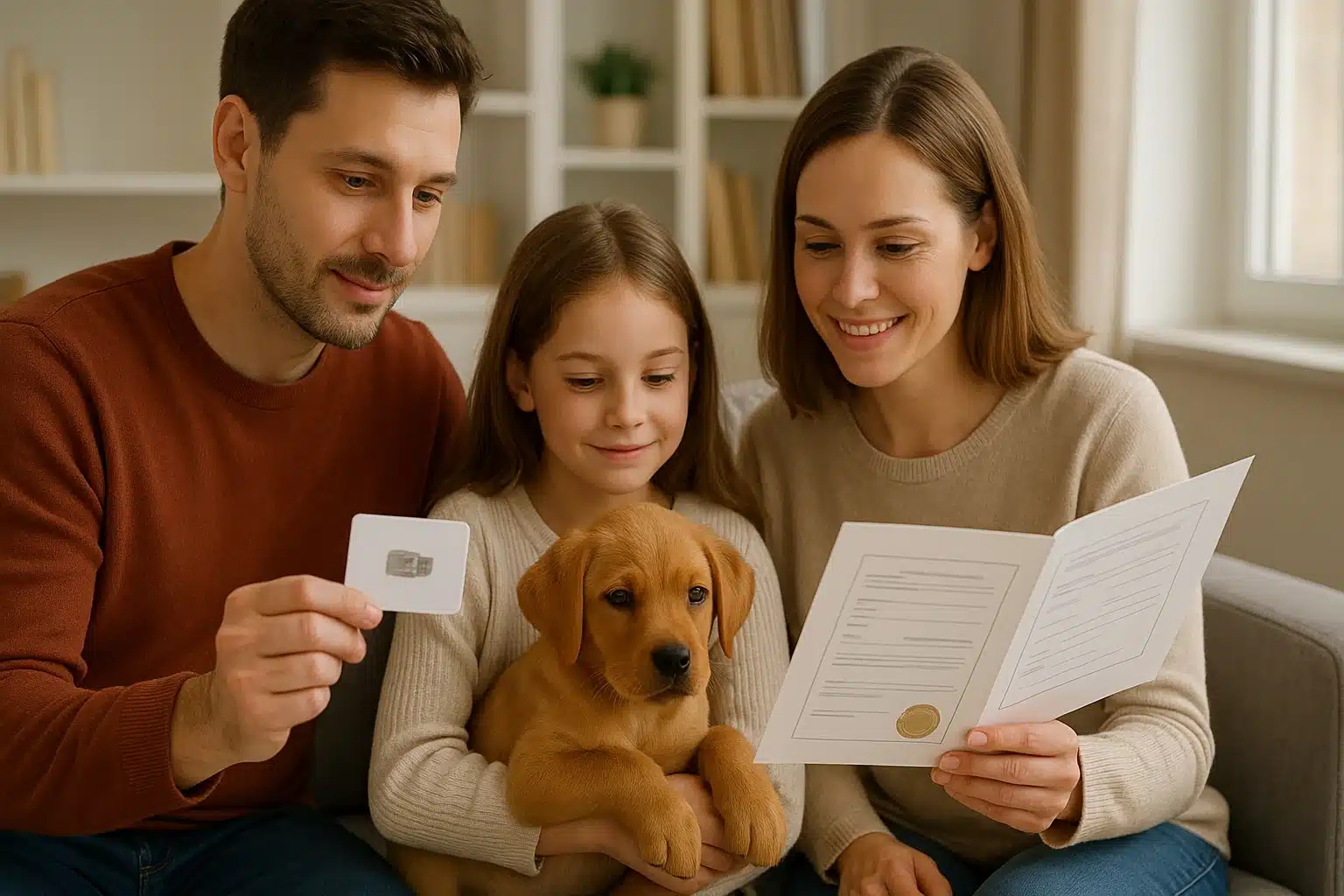
- Compare the puppy’s name, sex, birth date, color, markings, and parent names across the contract, vet record, vaccine record, and any registry forms.
- Check that the full microchip number is copied exactly. A chip only holds a unique ID number, so accurate registry details matter.
- Ask who registers the chip, when ownership transfers, and which registry holds the record.
- Read puppy registration papers breeder offers closely. They may be companion-only or have other limits.
- Registration and pedigree do not prove health, temperament, or sound breeding practices.
Specs
- Best for: Matching records and keeping permanent identification
- When to review: Before final payment and at go-home handoff
- What it should identify: Distinguishing details, microchip, parents, and registration status
- Main verification question: Do the identity details and microchip number match every relevant document?
Pros
- Connects medical and ownership records
- Helps recovery if your dog is lost
- Prevents mix-ups among similar puppies
Cons
- A chip fails its purpose if contact details are not updated
- Registry paperwork is not a health record
Register the chip promptly, then ask your vet to scan it at routine visits. The AVMA advises keeping registry contact details current.
This ranks fifth because good paperwork only helps when it identifies the correct puppy.
Last updated: September 12, 2026
Also Read: 10 Adorable Havapoo Colors You Need to See (2026)
6. Delivery, health certificate, and transfer paperwork
Travel documents make a distant handoff clear and easier to plan. Ask what travels with your puppy, who handles each step, and when it happens.

Highlights
- Destination states set their own entry rules, which may include a health certificate, vaccines, tests, or treatment. Check the USDA state-by-state travel guidance before confirming plans.
- Ask when the veterinary exam occurs. A travel health certificate is not the same as the puppy’s full wellness record.
- Match the puppy’s name, breed, sex, birth date, color, and microchip number across every record. Incomplete or mismatched details can cause delays, as APHIS warns.
- Get the delivery method, handoff contact, timing, and any family responsibilities in writing.
- Keep digital and paper copies before, during, and after transfer.
Specs
- Best for: Planning a documented local or interstate handoff
- When to review: Before finalizing pickup or delivery arrangements
- What it should identify: The puppy, destination, exam timing, transport plan, and transfer contacts
- Main verification question: Which documents are required for this destination, and who is responsible for each step?
Pros
- Makes delivery expectations easier to coordinate
- Creates a clear record of transfer
Cons
- Rules can change by destination
- Travel paperwork does not replace your own veterinary exam
This ranks sixth because interstate travel needs it most, but South Jordan pickup families should receive a documented transfer packet too.
Last updated: September 12, 2026
Also Read: 10 Red Flags to Avoid When Visiting a Local Puppy Breeder
7. Written care and transition packet
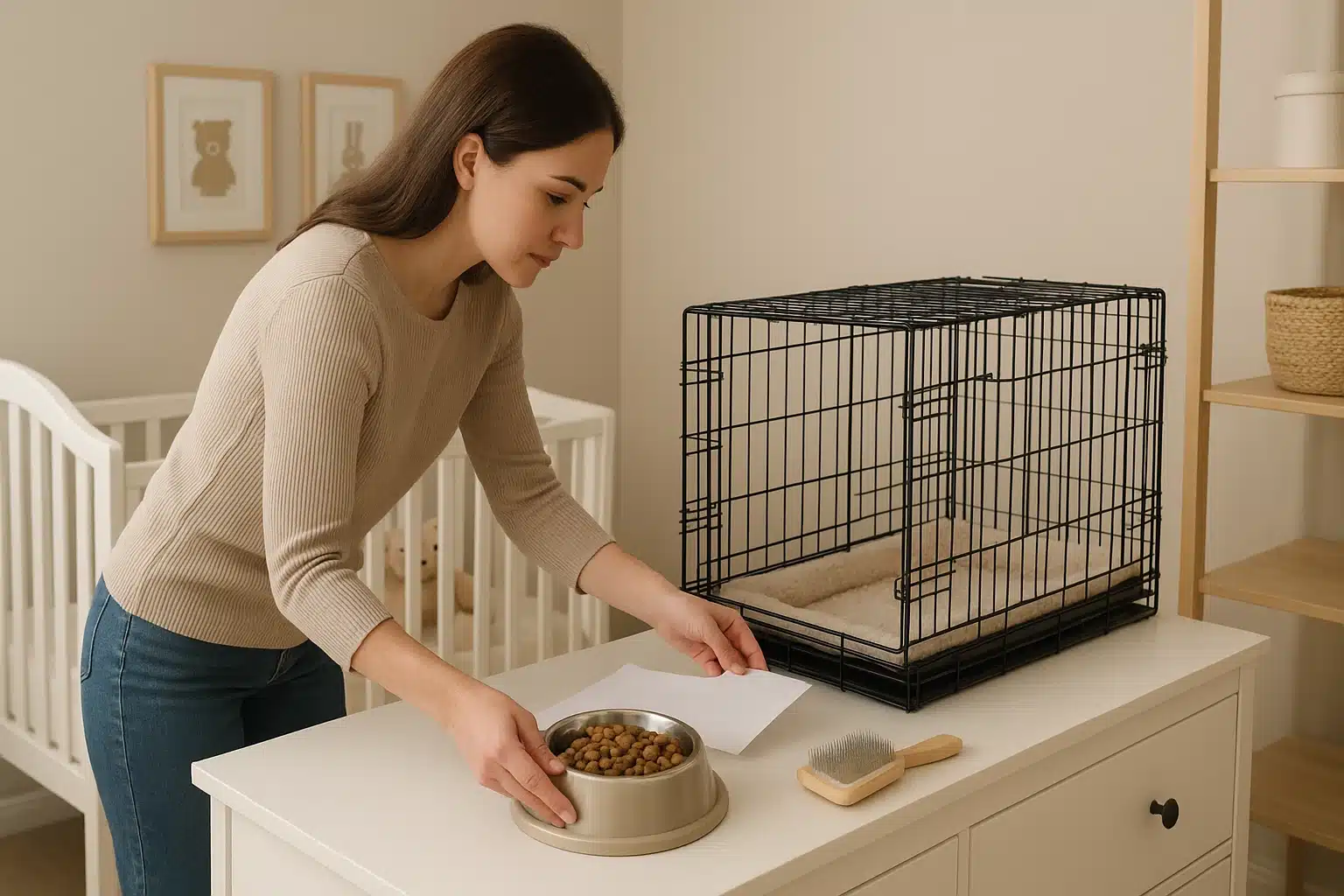
The best puppy go-home packet helps your puppy move from the breeder’s routine to your family routine calmly. Read it before go-home day, then keep it nearby during the first week.
Highlights
- Food instructions should name the current diet and explain a gradual change. AKC guidance on changing puppy food supports a slow transition.
- Routine notes should cover meals, naps, potty trips, crate expectations, and familiar cues.
- Havanese, Havapoo, and Cavapoo care notes should include coat brushing and future grooming needs.
- Socialization advice should focus on safe, positive, age-appropriate experiences. Positive puppy socialization should never overwhelm a young dog.
Specs
- Best for: A smoother first week at home
- When to review: Before go-home day and during week one
- What it should identify: Food, routine, care, grooming, socialization, and breeder contact
- Verification question: What routine has this puppy followed, and how should we change it gradually?
Pros
- Keeps early days more familiar for puppy and family
- Gives useful training and grooming context
Cons
- Your veterinarian should tailor care advice to your puppy
- Written notes cannot replace close observation or hands-on help
Make sure packet details match the contract and veterinary records.
It ranks seventh because it supports the puppy’s next stage rather than proving past breeding decisions.
Last updated: September 12, 2026
How to choose a reputable puppy breeder near you
Before a reservation payment, ask to review the contract, parent health tests, and a sample go-home packet.
Use this quick filter:
- Match the puppy’s name, birth date, sex, color, markings, parent names, and microchip number on every record.
- Ask how Havanese, Havapoo, or Cavapoo parent-breed health risks were considered. A good breeder can explain the results in plain terms.
- Read the health guarantee closely. Check exclusions, vet visit deadlines, notice rules, and the remedy offered.
- Choose a breeder who screens your family too and explains how puppies are raised, matched, and supported after go-home day.
- Confirm South Jordan pickup or nationwide delivery in writing, including handoff timing, travel records, and each party’s duties.
“Health guaranteed” is not enough. The written terms matter.
For families who want clear guidance and a home-raised small-breed focus, Sage Puppies is a strong choice for Havanese, Havapoo, and Cavapoo puppies.

Ready to discuss a puppy and the relevant records? View current puppies, review pricing and reservation steps, then start your application. Cassie can discuss your questions and the appropriate records during matching and go-home planning.
Frequently Asked Questions About Breeder Documents
Q1: What documents should a reputable puppy breeder provide?
Expect a purchase agreement, health record, vaccination and deworming details, parent health-test proof, pedigree or registration papers if promised, feeding guidance, and pickup or delivery records.
Q2: What health tests should a reputable breeder show for puppies?
Ask for tests relevant to the breed and parent dogs. Results should show the parents’ names, not just a general health claim. Puppy exam records are separate.
Q3: How can I verify a puppy breeder is reputable?
Match names, dates, microchip numbers, and litter details across every record. Speak directly with the breeder, ask clear follow-up questions, and avoid sellers who refuse paperwork.
Q4: Should the contract list my puppy’s microchip number?
Yes, if your puppy is chipped before going home. The number should match the medical record and transfer paperwork.
Q5: What if a breeder says documents will come later?
Ask which records exist now, which will follow an examination or go-home preparation, and when you can review them. Clarify parent information and written purchase terms before payment rather than assuming every puppy-specific record is already complete.