Quick Summary: Never buy a puppy from a breeder who won’t let you see where the dogs live or meet the mother-those are the top red flags. A responsible breeder shows clean, safe spaces, lets you observe parents and puppies, and provides verifiable health records for both parents. Puppies under 8 weeks old or sold without contracts, health policies, or clear answers about care are major warning signs. Sage Puppies stands out by offering transparent health testing, home-raised puppies, and a process that includes socialization and detailed records before pickup or delivery.
A puppy can look bright and healthy in a photo. The clearer proof often sits behind the front door: how adult dogs live, how direct the breeder is, and whether the puppy’s story has records to back it up.
A search for a reputable puppy breeder near me can lead to polished sites and sweet photos. Those details matter, but they can hide concerns if you focus only on breed, color, timing, or price.
This ethical breeder checklist ranks 10 red flags to spot during a visit and shows what responsible care looks like instead. Use this breeder visit checklist to review parents, housing, health records, socialization, puppy age, contracts, payments, and support after pickup.
Our ethical breeder checklist draws on veterinary, welfare, AKC, OFA, and breeder-training guidance. It helps families considering a Havanese, Havapoo, Cavapoo, or another companion puppy spot patterns of secrecy, pressure, poor care, or claims they cannot verify. One imperfect detail is not always a deal-breaker. This ethical breeder checklist helps you judge the full picture.
Quick Red Flag Comparison
| Red flag | Best for | What to observe | Why it matters | Buyer action |
|---|---|---|---|---|
| You cannot see where the puppies and parents live | Families who want direct evidence of puppy care | Clean, safe, appropriately socialized living spaces | The environment affects welfare, health, and early development | Request a transparent tour or pause the purchase |
| The breeder will not let you meet the mother or explain the father’s location | Families evaluating lineage, temperament, and authenticity | The dam’s health, comfort, and behavior around people | Parents influence inherited risk and temperament expectations | Request a clear explanation and verifiable records |
| Parent health testing is vague or unverifiable | Health-conscious puppy families | Specific tests, dates, parent identities, and verification | Parent screening can reduce known inherited risks | Review documents before placing a reservation |
| The puppies are under 8 weeks old or pushed home too early | Families planning a healthy transition home | Birth date, weaning status, litter interaction, and readiness | Early development depends on time with mother and littermates | Decline early placement and verify the revised timeline |
| The adult dogs or puppies look unhealthy, fearful, or poorly cared for | Buyers assessing immediate welfare and care | Body condition, cleanliness, behavior, water, shelter, and space | Visible welfare problems can signal broader neglect | Leave if conditions are unsafe or animals appear ill |
| The breeder has constant availability, many breeds, or unusually high volume | Families comparing boutique and larger breeding programs | Number of dogs, litters, breeds, caregivers, and records | Capacity affects individualized care and accountability | Ask who bred and raised the specific puppy |
| The sale happens in a parking lot, through a broker, or without seeing the puppy | Local buyers and families arranging delivery | Seller identity, puppy origin, records, and handoff plan | Direct accountability reduces deception and hidden welfare risks | Verify the breeder before paying and avoid rushed handoffs |
| The breeder pressures you to pay quickly or skips questions about your home | Families seeking a thoughtful matching process | Two-way questions, timing, deposit terms, and communication | Placement quality affects lifelong fit and support | Slow down and take all terms home to review |
| There is no clear contract, health policy, records, or return plan | Families protecting the puppy and their own responsibilities | Plain-language terms, records, deadlines, and return provisions | Written clarity supports accountability after go-home | Review with your veterinarian or adviser before signing |
| The breeder relies on registration, rare-color claims, or guarantees instead of substance | Families comparing marketing claims with breeding substance | Health discussion, realistic expectations, and evidence | Appearance and paperwork do not establish welfare or quality | Redirect the conversation to health, care, and fit |
What to know about choosing a reputable puppy breeder near you
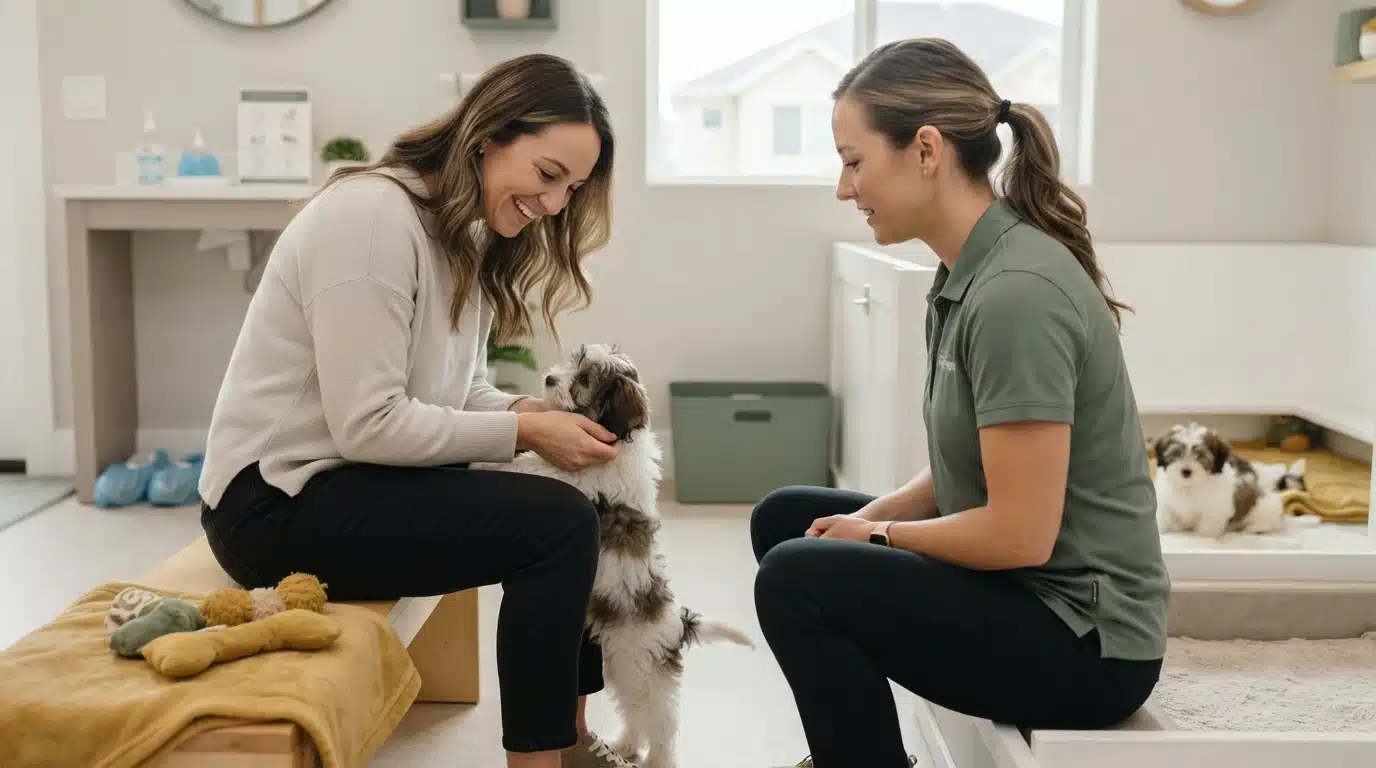
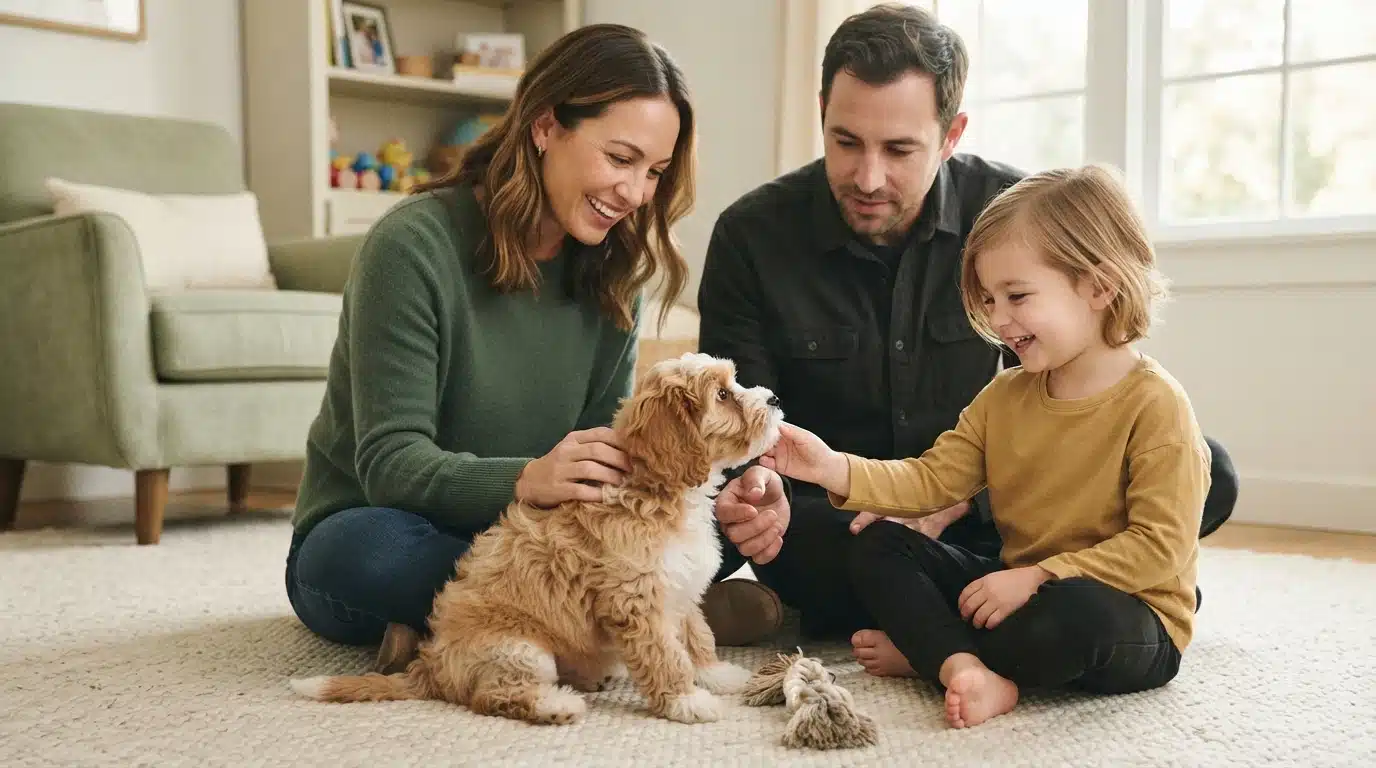
A reputable puppy breeder does far more than raise cute puppies. They plan each litter with care, look after their adult dogs, share useful health details, and give puppies safe, positive time with people before they go home.
A visit lets you compare a breeder’s words with what you see. Notice how the dogs are treated, how the space feels, and whether the breeder answers clear questions without pressure.
The right breeder also cares about the match. They should ask about your home, lifestyle, and plans for your new puppy, then remain a helpful resource after go-home day.
1. You cannot see where the puppies and parents live
A reputable breeder should explain and safely show where puppies are raised. A public meet-up, polished photos, or one tidy room is not enough.

Highlights
- Ask to see the litter’s real living area and the mother. The AKC advises buyers to observe the premises and meet a parent.
- Look for clean, safe space, fresh water, rest areas, and calm human contact.
- Young puppies may need disease-control limits. A breeder should give a clear reason and offer a safe, transparent alternative, since puppies are vulnerable to infection before full vaccination.
- Do not treat a video call as a full substitute for independent access.
Specs
- Best for: Families who want direct proof of puppy care
- What to observe: Clean, safe, social living spaces
- Buyer action: Request a transparent tour or pause the purchase
Pros
- Reveals care patterns photos can hide
- Helps spot third-party sellers
Cons
- A tidy room alone proves little
This ranks first because no access removes a key ethical breeder checklist safeguard.
Last updated: August 25, 2026
Also Read: Sage Puppies vs Happytail Puppies: Health Screening Comparison
2. The breeder will not let you meet the mother or explain the father’s location
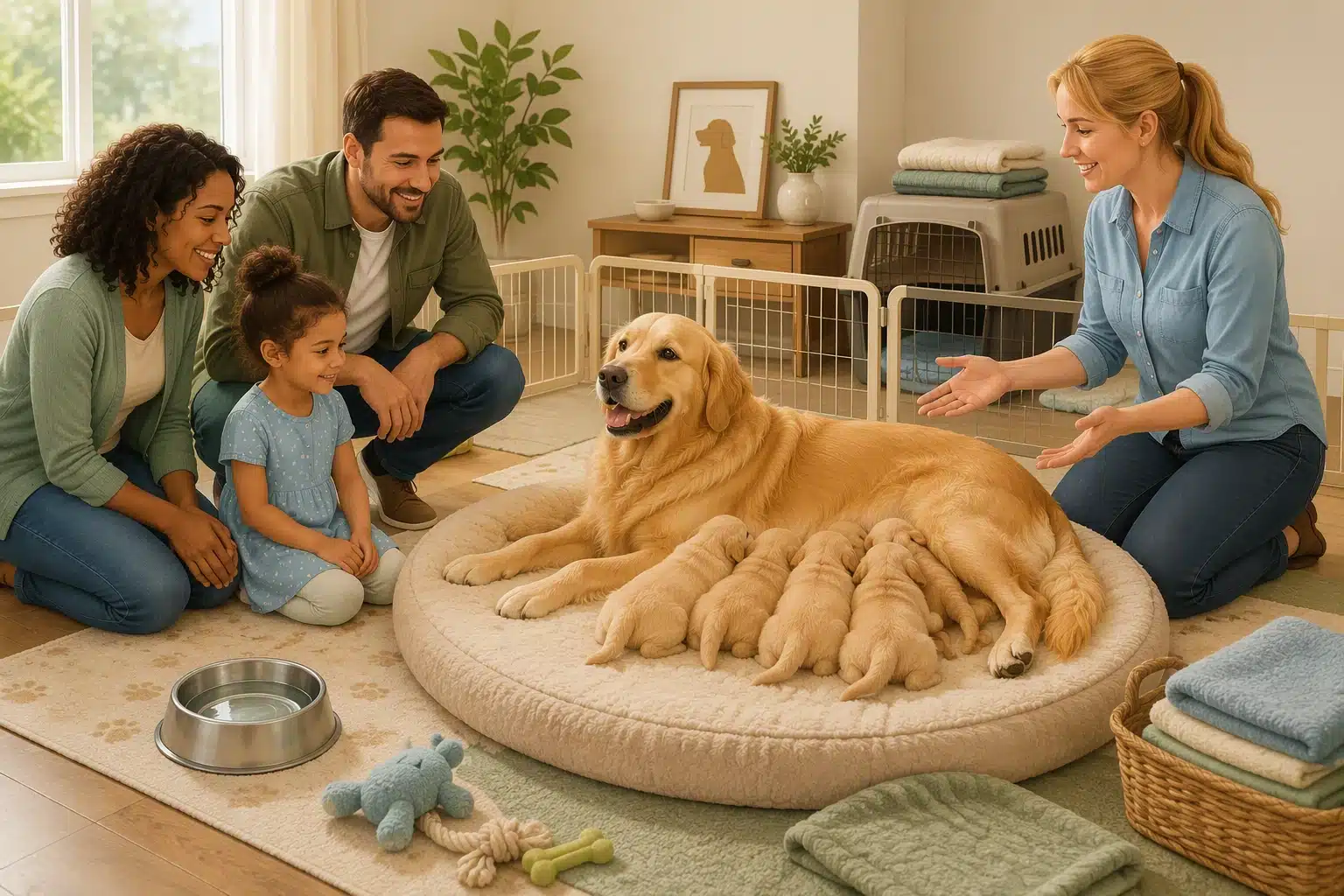
You should usually be able to meet the puppy’s mother and get a clear account of the father. The sire may live elsewhere, but secrecy is not acceptable.
Highlights
- Watch the dam’s health, comfort, and behavior around people and her litter.
- Ask for the sire’s name, owner, location, and relevant parent health-testing records.
- A father living with another breeder can be normal. The AKC notes that sires often live far from the litter, while the mother should be present and settled with her puppies. See the parent dogs.
Pros
- Helps confirm the litter’s origin and offers useful temperament context.
- Supports better health questions.
Cons
- A friendly parent cannot guarantee a healthy puppy.
- The sire may reasonably live elsewhere.
Ask for a plain explanation and records you can verify. Changing stories are the real warning sign.
This ranks highly because honest parent details help confirm health, temperament, and authenticity.
Last updated: August 25, 2026
Also Read: Puppy Care Blog & Resources | Sage Puppies
3. Parent health testing is vague or unverifiable
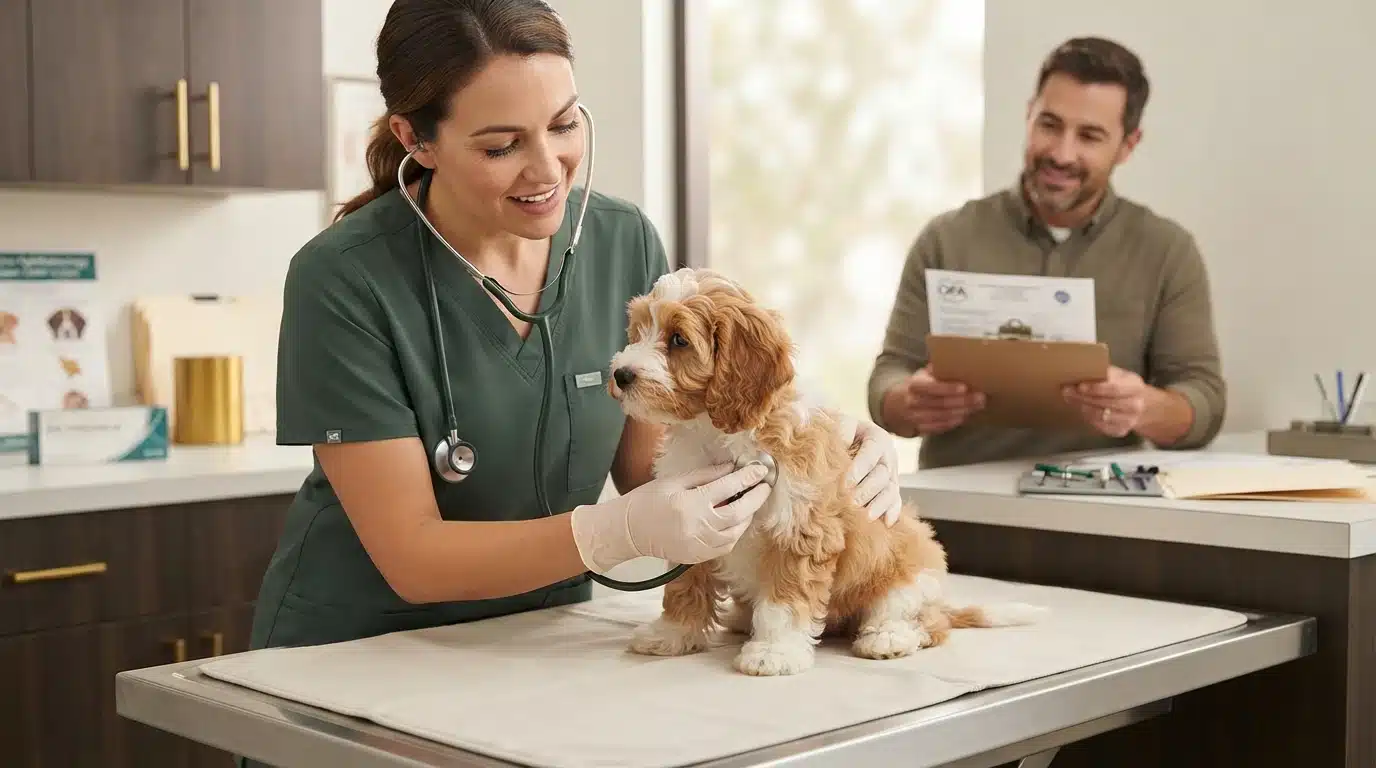
A puppy wellness exam is not the same as health testing the breeding parents. Claims like “DNA tested” need names, test types, dates, and results you can review.

Highlights
- Ask for records for both the dam and sire. OFA advises buyers to review parent health screenings, even if one parent lives elsewhere.
- Separate DNA panels from physical screens and routine vet care.
- For Havanese, Havapoo, and Cavapoo pairings, ask how each parent line shaped the testing plan.
- Confirm results through original documents or a recognized database. CHIC uses breed-specific screening protocols, so one generic badge is not enough.
Pros
- Gives your veterinarian a useful health record.
- Makes breeder comparisons more consistent.
Cons
- Testing cannot predict every future health issue.
- The right tests differ by breed and parent.
Review the documents before placing a reservation because inherited risks may not show in a young puppy.
Last updated: August 25, 2026
4. The puppies are under 8 weeks old or pushed home too early
A responsible breeder gives puppies time to mature with their mother and littermates. If someone offers a puppy before eight weeks, decline and ask why.

Highlights
- Ask for the exact birth date and planned go-home date. AVMA socialization research notes that puppies learn from their mother, littermates, people, and their setting during this key stage.
- Confirm the puppy is fully weaned and receiving proper care.
- Ask how the breeder handles puppies before departure.
- Do not let travel, holidays, or a discount set the puppy breeder go-home age.
Specs
- Best for: Families planning a healthy transition home
- What to observe: Birth date, weaning, litter interaction, and readiness
- Buyer action: Decline early placement and verify a revised timeline
Pros
- Protects development and supports continued socialization.
Cons
- Exact timing may vary for health or behavior needs.
Most dogs are ready to explore new settings at 8 to 9 weeks, according to the AVMA review.
It ranks here because early separation can signal other shortcuts in care.
Last updated: August 25, 2026
Also Read: 10 Questions to Ask Before Buying a Puppy Locally
5. The adult dogs or puppies look unhealthy, fearful, or poorly cared for
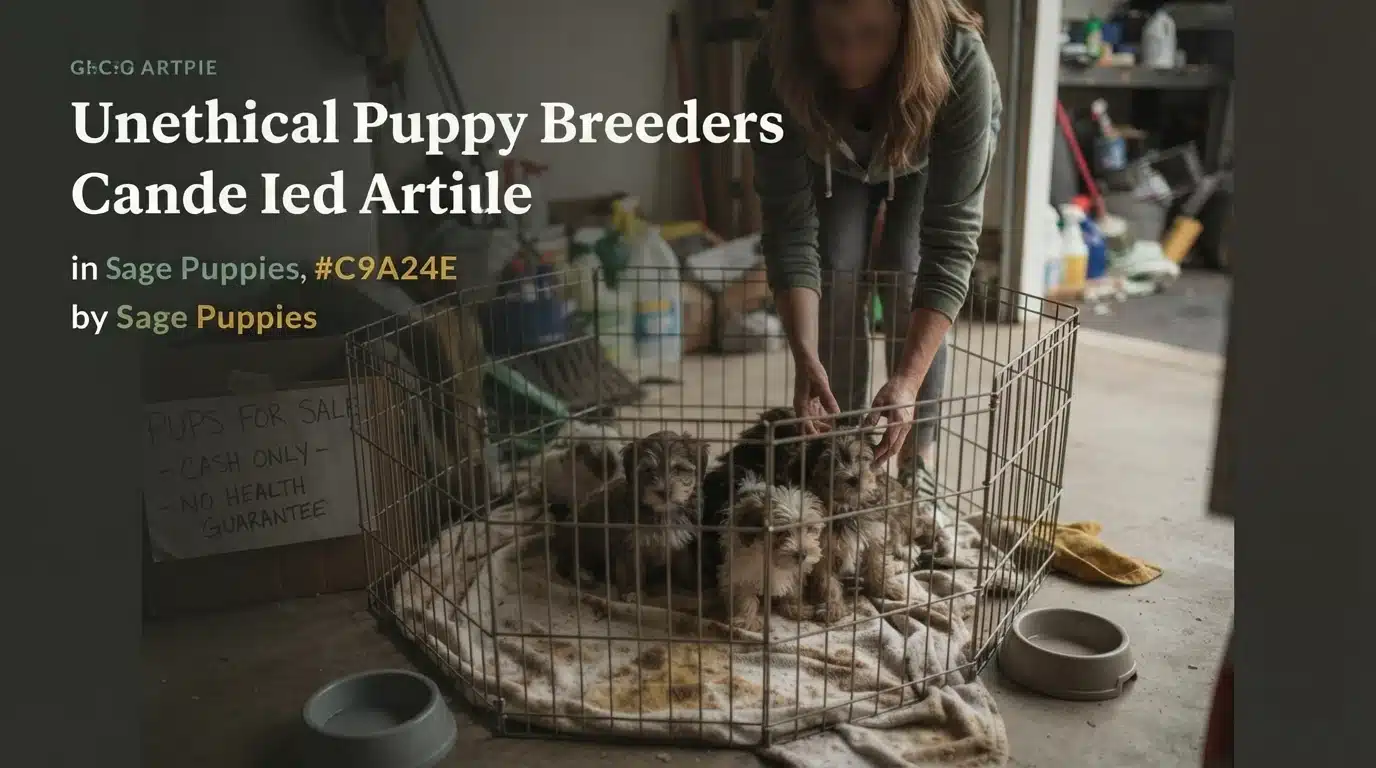
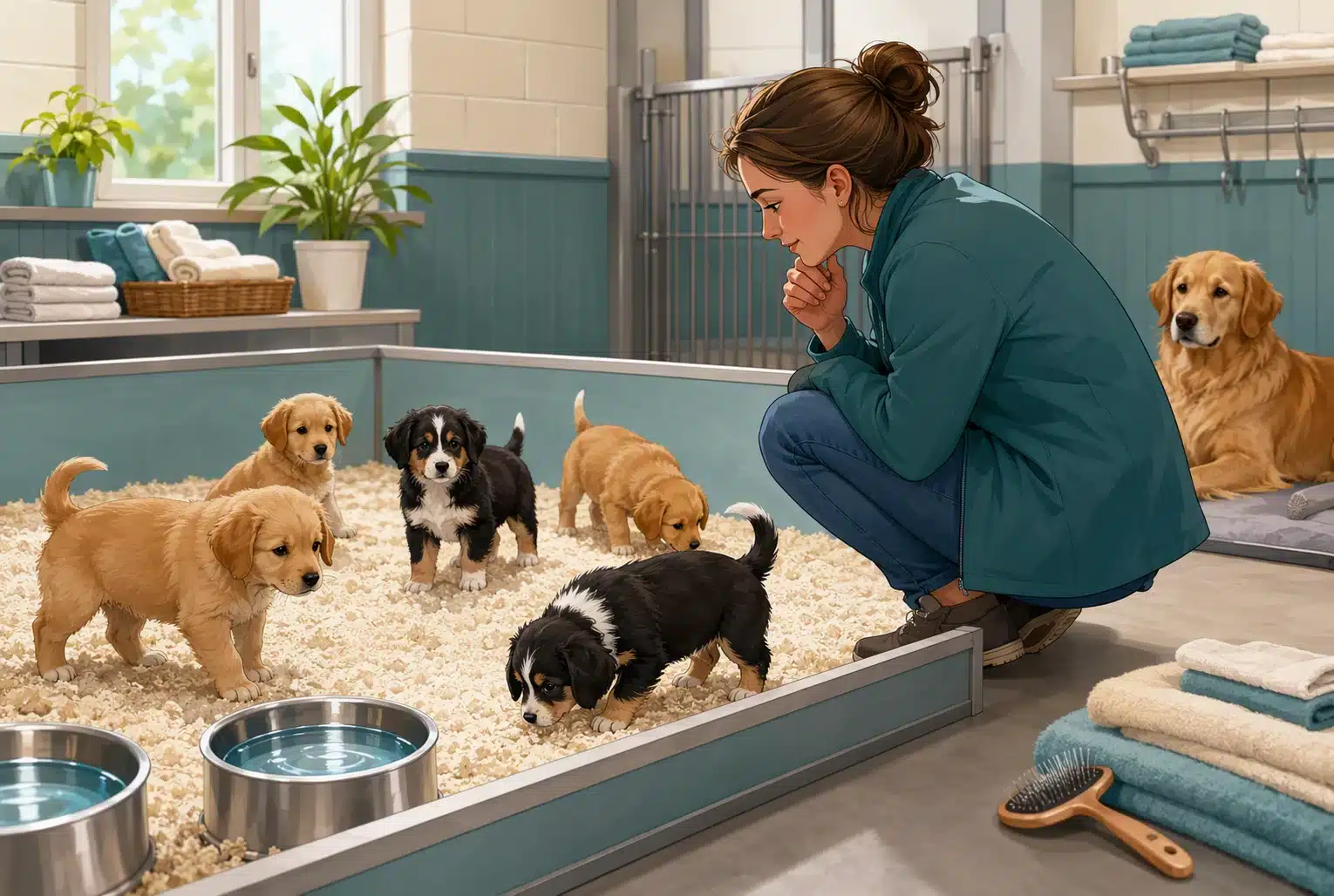
The dogs’ condition and behavior show you what daily care looks like. Look past a cute face and watch every dog you can see.
Highlights
- Check for clean coats, clear eyes, easy breathing, comfortable movement, healthy body weight, fresh water, safe flooring, and dry shelter.
- Notice how dogs react to the breeder. A shy puppy may need time, but repeated fear, lethargy, aggression, or untreated discharge are unhealthy puppy breeder red flags.
- Dirty water, crowded spaces, and poor sanitation can expose dogs to parasites and illness, as noted in this Humane World veterinary fact sheet.
- Do not buy an ill puppy because you feel sorry for it. Leave and seek veterinary or animal welfare guidance if conditions seem unsafe.
Specs
- Best for: Buyers assessing immediate welfare and care
- What to observe: Body condition, cleanliness, behavior, water, shelter, and space
- Buyer action: Leave if animals appear ill or poorly housed
A responsible breeder welcomes careful observation. Humane World advises visiting where puppies were raised.
Pros
- Gives immediate, visible proof of care.
- Can reveal backyard breeder warning signs records may miss.
Cons
- One shy moment needs context.
- A veterinarian must assess medical concerns.
This ranks here because visible welfare issues can point to neglect, disease risk, chronic stress, or overcapacity.
Last updated: August 25, 2026
6. The breeder has constant availability, many breeds, or unusually high volume
A never-ending supply of puppies deserves careful questions about capacity and sourcing. High volume is not proof of poor care, but the seller should clearly explain who bred and raised your puppy.

Highlights
- Ask how many litters are active and how many breeding females live on site.
- Ask who bred and raised this specific puppy. A broker may sell puppies bred elsewhere.
- Compare the number of puppies with the caregivers, space, and social plan.
- Be cautious if every breed, color, size, and pickup date is always ready. Responsible breeders often focus on one or two breeds, according to the Animal Humane Society.
Specs
- What to observe: Dogs, litters, breeds, caregivers, and records
- Buyer action: Ask who bred and raised the specific puppy
Pros
- Helps uncover broker arrangements and trend-driven selling.
Cons
- A larger program is not automatically unethical, and a small one can still fail dogs.
High volume ranks here because it can limit individual care and make accountability harder to verify. Check USDA inspection records when they apply.
Last updated: August 25, 2026
Also Read: 10 Adorable Havapoo Colors You Need to See (2026)
7. The sale happens in a parking lot, through a broker, or without seeing the puppy
A convenient handoff can block you from checking where a puppy came from and how it was raised. Delivery can be safe, but it should never replace clear identity, records, and direct breeder contact.

Highlights
- Ask whether the seller personally bred and raised the puppy. A broker may not know the parents, care routine, or true birth date.
- Confirm the pickup or delivery plan, records, timing, and who supports you afterward. The FTC advises researching the seller and arranging an in-person or video visit.
- Use live video as a supplement, not proof. Never pay before you can verify the puppy and parents.
- Avoid rushed handoffs and payment methods that are hard to trace. The FTC warns puppy scammers may use fake listings.
Pros
- Helps protect against brokers and fake puppy listings.
- Allows reputable breeders to arrange transparent nationwide delivery.
Cons
- Distance can make an in-person visit difficult.
This ranks here because third-party or sight-unseen sales can hide poor care, wrong age, illness, or a puppy that does not exist.
Last updated: August 25, 2026
Also Read: How to Check Puppy Breeder Contracts, Guarantees, and Return Policies
8. The breeder pressures you to pay quickly or skips questions about your home
A responsible placement process is a conversation, not a race to collect a deposit. If a breeder pressures you to pay before learning about your home, pause.

Highlights
- Responsible breeders ask about your schedule, dog experience, other pets, and plans for the puppy. The Humane Society advises that good breeders do not sell to the first person with cash.
- Ask for written deposit, reservation, refund, and timing terms. Take them home before you decide.
- Urgency, guilt, or vague answers are puppy breeder sales pressure red flags.
Pros
- Helps prevent an impulse decision.
- Shows whether fit matters to the breeder.
Cons
- A real waitlist or deadline can be normal, but it should be clear and fair.
This ranks here because pressure can make families miss health, care, and contract concerns.
Last updated: August 25, 2026
9. There is no clear contract, health policy, records, or return plan
Responsible placement terms should be written in plain language before payment. A contract cannot promise a risk-free puppy, but it should clearly state each person’s duties.

Highlights
- Read the agreement before any deposit. AKC advises reviewing a puppy contract before deciding to buy.
- Confirm veterinary follow-up costs, reporting deadlines, and required proof.
- Ask if the breeder will take the dog back or help rehome it if life changes.
- Keep copies of the contract, receipts, health records, and messages.
Specs
- What to review: Health policy, vaccine and deworming records, parent details, registration terms, and spay or neuter clauses.
- Buyer action: Have your veterinarian or trusted adviser review unclear terms before signing.
- Watch for: Vague guarantees, missing dates, or no return provision. Written agreements should state obligations and give each party a copy.
Pros
- Sets clear expectations and supports follow-up care.
Cons
- Terms vary, and valid exclusions may apply.
Without written terms, families may have little recourse when expectations differ.
Last updated: August 25, 2026
Also Read: Havanese, Havapoo & Cavapoo Puppy Care Blog
10. The breeder relies on registration, rare-color claims, or guarantees instead of substance
Labels and promises should never replace proof of health, care, and temperament. Registration documents lineage, but they do not prove healthy conditions or responsible choices.

Highlights
- Treat registration as documentation, not a full quality check. The AKC describes registration as lineage tracking, while health screening needs separate proof.
- Ask if color, size, and coat claims are realistic. Be wary when “rare,” “teacup,” or designer labels lead the conversation.
- Request written guarantees and ask what they cover. A guarantee cannot promise a puppy will never face health issues.
- A responsible breeder can discuss grooming, adult size, breed needs, and risks, not only the puppy’s looks.
Pros
- Helps you resist appearance-based marketing.
- Sets realistic expectations for family fit.
Cons
- Registration can still help document lineage.
- A clear, explained written guarantee can be useful.
This ranks here because sales claims can distract from the parent health testing and care evidence that matter most.
Last updated: August 25, 2026
How to choose the right local puppy breeder
Choose proof of good care over a short drive. Visit where puppies are raised when practical, or ask for a clear, transparent alternative if visits are limited for health reasons.
Use these criteria to compare breeders:
- Check parent records: For Havanese, Havapoo, and Cavapoo puppies, ask what health testing each parent completed and review the results.
- Ask about daily care: Confirm handling, home exposure, socialization, weaning, grooming practice, wellness care, feeding, go-home age, and take-home records.
- Read every written term: Review health policy, deposit terms, rehoming expectations, and plan your first vet visit before reserving.
- Expect thoughtful questions: A good breeder asks about children, pets, schedule, training, grooming, location, and whether pickup or delivery fits.
- Never rush: Pressure is a reason to pause.
For families seeking a home-raised small-breed puppy, Sage Puppies is a strong choice. Review available puppies, breed details, health information, pricing, application steps, reviews, and South Jordan pickup or nationwide delivery guidance before deciding.

Choose a breeder who welcomes careful questions and makes each step clear. Sage Puppies offers home-raised Havanese, Havapoo, and Cavapoo puppies with health-tested parents, early socialization, and a family-first process. View available puppies, then apply when you are ready for local South Jordan pickup or nationwide delivery.
Frequently Asked Questions
Q1: Why won’t a breeder let me meet the puppy’s parents?
The sire may live elsewhere, which is common. You should still meet the mother or see a live video. Refusal to discuss either parent, their health tests, or temperament is a concern.
Q2: What are the risks of buying a puppy under 8 weeks old?
Early separation can harm bite control, social skills, and stress coping. Puppies learn key lessons from their mother and littermates. A breeder rushing placement may value speed over a puppy’s healthy start.
Q3: How do I spot a puppy mill or backyard breeder?
Watch for many breeds, frequent litters, vague records, poor living spaces, and pressure to pay fast. A responsible breeder welcomes questions and can explain each puppy’s care, parent history, and placement process.
Q4: Should I ask for health-testing records?
Yes. Ask what tests were done on both parents and review the records yourself. A breeder should explain what the results mean and answer follow-up questions without becoming defensive.
Q5: Is a virtual visit enough to choose a breeder?
A live virtual visit can help if distance prevents travel. Ask to see the puppy’s everyday space, mother, and litter in real time. Avoid sellers who only send polished photos or pre-recorded clips.