Quick Summary: Choosing an Arkansas puppy litter means comparing temperament, adult size, and care needs, not just picking by color or first impression. Puppies in the same litter can differ, so ask breeders about parent health tests, early socialization, and individual traits. Local pickup works if you want in-person visits, but nationwide delivery from a program like Sage Puppies can help if the right Havanese, Havapoo, or Cavapoo is outside Arkansas. A well-matched puppy based on your real schedule matters more than the first available one.
A bold puppy in a photo is not always the right puppy for your home. The best fit comes from comparing Arkansas puppy litters by temperament, adult size, care needs, and early life care.
Families often look beyond location. They need clear answers about Arkansas puppy temperament, size estimates, newborn care, parent health planning, and social growth. Puppies in the same litter can act very differently.
This guide gives you a practical way to assess Arkansas puppy litters without choosing on color, price, or first impression alone. Local breeders may suit families who want in-person access. Sage Puppies offers Havanese, Havapoo, and Cavapoo puppies from South Jordan, Utah, with guided matching and nationwide delivery. Compare Arkansas puppy care details closely before you decide.
Arkansas Puppy Litters Compared: Temperament, Size, and Care
| Arkansas puppy litters | Sage Puppies | |
|---|---|---|
| Temperament evaluation | Varies by breeder; ask for individual observations | Early observation, handling, and family-fit guidance |
| Expected adult size | Depends on breed, parents, and individual growth | Discussed by breed, parent pairing, and individual puppy |
| First-weeks care | Confirm nursing, veterinary, handling, and socialization practices | In-home care, daily observation, gentle handling, and veterinary care |
| Parent health and pairing | Verify breed-relevant testing and pairing rationale | Health-tested parents and breed-aware pairing decisions |
| Family matching | May range from buyer choice to guided placement | Application-first matching based on home and lifestyle |
| Pickup and delivery | Often local pickup; transport varies by breeder | South Jordan pickup and coordinated nationwide delivery |
How Arkansas puppy litters and Sage Puppies Compare
Arkansas puppy litters
Arkansas puppy litters cover many breeds and breeder styles, so the experience can differ widely. Ask each breeder how they assess temperament, raise puppies, test parents, and handle pickup or transport. Responsible breeders should explain their pairing choices and early care, as veterinary guidance for puppy buyers recommends.
Sage Puppies
Sage Puppies is a boutique South Jordan, Utah program for Havanese, Havapoo, and Cavapoo families across the country. Its approach centers on health-tested parents, in-home early care, and application-first family matching.

Key strengths
- Family-fit guidance
- Coordinated nationwide delivery
Temperament Can Vary Within the Same Puppy Litter
What families should observe beyond a puppy’s first impression
The quiet puppy is not always shy, and the bold puppy is not always the easiest fit. Watch each puppy more than once, in a calm setting and during play.
Look for patterns, not a single cute moment:
- Does the puppy recover after a new sound or object?
- Do they seek people without demanding constant attention?
- Can they play, then settle?
- How do they respond to gentle handling?
- Do they respect siblings’ signals during play?
| What you see | What it may suggest | Ask the breeder |
|---|---|---|
| Follows people calmly | Social and people-focused | How does this puppy settle after play? |
| Hangs back, then joins | Thoughtful or slower to warm up | Does confidence grow with new experiences? |
| Rushes into every activity | High drive and curiosity | What helps this puppy switch off? |
A puppy snapshot is useful, but it cannot promise an adult personality. Current puppy tests have limited power to predict adult behavior, according to the American Kennel Club.
Why parent temperament and early development both matter
A well-matched puppy starts with knowing the parents. Ask about their comfort with visitors, handling, household life, and new places. Genetics matter, yet each puppy also develops through daily care and future training.
Early, safe exposure to people, sounds, surfaces, and gentle handling helps puppies build positive associations. The first weeks matter, but your routine after pickup or delivery matters too. The AKC notes that early socialization shapes how puppies later respond to their world.
Sage Puppies raises Havanese, Havapoo, and Cavapoo puppies in a home setting, then helps families consider each puppy’s observed traits alongside the home they can offer.
Choose the puppy whose needs fit your real schedule, children, activity level, and training plan – not simply the one who approaches first.
Also Read: Havanese, Havapoo & Cavapoo Puppy Care Blog
Comparing Size Across Arkansas Small-Breed Litters
Litter size is not the same as puppy size
A litter with six puppies does not automatically produce smaller adults than a litter with three. Litter count and adult size are different measures.
For Havanese, the breed standard sets an adult height range of 8.5 to 11.5 inches. The AKC also lists a typical adult weight of 7 to 13 pounds. Havapoos and Cavapoos can vary more because they are mixes.
Compare these details instead:
| Ask about | Why it matters |
|---|---|
| Dam and sire size | Gives the best starting point for adult range |
| Past litters | Shows how related puppies matured |
| Puppy build | Helps explain sturdy versus fine-boned frames |
| Current growth | Confirms each puppy is developing steadily |

A tiny puppy at eight weeks may still mature into the larger end of its family range.
How to discuss expected adult size responsibly
Ask for a range, not a promise. A careful breeder can explain the parents’ weights, heights, and the sizes seen in close relatives. They cannot guarantee an exact final number.
Use this simple check:
- Ask to see both parents’ size details.
- Request adult weights from prior related litters, if available.
- Plan supplies for the upper end of the estimate.
- Avoid labels such as teacup unless clear health and size facts support them.
Sage Puppies can help families compare parent information and choose a Havanese, Havapoo, or Cavapoo puppy that suits their home, whether they arrange South Jordan pickup or nationwide delivery.
Also Read: Arkansas Puppy Seller Reviews: Checking Experience With Your Breed
What Care Newborn Puppies Need in Their First Weeks
The first days: warmth, nursing, observation, and maternal support
Newborn puppies need a warm, quiet nest, frequent nursing, and close adult oversight. They cannot control body heat well at first. Keep the whelping area warm, dry, clean, and free from drafts.
A caring mother provides milk, warmth, cleaning, and comfort. Her first milk, colostrum, gives puppies key immune support. Check that every puppy finds a teat and is not pushed aside by stronger littermates.
- Watch nursing and behavior several times a day.
- Weigh each puppy daily and record the result.
- Change soiled bedding without upsetting the mother.
- Check the mother for poor appetite, painful teats, or unusual discharge.
Veterinary guidance advises prompt attention when a puppy is cold, crying often, alone from the litter, or failing to gain weight.
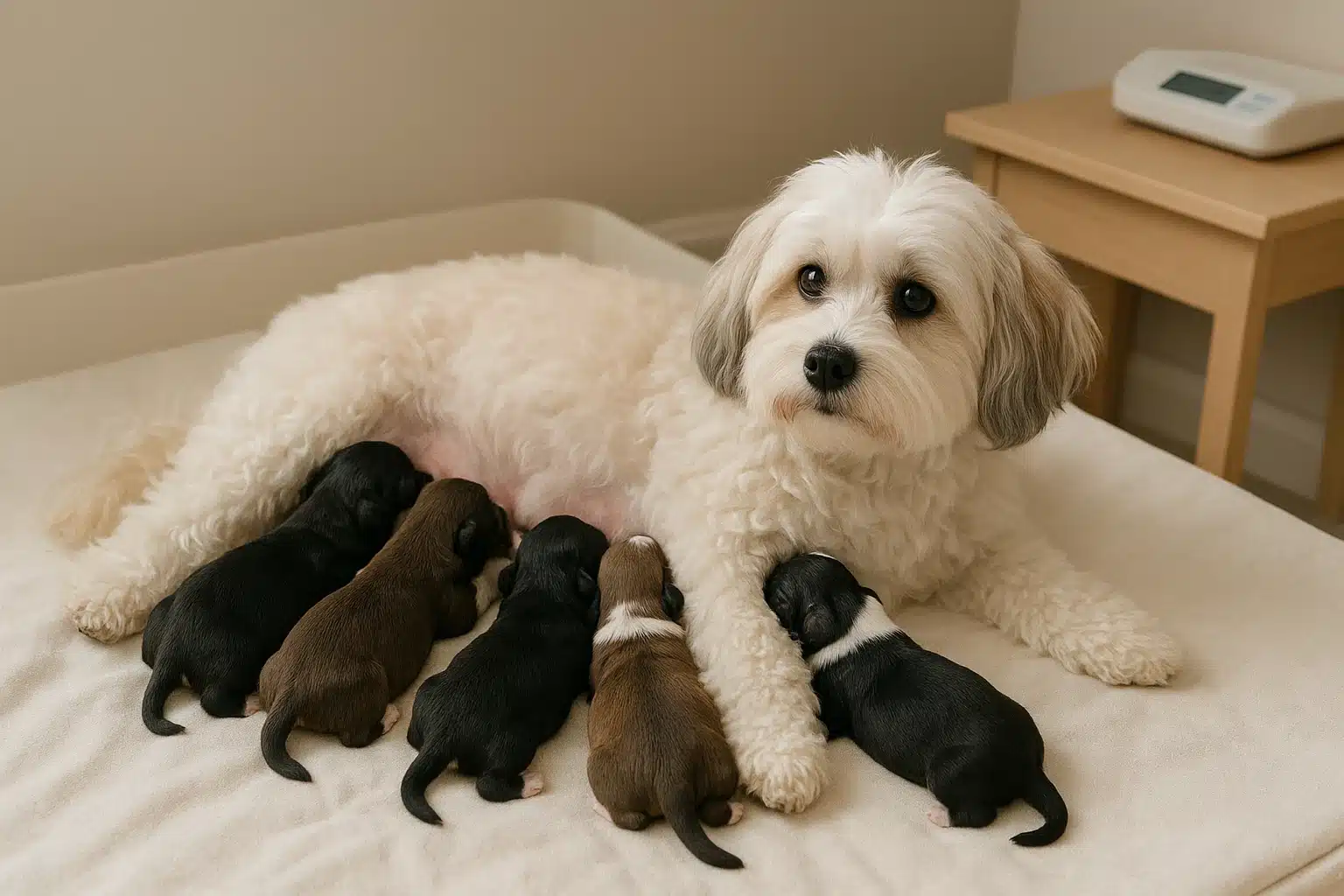
Call a veterinarian promptly if a puppy will not nurse, feels cool, seems weak, or loses weight. Newborn problems can worsen fast.
The transition from nursery care to family readiness
The first three weeks are a protected nursery stage. A Merck Veterinary Manual review notes that daily checks of weight, energy, elimination, and the mother’s health are part of sound neonatal care.
As puppies grow, care shifts in small steps:
- Keep the environment calm while eyes and ears begin to open.
- Introduce gentle, age-right handling by clean, calm adults.
- Maintain a routine for weighing, cleaning, and health notes.
- Let weaning begin gradually when puppies are ready, with breeder and veterinary guidance.
For Sage Puppies litters, this steady start supports the confident, family-raised companions families hope to bring home. It also gives a breeder time to spot each puppy’s needs and early temperament.
| Early sign | What it may show | Best response |
|---|---|---|
| Quiet, warm puppy | Comfort and full tummy | Continue close checks |
| Constant crying | Hunger, cold, or discomfort | Check warmth and nursing |
| No daily gain | Possible health concern | Contact a veterinarian |
Also Read: 10 Red Flags to Avoid When Visiting a Local Puppy Breeder
Health Testing and Pairing Matter More Than Litter Photos
Questions to ask before reserving from any litter
Sweet photos help you picture life with a puppy. They cannot show how thoughtfully that litter was planned. Start with the parents, their records, and the breeder’s reason for making the pairing.
Ask for health results you can review, not a general promise that parents are “healthy.” The OFA recommends buyers ask which screenings were done and see the results. Test needs vary by breed and may include eyes, heart, patellas, hips, and DNA panels.

Use these questions before you reserve:
- Which health tests did each parent complete, and may I see the reports?
- Why were these two dogs paired? Look for a clear answer about health, temperament, size, and build.
- What are the parents like at home? Ask about energy, friendliness, noise sensitivity, and grooming tolerance.
- Where are puppies raised, and what daily sights and sounds do they meet?
- How do you match puppies with families rather than simply taking color requests?
| What to confirm | Why it matters |
|---|---|
| Parent test records | Shows care beyond a sales claim |
| Pairing goals | Helps predict fit and adult traits |
| Raising setup | Shapes early comfort with family life |
| Matching process | Supports a better long-term fit |
Health testing lowers known risk. It cannot promise a lifetime free of illness.
At Sage Puppies, ask to understand the specific Havanese, Havapoo, or Cavapoo pairing before choosing a puppy. A calm, clear answer is a better sign than a perfect litter photo.
How Breed Choice Changes Temperament and Care Expectations
Companion-focused and people-oriented
A Havanese fits families who want a small dog close by. They are cheerful, alert, and friendly, with a strong need for shared time. The American Kennel Club notes that Havanese do not do well alone for long stretches.
Plan for:
- Daily short walks and indoor play
- Gentle, reward-based training
- Regular company, not long isolated days
A people-focused puppy needs a realistic family schedule, not just a loving home.

Bright, affectionate, and coat-variable
A Havapoo often brings together the Havanese’s social nature and the Poodle’s bright, engaged style. Still, a mix is not a fixed formula. One puppy may have a loose, easy-to-manage coat, while a littermate develops tighter curls that need more frequent brushing and trims.
| Family priority | Havapoo care question |
|---|---|
| Low shedding at home | Can you commit to coat care? |
| Eager learner | Can everyone use the same cues? |
| Small companion | Will someone be home most days? |
Ask about each puppy’s coat, play style, and comfort with handling. Those details matter more than a label.
Social and gentle, with ongoing care needs
A Cavapoo can suit a family seeking a soft, social companion with a little playful spark. Expect daily connection, basic training, coat brushing, and routine ear checks. Cavalier-type coats and ears need consistent attention, while curlier coats can mat if brushing slips.
The Cavalier parent breed is known for its gentle, adaptable nature and family bond, according to the AKC breed overview.
At Sage Puppies, compare littermates by asking:
- Which puppy settles fastest after play?
- Which coat routine fits our week?
- Can we meet this dog’s need for company?
Also Read: 7 Questions About Colorado Puppy Temperament and Family Compatibility
Choosing Between an Arkansas Litter and Nationwide Delivery
When local Arkansas pickup may be the better choice
Choose local pickup if meeting the breeder and seeing the puppy’s setting matters most to you. It also gives your family a calm car ride home and time to ask final care questions in person.
Local may fit best when you can:
- Visit without rushing
- Bring a secure crate and puppy supplies
- Plan a quiet first day at home
A nearby litter is not automatically the better litter. Put health records, parent temperament, and breeder openness ahead of distance.
When coordinated delivery may make sense
Nationwide delivery can be a smart choice when the right Havanese, Havapoo, or Cavapoo litter is outside Arkansas. Ask for the exact travel plan, who handles the puppy, and what paperwork travels with them.
Sage Puppies offers pickup in South Jordan, Utah, plus nationwide delivery options for approved families. USDA guidance says commercially transported puppies must be at least eight weeks old and weaned, and destination states may set their own health requirements. Review USDA interstate pet travel guidance before confirming plans.
- Confirm the handoff location and timing
- Prepare food, water, and a quiet sleep space
- Keep the first 48 hours low-key
Also Read: 10 Signs a California Puppy Listing Is a Scam – Sage Puppies
Which Puppy Litter Should Your Family Choose?
Choose an Arkansas litter when local access is central
Choose an Arkansas litter if meeting the breeder, seeing the puppy’s setting, and driving home together matter most. Local access can make pickup planning simpler and lets you ask questions face to face.
Use this quick check before reserving:
- Ask for parent health-testing records.
- Meet the mother when possible.
- Confirm the puppy’s expected adult size and coat care.
- Ask how the litter has been handled and socialized.
Responsible breeders welcome careful questions and screen families, too.
Pick location for convenience, but never let proximity replace sound breeding practices.
Choose Sage Puppies when guided small-breed matching matters
Choose Sage Puppies if your family wants help sorting the differences between a Havanese, Havapoo, or Cavapoo. The program is based in South Jordan, Utah, with home-raised puppies, health-tested parents, and early socialization.
A guided match is useful when you need to weigh:
| Family need | What to discuss |
|---|---|
| Smaller companion size | Expected adult range and handling needs |
| Busy household | Energy level and daily routine |
| Coat upkeep | Brushing and grooming commitment |
| Travel logistics | Utah pickup or nationwide delivery |
Start with an application, then discuss your household, children, work hours, and dog experience. Thoughtful breeder matching can connect a puppy’s observed traits with your real routine, as AKC guidance notes.
A calm, well-matched puppy matters more than choosing the first available one.

Ready to compare litters with confidence? Sage Puppies helps families choose a Havanese, Havapoo, or Cavapoo based on temperament, adult size, and daily care needs. Review available puppies, apply, then arrange South Jordan pickup or nationwide delivery.
Frequently Asked Questions
Q1: How does puppy temperament vary within a litter?
Puppies can differ greatly. Watch how each pup plays, rests, and responds to people. A calm puppy may suit quiet homes, while a bold pup may enjoy active family life.
Q2: What care do newborn puppies need in their first weeks?
They need warmth, steady nursing, daily weight checks, clean bedding, and close supervision. Responsible breeders also begin gentle handling and keep the mother calm and well cared for.
Q3: What are the typical litter sizes for small dog breeds?
Small breeds often have three to six puppies, though litter size varies by breed and mother. A smaller litter does not automatically mean better health or temperament.
Q4: Can I choose a puppy by color alone?
Color should come after health, temperament, and family fit. Ask the breeder which puppy matches your home, children, work schedule, and past dog experience.
Q5: When can a puppy safely leave its litter?
Puppies need time with their mother and littermates to learn social skills. Avoid rushing the transition, even if a family feels ready early.
Conclusion
Choose an Arkansas puppy litter by looking past coat color and first impressions. Compare likely adult size, daily grooming, play needs, and the puppy’s fit with your children, schedule, and home.
Ask clear questions about parent health testing, early socialization, and each puppy’s temperament. A responsible breeder should help match the puppy to your family, not rush a choice. The AKC notes that parents, health testing, and socialization all matter when choosing a puppy.
For small companion breeds, the right litter is one whose care needs you can meet for years, not just one that is available now.