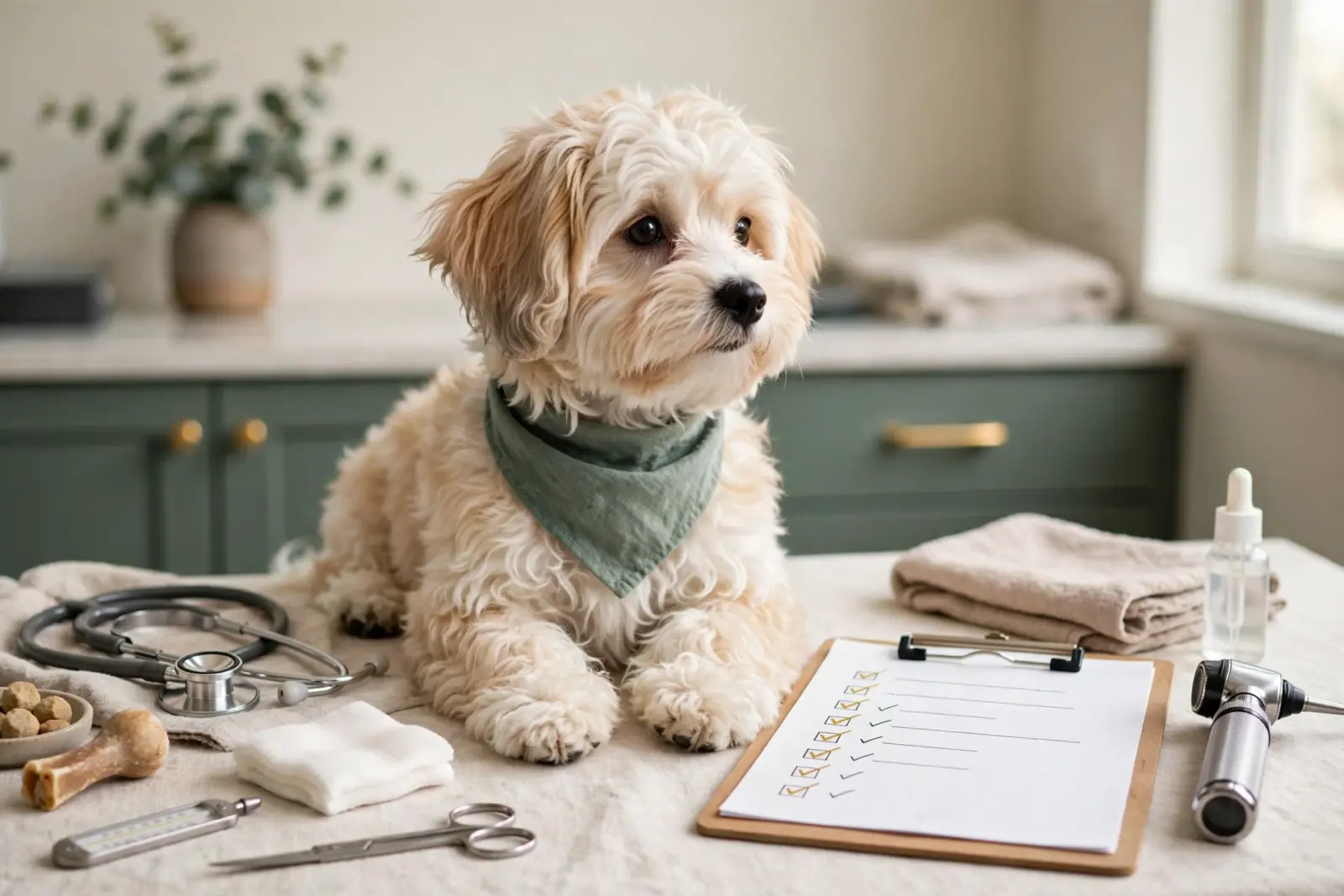
Quick Summary: Family-raised puppies can reach their new homes through pickup in South Jordan, ground transport, or in-cabin travel with a flight nanny, each with different costs, timing, and handoff steps. Confirm the route, health certificate, vaccination and deworming records, microchip details, airline rules, and delay plans before the trip, since paperwork is especially important when the breeder is not a licensed facility. Sage Puppies supports these options through its home-based program and handles each step from application and matching through delivery.
A Havapoo reserved in South Jordan can reach a family in Ohio three ways. You drive out and collect the puppy yourself, a ground transporter brings the puppy to your door, or a flight nanny carries the puppy in cabin. Family-raised puppy delivery options differ in documents, minimum ages, cost, and handoff steps, yet most families learn those differences only after booking.
That gap is the problem this guide solves. We compare puppy pickup vs delivery route by route, list the paperwork each one requires, and walk through go-home day in order, from health certificate to the first hours at home. Everything here draws on primary USDA APHIS, CDC, airline, and AVMA guidance, plus documented experience from Sage Puppies’ own home-based program. Read it before you reserve, and the family-raised puppy delivery options you choose will match your budget, timeline, and how you want that first meeting to happen.
What Family-Raised Actually Changes About Travel
A home-raised litter usually means fewer puppies, more questions answered, and a breeder who stays in the loop after go-home day. But household care is not the same as official oversight, and that shapes how puppy travel should work.
Household Care Is Not Independent Certification
Family-raised puppy delivery options, whether you drive to South Jordan or book a flight nanny, are backed by the breeder’s records rather than a facility license for small home programs. That makes paperwork your safety net. Before travel, ask for vaccination records and microchip details in writing, plus a recent vet exam. A small program can document every dose and visit; you just have to request it.
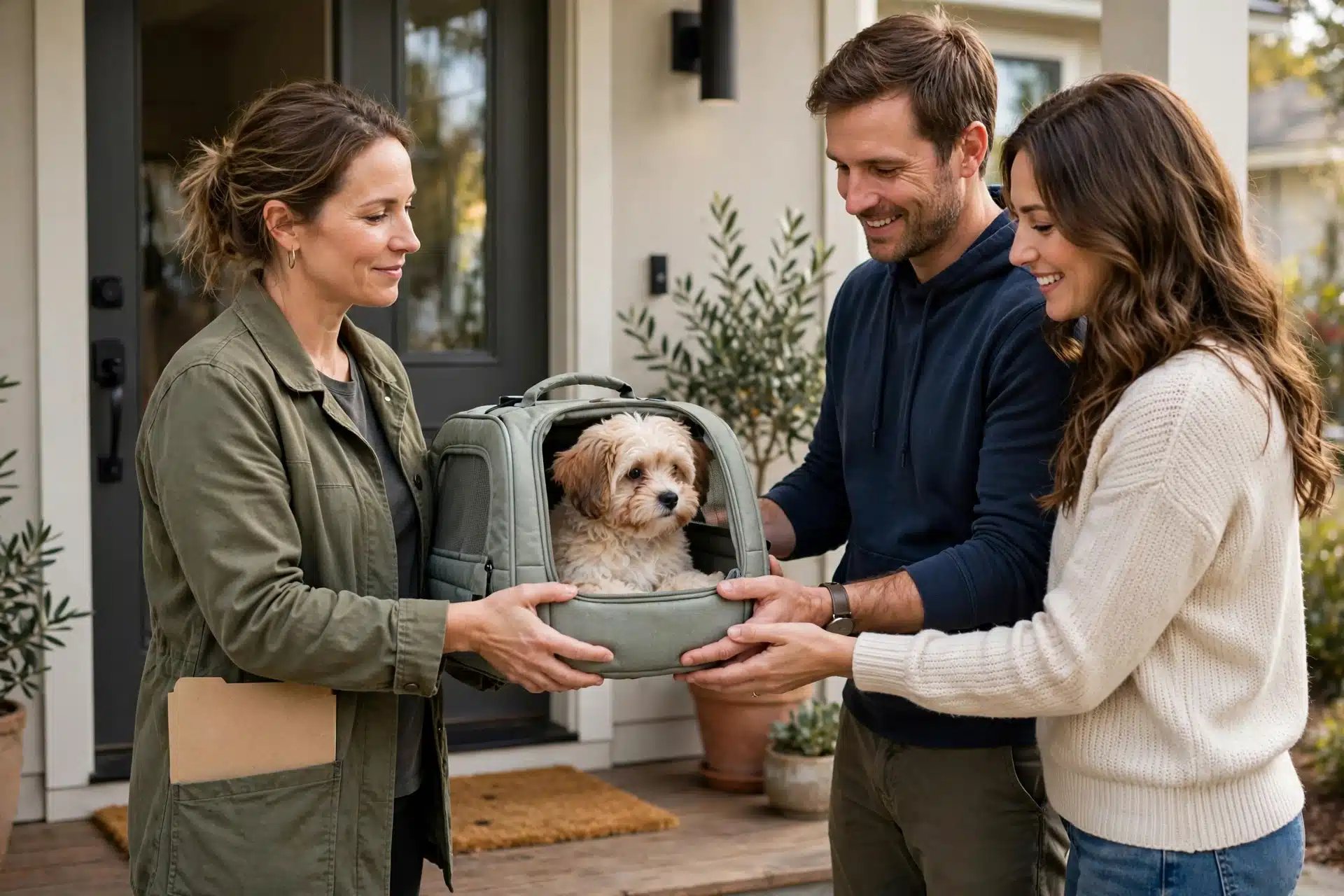
What a Good Handoff Includes
A solid home breeder puppy handoff is short and checkable. Expect these items:
- A signed health record with dates of shots and deworming
- A vet-issued health certificate dated close to travel
- Food the puppy already eats, for a smooth first night
- A familiar-smelling blanket or toy
- Feeding schedule and next vaccine dates, written down
If anything is missing, pause the handoff. Good breeders expect the questions.
Pickup or Delivery: How Each Route Actually Works
Family-raised puppy delivery usually splits into three routes: you drive to the breeder for pickup, the breeder arranges ground transport, or a flight nanny carries the puppy in-cabin. Each route moves the same puppy differently, so the cost, prep, and go-home day feel unlike one another.
| Route | Who travels | Best fit |
|---|---|---|
| Pickup | You drive to the breeder | Local Utah families |
| Ground transport | Puppy rides with a driver | Regional homes, 1-2 day trips |
| Flight nanny | Puppy flies in-cabin with a person | Long-distance families |
Self-Pickup in South Jordan
Pickup is the simplest path. You schedule a go-home day, drive to South Jordan, and meet the puppy where it was raised. You see the home, meet Cassie, and carry your puppy home yourself in a car harness or secured crate. Bring a soft blanket, water, and paper towels for the ride. Most families finish paperwork and puppy vaccination records review in under an hour, then head straight home.
Ground Transport Arranged by the Breeder
With ground transport, a commercial puppy transporter or dedicated driver picks the puppy up and drives it to your area, often meeting you at a parking lot or your front door. Expect text updates, rest stops, and a one to two day window depending on distance. Ask how many puppies ride together and how often the driver stops.
Air Travel With a Flight Nanny
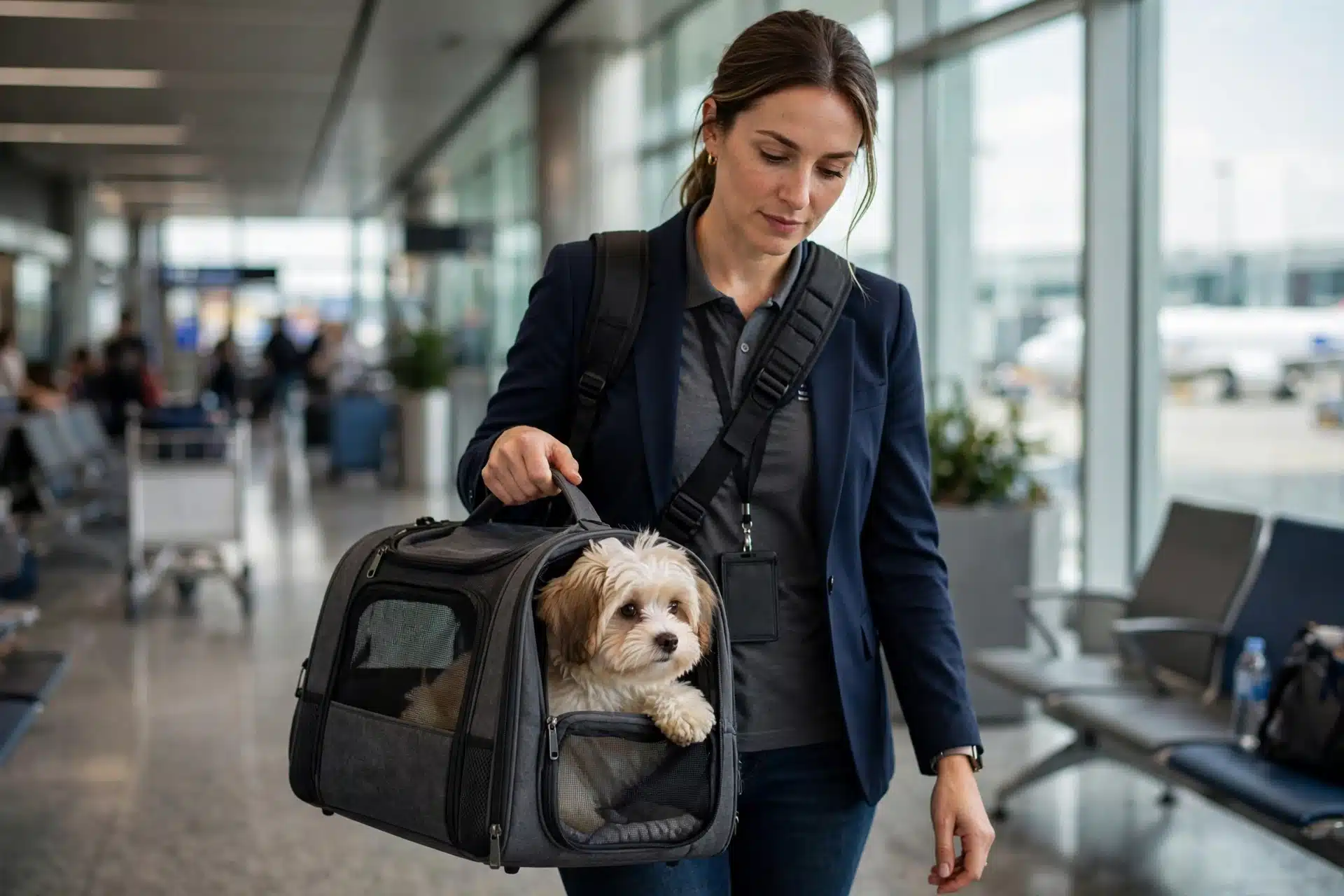
A flight nanny flies with your puppy in an in-cabin pet carrier and hands it to you at your airport. The puppy never rides as checked cargo. This route costs the most but shortens travel to a few hours.
The Delivery Sequence, Step by Step
Home breeder puppy handoff follows a set order, whether you pick up in South Jordan or have your puppy delivered. The steps run the same way for most programs:
- You submit an application and describe your home.
- The breeder matches you with a litter and confirms your pick.
- You reserve with a deposit and sign a contract.
- Everyone agrees on a go-home window.
- Travel plans get locked in during that window.
Application, Matching, and Reservation
The sequence starts with paperwork, not puppies. You fill out an application so the breeder understands your household, schedule, and experience with small breeds. Matching comes next: the breeder pairs your family with a Havanese, Havapoo, or Cavapoo puppy whose temperament fits, then you place a deposit to hold that specific puppy. At Sage Puppies, Cassie handles the matching herself rather than handing it to staff. Read the contract before you sign, especially the sections on deposits, health terms, and what happens if a puppy is not ready. Clear terms now prevent stress later.
Confirming the Go-Home Window Before Travel
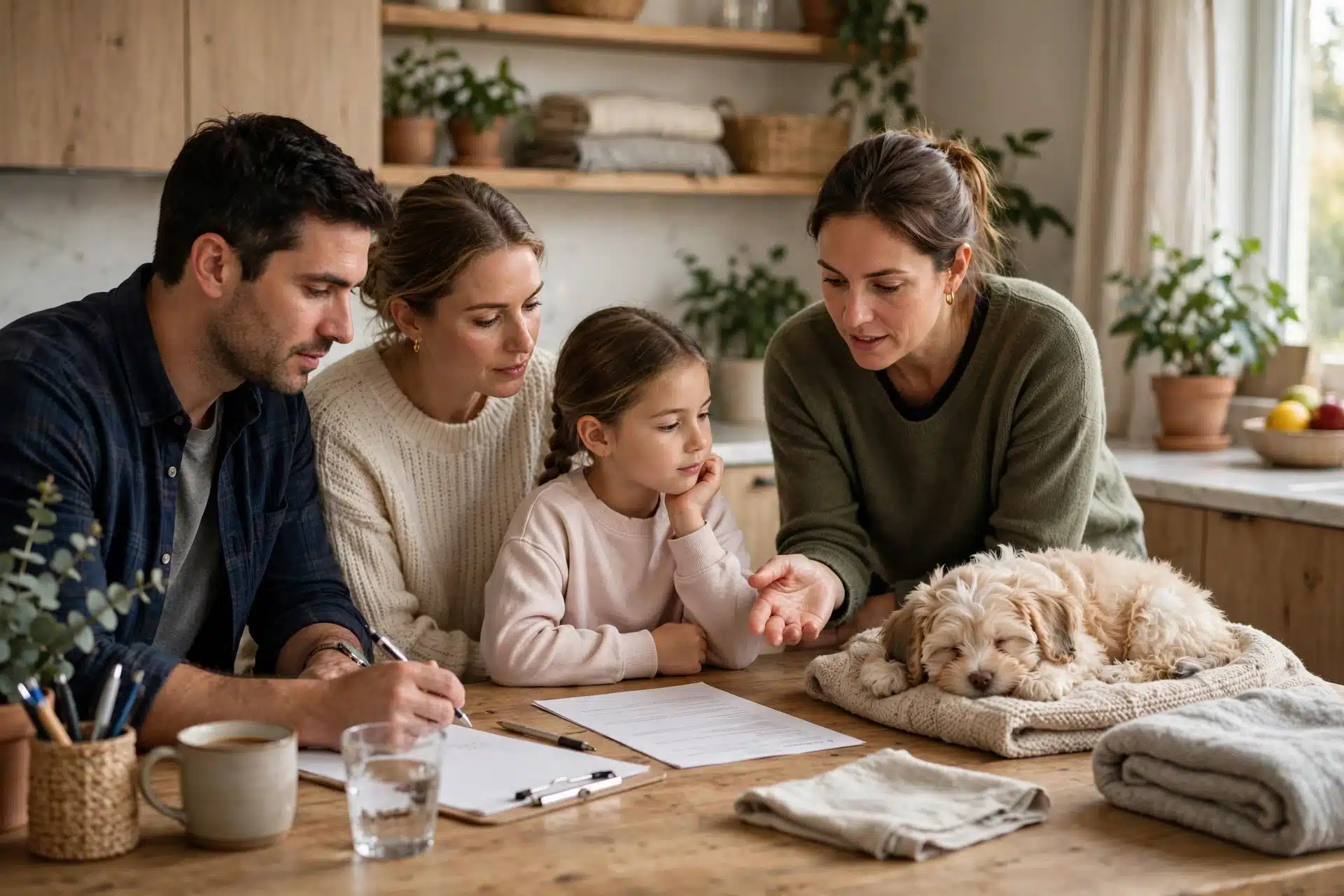
Most small-breed puppies go home around eight to ten weeks, but the exact date depends on the puppy, not the calendar. Once your litter’s go-home window is set, you and the breeder confirm the route: pickup, ground transport, or flight nanny. Book travel inside that window and share the plan in writing. Before any trip, the puppy needs a veterinary exam and a health certificate dated close to travel day. Ask for vaccination records and microchip details at the same time. If dates shift, tell everyone involved early so flights and driver schedules can change without fees.
Documents and Supplies That Travel With Your Puppy
A delivered puppy should arrive with paperwork you can file and gear that covers the first day. Good breeders pack both, and you should know exactly what to expect before go-home day so nothing gets lost in transit.
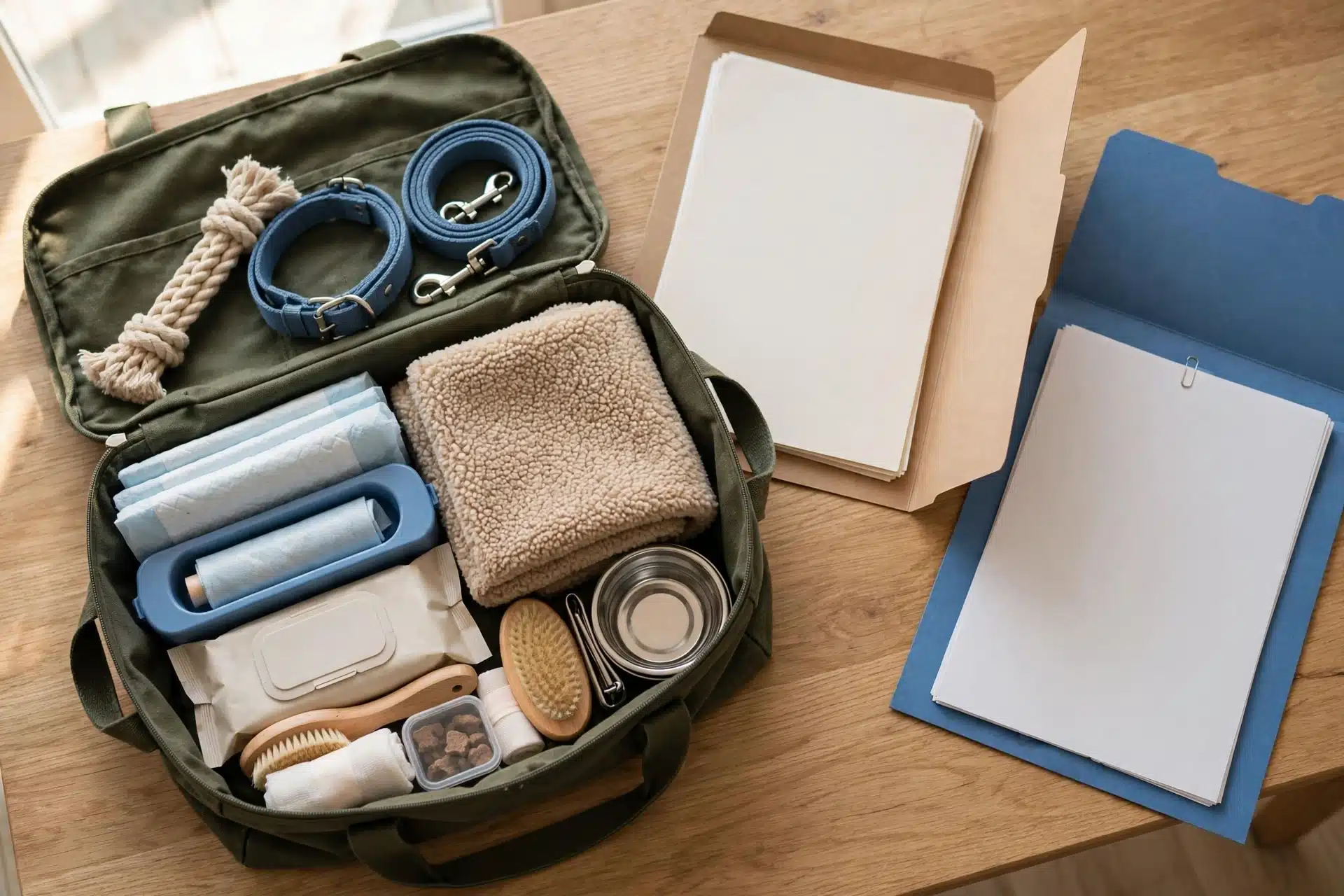
The Paperwork Handoff
What documents come with a delivered puppy? Expect this checklist:
- A health certificate issued by a licensed vet, usually within 10 days of travel
- Vaccination records showing which shots were given and when
- Deworming dates and any parasite treatment history
- Microchip number and registration details
- A written feeding schedule and food sample
- The purchase contract and health terms
Scan or photograph every page the moment the puppy arrives. If a courier hands you a sealed envelope, open it before you sign anything and ask questions while the driver is still there.
The Physical Kit
The travel setup matters as much as the paper. Puppies ride in an in-cabin pet carrier or an airline-approved crate, with absorbent padding and a secure latch. Car restraint rules on the receiving end apply to you too, so plan a harness or a second carrier for the drive home. A good kit also includes a familiar-smelling blanket, a collapsible water bowl, and enough of the breeder’s current food to get through the switch. Keeping the diet and the scent constant eases the stress of a new puppy’s first night.
Keeping a Small Puppy Safe in Transit
Restraint in the Vehicle
A small puppy should never ride loose in a car. Safe transport means:
- Back seat only, away from airbags
- A ventilated crate or carrier secured with a seatbelt so it cannot slide
- Room to stand, turn around, and lie down comfortably
The AVMA advises the back seat in a properly restrained crate as the safest setup. Avoid improvising with blankets or holding the puppy on a lap; a sudden stop turns a 10-pound puppy into serious weight.
Temperature, Feeding, and Stops
Small breeds chill and overheat faster than adult dogs, so keep the cabin mild and never leave the puppy alone in a parked car. Offer water at every stop, but keep meals light before driving to limit nausea. Plan a quick break every two to three hours for a potty spot on grass, away from where unknown dogs go. Our temperature and travel planning guide covers hot-weather trips in more detail.
Minimizing Stress
Familiar smells calm a puppy more than anything you can buy. Line the carrier with a blanket from the litter, keep voices low, and skip loud music. If the puppy whines, stop and reassure briefly rather than letting it cry it out. Practice short rides before the go-home day if you can, so the crate already feels routine.
Air Travel Details Worth Confirming Before Booking
Age and Route Requirements
How old must a puppy be to fly? Federal rules wean puppies before transport, and under USDA APHIS handling rules puppies under 16 weeks must be offered food at least every 12 hours. Airlines set their own floors too: American Airlines requires pets to be at least 8 weeks old on US flights. Ask which route your puppy will take before you book anything.
Carrier, Documentation, and Check-In
In-cabin travel means an approved soft carrier that fits under the seat, so confirm dimensions with the airline in advance. Paperwork usually includes a health certificate issued within 10 days of travel, vaccination records, and a microchip number. Arrival limits matter as well: many airlines require check-in earlier than usual, and DOT guidance notes carriers must provide food on trips over 12 hours. Confirm every cut-off time a week ahead.
What a Flight Nanny Actually Handles
A flight nanny carries your puppy in the cabin, not in cargo. Expect the nanny to manage the carrier, feeding schedule, airport check-in, and handoff at arrival. Ask for photo updates during layovers and confirm who signs for the puppy at the end. Clear answers here separate careful breeders from careless ones.
Questions to Ask Before You Reserve
Delivery-Specific Questions
Before you pay a deposit, ask the breeder these questions in one message:
- Who travels with the puppy on each route: pickup, ground puppy transport, or flight nanny delivery?
- How old will the puppy be on go-home day, and is it weaned and eating on its own?
- Does the price include the health certificate, vaccination records, and microchip?
- What carrier and car restraint do you use for the drive or flight?
- Who meets me at the handoff, and what happens if a flight is delayed?
- Can I see photos or video of the puppy’s parents and home?
Reading the Answers
A good breeder answers fast, in detail, and without pressure. Vague replies like “we handle all that” are a warning sign. Ask for the vet’s name and clinic, then confirm the health certificate timing matches the rules discussed earlier. If a flight nanny is involved, ask for the nanny’s name and the airline’s pet policy in writing. With ground transport, ask how often the puppy is offered food and water on trips longer than 12 hours. Any program that rushes your deposit before you have these answers is telling you something.
Preparing for the First Hours at Home
Before the Puppy Arrives
Set up one small, quiet space before the go-home day: a crate, a bed, food and water bowls, and a spot outside for potty breaks. Pick up anything chewable off the floor. Ask the breeder what food the puppy has been eating so you can match it, then book your vet visit in advance, since good clinics fill up fast.
The First 24 Hours
A delivered puppy needs calm more than attention.
- Carry the puppy to the potty spot and wait.
- Offer water and a small meal.
- Let the puppy explore one room on leash.
- Keep visitors away and let sleep come early.
A short, quiet first day prevents overwhelm. Save play, car rides, and introductions to other pets for day two or three.
The First Veterinary Visit
Plan the visit within the first few days of arrival, not months later. Bring the health certificate, vaccination records, and microchip number from the handoff so your vet can see what has already been done. Expect a weight check, a look at ears, eyes, and teeth, and a fecal test. Your vet will map out the remaining vaccine series and discuss flea, tick, and heartworm prevention, so schedule the visit before the puppy comes home.

Ready to meet your puppy without guessing how the trip works? Visit Sage Puppies to see available Havanese, Havapoo, and Cavapoo puppies, then start the application. Pickup in South Jordan or breeder-arranged delivery, either way Cassie walks you through every step. Wisely Bred. Beautifully Loved.
Frequently Asked Questions
Q1: How do delivery and pickup work for home breeders?
Home breeders usually offer three routes. You pick up in person, a driver brings the puppy by ground puppy transport, or a flight nanny carries it in-cabin to your airport. You confirm the route inside the go-home window and handle paperwork at handoff.
Q2: What does flight nanny delivery usually cost?
Costs vary by route and season, often several hundred dollars beyond the puppy price. Ask the breeder for a written quote that lists the nanny fee, airline pet charge, and carrier so there are no surprises.
Q3: What documents should arrive with my puppy?
Expect a vet-issued health certificate, vaccination records, deworming dates, microchip details, a feeding schedule, and the signed contract. Photograph every page when the puppy arrives, before anyone leaves.
Q4: How old should a puppy be before it travels home?
Most small breeds go home at eight to ten weeks, weaned and eating on their own. Airlines set their own minimums, often eight weeks for domestic flights.
Q5: Can I meet the puppy’s parents before delivery?
With pickup, yes. For delivery, ask for photos or video of the parents and the home before you reserve. A careful breeder shares them willingly.
Q6: What happens if a flight or driver is delayed?
Good breeders set a backup plan in writing: who keeps the puppy overnight, who covers extra costs, and how you get updates. Confirm this before travel day.
Conclusion
Family-raised puppy delivery comes down to three routes: pickup in South Jordan, ground puppy transport, or flight nanny delivery in-cabin. Each route differs in cost, documents, and handoff steps, but the paperwork never changes: a health certificate dated close to travel, vaccination records, deworming dates, and a microchip number. Confirm the route inside the go-home window, ask who travels with your puppy and what happens on delay, and keep the first 24 hours quiet once your Havanese, Havapoo, or Cavapoo arrives. When you compare puppy pickup vs delivery with these details in hand, the choice stops feeling like a gamble and starts feeling like a plan. Wisely Bred. Beautifully Loved.