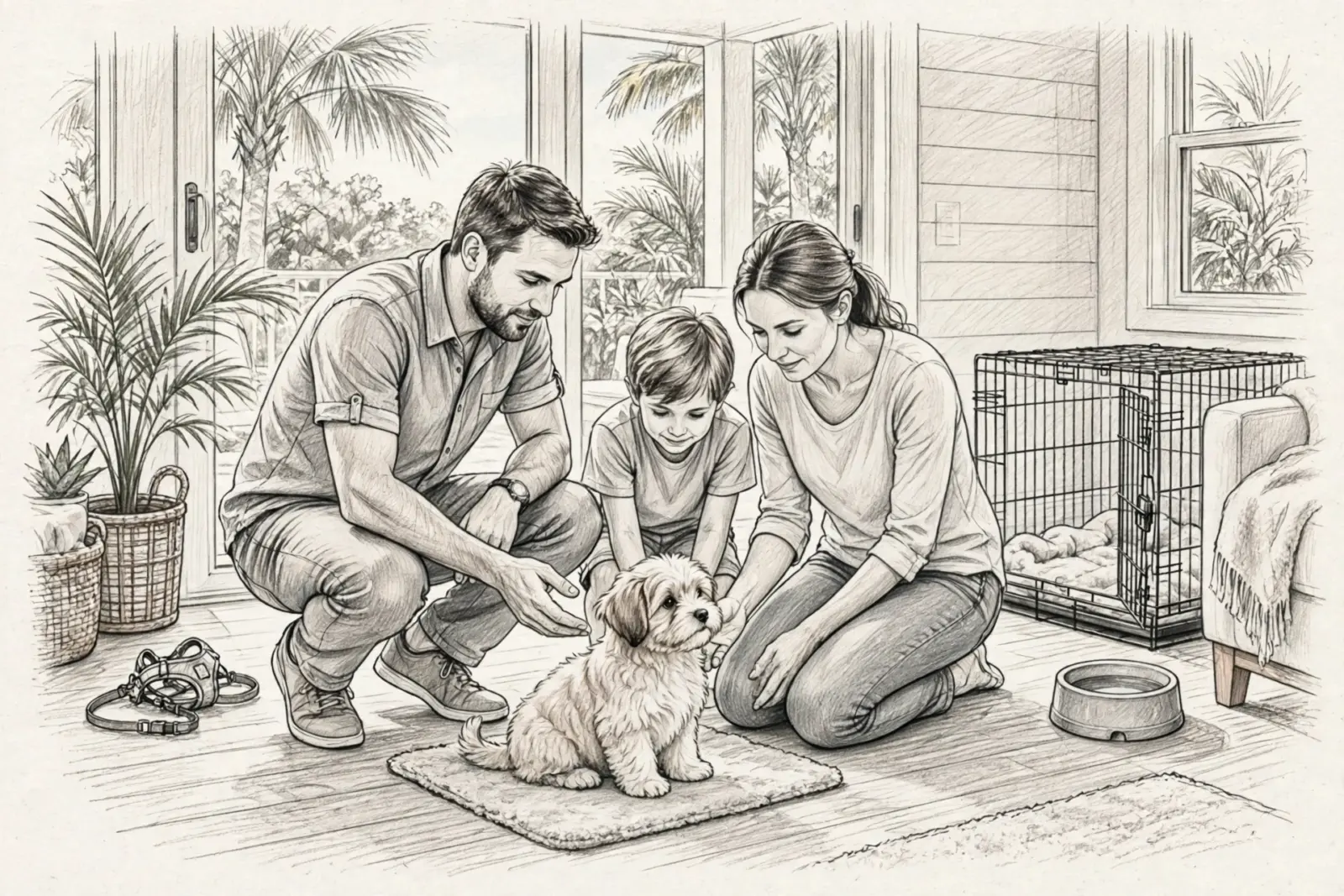
A Florida puppy trip needs a plan for the cabin, the carrier and every stop after handoff. Prepare those details before the puppy joins you, and leave room to change plans when traffic or weather makes the journey longer.
Sage Puppies is based in South Jordan, Utah. For an approved placement, confirm the individual delivery or Utah-pickup arrangement through Delivery & Pickup. There is no Sage Florida pickup facility. This guide covers your car-travel preparation; it does not confirm a delivery route or handoff for your puppy.
Confirm the handoff before planning the drive
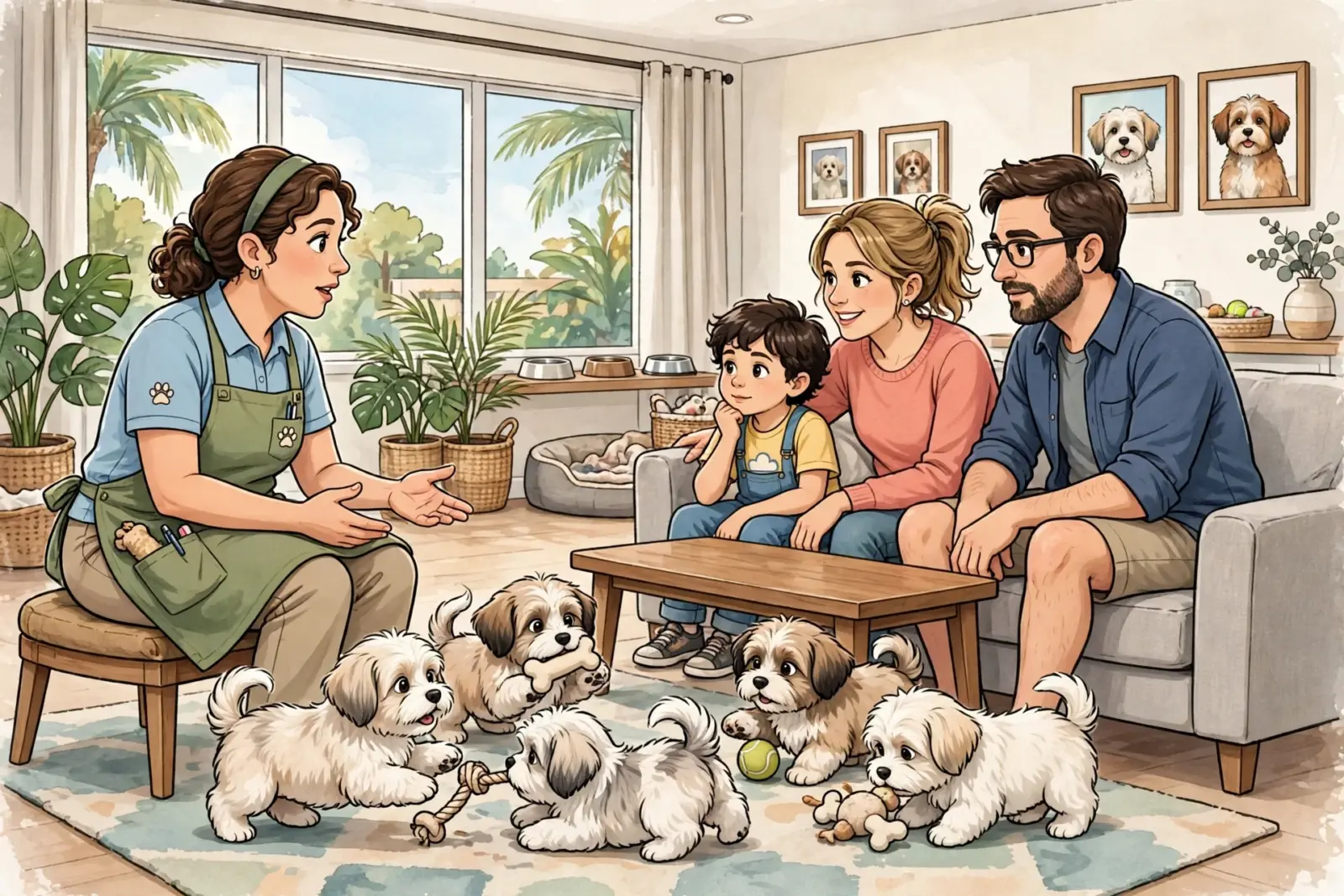
Write down who will communicate with you, where and when the handoff is proposed, the puppy’s confirmed readiness and which records will accompany it. Ask what happens if the plan changes. Confirm the separate travel cost and any carrier or airline requirements directly with the responsible provider before booking.
Florida’s official dog and cat movement guidance distinguishes ordinary pet travel from entry for sale. Ask the veterinarian and transporting party which current records apply to your purchase and route. Keep the agreed documents accessible during travel.
Plan the journey around your puppy’s known feeding and care routine. Ask Sage and your veterinarian about appropriate breaks, motion sickness or any individual travel concern. A young puppy’s needs cannot be reduced to one fixed stop interval.
Prepare the cabin and restraint before loading
Make sure the vehicle’s cooling works, cool the cabin before loading and check conditions where the carrier will sit. Keep bags and bedding clear of ventilation openings. Choose a carrier or appropriate restraint for the puppy’s current size, and secure it according to the manufacturer’s vehicle-use instructions. Keep the puppy away from direct sun and do not let it ride loose on a lap.
Pack water, a bowl, the usual food, a lead or harness, identification, spare bedding and cleaning supplies. Keep care records and veterinary contacts together. Position essentials where a passenger can reach them without opening the carrier while the vehicle is moving.
Cornell’s veterinary heat-safety guidance warns against leaving a dog unattended in a vehicle, including a running air-conditioned car. Cracked windows cannot make a parked car safe. Plan errands and breaks so an adult stays with the puppy, or use a confirmed pet-permitted alternative.
Plan supervised stops and an alternative
Before setting out, identify places where you can stop safely and check whether the puppy is permitted. Consider how you will manage fuel, toilets and food if you are traveling alone. A site described as pet friendly may still have restrictions, so confirm the access you need.
At a stop, secure the puppy before opening the vehicle or carrier. Avoid hot pavement and choose a suitable shaded route when outdoor access is appropriate. Ask your veterinarian about contacts and surfaces during the puppy’s vaccination stage. Keep breaks purposeful and return to comfortable conditions before the puppy becomes distressed.
When delays develop, reassess the whole plan: the puppy’s care needs, the vehicle’s cooling and whether a suitable overnight stop is needed. A reserved travel schedule matters less than having a workable place to rest and care for the puppy. Confirm pet permission before relying on a hotel.
Respond promptly to signs of overheating
Cornell identifies heavy panting and drooling as possible early overheating signs. Move the puppy into cool air and call a veterinarian for guidance. Breathing difficulty, weakness, confusion, seizures or collapse require immediate emergency veterinary care. Do not wait for a blog’s time limit or for collapse before seeking help. See Cornell’s heat-safety guidance and save an emergency veterinary contact before departure.
If something seems wrong, stop safely and contact a veterinary professional. Follow their instructions for the puppy and your location. Do not give human motion-sickness medicines or improvise treatment from a general travel article.
Prepare the last few minutes of the trip
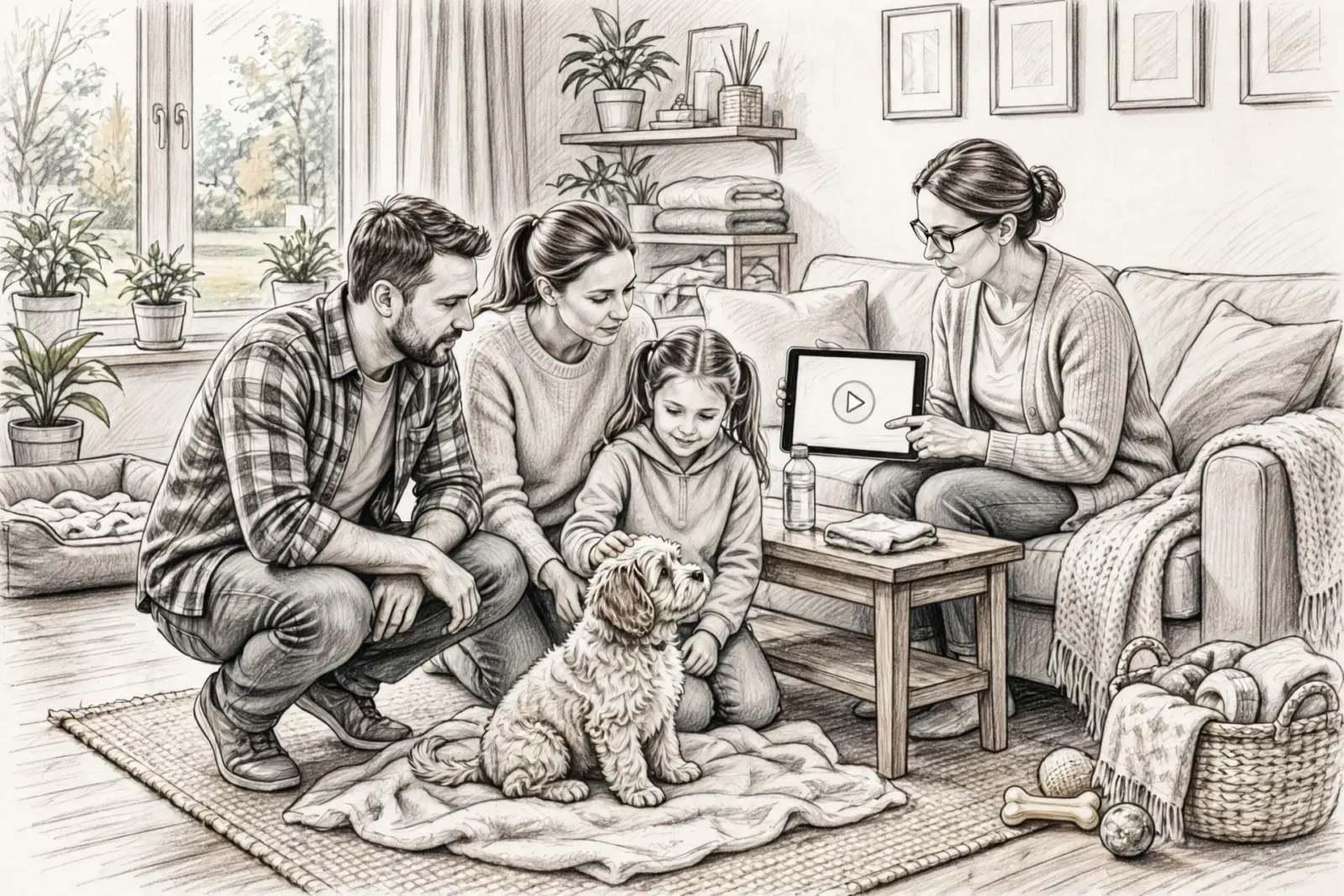
Make the home ready before the car arrives. Check the path to the entrance, secure doors and have a comfortable indoor rest area available. Keep the welcome calm and review the puppy’s records, familiar food and care instructions before the household gets busy.
Our Florida first-week preparation guide covers condo access, household routines and portable emergency supplies. For current puppies and next steps, return to the Florida buyer guide. Still deciding? Use the shortlisting guide before sharing your household and timing in the application.