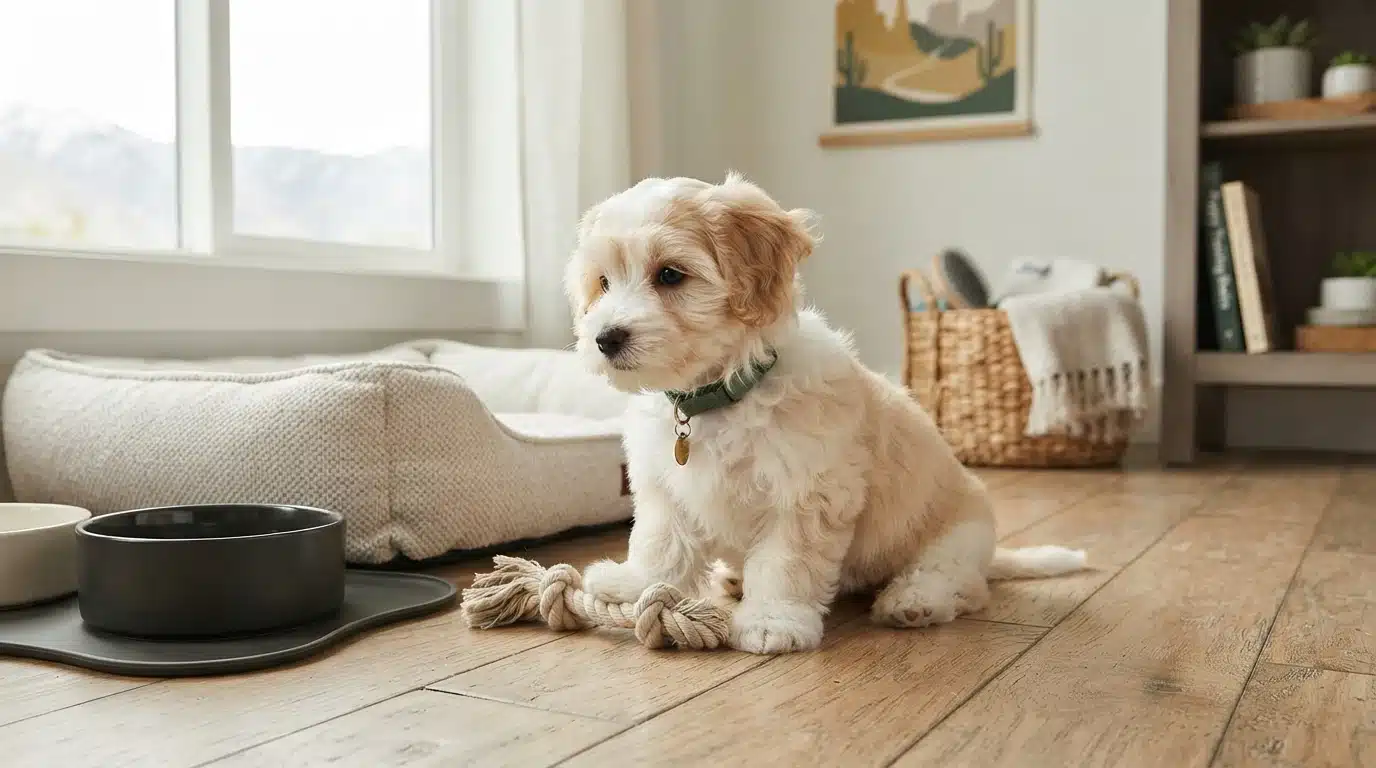
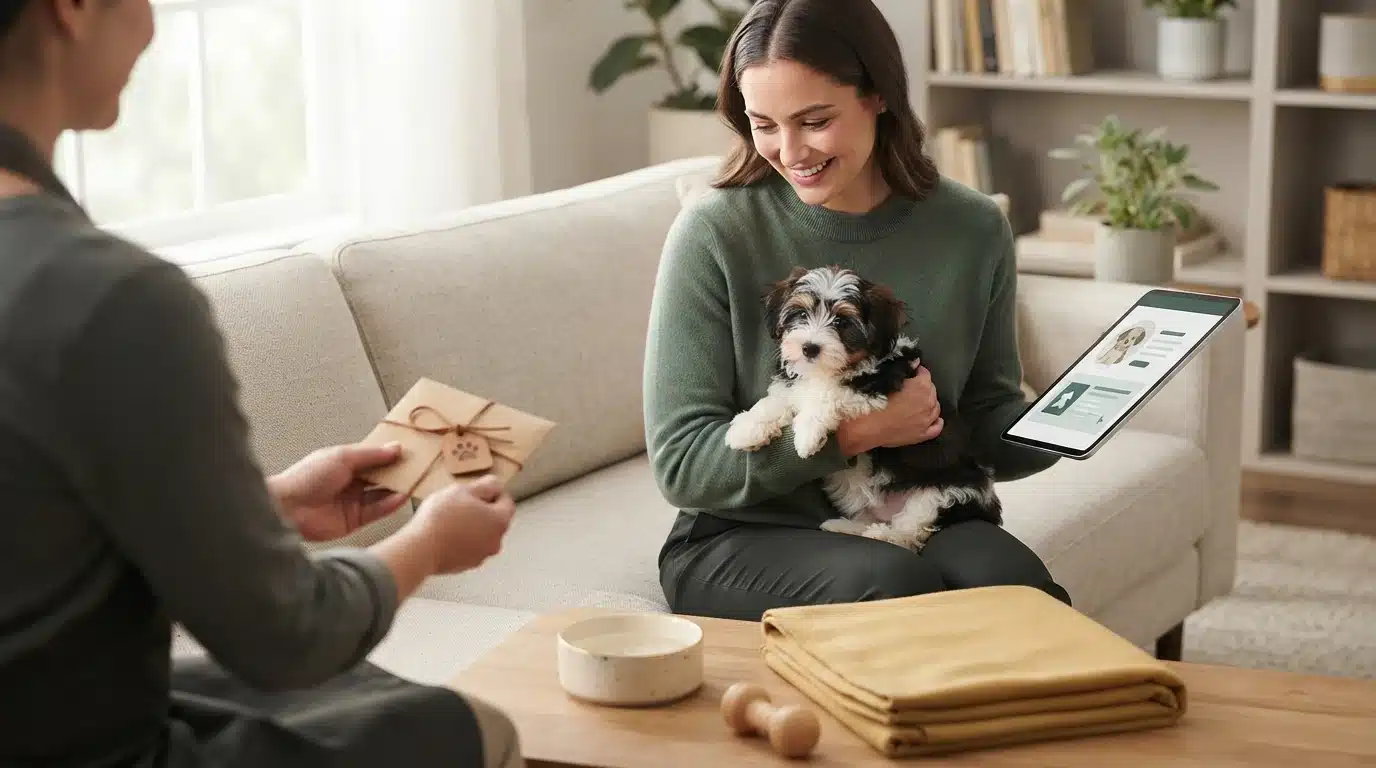
Quick Summary: Buying a puppy in Utah means choosing how it gets home: local pickup near South Jordan, a self-drive trip, a partway meet-and-greet handoff, breeder-arranged ground transport, or cabin air travel with a flight nanny. Each option affects cost, stress on the puppy, and the paperwork you need, with the receiving state (not Utah or the federal government) setting entry rules and typically requiring a Certificate of Veterinary Inspection issued within about ten days of travel. Sage Puppies, a South Jordan program placing Havanese, Havapoo and Cavapoo puppies, handles that logistics weekly and recommends confirming every detail in writing and verifying USDA APHIS registration before paying a deposit or a transporter.
You found the Havapoo. You worked through the application. Then the practical question lands: does this puppy fly, ride with a ground transporter, or do you drive to South Jordan yourself? That one choice shapes your cost, your paperwork and your risk more than almost anything else in the purchase.
This guide breaks down every Utah puppy delivery options question in plain terms: local pickup near South Jordan, self-drive trips, meet-and-greet handoffs, and breeder-arranged ground or air transport. We separate documented rules from buyer assumptions, so you know what regulators require and what a breeder simply prefers. Because Sage Puppies is a Utah program placing Havanese, Havapoo and Cavapoo puppies with families here and nationwide, this is logistics we think about every single week.
Local Pickup Near South Jordan for Utah Families
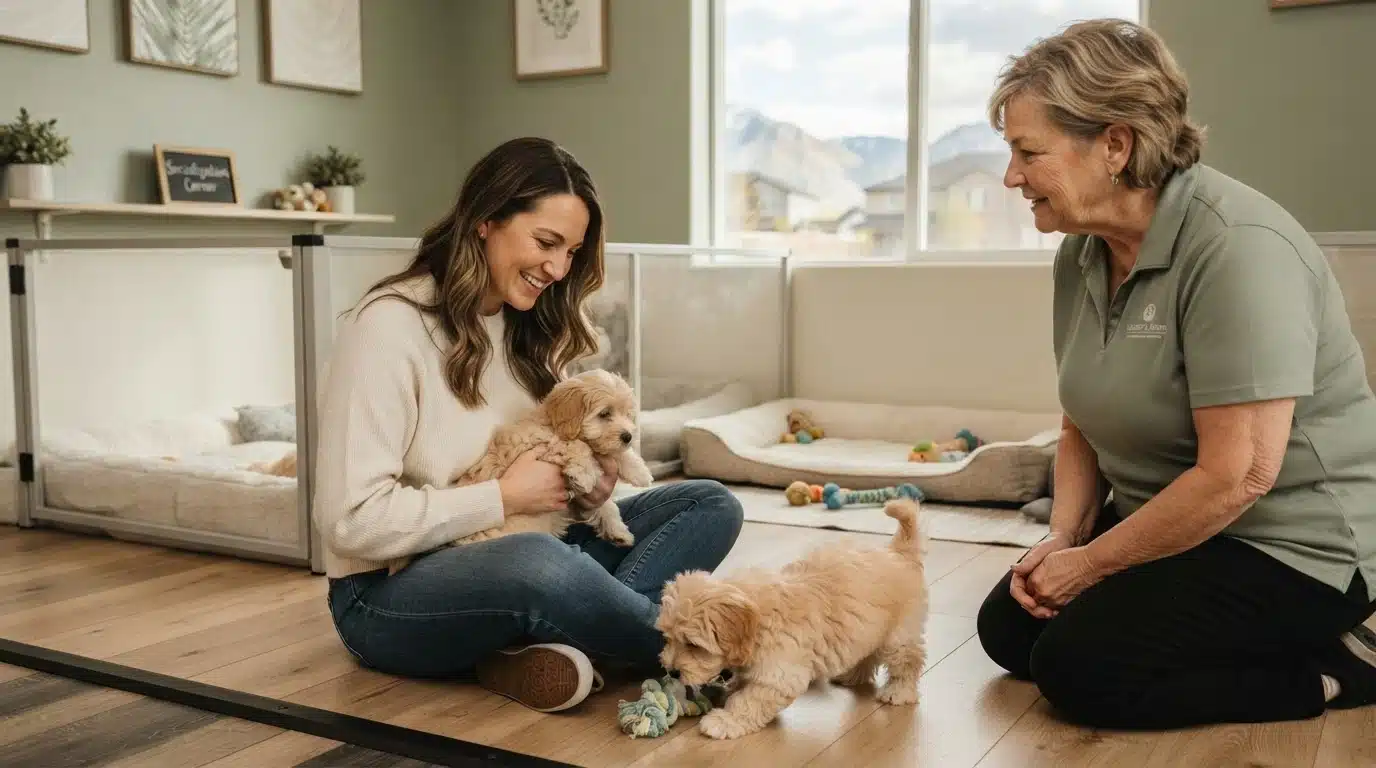
If you live along the Wasatch Front, pickup is often the easiest of the Utah puppy delivery options. Sage Puppies is based in South Jordan, so families from Salt Lake City, Provo or Tooele can meet the puppy within a short drive, ask questions face to face, and see how Cassie raises her Havanese, Havapoo and Cavapoo puppies before committing to a deposit.

Why Pickup Is Often the Simplest Option for In-State Buyers
Pickup skips scheduling, carrier fees and handoff windows. You pick the day, you meet the breeder, and the puppy rides home in your own car within the hour. For a small breed puppy, that short trip matters: fewer transitions mean less stress, fewer potty accidents and an easier first night.
You also get to verify things in person. You can see the mother when she is on site, check the puppy’s coat and energy level, and take home the food and paperwork without shipping delays. If you are still comparing breeders, our Utah puppy buying guide walks through what to look for and what to walk away from before you visit anyone.
Before you drive, confirm the exact meeting address, the pickup day and what to bring. A two-minute call prevents a wasted trip across the valley.
Preparing Your Home and Car Before the Drive
A little prep keeps the ride calm and the first evening simple.
- Car setup: Place a towel-lined crate or a lap blanket in the back seat. Let a second adult hold the puppy gently; do not improvise restraints meant for larger dogs.
- Supplies: Pack water, a small bowl, poop bags and a chew-safe toy.
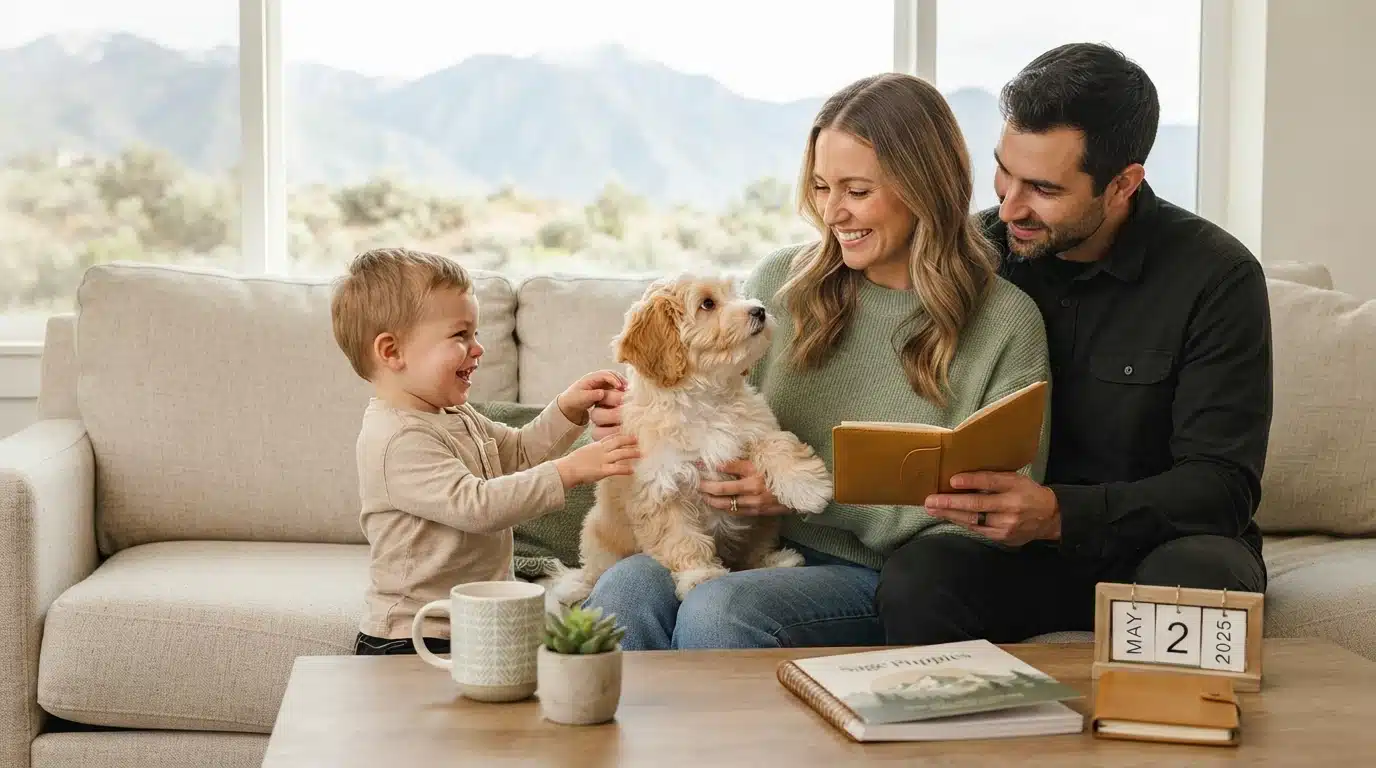
- At home: Set up one quiet room with a bed, water and a defined potty spot. Keep the first days low-key while the puppy settles.
Plan the pickup for morning if you can, so the puppy has daylight hours to explore before bedtime.
Driving Yourself From Across Utah
If you live in St. George, Moab, Logan or the Uintah Basin, a self-drive gives you the most control of all the Utah puppy delivery options. You set the pace, keep your puppy with you the whole way, and skip handoff fees.
Route Planning and Weather Reality
Utah distances look short on a map and longer behind the wheel. St. George to South Jordan runs about four hours; Vernal adds mountain passes. Check UDOT’s statewide road conditions the night before and again that morning, because construction, crashes and snow can close canyons without much warning. Winter travel on I-15 or US-40 may require chains or traction tires when storms move through. Build a buffer into your pickup day, and if the forecast turns ugly, ask about shifting the date rather than pushing through a whiteout with a puppy aboard.
Comfort, Stops and Toileting on the Road
Puppies this size travel best in a small crate or carrier, secured in the back seat. Plan a water-and-potty stop every two hours or so. Use a harness and leash for each stop, since an eight-week-old on a rest-area lawn has no recall yet. Skip big meals right before driving; a light portion after a stop settles better. Keep cleanup wipes and paper towels within arm’s reach, and bring a blanket that smells like home so the first ride feels less strange.
Pack the car the night before: crate, towel, water bowl, leash, and treats. Morning pickup days go smoother when nothing waits on a store run.
Partway Handoffs and Meet-and-Greet Pickup Points
How a Meet-and-Greet Handoff Actually Works
A handoff splits the driving. You and the breeder each cover part of the distance and meet somewhere in the middle, often a park, a truck stop, or a quiet parking lot along a main highway. Confirm the spot, the time, and a backup plan in case weather or traffic delays one of you.
At the meeting, you review the puppy’s health records, see the temperament in person, and sign any final paperwork before payment completes. Ask for food, a familiar blanket, and feeding instructions. Because the breeder is present, you can ask last-minute questions face to face, and the two of you can compare notes on transport options such as a partway meetup versus full delivery.
When a Handoff Is Worth the Coordination
A handoff shines when the full drive is too long for one trip but too short to justify air or ground delivery fees. Families coming from the Denver or Las Vegas side often find a midpoint on I-15 saves hours.
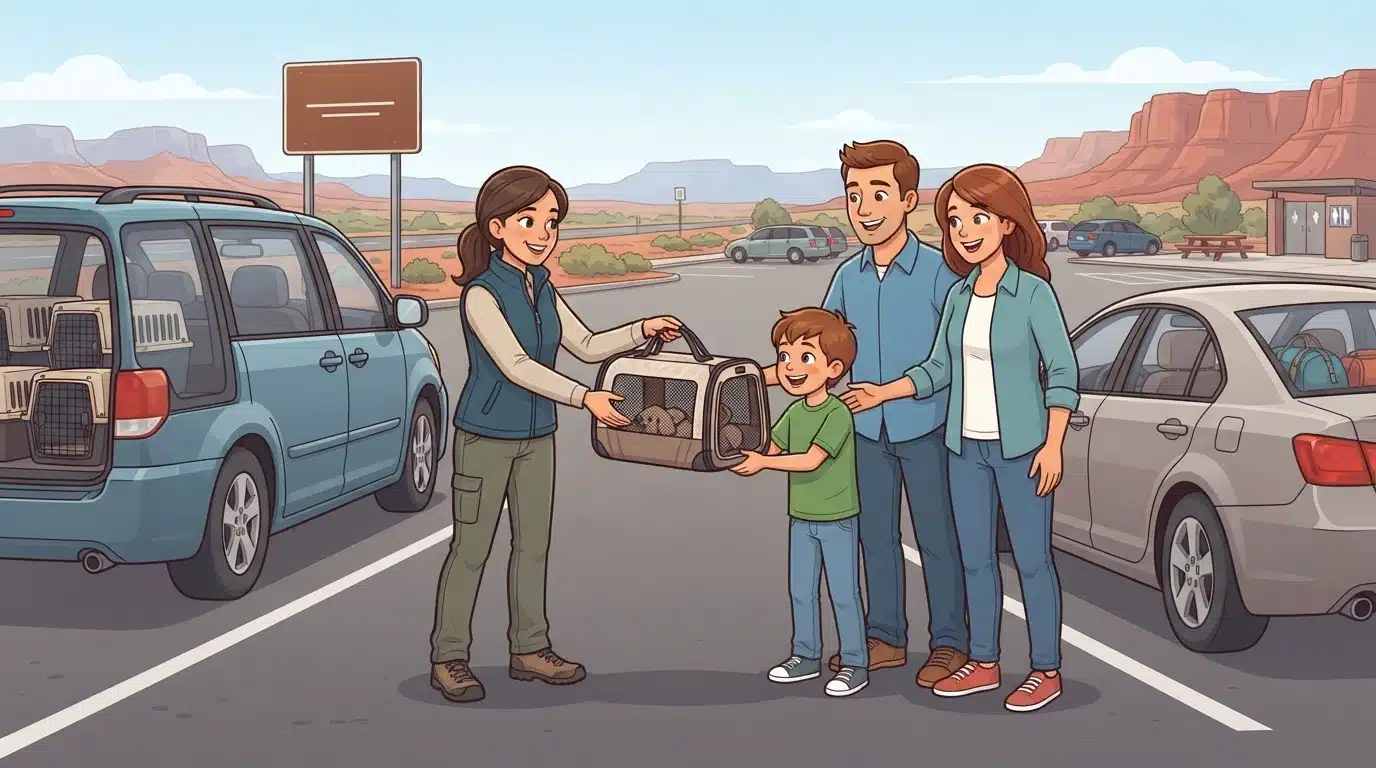
It also suits buyers who want to meet their puppy’s breeder without traveling the whole way to South Jordan. Schedule the meeting for morning hours so the puppy still has daylight to settle at home, and keep the carrier, water, and a towel within reach before you part ways.
Ground Transport for Families Outside Utah
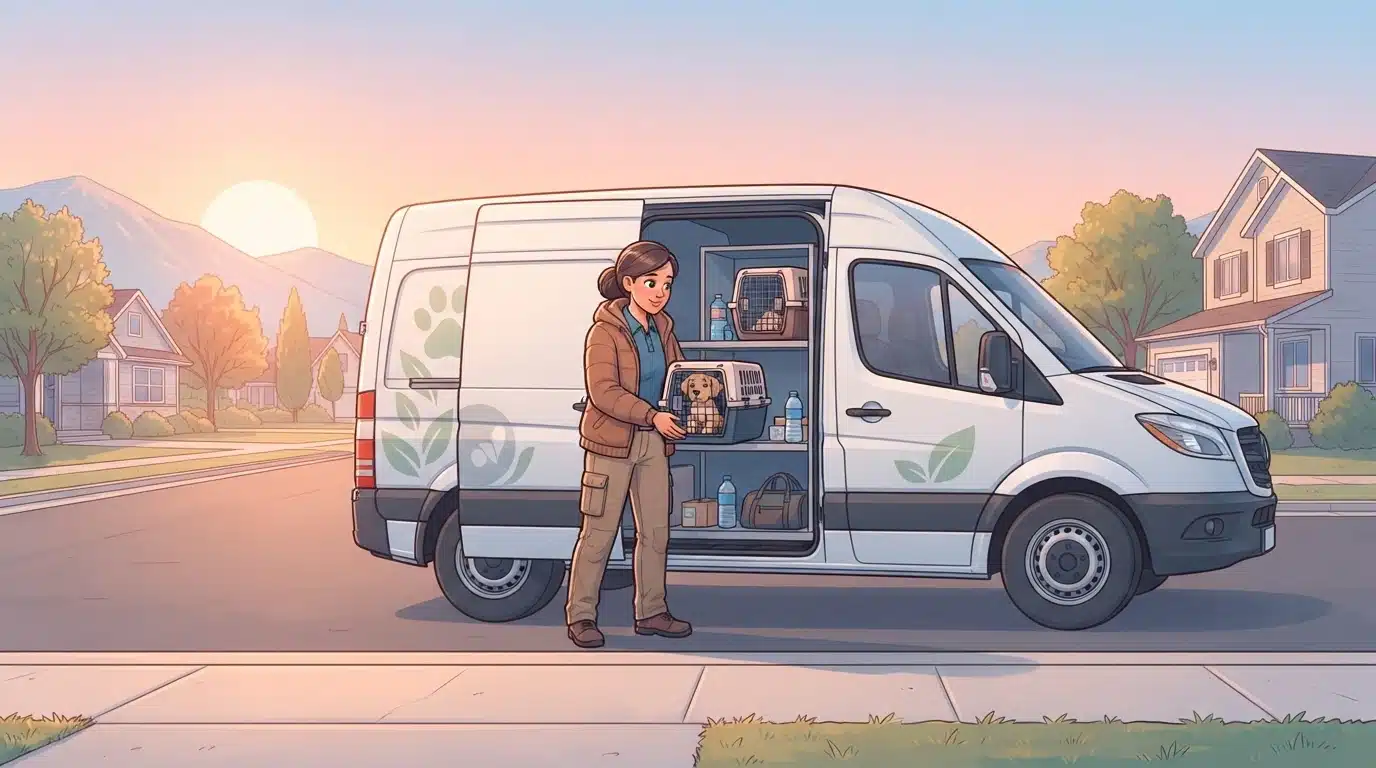
If you live beyond driving distance of South Jordan, ground transport puts your puppy in a vehicle with a handler who drives her straight to you or to a agreed meeting point. It avoids airport cargo holds, which is why many small breed families prefer it.
How Ground Transport Works End to End
Most trips follow the same shape. The breeder books a transporter, the puppy rides with a health certificate from a licensed veterinarian, and you receive photo updates and an estimated arrival window. Because commercial animal transport is regulated under the Animal Welfare Act, professional transporters who move animals for hire must register with USDA APHIS. Trips may run one to three days depending on distance, with rest stops for food, water and potty breaks. Each state sets its own entry rules, so the receiving state’s requirements, not the driver’s home state, decide what paperwork you need. APHIS maintains a state-to-state pet travel directory where you can confirm yours.
Questions to Ask a Transport Provider Before Booking
A few direct questions will separate professional haulers from part-time ones:
- Are you registered with USDA APHIS, and can you share the number?
- Who rides with the puppy, and how many animals travel on this route?
- How often will I get updates and photos?
- What happens on multi-day trips overnight?
- What are your temperature limits, and how do you handle delays?
- Is payment refundable if the trip is cancelled?
Get the answers in writing before you send a deposit. If a provider dodges the registration question, keep looking.
Health and Comfort Planning for Multi-Day Travel
Ask your veterinarian for a current health certificate dated close to departure, since many states require one within a set number of days. Pack familiar food, and confirm the crate size lets the puppy stand and turn. For a comparison of every transport option, Sage Puppies breaks down puppy delivery vs pickup in detail.
Accompanied Air Travel for Long Distances
When a puppy crosses the country, flying is usually faster than a multi-day drive. Two routes exist: the puppy rides in the cabin with a person, or it ships as cargo. The first option is what most small breed families choose, and for good reason.
Cabin Travel Versus Shipping a Puppy as Cargo
A Havanese, Havapoo or Cavapoo puppy fits the cabin rules most airlines set. Carriers limit in-cabin pets by size and weight, and the soft carrier must slide under the seat in front of the passenger, according to the US Department of Transportation. The puppy stays with an adult the whole flight, so feeding, potty breaks and reassurance happen on the spot.
Cargo works differently. If a pet is too large for the cabin, it travels as checked cargo, as American Airlines explains. For an eight-week-old toy breed, that separation adds stress and cold-hold risks most families would rather avoid. Cabin travel keeps it simple.
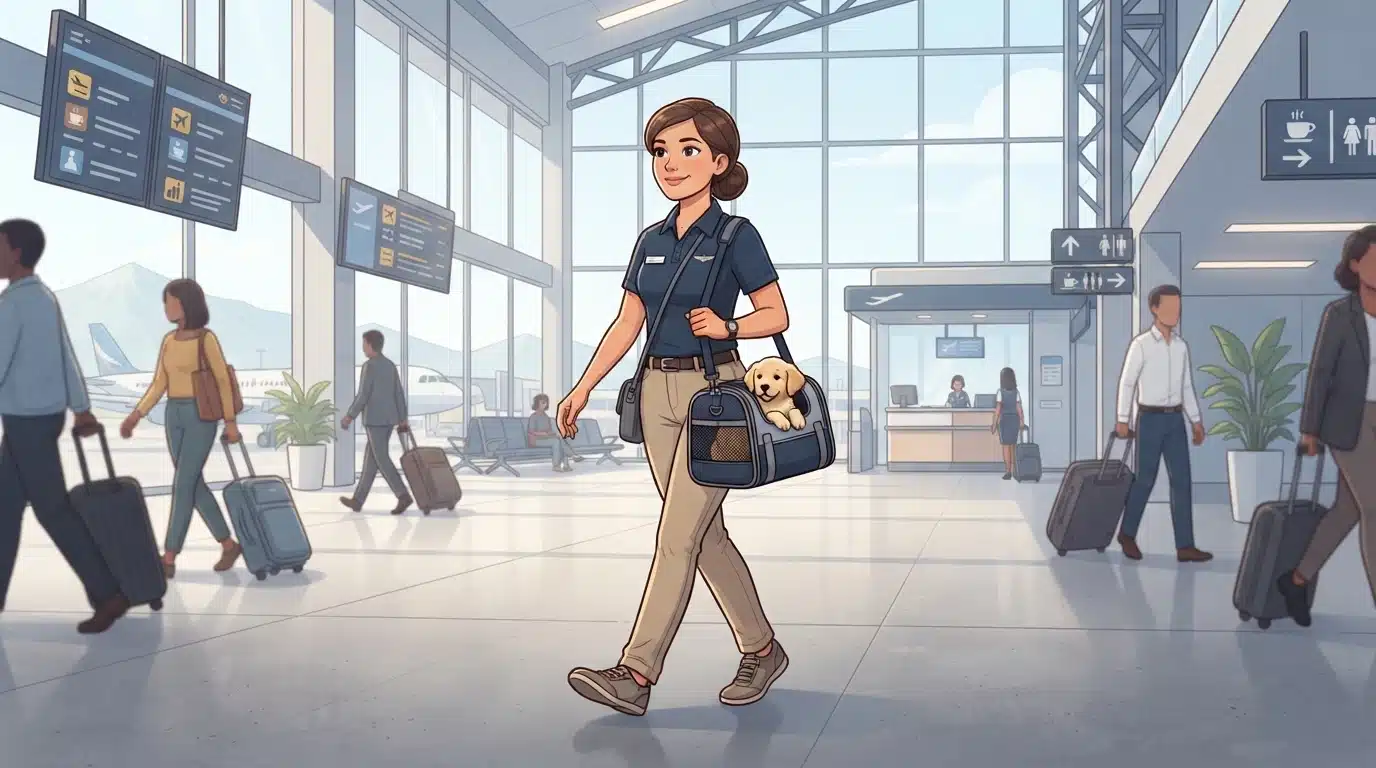
Choosing and Verifying a Flight Nanny Service
A flight nanny is a person who carries the puppy in a cabin carrier on a commercial flight and hands it to you at your home airport. Before you pay anyone:
- Ask for a real government ID and the confirmed flight details.
- Request photos and updates during the trip.
- Confirm who pays the airline pet fee and what it runs.
- Agree on the handoff spot and time in writing.
Reputable nannies welcome these questions. If someone avoids them, keep looking. Sage Puppies works with trusted transporters when a puppy flies home, and families always get the flight details before travel day.
Health Certificates and State Entry Requirements
Whose Rules Apply and Why It Matters
Here is the part that surprises most first-time buyers: the federal government does not set the rules for moving a pet between states. The receiving state does. According to USDA APHIS, the destination state or territory sets its own entry requirements, so what matters for your puppy is where it lands, not where it starts.
That means pickup in South Jordan, a drive to Nevada, and a flight to New Jersey can each involve different paperwork. The rules are usually simple for healthy young puppies, but a breeder or transporter who ignores them risks a delay at a checkpoint or a boarding hold. Ask any breeder you are comparing which documents they provide and when. A program like Sage Puppies handles delivery paperwork for you, but you should still see what the certificate says before travel day.
The Certificate of Veterinary Inspection, Explained
The core document is the Certificate of Veterinary Inspection, often called a health certificate or CVI. A USDA-accredited veterinarian examines the puppy and certifies that it appears healthy and free of contagious disease. These certificates are typically issued within a short window before travel, commonly ten days, so timing matters. You can read the standard form, APHIS 7001, on the USDA site, and APHIS explains the role of accredited veterinarians who issue it.
If your puppy’s certificate lists an issue date, check it against your travel date. An expired CVI can invalidate a transport.
Other Documents Worth Confirming
Vaccination records, especially rabies once your puppy is old enough, should travel with the certificate. Airlines may require their own acclimation or booking details. Request copies in advance so your own veterinarian can pick up where the breeder’s left off.
Costs, Weather and Timing to Plan Around
Building a Total Cost Picture Without Invented Averages
The puppy’s price is only part of the budget. Add the travel method, the vet health certificate, supplies, and a first exam shortly after arrival. A simple table keeps the totals honest:
| Cost item | What it covers | Plan ahead by |
|---|---|---|
| Puppy price | The puppy itself, per the breeder’s posted pricing | Ask what the deposit applies to |
| Transport | Ground delivery, a self-drive trip, or a flight nanny | Request a written quote for your route |
| Health paperwork | The veterinary exam and certificate most carriers require | Confirm who schedules the vet visit |
| Homecoming supplies | Crate, food, bowls, and a first-day setup | Buy before pickup day, not after |
Flight nanny pricing varies widely by route and season; one booking marketplace lists typical in-cabin nanny service at roughly $350 to $1,500 or more, so treat any single number you see online as a starting point, not a quote. Ask each provider what the fee includes, because fuel, waiting time, and airline pet fees are not always bundled.
Budget example, not a market average: puppy price plus transport quote plus roughly $100 to $300 for first-week supplies gives most families a workable planning total.
Weather, Daylight and Your Puppy’s Schedule
Utah winters complicate timing. Storms on I-15 or US-40 can trigger chain or traction requirements, so check current UDOT road conditions the morning you travel and build in buffer time rather than a tight arrival window. Summer is different: pavement and cabin heat matter more than snow, so plan stops for water and shade.
Daylight helps too. A puppy arriving in the afternoon can potty, eat lightly, and settle before night, which makes the first evening easier for both of you. Ask the breeder when the puppy last ate, then keep its first car ride short and calm.
Common Mistakes to Avoid
Assuming Policies That Were Never Confirmed
Buyers often assume a breeder will meet at a specific spot, hold a puppy past a date, or ship by air, then find out the week of pickup that none of that was offered. Get every detail in writing: who travels, where you meet, what it costs, and who pays. Ask about weather delays too. A quick written confirmation before you pay protects both sides and prevents a stressful scramble later.
Skipping Verification of the People Handling Your Puppy
Whoever drives your puppy is responsible for a living animal, so vet them like one. Ask for the transporter’s USDA registration number if the trip crosses state lines, and confirm the driver’s name, vehicle, and rest stops before handoff. Check that puppies travel with proper health paperwork. A reputable program such as Sage Puppies will answer these questions directly, so treat a vague or defensive reply as a warning sign.

Still weighing pickup against delivery? Tell Sage Puppies how and when your puppy needs to travel, and Cassie will walk you through the realistic options for your route. Start your application at Sage Puppies, or browse currently available puppies and take the next step today.
Frequently Asked Questions
Q1: What delivery, travel, and pickup options exist for Utah puppies for sale?
Four realistic channels: local pickup near South Jordan, self-drive, a partway meet-and-greet handoff, or breeder-arranged ground or air transport with a flight nanny.
Q2: Do puppies need a health certificate to travel between states?
Yes. The receiving state sets entry rules, and most require a Certificate of Veterinary Inspection issued within roughly ten days of travel.
Q3: Is it better for a small puppy to fly in the cabin or as cargo?
Cabin. A flight nanny keeps an eight-week-old Havanese, Havapoo or Cavapoo with an adult, avoiding cargo hold stress and temperature risks.
Q4: How much does puppy delivery cost?
It varies by route and season. Flight nannies commonly run several hundred dollars or more; always request a written, itemized quote first.
Q5: What should I ask a ground transporter before booking?
Confirm USDA APHIS registration, who rides along, update frequency, overnight plans, temperature limits, and whether a cancelled trip is refundable.
Q6: What should I check on pickup day itself?
Confirm the meeting address, bring a towel-lined crate, water, and leash, and review health records before payment completes.
Conclusion
How your puppy travels home is a decision worth making early, not the week of pickup. Local pickup near South Jordan keeps the trip short and lets you meet the breeder. A self-drive or partway handoff gives you control on longer Utah routes. Ground transport and cabin flights with a flight nanny cover out-of-state families, and cabin travel beats cargo for a small puppy.
Whatever you choose, two habits protect you: confirm every detail in writing, and verify the USDA APHIS registration and health certificate before anyone hands over a deposit or a puppy. The receiving state sets the entry rules, so paperwork follows your destination, not your starting point.