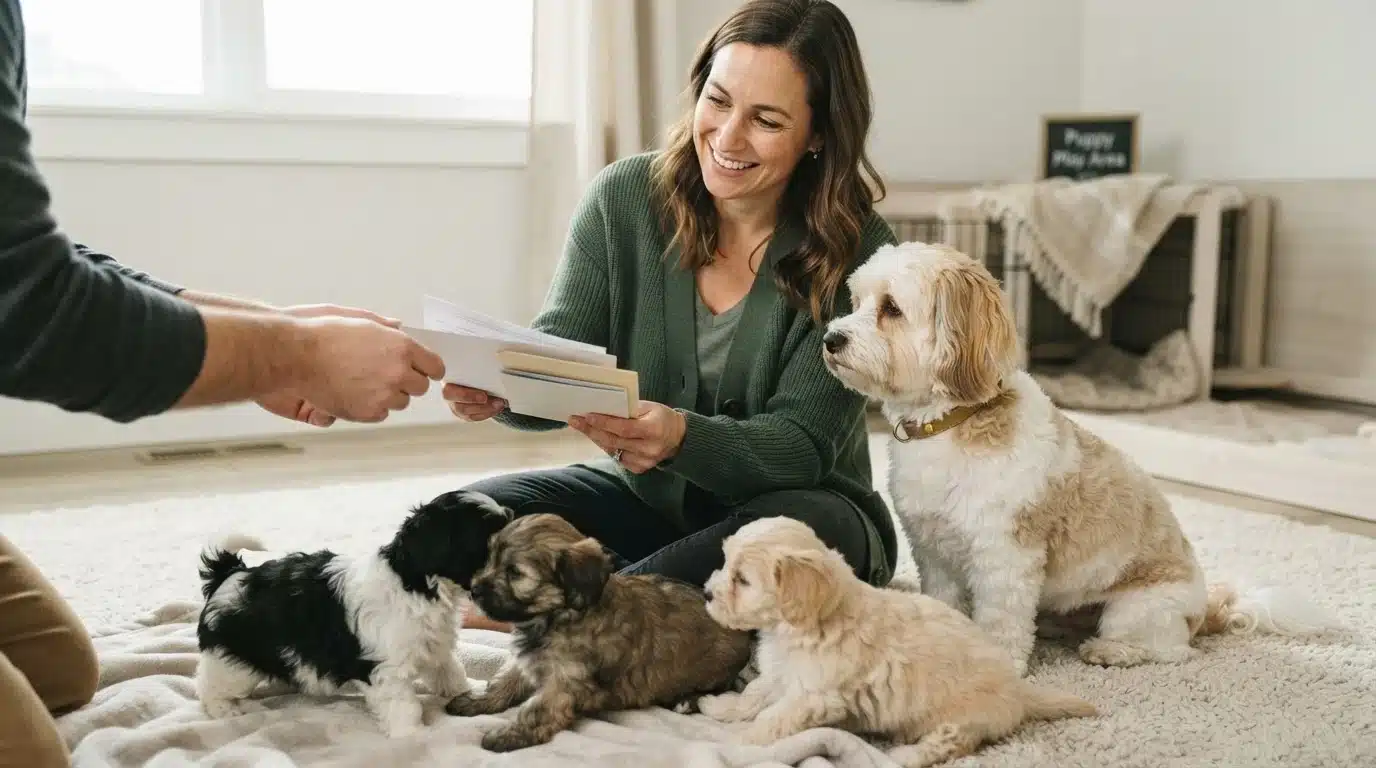
Quick Summary: Utah puppy buyers should receive four core document types at pickup: a signed bill of sale, a purchase contract with clear health guarantee terms, vet-issued health records including a dated vaccination and deworming log, and a microchip registration you can transfer into your name. Each document deserves active verification before payment: call the vet clinic using a number from its own website, run microchip and OFA numbers through free online registry lookups, and confirm that names, dates, and prices match across the contract, receipt, and health records. Red flags include vague health guarantees, promises that papers will arrive later, altered or incomplete entries, and pressure to skip the review process, so since Utah has no puppy lemon law, those written records are your main legal protection.
Before you wire a deposit for a Havapoo, Cavapoo, or Havanese puppy in Utah, look at what the breeder hands you at pickup. That envelope of Utah puppy buyer paperwork tells you almost everything about the program behind the dog. Missing records create real problems later: a vet who lacks vaccination dates, a microchip you cannot trace, or registration papers that never arrive. First-time buyers often do not know which documents matter, so this guide walks through each one and pairs it with a simple verification step you can take before money changes hands. You will learn what health records, contracts, and registrations to expect, plus a few Utah-specific details for pickup and delivery. We are Sage Puppies, a small program in South Jordan that raises Havanese, Havapoo, and Cavapoo puppies, and this checklist reflects what we ask of any Utah puppy buyer paperwork we see, ours included.
The Core Documents Every Utah Puppy Buyer Should Receive
No matter which breeder you choose in Utah, four categories of paperwork should come with your puppy. Ask for each one before you pay, and read every page before you sign. Good Utah puppy buyer paperwork protects both sides, and a breeder who keeps records well usually keeps puppies well too.
Bill of Sale and Basic Transaction Record
The bill of sale is your proof of purchase. It should list the puppy’s date of birth, breed, sex, color or markings, microchip number, purchase price, and the date of the sale. Both parties sign it, and you keep the original.
This record matters more than most new buyers expect. It proves ownership if a dispute comes up, and it anchors the puppy’s identity for vet records and licensing. Check that the microchip number on the paper matches the puppy itself, not just the litter. If a breeder will not put the sale in writing, treat that as a reason to walk away. Any legitimate Utah seller expects to issue one.
Purchase Contract and Health Guarantee Terms
The purchase contract spells out the deal beyond the price. Expect sections on what happens if the puppy develops a covered health issue, whether you must use a specific vet exam window, and what the breeder asks from you as the new owner. Some contracts include a return clause or a spay and neuter requirement, so read those lines closely.
A health guarantee is only useful if the terms are clear. Look for a defined exam deadline, named covered conditions, and a written claim process instead of vague promises. Ask questions before signing, not after. Responsible breeders, including small Utah programs, will walk you through the contract section by section and give you time to review it at home.
Registration Application Papers
If your Havanese puppy comes from registered parents, you should receive paperwork to register the puppy yourself, often called a limited registration application. Breeders of mixes like Havapoos and Cavapoos usually cannot offer registration, and that is normal, but they should still provide lineage details.
Health and Veterinary Records You Should Not Leave Without
Some paperwork protects the sale. Health records protect your puppy. Three documents matter most, and each one comes with a simple way to check it before you pay.
Vet-Issued Health Certificate and Exam Notes
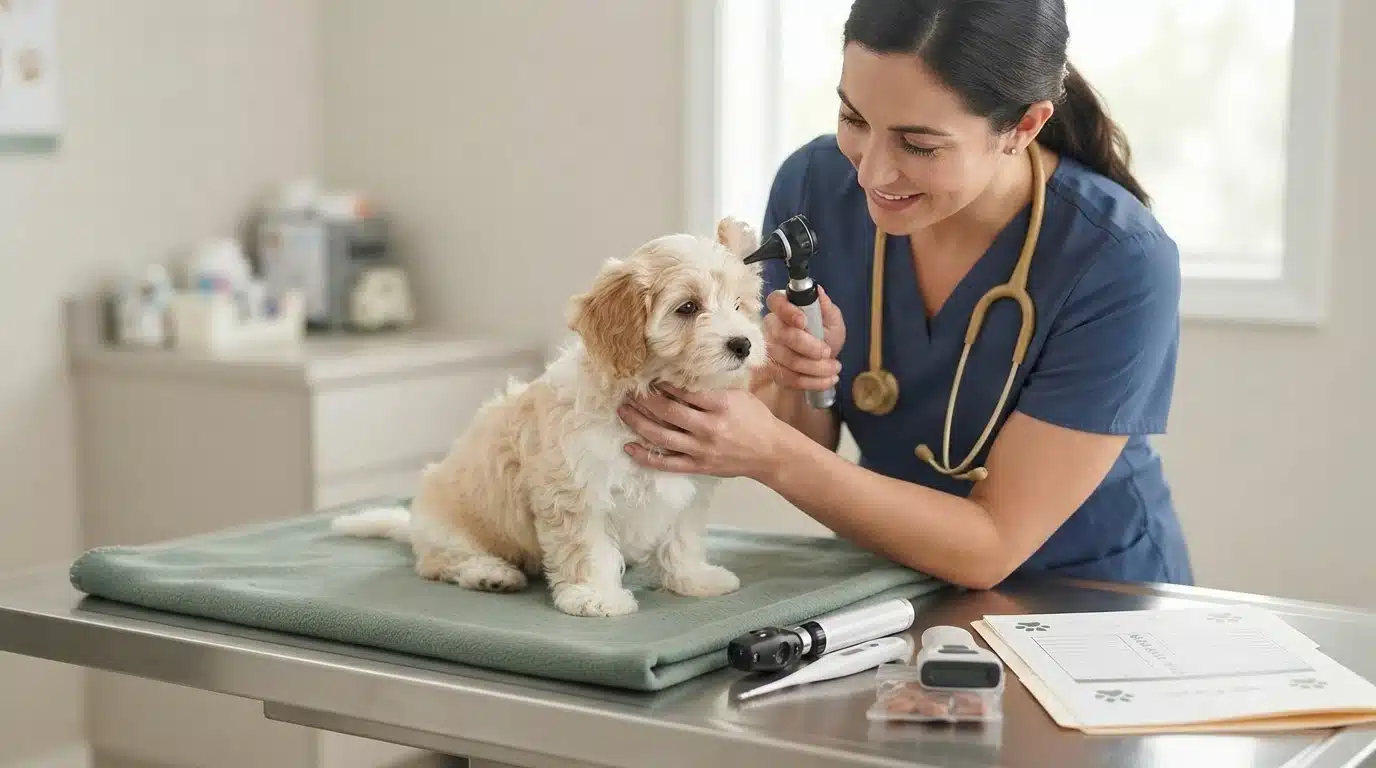
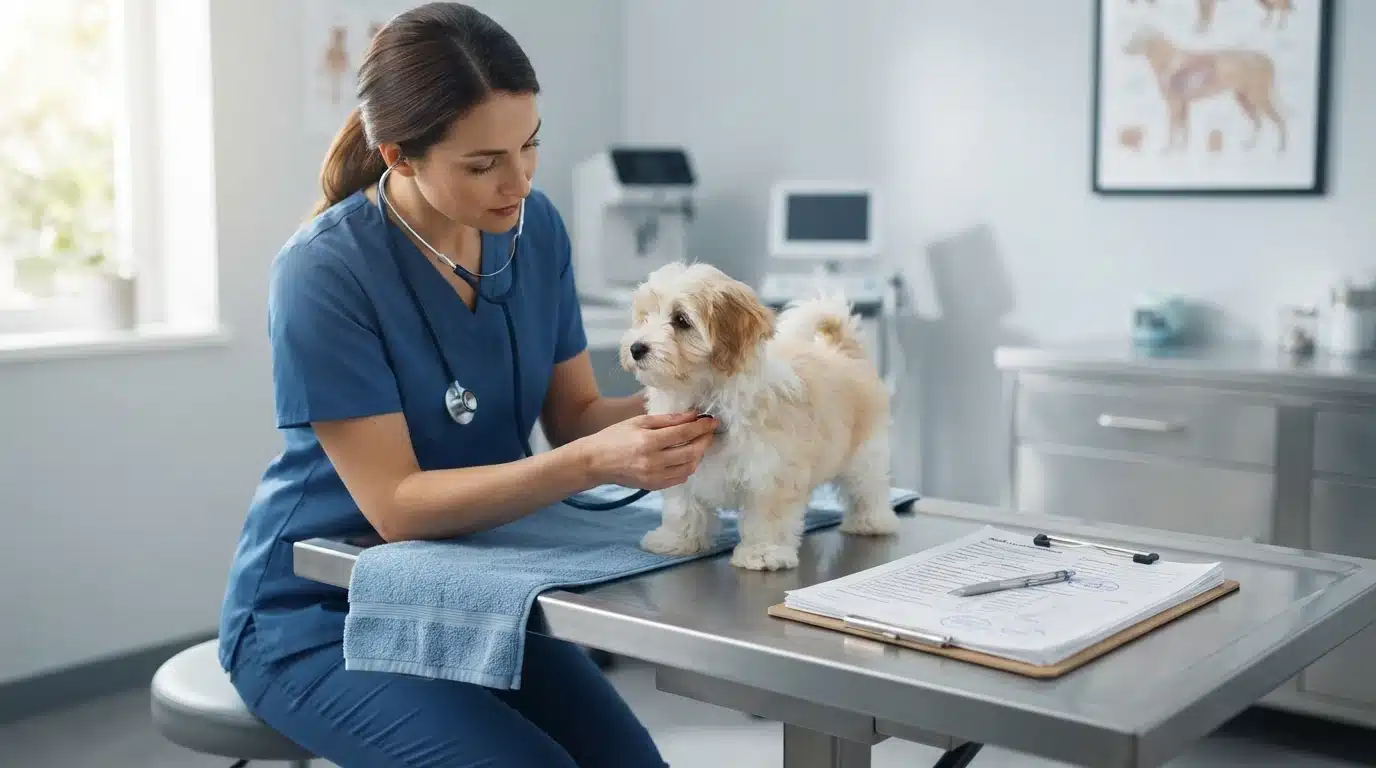
A health certificate is a document a licensed veterinarian signs after examining the puppy, usually within ten days of pickup or delivery. It should list the puppy’s age, weight, and any findings from that exam. Read it while the seller is still in the room. The date matters, the vet’s contact details matter, and a photocopy with no signature means nothing. Interstate travel rules vary, so buyers arranging delivery should compare the certificate against their state’s requirements listed by the USDA before the puppy ships. If the seller shrugs at the request, treat that as a red flag worth a second look.
Vaccination and Deworming Log
Puppies need a series of shots, not a single visit. By eight weeks, most have had their first round of distemper, parvovirus, and sometimes adenovirus, plus one or two dewormings. Ask for a dated log that names each vaccine and the brand used. Then check that the dates fit the puppy’s age. A record claiming three vaccine rounds by seven weeks was written backwards. Your own vet will use this log to build the rest of the schedule, so bring it to the first appointment.
Parent Health Testing and Genetic Clearances
The parents’ test results predict problems no puppy exam can catch. For Havanese, Havapoos, and Cavapoos, ask for OFA or CERF eye clearances, patella results, and DNA panels covering breed-relevant conditions. Match each result to a registry number and verify it on the registry’s own site. A PDF alone proves little. Honest breeders expect the question, and our guide to verifying health testing claims walks through the lookup step by step.
Microchip, Transport, and Ownership Transfer Paperwork
Three documents close out a Utah puppy purchase: the microchip record, the transport or handoff paperwork, and the contract clauses that govern spay/neuter timing and returns. Ask for each one in writing before you pay the final balance.

Microchip Registration and Transfer Steps
Most breeders implant a microchip before the puppy leaves. You should leave with the chip number written on the health record, then register it in your own name. The chip is useless for a lost dog if it still lists the breeder or a kennel. Ask which registry the chip uses, create your account, and confirm the transfer shows your phone number within a few days. If the breeder handles the transfer for you, request a confirmation email. This step is easy to skip on go-home day, so set a phone reminder for the same week.
Transport and Handoff Documents for Utah Buyers
Local pickup in Utah needs less paper: a signed sales receipt, the chip number, and the vet record. Out-of-state delivery adds more. Ground transporters and flight nannies typically require a signed handoff form and may ask for a health certificate issued within a set window before travel. Get the transporter’s company name, the driver’s contact, and a photo of the puppy at handoff. A breeder who explains pickup and delivery expectations clearly, as covered in this Utah puppy buyer guide, makes the logistics easier to verify.
Spay/Neuter, Return, and Guardian Provisions
Read the contract for three clauses. First, the required spay or neuter age, since small breeds often wait longer than large ones. Second, the return policy: many breeders require that the dog come back to them rather than a shelter. Third, any breeding or guardian terms. Guardian homes, where a family keeps a breeding dog under a shared agreement, carry long obligations, so confirm litter counts, costs, and who owns the dog after retirement before signing.
How to Verify Each Document Before You Finalize Payment
Paper in hand proves nothing until you check it. A fake health certificate takes minutes to print, so treat every document as a claim and confirm it yourself before money changes hands.
Phone and Email Verification of the Vet Clinic
Find the clinic’s number yourself, from its official website, not from the paperwork the seller hands you. Call and ask two questions: did this puppy have an exam on the date listed, and what did the vet find? A real clinic will confirm the visit. If the number on the certificate rings to a cell phone or the front desk has no record of the puppy, walk away.

Registry, Microchip, and OFA Lookups
Most breeder documents can be checked online for free. Enter the microchip number into AAHA’s microchip registry lookup tool to confirm the chip exists and see which registry holds it. Then scan the chip at pickup, if you can, and compare the number to the paperwork. For health testing claims, run the dam and sire’s names through the OFA advanced search, which holds records on millions of dogs. Results should match what the breeder told you. Registry papers like AKC or ACA applications should carry a litter number you can confirm with the registry directly.
Matching Paperwork to Your Application and Receipt
Line up names, dates, and amounts before you pay. The contract, receipt, and microchip record should all show the same puppy description, the same price, and the same buyer details as your application. Any mismatch, even a small one, deserves a phone call first. Breeders who run a clean process, as Sage Puppies does with its documented application and matching steps, make this cross-check easy.
When your reservation and payment terms are clear up front, the final receipt rarely holds surprises; Sage explains its process on its pricing and reservation page.
Paperwork Red Flags Specific to Utah Puppy Buyers
Some paperwork problems are easy to miss when you are excited about a puppy. Slowing down for ten minutes protects your money and your dog’s health.
Documents That Are Missing, Altered, or Vague
Refuse any puppy sold without a written bill of sale and a health record. Watch for vaccination records with no veterinarian name or clinic contact, dates that run together in the same ink, or white-out over key entries. A “health guarantee” that promises nothing in writing, or a contract with blank spaces left open, is not a guarantee at all. Papers for a purebred Havanese should match the puppy in front of you, since mismatched names or birthdates suggest borrowed paperwork. Honest breeders hand over records without being asked twice.
Pressure Tactics Around Paperwork Timing
Beware the seller who says “papers will come later” or “I’ll email them after pickup.” Every document you need should exist before money changes hands, not after. High-pressure lines like “someone else is paying the deposit tonight” exist to stop you from verifying anything. A legitimate breeder welcomes your questions and never objects to you reading a contract before you sign it.
Utah Consumer-Law Anchors That Protect the Buyer
Utah has no dedicated puppy “lemon law,” so your protections come from general consumer fraud and contract law instead. As Michigan State’s Animal Legal & Historical Center explains, only some states give puppy buyers statutory refunds or vet-cost reimbursement, so Utah buyers depend on the written contract itself. FindLaw’s pet purchase guide notes that a seller’s written health representations become enforceable promises. Get every claim in writing, because that document is your legal standing. Breeders like Sage Puppies build their contracts around clear written terms rather than vague guarantees.
Organizing and Using Your Utah Puppy Paperwork After Pickup
The paperwork you collected before pickup only helps if it stays organized and gets used. Set it up in the first week, while every date and detail is fresh.
Sharing Records With Your New Veterinarian
Book your puppy’s first vet visit within a few days of pickup, and bring every document you have: the vaccination record, deworming dates, and any health check notes. Vets want traceable records, not word of mouth, so hand over the original vaccination card or a clear copy and let the clinic scan it into your file. Ask which vaccines your puppy still needs and when.
Tracking Warranties, Boosters, and Follow-Up Records
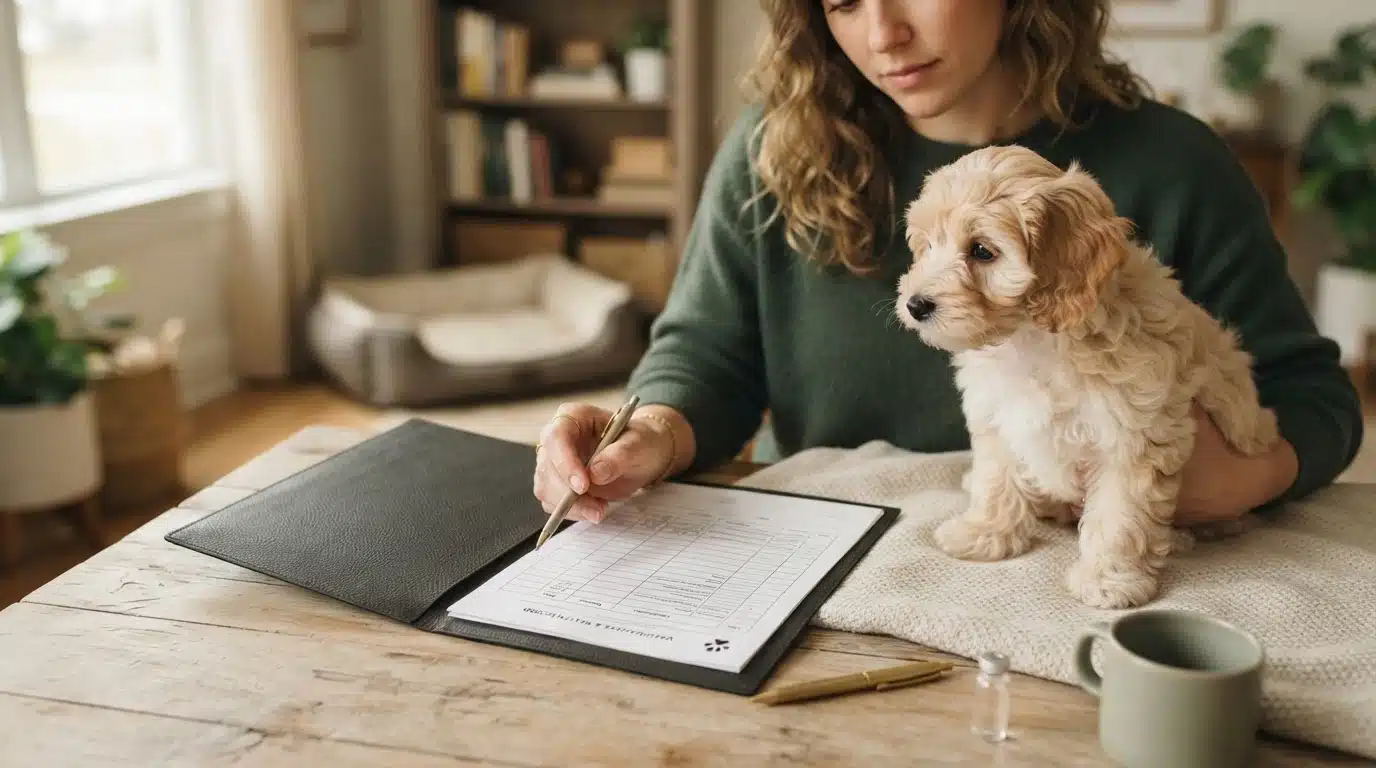
Keep two folders, one paper and one digital. Scan or photograph each document, then store copies in cloud storage so a lost folder never means lost records. Add booster dates to your phone calendar with a one-week reminder. If your contract includes a health warranty with a deadline, note that date prominently, because some requirements, like an exam within a set number of days, only count if you meet them. Every vet visit from now on creates new records, so file those the same way.
What to Do if the Breeder Stops Responding
Most breeders stay reachable, but plan anyway. Save your purchase contract, payment records, and all messages from day one, since they document what was promised. If communication stops, send one polite written request, then check whether your contract names a replacement contact. For travel paperwork such as rabies certification, a USDA-accredited veterinarian can help you meet requirements going forward.
Paperwork Checklist to Take Into Your Next Utah Puppy Conversation
One-Page Buyer Checklist of Required Documents
Print or save this list before you call or visit any Utah breeder:
- Written purchase contract with both parties’ names and dates
- Health record showing vaccinations and deworming dates
- Veterinary exam or health certificate from a licensed vet
- Parent health-test results, if the breeder promises them
- Registration or pedigree papers, only if stated in writing
- Feeding and care sheet for the first weeks home
- Receipt for any deposit you pay
Reputable breeders hand over vet records and health forms at pickup, so treat a missing item as a question to ask, not a reason to panic on the spot. Many checklists for buyers stress the same core set of documents, including vaccination certificates and vet reports.
Turning the Checklist Into a Decision Tool
Use the list to compare breeders, not just to collect paper. Before each visit, note which items the breeder mentions unprompted. A seller who volunteers the health record and contract is telling you how they run their program. One who dodges is telling you something too.
Score each breeder on three things: what they provide, what they explain clearly, and what they refuse to put in writing. When you compare notes afterward, the gaps usually stand out fast. This works whether you buy in South Jordan or arrange delivery from out of state, because the paperwork proves the same things either way. Bring a copy of your own checklist so nothing gets skipped in the excitement of meeting puppies.

Gathering your paperwork before pickup day is much easier when the breeder hands you clear records up front. At Sage Puppies, Cassie walks every family through the application and matching process, so you know exactly what to expect. Ready to meet your Havanese, Havapoo, or Cavapoo? Start your application today.
Frequently Asked Questions
Q1: What paperwork and records should Utah puppy buyers receive?
At minimum: a signed bill of sale, purchase contract, vet-issued health certificate, vaccination and deworming log, microchip number, and any promised health testing or registration papers.
Q2: Can a breeder email documents after pickup instead?
Treat that as a red flag. Every core document should exist before money changes hands; “papers will come later” usually means they never will.
Q3: Do mixed breeds like Havapoos come with registration papers?
Usually not, since most registries don’t cover mixes. That’s normal, but the breeder should still provide lineage details in writing.
Q4: How do I verify a health certificate is real?
Call the clinic using a number you find on its official website, and confirm the exam date and findings.
Q5: When should I register the microchip?
Within the first week. Ask which registry holds the chip, create your account, and confirm the transfer shows your contact details.
Q6: Does Utah have a puppy lemon law?
No. Utah buyers rely on written contract terms and general consumer law, so get every health claim in writing before signing.
Conclusion
Good paperwork comes down to three habits: ask for every document before you pay, verify each one yourself, and keep it organized after pickup. A signed contract, dated health records, a traceable microchip, and registry lookups on parent testing tell you more about a breeder than any website can. Since Utah has no puppy lemon law, those written records are your legal protection, not just extras. Breeders who hand them over willingly, answer questions without pressure, and match every name and date across documents are showing you how they run their program. Check the paper, trust what it proves.