Quick Summary: Utah puppy prices reflect four inputs that most listings hide: parent health testing, program size, coat and color, and demand. Two families can each get honest quotes $2,000 apart for the same breed because one figure may skip CHIC screening or exclude delivery, while another bundles it in. The smarter move is to ask every breeder the same written questions on inclusions, deposit terms, health records, and delivery, then line up the answers side by side rather than the totals. A first-year budget for a small breed usually runs $5,200 to $8,000, so the puppy price is just one line item in a longer commitment.
Two Utah families can be quoted $2,300 and $4,300 for a Havapoo in the same week, and both quotes can be honest. The numbers answer different questions: what health testing was done, who pays for delivery, and where the deposit actually goes.
That gap is the real challenge when you shop for a puppy. Puppy prices in Utah are rarely published with their inputs, so you cannot tell whether you are comparing a well-planned litter to a rushed one, or a full quote to a partial one. Most listings just show a band and let you guess.
This guide breaks the number apart instead. You will see the variables a breeder weighs before setting a price, a written-questions checklist for evaluating any quote, and a clearly labeled example budget so you know what is and is not included.
It is written from Sage Puppies, a small Havanese, Havapoo and Cavapoo program in South Jordan, so the figures reflect how one Utah breeder actually builds a price.
How Utah Breeders Actually Set a Puppy Price
Puppy prices in Utah look mysterious only when you see the final number without the math behind it. Two breeders can quote different amounts for the same breed and both be honest, because each one weighs a different set of costs. Break the price into its parts and any quote becomes easy to judge.
The Four Inputs Behind Almost Every Utah Puppy Price
Most puppy prices in Utah come down to four inputs.
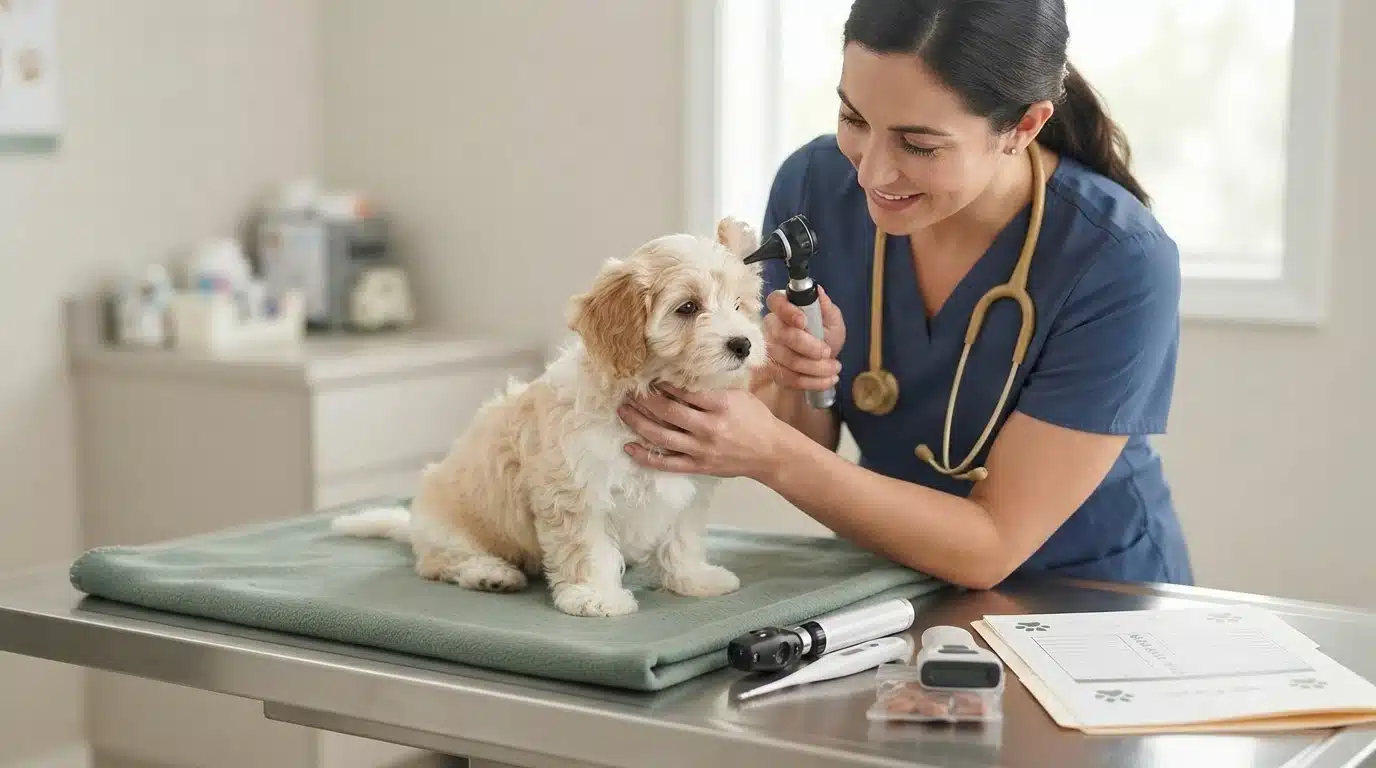
- Health testing and vet care. Parent DNA panels, hip and eye exams, deworming, first vaccines and the puppy check all add up before a puppy goes home.
- The breeding program itself. Small programs raise fewer litters per year, so each litter carries more of the kennel’s cost. High-volume sellers spread costs thinner, and the price often shows it.
- Coat, color and size. Rarer colors or smaller, in-demand sizes carry a premium in most Utah programs.
- Demand and timing. Holiday seasons and waitlist length shift what a breeder charges, litter to litter.

What a Price Does Not Tell You
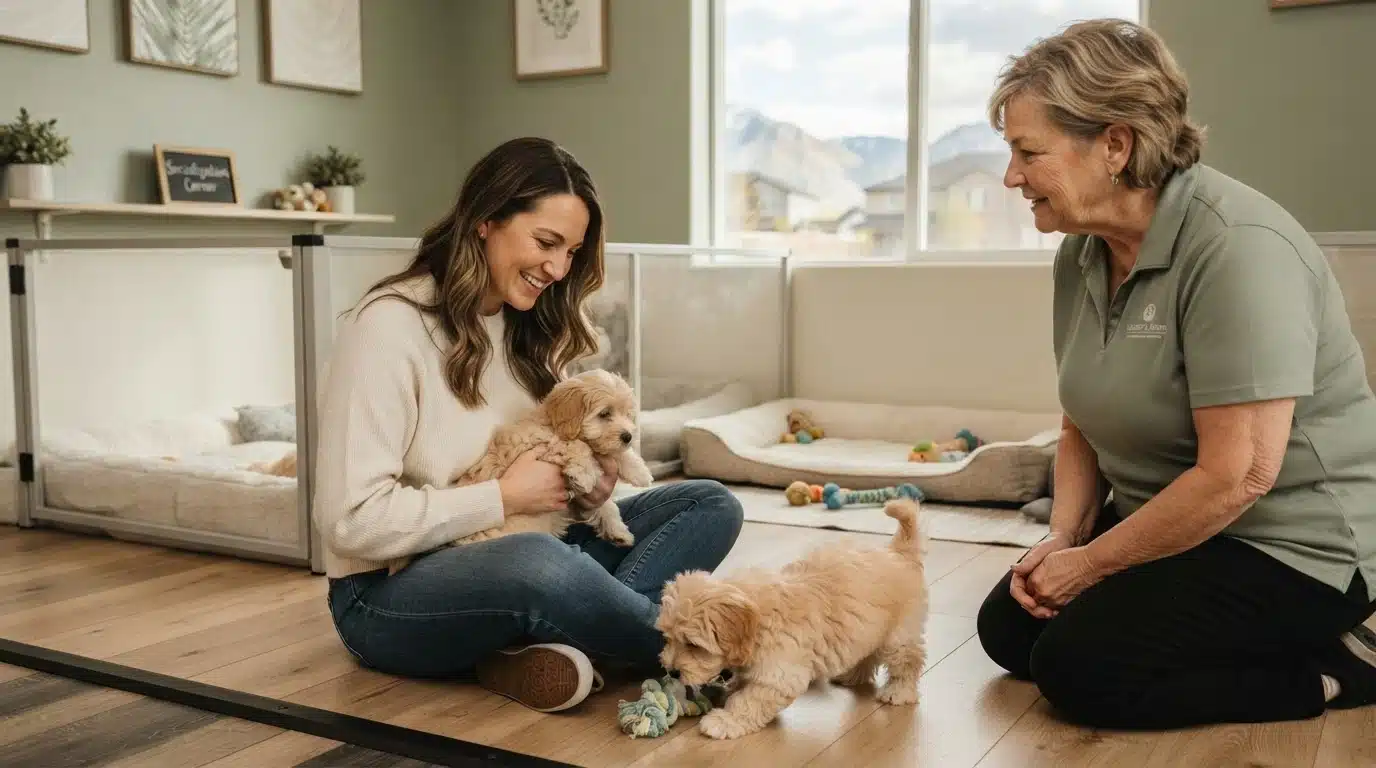
A number alone hides the questions that matter. It says nothing about whether parents were health tested, whether puppies are raised in the home, or what socialization actually looks like day to day. It also says nothing about what happens after pickup: support, contract terms, and how a breeder handles a health concern at week six.
That is why puppy prices in Utah are best compared alongside a written set of questions, not side by side in a search result. Our guide to red flags and green flags covers what to ask before you compare a single quote.
Sage Puppies Pricing, Stated Plainly
Sage Puppies lists its range openly: $3,500 to $4,500, with details on our pricing and reservation page. Ask any breeder to state theirs as plainly.
What Buyers Are Comparing When They Compare Utah Prices
Two quotes rarely differ for one reason. Usually three factors move the number: the breed mix, the puppy’s coat, and how much health testing sits behind the litter. Here is how each one works.
Purebred Havanese Versus Havapoo and Cavapoo Pricing
Purebred Havanese puppies usually cost more than Havapoos or Cavapoos, and the gap is not arbitrary. A Havanese breeding dog is a pedigree investment. The dam often comes from established lines, and litters are small, so fewer puppies spread the same cost. Doodle litters tend to be larger, which lowers the per-puppy price a breeder needs.
That said, a well-bred Cavapoo from fully tested parents can outprice a Havanese from an untested line. Breed mix sets the starting range, but testing and care decide where inside that range a puppy lands. When you compare quotes across the three breeds, compare the inputs first, then the totals.
Coat, Color and Coat Pattern as Price Factors
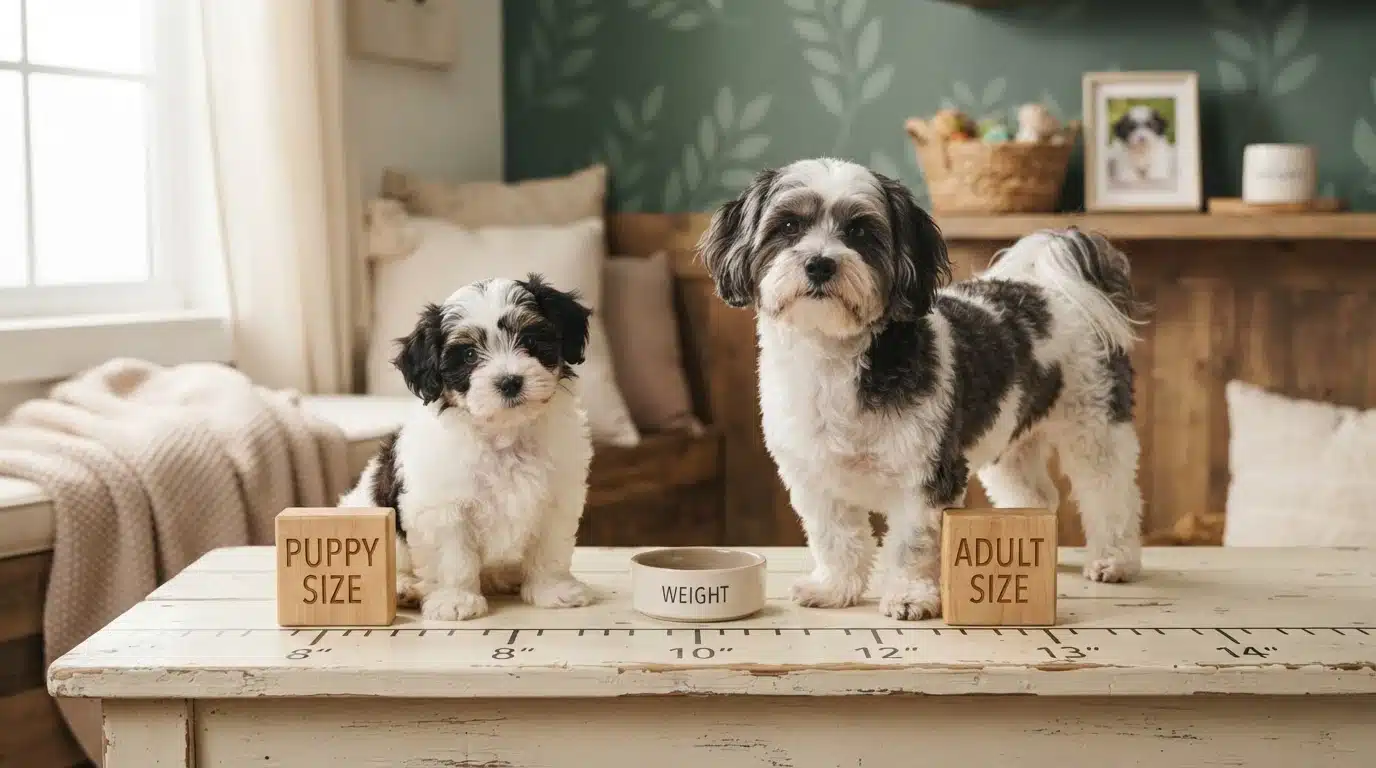
Breeders often price within a litter by appearance. Rare colors, parti patterns and certain coat textures can carry a premium because demand for them runs high. A straighter coat or a common solid color may sit at the lower end of the same litter’s range.
Appearance is the weakest reason to pay more. Coat color predicts nothing about health or temperament.
It does predict grooming, though. A Havanese has a double coat, and dense or curly doodle coats mat faster than wavy ones, so a premium coat often means a bigger grooming budget later. Pay for the look only if you also want the upkeep that comes with it.
Why Testing Scope Changes the Number
Health testing is where honest quotes split widest. The Orthopedic Foundation for Animals runs the CHIC program, which sets breed-specific screening standards, and the Havanese Club of America lists what it expects: annual eye exams, hip x-rays and patella certification. Each parent test costs real money, and a breeder who runs the full panel prices it in.
A lower quote sometimes means fewer tests, not lower margins. Ask which tests each parent completed and whether results are public, then weigh that answer against the price. A checklist of questions for any breeder makes those answers easy to compare side by side.
Deposits, Delivery and Guardian Arrangements
The puppy’s price is rarely the whole number you pay. Deposits, transport and any co-ownership terms change the final math, and breeders handle each one differently. Ask about all three before you compare quotes.
What a Deposit Does and Does Not Secure
A deposit holds a place, not always a specific puppy. Many breeders use a list: your deposit reserves a pick position in a coming litter, and you choose from the available puppies in order. Others take a deposit on a puppy already born. Know which system you’re buying into before you pay.
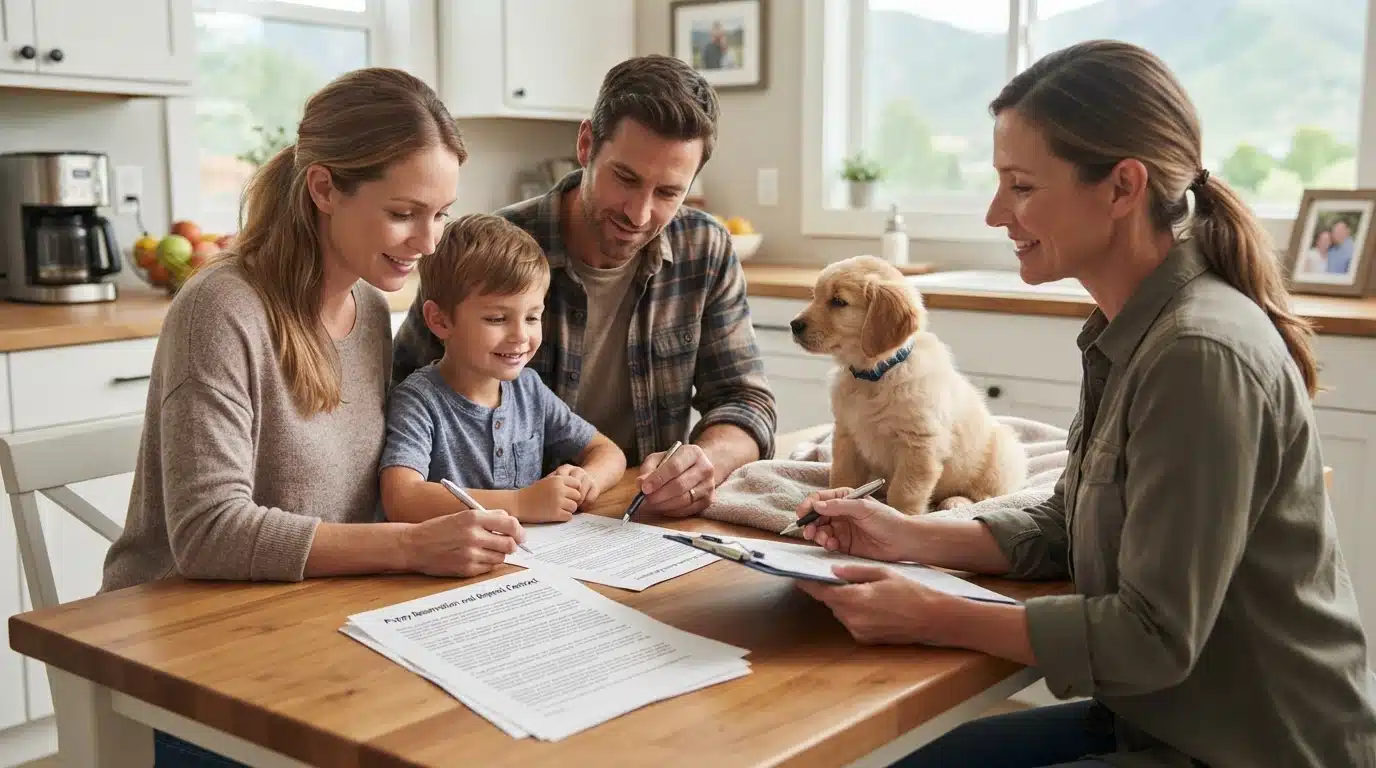
Also ask whether the deposit is refundable, transferable to a later litter, or applied to the final balance. Get the answer in writing. A non-refundable deposit is normal in this industry, but surprise terms after you’ve paid are not. Any breeder you’d want to work with, including smaller programs where you apply first and are matched after review, will spell these terms out plainly on the application or pricing page.
Why Delivery Is Quoted Separately
The $3,500 to $4,500 range at Sage Puppies covers the puppy, not the ride to your door. Delivery is quoted separately because costs vary widely by distance and method. Options usually include local pickup in Utah, ground transport with a driver, or a flight nanny who carries the puppy in the cabin.
Flight nannies typically cost more than ground transport, and both depend on fuel, season and routing. Because these prices move around, a fixed delivery number quoted months ahead can be stale. Ask for a current quote tied to your city, and confirm who carries insurance and what happens if a flight is canceled. Then add that figure to your budget as its own line.
Guardian and Co-Ownership Pricing
Some breeders offer guardian or co-ownership homes, where a puppy is priced lower because you agree to specific terms, such as breeding rights, showing duties or shared ownership. These deals can be fair, but read the contract closely. Lower cost often means lasting obligations, so make sure you want the commitment, not just the discount.
A quote is only useful when you know what sits inside it. Before you pay anything, put the breeder on the same page with five plain questions.
Five Questions to Ask Before You Pay
- What does the total include? Ask about vaccinations, deworming, microchip, spay or neuter terms, and a starter kit.
- What does it exclude? Delivery, crates, and food often show up later as separate charges.
- What health testing sits behind this price? Ask which parent dogs were screened and for what conditions.
- What happens if the puppy gets sick in the first weeks? Get the return or support terms in writing, not verbally.
- What is the deposit, and is it refundable? A number means little until you know what it locks in.

Ask all five of every breeder you contact. The answers, not the sticker, tell you which quote is real.
Signs the Price Is Doing the Persuading
Watch for quotes that feel engineered to close you fast. A price dramatically under the Utah range usually means skipped health testing, minimal vet care, or a high-volume operation. Pressure tactics are another flag: “two other families are looking” paired with a discount if you pay today. A trustworthy breeder quotes one number and explains it. Vague answers to the five questions above matter more than a low figure ever will.
Comparing Two Quotes on the Same Terms
Put both quotes in a simple table. List the puppy price, inclusions, exclusions, health testing, and deposit terms side by side. Once the line items match, the honest comparison appears on its own.
Planning the Full Budget, Not Just the Price
The puppy price is the number you negotiate. The budget is the number you live with. A $3,800 puppy becomes a four-figure commitment every year after pickup, so it helps to see both sides on one page. The AKC pegs one-time setup costs, such as a crate, spay or neuter surgery and starter gear, at about $2,100, with annual costs averaging another $2,500, according to AKC cost data.
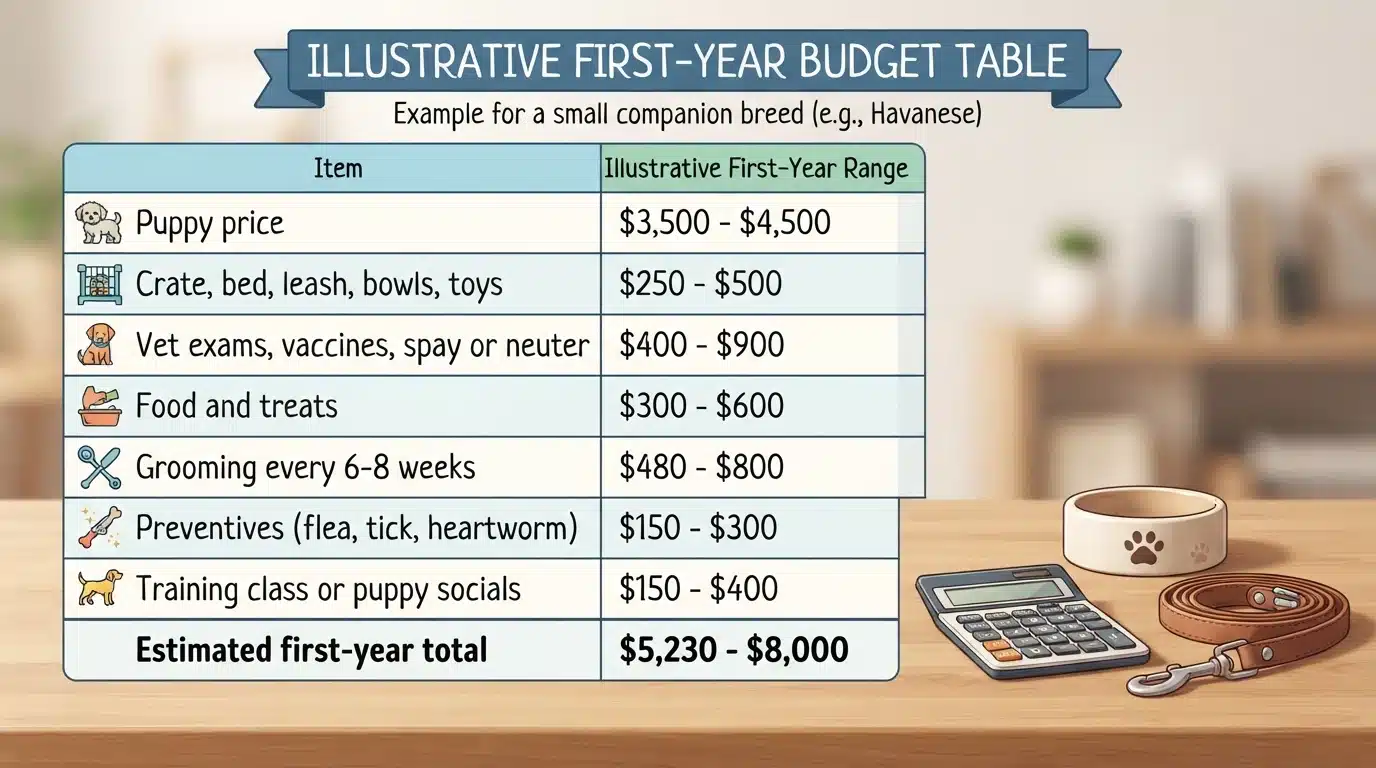
Illustrative First-Year Budget Table
This is a labeled example for a small companion breed like a Havanese or Havapoo, not a quote or a market average. Your actual totals will move with your vet, your city and your choices.
| Item | Illustrative First-Year Range |
|---|---|
| Puppy price | $3,500 – $4,500 |
| Crate, bed, leash, bowls, toys | $250 – $500 |
| Vet exams, vaccines, spay or neuter | $400 – $900 |
| Food and treats | $300 – $600 |
| Grooming every 6-8 weeks | $480 – $800 |
| Preventives (flea, tick, heartworm) | $150 – $300 |
| Training class or puppy socials | $150 – $400 |
| Estimated first-year total | $5,230 – $8,000 |
Recurring Costs People Underestimate
Two line items surprise new owners most. The first is grooming. Havanese and doodle coats grow continuously, so skipping a session turns a $75 appointment into a $150 shave-down. Our Cavapoo grooming schedule for first-time owners shows how often that cycle runs.
The second is preventive care. Pet insurance averaged $676 per year for dogs in recent industry statistics, and even one surprise ER visit can dwarf a year of premiums. Budget monthly, not per event, and the price you paid for the puppy will stay in proportion.
Questions to Ask a Utah Breeder About Price, in Writing
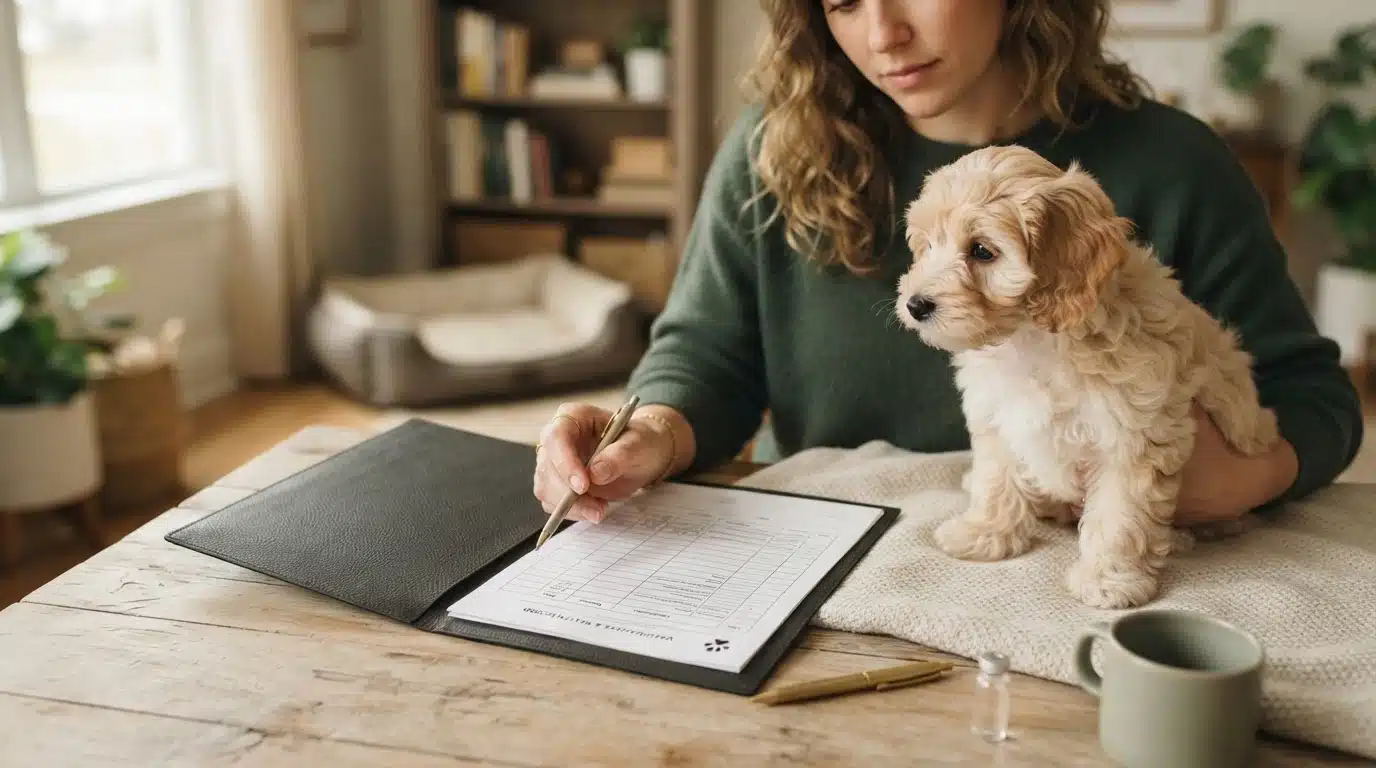
Verbal answers fade. A written reply gives you something to compare across breeders and something to hold later if the number changes. Send the same list to every breeder you are considering so each quote lands on identical terms.
A Written Sequence That Protects the Buyer
Ask these in order, and ask for answers by email or text:
- What is the total price for this specific puppy, and what does it include?
- Is the deposit refundable or transferable, and under what conditions?
- When is the balance due, and does the quoted price change before pickup?
- What health testing and vet care are covered, and will I get the records in writing?
- What is your contract’s return or rehome policy?
- If delivery is involved, what does it cost separately?
A breeder who answers clearly is showing you how they work. The pricing and reservation page at Sage Puppies models this: the range is published first, then the details. Hesitant or shifting answers tell you to keep looking.
Where to Review Current Pricing and Puppies
Before you send anything, check what a breeder already publishes. A posted price range, deposit terms and current litter list let you do most of this comparison without a single email. Review the current puppies and compare them against the published range. If a price only appears after you ask twice, treat that as data.

Want a quote you can judge on its own terms? Sage Puppies lists its $3,500 to $4,500 range openly, with what it covers and what it doesn’t. See the details on Sage Puppies, then visit the pricing and reservation page to compare written answers, not guesses.
Frequently Asked Questions
Q1: How are prices set for puppies for sale in Utah?
Breeders weigh four inputs: parent health testing, program size, coat and color, and demand. Small home-based programs carry higher per-puppy costs than high-volume sellers, which shows in the quote.
Q2: What does a typical Utah puppy price include?
Usually first vaccines, deworming, a vet check, and sometimes a microchip. Delivery, crates and food are often excluded, so confirm every line in writing.
Q3: Why do Havanese cost more than Havapoos or Cavapoos?
Pedigree investment and smaller litters. Fewer puppies carry the dam’s cost, while larger doodle litters lower the per-puppy price a breeder needs.
Q4: Are deposits refundable?
Often not, though some transfer to a later litter. Get the terms in writing before paying anything.
Q5: Is delivery included in the price?
No. Pickup, ground transport and flight nannies are quoted separately because costs shift with fuel, season and routing.
Q6: Why is one puppy in a litter priced higher?
Coat color, markings and size often carry premiums. Appearance predicts nothing about health or temperament, so weigh grooming upkeep before paying more.
Conclusion
Puppy prices in Utah make sense once you see their parts: health testing, program size, coat and color, and demand. Two honest quotes can still differ by thousands because those inputs differ, so compare the answers behind each number instead of the totals alone.
Ask every breeder the same written questions about inclusions, deposit terms, health records and delivery. Then judge a price against a full first-year budget, which for a small breed usually runs well past the puppy’s price.
Sage Puppies lists its $3,500 to $4,500 range with its inclusions published alongside. Whatever program you choose, the best deal is the quote you can read line by line.