Quick Summary: Utah puppy deposits and contracts only protect buyers who read the paperwork before paying. The guide walks through the money clauses first (deposit amount, balance due date, and whether refunds, credits, or transfers apply), then the health guarantee (typically one to three years of genetic coverage tied to a 48-72 hour vet exam), and finally behavioral terms like spay or neuter deadlines and return-to-breeder rules. It also flags red flags such as vague refund language, sweeping 100% guarantees, and breeders who resist putting terms in writing. Sage Puppies, a small South Jordan program founded in 2025, is highlighted as a transparent example that shares its contract and pricing up front.
A Utah breeder emails you at 9 p.m. with an invoice and a one-page contract. The deposit is due Friday. Reading this page first is the cheapest insurance in the whole process.
Most buyers skim both documents, wire the money, and hope. That works until it doesn’t: a missed health clause, a vague refund rule, or a delivery promise nobody wrote down can cost you thousands. A Utah puppy deposit and contract should spell out exactly what you are paying for and what happens when plans change.
This guide walks you through a Utah puppy deposit and contract clause by clause, from the money terms to the health section to pickup and delivery language. You will see what a fair agreement includes, which questions to ask before you sign, and how Utah consumer rules apply. Sage Puppies, a small South Jordan program founded in 2025, writes from the breeder side so you know what buyers should expect.
Step 1: Ask for the Written Agreement Before You Send Money
Your Utah puppy deposit and contract should exist before any money moves. Text promises are easy to make and easy to deny later, so ask a breeder to email or text the actual paperwork before you pay. A confident breeder sends it the same day. Hesitation, vague answers or “we don’t really use contracts” are signals worth slowing down for, not rushing past.

The Four Documents to Request in One Message
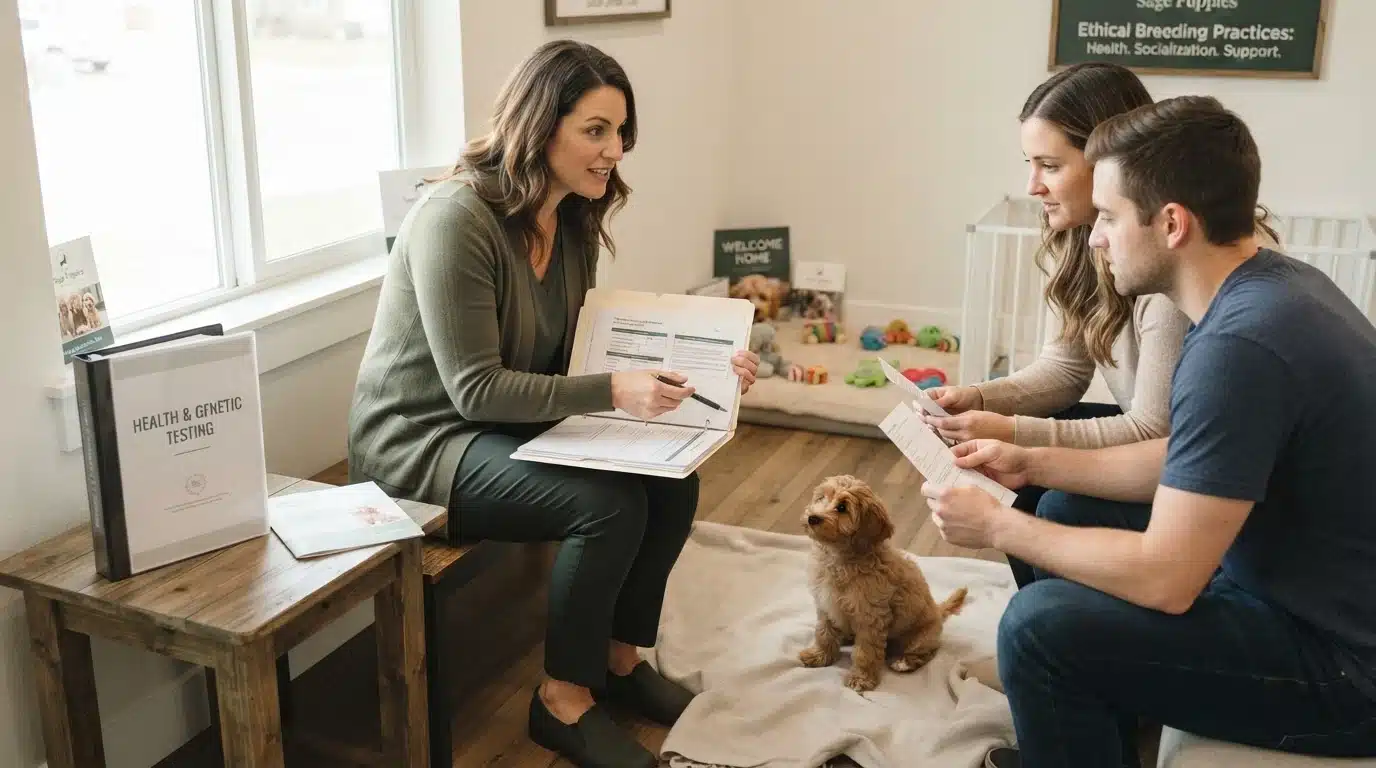
Send a single, polite message and ask for four things. First, the written deposit terms: the amount, what it reserves, and whether it is refundable or applies to the price. Second, the full purchase contract, including health terms and any spay or neuter clause. Third, proof of the parents’ health testing you can verify yourself. Fourth, a receipt template or invoice showing the breeder’s legal name and payment method. One message keeps the request simple and gives you a paper trail. If the breeder sends only screenshots, ask for a complete, dated document instead. A clear written Utah puppy deposit and contract protects both sides, so a good breeder will not treat this as a nuisance.
What the Reservation Should Identify in Writing
The reservation part of the Utah puppy deposit and contract should name specifics, not just “a puppy from an upcoming litter.” Look for the breed, the litter or pairing, the price, the deposit amount, and how the deposit is applied. It should also state when you pick your puppy, the pickup or delivery window, and what happens if the litter is smaller than expected or a pregnancy fails. Read the refund terms twice. “Non-refundable” is normal, but the document should say exactly when and how any money comes back to you.
Why the Order Matters
Ask for documents first, then pay, then sign. Reversing that order hands over your leverage. Once a deposit clears, some sellers stop answering questions, and disputes get much harder to prove. Every reputable breeder contract template puts the deposit amount and purchase terms in writing for this exact reason. Signing after you have read, questioned and kept a copy of everything is what makes the deal enforceable.
Step 2: Read the Money Clauses First
Before health sections and spay clauses, find every dollar figure in the contract. Money terms cause the most disputes because buyers skim them while the puppy is in front of them. Locate three things: the deposit amount, the total balance, and the due date for that balance. A trustworthy contract states all three in plain numbers.
Deposit Amount, Balance, and What Triggers Each Outcome
Good contracts name what the deposit actually buys. Does it hold a specific puppy, a spot in a litter, or a place in the general waitlist? Each answer changes your risk. A puppy-specific deposit usually means the puppy is held for you; a waitlist spot may not. Note the balance due date too, and what happens if you pay late. Some breeders forfeit the deposit after a missed deadline, so put that date on your calendar the day you sign.
Refund, Credit, and Transfer Compared
These three words are not interchangeable, and contracts use them on purpose.
| Term | What It Means | Buyer Risk |
|---|---|---|
| Refund | Money returns to you | Lowest risk |
| Credit | Money applies to a future litter or puppy | Tied to that breeder |
| Transfer | Deposit moves to another litter or buyer | Timing may be out of your hands |
A “non-refundable deposit” is still fair if the contract explains what you get for it, such as a guaranteed spot in a later litter. Ambiguity is the problem. Ask the breeder to define each term in writing before you pay, and compare their wording against published terms like the Sage Puppies pricing and reservation page so you know what clear language looks like.
Litter or Timing Shortfalls
Ask what happens when the breeders’ plans slip. If a litter is born smaller than expected, or a planned breeding does not take, your wait gets longer. A fair contract offers a choice: wait for the next litter, move your deposit, or get your money back. If the contract only says “deposit transfers to next available litter,” ask how many litters that could involve and how long their typical gap runs between litters. Get the answer in writing.
Comparing Terms Across Utah Breeders
Request deposit terms from two or three Utah breeders before you commit anywhere. Most will email a sample contract or a summary. Line the documents up side by side and compare four rows: deposit amount, refund rules, credit rules, and timing guarantees. Differences of a few hundred dollars matter less than differences in what you can get back. Our Utah buyer red flags guide covers which terms should make you walk away. A breeder who hesitates to put refund rules in writing has already told you something.
Step 3: Check the Health Guarantee Clause Carefully
A health guarantee is a promise in writing about what happens if your puppy gets sick. It is not a promise that nothing will go wrong. Read the clause line by line, because the details decide whether you have real protection or a page of fine print.
Three Different Things Buyers Confuse
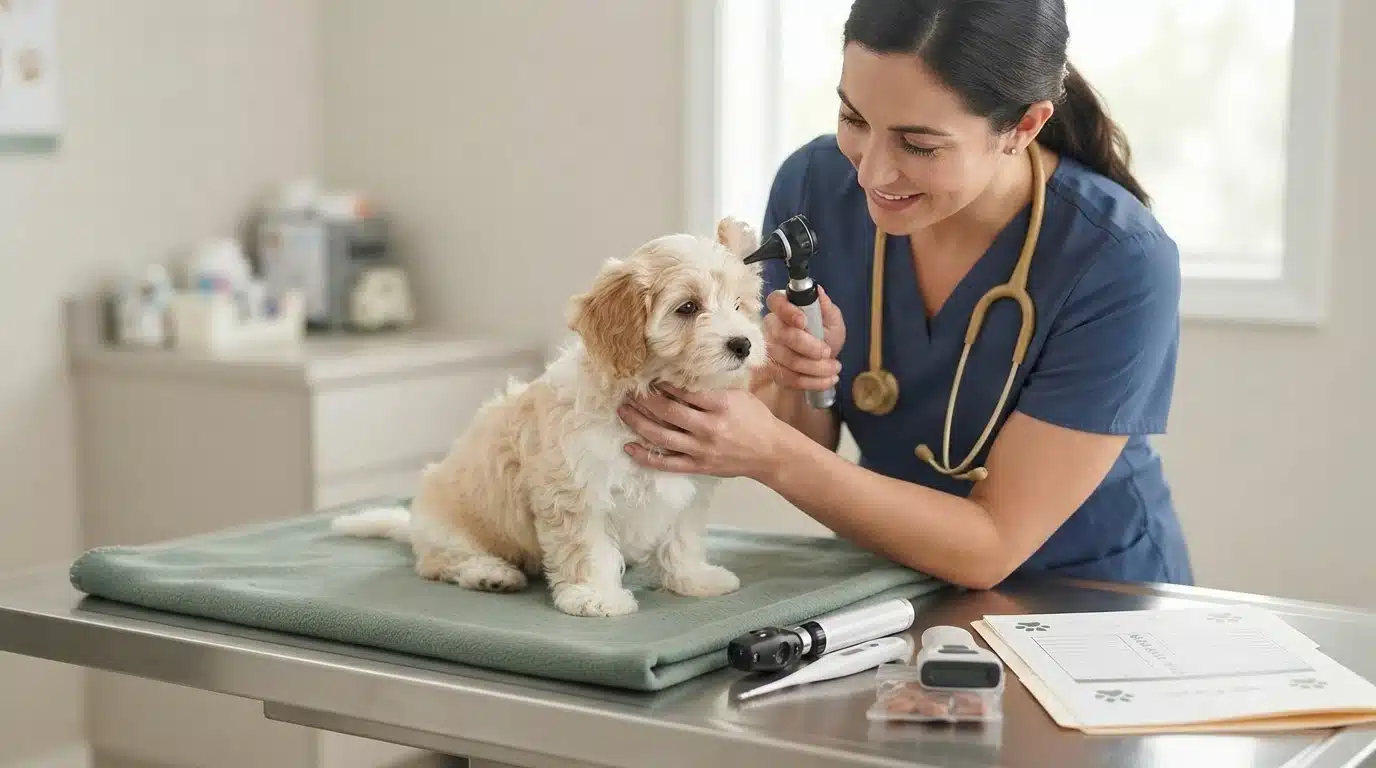
Buyers often mix up three separate terms. A health guarantee covers genetic or congenital conditions, usually for one to three years. A warranty on vet exam timing protects the breeder if the puppy was sick at pickup. A return policy is about your change of heart, not the puppy’s health. Ask which one the contract actually offers, because many guarantee clauses in practice mostly spell out timing rules; breeders commonly require a licensed vet exam within 48 to 72 hours, per the standard contract terms.
The Conditions Attached to Any Guarantee
Nearly every guarantee comes with strings. The most common one is an initial vet exam within a set window, often 48 to 72 hours, which one sample contract confirms: the buyer must have the puppy examined within 72 business hours or coverage can lapse. You may also need to keep up with vaccines and deworming, feed an approved diet, and send written notice of a claim within a deadline. Miss one condition and the whole clause may be void, so calendar every date the day you sign. A clear health guarantee spells these conditions out before you commit.
What Usually Excludes a Claim
Most guarantees exclude treatable or routine problems. Expect clauses for parasites like giardia or coccidia, kennel cough, hypoglycemia in small breeds, and injuries after pickup. Vet bills are rarely reimbursed, and many guarantees only offer a replacement puppy or a partial refund. If the remedy listed is unclear, ask the breeder to define it in writing.
Why No Guarantee Should Ever Be Absolute
A “100% guarantee” against anything is a warning sign, not a comfort. Health depends on genetics, environment, and care the breeder cannot control once the puppy leaves. Honest programs, including ours, keep guarantees specific and limited. A short, precise clause beats a sweeping promise you could never enforce in a dispute.
Step 4: Review the Behavioral and Household Clauses
The health pages get all the attention, but the behavioral and household clauses shape daily life with your puppy. These sections cover spay or neuter timing, what happens if you ever cannot keep the dog, registration limits, and sometimes lifestyle rules. Read each one as a question: can our family actually live with this term for the next 12 to 15 years?

Spay and Neuter Timing
Most pet-puppy contracts require spaying or neutering, and AKC’s contract overview confirms this is standard for pet-quality dogs. Watch the deadline. Some breeders want proof by six months, others allow 12 to 18 months so growth plates close first. For small breeds like Havanese and doodles, ask your vet which timing fits the puppy. If the contract date conflicts with your vet’s advice, get the disagreement in writing before you sign.
Return-to-Breeder and Notification Clauses
Many contracts require you to return the dog to the breeder if you cannot keep it, rather than rehome or surrender it. Legal commentators note these clauses aim to keep dogs out of shelters. Check who pays return shipping, whether any refund applies, and how much notice you owe. Some contracts also restrict resale, so a family emergency needs a call, not a classified ad.
Registration, Names, and Breeding Restrictions
Pet puppies usually come with limited registration, which blocks offspring from registration. Contracts often ban breeding outright and attach penalties, sometimes monetary, if you breed anyway. You may also need to keep the breeder’s chosen prefix in the dog’s registered name. Ask what happens if you ever want full registration; some breeders grant it for a fee, others never.
Reporting and Lifestyle Clauses
Expect clauses about keeping the dog as a household pet, providing vet care, and sometimes sending periodic updates or photos. A few contracts add indoor-only requirements or weight expectations. These read as trust-building, but they are still promises. Only agree to terms you know you will meet.
Step 5: Confirm Pickup, Delivery, and Payment Logistics
A signed contract means little if you don’t know where the handoff happens or how the final payment clears. Get these details in writing before you send anything.
Pickup Site and Appointment Mechanics
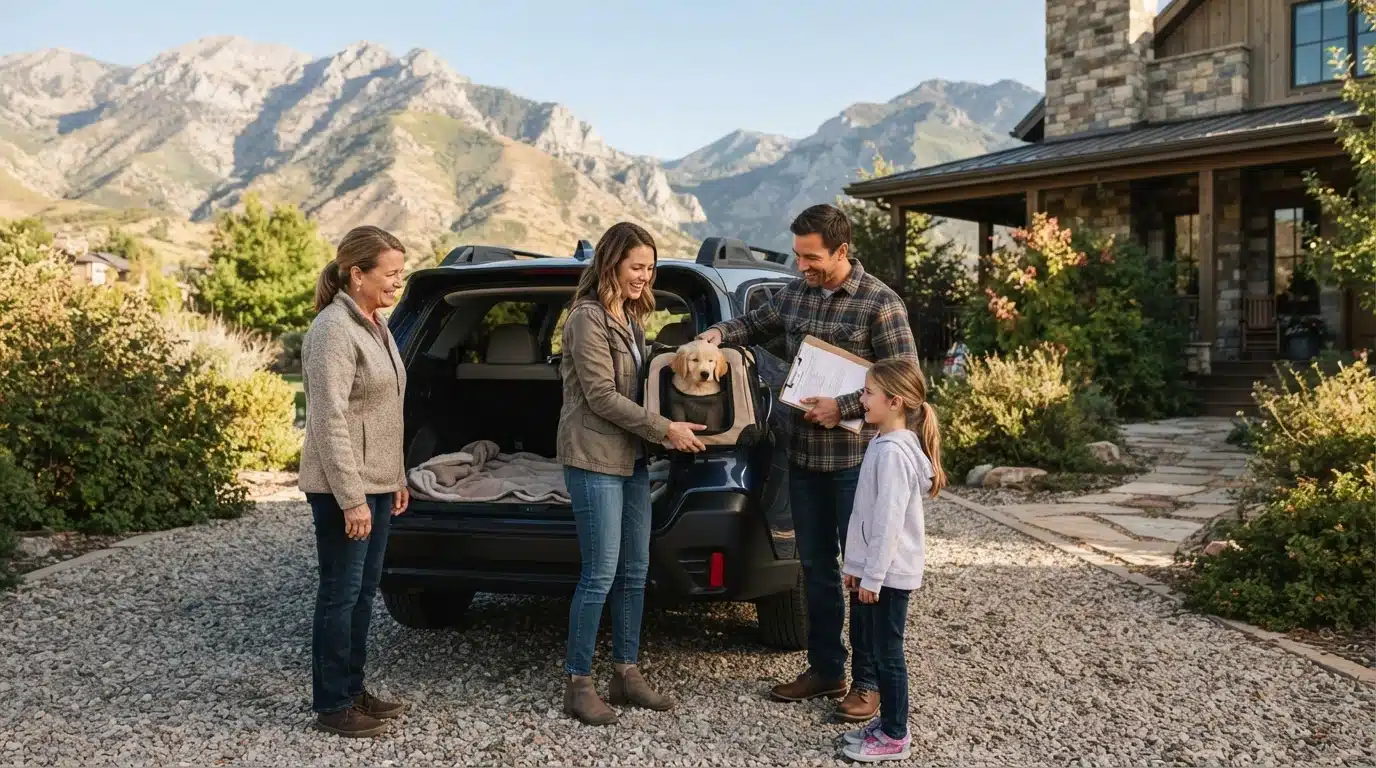
Ask whether you pick up at the breeder’s home, a neutral meeting spot, or an airport. Utah families can usually drive to the breeder directly. Confirm who sets the appointment, how flexible the date is if your puppy’s readiness shifts, and what happens if you need to reschedule. Put the agreed date and location in the contract.
Delivery and Its Separate Costs
Out-of-state families should ask exactly how the puppy travels. Options include a flight nanny who carries the puppy in the cabin, air cargo, or ground transport, and each carries its own fee. Ask who pays the travel cost, whether it appears in the contract or a separate invoice, and who holds risk while the puppy is in transit. A breeder who quotes travel as a flat add-on is easier to budget for than one who leaves it vague.
Payment Method and Final Paperwork
Most programs take a deposit first and the balance at pickup, often by cash, Zelle, or another transfer app. Ask which methods the breeder accepts and whether a card fee applies. At handoff, you should leave with the signed contract, vaccination and deworming records, vet exam notes, and registration or microchip paperwork. Photograph or scan everything before you drive away.
Step 6: Know What You Can Do If Something Goes Wrong
Start With the Document and a Calm Conversation
Most disputes end at this first step. Reread the contract, note the exact clause in question, and write down dates and facts before you contact the breeder. Then email or call with a plain summary of what happened and what the contract says. Breeders who put terms in writing usually honor them, because their reputation depends on how they handle problems.
When a Professional or Legal Reading Helps
Call in outside help when the conversation stalls. A vet can document a health issue with records and dates, which matters more than any opinion. If money is significant and the breeder stops responding, a Utah consumer protection attorney can review the contract for an hour at modest cost. For outright fraud, the Utah Division of Consumer Protection accepts complaints, and that paper trail helps other families too.
What No Contract Can Fix
A contract is a tool for defined events, like a documented genetic condition found in the first year. It cannot undo heartbreak, cover every vet bill, or guarantee a puppy’s temperament. That is why the reading happens before you sign, not after. Ask breeders like Sage Puppies how they handle each scenario, then judge whether the answers sit well with you.
Common Questions to Ask Before You Pay
A good breeder welcomes questions. A vague or defensive answer tells you as much as the contract itself, so ask these before any money moves.
Deposit and Timing Questions
Ask how much the deposit is, whether it applies to the full price, and if any part is refundable. Find out when your puppy can come home, what happens if the litter is smaller than expected, and how pick order is decided.
Health and Record Questions
Ask which health tests the parents passed, and request proof in writing. Confirm the puppy’s vaccination and deworming schedule, and whether the vet exam window in the contract is 48 or 72 hours. Ask what records you’ll receive on pickup day.
Terms and Behavior Questions
Ask what the contract says about spay or neuter deadlines, and whether it allows six months or longer. Clarify any training, socialization, or rehoming clauses. Ask who pays if a health issue appears, and how returns actually work.
Serious programs, Sage Puppies included, answer these in writing before you pay.

Before you send a deposit, read the contract like your family will live with it, because you will. If a transparent process sounds right, Sage Puppies shares its terms up front. Visit our pricing and reservation page, or start the application and ask Cassie any question first. Wisely Bred. Beautifully Loved.
Frequently Asked Questions
Q1: What should Utah puppy breeder deposits and contracts include?
The deposit amount, what it reserves, refund or credit rules, the balance due date, health guarantee terms, spay or neuter timing, and pickup or delivery details in writing.
Q2: Are puppy deposits refundable in Utah?
Often no, but a fair contract explains exactly when money returns, converts to credit, or transfers to a later litter. Ambiguous wording is the real problem.
Q3: What health guarantee window is normal?
Genetic condition coverage typically runs one to three years, usually conditioned on a licensed vet exam within 48 to 72 hours of pickup.
Q4: Do deposits apply toward the full price?
Usually yes, but confirm in writing whether the deposit holds a specific puppy or only a general waitlist spot.
Q5: What happens if the litter is smaller than expected?
A fair contract offers choices: wait for the next litter, transfer your deposit, or receive a refund. Get the answer written down.
Q6: How do out-of-state deliveries work?
Common options include a cabin flight nanny, air cargo, or ground transport, each with separate fees. Ask who holds risk during travel.
Conclusion
Reading the contract before money moves is the whole game. Get the deposit terms, the full purchase agreement, and proof of parental health testing in writing first. Then work through the money clauses: what the deposit reserves, when the balance is due, and whether refund, credit, or transfer rules apply. Read the health guarantee for its conditions and exclusions, not just its headline promise. Check spay or neuter deadlines, return-to-breeder terms, and delivery costs against your real life. Finally, calendar every deadline and keep a copy of everything you sign. A specific, limited contract from a breeder who answers questions in writing is worth far more than a sweeping verbal promise.