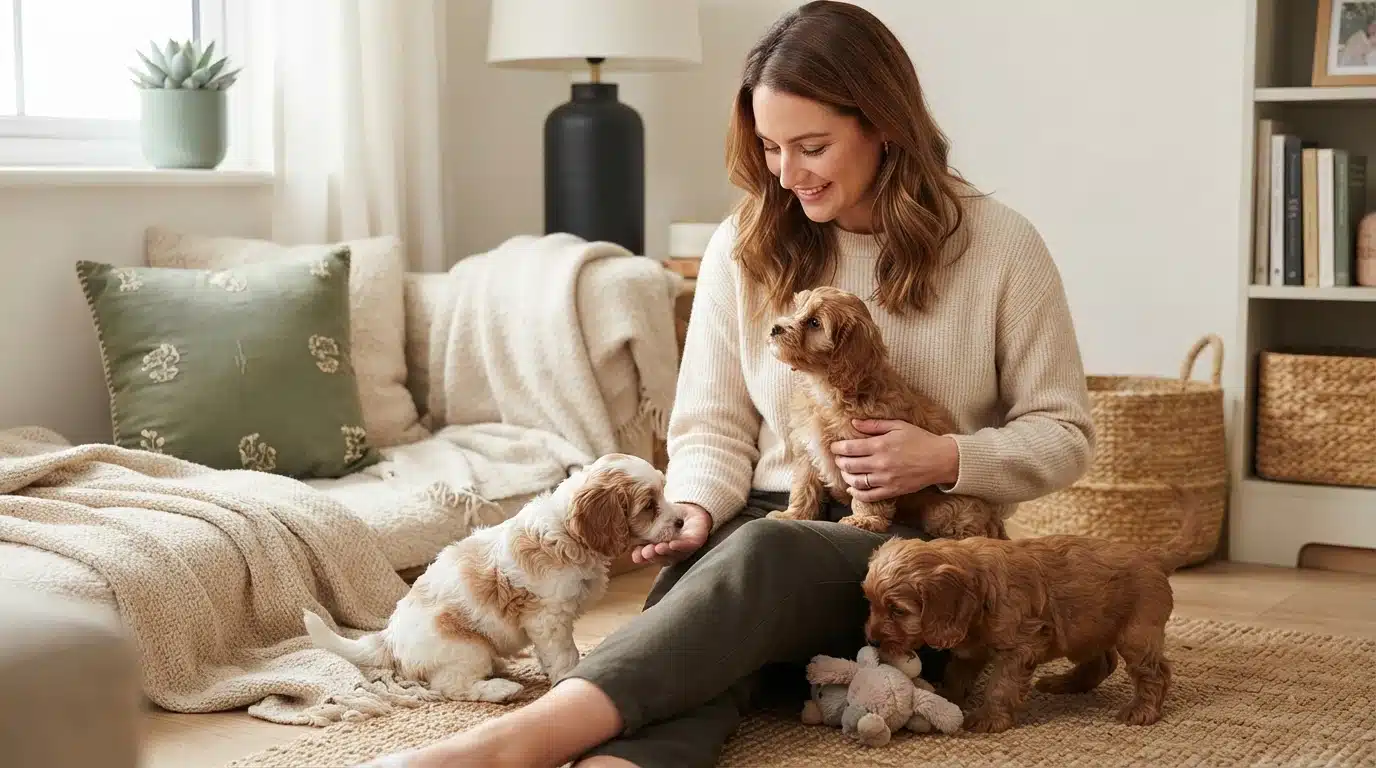
Quick Summary: Bringing home a Cavapoo is mostly about paperwork and routine, not cuddles. Know what health folder the breeder should hand over before pickup, feed the same food at the same times, and take a potty break every 30 to 45 minutes. Book the first vet visit that same week, keep the first 72 hours calm with minimal outings, and crate the puppy beside your bed so the noisy first nights pass quickly.
The paperwork hits harder than the puppy. Most families shopping Cavapoo puppies for sale picture the car ride and the first cuddle, then discover the most consequential thing on day one is a folder. Vaccination records, deworming dates, health test results from both parents, contract terms, and a phone number for the breeder’s vet all change hands while a small Cavalier and Poodle mix is already chewing the corner of her receiving blanket.
That folder is the problem this guide solves. If you know what should be in it before pickup, you can spot gaps on the spot instead of a week later.
Here, you will find what to expect hour by hour: the temperament quirks of a young Cavapoo, the documents a careful breeder hands over, and a clear line between what the breeder finished and what you still need to schedule.
At Sage Puppies in South Jordan, Utah, Cassie Milar’s program walks families through this handover for every litter, locally or by delivery. Keep reading before you browse Cavapoo puppies for sale, because the first three days shape the next thirteen years.
Before You Leave the Breeder: What Changes at the Handover
The pickup moment is where responsibility shifts. Until now, the breeder managed feeding, worming, vaccines and socialization. From the moment you take the leash, every appointment and decision belongs to you. A good handover makes that shift clear, so know what to collect, what to watch, and what to ask before you drive away.
The Folder You Should Be Handed
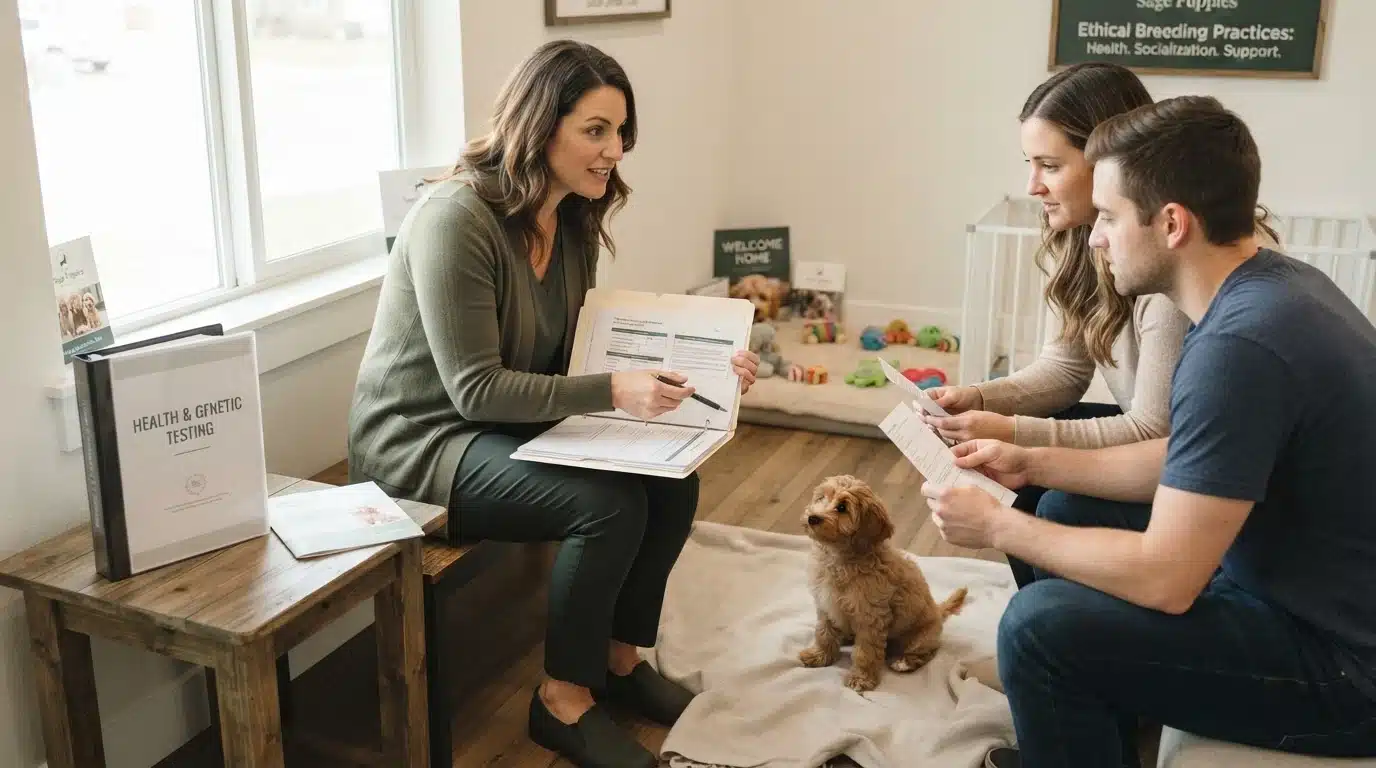
Ask for a complete health folder before you leave. It should include the vaccination record with dates and vaccine names, a deworming history, any vet exam notes, and the food the puppy currently eats so you can transition slowly. Reputable programs provide full documentation from a licensed veterinarian, with names, dates and details about the puppy’s health, so treat a vague or missing folder as a warning sign. Photograph every page with your phone as a backup. Keep the originals somewhere safe, because your vet will want the vaccine history at the first appointment, and some records matter later for licensing. Sage Puppies walks every family through this folder at pickup, so nothing gets lost between South Jordan and your kitchen table.
The Ten-Minute Routine Walkthrough
Before you load the puppy, ask the breeder to describe a normal day. You want specifics: which food, how much, how often, when the last meal was, and how the puppy signals it needs to go out. Ask what the puppy sleeps in and whether it has spent any nights alone. Note the exact potty cue words the puppy already knows, even simple ones like “go potty.” Write these down. Consistency for the first three days matters more than anything you buy, and the fewer surprises in the routine, the faster your puppy settles.
Questions Worth Asking in Person
Reserve your deepest questions for the visit, because tone and detail come through better in person. Ask when the next vaccine is due, what the breeder has noticed about this puppy’s personality, and what a health concern would look like at this age. Ask about the microchip registration too. A well-run pickup and handoff process should leave you able to answer most questions yourself, but you should never feel rushed out the door. If a breeder cannot explain the puppy’s routine clearly, that tells you something before you commit.
The First Few Hours at Home
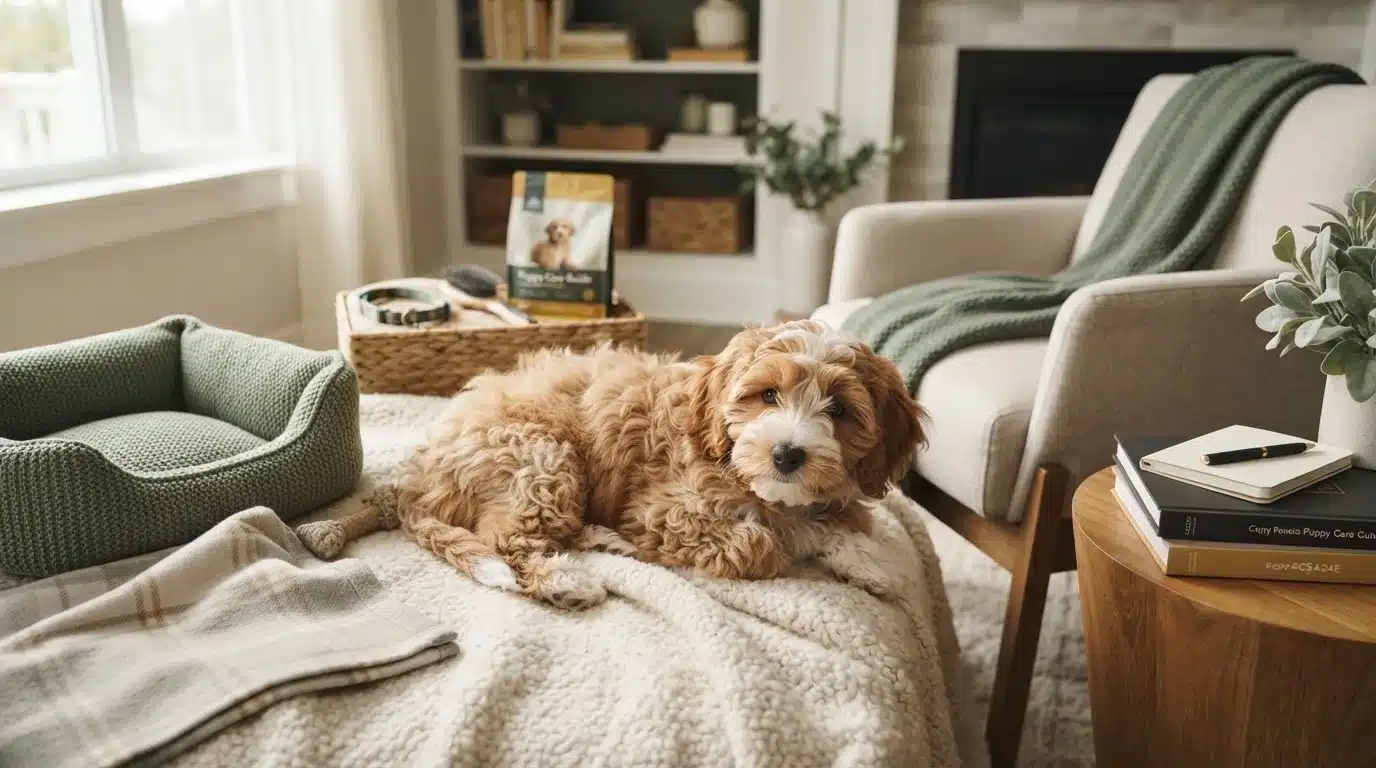
Your Cavapoo will be tired, a little wobbly, and taking in everything at once. Resist the urge to invite neighbors over. The goal for the first few hours is simple: keep the world small, keep the routine boring, and let your puppy learn that this strange new place is safe.
One Room, One Mat, One Puppy
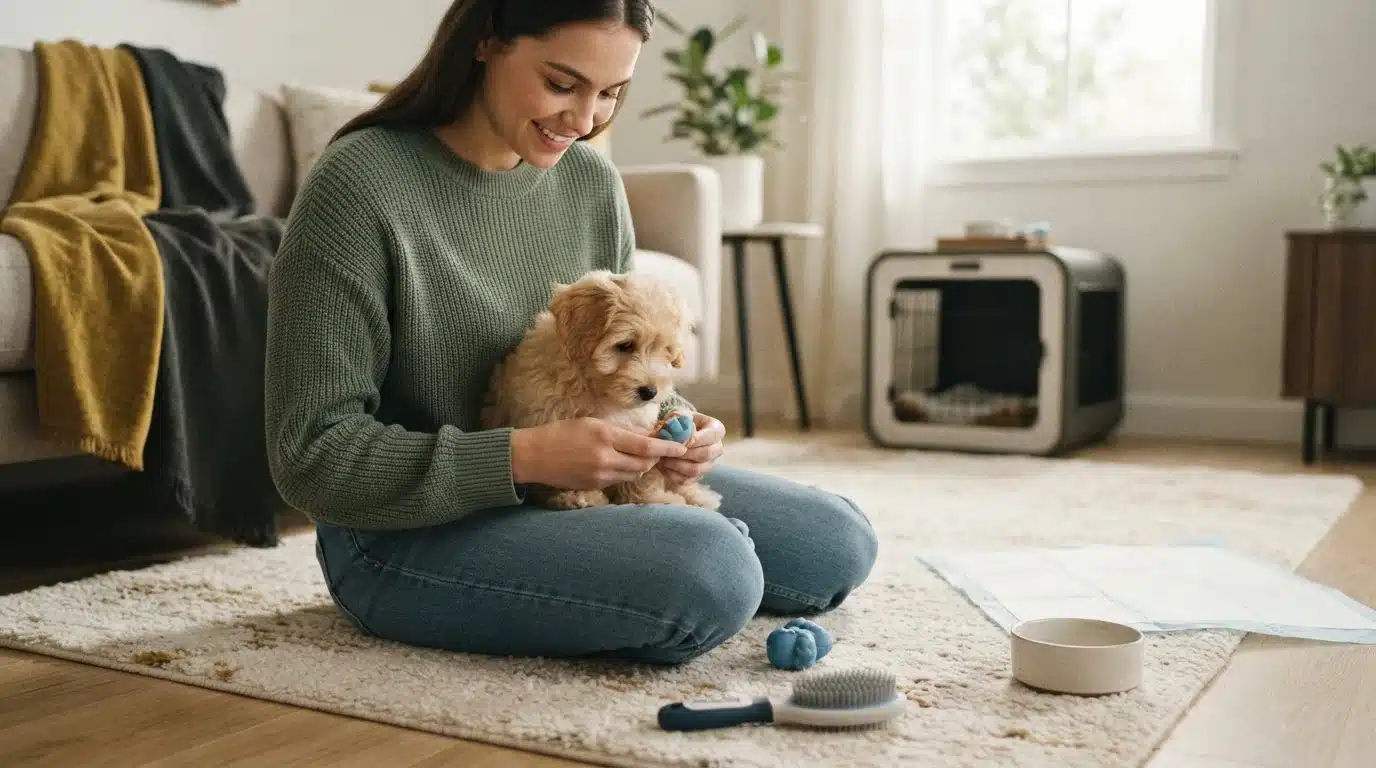
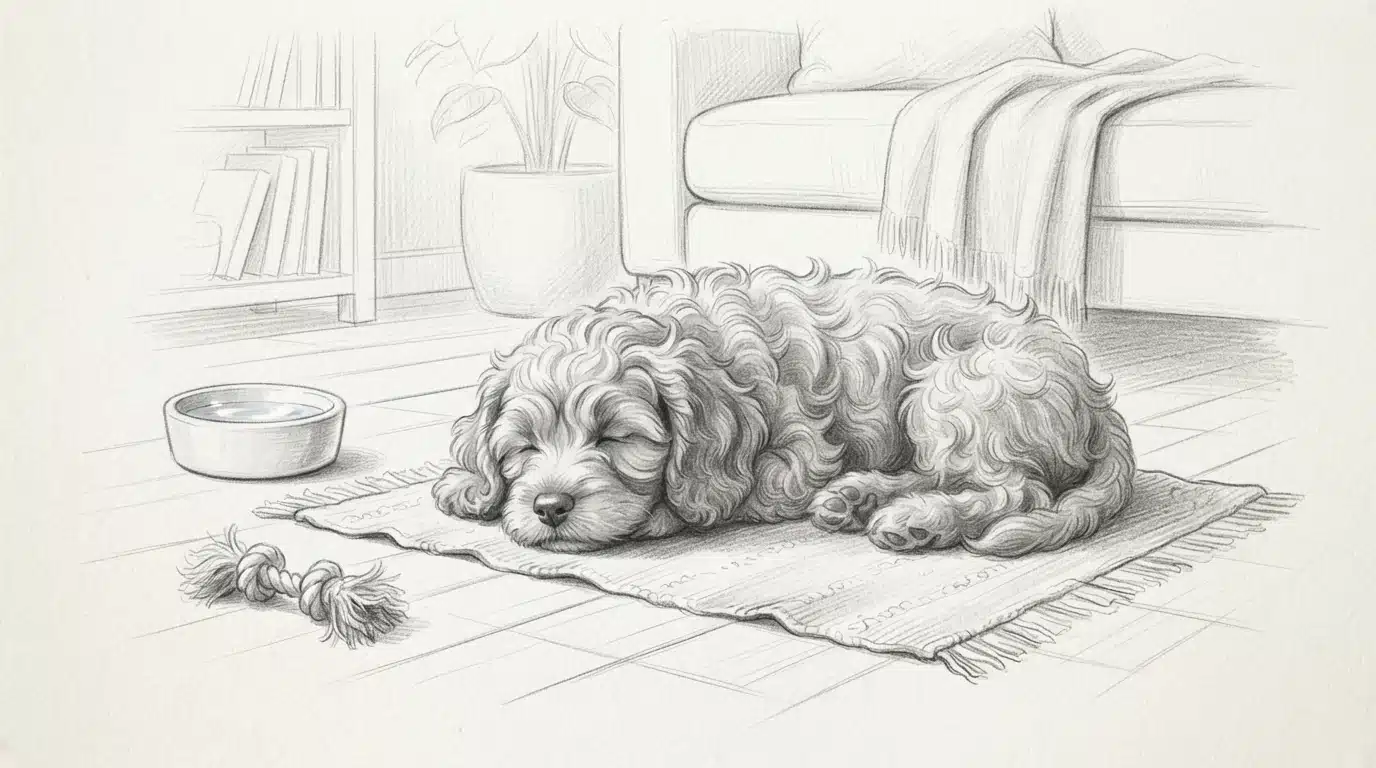
Pick one puppy-proofed room and stay in it. Set out a mat or bed, a water bowl, and a couple of chew toys. That is the whole setup. Kids should sit on the floor and let the puppy come to them, no chasing or squealing. Calm, structured first days help a puppy decompress after the car ride, and loose stools from stress are common, so a small space is easier to clean and easier to learn.
Potty First, Then Explore
Carry your puppy straight to the outdoor potty spot before anything else. Use the same cue word every time and reward quietly when it works. Puppies this age need frequent trips, so take your puppy out at least every 30 to 45 minutes during the first day, plus after meals, naps, and play. Keep the leash on and the route short.
The First Meal, Fed Exactly the Same
Feed whatever food the breeder sent home, at the usual time, in a small portion. Sudden food changes cause stomach upset, so ask before switching and transition slowly over a week if you plan to. Consistent feeding times also make potty training more predictable from day one.
Cavalier and Poodle Temperament on Day One
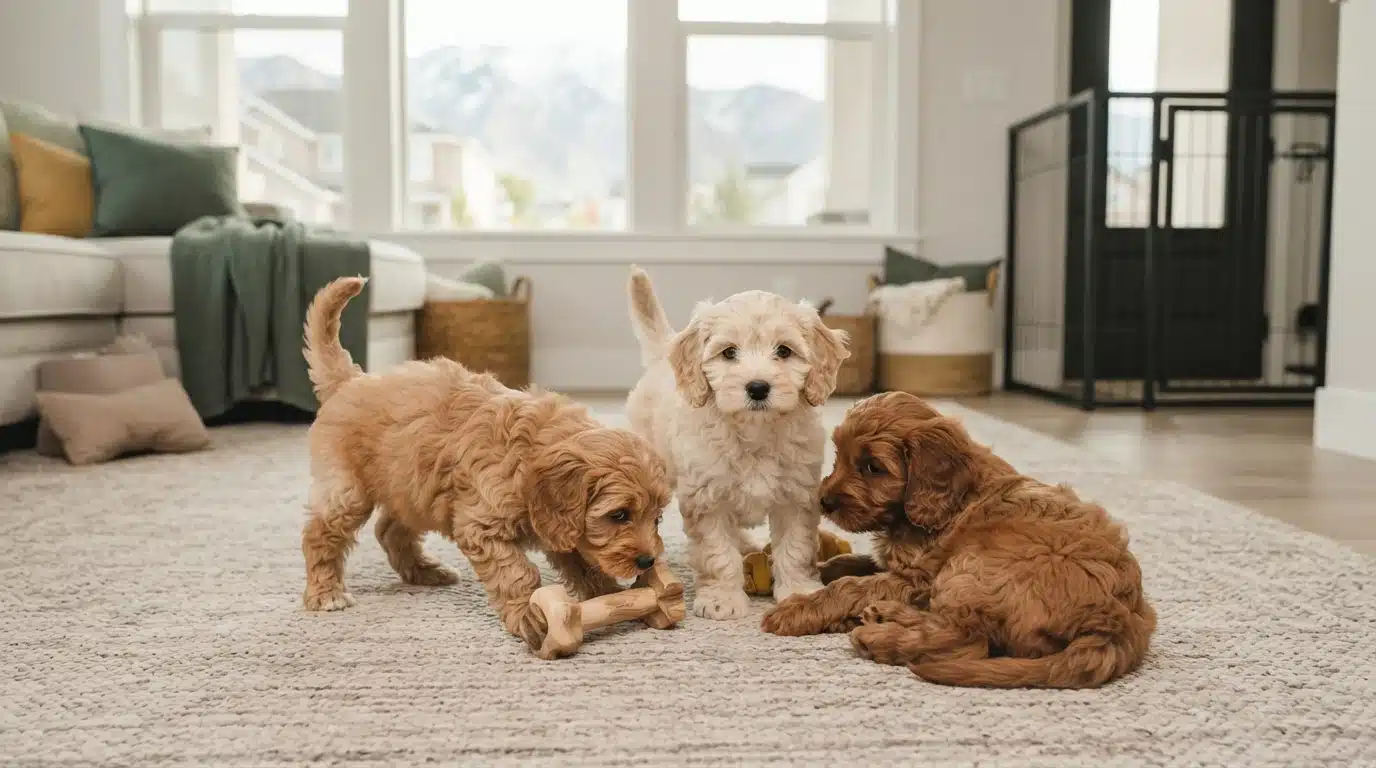
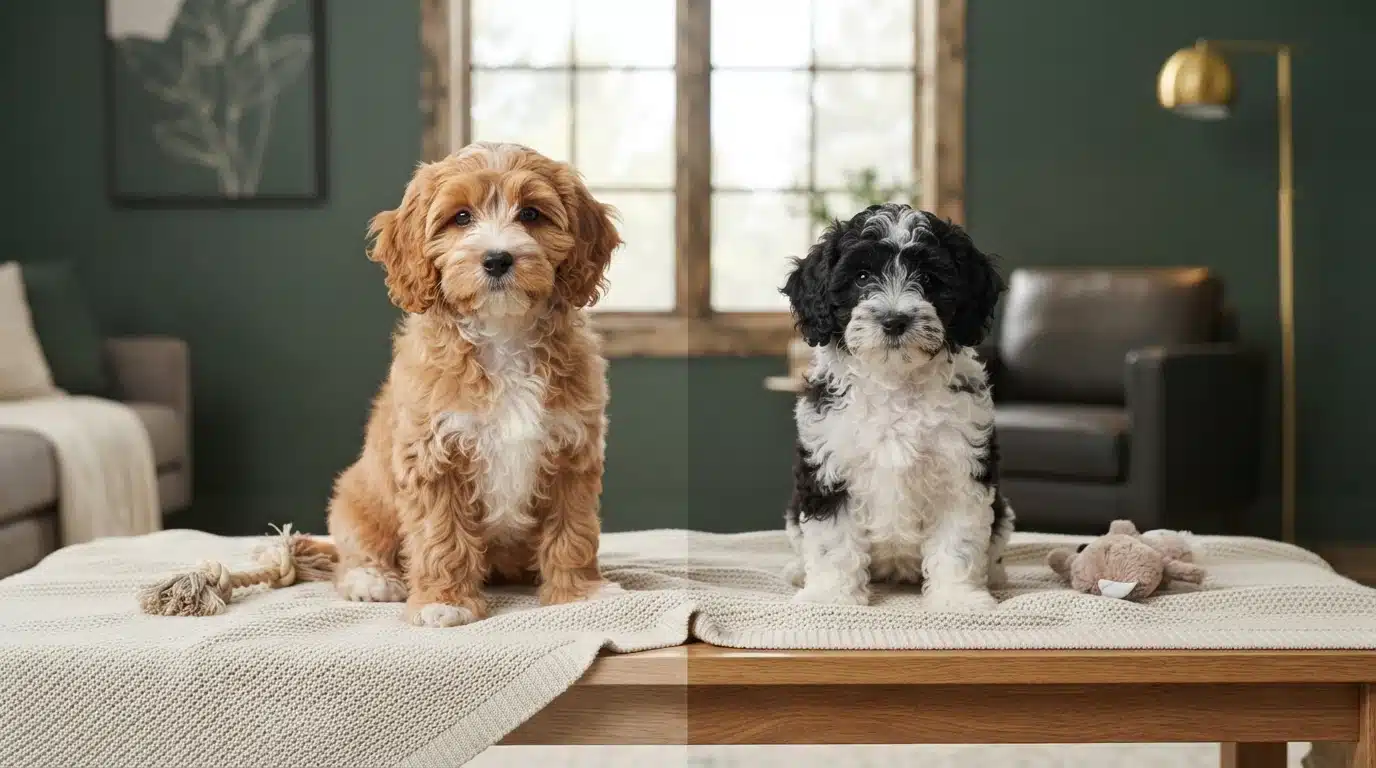
Cavapoos usually land in one of two camps. Some Cavaliers’ soft, people-focused side shows up as a puppy that follows you and melts into your lap. Others take after their Poodle parent, bright and busy, sniffing every corner before settling. Both are normal. Let your puppy set the pace for handling and play in these first hours.
The Ride Home and Arrival Setup
A Secured Puppy, Not a Loose One
Plan the drive before you pick your puppy up. A small crate or carrier lined with a towel works best, and a second person to sit nearby and offer calm reassurance helps a lot. A loose puppy can slip under the driver’s feet or into a footwell, which is dangerous for everyone. If your ride is long, plan a quick potty stop or two, and remember that puppies this age need frequent trips. Keep the radio low and let the puppy settle.
Carrying a Small Puppy Into a New Home
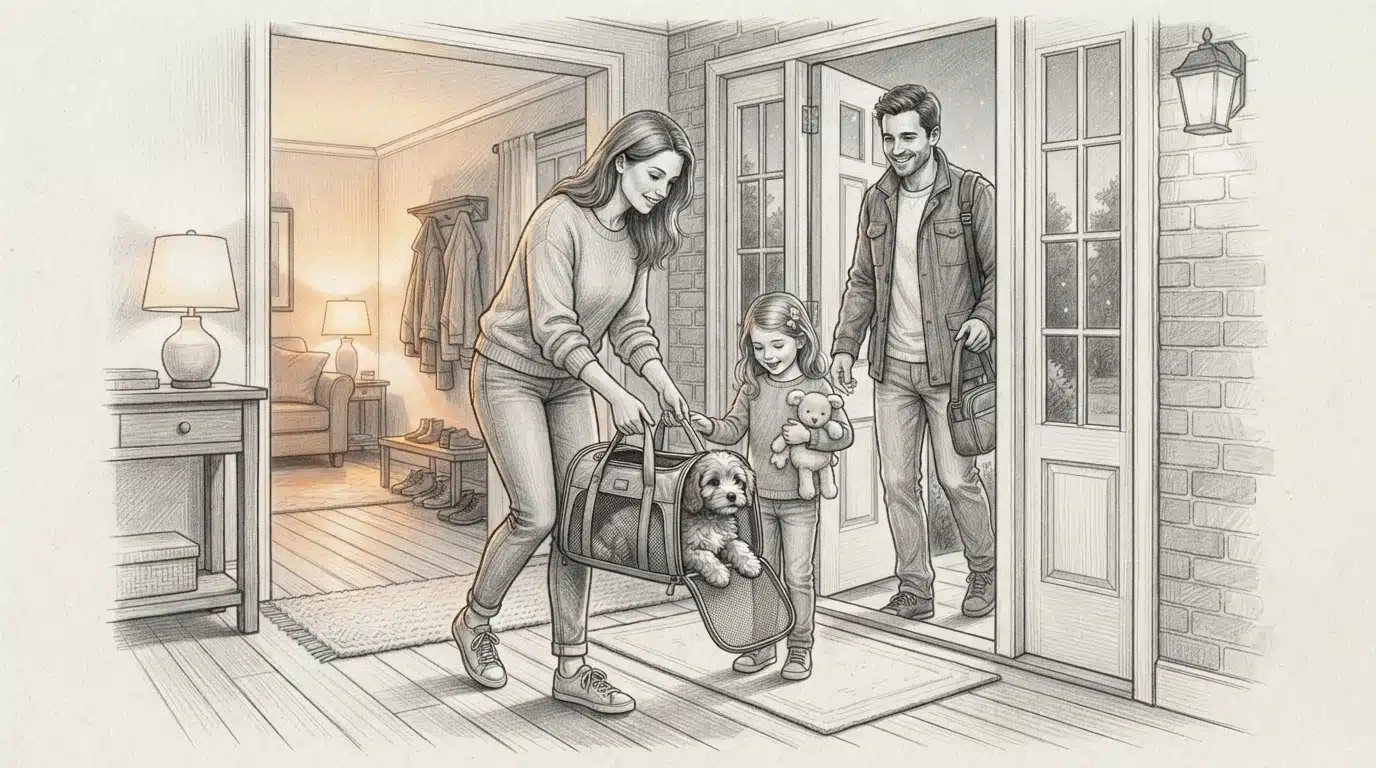
When you arrive, carry the puppy in and set it down in the quiet space you already prepared. Some puppies want to explore right away. Others freeze at the door and need you to lift them to the potty spot, the water bowl, and the crate one by one. Both reactions are normal, so follow your puppy’s pace instead of pushing it. A short outdoor potty trip before anything else prevents the most common day-one accident.
Meeting the Rest of the Household
Introduce children calmly, with seated greetings and soft voices. Let each person offer a hand first, and skip the crowd of neighbors for a day or two. If you have another dog, keep the first meeting outside on neutral ground, leashed and short, then bring them in together. Cats usually manage themselves if you give them an escape route.
Expect less sleep for everyone the first night. A warm crate near your bed, a potty break before lights out, and patient reassurance usually get you through it.
The First Night, Honestly
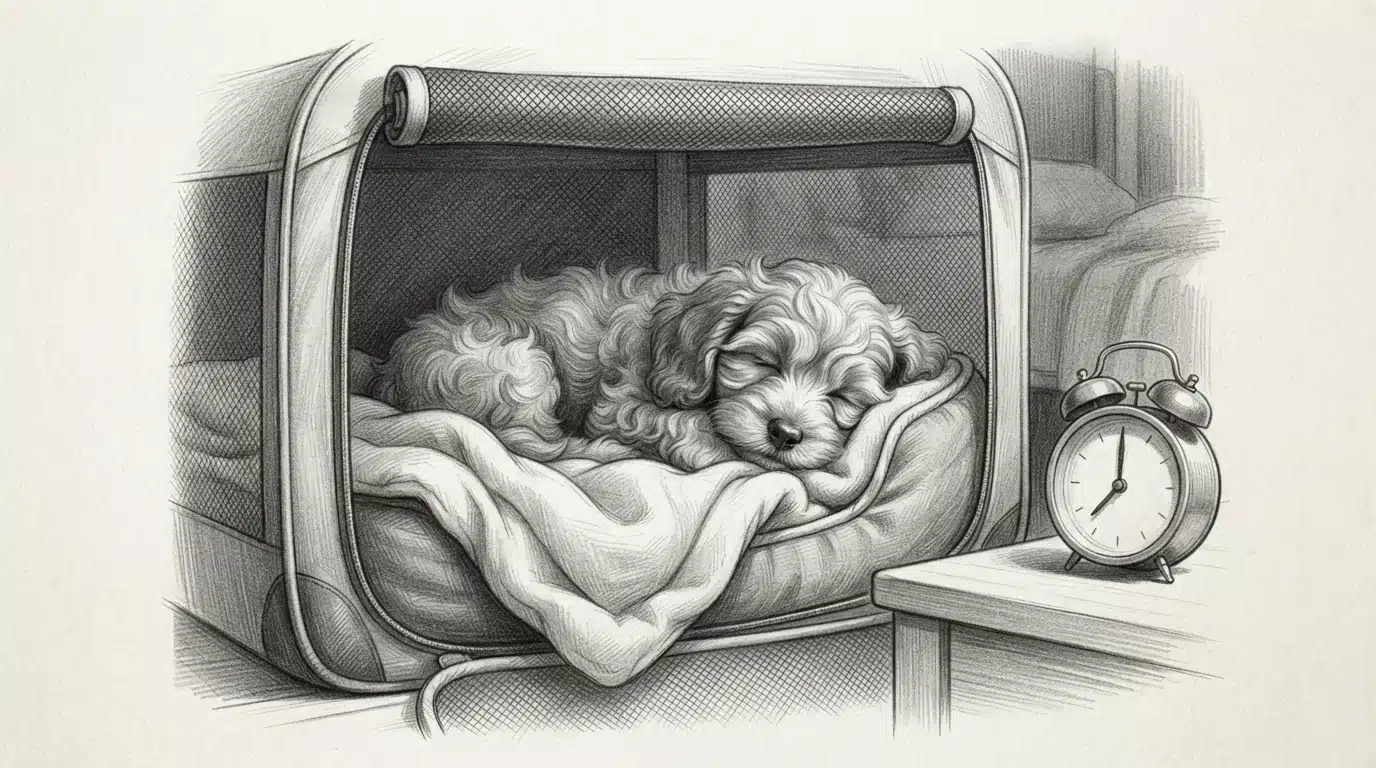
Expect the first night to be loud. Most Cavapoo puppies cry in their crate for 10 to 30 minutes, settle, then wake once or twice before dawn. That pattern is normal, and it fades fast with a calm routine.
What the Crying Sounds Like
It starts as a whine, builds to a short bark, then loops. Some puppies sound frantic for two minutes and give up. Others pace the crate and paw at the door. Ignore protest crying unless it sharpens into a sustained, panicked howl, which usually means your puppy needs a potty trip. Cavapoos read your tone well, so a quiet “goodnight” works better than shushing on repeat.
A Setup That Makes Night Easier
Put the crate beside your bed so your puppy can see you. Add a warm blanket and a plush toy, and keep the last potty break right before lights out. Take out the water bowl about an hour before bedtime so the first stretch is more likely to hold. If your puppy wakes at 2 a.m., carry it out quietly, give it two minutes, then back in the crate without play or fuss.
What Is Normal and What Is Not
Normal: whining for a stretch each night, one or two potty wakes, and steady improvement within a week. Not normal: vomiting, diarrhea, refusing water by morning, or crying that never eases after several nights. A puppy this small can get dehydrated quickly, so call your vet if something feels off. The Sage application flow includes preparation guidance, but your first night depends on the routine you keep.
The First 72 Hours and the First Vet Visit
Day one is about settling in. Days two and three add the first vet appointment, and that visit goes far better when you book it before you ever pick up your puppy.
Book the Vet Appointment Before You Leave
Call a local clinic during the week you bring your puppy home, ideally the same day. Most puppies see a vet within the first three days, and good clinics book out a week or more. If your puppy arrives with vaccine records showing a first dose given at 6 to 8 weeks, mention that when you call so the clinic lines up the next visit correctly. See our first vet visit checklist before you call.
What the Vet May Ask About
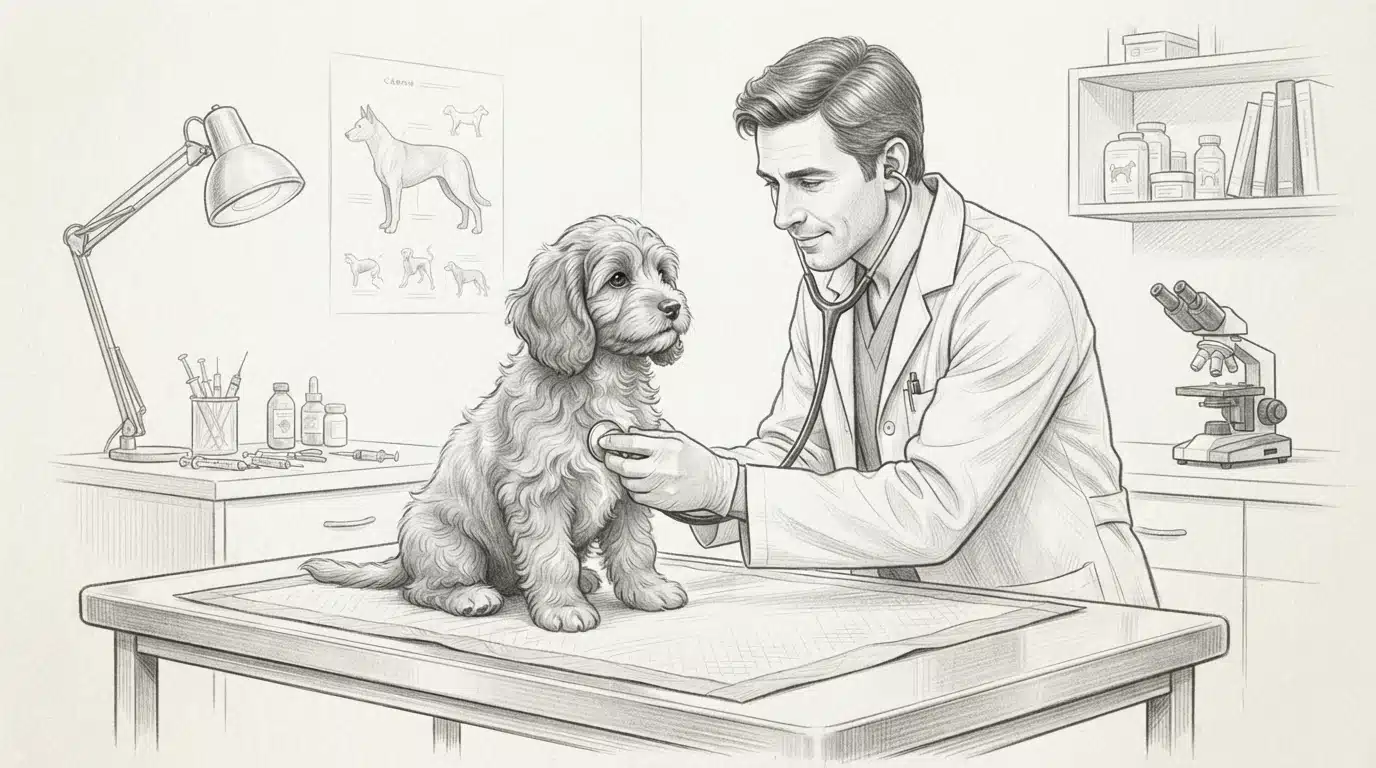
Bring every paper the breeder handed you: vaccine dates, deworming history, and the food your puppy has been eating. The vet will weigh your puppy, check the heart, eyes, ears, and teeth, and set up the vaccine series that continues every few weeks until about 16 weeks old. Expect questions about appetite, stool, sleeping, and crate crying. Keep answers simple and honest. A puppy that ate well and played this morning is exactly what they want to hear.
The Days After That
Hold the routine steady once the visit is done. Same potty trips, same feeding times, same short naps in the crate. Resist the urge to take your puppy on errands or visits during these first days, because full vaccine protection is still weeks away. Short car rides to the clinic are fine. Quiet at home builds the confident puppy you want by week two.
Keep the Line Open With Your Breeder
Your breeder wants updates, especially in week one. A good program answers questions about eating, stools, and sleep, and clarifies what was already handled, like deworming. Ask anything that seems off rather than waiting, and send a photo or two. That early contact also builds the record your vet will use for years.
Day Five and Beyond: Settling Into the Cavapoo Routine
What Settled Looks Like by About Day Five
Most Cavapoos turn a corner around day five. The crying at night shortens or stops, your puppy checks in with you before napping, and house training starts to click if you have kept the every-30-to-45-minute rhythm going. Appetite steadies, play gets bolder, and the crate becomes a place your puppy walks into instead of a trap to dodge. Expect small backslides when life gets busy. That is normal. A settled puppy still needs the same potty schedule and calm arrivals, just with fewer rough patches between them.
Why the First Days Should Shape Your Search
This is the part most buyers never consider until they are living it. A breeder who crate-trains gently, sends home scent cloth and feeding notes, and answers the phone during week one removes half the hard work before your puppy ever arrives. So when you compare programs, ask what happens before pickup day, not just after. A boutique program like Sage Puppies builds its matching and handover around this exact window. The paperwork and preparation you received should also make your first vet visit and grooming plan easier to start.
Where to Go Next
Your next job is a rhythm you can repeat: potty breaks on schedule, short play sessions, naps in the crate, and a weekly brush so coat care never feels new. If the grooming side feels unsure, our first-time guide to the Cavapoo puppy grooming schedule lays out a week-by-week plan. Keep vet and vaccine dates on the calendar, then enjoy the calm you have both earned.

Knowing the first 48 hours makes the wait easier, and it also tells you when a breeder has your back. At Sage Puppies, every Cavapoo goes home with clear records and honest guidance, so day one starts with confidence instead of guesswork. Ready to meet your puppy? Start the application today.
Frequently Asked Questions
Q1: What should I expect on day one with a Cavapoo puppy?
Expect a tired, wobbly puppy and a folder of paperwork. Get the health records, feed the breeder’s usual food at the usual time, and take potty trips every 30 to 45 minutes. Keep everything calm and boring. Crying in the crate for 10 to 30 minutes at bedtime is normal.
Q2: When should I book the first vet visit?
Call a local clinic the same week you bring your puppy home. Good clinics book a week or more out, and most puppies should be seen within the first three days, so booking before pickup day avoids a scramble.
Q3: What paperwork should a breeder hand over at pickup?
A complete health folder: vaccine dates and names, deworming history, vet exam notes, the current food, contract terms, and parent health test results. Photograph every page as a backup, and treat missing or vague records as a warning sign.
Q4: Should the puppy sleep in a crate the first night?
Yes. Put the crate beside your bed with a warm blanket, take the water bowl up an hour before bedtime, and give one last potty break. Quiet 2 a.m. trips with no play help the puppy settle within a few nights.
Q5: When can my Cavapoo meet other dogs and go on outings?
Keep first dog meetings outside, leashed, short, and on neutral ground. Skip errands and visits during the first days because vaccine protection is not complete until the series ends around 16 weeks.
Q6: How long until my Cavapoo settles in?
Most puppies turn a corner around day five. Night crying shortens, appetite steadies, and house training starts to click if you kept the potty rhythm steady. Small backslides are normal and fade with a consistent routine.
Conclusion
Day one with a Cavapoo comes down to three things: a complete health folder, a boring and calm first few hours, and a routine you repeat without change. The breeder’s job ends at the handover with vaccines, deworming records, feeding notes, and honest answers about this puppy’s personality. Yours starts with potty trips every 30 to 45 minutes, the same food at the same times, and a crate beside your bed for the first noisy nights.
The first vet visit should already be booked by day three, and quiet days at home protect a puppy whose vaccine series runs until about 16 weeks. Get these first 72 hours right and day five usually arrives on schedule: a puppy that settles, eats, and checks in with you. Browsing available Cavapoo puppies with this checklist in hand turns pickup day into a plan instead of a surprise.