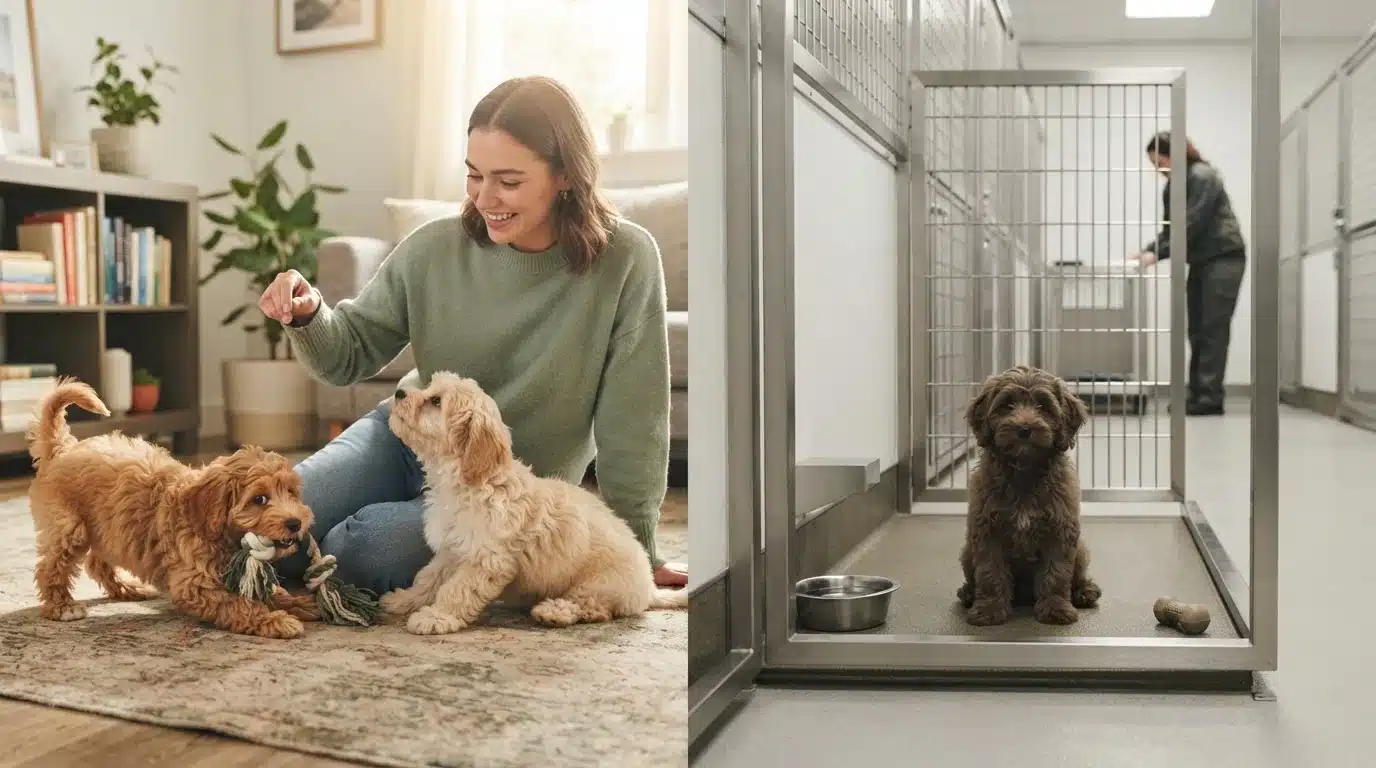
Quick Summary: Cavapoo and Havapoo puppies share similar size, grooming needs, and low-shedding coats, but their parent breeds shape real differences. Cavapoos typically inherit the Cavalier’s eager-to-please temperament, a tighter adult weight range of 9 to 18 pounds, and added health risks like mitral valve disease and syringomyelia. Havapoos take after the calmer, chattier Havanese, span a wider 7 to 20 pound range, and carry a shorter risk list with no Cavalier heart line. Pick a Cavapoo for easier training and a sleeker coat, or a Havapoo for a steadier companion and fewer cardiac concerns, and always request written health clearances on both parents before reserving.
Two puppies from a South Jordan, Utah litter can look nearly identical in a listing photo and still differ more than families expect. A Cavapoo vs havapoo puppies decision usually comes down to this: the Cavapoo often carries a longer, silkier coat and a more eager-to-please streak, while the Havapoo’s Havanese parent brings a softer coat and a steadier, more settled temperament. If your choice hangs on daily life, Havapoos tend to suit buyers who want a lower-shedding companion and Cavapoos suit buyers who prioritize trainability and a sleeker coat. The rest comes down to size range and inherited health risk.
Both crosses are priced alike, both get labeled hypoallergenic and easy, and neither listing tells you what will actually change in your home for the next twelve to fifteen years. This comparison covers coat and grooming, temperament, adult size, health outlook and lifestyle fit, then closes with a clear rule for choosing and questions to put to any breeder in writing.
Cavapoo Puppies vs Havapoo Puppies: At a Glance
| Cavapoo puppies | Havapoo puppies | |
|---|---|---|
| Parentage | Cavalier King Charles Spaniel x Poodle | Havanese x Poodle |
| Typical adult size | 23-33 cm (about 9.1-13 in) tall, 4-10 kg (about 8.8-22 lb) | Varies widely by parent size; most mature under 15 lb, with reported range about 7-20 lb |
| Coat and shedding | Silky or curled double coat; commonly apricot, red, cream, black, chocolate/brown, white | Silky to wavy or curly over a Havanese double coat; sheds more than a Poodle but less than many spaniel types |
| Temperament and trainability | Generally eager to please and people-focused; often notices its name quickly | Typically steady, calm and people-oriented; Havanese lineage is known for a settled, affectionate manner |
| Health outlook | May inherit mitral valve disease from the Cavalier side and bloat, hip and eye issues from both parents | Inherits Havanese concerns such as hip and leg joint issues, luxating patellas and certain eye conditions; no Cavalier heart line |
| Best for | Buyers who want a responsive, trainable small dog and prefer a sleeker, lower-shedding coat | Buyers who want a plush, soft-coated companion and prefer a calmer household |
How Cavapoo puppies and Havapoo puppies Compare
In any cavapoo vs havapoo puppies decision, the two crosses start from different purebreds, and that parentage shapes everything else. Here is a quick introduction to each contender.
Cavapoo puppies
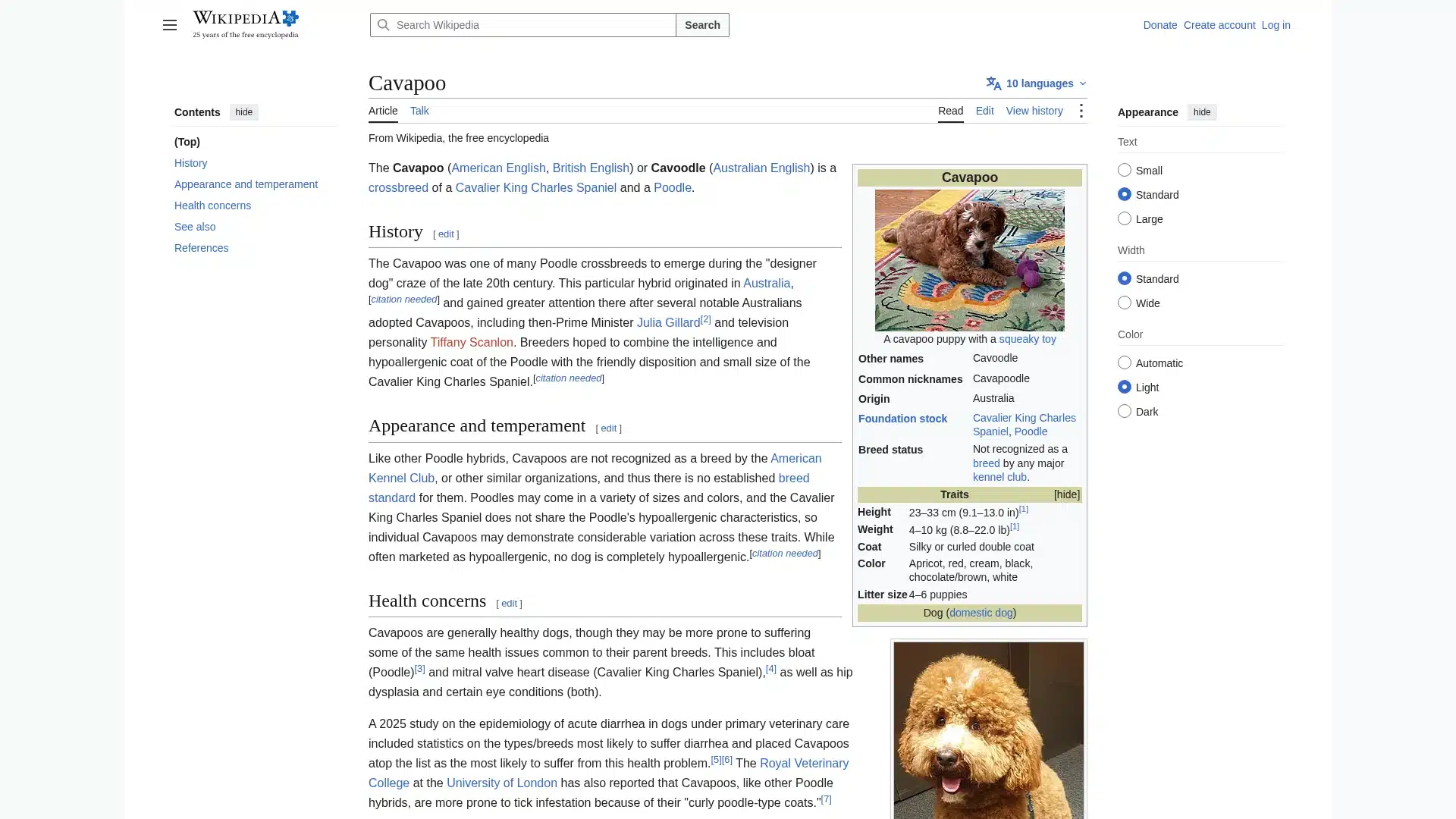
The Cavapoo is a Cavalier King Charles Spaniel and Poodle cross that grew popular during the designer dog trend in Australia. It suits buyers who want an eager-to-please, people-focused small dog with a sleeker coat.
Key strengths
- Friendly, trainable temperament; often learns its name quickly
- Silky or curled double coat in apricot, red, cream and other colors
- Compact build, most adults between 9 and 13 inches tall
Havapoo puppies
The Havapoo blends a Havanese with a Poodle, producing a steady, calm companion that stays people-oriented. It fits buyers who want a plush, soft-coated dog for a quieter household.
Key strengths
- Settled, affectionate manner drawn from Havanese lines
- Wavy to curly coat over a soft Havanese double coat, with modest shedding
- No Cavalier heart line, though joint and eye checks still matter
Coats, Shedding and the Grooming Bill
What the Coats Actually Feel Like Day to Day
For anyone comparing cavapoo vs havapoo puppies, the coat difference is small but real. A Cavapoo often leans toward the Cavalier parent: softer, silkier waves that grow a little less dense. A Havapoo usually carries the Havanese coat, fine and slightly heavier, with more of a plush, cottony feel. Both fall somewhere between straight and curly, and littermates can differ. Daily reality looks similar either way: soft hair that mats behind the ears and under the collar if you skip brushing. Neither coat behaves like a short-haired breed. You are signing up for hair that grows continuously and needs regular trims, which is the whole point of the Poodle cross.
Shedding and Allergy Expectations
Both mixes shed very little, but neither is truly non-shedding. Cavapoos with flatter, spaniel-like coats can drop a bit more hair than curly-coated siblings. F1b or “hypoallergenic” labels do not guarantee a low-allergen dog, so spend time around the puppy before deciding, as Petful’s shedding guide explains. Allergies come from dander and saliva, not just hair, so meeting the actual dog beats trusting a label.
Grooming Time and Cost, With a Labeled Example
Brush both coats three to four times weekly and book professional grooming every 6 to 8 weeks. Budget example (label: estimate): a small-breed groom near Salt Lake City often runs $65-$90 per visit, so roughly $430-$780 per year, plus brushes and comb. If that schedule feels new, a Cavapoo puppy grooming routine for first-time owners lays out each step week by week.
Temperament, Trainability and Noise
Why Neither Cross Has a Breed Standard
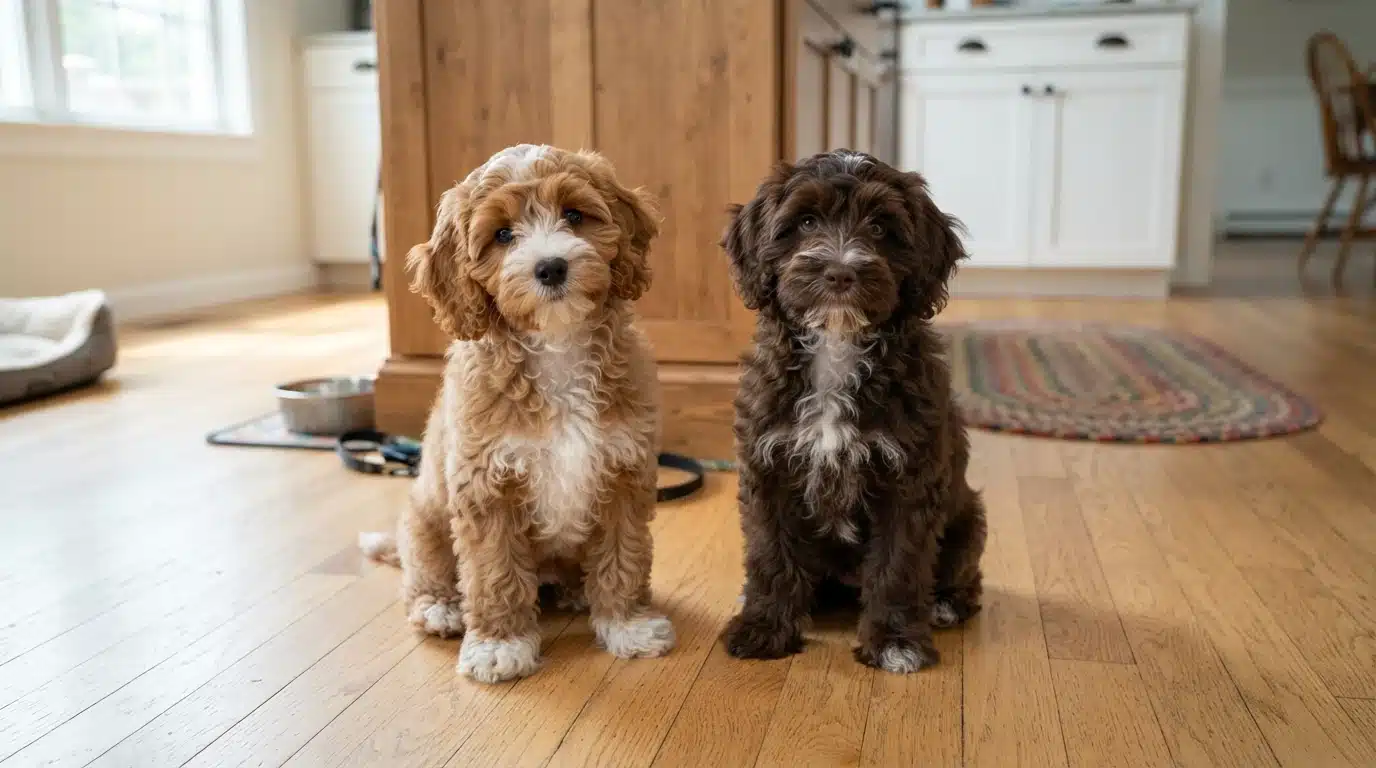
Both are designer crosses, so no official breed standard sets their temperament. A Cavapoo or Havapoo can lean hard toward either parent, and littermates often differ. The best predictor is the individual puppy: meet it, watch how it reacts to noise and handling, and ask the breeder what each parent is like in daily life. Breeds give you tendencies, not promises.
What Each Parent Breed Contributes
The Cavalier contributes a soft, people-focused temperament. The AKC describes the breed as sweet, gentle, eager to please, and friendly with strangers and other animals. That usually produces a Cavapoo that trains easily and wants company more than control.
The Havanese is a former circus performer with a watchful streak. It picks up tricks fast but often announces visitors. A Havapoo may be a quicker study and a sharper alarm system, which rewards consistent early training. Matching a puppy’s temperament to your household matters more than the cross itself, because individual litters vary.
Barking, Alertness and Apartment Living
Cavaliers bark briefly at knocks and birds but settle fast; Havanese tend to be chattier watchdogs. In an apartment, that difference shapes your routine: a Havapoo needs earlier “quiet” training and less solo time. Both breeds dislike long hours alone, so neither suits a household that’s empty all day.
Adult Size: How Far the Numbers Actually Spread
Breed averages hide how wide real-world results run. A Havanese matures at 7 to 13 pounds, while a Cavalier King Charles Spaniel reaches 13 to 18 pounds, so a crossbreed’s adult size depends on which parent pulls harder. That’s why one puppy in a litter can settle near 9 pounds and a sibling can top 18.
Why One Range Is Wider
The Havapoo range is wider because Havanese breeders stay inside one standard, roughly 7 to 13 pounds, but poodle parents vary from toy to small miniature size. Mix a 9-pound Havanese with a 12-pound toy poodle and you get one outcome; pair the same Havanese with a larger miniature and the puppies can mature well past it. Cavapoos sit inside a tighter window because both parents, the Cavalier at 13 to 18 pounds and the toy poodle, are more predictable in scale. Littermates still differ, so treat any projection as a range, not a promise.
Questions to Ask About Projected Adult Weight
- What did each parent actually weigh, measured rather than estimated?
- Is the poodle parent a toy or a small miniature?
- What did previous litters from the same pairing mature to?
- Is the projection a single number or an honest range?
A breeder who tracks mature weights from past pairings can answer these from records. At small programs like Sage Puppies, you can ask how each puppy’s parents and earlier littermates turned out before you commit.
Lifestyle Fit for Small Homes
Most adults from either mix stay under 20 pounds, so both suit apartments and travel. If airline carry-on limits matter to you, lean toward the smaller end of the Havapoo range, since its spread is wider.
Two Different Inherited Risk Profiles
Both mixes are generally healthy, but they inherit from very different parent breeds. A Cavapoo carries Cavalier lineage, and that lineage brings some of the most closely watched hereditary conditions in dogs. A Havapoo carries Havanese lineage, which comes with a shorter, milder list. Knowing which risks sit where helps you read a breeder’s health testing with a sharper eye.
What Cavalier Lineage Brings
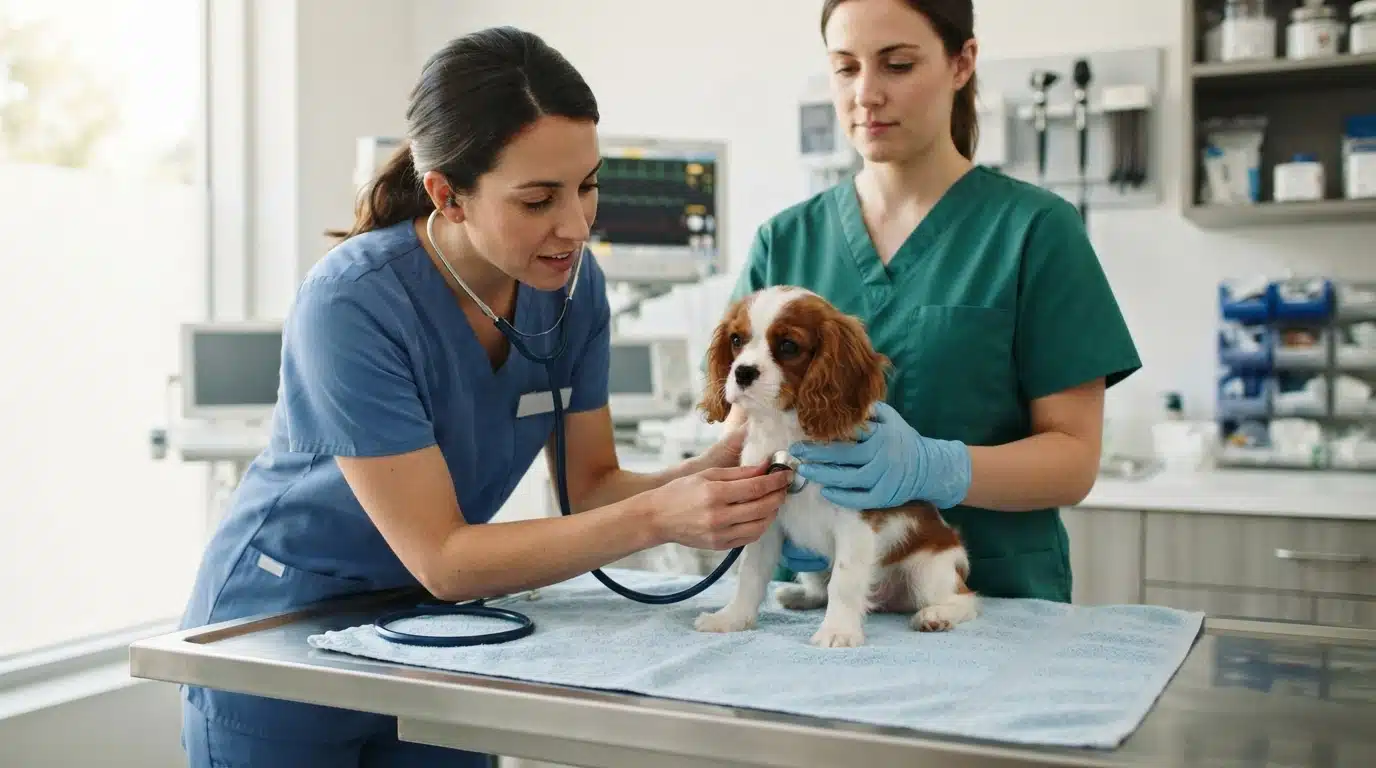
The Cavalier King Charles Spaniel’s two big concerns are mitral valve disease (MVD), a degenerative heart valve condition, and syringomyelia (SM), a painful condition where fluid-filled cavities form near the spinal cord. Research on Cavaliers shows the two are linked, and MVD appears in this breed far earlier and more often than in most others. Cavaliers can also pass on eye problems such as juvenile cataracts and retinal issues, plus luxating patellas. Because a Cavapoo puppy inherits half its genes from a Cavalier, the mix dilutes some risk but does not remove it. Ask any breeder for heart clearances on both parents, not just the Cavalier side. The Cavalier breed club lists these inherited problems in plain terms, and peer-reviewed work confirms the strong link between SM and MVD in the breed.
What Havanese Lineage Brings
The Havanese risk list is shorter. Watch for hereditary cataracts, patellar luxation (loose kneecaps common in small breeds), and occasional liver shunt or deafness reports. Heart disease is far less prominent in Havanese than in Cavaliers, which is a real daily-life advantage for a Havapoo family: fewer expected cardiac checkups as the dog ages. Reputable Havanese breeders still screen eyes, knees and hearing. A Havapoo’s poodle parent adds its own small risks, mainly progressive retinal atrophy, so a DNA panel on both parents matters here too.
What Testing Can and Cannot Tell You
Testing separates evidence from marketing language. DNA panels screen for known gene variants, eye exams catch current disease, and knee and heart checks by a vet flag structural problems. None of it guarantees a puppy stays healthy forever, and no test yet predicts every case of MVD. It narrows odds, not outcomes. If a listing shows only a coat-color DNA test and calls it health testing, ask for more; our guide to reading health testing on puppy listings shows what real documentation looks like.
Both mixes are companion breeds, so neither needs hours of hard exercise. A Havapoo usually carries a bit more poodle-driven energy and wants two short walks plus a play session. A Cavapoo tends toward the Cavalier’s softer pace and is happy with one walk and indoor games. Both settle well after activity, which is what most families actually need.
| Trait | Cavapoo | Havapoo |
|---|---|---|
| Daily walks | One 20-30 minute walk | Two 15-20 minute walks |
| Play style | Gentle, close to people | Fetch, puzzle toys, zoomies |
| Alone-time tolerance | Struggles more with long days | Slightly more adaptable, still social |
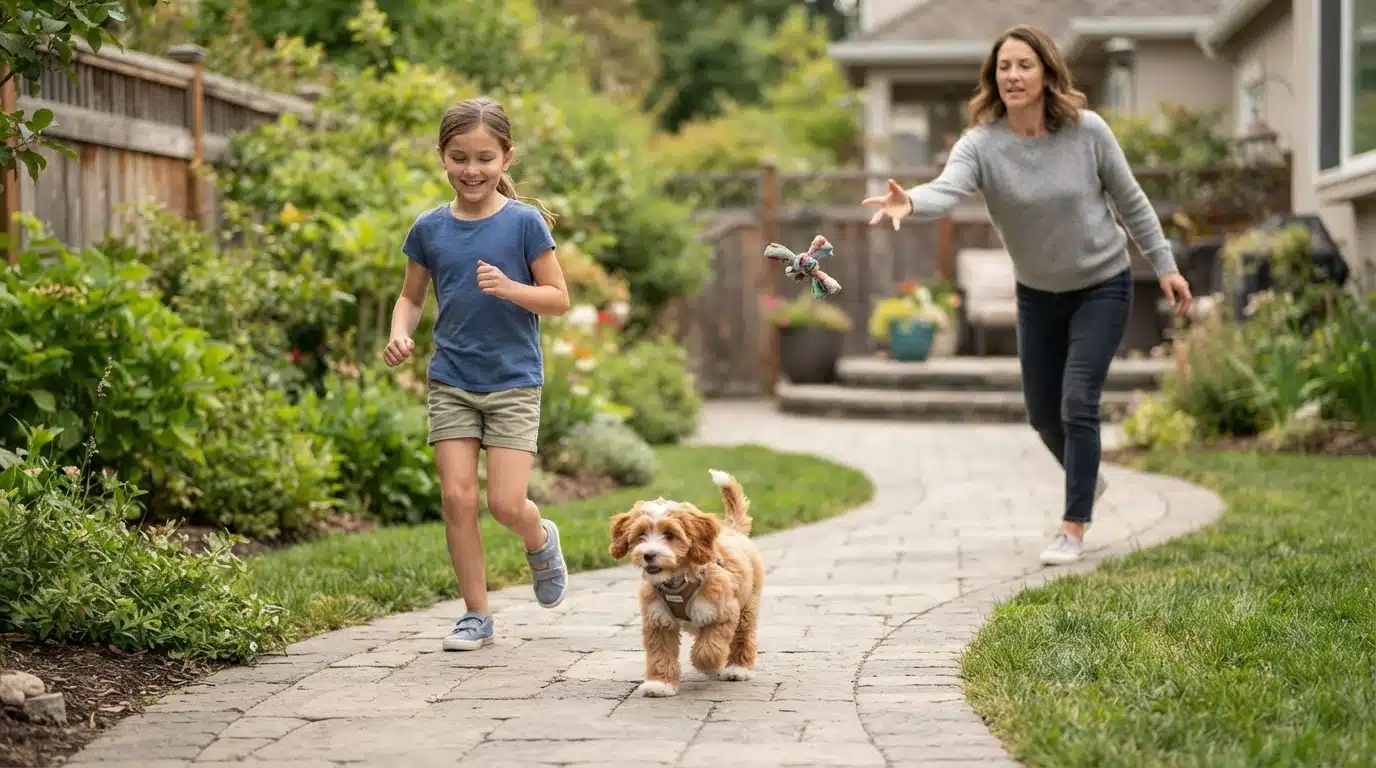
Homes with young kids should know one thing: both breeds are small and social, so rough play can injure them. Teach children to sit on the floor and let the puppy come to them. Neither mix handles a full workday alone well, so plan a midday break or dog walker. Both are bred to be near their people, so busy households work best when someone is home most of the day.
Because a Havapoo’s adult size depends on which poodle parent contributed, ask the breeder about the parents and watch a puppy’s own tempo during a visit. A bolder, busier pup in a litter often stays that way. Match the puppy’s energy to your real week, not the one you hope for. When breeders use owner-managed matching, they can pair each family with the puppy whose energy actually fits their routine.
What to Ask Before You Reserve Either One
Both mixes are winning breeds, so good breeders expect questions. Ask the same list for either puppy and compare answers side by side.
Parent and Health Records to Request
Ask to see both parents, or at least the mother, plus proof of health testing. For Cavapoos, ask specifically about the Cavalier side: mitral valve disease and syringomyelia are inherited, so OFA or veterinary clearance matters more than a catchy “hypoallergenic” label. For Havapoos, ask about patella exams and eye checks on both parents. Request the vet exam record for your puppy, the vaccine and deworming dates, and a written list of what food she’s on. A breeder who shares records openly usually has nothing to hide.
Contract, Deposit and Pickup Questions
Get the contract in writing. Ask whether deposits are refundable, when the puppy can come home, and how delivery works if you’re out of state. Sage Puppies, for example, runs an application first and offers Utah pickup or owner-managed transport nationwide. Confirm the price includes your puppy’s first shots and microchip.
Where to See Current Details
Litters, prices and waitlists change fast, so read the current details on available puppies and the pricing and reservation pages before you apply. Then ask your questions in one message so nothing gets lost.
Which Should You Choose: Cavapoo or Havapoo?
Choose a Cavapoo If
You want a slightly softer, cuddly companion with a calm indoor rhythm. The Cavalier side gives most Cavapoos a gentle, people-first temperament that suits families with kids or quiet households. Their size runs predictable, usually under 20 pounds, and one steady 20-30 minute walk a day keeps them content.
Choose a Havapoo If
You want a sturdier little dog with a bold, playful streak. Havanese lines bring confidence and a happy, alert nature, so Havapoos often handle busier homes well. Their adult size varies more with the poodle parent, so ask about each parent’s weight. Two shorter walks a day fit their energy best.
Next Step
Whichever mix fits your home, meet the puppy first. At Sage Puppies, Cassie matches each family by temperament and lifestyle, so start with the application and ask questions early.

Still torn between the two? Both mixes stay under 20 pounds and thrive in family homes, so your choice comes down to coat care and temperament fit. Tell us how you live and Cassie will match you honestly, with local pickup in South Jordan or delivery anywhere in the US. Start your application at Sage Puppies.
Frequently Asked Questions
Q1: How do Cavapoo puppies and Havapoo puppies compare?
Cavapoos lean toward the Cavalier: silkier coats, easier training, one steady daily walk. Havapoos lean Havanese: plush coats, calmer but chattier, two short walks. The Havapoo’s biggest edge is the shorter inherited risk list, since there’s no Cavalier heart line.
Q2: Do either of these mixes shed much?
Neither sheds much, but neither is truly non-shedding. Flatter-coated Cavapoos can drop slightly more hair. Allergy reactions come from dander and saliva, so meet the puppy in person before trusting any label.
Q3: Which mix costs more to groom?
Both need brushing three to four times weekly and professional trims every 6 to 8 weeks, so grooming bills are similar, roughly $430-$780 yearly in the Salt Lake City area. Budget differences come from coat texture, not crossbreed.
Q4: Which cross is healthier?
Havapoos generally carry the shorter risk list: cataracts, loose kneecaps, occasional eye or hearing issues. Cavapoos add Cavalier concerns like mitral valve disease and syringomyelia, so request heart clearances on both parents.
Q5: How big will each mix get?
Cavapoos sit in a tighter window, usually 9-18 pounds. Havapoos range wider, about 7-20 pounds, because poodle parents vary from toy to small miniature. Ask for measured parent weights and past litter outcomes.
Q6: Can either mix be left alone during a workday?
Neither handles a full day alone well. Both are companion crosses bred to stay near people, so plan a midday break or dog walker. Havapoos adapt slightly more, but social hours still matter.
Q7: Which is better for apartments?
Both work, since most adults stay under 20 pounds. Havapoos often announce visitors, so start “quiet” training early. If airline carry-on size matters, lean toward the smaller end of the Havapoo range.
Conclusion
The clearest divide sits in the parents. A Cavapoo inherits the Cavalier’s eager-to-please nature, a tighter size range of about 9-18 pounds, and a longer health watchlist that includes mitral valve disease and syringomyelia. A Havapoo inherits the Havanese’s settled, affectionate manner, a wider size spread of roughly 7-20 pounds, and a shorter risk list with no Cavalier heart line. Grooming costs, shedding and exercise needs land close enough that neither wins there.
So the choice comes down to temperament and health paperwork. Pick the Cavapoo if trainability tops your list, the Havapoo if calm company matters more. Either way, ask for parent weights, heart, knee and eye clearances in writing before you reserve.