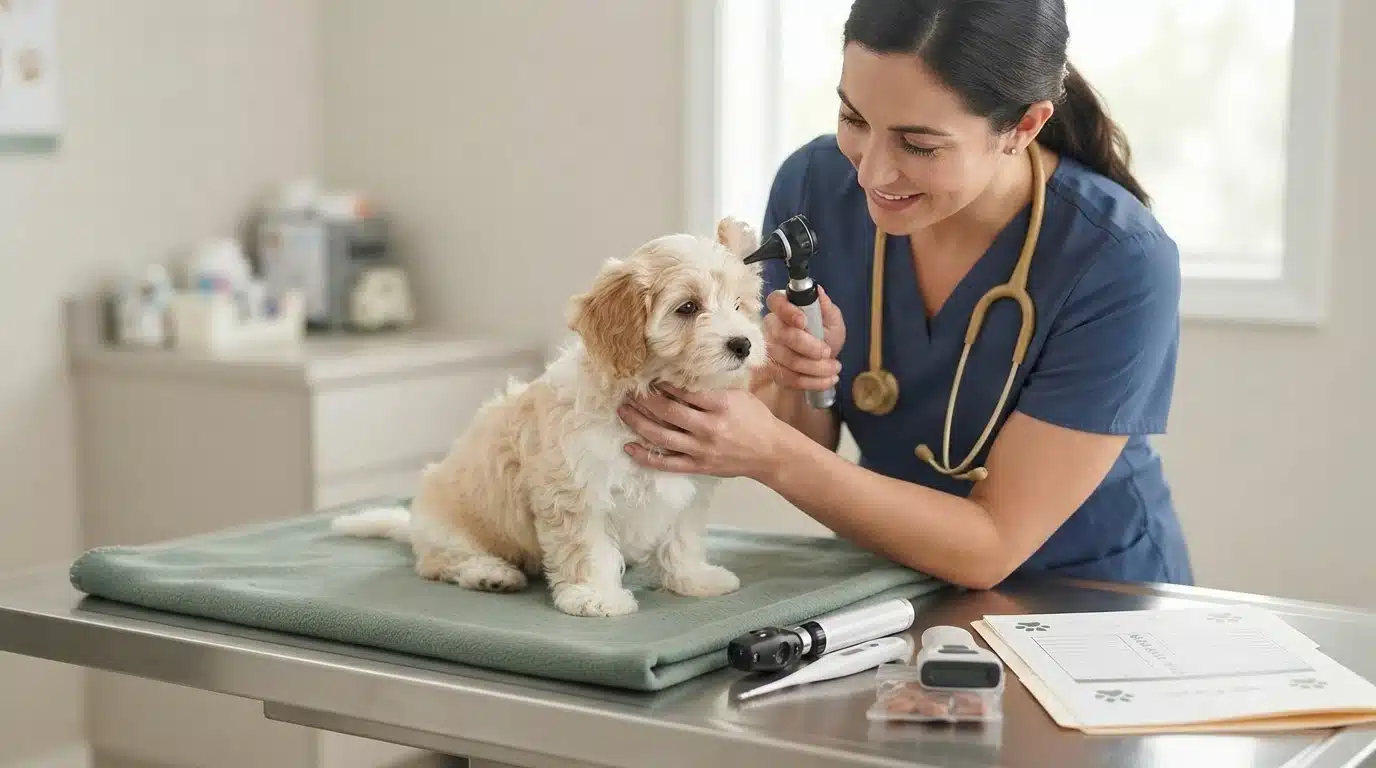
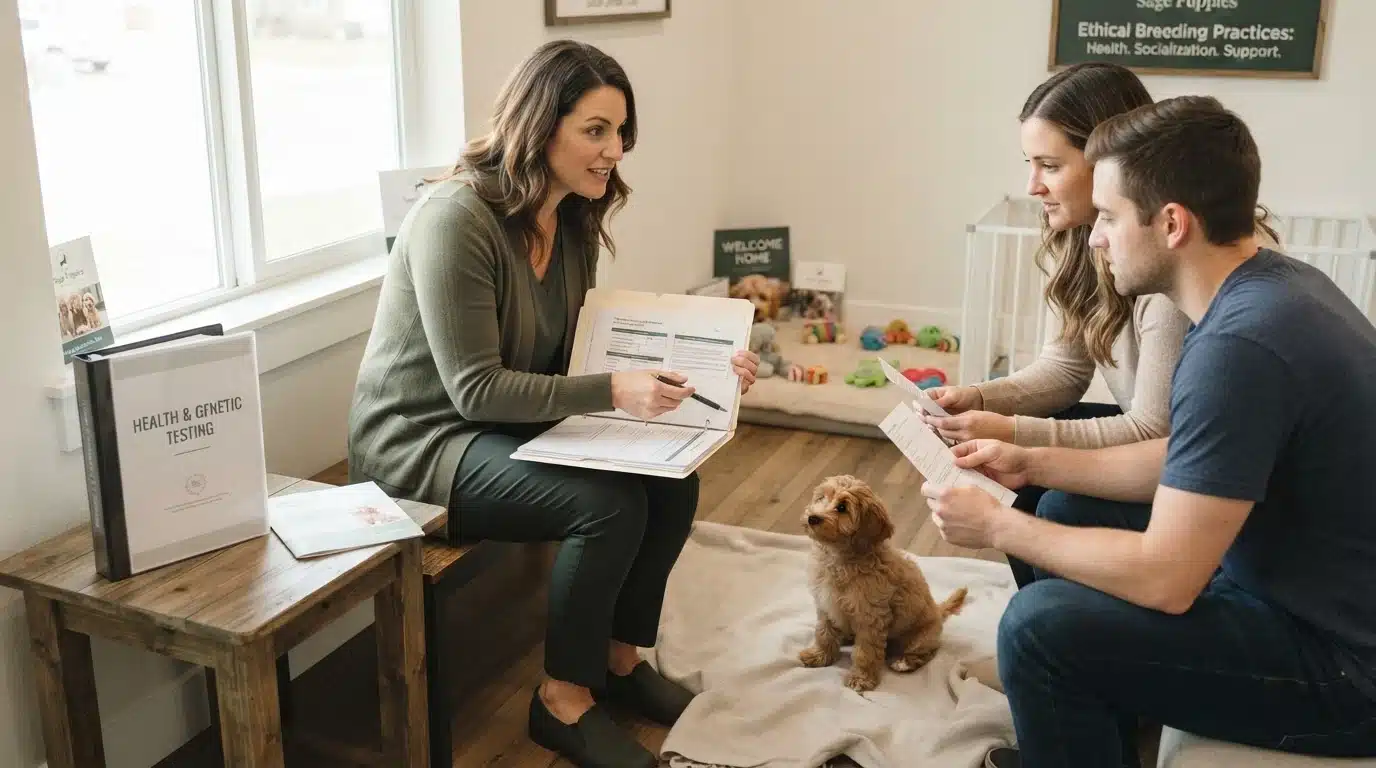
Quick Summary: Any breeder claiming “fully health tested” parents can be checked in about an hour using free tools, starting with ofa.org. Real verification means asking for each parent’s AKC number, looking up their records yourself, and reading certificate numbers for breed, result rating, age at testing, and ID status (VPI is strongest). A CHIC number only proves the required tests were completed and published, not that the results were normal, so open each result individually. Cross-breeds like Havapoos and Cavapoos have no parent-club checklist, so each purebred parent must be checked against its own breed’s requirements before any deposit changes hands.
You find a Havapoo listing. The photos are perfect, and the breeder says both parents are “fully health tested.” Those three words mean nothing until you see them on paper, so you need to verify breeder health tests before you send a deposit.
The problem is simple. Health claims are easy to make and just as easy to fake. A screenshot, a fuzzy photo of a certificate, or a confident sentence in a text message is not proof.
This guide shows you how to verify health testing the way registries and breed clubs define it. You will learn reading OFA certificates puppies’ parents should have, checking the OFA and CHIC databases yourself, and spotting the gaps between a real test and a passing grade. We also cover breed-specific expectations for Havanese, Havapoo, and Cavapoo families, based on current guidance from OFA, the AKC, and the Havanese Club of America.
Step 1: Confirm the Litter and the Parents Exist
Before you verify breeder health tests, confirm the litter itself is real. Scam listings often use photos of puppies that belong to someone else, so start by asking who the parents are and proving they exist.

Why the Registered Name Is Your Single Most Important Clue
A purebred Havanese has a registered name with the American Kennel Club. Ask for the dam’s and sire’s full registered names and AKC numbers. Then check the AKC MarketPlace or ask the breeder for the litter number, which any responsible breeder shares freely, as the AKC’s guide to responsible breeders makes clear. For Cavapoos and Havapoos, the parents are purebreds, so verify each parent separately. Names that match across OFA, pedigree, and the listing tell you the dogs are real.
Red Flags That Mean Stop and Ask More Questions
Some answers should end the conversation:
- No registered names or numbers. “The paperwork is coming” is not an answer.
- Refuses a live video call. Photos can be stolen; a live call showing the puppy with its mother is harder to fake.
- Only stock photos or reused images. Run a reverse image search on the puppy pictures.
- Pressure to pay a deposit fast. Urgency is the scammer’s favorite tool.
- Parents “not available” to see. You should meet the mother, at least on video.
When a breeder dodges these basics, you cannot verify breeder health tests later, because the dogs behind the claims may not exist. A program that documents health testing will welcome these questions.
Step 2: Pull Up the Sire and Dam on the OFA Website
The OFA, or Orthopedic Foundation for Animals, keeps a free public database of health test results. You do not need an account, and you do not need the breeder’s permission. If a breeder claims both parents are tested, you can confirm it yourself in about five minutes.

Reading the Orange Search Bar Like a Pro
Go to ofa.org and you will see a large orange Begin Search button. Click it, then choose Advanced Search for the most control. Enter the dog’s registered name and pick the breed from the dropdown. Registered names usually start with a kennel prefix, so “Sage’s Copper Moon of Jordan” may be listed as “Jordan’s Sage’s Copper Moon.” Try the full name first, then drop the prefix. You can also search by partial name plus breed, or by AKC registration number if the breeder shared one. That number is the fastest match because it is unique.
How to Match the Dog You Found to the Right Record
A name match alone is not proof. Check these details before you trust the record:
- Breed matches the puppy’s breed exactly
- Sex matches (sire is male, dam is female)
- Birth year fits a dog old enough to be a parent
- Owner or co-owner name, if the breeder shared it
Once you open the right record, scan for the CHIC number. A CHIC listing means the dog completed the breed’s required test panel, though results may include some fails. Look at each result, not just the number. The OFA’s advanced search is the tool for this, and breed clubs like the SHCA health testing guide explain how to read what you find.
What “No Record Found” May (and May Not) Mean
No result is not automatically a red flag. Some tested dogs sit under a different registered name, or results were filed under a co-owner. Ask the breeder for the exact registered name and AKC number, then search again. But if a breeder claims clear hips and eyes and cannot produce a record, treat it as an unverified claim. Reputable programs share records up front, so hesitation is its own answer.
Step 3: Read Every OFA Certificate Number Like an Insider
An OFA number is not random text. It is a coded summary of the breed, the test, the result, and the dog’s age on test day. Once you can read it, a fake or padded claim falls apart fast.
The Anatomy of an OFA Number, Piece by Piece
Take a real-style hip number: HV-100E24M-C-PI. The OFA’s own key breaks it down. HV is the breed code, here Havanese (Poodle is PO, so a Havapoo parent often carries that). The 100 is an ascending ID assigned to each normal result. E is the hip rating: E for Excellent, G for Good, F for Fair. The 24 is age in months at testing. M is male. The C shows the x-ray used chemical restraint; P means physical only. Other databases swap in a test code, like PA for patellar luxation or BR for BAER deafness.
So an age of 24 months means hips were done at two years, a mature result. An 11-month-old puppy should have no hip number at all.
What VPI, PI, and NOPI Mean for Your Confidence
The last segment tells you whether the tested dog was actually identified. VPI means the microchip or tattoo was verified and signed off by the attending vet. PI means the dog has permanent ID, but it was not vet-verified. NOPI means no permanent ID, so the certificate is not tied to a specific dog’s body.
Here is why that matters: without verified ID, a breeder could test any dog and attach the number to a litter. VPI is the strongest proof the result belongs to the parent you met.
Match the Certificate to the Official Sample Forms
Pull up the OFA’s sample forms and compare line by line. The number’s breed code, sex, and database should match the parent’s registered name, age, and the test claimed. Check the parent’s microchip against the certificate. If any piece disagrees, ask for the original paperwork before you pay a deposit.
Step 4: Decode What a CHIC Number Actually Means
Where CHIC Numbers Live and Why They Matter
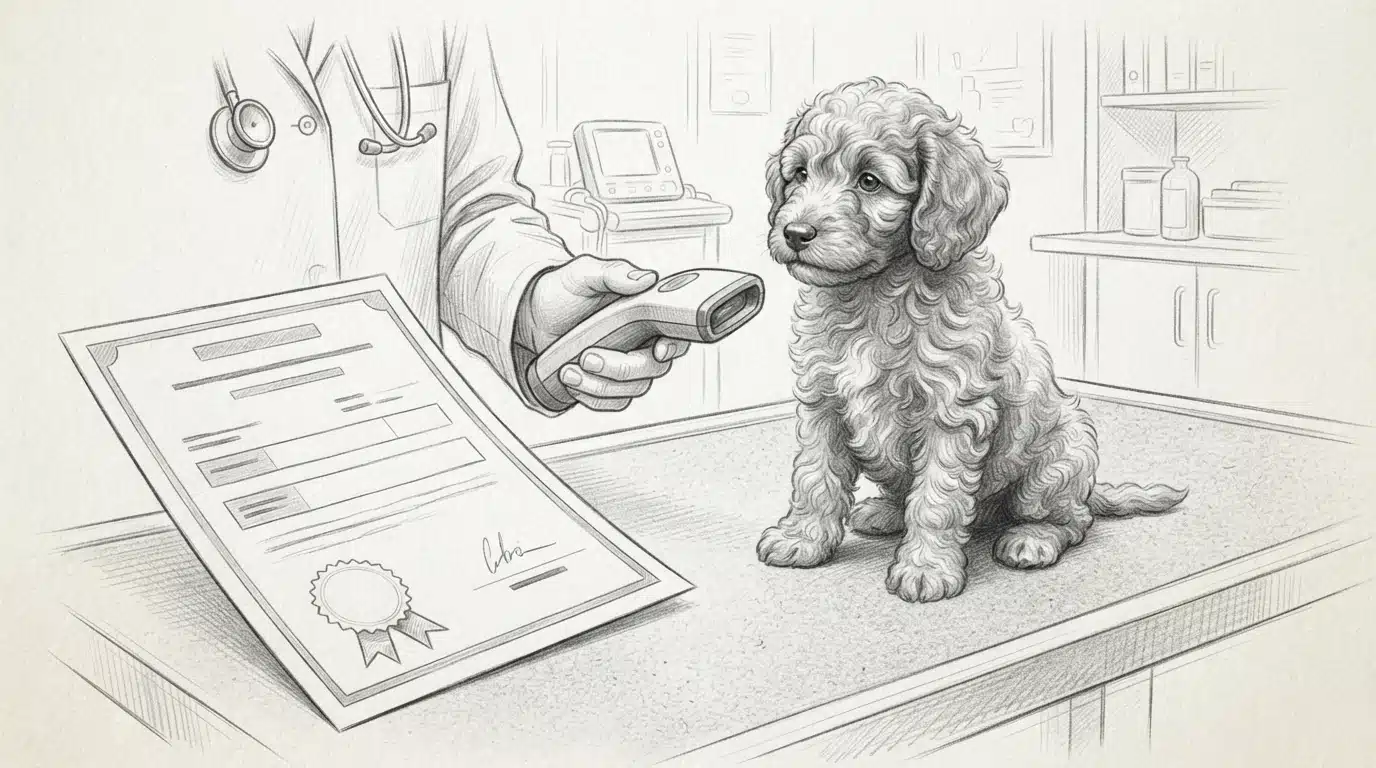
A CHIC number is a four- or five-digit ID issued by the Canine Health Information Center, a joint program run by the OFA and breed parent clubs. You will find it on a dog’s OFA page, printed on health certificates breeders share, and listed alongside other results. It matters for one core reason: a CHIC number is only issued when the dog has completed every health test its breed requires and the owner agreed to publish the results, whatever those results are.
The Three Things a CHIC Number Does Not Guarantee
This is where buyers get tripped up. A CHIC number proves effort, not outcome.
- It does not mean the results are normal. The dog could have failed one or more tests and still earned the number. As the Golden Retriever club’s health guide puts it, the number only shows the required tests were done and posted.
- It does not mean every test was recent. Some results stay valid for life, others should be refreshed.
- It does not guarantee healthy puppies. Genetics pair, timing, and how the breeder uses the results all matter too.
So read the number as an invitation to click further, not a gold seal.
Matching CHIC Requirements to Your Specific Breed or Cross
Requirements differ by breed. The OFA’s browse-by-breed listing shows exactly what each one expects, such as hips, eyes, cardiac, and patellas for the Havanese. Here is the catch for doodle buyers: Havapoos and Cavapoos are crosses, so they have no parent-club CHIC checklist of their own. Ask which parent breed’s requirements the breeder followed, and verify each parent dog individually. Any breeder should welcome that question, including mixed-breed programs like Sage Puppies, which can show parent testing on request.
Step 5: Verify DNA Panels and Specialty Tests the Right Way
DNA testing is the easiest claim for a breeder to fudge and the easiest one for you to confirm. Most results end up in a public registry, so a vague “parents are fully health tested” email should never be your stopping point.
Where to Find a DNA Report You Can Trust
Start with the dog’s OFA page. DNA results sent from partner labs post there automatically, and breeders can also mail lab reports to OFA themselves to get them on the public record. Check the OFA’s DNA-based disease test listing to see which tests apply to the breed. For Havanese, look for markers tied to heart and skeletal conditions; for Cavapoos and Havapoos, ask which parent line carries which tests.
Ask the breeder for two things: the registry link and a copy of the lab report itself. The report should show the dog’s registered name or number, the testing lab, and a date. If all you get is a screenshot with the name cropped out, treat that as a red flag.

PennHIP, CAER Eyes, and Patellas: Tests That Live Outside OFA
Some screenings never appear on the OFA database, so you have to verify them differently. PennHIP hips use a different method than OFA X-rays and results come from the PennHIP system, not OFA. Eye exams are done by a board-certified ophthalmologist under the CAER program, and the breeder should show you the signed exam form. Patellas (kneecaps) are checked by a vet and then registered with OFA, so those do show up online.
For each one, ask: who performed it, when, and can I see the form or registry entry? A legitimate breeder answers within a day. Vets can also submit results on a dog’s behalf, so a missing online entry is not always bad news, but it is worth a polite question.
Reading a DNA Panel Honestly
A clear panel does not mean a risk-free puppy. Two carriers can still be bred together safely if the pairing avoids producing affected puppies, so a “carrier” result on a parent is not a dealbreaker by itself. What matters is that the pairing clears each condition. For a plain-English walkthrough of which tests matter most, see our guide to genetic tests every puppy should have.
Step 6: Cross-Check the Whole Picture Before You Pay
Individual checks can look fine on their own. The real signal comes from whether every piece fits together.
Build a One-Page Verification Summary
Put everything you have confirmed on one page. List the parents’ OFA numbers, CHIC status, genetic panel results, eye exam dates, and the puppy’s vet records, then mark each item as verified or pending. A short paper trail makes gaps obvious at a glance.
If two answers disagree, ask before you send money. A breeder who says hips were checked should match the certificate, and an age like 11 months should mean no hip number exists yet. Keep every email and document in one folder so you can reread them before signing. Our guide on reading puppy health records shows what a complete file should contain.
Confirm the Puppy’s Own Health Certificate
The puppy itself needs a current certificate from a licensed veterinarian, usually issued within 10 days of pickup or delivery. It should list the exam date, the vet’s name and license number, and any treatment given, such as deworming or vaccines.
Check that the puppy’s age, breed, and description match the listing. A mismatch here is a genuine red flag, not a paperwork slip to overlook.

Now put that checking habit to work. At Sage Puppies, every Havanese, Havapoo, and Cavapoo listing shows documentation you can verify yourself, so you never have to take health claims on faith. Browse available puppies, or ask us for a parent’s OFA records before you place a deposit. Wisely Bred. Beautifully Loved.
Frequently Asked Questions
Q1: How can I verify health testing on a puppy listing?
Ask for each parent’s registered name and AKC number, then search ofa.org yourself. Match the breed, sex, and birth year to the record, and read every certificate number rather than trusting screenshots or a “fully health tested” claim.
Q2: How do I look up a dog’s OFA results?
Go to ofa.org, click Begin Search, then Advanced Search. Enter the registered name or AKC number and pick the breed. The AKC number gives the fastest, most exact match since it is unique to one dog.
Q3: What does a CHIC number actually mean?
It confirms the dog completed every test its breed requires and the owner agreed to publish results. It does not mean those results all passed, so open the record and read each individual result.
Q4: What if a breeder’s dog has no OFA record?
Ask for the exact registered name and AKC number, then search again. Some results are filed under co-owners or alternate names, but a breeder who cannot produce records for a claimed test is a red flag.
Q5: Should I insist on VPI results?
VPI means the dog’s microchip or tattoo was verified by the attending vet, tying the result to that specific dog. PI or NOPI results are weaker proof, so ask questions before paying a deposit.
Q6: What health tests should a Havanese parent have?
Hips, eyes (CAER), cardiac, and patellas, per the breed’s CHIC checklist. For Havapoos and Cavapoos, verify each purebred parent separately against its own breed’s requirements.
Conclusion
Verifying health testing takes about an hour and five free searches. Confirm the parents exist, pull each one up on ofa.org, read every certificate number for breed, result, age, and ID status, and treat a CHIC number as a checklist, not a clean bill of health. DNA panels and eye exams need their own records, and everything should agree on one page before money changes hands. Breeders who document their testing welcome these questions. Breeders who dodge them have told you something too. The paperwork either lines up or it does not, and that answer is worth more than any photo.