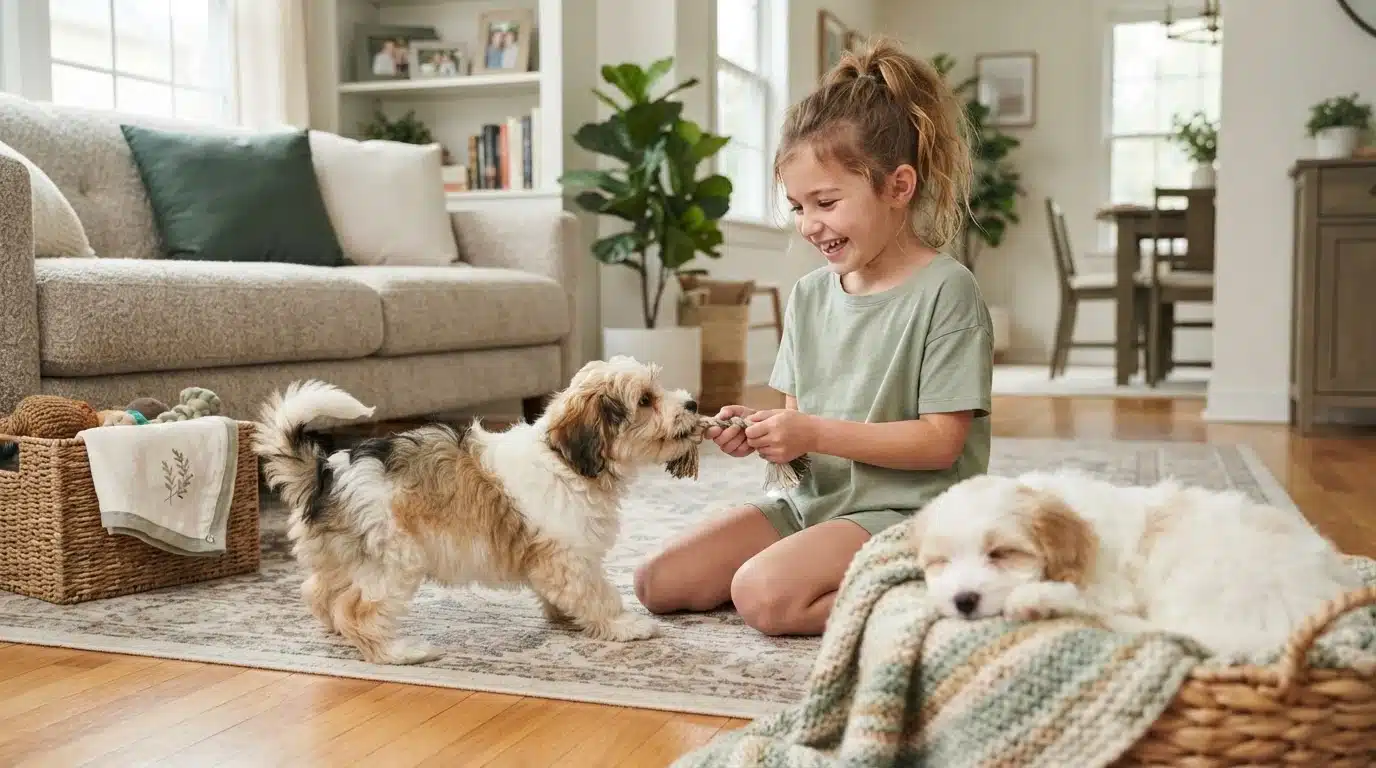
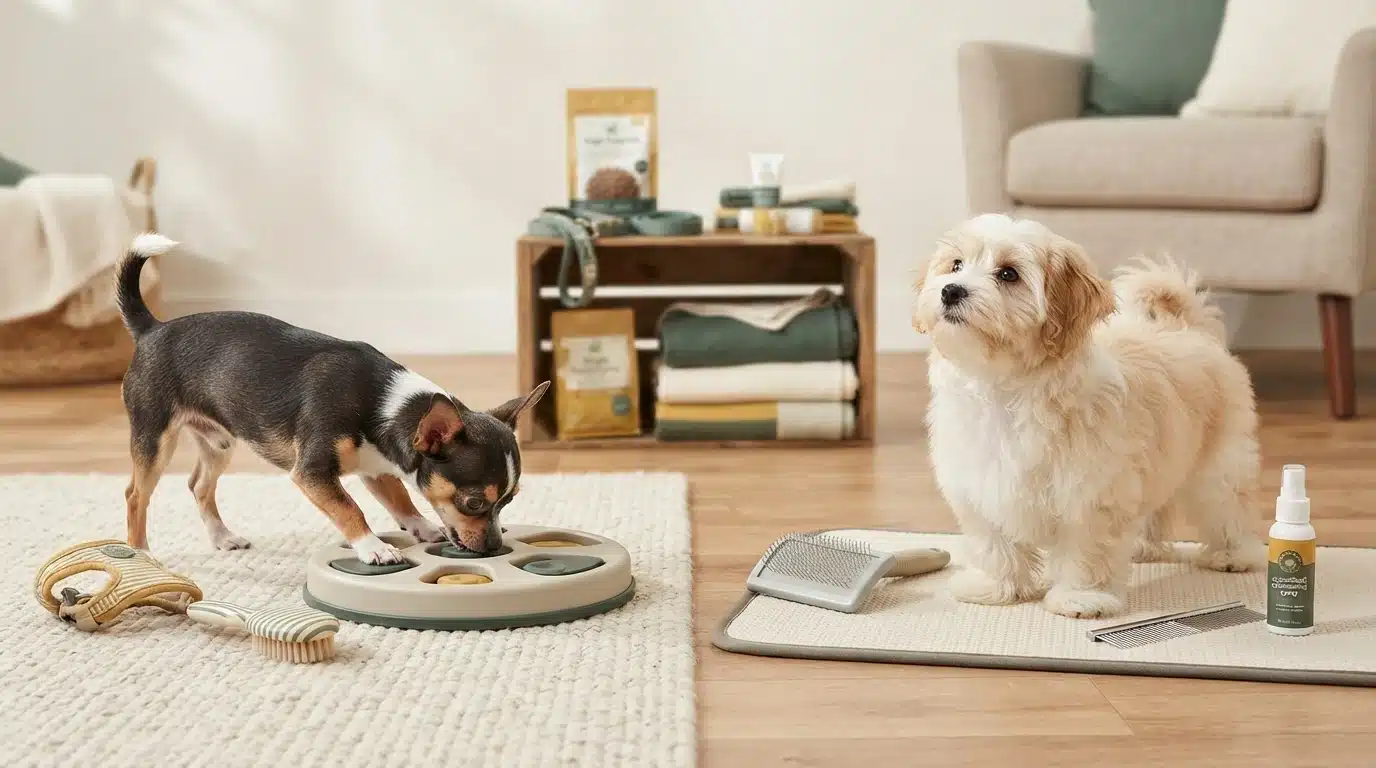
Quick Summary: Picking between a Cavapoo and a Yorkipoo is less about which is better and more about your home setup. Cavapoos are calmer, quieter, and sturdier for families, but they inherit Cavalier risks like mitral valve disease and syringomyelia. Yorkipoos stay smaller, bond intensely with one person, and bark more often, while bringing Yorkie issues like patellar luxation, crowded teeth, and tracheal sensitivity. Both need grooming every 6 to 8 weeks and cost roughly $1,500 to $5,000 in the first year beyond the purchase price. Sage Puppies prices its puppies between $3,500 and $4,500, which covers parent health testing and early socialization, and helps match buyers to the right mix.
Choosing between these two Poodle mixes comes down to three household questions: how much barking you can live with, how much brushing and grooming you can sustain, and which inherited health risks you will watch over the next 12 to 15 years. There is no single winner in the cavapoo vs yorkipoo decision. The fit is the answer.
Most comparisons offer glossy photos and a quick pros list, but skip what each mix actually inherits from the Cavalier King Charles Spaniel or Yorkshire Terrier. This cavapoo vs yorkipoo guide uses parent-breed veterinary evidence on heart, knee, and dental risks, then turns it into a first-year cost range and a household fit check. That evidence, not breed-label marketing, is what should drive a cavapoo vs yorkipoo choice for your family.
Cavapoo vs Yorkipoo at a Glance
| Cavapoo | Yorkipoo | |
|---|---|---|
| Parent breeds | Cavalier King Charles Spaniel x Toy or Miniature Poodle | Yorkshire Terrier x Toy or Miniature Poodle |
| Typical adult size range | Roughly 9 to 25 lb (Toy to Mini Poodle parent); individual variation is wide | Roughly 4 to 15 lb (Toy to Mini Poodle parent); individual variation is wide |
| Coat type and grooming load | Wavy to curly; brushing several times a week and professional grooming every 6 to 8 weeks | Silky to curly; daily brushing if Yorkie-type coat, professional grooming every 4 to 8 weeks |
| Energy and exercise needs | Moderate; short daily walks and indoor play usually sufficient | Moderate to high in short bursts; mental play matters as much as walks |
| Common inherited health risks | Mitral valve disease and syringomyelia from the Cavalier line; Poodle-line eye and orthopedic issues | Patellar luxation, dental crowding, and tracheal sensitivity from the Yorkie line; Poodle-line eye and orthopedic issues |
| Best-fit household | Calm families, first-time owners, apartment living where low noise and easy handling matter | Active singles or small-family homes, owners who can train a vocal alert dog and stay on top of dental care |
How Cavapoo and Yorkipoo Compare
Cavapoo
A Cavapoo pairs a Cavalier King Charles Spaniel with a Toy or Miniature Poodle, producing a soft-coated companion that usually weighs 9 to 25 pounds. It suits calm families and first-time owners who want an affectionate, people-oriented dog that adapts well to apartment life. For a deeper look at the breed, our Cavapoo guide covers temperament and home prep.
Key strengths
- Gentle, people-focused temperament
- Moderate energy with short daily walks
- Lower grooming load than tighter curls demand
Yorkipoo
A Yorkipoo combines a Yorkshire Terrier with a Toy or Miniature Poodle, usually weighing 4 to 15 pounds. The breed tends to be alert and playful, often more vocal than a Cavapoo, which makes it a good match for active singles or small families. Owners who can manage training and dental care from the start tend to do best with this mix.
Parent Breeds and Why the Mix Exists
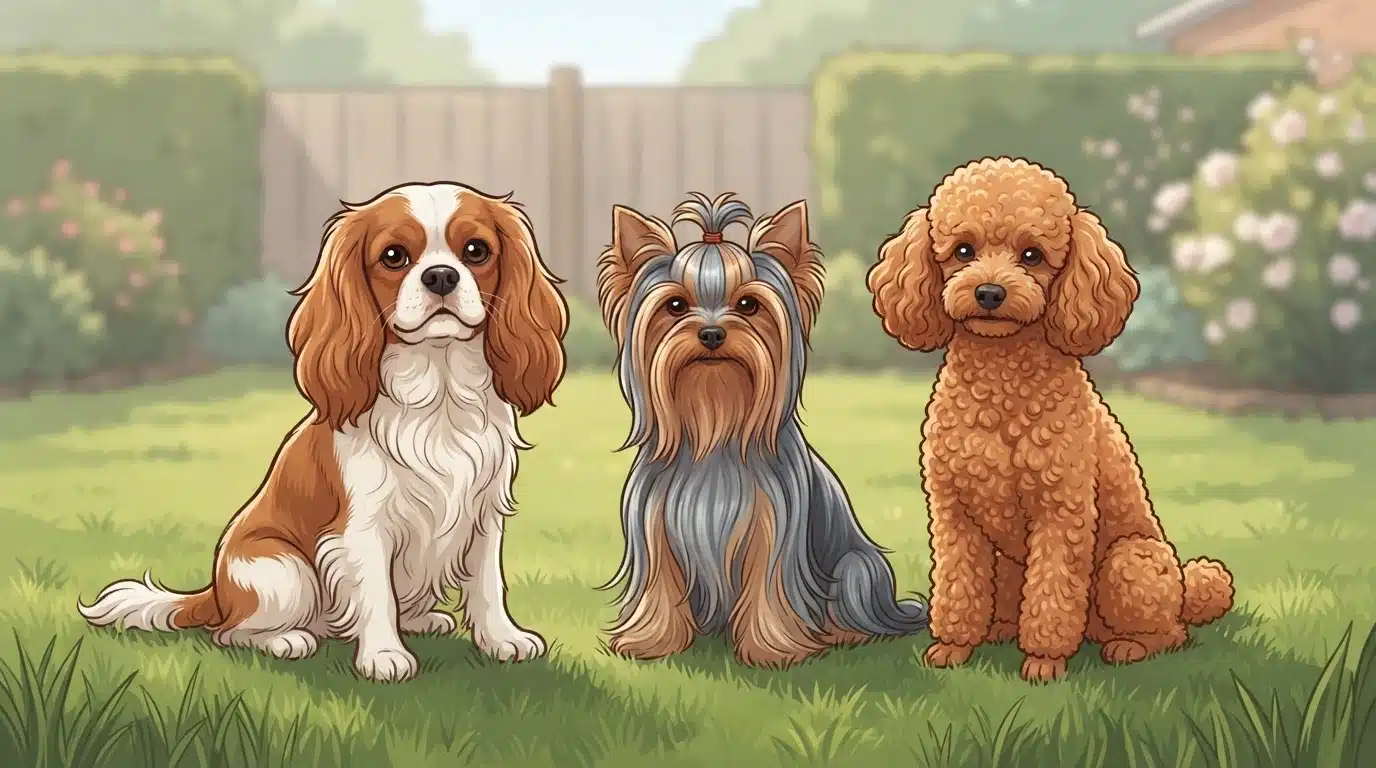
Both crosses pair a small companion breed with a Poodle, so the parents explain almost everything about the adult dog. Knowing what each side contributes helps you predict coat, size and daily care before you commit.
What a Cavalier King Charles Spaniel Brings to the Cross
The Cavalier is a true companion breed. Toy spaniels were favorites of European nobility as far back as the Renaissance, and centuries of breeding for lap and family life shaped a dog that is soft-tempered, gentle with children and eager to please. Cavaliers weigh 13 to 18 pounds and carry a silky, moderate-shedding coat. They crave company and cope poorly with long days alone. In a Cavapoo, the Cavalier contributes the mellow, affectionate core temperament, but also risks such as heart valve disease and, in some lines, a skull malformation that affects the brain.
What a Yorkshire Terrier Brings to the Cross
The Yorkie started as a working dog. Mill and mine workers in northern England bred small terriers to hunt rats, so the breed carries sharp alertness, boldness and a surprisingly big voice. A fine, silky coat grows continuously and sheds very little. Yorkies weigh under 7 pounds and often bond intensely with one person. In a Yorkipoo, that history shows up as energy, watchfulness and a tendency to bark at every passing sound.
Why Add the Poodle, and Why Variation Is the Rule
Breeders add the Poodle for its low-shedding coat and trainability. The catch: which Poodle genes each puppy inherits is a lottery. Puppies in one litter can differ in coat, size and grooming needs, which is why our Cavapoo coat guide focuses on matching expectations rather than promising a fixed result.
Size, Coat, and Grooming Load
Adult Size: How Small Will Each Mix Stay
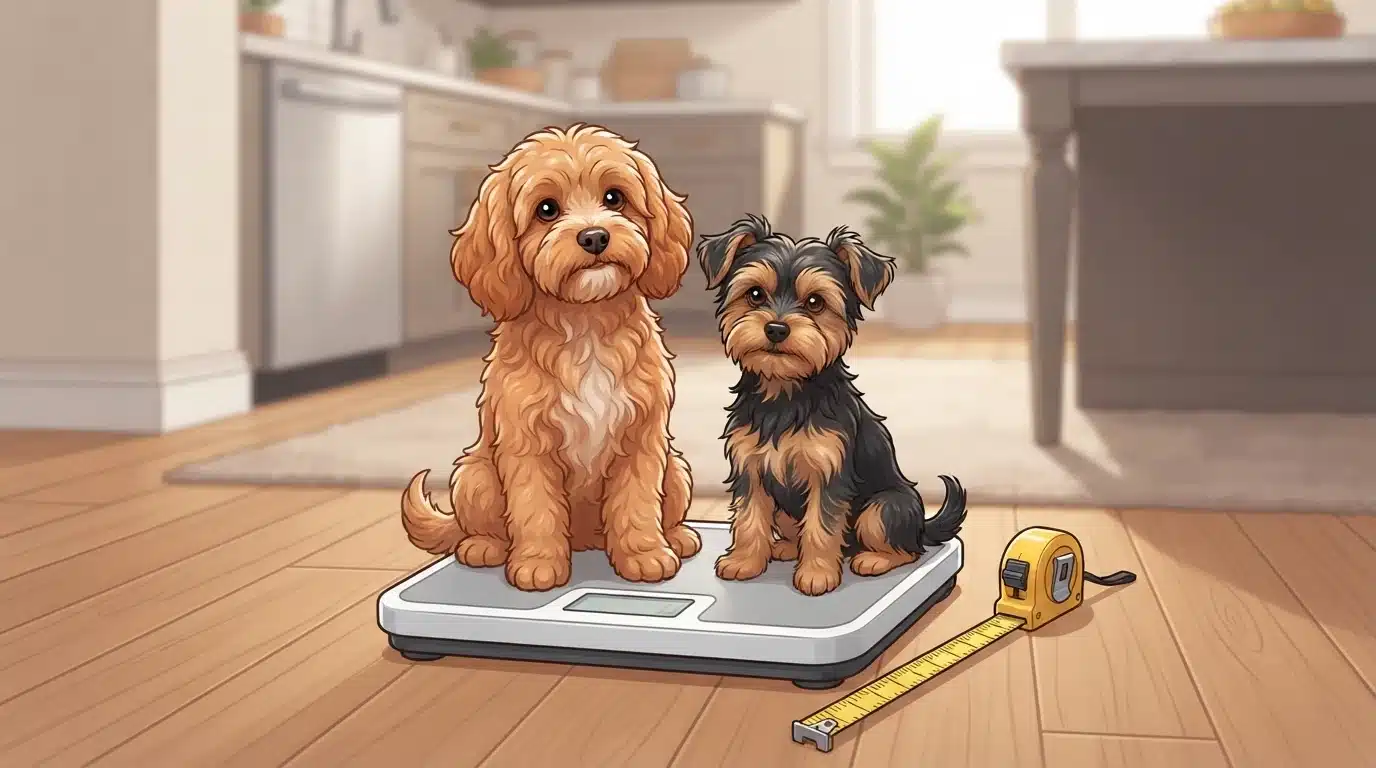
Neither mix has a fixed size, because the Poodle parent drives most of the range. A Cavapoo usually lands between 9 and 25 pounds, while a Yorkipoo stays smaller at 4 to 15 pounds. Ask the breeder which Poodle variety was used, Toy or Mini, and check both parents if you can. A Cavapoo breed guide confirms this span, so treat breeder estimates as ranges, not promises.
Coat Type, Shedding, and Allergy Note
Cavapoos tend toward wavy or curly coats with light shedding. Yorkipoos vary more: a Yorkie-type coat is fine and silky, while a Poodle-type coat curls tighter. Neither breed is truly hypoallergenic. Curly Yorkipoo coats mat easily without routine brushing, so coat type matters more than breed label.
Daily Brushing and Professional Grooming Cadence
Plan on brushing a Cavapoo several times a week and a Yorkipoo daily if its coat leans silky. Both need professional grooming every 6 to 8 weeks, a trim costing roughly $60 to $90 per visit. Our Cavapoo puppy care guide walks through a first-year grooming routine step by step.
Temperament, Energy, and Trainability
Personality is where these two mixes really split. Both are affectionate and smart, but they express it differently.
Daily Energy and Exercise Needs
A Cavapoo inherits the Cavalier’s easygoing streak. Two short walks plus a play session usually leave one satisfied. A Yorkipoo runs on a smaller engine that revs faster: PetMD describes the Yorkiepoo as playful and energetic despite its size, needing light but regular activity. Expect zoomies indoors either way. Neither is a jogging partner.
Barking, Alertness, and Apartment Living
The Yorkie side brings a strong alert instinct. Yorkipoos often announce visitors, delivery drivers, and every noise in the hallway, which can be a problem in an apartment with thin walls. Cavapoos bark far less and tend to greet strangers as friends, so they suit shared buildings and quieter homes better. Training can soften the Yorkipoo’s watchdog habits, but it rarely removes them.
Training, Socialization, and Household Fit
Both mixes are trainable because the Poodle parent is eager to please. Yorkipoos can inherit a hint of terrier stubbornness, so short, upbeat sessions work best. Cavapoos are sensitive and people-focused; harsh corrections shut them down, while praise moves them fast.
For busy family homes, the Cavapoo’s go-with-the-flow nature absorbs chaos well. The Yorkipoo fits an attentive adult household that enjoys a bold, bonded little companion. Early socialization decides the adult dog more than breeding does.
Inherited Health Risks to Discuss With a Vet
Mixed breeds inherit health risks from both parent lines. Knowing what to ask about before you commit helps you screen breeders, plan vet visits, and budget for care.

Cavalier-Line Risks: Heart and Neurological Screening
The biggest concern in the Cavapoo line is mitral valve disease, a heart valve problem that is about 20 times more common in Cavaliers than in other breeds and is their leading cause of death, according to NC State’s College of Veterinary Medicine. Cavaliers are also prone to syringomyelia, a painful condition where fluid-filled cavities form in the spinal cord near the brain; one screening study reports overall prevalence of 39 to 46 percent in the breed. Ask breeders whether parents have current cardiac clearances and, ideally, MRI screening, and have your vet listen for murmurs at every checkup.
Yorkie-Line Risks: Knees, Teeth, and Trachea
Yorkies bring a different list. Patellar luxation, where the kneecap slips out of place, is common in tiny breeds and can show up as skipping or bunny-hopping gaits. Their crowded, small jaws concentrate plaque, so dental disease is a near-universal issue without regular brushing and cleanings. Collapsing trachea, a weakening of the windpipe rings, causes a honking cough and worsens with collar pressure, so use a harness. Ask whether both parents had patella exams, and build dental care into your routine from puppyhood.
Shared Poodle-Line and General Small-Breed Risks
The Poodle side contributes progressive retinal atrophy, an inherited eye disease that DNA tests can screen for, along with general small-dog risks: hypoglycemia in very tiny puppies, obesity, and luxating patellas. Annual eye exams and knee checks benefit either mix.
A DNA panel does not rule out every disease. Treat it as one tool, alongside parent clinical exams and your vet’s checks.
Why “Hybrid Vigor” Is Not a Health Guarantee
Breeders sometimes claim mixed breeds are automatically healthier. The research does not support a blanket promise; a 2015 study of Cavalier records found the breed carries a heavy inherited disease burden, and a mix can still inherit any of it. For more on evaluating test records, see our Cavapoo puppy care guide.
First-Year Cost and Ongoing Budget Reality
Purchase Price: Why the Range Is So Wide
Well-bred Cavapoos and Yorkipoos often sell for $2,000 to $5,000. Sage Puppies prices its puppies between $3,500 and $4,500, which covers health testing on the parents, early socialization, and a structured matching process. Breeders charging far less usually skip those steps, so the upfront savings can show up later as vet bills.
First-Year Non-Purchase Costs
The puppy price is only the entry fee. Rover’s cost breakdown puts a dog’s first year at roughly $1,500 to $5,000 once you add supplies, vaccines, spay or neuter surgery, training classes, and pet insurance (Rover). Expect a starter bill for a crate, harness, carrier, and grooming tools, plus three to four puppy vet visits.

Recurring Annual Costs: Grooming, Food, and Preventive Vet
After year one, budget roughly $1,000 to $2,500 per year for a small Poodle mix. Both breeds need professional grooming every 6 to 8 weeks at about $60 to $90 per visit, plus quality small-breed food, monthly preventives, and an annual exam. A Yorkipoo eats less; a curlier coat often costs more to groom. The difference is real but modest, so let temperament and household fit drive the choice.
Choosing a Breeder and Preparing Your Home
Questions to Ask Any Breeder, Including a Sage Puppies Litter
Start with health testing on both parents, and ask to see the actual results, not just a verbal yes. Ask how the puppies are raised, when the parents are retired, and what socialization the litter gets before go-home day. The OFA’s breeder interview guide covers the deeper questions worth bringing. A breeder who welcomes these questions is a good sign; one who dodges them is not.
Home Prep for a Small, Low-Shedding Puppy
Puppy-proof one room first: block cords, lift houseplants, and stash small objects a 5-pound mouth could swallow. Set up a crate, a playpen, food and water bowls, and a brush before the puppy arrives. Both mixes need brushing several times a week and grooming every 6 to 8 weeks, so keep your groomer list ready. Pick a vet in advance and book a first exam within a few days of pickup.
Matching Your Household to the Right Mix
Honest answers about your routine matter more than coat charts. If you want a sturdier family dog that handles kids and short alone stretches, lean Cavapoo. If you want a tiny, people-focused shadow and can commit to daily coat care, the Yorkipoo fits. For sizing, costs, and parent-breed health detail, the Cavapoo pillar guide goes deeper.
Which Should You Choose: Cavapoo or Yorkipoo?
There is no universal winner here. Match the dog to your home, and both breeds can thrive.
Choose the Cavapoo If These Household Facts Fit
Pick a Cavapoo if you want a sturdier, softer-tempered companion that tolerates gentle handling from older kids. Cavaliers pass down an easygoing, people-first nature, so Cavapoos usually suit busy families with visitors coming and going. If you can commit to heart and brain health checks on the parents’ side, since Cavaliers carry risks of mitral valve disease and syringomyelia, the reward is one of the friendliest small dogs you can own.
Choose the Yorkipoo If These Household Facts Fit
Pick a Yorkipoo if your space is small and your household is quiet. At 4 to 15 pounds, these dogs fit apartment life well, but they bond intensely with one or two people and can be vocal. If you work from home or retire soon, that constant company becomes a feature, not a burden. Daily brushing for a Yorkie-type coat is part of the deal.
A Practical Next Step for Ready Buyers
List your deal-breakers first: size, barking tolerance, grooming time, and household energy. Then interview breeders about parent health testing, not just puppy photos. Ask each program which mix they actually specialize in, because depth in one breed usually beats variety. You can read our full Cavapoo guide for what responsible testing looks like before you place a deposit anywhere.

Still torn between the two? Start with your answers to the three household questions above. If a Cavapoo fits, Sage Puppies can help you match with a well-bred puppy through a clear application and honest conversation.
Frequently Asked Questions
Q1: compare cavapoo and yorkipoo for potential owners?
Choose a Cavapoo if you want a calmer, sturdier family dog that barks less and handles kids well. Choose a Yorkipoo for a smaller, bolder, more vocal companion in a quiet adult home. Fit, not ranking, decides it.
Q2: Which mix barks less in an apartment?
Cavapoos bark far less and greet strangers warmly, so they suit shared buildings better. Yorkipoos inherit a terrier alert instinct; training softens it but rarely removes it.
Q3: How much grooming does each mix need?
Brush a Cavapoo several times weekly, a silky-coated Yorkipoo daily. Both need professional grooming every 6 to 8 weeks, roughly $60 to $90 per visit.
Q4: Are Cavapoos or Yorkipoos healthier?
Neither is automatically healthier. Cavapoos carry Cavalier heart and brain risks; Yorkipoos risk knees, teeth, and trachea. Ask breeders for parent health clearances.
Q5: What should a Cavapoo or Yorkipoo cost in year one?
Well-bred puppies run $2,000 to $5,000, plus roughly $1,500 to $5,000 in first-year supplies, vet visits, and training. Budget $1,000 to $2,500 yearly after that.
Conclusion
The cavapoo vs yorkipoo decision comes down to fit, not rankings. Cavapoos offer a calmer, sturdier family dog with less barking but Cavalier heart and brain risks to screen for. Yorkipoos stay smaller and bolder, bonding closely with fewer people, at the cost of daily brushing, more vocal alerts, and dental care. Both need regular grooming, either mix can inherit health issues, and hybrid vigor guarantees nothing. Match size, noise tolerance, grooming time, and household energy to the right mix, then choose a breeder who shows parent health testing openly.