Quick Summary: Havanese fit busy households with kids and visitors, while Maltese suit quieter homes where someone can brush daily. Both shed little, live 13 to 16 years, and stay apartment-friendly, but the Havanese bonds with the whole family and tolerates rougher handling, whereas the under-7-pound Maltese prefers gentler companions and one or two close people. Grooming time, health screening for patellar luxation and eye issues, and breeder transparency matter more than picking one breed over the other, with realistic lifetime costs running $15,000 to $20,000.
If you want an apartment friendly dog that truly thrives in 700 square feet, the honest Havanese vs Maltese answer is this: the Havanese usually suits a busier household with kids, while the Maltese often suits a quieter home with time for grooming. The right choice depends on the household you actually have, not on which breed looks cuter.
That matters because these two toy breeds behave, age, and shed very differently, and you are signing up for a 13 to 16 year commitment. Choosing between a Havanese or Maltese should start with your daily routine. This comparison covers temperament, family fit, coat care, health, training, and apartment life for the Maltese or Havanese side by side, then maps each verdict to a specific home profile, including where to dig deeper on the Havanese.
Havanese vs Maltese at a Glance
| Havanese | Maltese | |
|---|---|---|
| Origin and group | Cuba; AKC Toy Group, national dog of Cuba | Mediterranean basin, often associated with Malta; AKC Toy Group |
| Size and weight | About 8.5 to 11.5 inches tall, 7 to 13 pounds | About 7 to 9 inches tall, under 7 pounds (commonly 4 to 7) |
| Coat type and grooming | Long, soft double coat, low shedding; brush several times a week to prevent mats | Long, straight, silky single coat, low shedding; daily brushing and routine baths to manage tear staining |
| Temperament with family | Affectionate, playful, people-oriented; tends to bond with the whole family | Lively, alert, attached to their person; often more reserved with strangers and young children |
| Exercise and apartment fit | Moderate daily play and short walks; well suited to apartments when exercised daily | Short walks and indoor play; apartment-friendly, but needs daily activity to stay calm |
| Health watch areas | Eye conditions, patellar luxation, hip concerns, and breed-specific screenings tracked by CHIC | Dental crowding, patellar luxation, white shaker syndrome, and tear staining around the eyes |
How Havanese and Maltese Compare
Havanese
The Havanese is Cuba’s only native breed, and the AKC places it in the Toy Group. It grows to about 8.5 to 11.5 inches and 7 to 13 pounds, with a soft double coat that sheds little. Families often pick a Havanese or Maltese for apartment life, and this sturdy, people-loving breed fits that role well.

Key strengths
- Bonds with the whole family rather than one person
- Low shedding, only needs brushing several times a week
- Happy with short walks and daily indoor play
Maltese
The Maltese is an ancient toy breed from the Mediterranean, often linked to Malta, and it weighs under 7 pounds. Its silky white coat needs daily brushing, and it tends to attach closely to one person. Calmer households, singles, and retirees often suit it best.
Key strengths
- Extremely compact, ideal for small apartments
- Lively and alert without heavy exercise demands
- Steady, affectionate companionship for quieter homes
Temperament and Family Fit: Where Each Breed Shines
Both breeds want to be with you. The real difference is how much activity and handling each one absorbs comfortably, and that shapes which home fits best.
How Each Breed Bonds with People
The Havanese bonds with the whole household, not one favorite person. The AKC describes it as an affectionate, social companion, and the Havanese Club of America rates it at the top of its scale for family affection, child tolerance, and friendliness with other dogs. It follows you from room to room and stays playful well into adulthood. That depth of temperament is worth reading about in detail, which is why our Havanese temperament and family compatibility review breaks it down by age and household type.
The Maltese bonds just as deeply but often with one or two people. It is gentle, alert, and happiest on a lap. Left alone too long, either breed can develop separation stress, so both need owners who are home often or can arrange company.

Homes with Kids, Visitors, and Other Pets
Havanese handle busy homes well. Their sturdy 7 to 13 pound frame tolerates honest toddler play better than most toy breeds, and they greet visitors warmly instead of hiding. If your children are under six, this resilience matters.
The Maltese suits calmer households. Under 7 pounds, it can be injured by a fall or rough grab, so most breeders recommend homes with gentle, older children. With respectful kids, quiet adults, and polite pets, it thrives.
Coat, Shedding, and Grooming: The Real Weekly Time Cost
Both breeds are low-shedding, but neither is low-maintenance. The coat you choose decides how many minutes your week gives to brushing, and the difference between them is real.
Havanese Double Coat: What Brushing Actually Looks Like
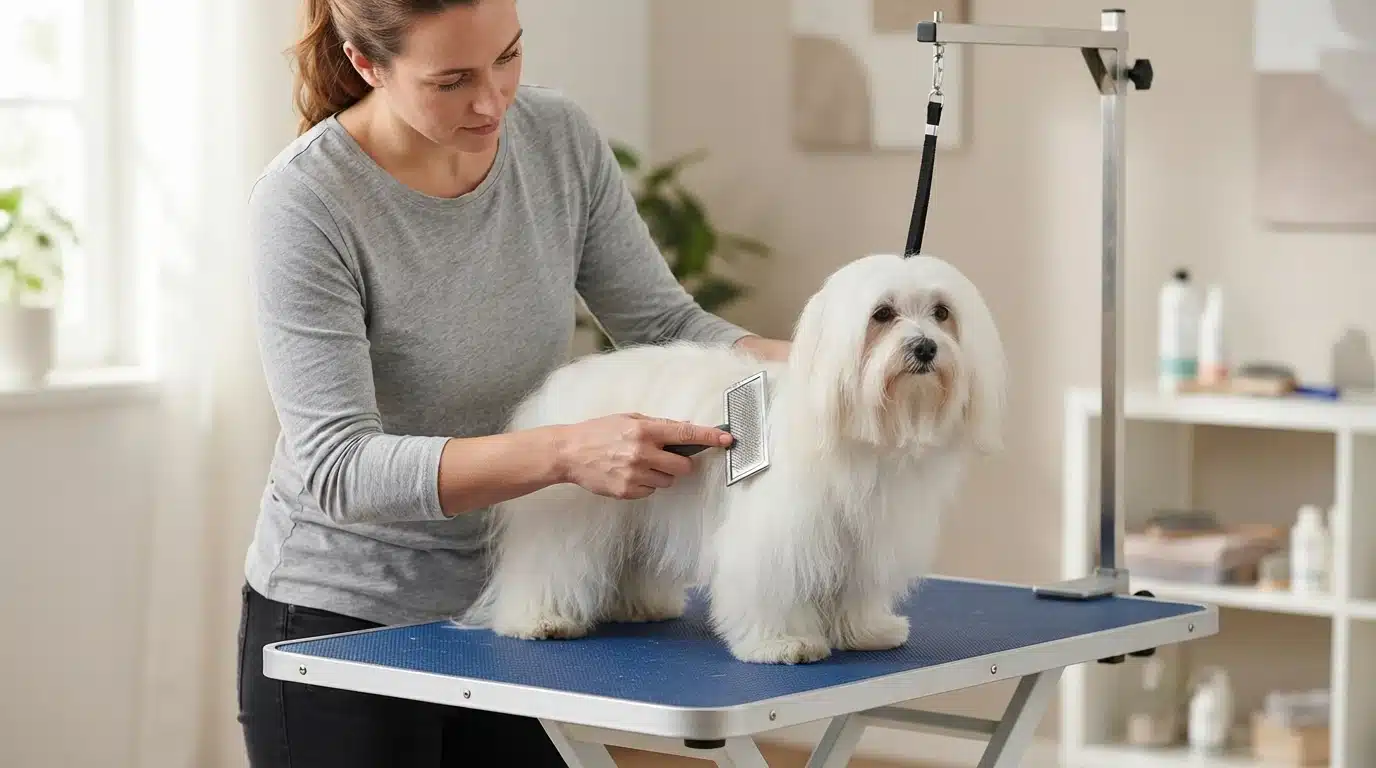
The Havanese carries a soft double coat that traps loose hair instead of dropping it on your couch. That keeps floors clean, but trapped hair mats fast if you skip sessions. Plan on brushing two to three times a week, more for a full coat; the Havanese Club of America estimates full-coated adults need exactly that, and ASPCA Pet Insurance recommends at least twice weekly. Each session runs 10 to 15 minutes with a slicker brush, working down to the skin. Most pet families keep a shorter puppy cut, which trims the work and a professional groom every four to six weeks handles the rest. Our Havanese puppy care guide covers grooming routines in detail. Budget roughly 45 to 60 minutes a week plus grooming fees.
Maltese Single Coat and Tear Stain Care
The Maltese has a single layer of long, white, human-like hair with no undercoat, so it sheds less than almost any breed. The trade-off: that floor-length coat tangles daily, and most owners brush every day or keep a short clip. Because the coat is white, tear stains show quickly, so plan on wiping under the eyes each day and keeping the face dry. Count on about 10 minutes daily plus the same groomer visits.
Health and Lifespan: What Buyers Should Actually Watch
Both breeds usually live 13 to 16 years, so the real question is not how long they live but what health checks separate a well-bred puppy from a risky one. In each case, the parents’ test results tell you far more than the puppy’s cute face.
Havanese Health Watch Areas
Havanese are generally sturdy, but a few issues run in the breed. Patellar luxation, a kneecap that slips out of place, is the most common, so ask for OFA patella certification on both parents. Eye conditions such as cataracts and heart problems also appear, which is why the Havanese Club of America lists patella, eye, and cardiac exams as core CHIC requirements. Dental crowding shows up too because of the short muzzle. You can look up any breeder’s dogs in the free OFA records search before you commit. If a breeder says “we’ve never had a problem” but cannot show test results, walk away. Our own breakdown of Havanese health risks by breed covers how these concerns compare with other small breeds.

Maltese Health Watch Areas
Maltese health concerns center on small size. Their tiny mouths crowd teeth, so daily dental care matters more here than in almost any other breed; many need professional cleanings by middle age. Patellar luxation appears in this breed too, along with low blood sugar in very young puppies and a risk of white shaker syndrome, a tremor condition treatable with medication. Fragile bones mean falls from beds or arms can cause fractures. Ask breeders for patella and eye clearances, and confirm puppies stay with the litter until at least 10 to 12 weeks. A slightly larger, well-built Maltese often handles family life better than the tiniest one, so resist choosing the smallest puppy in the litter.
Training, Exercise, and Apartment Living Day to Day
Daily Energy and Mental Work
Both breeds are moderately active, so neither needs a yard to stay happy. Two short walks plus a play session cover most of it. The Havanese carries a bit more energy and loves games, trick training, and even dog sports, so it wants more mental work than the Maltese. The Maltese is content with a gentler routine, though it still needs daily movement and attention to stay settled indoors.
For either breed, five to ten minutes of puzzle toys or short training sessions burns more energy than a long nap on the couch. Small breeds mature fast mentally, so start early with basic cues and house rules. Our Havanese puppy care guide walks through feeding, grooming, and first-month training step by step.

Separation, Barking, and Noise in Shared Walls
This is where apartment fit really gets tested. Both breeds bond hard with their people, and both can develop separation anxiety if left alone all day. The ASPCA notes that barking and howling are common signs of separation distress, and thin walls turn that into neighbor complaints fast.
Neither breed is a silent one. Havanese can be alert barkers, and Maltese often yap at every sound in the hallway. The fix is the same either way: teach a “quiet” cue early, manage window and door access, and build alone time gradually. Start with a few minutes, then stretch it. A stuffed chew or food puzzle helps the goodbye feel routine instead of scary.
If you work long days away from home, plan for a dog walker or a midday visit. Both breeds do best with companionship, not full-time solitude.
Tip: Tape a week of normal daytime noise before you decide. If you can hear neighbors’ dogs bark, they can hear yours.
Cost, Longevity, and the 13 to 16 Year View
Realistic Lifespan and Senior Care
The AKC lists the Havanese’s life expectancy at 14 to 16 years, and the Maltese sits in the same 13 to 16 year range. That is a long runway. A puppy you bring home at eight weeks could share your apartment until your toddler graduates high school.
Plan for the senior years now. Both breeds often slow down after age 10 and need twice-yearly vet visits, dental cleanings, and joint support as their knees and eyes age. Small dogs hide pain well, so watch for stiff mornings or hesitation on stairs.
Adopting or buying is not the expensive part. The last four years often are.
First-Year and Lifetime Budget: A Worked Example
Here is a labeled example, not a market average. Say you pay a $3,500 to $4,500 purchase price, the range for a well-bred toy breed puppy from a careful program. Add about $1,200 the first year for vaccines, spay or neuter, supplies, and food, plus $400 to $700 in grooming.
| Cost item | First year | Each year after |
|---|---|---|
| Puppy price | $3,500-$4,500 | – |
| Vet care | $500-$700 | $300-$600 |
| Grooming | $400-$700 | $500-$800 |
| Food and supplies | $400-$500 | $400-$600 |
Over 15 years, that example totals roughly $15,000 to $20,000. Budget for it before you fall in love.
Choosing a Healthy Puppy in Either Breed
Both breeds live 13 to 16 years, so the breeder you pick matters more than the breed you pick. A well-bred puppy starts with health testing, honest paperwork, and a breeder who screens you as hard as you screen them.
Questions to Ask Any Breeder
Start with health testing. Ask whether both parents have current patella (kneecap) and eye clearances, and whether results are on file with a registry like OFA or CERF. Then ask how many litters the program raises each year, where the puppies live, and what socialization they get before they leave. A responsible breeder will also interview you about your household, schedule, and experience, because they want the right home as much as you want the right puppy, a habit the AKC lists as a hallmark of responsible breeding. Good programs breed only Havanese or only Maltese, not a rotating mix. That focus shows in how precisely they can answer questions about temperament, size, and lineage.
Reading Records and Red Flags
Ask for written records: vaccination dates, deworming schedule, a recent vet exam, and the exact date the litter can go home. Puppies should stay with their mother and littermates until at least 10 to 12 weeks. Be cautious if a breeder refuses a video call or visit, will not show where the dogs live, pushes a same-day deposit, or claims the puppies are “vet checked” without documentation, red flags echoed in buyer guidance. A written health guarantee helps, but treat any breeder promising a puppy will never get sick as one to walk away from. Clear paperwork and open answers matter more than glossy photos.
Which Should You Choose: Havanese or Maltese?
Both breeds fit small spaces and both live long lives. The better pick comes down to your household’s noise level, the ages of your kids, and how much time you can give a dog each day.
Choose a Havanese If Your Home Looks Like This
Pick the Havanese when your house has energy. A busy family with children, other pets, or a steady stream of visitors suits this breed well. Its sturdy 7 to 13 pound frame handles honest toddler play better than most toy breeds, and it greets guests instead of hiding.
It also fits apartment life because it sheds little and barks far less than many small dogs. You will trade some brushing time for that flexibility: plan on 10 to 15 minute sessions with a slicker brush a few times a week. If you want one dog that can keep up with kids in the afternoon and settle on the couch at night, this is your breed.
Choose a Maltese If Your Home Looks Like This
Pick the Maltese when your home is calmer. Retirees, remote workers, and couples in condos match this breed’s pace. It weighs under 7 pounds, so it needs less space and slightly shorter play sessions, and its 10 minutes of daily brushing keeps that white coat in shape.
Just be honest about the children in the picture. A fall or rough grab can injure a dog this small, so the Maltese fits homes with gentle, older kids best.
If You Lean Havanese, Here Is a Clean Next Step
If the Havanese fits your household, review Sage Puppies’ application to see how owner-managed matching works. Then compare the checklist above against your weekly schedule before you commit.

If the Havanese fits your household, Sage Puppies can help. Cassie Milar’s program raises well-bred Havanese puppies with a clear application and owner-managed matching, so you can start now and bring home a puppy raised with care. Wisely Bred. Beautifully Loved.
Frequently Asked Questions
Q1: What is the main difference between a Havanese and a Maltese?
The Havanese bonds with the whole family and tolerates busier homes, while the Maltese usually attaches to one or two people and fits quieter households. The Maltese also needs daily brushing, versus two to three sessions weekly for a Havanese.
Q2: Which is better for families, Havanese or Maltese?
The Havanese. Its sturdy 7 to 13 pound frame handles rough toddler play better, and it greets visitors warmly. The under-7-pound Maltese can be injured by a fall, so it fits gentle, older kids best.
Q3: Which breed has fewer health problems, Havanese or Maltese?
Both are fairly sturdy toy breeds with overlapping risks like patellar luxation. Watch for eye and heart issues in Havanese; dental crowding and white shaker syndrome in Maltese. Parent health testing matters more than breed choice.
Q4: Do Havanese or Maltese bark a lot in apartments?
Both can be noisy. Havanese alert bark, and Maltese often yap at hallway sounds. Teach a “quiet” cue early and build alone time gradually.
Q5: How much does each breed cost per year?
Expect roughly $3,500 to $4,500 for a well-bred puppy, then $1,200 or more the first year, plus grooming and food, so budget $15,000 to $20,000 over 15 years.
Conclusion
The Havanese vs Maltese decision comes down to your household, not a scoreboard. Both breeds are small, low-shedding, apartment-friendly, and long-lived at 13 to 16 years. Pick the Havanese if your home is busy with kids, pets, or visitors; its sturdier frame and whole-family bonding handle real life well. Pick the Maltese if your home is quieter and someone can give 10 minutes of daily brushing. In either breed, the breeder matters more than the breed: demand patella and eye clearances, written records, and 10 to 12 weeks with the litter. Budget $15,000 to $20,000 over 15 years, and the right match will repay you every single day.