Quick Summary: A Havanese puppy thrives on a strict rhythm: four small daily meals until six months, then tapering to two, paired with a growth-formulated small-breed food. Their long, untrimmed double coat needs near-daily brushing down to the skin, plus blow-drying after baths to prevent matting. Short, positive training sessions work best for this people-focused breed, and early socialization before 16 weeks, routine vet care, and watching for luxating patella and eye issues round out the first year. Built around the practices Sage Puppies uses from day one, a predictable routine of meals, potty breaks, play, and naps turns a tiny puppy into a calm companion.
You bring home an eight-week-old Havanese who fits in one hand. That same afternoon, you face three decisions at once: how often to feed her, whether a first bath can wait, and which command to teach first. Getting these wrong is easy, because a feeding Havanese puppy needs small, frequent meals, not the free-feeding schedule that works for big dogs.
This guide walks the first year in order. You will learn how to choose Havanese puppy food, set a feeding rhythm that protects her toy-sized stomach, and handle Havanese coat care from the first gentle brush to the full grooming routine. Then we cover early training and socialization, plus the health checks that matter for this breed. The advice follows the AKC Havanese standard and the practices our Sage Puppies families use every day, starting in the first week at home.
The Havanese at a Glance: What Every New Owner Should Understand First
The Havanese is Cuba’s national dog, a small companion bred to stay close to people. Before your puppy comes home, three traits shape everything: its size, its coat, and its need for company.
Size, Coat Type, and Daily Energy
Adults stand 8.5 to 11.5 inches tall and weigh 7 to 13 pounds, so they suit apartments and small homes well. The AKC standard describes a slightly longer-than-tall body covered in a long, untrimmed double coat that is soft, silky, and wavy. That coat rarely sheds much, but it mats fast without regular brushing.
Energy levels are moderate. A Havanese enjoys short play sessions, a couple of walks, and then a long nap near you. When feeding a Havanese puppy, portions stay small because the stomach does. Expect a sturdy little dog, not a fragile one, but still one that children must handle gently.
Temperament and What It Means for Training
Bred for centuries as a companion, the Havanese is friendly, intelligent, and playful, according to the AKC breed profile. It wants to be where you are. This makes training easier than with many breeds: the puppy works for your attention and learns quickly with praise and treats.
The flip side is a real risk of separation distress if the puppy is left alone for long hours. Keep early sessions short and cheerful, and pair alone-time practice with something enjoyable. A soft, people-focused breed responds to patience far better than correction, which sets the tone for every lesson that follows.
Feeding Your Havanese Puppy: Schedule, Food Choice, and Portion Basics
Feeding a Havanese puppy well comes down to three things: a steady meal schedule, a food formulated for growth, and portions matched to your puppy’s body rather than the bag. Because Havanese adults weigh only 7 to 13 pounds, small errors show up fast, so a little structure pays off.
How Often to Feed by Age
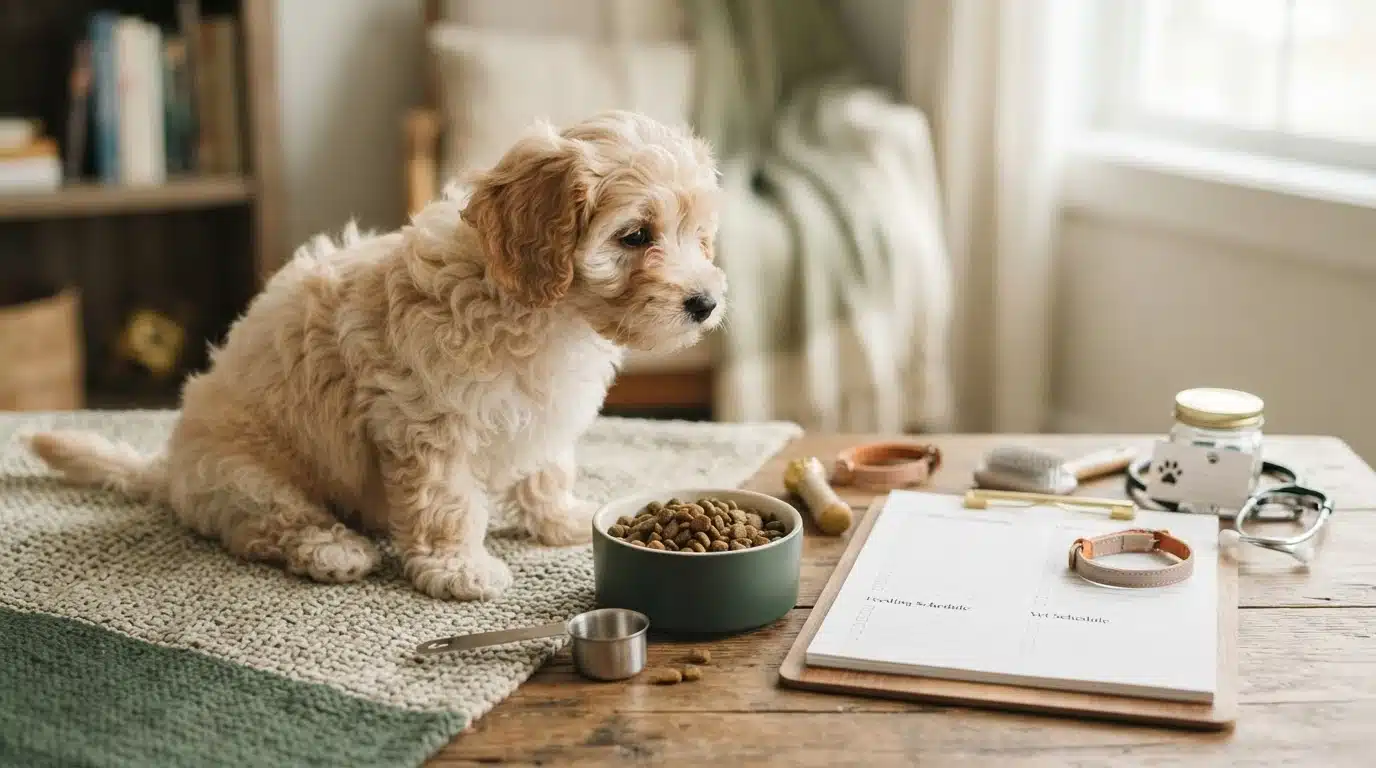
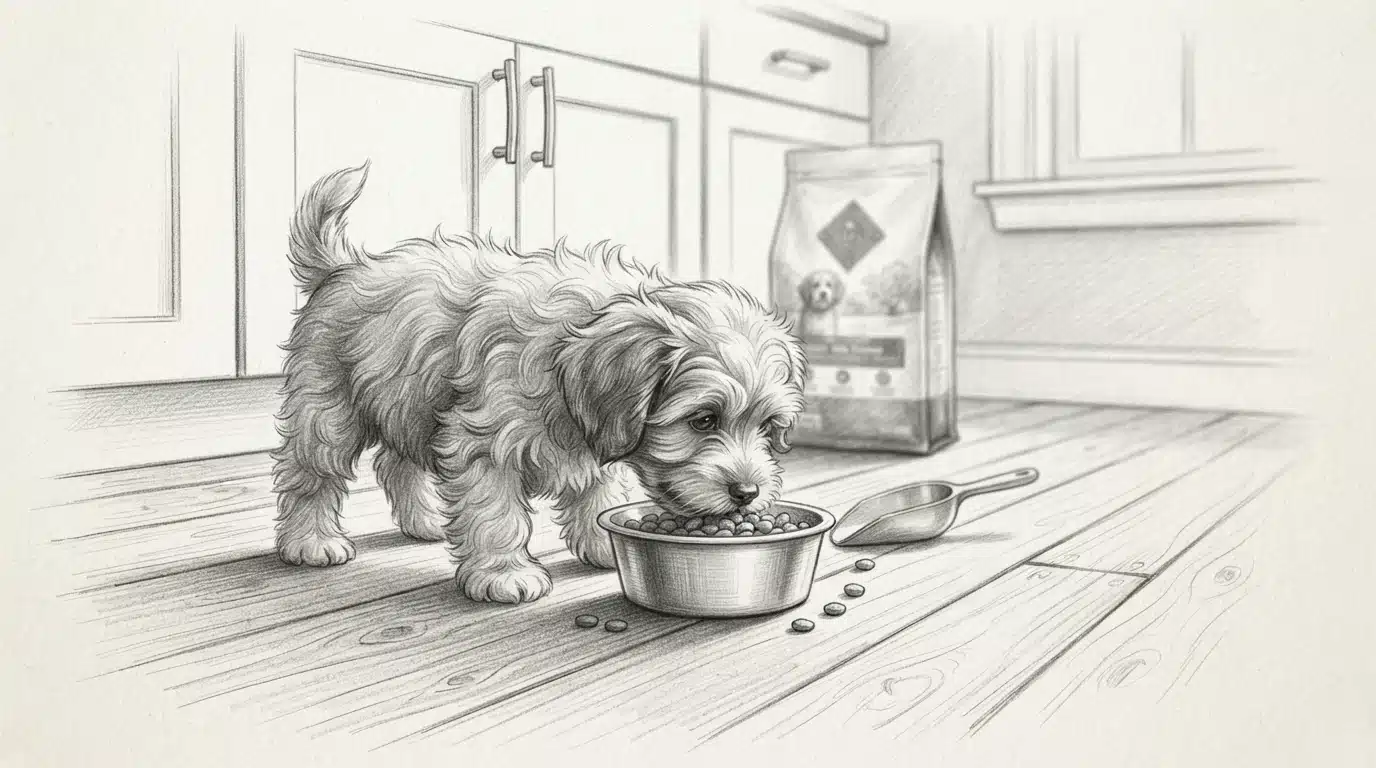
Puppies need more frequent meals than adults because their tiny stomachs and fast growth leave little fuel reserve. From weaning until about six months, feed four meals a day, which suits toy and small breeds especially well. Between six and twelve months, drop to three meals, then settle into two meals a day for life.
| Age | Meals per Day |
|---|---|
| 8 weeks to 6 months | 4 |
| 6 to 12 months | 3 |
| 12 months and older | 2 |
Keep meal times consistent, and pick up any uneaten food after 15 to 20 minutes. A steady schedule also makes house training easier, since puppies usually need to go out shortly after eating.
Choosing a Food and Reading the Label
Pick a food labeled “complete and balanced” for growth or all life stages. That phrase means the recipe meets AAFCO nutrient profiles, the industry standard for puppy nutrition. A small-breed puppy formula is a good match, since the kibble pieces are sized for smaller mouths.
Check the first few ingredients for a named animal protein, and confirm calorie content is listed. When you bring your puppy home, ask what the breeder was feeding and stay with it for two weeks before switching. A slow transition over seven to ten days prevents stomach upset.
Portion Control and Body Condition
Portion basics start with the feeding chart on the bag, then adjust to your puppy’s actual condition. Weigh your puppy monthly, and aim to feel ribs easily under a thin layer of fat with a visible waist from above. If you cannot feel the ribs, cut back slightly; if they are sharp and obvious, add a little. Vets recommend meal feeding rather than free feeding, because steady portions keep growth on track. Treats should stay under ten percent of daily calories.
Grooming and Coat Care at Home
The Havanese coat is long, soft, and silky, and the AKC notes it needs near-daily attention to stay free of mats. Start grooming routines in the first weeks you have your puppy, so handling becomes normal instead of a battle.
Brushing a Double Coat the Right Way
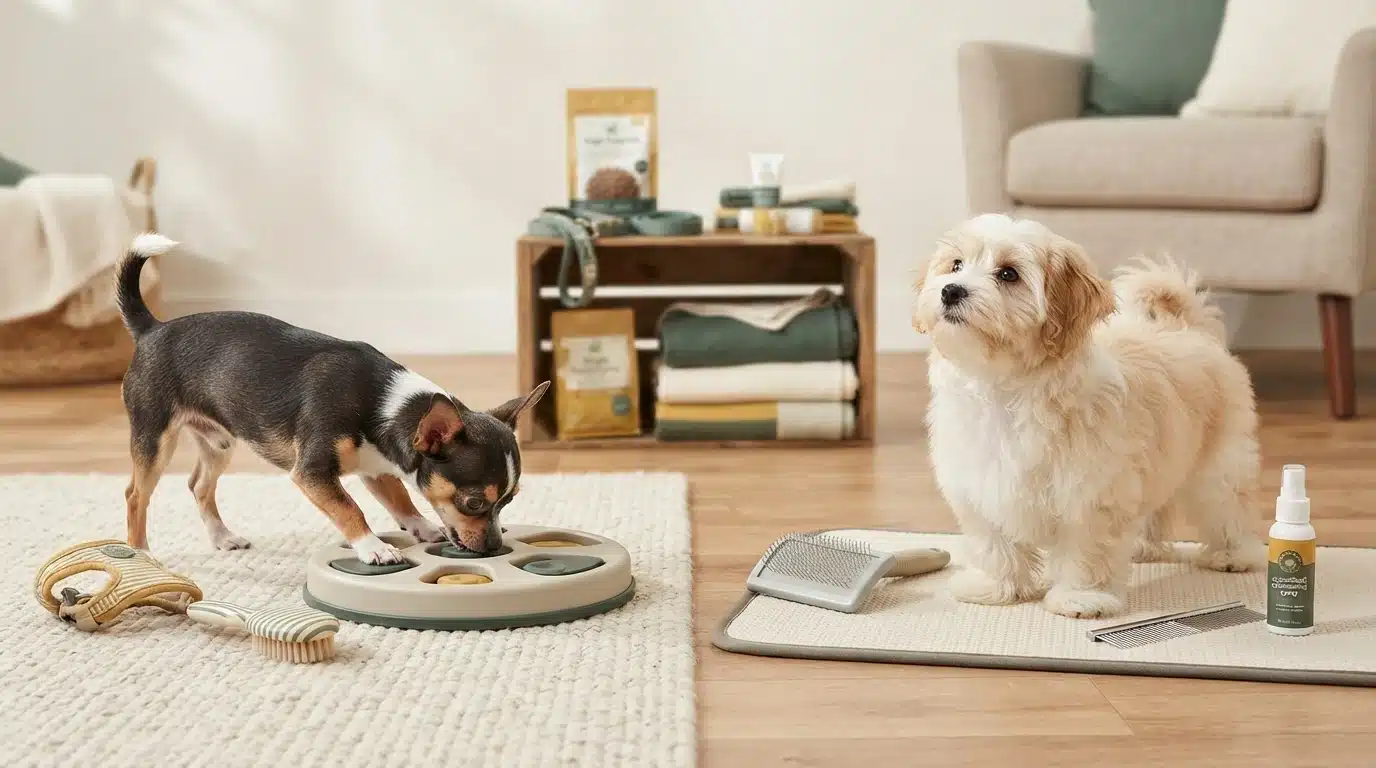
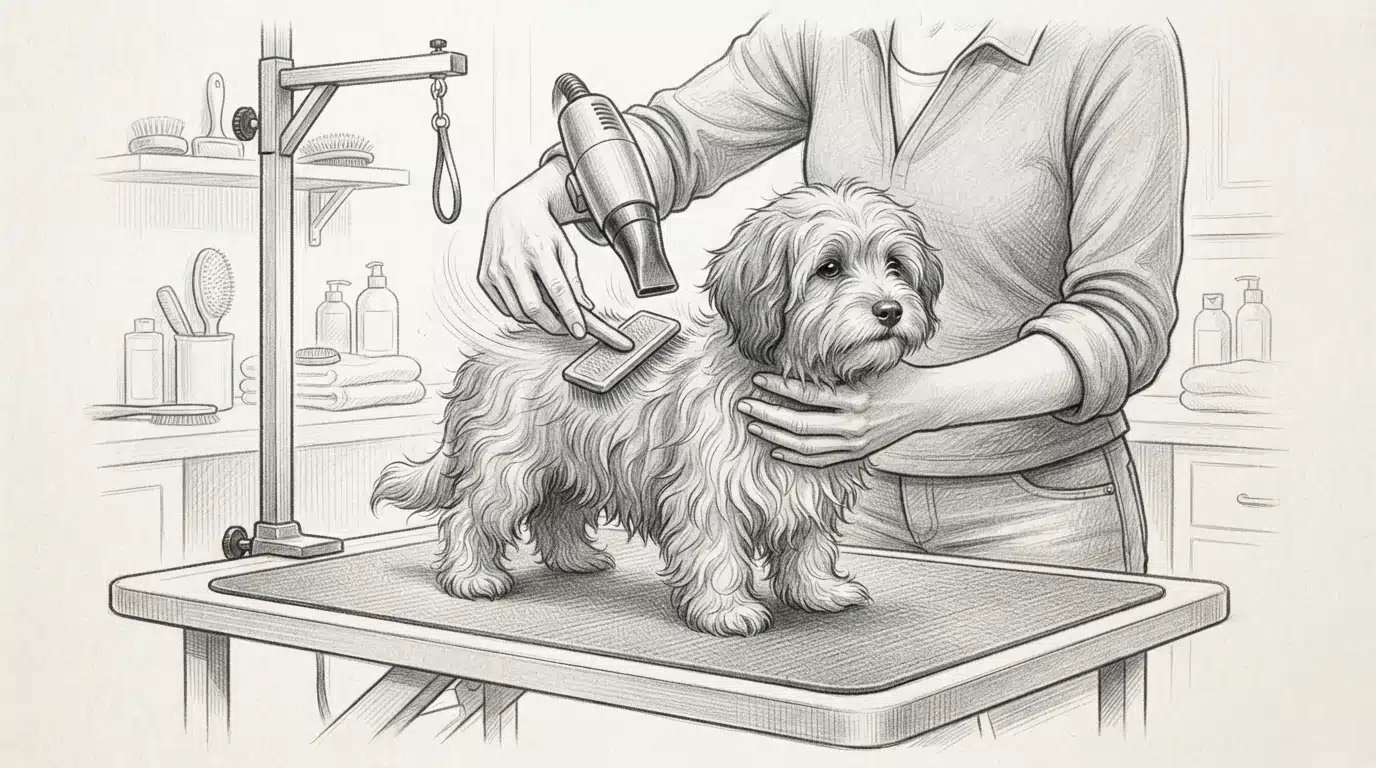
Brush down to the skin, not just the top layer. Mats form at the base, especially behind the ears, in the armpits, and under the collar, so work through those friction zones every session. Use a slicker brush in a gentle rolling motion, then follow with a metal comb to catch anything you missed. A light spritz of water or coat conditioner before brushing prevents breakage. Aim for daily brushing, or at least a solid session three to four times a week if you keep the coat trimmed short.
Bathing, Drying, and Skin Sensitivity
Bathe every two to four weeks with a mild puppy shampoo and conditioner, then rinse thoroughly because leftover soap itches. Dry matters as much as the wash: a damp Havanese coat mats fast, so blow-dry on low heat while brushing the coat upward and outward. Never let the puppy air-dry in a tangled state, or you will comb out tight mats later and hurt the skin. If you notice flaking, redness, or constant scratching, slow down on baths and ask your vet, since small breeds often have sensitive skin.
Eyes, Ears, Nails, and Dental
Tear staining shows up quickly on light coats, so wipe under the eyes daily with a damp cloth. Check ears weekly for redness or odor, and pluck or trim hair around the ear opening only if your vet or breeder recommends it. Trim nails every few weeks; if you hear clicking on hard floors, they are too long. Brush teeth several times a week with dog toothpaste, since small breeds build tartar fast. Coat condition also reflects diet, so steady, balanced feeding a Havanese puppy routine supports healthy skin and shine. For a week-by-week plan, see this Havanese grooming schedule.
Training Foundations: Potty, Crate, and Basic Manners
Havanese puppies learn fast but need structure early. Their small bladders, big feelings, and love of company mean potty habits, crate comfort, and manners all come from the same routine.
Potty Training Week by Week
Take your puppy out first thing in the morning, after every meal, after naps, and before bed. The AKC advises picking a simple cue like “go potty” and saying it calmly each time, then rewarding the moment your puppy finishes outside (AKC). Expect real progress around 12 to 16 weeks, since small breeds often need a few extra weeks to gain bladder control. Stay consistent through week-to-week ups and downs, and never punish accidents; clean them well and watch the schedule more closely. For a full timeline, our Havanese potty training schedule by age breaks it down month by month.
Crate Training for a Companion Breed
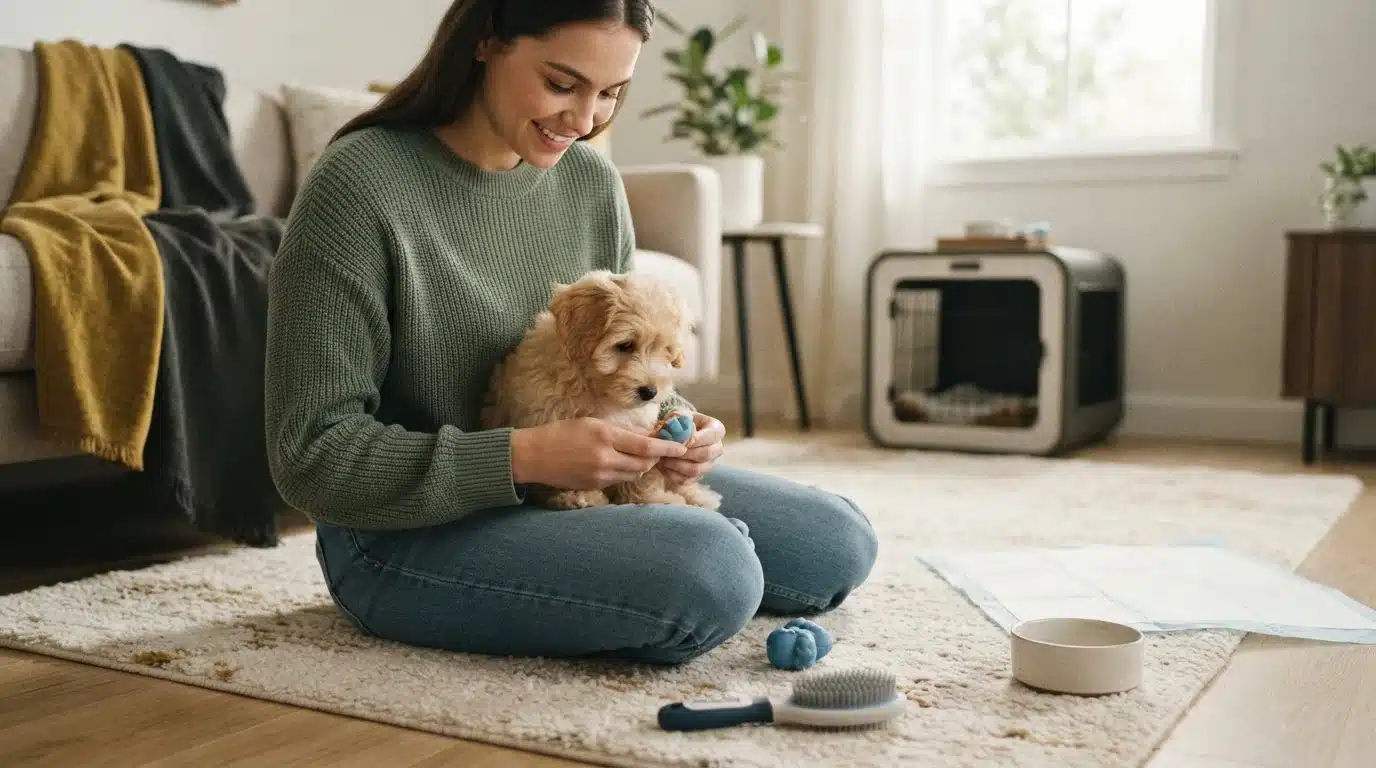
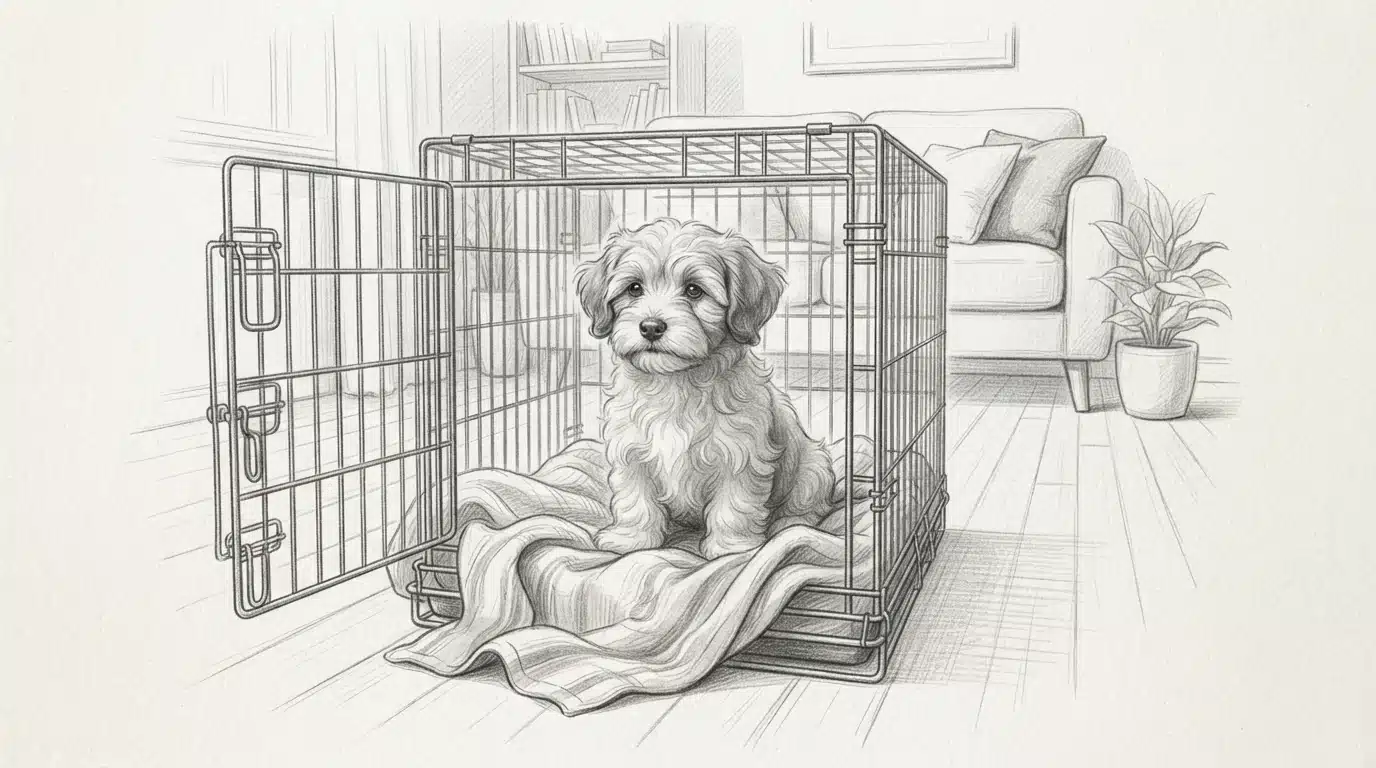
A crate gives your puppy a safe den and protects your house while you shower or cook. Havanese are velcro dogs, so the crate also teaches them to settle alone, a skill that prevents separation stress later. Keep it near the family at first, never use it as punishment, and make it the most comfortable spot in the room. Feed meals inside with the door open, then close it for short stretches while you stay in sight. Small-breed bladders limit crate time, so pair short sessions with frequent potty breaks.
Teaching Sit, Come, and a Quiet Cue
Keep sessions to three to five minutes and always end on a win. Lure a sit with a treat over the nose, then say “sit” only once your puppy gets it. Practice “come” indoors with huge praise before you ever try it outdoors. Havanese can become barky, so teach a quiet cue: let them bark once or twice, say “quiet,” and reward the silence.
Treats count toward daily food, so keep them tiny. When feeding a Havanese puppy on a fixed schedule, deduct training treats from meals to keep calories steady.
Health Basics: Vet Visits, Vaccinations, and Breed-Specific Watch-Fors
Good health care in year one sets the pattern for life. Havanese are sturdy little dogs, but their size and coat bring a few breed-specific watch-fors that are easier to manage when you catch them early.
Your First Vet Visit and What to Bring
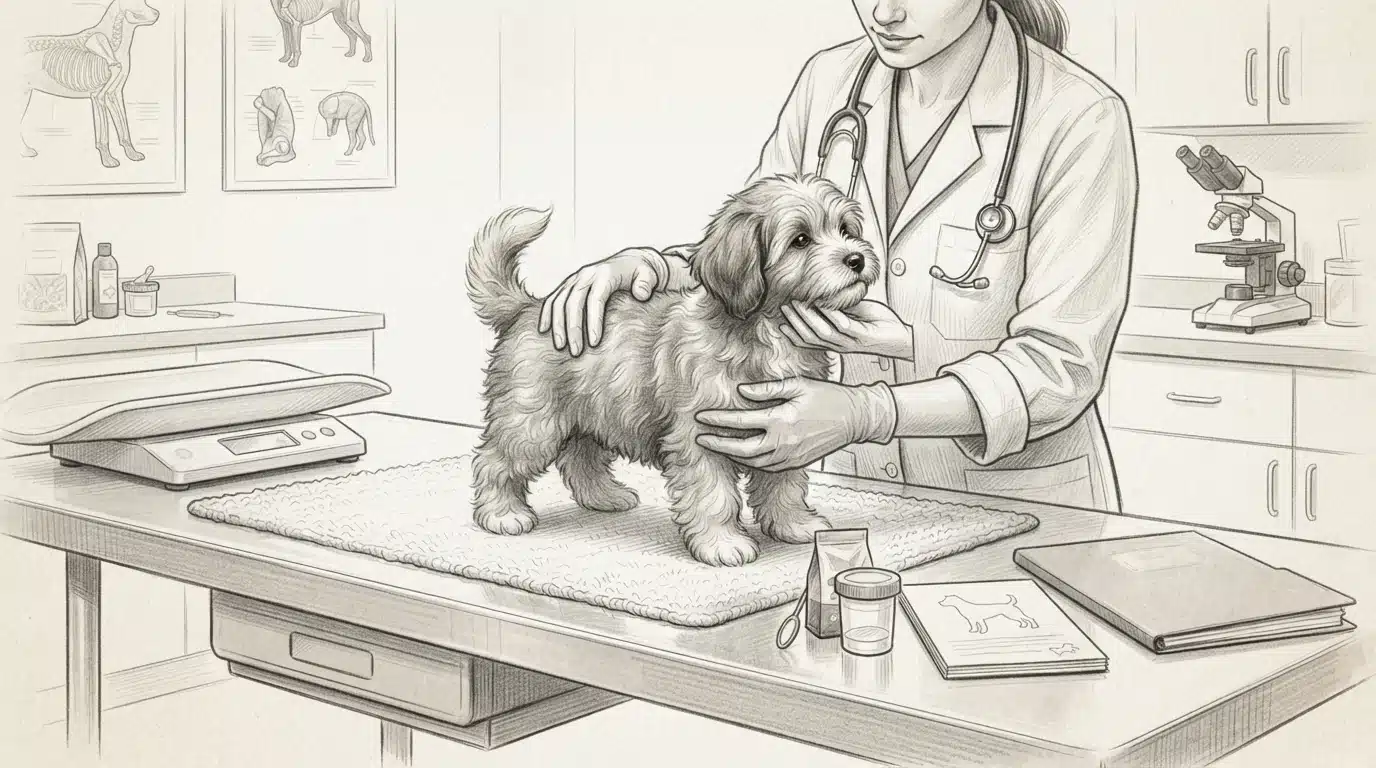
Book a vet visit within the first few days home, even if your puppy seems perfect. Bring the health record your breeder gave you, any food the puppy has been eating, and a fresh stool sample. The vet will check heart, eyes, knees, and bite, then compare notes on feeding Havanese puppy schedules and weight gain. Write down questions before you go; the appointment moves fast.
Vaccinations, Parasite Prevention, and Spay or Neuter Timing
Puppies need a series of combination vaccines, usually starting around 6 to 8 weeks and repeated every 3 to 4 weeks until about 16 weeks, plus rabies on your state’s schedule. Your vet sets the exact plan. Heartworm and flea or tick prevention typically start early too, so ask for doses sized for a small breed.
Spay or neuter timing matters more in small dogs than many owners expect. Many vets now suggest waiting until 12 months or later for toy breeds, since growth plates close late. Discuss the timing openly at your second or third visit rather than deciding at checkout.
Havanese-Specific Health Watch-Fors
Three issues show up more often in Havanese, so learn the early signs. Watch for cloudy eyes or squinting, which can point to inherited eye disease. Watch for a skipping gait or bunny hop, a classic sign of luxating patella, where the kneecap slips out of place. And check the ears weekly, because the drop ears and heavy coat trap moisture. Regular teeth brushing rounds out the routine, since small breeds build tartar fast.
Socialization, Exercise, and the First-Week Routine
Your Havanese puppy’s temperament depends on what you do before 16 weeks. The good news: this breed loves people, so your job is mostly about giving safe, positive exposure.
Safe Socialization Before Full Vaccination
The first three months of life matter most for socialization, and the American Veterinary Society of Animal Behavior recommends starting before puppies finish their vaccines. The rule is simple: keep paws off unknown ground, but let the world come to your puppy.
Safe options include short car rides, being carried through a pet-friendly store, meeting calm friends at home, and sounds like vacuum cleaners, traffic, and doorbells. Pair every new thing with treats. Gentle handling of paws, ears, and mouth now makes grooming much easier later, and good breeding programs start this handling well before your feeding Havanese puppy routine begins at home.
Exercise, Play, and the Boredom-to-Barking Link
Havanese puppies need short play sessions, not long walks. Five to ten minutes at a time, a few times a day, is plenty for a 7 to 13 pound adult body still growing.
A bored Havanese becomes a noisy one. Barking, chewing, and jumping usually mean the puppy has energy left over. Rotate a few toys, add a sniffing game like scattering kibble in grass, and end each session with a short settle so calm behavior gets rewarded too.
A Starter First-Week Daily Routine
Puppies settle faster with a predictable day. Use this pattern as a starting point and adjust to your schedule.
| Time | Activity |
|---|---|
| 6:30 am | Wake, potty trip, breakfast |
| 7:00 am | Play and training, then nap |
| 12:00 pm | Lunch, potty, short play, nap |
| 5:00 pm | Dinner, gentle socialization time |
| 8:00 pm | Calm play, last potty at bedtime |
| Overnight | One or two potty trips |
Consistency in meals, potty breaks, and naps does more for the first week than any training session.

Caring for a Havanese puppy gets easier with a good start. If you want a well-bred, well-socialized companion raised with this same care, visit Sage Puppies. Browse available puppies, review pricing, and start your application today.
Frequently Asked Questions
Q1: How often should I feed my Havanese puppy each day?
Four meals daily from 8 weeks to 6 months, three meals from 6 to 12 months, then two meals for life. Pick up uneaten food after 15 to 20 minutes.
Q2: What is the best way to groom a Havanese puppy at home?
Brush down to the skin with a slicker, working through friction zones behind ears and armpits. Follow with a metal comb, and lightly mist the coat first to prevent breakage.
Q3: How do I potty train a Havanese puppy successfully?
Take her out after every meal, nap, and play session, reward immediately outside, and clean accidents without punishment. Expect steady progress around 12 to 16 weeks.
Q4: When can I bathe my Havanese puppy, and how often?
Bathing is safe from the first weeks home. Bathe every two to four weeks with mild puppy shampoo, rinse well, and blow-dry on low heat while brushing to prevent mats.
Q5: How much exercise does a Havanese puppy need?
Short sessions work best: five to ten minutes of play, a few times daily. Add sniffing games and end with calm settling time to prevent boredom barking.
Putting It All Together
Raising a Havanese puppy comes down to rhythm. Feed small, frequent meals that match her age, brush that silky double coat down to the skin before mats form, and keep training sessions short, patient, and rewarding. Build in daily socialization before 16 weeks, keep up with vet visits and vaccines, and watch for breed-specific issues like luxating patella and eye trouble. None of it requires perfection, just consistency. A predictable routine of meals, potty breaks, play, and naps gives this people-loving breed exactly what it needs to grow into a calm, joyful companion.