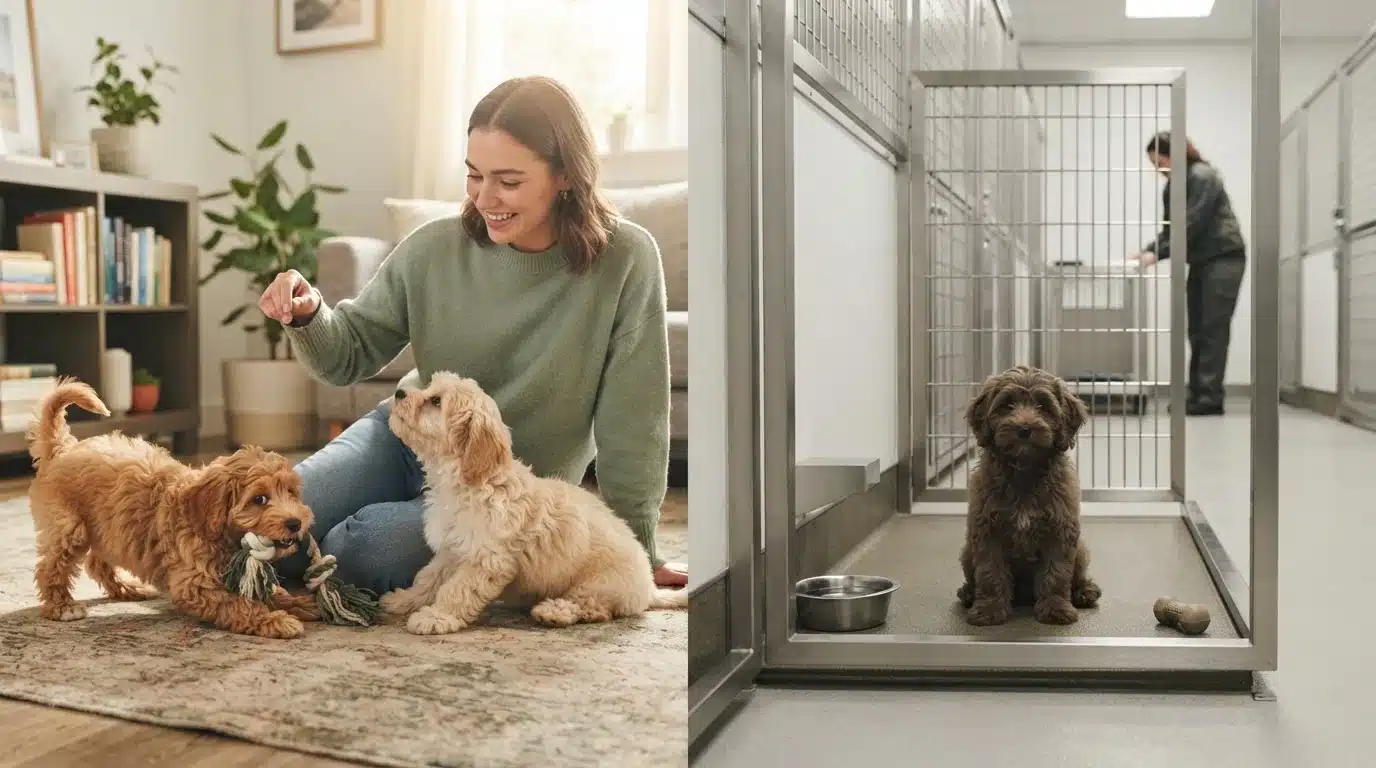
Quick Summary: A small breed puppy like a Havanese, Havapoo, or Cavapoo demands 2-4 hours of daily care and $4,500-$9,000 in the first year, but rewards owners with a trainable, hands-on companion that joins every part of family life. A cat needs just 20-60 minutes a day and $1,000-$3,500 upfront, handling long workdays and rentals on its own without separation stress. The real choice comes down to matching the pet to your actual schedule and budget rather than picking one as universally better. If a small breed puppy fits, programs like Sage Puppies match families to well-socialized Havanese, Havapoo, and Cavapoo puppies through a transparent health-testing and application process.
Choosing between small breed puppies vs cats comes down to what you want from the next decade. A small companion puppy, like a Havanese, Havapoo or Cavapoo, fits homes that want a dog-shaped daily relationship. A cat fits homes that want a lower-cost companion that minds itself during long workdays.
The stakes are real. First-time owners, apartment dwellers and busy families are weighing two very different ten-to-fifteen year commitments, and nobody wants to rehome a pet a year later. So this comparison walks through time, money, home setup, family fit and travel for both options side by side. Match the pet to your actual week, not to a sales pitch.
Small Breed Puppy vs Cat at a Glance
| Small breed puppy | Cat | |
|---|---|---|
| Daily time commitment | 2-4 hours of training, walking, play and supervision daily in year one | 20-60 minutes of feeding, litter, and play daily; more independent overall |
| First-year cost range | $4,500-$9,000+ (purchase, vet, supplies, training) | $1,000-$3,500 (adoption or breeder fee, spay/neuter, vet, supplies) |
| Ongoing yearly cost range | $1,500-$3,500 (food, vet, grooming, supplies) | $700-$2,000 (food, litter, vet, supplies) |
| Apartment and home fit | Strong for small breeds; puppy-proofing and potty training are the first-year burden | Strong in apartments and rentals; litter box is the main setup |
| Family and kid fit | Strong with gentle handling and adult supervision; matches active family routines | Good with older, respectful children; less suited to rough toddler play |
| Allergy and shedding fit | Lower shedding than many dogs, but not allergy-proof; consult an allergist | Allergens are present in all cats; consult an allergist, no truly hypoallergenic breed |
How Small breed puppy and Cat Compare
Small breed puppy
A small breed puppy in this comparison means a companion dog like a Havanese, Havapoo or Cavapoo, bred for family and apartment life. The small breed puppies vs cats choice often comes down to how much hands-on time you can give in year one. Expect daily training, walks and play, plus potty training and puppy-proofing at home.

Key strengths
- Strong fit for small homes and active family routines
- Lower shedding than many dogs, though not allergy-proof
- Deep bond through daily training and companionship
Cat
A domestic cat, adopted from a shelter or bought from a breeder, works well as an indoor companion. In the small breed puppies vs cats question, cats suit owners who want a lower-maintenance pet that still offers warmth and company. They handle apartments and rentals easily, with a litter box as the main setup.
Key strengths
- Independent, needing roughly 20-60 minutes of care daily
- Lower first-year and ongoing costs than a puppy
- Quiet, clean and well suited to rental living
Time and Attention in a Normal Week
Money matters, but time is where most families feel the difference. Here is how a typical week shakes out for each pet.
What a Small Breed Puppy Week Looks Like
Plan on 2 to 4 hours a day in year one, spread across potty breaks, short training sessions, walks, play, and supervision. Puppies cannot hold their bladder all day, so a midday break matters unless someone is home. Weekends often include a vet visit, a grooming appointment, or a puppy class. Small breeds such as Havanese and Cavapoos are apartment-friendly, as our small breed puppy guide covers, but they still need the same steady attention as any puppy.
What a Cat Week Looks Like
Cats run on a lighter schedule. Most need 20 to 60 minutes a day for feeding, litter box care, and play, and they handle a workday alone without stress. Fresh water, a clean litter box, and a short wand-toy session cover the basics. The trade-off is flexibility in both directions: you get your time back, but the bond builds on the cat’s terms. A cat will not greet you at the door or train for treats the way a puppy will. For busy households, that independence is often the deciding factor rather than a flaw.
Keep your own weekly schedule honest, because the right pet fits the hours you actually have.
First-Year vs Ongoing-Year Costs
First-Year Stack-Up
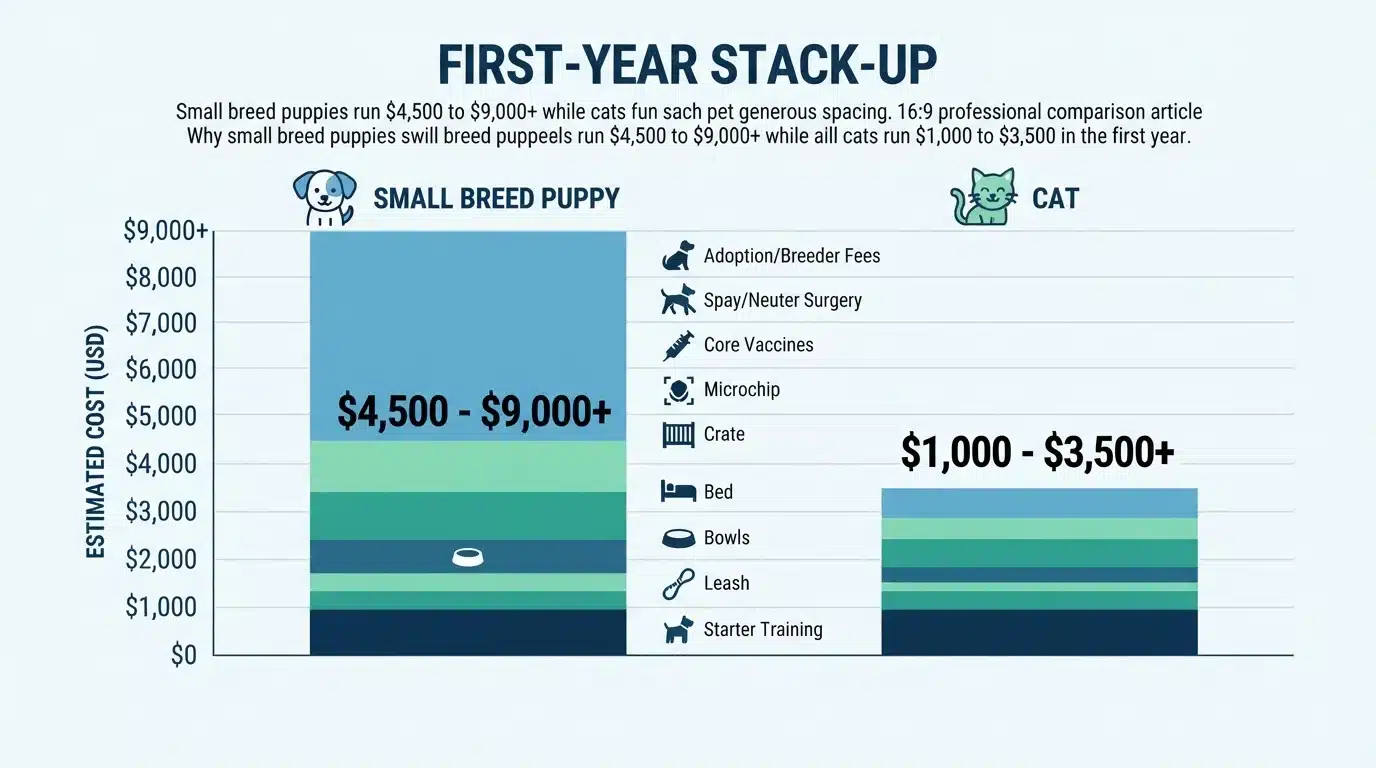
The first year is the expensive one for a puppy. Adoption or breeder fees plus spay or neuter surgery, core vaccines, a microchip, a crate, a bed, bowls, a leash, and starter training all land in the same twelve months. That is why small breed puppies typically run $4,500 to $9,000+ in year one, while a cat usually lands between $1,000 and $3,500.
If you buy from a breeder, ask what the price includes. Some programs, including Sage Puppies, share current pricing on a pricing and reservation page so you can budget before you apply.
Year Two and Beyond
Ongoing years get easier on your wallet. A small dog usually costs $1,500 to $3,500 a year for food, routine vet visits, grooming, and supplies. A cat runs roughly $700 to $2,000, mainly because litter is cheap and most cats skip professional grooming.
These figures are examples, not quotes. Your total depends on where you live, your vet’s rates, and whether you buy pet insurance. Grooming is the biggest swing factor for small breeds: a Havanese or a doodle cross needs regular trims, while a short-haired cat needs a brush and little else. Price out grooming in your area before you commit, because it can add several hundred dollars a year.
Home Setup: Apartments, Rentals, and Daily Logistics
Rental Rules and Setup
Read your lease before you pick a pet, not after. Many rentals charge a one-time pet deposit plus monthly pet rent, and the averages sit near $250 to $500 upfront and $10 to $60 a month, according to RentCafe’s pet-friendly housing data. Some properties also cap pet size or count. Ask about breed limits in writing, because small breeds usually clear them easily while a few lists still restrict dogs by weight.

Space, Noise, and Neighbors
Cats adapt to small floor plans with little effort. A litter box, a scratching post, and a window perch cover most of their needs, and they stay quiet enough for thin walls.
A small breed puppy can fit an apartment too, but expect more work in the first months. Puppies need frequent potty trips to a grass patch or pad, early crate training, and calm handling of barking so neighbors stay friendly. Small companion breeds are a common fit for apartment life, and this guide to apartment-friendly small breed puppies covers what makes certain breeds easier in close quarters. Plan your daily walk routes before homecoming day.
Family Fit: Kids, Other Pets, and Routines
Households With Children
Small breed puppies and cats both handle kids well, but they need different oversight. A puppy needs you to teach children how to hold, feed, and play gently, and adults still need to run the training plan. That daily structure, usually the same 2 to 4 hours of care already discussed, fits families who split chores.
Cats are more forgiving of a missed session, yet a toddler chasing a cat teaches it to hide. Give children clear rules for both animals: quiet hands, no pulling, and a pet-free zone the animal can retreat to. Families who want a puppy raised around real household noise can look at programs that prioritize early socialization, since well-socialized puppies settle into busy homes faster.
Other Pets in the Home
Introductions matter more than species. Cats usually accept a calm, small puppy if the first meetings are slow: keep them separated at first, swap scents, then allow short supervised visits while the cat keeps an escape route and high perches, as guides from Chewy and Vets4Pets both recommend. Expect weeks, not days, before they relax together.

Two cats often adjust faster than a cat and a new dog, because the newcomer shares their routines and respect for space. A resident dog plus a new cat is the easiest pairing to manage. Whatever the mix, feed pets separately at first and never leave a young puppy and cat alone unsupervised until trust is proven.
Either way, the right match depends more on your household’s patience during introductions than on which species you pick.
Allergies, Shedding, and Indoor Cleanliness

What the Allergen Science Actually Says
Pet allergies come from proteins in dander, saliva, and urine, not fur itself, so no breed or pet is truly hypoallergenic. The main cat protein, Fel d 1, is sticky and spreads easily through a home. Dog allergen is milder for many people, though not always. One large study found both cat and dog allergens in nearly every U.S. home tested, even those without pets, per research published in the Journal of Allergy and Clinical Immunology. If someone in your home has symptoms, spend time around the species before you commit, and see your doctor. The Asthma and Allergy Foundation of America lists practical steps too. Low-shedding breeds like the Havanese, Havapoo, and Cavapoo help, as our guide to Havanese shedding and coat care explains, but no puppy removes allergens.
Cleaning and Hair in the Home
Shedding shapes your cleaning routine more than anything else. Cats mostly leave hair where they sleep, and their saliva-based allergens settle into fabric and air. A puppy tracks hair across floors, rugs, and couches, plus muddy paws after rain.
Either way, a weekly vacuum with a HEPA filter, washed pet bedding, and an air purifier in the main room keep hair and dander down. Hard floors are easier to clean than deep carpet.
Travel, Workdays, and the Long-Term Commitment
Workdays and Overtime
A cat shrugs off an eight-hour day. It naps, eats from its bowl, and greets you at the door without separation stress. A small breed puppy cannot hold it together for that long at first. Puppies under six months need a midday potty break, so plan on a dog walker, a neighbor, or a lunchtime trip home for the first several months. If overtime is routine, build that cost in now. It fades as your puppy matures, usually by the one-year mark.
Travel, Boarding, and Moves
Cats travel easier on paper: a carrier and a litter box cover most trips, though many hate the car ride itself. Dogs need boarding or a pet sitter, which typically runs $25 to $50 per night in most U.S. cities. Moves matter too. Both pets handle a relocation fine if you keep their routine, food, and bedding familiar during the switch. Before you decide, be honest about who handles holiday travel and last-minute trips.
Choosing the Right Source: Breeder, Shelter, or Rescue
What to Verify Before You Pay Anyone
Shelters and rescues work well if you want an adult cat or dog with a known size and temperament, and the fee usually covers spay or neuter and first vaccines. If you choose a breeder instead, the AKC lists the signs of a responsible breeder: health testing on parent dogs, clean and open facilities, and a breeder who asks you questions right back. Walk away from sellers who always have puppies ready, dodge video calls, or push same-day deposits, since these are common puppy scam red flags in the BBB’s study.
Where Sage Puppies Fits in the Picture
A boutique program like Sage Puppies sits between those two paths. It raises Havanese, Havapoo, and Cavapoo puppies in South Jordan, Utah, and shares its health testing and pricing openly, with local pickup or nationwide delivery. Whichever source you pick, ask to see where the animal lives, request health records in writing, and take time with the decision. The right fit shows up in paperwork, not pressure.
Which Should You Choose: A Small Breed Puppy or a Cat?
The honest answer depends on your time, budget, and how hands-on you want to be. Neither pet is “better.” Match the animal to the life you actually live, not the one you hope to have someday.
A Small Breed Puppy Is the Better Fit When…
You have 2 to 4 hours a day to give in year one, and you want a companion that joins everything: car rides, patio dinners, couch time. A Havanese or Cavapoo thrives when someone is home often, or when your family can split potty breaks, training, and walks across the day.
Choose a puppy if you want to shape behavior from the start. Training, socializing, and house rules are all in your hands, which matters if you have kids who will grow up alongside the dog. Small breeds also travel well and fit comfortably in apartments.
If that description fits, a boutique program with a clear application process helps match you to the right temperament rather than a first-available puppy.
A Cat Is the Better Fit When…
Your schedule is full or unpredictable. A cat needs roughly 20 to 60 minutes daily and handles a workday alone without stress, so it suits busy households and first-time owners who want companionship without the training workload.
Choose a cat if your budget favors $700 to $2,000 a year over $1,500 to $3,500, if you prefer a home without daily walks, or if you travel often, since cats usually manage better with a drop-in sitter. As vets often note when helping families choose a pet, matching care demands to your routine prevents rehoming later.
Want an eager, trainable shadow? Pick the puppy. Want calm independence? Pick the cat.

Still leaning toward a puppy? Sage Puppies matches families with well-bred Havanese, Havapoo, and Cavapoo puppies through a simple, honest application. Start yours today and take one clear step toward the companion that fits your home.
Frequently Asked Questions
Q1: choosing between a small breed puppy and a cat
Decide by your week, not your wish list. If you can give 2 to 4 hours daily in year one and want a hands-on companion, pick a puppy. If you need 20 to 60 minutes and independence, a cat fits better.
Q2: Which pet costs less in the first year?
Cats. Expect roughly $1,000 to $3,500 versus $4,500 to $9,000+ for a small breed puppy, mostly because breeder fees, training and supplies stack into a puppy’s first twelve months.
Q3: Can a small breed puppy stay alone during a full workday?
Not at first. Puppies under six months need a midday potty break, so budget for a walker or lunchtime visit until about age one. Cats handle a workday alone without stress.
Q4: Are any of these pets hypoallergenic?
No. Allergies come from dander and saliva proteins, not fur. Low-shedding breeds like the Havanese help some families, but spend time around the species and talk to your doctor first.
Q5: What should I ask a breeder before paying?
Ask about health testing on parent dogs, request records in writing, and expect questions back. Walk away from sellers who dodge video calls or push same-day deposits.
Q6: Which pet is easier with young children?
Puppies need gentle-handling training and adult supervision; cats need respect for escape routes. Older, calm children fit both, while rough toddler play suits neither pet well.
The Right Pet for Your Home
The comparison comes down to three numbers: 2 to 4 daily hours and $4,500 to $9,000+ in year one for a small breed puppy, versus 20 to 60 minutes and $1,000 to $3,500 for a cat. Neither pet wins on its own. A Havanese, Havapoo, or Cavapoo fits families who want a trainable, hands-on companion, while a cat suits busier schedules and smaller budgets. Whichever you choose, verify health records, read your lease, and match the pet to the week you actually live.